
Kuva: Weight Management Benefits of Watermelon in a Healthy Diet
Julkaistu:
Viimeksi päivitetty: 16. elokuuta 2026 klo 19.08.19 UTC
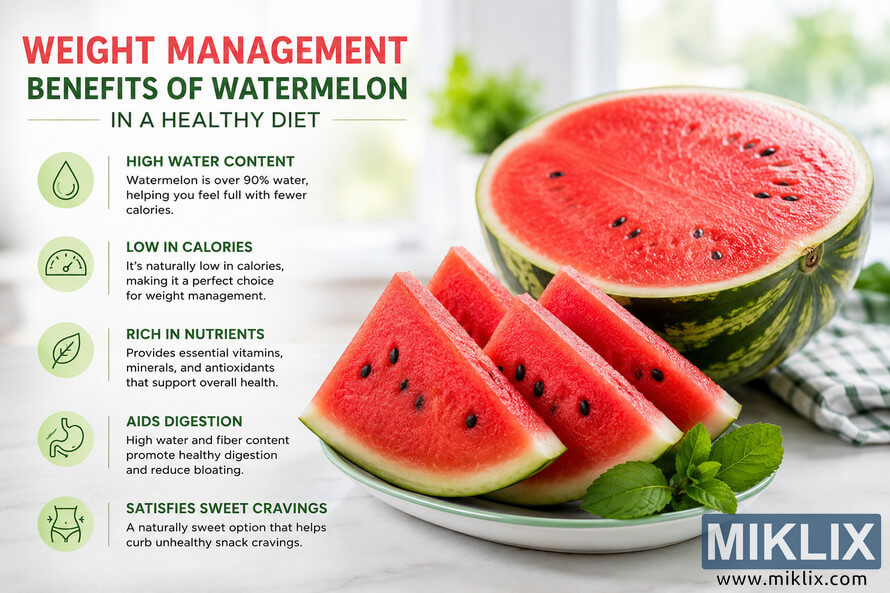
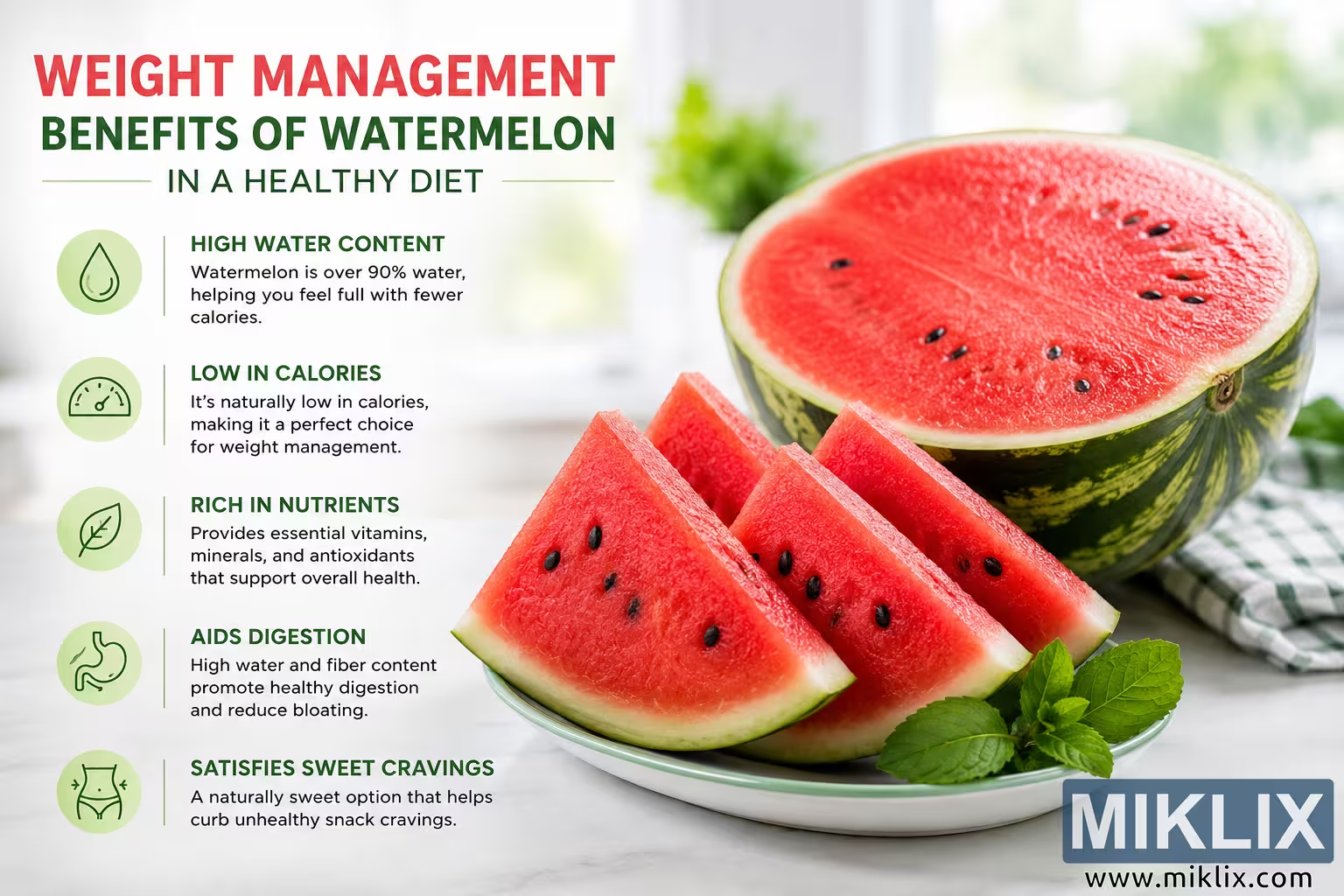
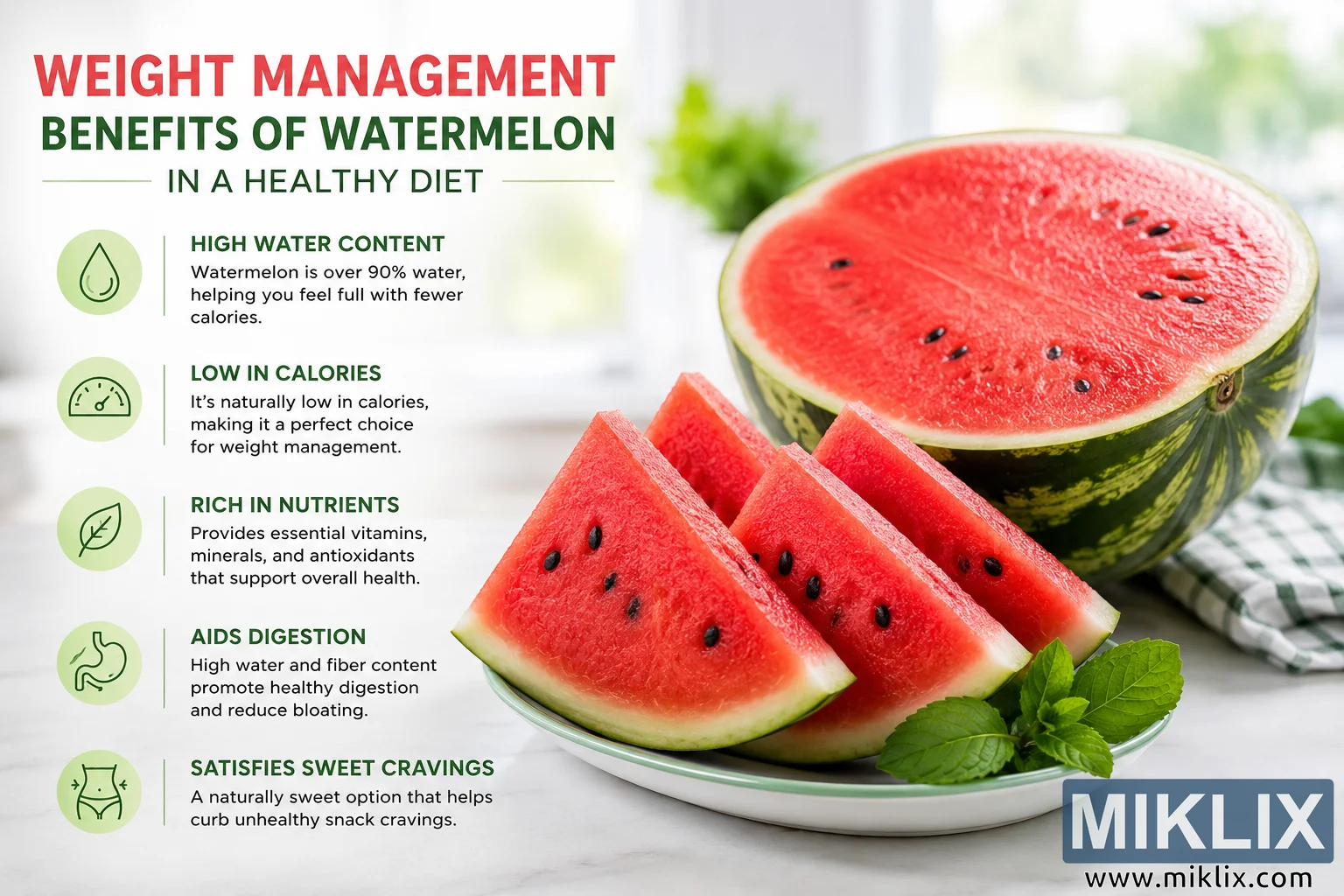
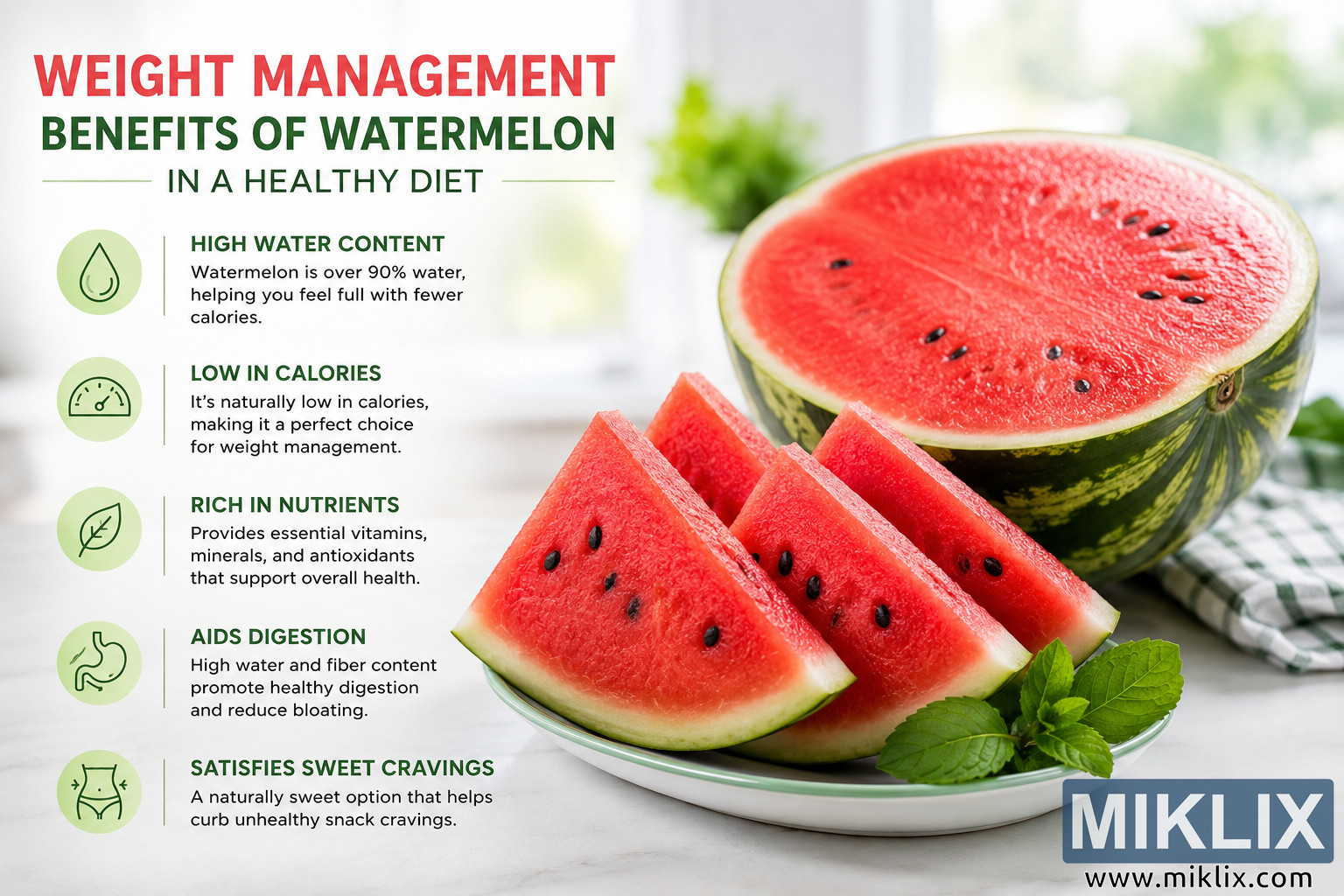
Bright landscape infographic illustrating the weight management benefits of watermelon in a healthy diet, featuring fresh watermelon slices alongside educational highlights about hydration, low calories, nutrients, digestion, and natural sweetness.
Weight Management Benefits of Watermelon in a Healthy Diet
Saatavilla olevat versiot tästä kuvasta
Jäljempänä ladattavissa olevat kuvatiedostot ovat vähemmän pakattuja ja korkearesoluutioisempia - ja siten laadukkaampia - kuin tämän verkkosivuston artikkeleihin ja sivuihin upotetut kuvat, joiden tiedostokoko on optimoitu kaistanleveyden kulutuksen vähentämiseksi.
Normaali koko (1,536 x 1,024)
Suuri koko (3,072 x 2,048)
Erittäin suuri koko (4,608 x 3,072)
Erittäin suuri koko (6,144 x 4,096)
Koomisen suuri koko (1,048,576 x 699,051)
- Lataus jatkuu edelleen... ;-)
Kuvan kuvaus
This landscape-oriented image presents a bright, clean, and inviting health-themed composition centered on the nutritional role of watermelon within a balanced lifestyle. The overall design combines the visual appeal of fresh fruit photography with the clarity of an educational infographic. The background is softly blurred, suggesting a naturally lit kitchen or dining environment with abundant daylight streaming through large windows. The bright atmosphere conveys freshness, cleanliness, and healthy living while ensuring that the main subject remains the visual focal point.
On the right-hand side of the composition sits a large, freshly cut watermelon that has been sliced in half, revealing vibrant red flesh filled with scattered black seeds and surrounded by a thick green rind. The watermelon appears juicy and ripe, with subtle highlights emphasizing its moisture content. In front of the larger half rests a white plate holding several triangular watermelon slices arranged in an overlapping fan-like formation. The slices display vivid red interiors, crisp white rind transitions, and green outer skin, creating a striking contrast against the neutral plate. Fresh green mint leaves are placed beside the watermelon slices, adding another natural element while reinforcing the image's healthy and refreshing theme. Beneath the fruit, a folded green-and-white checkered kitchen cloth provides subtle texture and contributes to the welcoming kitchen aesthetic.
The left side of the image is devoted to an infographic panel that communicates educational information regarding watermelon and weight management. A large, bold headline occupies the upper portion of this panel. The typography uses contrasting red and dark green colors, immediately drawing attention while maintaining a fresh, natural appearance. Decorative horizontal lines frame portions of the heading to improve visual balance without overwhelming the composition.
Below the headline, five informational sections are vertically stacked. Each section begins with a simple circular icon rendered in soft green tones. The icons visually represent the associated health topic while maintaining a clean, modern aesthetic. The first icon resembles a water droplet, symbolizing hydration and high water content. The accompanying text explains that watermelon consists largely of water, which can contribute to feelings of fullness while supporting hydration.
The second section features an icon resembling a speedometer or gauge, representing low calorie density. The corresponding explanation highlights that watermelon naturally contains relatively few calories compared to many snack foods, making it a suitable option within a calorie-conscious eating pattern.
The third section displays a stylized leaf icon to represent natural nutrition. The nearby text discusses the presence of vitamins, minerals, antioxidants, and other beneficial nutrients that contribute to overall health and wellness. The wording emphasizes nutritional value without making exaggerated or unrealistic health claims.
The fourth section uses an icon representing the digestive system. This portion of the infographic explains that watermelon contributes both water and small amounts of dietary fiber, factors commonly associated with healthy digestion and overall gastrointestinal comfort when included as part of a balanced diet.
The fifth and final section includes an icon depicting a waistline or torso, symbolizing satisfaction and appetite management. The accompanying explanation notes that watermelon offers natural sweetness, making it an appealing alternative to higher-calorie desserts or processed snacks for individuals seeking healthier food choices.
Throughout the infographic, the typography remains clean and highly legible. The use of generous spacing, consistent alignment, and harmonious color choices creates a professional appearance that resembles modern health education materials. The visual hierarchy guides the viewer naturally from the prominent title through each benefit before arriving at the fresh fruit imagery.
The overall color palette is dominated by vivid reds, multiple shades of green, soft whites, and subtle neutral gray tones. These colors reinforce themes of freshness, hydration, nutrition, and natural food. Gentle depth of field keeps the foreground fruit exceptionally sharp while softly blurring the background, enhancing realism and emphasizing the main subject. The lighting appears soft and diffused, producing minimal harsh shadows while highlighting the juicy texture of the watermelon flesh and the glossy surface of the fruit.
No recognizable commercial products, logos, trademarks, or branded packaging appear anywhere within the scene. The presentation remains entirely generic, focusing exclusively on fresh produce, healthy eating concepts, and educational messaging. Overall, the image functions as an attractive blend of food photography and nutritional education, communicating the idea that watermelon can be incorporated into a healthy diet while illustrating several commonly recognized characteristics such as hydration, low calorie density, natural sweetness, and nutrient content in a visually engaging, clean, and approachable format.
Kuva liittyy: Watermelon: The Hydrating Superfruit You Should Eat More Often