
Hops in Beer Brewing: Coigneau
Nai-publish:
Huling na-update: Marso 12, 2026 nang 3:15:18 PM UTC
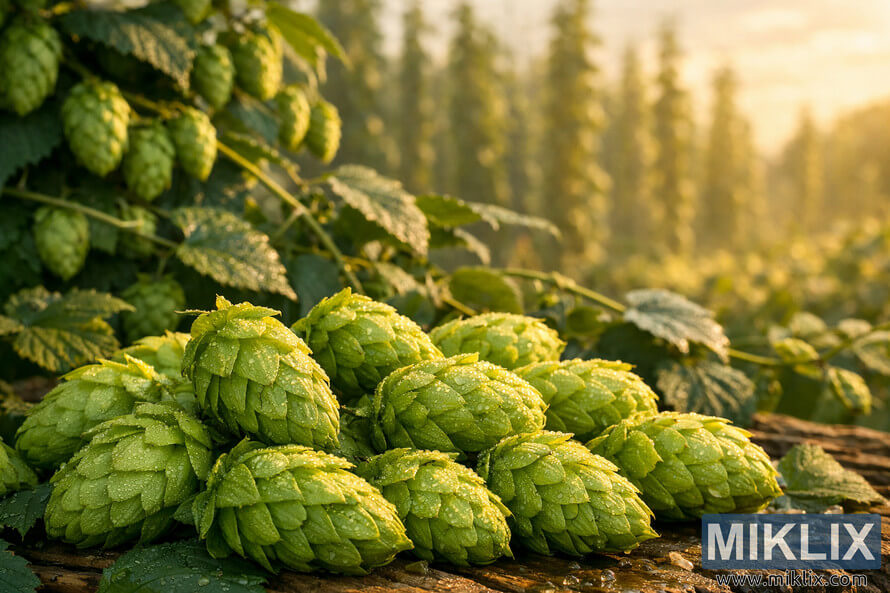
Coigneau hops are a classic Belgian variety, crucial in traditional lambic brewing around Brussels. They were grown extensively in the Aalst-Asse area during the 19th and early 20th centuries. Known for their low bitterness and gentle aromatics, these hops were perfect for spontaneous-fermentation beers.
Hops in Beer Brewing: Coigneau
I-click o i-tap ang larawan para sa karagdagang impormasyon at mas mataas na resolution.
The variety originated with farmer Franciscus Coigneau in Teralfene. It eventually replaced Groene Bel in many fields due to its higher yield. By the early 20th century, Coigneau dominated the hops acreage in Aalst-Asse. Despite a significant decline in Belgian hops acreage, there's a renewed interest in these heritage varieties. This has led to efforts to revive and preserve them on a small scale.
In lambic brewing, Coigneau hops were used fresh and aged in equal parts. This balance controlled bitterness while adding preservative qualities. Today, brewers and historians study Coigneau. They do this to understand its role in lambic hops and to gain insights into regional brewing culture and agricultural choices in Belgium.
Key Takeaways
- Coigneau hops are a historic Belgian variety linked to the Aalst-Asse region near Brussels.
- They were favored in lambic beers for low bitterness and mild aromatic character.
- Coigneau replaced Groene Bel around 1900 due to better yields and broad local adoption.
- Interest in heritage hop varieties has spurred preservation and small revival projects.
- Understanding Coigneau helps brewers recreate traditional lambic hop regimens and recipes.
Overview of Coigneau hops and their role in brewing
Coigneau, a traditional Belgian hop, has a significant yet understated role in the brewing world. This overview delves into its origins, its impact on local brewing traditions, and why it remains relevant today. It highlights the importance of preserving this hop variety for future generations.
Brief description and origin
The Coigneau hop's roots are in the Aalst–Asse area, near Brussels. It was named after Franciscus Coigneau, who cultivated it in Teralfene in the late 1700s. Known for its low-alpha characteristics, Coigneau boasts alpha acids around 1–2 percent. This makes it ideal for beers that require a mild bitterness and a subtle aromatic lift.
Historical significance in Belgian brewing
By the early 1900s, Coigneau dominated the Aalst region's hop cultivation. Its popularity among growers was due to its higher yields compared to older varieties like Groene Bel. Brewers preferred Coigneau for its ability to add a nuanced hop presence without overpowering the beer. This made it a cornerstone in the Belgian hop heritage, especially in lambic brewing.
Why Coigneau matters to modern brewers and enthusiasts
Modern brewers and enthusiasts are drawn to Coigneau for its connection to authentic Belgian brewing traditions. Its low bitterness and delicate aromatics make it a favorite among small-scale growers and craft brewers. The use of Coigneau in brewing can significantly alter the fermentation dynamics and sensory balance of mixed-fermentation beers. This is why it's increasingly being used in revival trials and niche commercial batches.
I-click o i-tap ang larawan para sa karagdagang impormasyon at mas mataas na resolution.
History of Coigneau cultivation in Belgium
The tale of Coigneau hops starts in small Flemish fields, evolving into a cornerstone of Belgian hop cultivation. Franciscus Coigneau, who farmed a unique hop in Teralfene in the late 18th century, is credited with its origins. This early start paved the way for its widespread adoption across nearby parishes.
By the 19th century, the Aalst-Asse hop history became pivotal in local agriculture. Growers preferred Coigneau for its consistent yields and milder bitterness compared to Groene Bel. Around 1900, Coigneau made up about three quarters of hop acreage near Aalst. This dominance was due to market demand and its agricultural suitability.
Belgian hop cultivation saw a significant surge during this period. National totals soared into the thousands of hectares, with exports hitting millions of kilos in peak years. This growth framed a booming industry where Coigneau was a key player in regional output and trade.
However, the 20th century brought shifts with foreign competition and changing tariffs. Imported varieties like Hallertau and Saaz started to replace native types, shrinking the area of historic fields. Efforts to preserve old cultivars involved archival work and collections at institutions, driven by growers and researchers.
Today, there's renewed interest in Coigneau's history, tied to preservation projects and catalog searches at universities and national collections. These efforts aim to reconnect brewers and horticulturists with a crucial part of Belgian hop cultivation and Franciscus Coigneau's legacy in Flemish landscapes.
I-click o i-tap ang larawan para sa karagdagang impormasyon at mas mataas na resolution.
Botanical characteristics of Coigneau
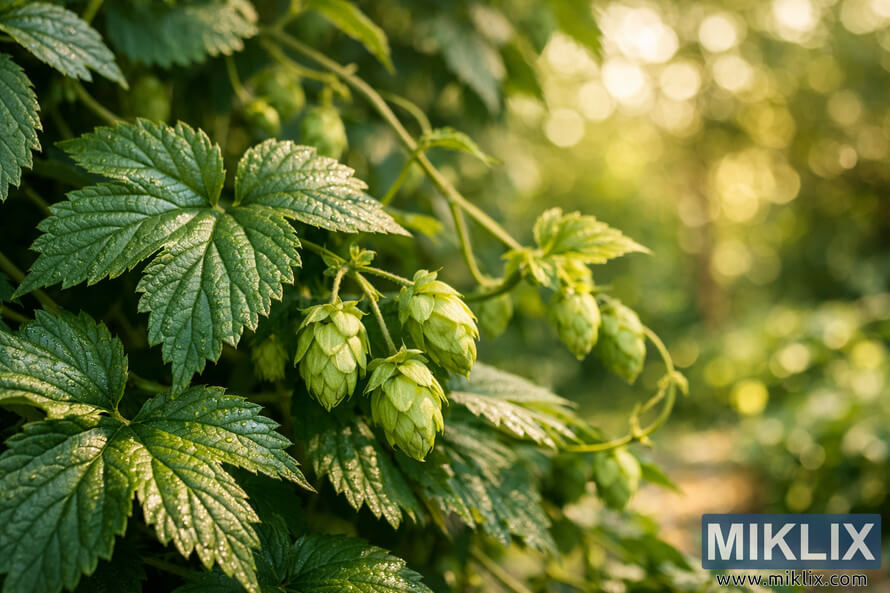
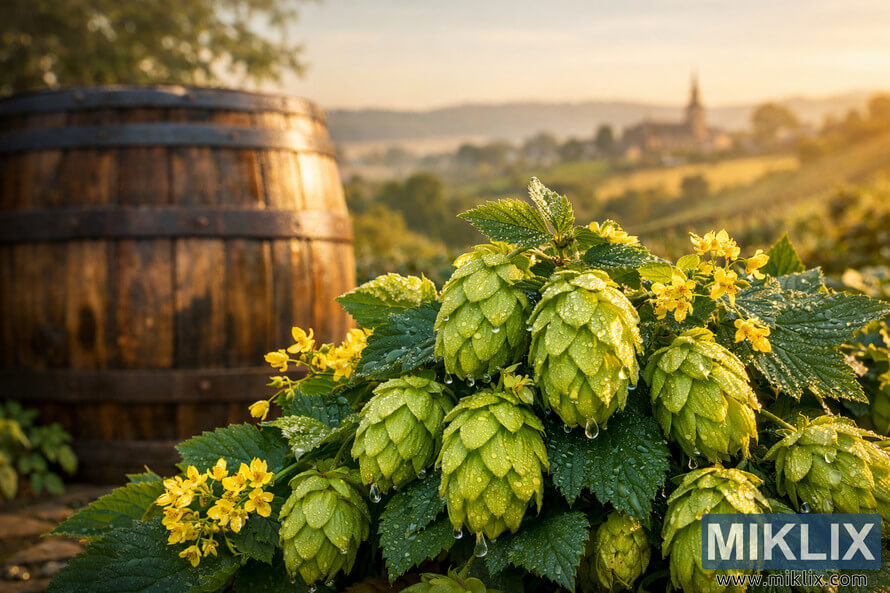
Coigneau is a robust bine with compact, light-green cones, fitting the lambic tradition for fresh-hop use. Growers in the Aalst-Asse area valued its consistent flowering and higher yield. These traits helped it replace older local varieties in the 19th century.
- Plant form and flowers: Coigneau's tight, elongated cones have moderate lupulin content. It shows good bract closure and dries to a pale green. This reflects its historical use in coolship and spontaneous-fermentation brewing.
- Yield behavior: Historical reports show Coigneau yields more than Groene Bel. This yield advantage encouraged its adoption across smallholdings and commercial plots in Belgium.
Plant type, flower appearance, and yield traits
Coigneau grows as a robust bine with reliable cone set, adapted to Belgian soils. Its light green, compact flowers made handling and drying straightforward for brewers using fresh hops.
Farm records highlight its output. Coigneau averaged higher crop mass per hectare than Groene Bel. This helped maintain supply for regional lambic brewers.
Alpha and beta acid profile
Coigneau falls into the low-alpha category common among lambic-type hops. Typical hop alpha acids for lambic varieties sit around 1–2%. This limits bittering potential when used fresh.
Beta acids for lambic hops often range higher, roughly 2.8–5%. These values mean Coigneau adds subtle preservative effects without driving bitterness. This is key in lambic hop chemistry.
Typical essential oil composition and aromatic notes
Hop oil composition in lambic hops tends to concentrate light volatiles. Total oils often measure near 0.8–1.2 mL per 100 g. Myrcene is commonly the largest fraction, with humulene, caryophyllene, and farnesene following.
These oil proportions give Coigneau a floral, slightly fruity character when used fresh. Low cohumulone ratios in many traditional Belgian hops support a softer bitterness. This delicate aromatic lift is crucial in mixed-fermentation beers.
I-click o i-tap ang larawan para sa karagdagang impormasyon at mas mataas na resolution.
Coigneau hops and Lambic beer tradition
Coigneau played a crucial role in Pajottenland's lambic brewing tradition. Its low bitterness and delicate aromatics were prized for beers that rely on wild yeast and bacteria. Records and tasting notes show Coigneau lambic had a soft hop presence. This supports fermentation without hiding fruity and sour flavors.
Why Coigneau fit the bill for lambic brewing
Coigneau was chosen for its low alpha acids, often around 1–2 percent. This provided mild preservative action without high IBUs. The hop's gentle oils controlled microbial activity in coolships and open vessels. This allowed spontaneous fermentation to shape the beer.
Fresh versus aged hop practice in traditional brews
- Many lambic recipes used aged hops to tame harsh vegetal notes and reduce bitterness further.
- Local practice often mixed fresh hops in lambic with aged hops at about a 50/50 ratio. This retained subtle hop aroma while keeping bitterness minimal.
- Coigneau’s low lupulin meant fresh hops in lambic contributed scent and mild antibacterial effect without pushing bitterness.
How low bitterness affects spontaneous fermentation beers
Low bitterness lets Brettanomyces, Pediococcus, and Lactobacillus show their character. With Coigneau, the hop profile limits hop-derived masking. This way, esters and lactic notes remain prominent. This balance made Coigneau lambic distinct from beers brewed with higher-alpha imported varieties.
I-click o i-tap ang larawan para sa karagdagang impormasyon at mas mataas na resolution.
Flavor and aroma profile in finished beer
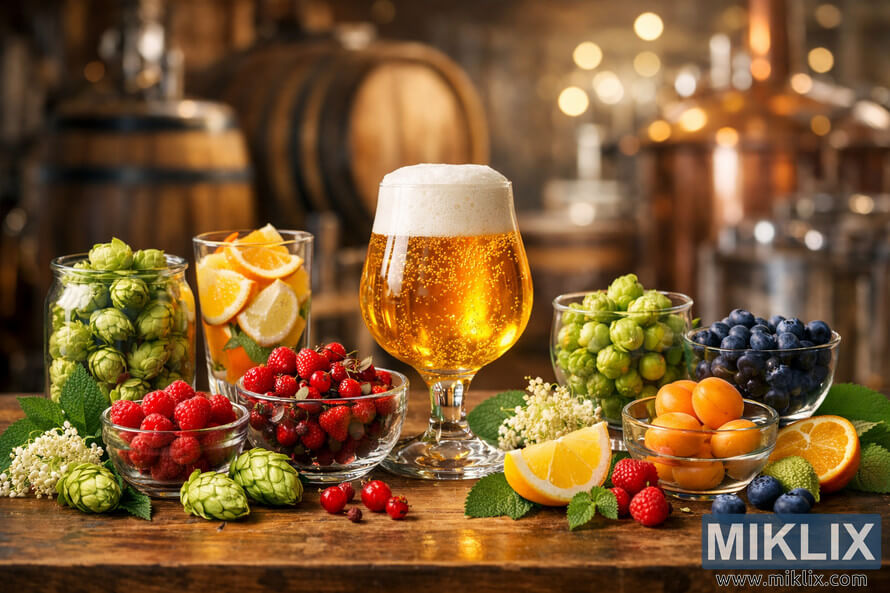
Coigneau flavor in finished beer is subtle. Historical and recent trials reveal floral and fruity notes, not bold bitterness. Brewers find that Coigneau enhances wild yeast and bacteria without overpowering the beer.
Floral, fruity, and herbal notes are common descriptors. The hop's low alpha acids and myrcene-rich oils create a soft nose. This allows the beer's sugars and lactic acids to stand out.
Coigneau influences the beer's mouthfeel, softening bitterness and adding a rounded finish. Tasters find a gentle tannic backbone, not a sharp bitterness. This results in a smoother palate and a clean finish.
- Historic tasting notes: modest smell and taste, prized for balance with spontaneous fermentation.
- Lyceum of Aalst reports: a very peculiar bitterness that reads as modest and refined.
- Modern test brews: floral and fruity accents with a soft, integrated hop presence.
Preserved lambics show Coigneau's impact. In aged bottles, the hop's presence is subtle, blending with cellar funk and fruit esters. Newer batches follow the same pattern: an aromatic start, delicate hop bitterness, and a soft finish.
I-click o i-tap ang larawan para sa karagdagang impormasyon at mas mataas na resolution.
Comparing Coigneau to other traditional Belgian hops
Coigneau was a unique gem among Belgian landraces. It was cherished for its minimal bitterness and a soft, aromatic quality. This made it perfect for lambic and soft ales. However, the shift towards higher yields and market demands led to its decline. This change created a stark contrast with other cultivars.
- Coigneau vs Groene Bel: Coigneau had significantly lower alpha-acid levels and a milder bittering profile. Groene Bel was preferred when a more pronounced hop presence was desired. Coigneau, with its gentle bitterness, was ideal for lambic brewing.
- Witte Rank comparison: Witte Rank was known for its soft, delicate character, often likened to German aroma hops. It was suited for beers where a subtle hop presence was necessary, allowing the aroma to remain clean and floral.
- Agronomic note: Groene Bel's lower yields made it less popular. Coigneau offered a better yield while maintaining the lower bitterness brewers sought.
How Coigneau compares to imported varieties that replaced it
- Saaz vs Coigneau: Saaz, with its classic noble spice and low alpha acids, presents a different noble aroma and slightly firmer bitterness than Coigneau. It's a good substitute for aroma but can increase bitterness if used at full rates.
- Hallertau and similar imports: Hallertau varieties, introduced in the early 20th century, offer familiar Germanic floral notes. They share Coigneau's delicate aroma but differ in bitterness and oil makeup, affecting a lambic's balance.
- Practical swap: When Coigneau was scarce, brewers turned to Saaz and Hallertau. They accepted small changes in aroma and adjusted hopping to maintain the lambic's character.
Practical implications for recipe formulation
- Recipe substitution Coigneau requires selecting low-alpha aroma hops and reducing rates to avoid extra IBUs. A low-alpha Saaz or Hallertau often serves as a stand-in if quantities are adjusted.
- Plan hopping schedule for aroma and preservative effect rather than bittering. Use Coigneau early for preserving wort or late additions for scent, depending on whether fresh or aged hops are desired.
- Balance is key: increase mash or specialty malts if a substitute raises bitterness. Brewers can blend a small percentage of a firmer hop with a low-alpha aroma hop to mimic Coigneau’s soft presence without overpowering fermentation character.
Growing conditions and regional suitability
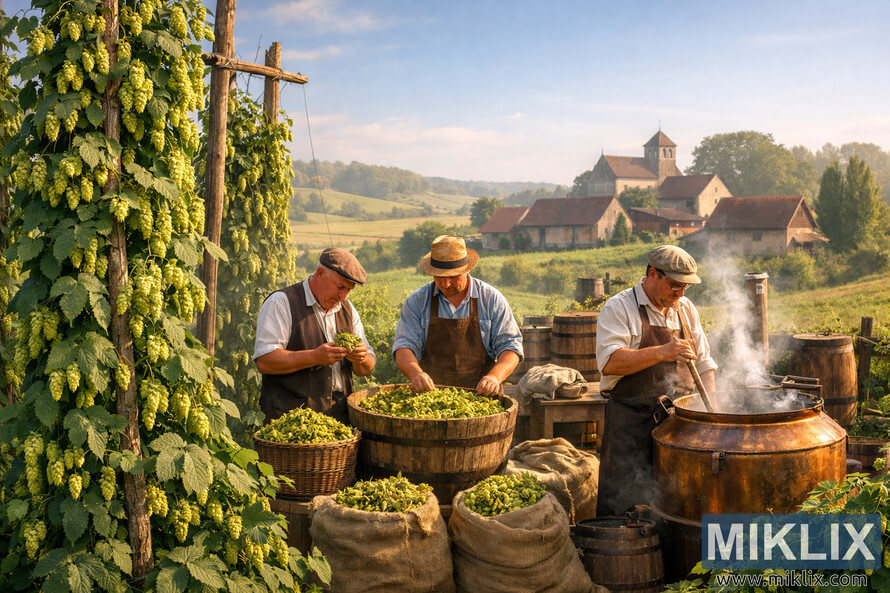
The Coigneau hop thrived in areas where soil, weather, and local expertise converged. Warm summers, cool nights, and loamy clay soils were ideal for its growth. Harvests became community events, with growers coming together to gather the crop.
Historical growing region and microclimate
The Aalst-Asse climate was perfect for Coigneau. Located near Brussels, this Flemish area offered mild, humid conditions and sheltered fields. This microclimate reduced weather stress and preserved delicate hop oils during ripening.
Yield characteristics that made it attractive
Farms preferred Coigneau for its high yields, often surpassing local varieties like Groene Bel. This meant more income per hectare. By 1900, growers chose Coigneau for its reliability and adaptability to regional soils.
Limitations and the drift from commercial culture
Several factors contributed to Coigneau's decline. Market prices dropped while production costs increased. Foreign competition from Saaz and Hallertau shifted demand. Trade rules and tariffs further reduced Belgian competitiveness.
- Loss of local expertise made replanting harder over generations.
- Growers moved toward varieties with stronger export markets.
- National acreage shrank dramatically, reflecting the wider decline of Belgian hops.
Economic pressure and changing market tastes led to Coigneau's decline. Despite its suitability for the Aalst-Asse climate and solid yields, it retreated from commercial fields.
Preservation, revival efforts, and modern availability
Interest in Coigneau revival has surged among brewers and historians. They aim to capture authentic Belgian hop flavors. Small-scale projects are underway, linking archives, university collections, and local schools. These efforts focus on practical cultivation trials and detailed documentation of plant material.
Rediscovery in heritage collections
Samples from the Wye College hop collection in Kent were crucial for identifying Coigneau relatives. Plant material from Slovenia and conservation stocks at Gembloux confirmed genetic and aromatic traits. These international finds provided a starting point for reintroduction trials in Belgium.
Local reclamation and classroom trials
Teachers and students at the lyceum of Aalst actively participated. They used archival records and foreign accessions for test plots. Local hobby brewers, including Belleketels, collaborated with the school. They brewed small batches and documented sensory outcomes.
Small-scale production and sources
Commercial availability is still limited. Farm-scale projects near Poperinge, like Hoppecruyt Coigneau plantings, offer modest quantities for specialty brewers. Specialty hop vendors list aged, low-alpha lots for lambic and wild ales.
For brewers seeking Coigneau, options include ordering from boutique Belgian growers or joining seed-exchange networks. Collaborating with educational trials is also an option. These channels ensure plant material circulation while safeguarding heritage lines.
Brewing with Coigneau: recipe ideas and practical tips
Coigneau excels when hops enhance fermentation and aging, rather than dominating bitterness. Opt for grain bills and fermentation schedules that emphasize Brettanomyces, Pediococcus, and barrel aging. View hops as a preservative and a subtle aromatic layer.
Using Coigneau in lambics and mixed fermentation beers
- In traditional lambic-style beers, use light kettle additions. Focus on early hopping for microbial stability. Let coolship exposure and barrels add complexity.
- When brewing with Coigneau, aim to highlight subtle floral and herbal notes. Avoid late aggressive hop additions that mask spontaneous fermentation character.
- Pair Coigneau with aged or oak-aged fermentation to let tartness and funk shine while the hop offers a framing aroma.
Proportion recommendations for fresh vs. aged hops
- Traditional practice suggests a roughly balanced fresh vs aged approach. A 50% fresh / 50% aged ratio gives preservative function and a touch of freshness without excess bitterness.
- If you want less hop aroma, increase the aged proportion. If you want a brighter hop note, push the fresh share to two-thirds but cut total hop weight to avoid extra IBUs.
- Because Coigneau is low in alpha acids, calculate bitterness targets before brewing. Adjust additions or include a small amount of a higher-alpha hop if specific IBU levels are required.
Substitutes and blending strategies when Coigneau is unavailable
- Use low-alpha aroma varieties like Saaz, Hallertau, or Willamette as Coigneau substitutes. Match total hop weight for aroma rather than alpha acid alone.
- Blend a low-alpha aroma hop with a pinch of higher-alpha variety to meet bitterness goals while retaining delicate character. Keep the higher-alpha portion small.
- When using substitutes in a lambic recipe Coigneau, mimic the fresh vs aged balance by aging part of the hops or sourcing already aged leaf to reproduce the mellow preservation effect.
Test small batches before scaling. Tweak proportions to suit fermentation profile and barrel contact time. Document outcomes so each iteration refines the role of hops in your mixed fermentation program.
Processing and storage considerations for low-alpha hops
The journey from field to cellar is crucial for low-alpha hops in lambic and mixed-fermentation beers. It's essential to focus on drying, aging, and storage. This ensures that bittering acids don't overpower, while preserving the delicate aromatics that make these hops valuable.
Drying and the shift in bitterness and aroma
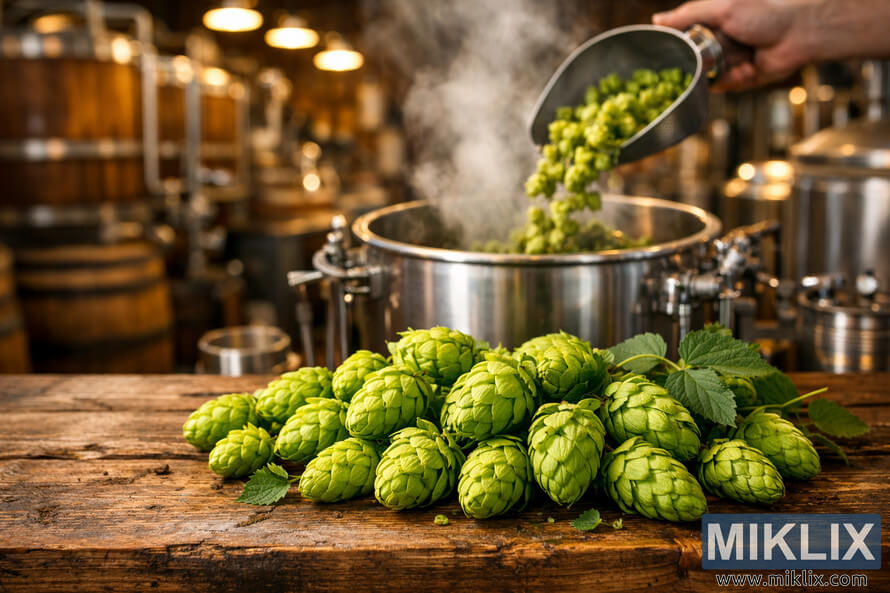
Drying is key to reducing moisture and initiating chemical changes that soften bitterness. Traditional methods in lambic brewing used aged hops to balance alpha-acid harshness. Proper drying controls this transformation, preventing hop oils from overheating.
How aging alters hop compounds
Aging hops in cool, stable conditions transforms alpha acids into milder forms. This process shifts the oil profile, enhancing the flavors brewers seek in spontaneous beers. Proper aging balances bitterness while preserving floral and herbal notes.
Best practices for storing delicate oils
For preserving hop oils, store hops in cold, dark places with minimal oxygen. Techniques like vacuum sealing or nitrogen flushing slow oxidation. Cold storage at or below freezing preserves volatile oils like myrcene.
Handling fresh hops for kettle and coolship use
- Fresh hop handling must be fast. Move harvest to processing within hours to retain volatile aromatics.
- Sanitation matters for coolship exposures. Clean surfaces and brief handling reduce unwanted microbial load while allowing intended wild inoculation.
- When using fresh picks in the kettle, adjust hopping rates down because higher green hop mass can add vegetal flavor and moisture.
Practical checklist for brewers
- Dry to target moisture without high heat to protect essential oils.
- Age a portion of the crop under low-oxygen, refrigerated conditions for lambic-style recipes.
- Store packaged hops frozen or near-freezing with oxygen excluded for long shelf life.
- Plan fresh hop handling workflows during harvest for immediate use in coolship or kettle additions.
Small-scale revival growers have shown that combining aged and fresh lots preserves tradition while letting brewers experiment. Attention to storing Coigneau hops and disciplined fresh hop handling gives the best chance of hop oil preservation and desirable outcomes when aging lambic hops for mixed fermentation beers.
Analytical data and lab values relevant to Coigneau
Lab numbers serve as a practical guide for brewers using Coigneau in both traditional and experimental beers. They help determine hop rates based on Coigneau alpha acids. Additionally, hop lab values and hop oil metrics predict the aroma contribution and aging behavior of the hops.
Typical analytical ranges for lambic-style hops show alpha acids between 1% and 2%. This low range means that unless brewers use large quantities, the IBUs will remain modest.
- Alpha acids: 1.0–2.0% typical for preserved lambic hops.
- Beta acids: roughly 2.8–5.0%, which affect oxidation and perceived bitterness over time.
- Cohumulone: about 29–35% of alpha acids in similar traditional hops, relevant to bitterness character.
Hop oil metrics for traditional lambic hops indicate total oils near 0.8–1.2 mL per 100 g. Myrcene dominates at roughly half of total oils. Humulene, caryophyllene, and farnesene also contribute significantly.
Before scaling recipes, brewers must read hop lab values. Low alpha values require larger masses to reach target IBUs. However, lambic practice often aims for low IBUs to balance spontaneous fermentations.
- Use measured alpha-acid percent from certificates to calculate hop quantities.
- Factor beta acids and cohumulone when predicting bitterness evolution during aging.
- Adjust timing: prioritize late additions or dry hopping if hop oil metrics show delicate, volatile compounds.
Storage stability impacts hop oil metrics and the aromatic lift Coigneau can provide. Fresh or well-preserved samples retain myrcene and humulene profiles. These profiles shape floral and herbal notes.
Laboratory reports provide numbers that directly translate into hopping rates and schedules. Paying close attention to Coigneau alpha acids and full hop lab values is crucial. It helps brewers meet stylistic goals while honoring lambic tradition.
Economic and cultural context of lost Belgian hop varieties
The rise and fall of Belgium's hoplands significantly impacted local life and beer recipes. Fields near Aalst and Teralfene, once vast, supplied a booming export market. However, farmers faced economic pressures that drastically reduced acreage, reshaping the region's identity.
Several key milestones highlight the decline of Belgian hops. In the mid-1800s, hop acreage peaked at several thousand hectares. Exports reached two million kilos by 1865. Yet, by the 20th century, imports and foreign competition eroded market share. High production costs and tariff asymmetries favored imported hops from Hallertau, Saaz, Kent, and English Goldings.
Economic pressures forced growers to abandon traditional cultivars. Native varieties like Groene Bel, Witte Rank, and Coigneau lost commercial relevance. Growers turned to higher-yield or more marketable varieties to stay afloat. Today, Belgian hop acreage stands at about 160 hectares, with a small number of dedicated farmers.
Social life around the harvest was deeply rooted in tradition. Hop harvests were communal events, filled with family labor, regional songs, and local fairs. Manual picking and shared meals were milestones, binding rural communities to their fields and brewing customs in Pajottenland and the Aalst-Asse hoplands.
As commercial cultivation declined, much of this cultural memory was lost. Revival efforts, like those at the Lyceum of Aalst, aim to reintroduce lost varieties. Today, small-scale growers and craft brewers view heritage hops as both a botanical resource and a way to recover local heritage.
- Causes: foreign competition, tariff policies, and rising costs explain part of the decline.
- Consequences: loss of varieties and shrinking acreage reshaped regional farming economies.
- Cultural impact: waning hop harvest traditions weakened communal ties and seasonal rituals.
Today, interest in these varieties links cultural revival to modern brewing. Brewers and researchers use recovered stocks to study flavor, preserve genetic diversity, and revive local identity through small-batch beers. The interplay of economic history hops and cultural memory keeps the story of these varieties alive.
Case studies: revival brews and sensory outcomes
The recent revival of old Belgian hops has brought tangible results for brewers and researchers. Small-scale trials and farm plantings have allowed us to compare experimental batches with modern lambic-style products. These accounts focus on tasting notes, production choices, and how delicate hop character shapes spontaneous fermentation beers.
Lyceum of Aalst test brews and results
Teachers and students at the Lyceum of Aalst retrieved heritage material from international collections. They teamed with hobby brewery Belleketels to run lyceum of Aalst lambic tests. The trial batches used fresh and aged Coigneau to measure bitterness and aroma evolution.
Reports from those trials describe a very peculiar bitterness that reads as modest rather than sharp. The lyceum of Aalst lambic tests show low IBUs when aged hops are used, while floral and fruity notes persist through fermentation.
Small commercial plantings and experimental batches
Hoppecruyt in Proven began limited plantings of Groene Bel and Coigneau to supply local brewers. Those Hoppecruyt Coigneau brews gave small breweries access to authentic Belgian hop character for seasonal and heritage beers.
Grower-led batches allowed practical assessments of yield, harvest timing, and drying. Small commercial producers reported consistent delicate herbal tones and soft mouthfeel when Coigneau featured in kettle or coolship treatments.
Sensory notes and brewer reports from modern attempts
Contemporary sensory reports from revival brews emphasize floral and fruity aromatics with subtle herbal edges. Tasters note a restrained bitterness that supports spontaneous fermentation rather than dominating it.
- Floral topnotes with light citrus hints in early tastings.
- Faint herbaceous backing that fades as beers age.
- Soft mouthfeel and perceived low bitterness, even in hopped batches.
Collective accounts from labs, hobbyists, and microbreweries suggest Coigneau revival brews can restore historic lambic balance while allowing modern experimentation. These sensory reports help brewers decide how to use Coigneau in mixed fermentation recipes and in conservation-minded brewing projects.
Coigneau hops
Coigneau hops originate from the Aalst-Asse region of Belgium. They are known for their low alpha-acid content, crucial in traditional lambic brewing. This summary emphasizes their gentle floral and herbal aromas. It also highlights their historical significance, tied to Franciscus Coigneau of Teralfene. Their use in brewing focuses on aroma rather than bitterness.
Key traits and brewing uses
- Low alpha-acids suited to minimal bitterness and for use as fresh or aged hops in spontaneous-fermentation beers.
- Delicate essential oils that emphasize floral, green, and mildly fruity notes when handled gently.
- Best employed to support fermentation character and blending, rather than to drive IBUs.
Identifying Coigneau in collections
- Check historical catalogs and hop-museum records that list Coigneau or the alternate spelling Cagneau as a dominant local cultivar circa 1900.
- Look for authenticated material from Wye College archives, the Slovenian Institute for Hop Research and Brewing, Gembloux records, or modern growers such as Hoppecruyt.
- Catalog entries and labels often describe it as a low-alpha Belgian hop, sometimes sold specifically for lambic and wild ales.
Practical tips for identifying Coigneau hops
- Note leaf and cone descriptors in botanical notes; historical listings often include yield and flower descriptions useful for verification.
- Request provenance information when sourcing certified rhizomes or small commercial batches to confirm authenticity.
Recommended beer styles for experimentation
- Mixed-fermentation ales where Coigneau beer styles can add subtle floral lift without masking Brettanomyces or lactobacillus character.
- Barrel-aged sours and saisons that benefit from gentle herbal and floral aroma rather than assertive bitterness.
- Low-bitterness Belgian-style pale ales where aroma and preservation matter more than hop-driven IBUs.
Practical pairing advice
- Use Coigneau sparingly at kettle or as aged hops; emphasize late additions or dry hopping to preserve volatile oils.
- Blend with more neutral hops if you need structural bitterness but want to retain Coigneau’s delicate aromatics.
Conclusion
Coigneau conclusion: this hop marks a significant chapter in Belgian brewing history. Originating in the Aalst-Asse area, it was named after Franciscus Coigneau. Its low alpha-acid and modest oil profile made it perfect for lambic brewing. Here, fresh and aged hops complement each other, creating a delicate balance.
Heritage hops importance is clear in Coigneau’s story. Foreign competition and shrinking Belgian acreage nearly erased it. Yet, thanks to collections at Wye College, Gembloux, and efforts from the Lyceum of Aalst, it was revived. Today, small-scale cultivation and test brews confirm its unique flavor contribution, sparking renewed interest worldwide.
Lambic hop revival hinges on practical access and informed brewing. Analytical values guide hop rates and aging choices. Specialty suppliers now enable brewers to experiment with authentic lambic-style hopping. For those committed to tradition or exploring delicate hop character, Coigneau offers a rare opportunity to connect modern beer with Belgian terroir.
FAQ
What is Coigneau and where did it originate?
Coigneau is a traditional Belgian hop variety named after Franciscus Coigneau, who first cultivated it in Teralfene in the late 18th century. It was massively grown in the Flemish Aalst‑Asse area near Brussels during the 19th and early 20th centuries. It became a local staple for regional brewing.
Why was Coigneau important to Lambic brewing?
Coigneau’s very low alpha‑acid levels (commonly cited around 1–2%) gave it light bitterness. This made it ideal for lambic producers who wanted preservative and antimicrobial hop functions without adding strong IBUs. Brewers often used Coigneau both fresh and aged—traditionally sometimes roughly 50/50—to combine aroma and microbial control while keeping bitterness subtle.
How does Coigneau compare to other historical Belgian hops like Groene Bel and Witte Rank?
Compared with Groene Bel, Coigneau had substantially higher yields and noticeably lower lupuline and bitterness—Groene Bel has been reported to contain about 1.6× the lupuline of Coigneau. Witte Rank was another local variety used for soft beers. Coigneau’s low alpha profile contrasts with imported aroma hops (Saaz, Hallertau) that later supplanted many native types.
What are the typical analytical values for Coigneau?
Modern lambic‑hop references place Coigneau in the low‑alpha category, roughly 1–2% alpha acids. Beta acids in lambic‑type hops are often around 2.8–5%. Total oils are modest—about 0.8–1.2 mL/100 g in similar cultivars—with myrcene usually dominant, plus humulene, caryophyllene and farnesene fractions that yield floral, fruity, and herbal aromatics.
How does Coigneau affect finished beer flavor and mouthfeel?
Coigneau contributes delicate floral, fruity and herbaceous notes rather than assertive bitterness. Its low alpha acids produce a softer perceived bitterness and can make mouthfeel seem rounder. Historic and revival brews emphasize fermentation and barrel character, with Coigneau adding subtle hop scent rather than hop drive.
Can I substitute Coigneau with other hops if it’s unavailable?
Yes. Substitute with low‑alpha aroma hops such as Saaz, Hallertau or Willamette‑style aromatics, adjusting mass to match desired aroma and minimal IBUs. For lambic‑style balance, consider blending aged low‑alpha hops and small amounts of higher‑alpha hops for controlled bitterness while keeping the bulk contribution aromatic and mild.
How were Coigneau hops used fresh versus aged in lambic tradition?
Traditional practice used aged hops for reduced bitterness and refined preservative properties, but fresh hops were also used—often in a 50/50 fresh/aged mix. Because Coigneau’s low alpha‑acid content added little bitterness, fresh additions could supply aroma and antimicrobial activity without driving IBUs.
Why did Coigneau fall out of commercial cultivation?
Several economic and agronomic pressures led to decline: foreign competition and imports, tariff and market shifts, adoption of foreign varieties with attractive traits, and falling Belgian hop acreage from thousands of hectares in the 19th century to roughly 160 hectares today. Loss of commercial incentive and local expertise also contributed.
Have there been successful revival or preservation efforts for Coigneau?
Yes. Rediscovery work traced Coigneau material in international collections (Wye College in Kent, holdings in Slovenia and Gembloux) and local initiatives at the lyceum of Aalst. Trial cultivations and test brews, and small commercial plantings by growers such as Hoppecruyt, have returned limited supplies for specialty breweries and hobbyists.
Where can brewers source Coigneau today?
Coigneau is available only in limited quantities from specialty European growers and heritage hop projects. Small Belgian producers, preservation farms, and niche hop vendors occasionally list aged Coigneau for lambic and wild‑ale brewers. Archives and hop‑collection records can help verify provenance when sourcing.
What are best practices for processing and storing Coigneau to retain its qualities?
For both fresh and aged use, preserve delicate oils by drying and storing hops cold, dark, and low‑oxygen—vacuum or nitrogen flushing and refrigeration or freezing slow oil degradation. Aging under controlled, low‑oxygen conditions reduces alpha bitterness and can produce the mellow hop character prized for lambic styles.
How should I calculate hopping rates with Coigneau given its low alpha acids?
Use measured alpha‑acid values to compute IBUs. Because Coigneau is low alpha (~1–2%), you need more mass to reach a target IBU, though lambic styles usually aim for low IBUs. When a specific bitterness is desired, blend in a small amount of higher‑alpha hop or increase Coigneau mass while tracking bitterness with calculations.
What beer styles beyond lambic suit Coigneau experiments?
Coigneau suits mixed‑fermentation and barrel‑aged sour ales, saisons seeking delicate floral/herbal top notes, and low‑bitterness Belgian‑style pale ales where hop aroma and preservation are preferred over assertive IBUs. Its subtle profile pairs well with yeast‑driven complexity and oak aging.
What sensory results have revival brews with Coigneau produced?
Lyceum of Aalst trial brews and small commercial tests reported modest, “very peculiar” bitterness and delicate aromatic character rather than aggressive hop presence. Modern brewer reports describe floral, fruity and soft herbal notes that support spontaneous fermentation character without dominating it.
How can I identify Coigneau in a hop collection or catalog?
Look for Belgian origin (Aalst‑Asse), alternate spelling Cagneau, designation as a low‑alpha aged hop for lambic, and analytical ranges consistent with lambic hops (alpha ~1–2%, low total oils). Confirm provenance via collection records from institutions like Wye College, Slovenian collections, Gembloux, or reputable heritage growers offering authenticated material.
Karagdagang Pagbasa
Kung nasiyahan ka sa post na ito, maaari mo ring magustuhan ang mga mungkahing ito:
- Hops sa Beer Brewing: Southern Cross
- Mga Hop sa Paggawa ng Beer: Herkules
- Hops sa Beer Brewing: Fuggle