
Larawan: Witbier Wort Preparation with Malt, Coriander, and Orange Peel
Nai-publish:
Huling na-update: Hulyo 13, 2026 nang 7:42:29 PM UTC
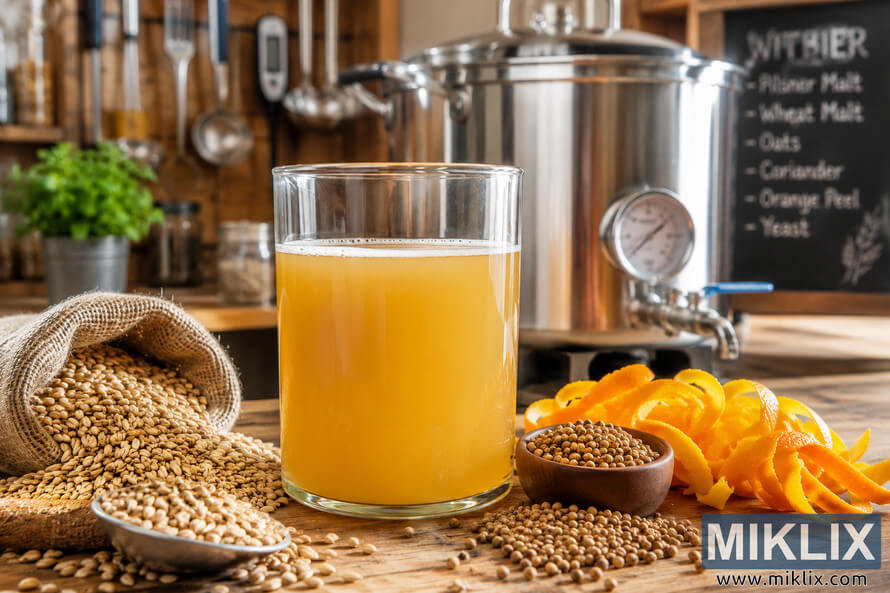
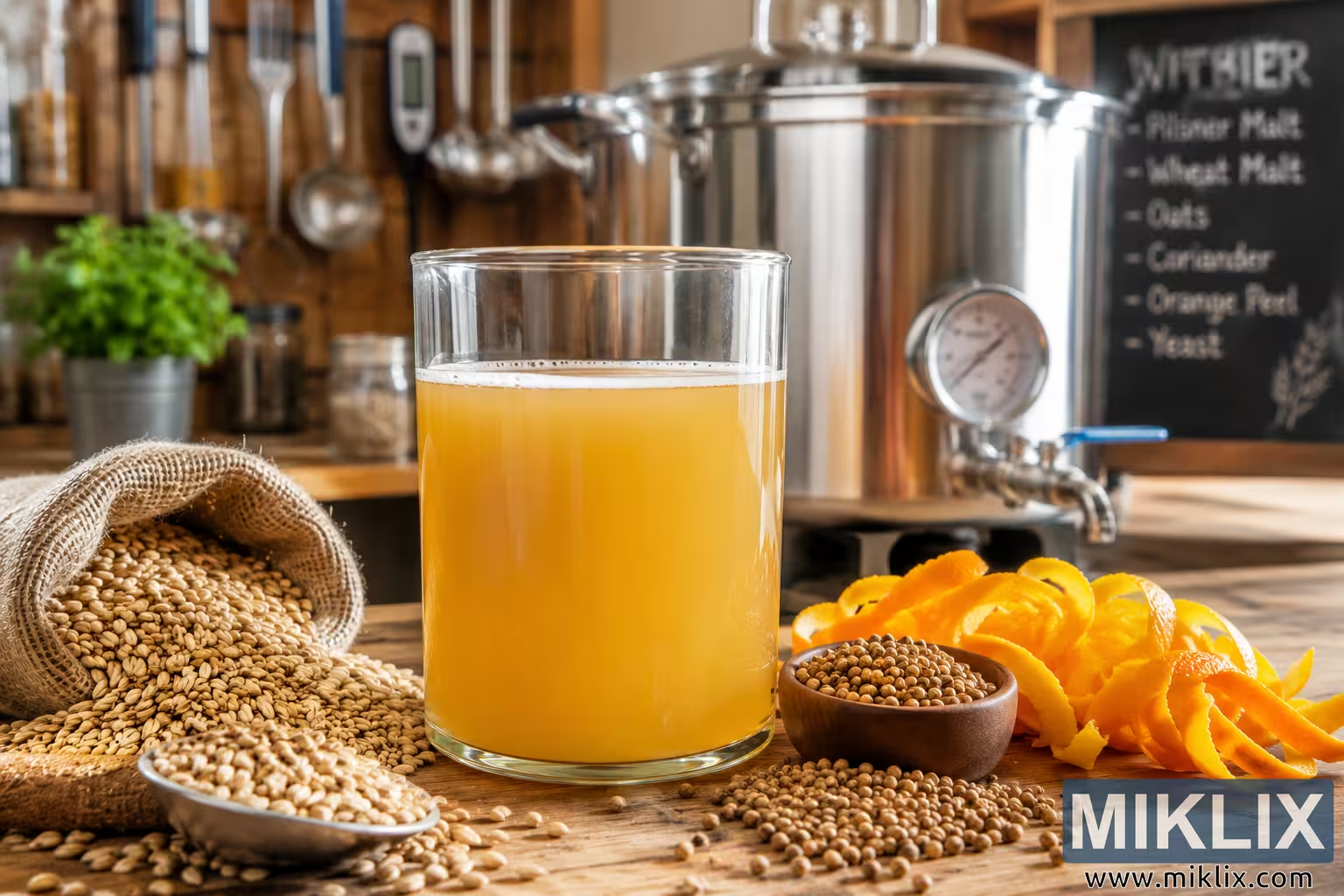
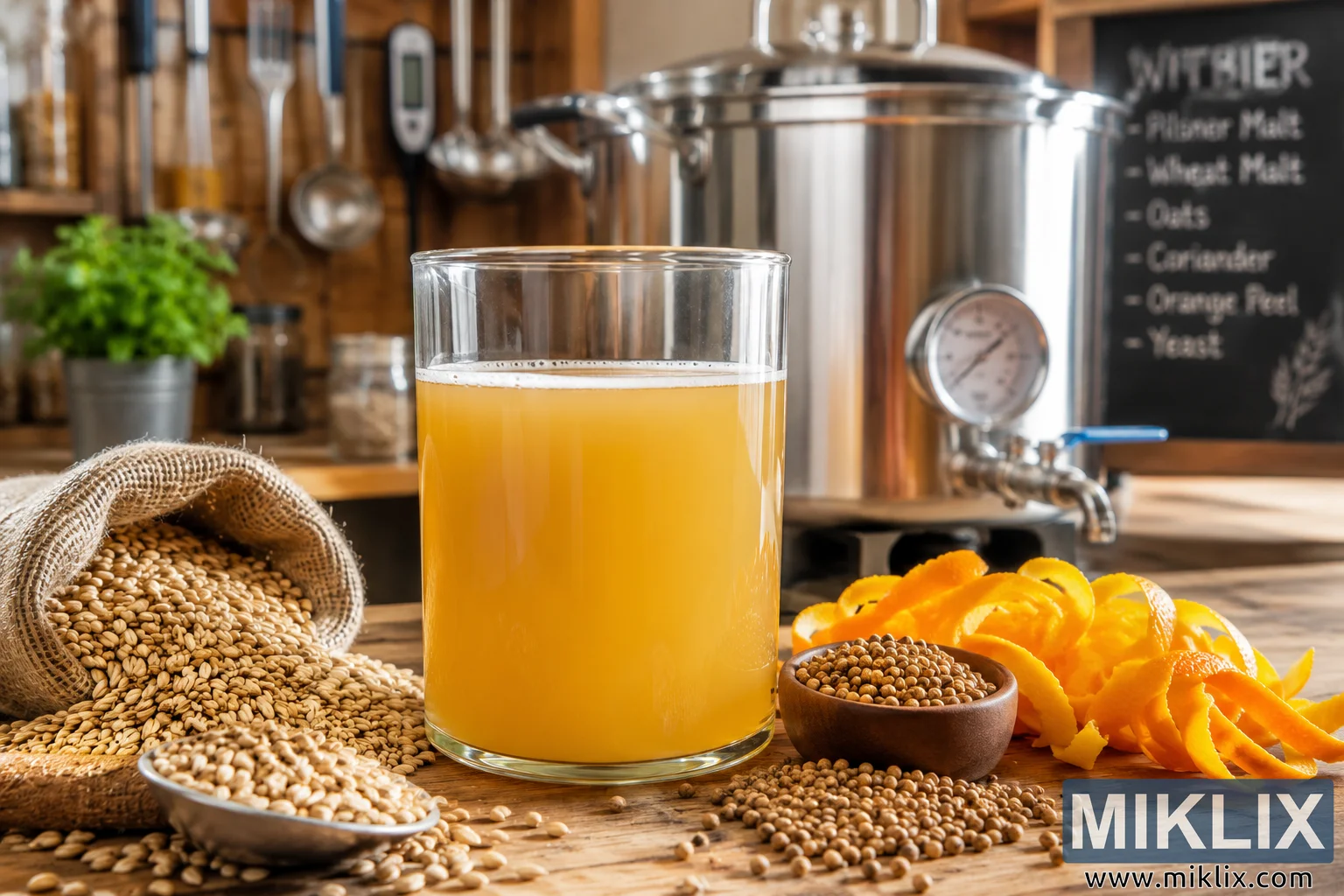
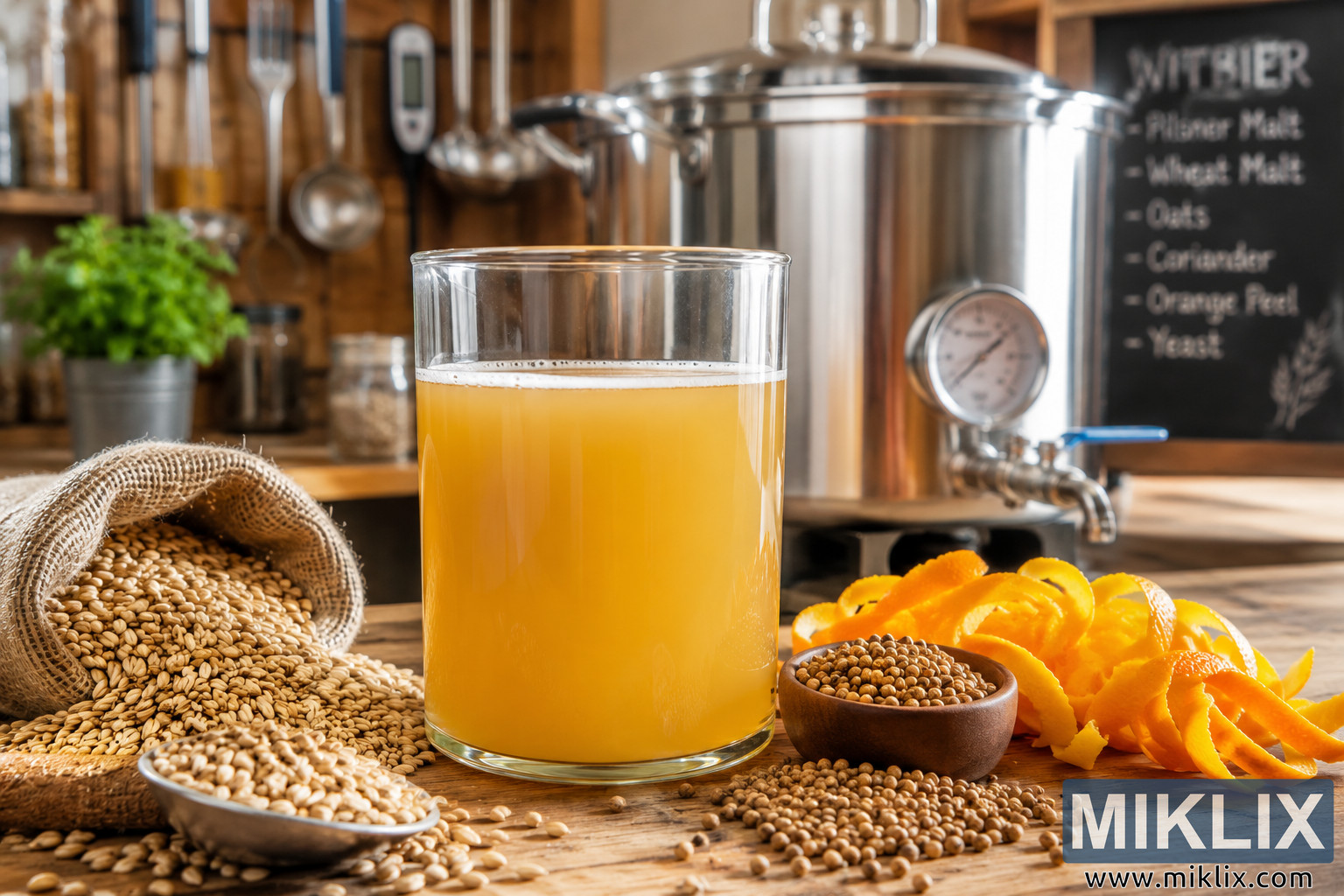
Detailed brewing scene showing witbier wort preparation with malt grains, coriander seeds, orange peel, a glass vessel of hazy golden wort, and a stainless-steel kettle.
Witbier Wort Preparation with Malt, Coriander, and Orange Peel
Mga magagamit na bersyon ng larawang ito
Ang mga larawang maaaring i-download sa ibaba ay hindi gaanong naka-compress at mas mataas ang resolution - at dahil dito, mas mataas ang kalidad - kaysa sa mga larawang naka-embed sa mga artikulo at pahina sa website na ito, na mas na-optimize para sa laki ng file upang mabawasan ang pagkonsumo ng bandwidth.
Regular na laki (1,536 x 1,024)
Malaking sukat (3,072 x 2,048)
Napakalaking sukat (4,608 x 3,072)
Napakalaking sukat (6,144 x 4,096)
Katawa-tawang laki (1,048,576 x 699,051)
- Nag-a-upload pa rin... ;-)
Paglalarawan ng larawan
A richly detailed landscape photograph presents an inviting artisanal brewing workspace centered on the preparation of witbier wort. In the foreground, a clear cylindrical glass vessel stands prominently on a rustic wooden work surface, filled with a light, hazy golden liquid that represents fresh wort. The liquid has a warm amber-yellow glow, with a faint cloudy opacity that suggests suspended proteins, wheat character, and the early stages of Belgian-style witbier brewing. A slim pale foam line rests near the surface, adding realism and giving the impression that the wort has recently been stirred, poured, or transferred. The glass itself is crisp and reflective, catching highlights from bright natural light and subtly magnifying the golden tones inside.
Around the vessel, the key ingredients are carefully arranged to communicate both their visual appeal and their role in the brewing process. To the left, a small burlap sack lies open, spilling malt grains across the wooden counter. The coarse weave of the sack contrasts with the smooth glass and polished metal in the scene, reinforcing a handcrafted, ingredient-focused atmosphere. The grains are abundant and textured, with individual kernels visible in shades of tan, beige, and honey brown. Their placement suggests the base of the brew, grounding the image in the practical preparation of malt for wort production.
Near the front left, a small metal scoop holds additional pale grains, adding another brewing-related detail and strengthening the sense of a working brewhouse. In the foreground and slightly to the right of the glass vessel, coriander seeds are gathered in a wooden bowl and scattered loosely across the counter. Their round shape and earthy brown color make them visually distinct from the malt, while their prominent placement highlights their importance in witbier’s classic spiced profile. The coriander seeds appear fresh, dry, and ready to be measured into the recipe.
On the right side of the composition, bright curls and strips of orange peel form a vivid pile of citrus color. The orange peel introduces a lively contrast against the golden wort and neutral grains, bringing freshness, aroma, and energy into the image. Its curled shapes and glossy texture evoke the zesty character commonly associated with Belgian wit beer. Together, the malt, coriander, and orange peel create a clear visual explanation of how the flavor foundation of witbier is assembled before fermentation.
In the middle background, a stainless-steel brewing kettle glimmers under warm, natural lighting. Its polished surface reflects the surrounding wood tones and bright highlights, giving the brewing environment a clean yet welcoming feel. A round thermometer or gauge is visible near the kettle, along with a small valve and fittings, suggesting practical temperature control and brewing precision. The kettle is softly out of focus compared with the foreground ingredients, but it remains recognizable as the central brewing equipment used to heat, mash, or boil the wort.
The background features wooden shelves and wall-mounted brewing tools, including spoons, measuring implements, jars, and thermometers. These items are softly blurred by the shallow depth of field, creating an attractive bokeh effect while still communicating a functional brewing setting. The warm wooden surfaces, organized tools, and stainless-steel equipment combine to create an atmosphere that feels both educational and craft-oriented. A chalkboard-style board in the background lists witbier-related ingredients, including wheat malt, oats, coriander, orange peel, and yeast, reinforcing the brewing theme without relying on any commercial branding.
The overall mood is bright, energizing, and informative. Natural light emphasizes the clarity of the glass vessel, the rich golden color of the wort, the earthy texture of malt grains, the aromatic quality of coriander, and the vivid freshness of orange peel. The composition is carefully balanced: the wort vessel anchors the center, the burlap sack and grains add weight to the left, the citrus peel adds color and motion to the right, and the kettle provides context in the background. The softly blurred depth of field keeps the viewer’s attention on the ingredients and the brewing process while still allowing the surrounding workspace to feel complete and authentic.
This image captures the essence of preparing a Belgian-style witbier by visually connecting raw ingredients, wort, and brewing equipment in a single cohesive scene. It conveys the transformation from grain and spice to aromatic golden wort, presenting brewing as a hands-on, sensory craft. The scene would be suitable for educational brewing content, homebrewing guides, recipe introductions, ingredient explainers, or editorial material about Belgian wheat beer production.
Ang larawan ay nauugnay sa: Fermenting Beer with White Labs WLP410 Belgian Wit II Ale Yeast