
Larawan: Corn Earworm Damage on Corn Cob in Field
Nai-publish:
Huling na-update: Marso 13, 2026 nang 8:39:18 PM UTC
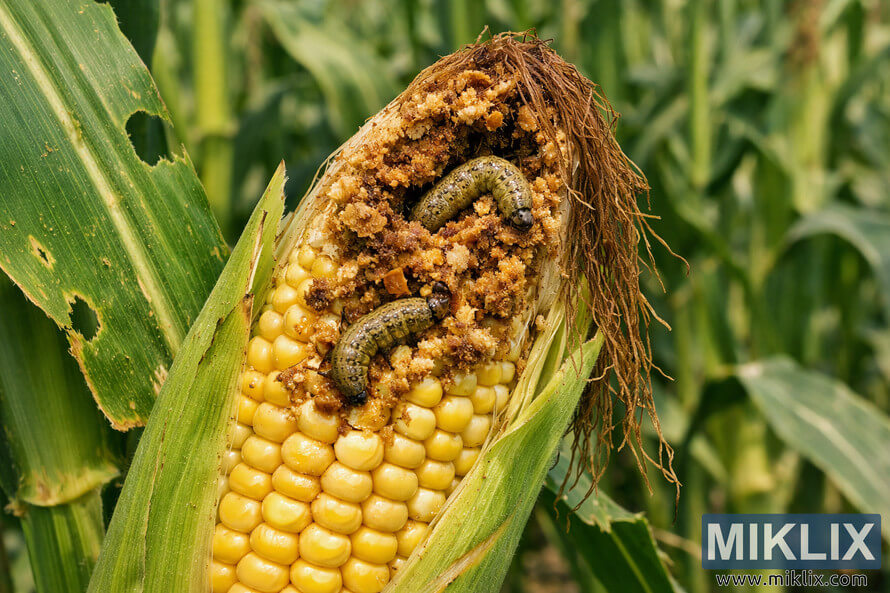
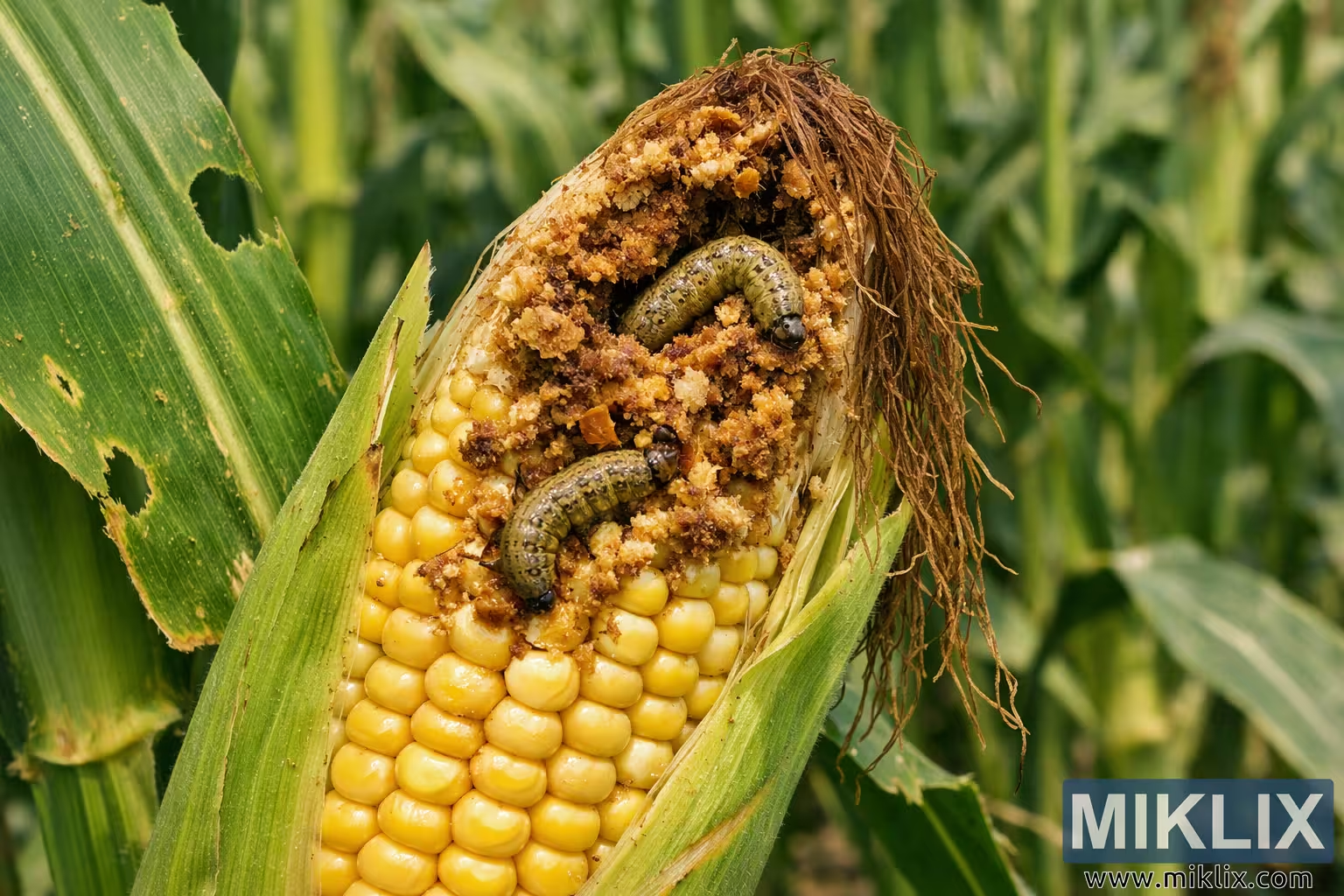
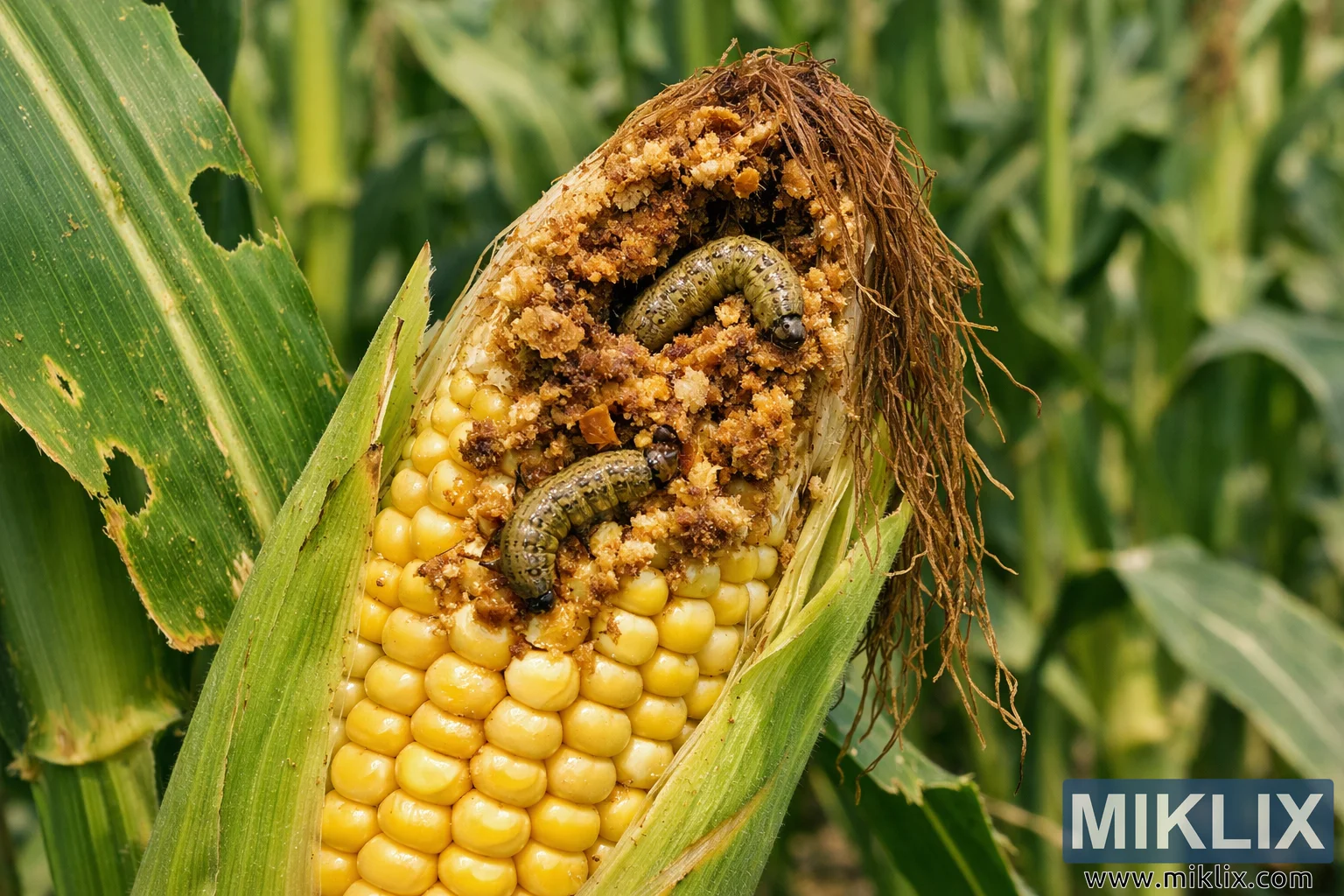
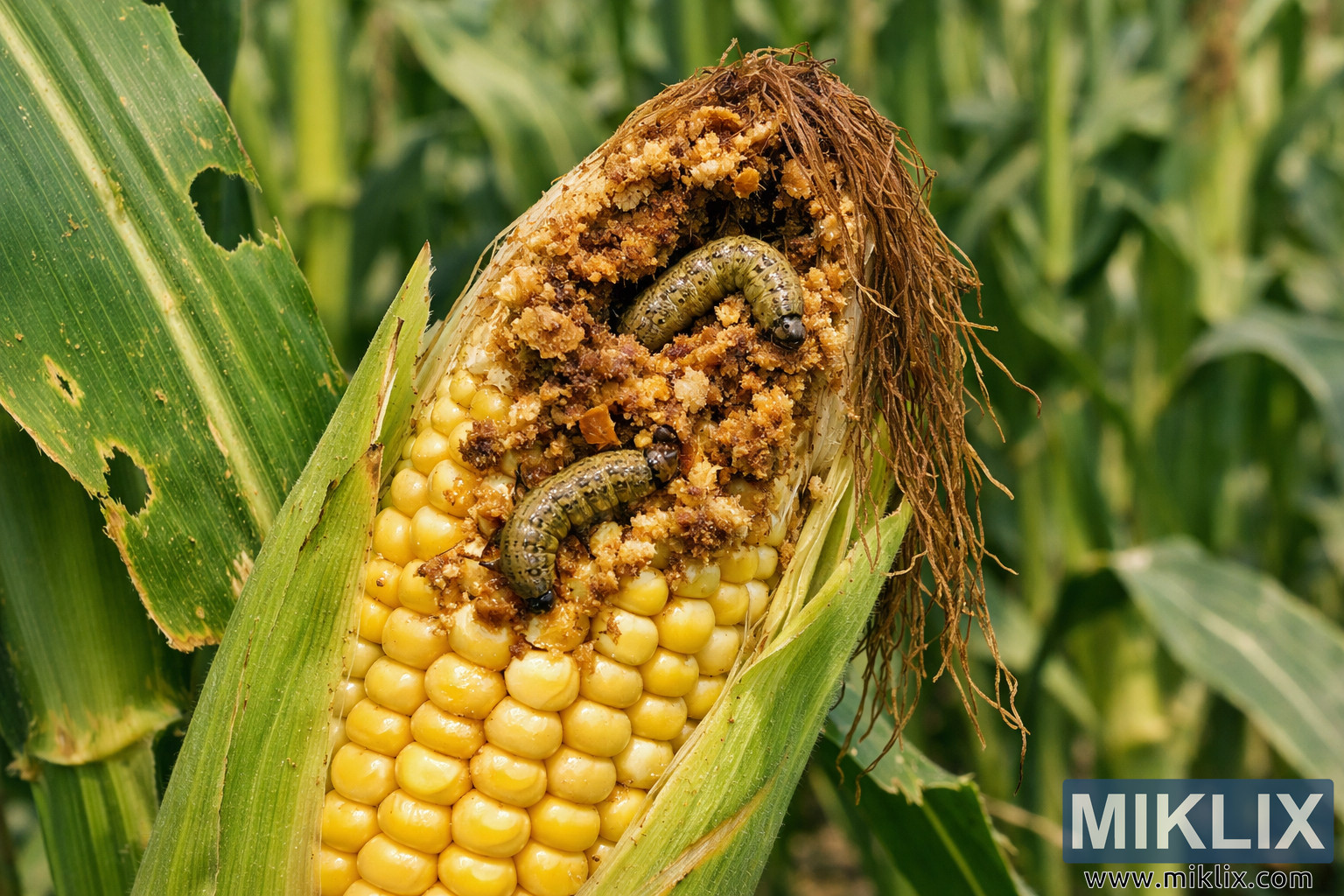
Detailed close-up image of corn earworm caterpillars damaging the tip of a corn ear, showing chewed kernels, frass, and feeding injury in a cornfield.
Corn Earworm Damage on Corn Cob in Field
Mga magagamit na bersyon ng larawang ito
Ang mga larawang maaaring i-download sa ibaba ay hindi gaanong naka-compress at mas mataas ang resolution - at dahil dito, mas mataas ang kalidad - kaysa sa mga larawang naka-embed sa mga artikulo at pahina sa website na ito, na mas na-optimize para sa laki ng file upang mabawasan ang pagkonsumo ng bandwidth.
Regular na laki (1,536 x 1,024)
Malaking sukat (3,072 x 2,048)
Napakalaking sukat (4,608 x 3,072)
Napakalaking sukat (6,144 x 4,096)
Katawa-tawang laki (1,048,576 x 699,051)
- Nag-a-upload pa rin... ;-)
Paglalarawan ng larawan
This high-resolution landscape photograph shows a close-up view of a developing ear of corn in a cultivated cornfield, clearly illustrating damage caused by corn earworm caterpillars. The ear is partially exposed with its green husk peeled back, revealing bright yellow kernels beneath. At the top of the ear, the kernels are heavily damaged and irregular, forming a rough, hollowed cavity where the pests have been feeding. The damaged section contrasts strongly with the intact rows of plump, glossy kernels lower on the cob.
Two corn earworm larvae are visible within the feeding area near the tip of the ear. Their bodies are thick and segmented, colored in mottled shades of greenish-brown with subtle striping and small dark spots along their sides. One caterpillar rests partially curled among the chewed kernels near the center of the cavity, while the other lies slightly above it closer to the dried corn silk. Both larvae appear actively feeding on the soft kernels.
Surrounding the larvae is a mixture of partially eaten kernel fragments and granular debris known as frass, which accumulates as the insects consume the corn. The frass forms a coarse, crumbly layer covering much of the damaged tip, giving the area a rough texture compared with the smooth and orderly appearance of the healthy kernels below.
The corn silk at the top of the ear is dry and tangled, draping over the damaged area and emphasizing the entry point where the larvae likely entered the ear. The green husk leaves frame the cob on both sides, with one leaf showing irregular holes and ragged edges that suggest additional insect feeding. These leaves create a natural border around the central subject.
In the softly blurred background, rows of tall green corn plants stretch across the field, providing agricultural context while keeping attention focused on the damaged ear in the foreground. The shallow depth of field isolates the cob and larvae sharply against the background, highlighting the pest damage in clear detail.
Overall, the image visually documents the typical symptoms of corn earworm infestation: feeding at the tip of the ear, chewed kernels, accumulation of frass, and the presence of caterpillars within the ear. The photograph provides a clear and instructive example of pest damage in corn production systems.
Ang larawan ay nauugnay sa: Growing Corn: Your Complete Guide to Sweet Success in the Garden