
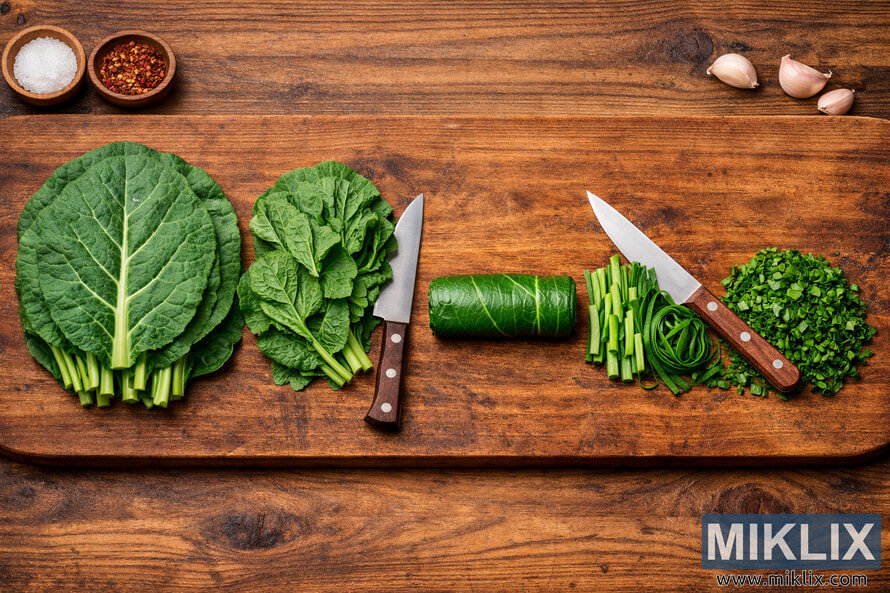
Larawan: Step-by-Step Collard Greens Preparation on Cutting Board
Nai-publish:
Huling na-update: Hulyo 21, 2026 nang 8:41:20 PM UTC
A detailed visual guide showing the step-by-step preparation of collard greens on a rustic wooden cutting board, from fresh leaves to finely chopped greens, highlighting traditional cooking techniques and natural textures.
Step-by-Step Collard Greens Preparation on Cutting Board
Mga magagamit na bersyon ng larawang ito
Ang mga larawang maaaring i-download sa ibaba ay hindi gaanong naka-compress at mas mataas ang resolution - at dahil dito, mas mataas ang kalidad - kaysa sa mga larawang naka-embed sa mga artikulo at pahina sa website na ito, na mas na-optimize para sa laki ng file upang mabawasan ang pagkonsumo ng bandwidth.
Regular na laki (1,536 x 1,024)
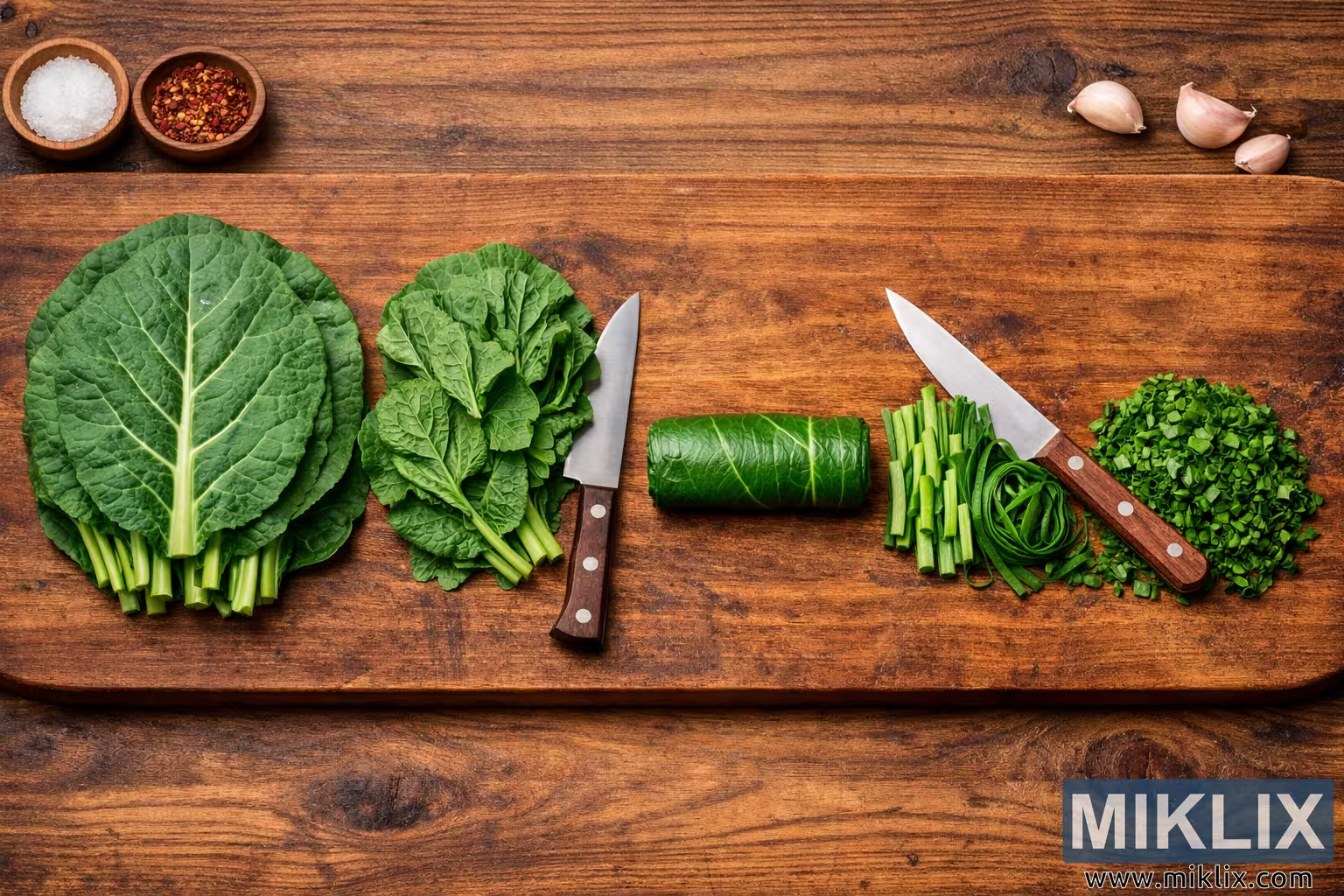
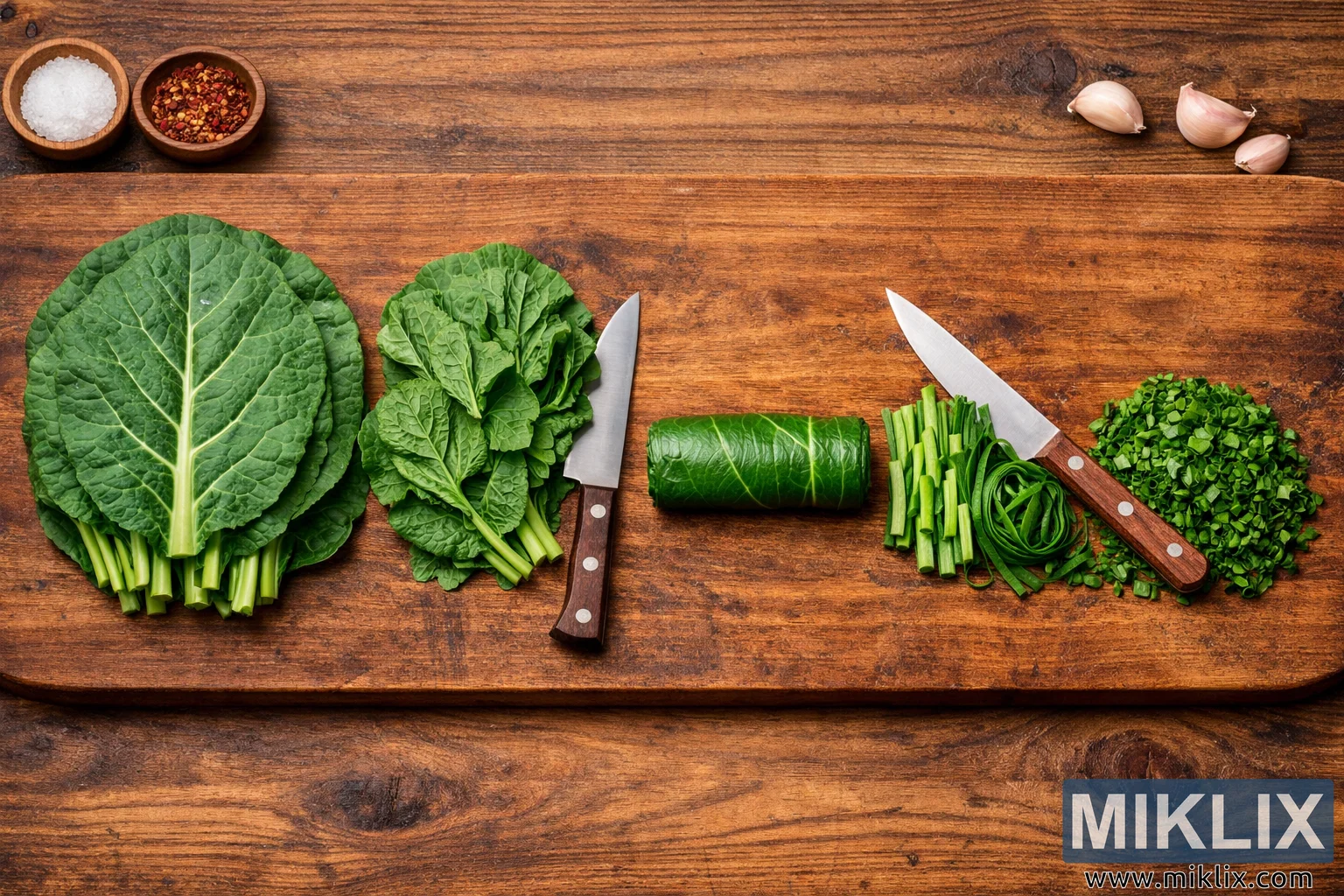
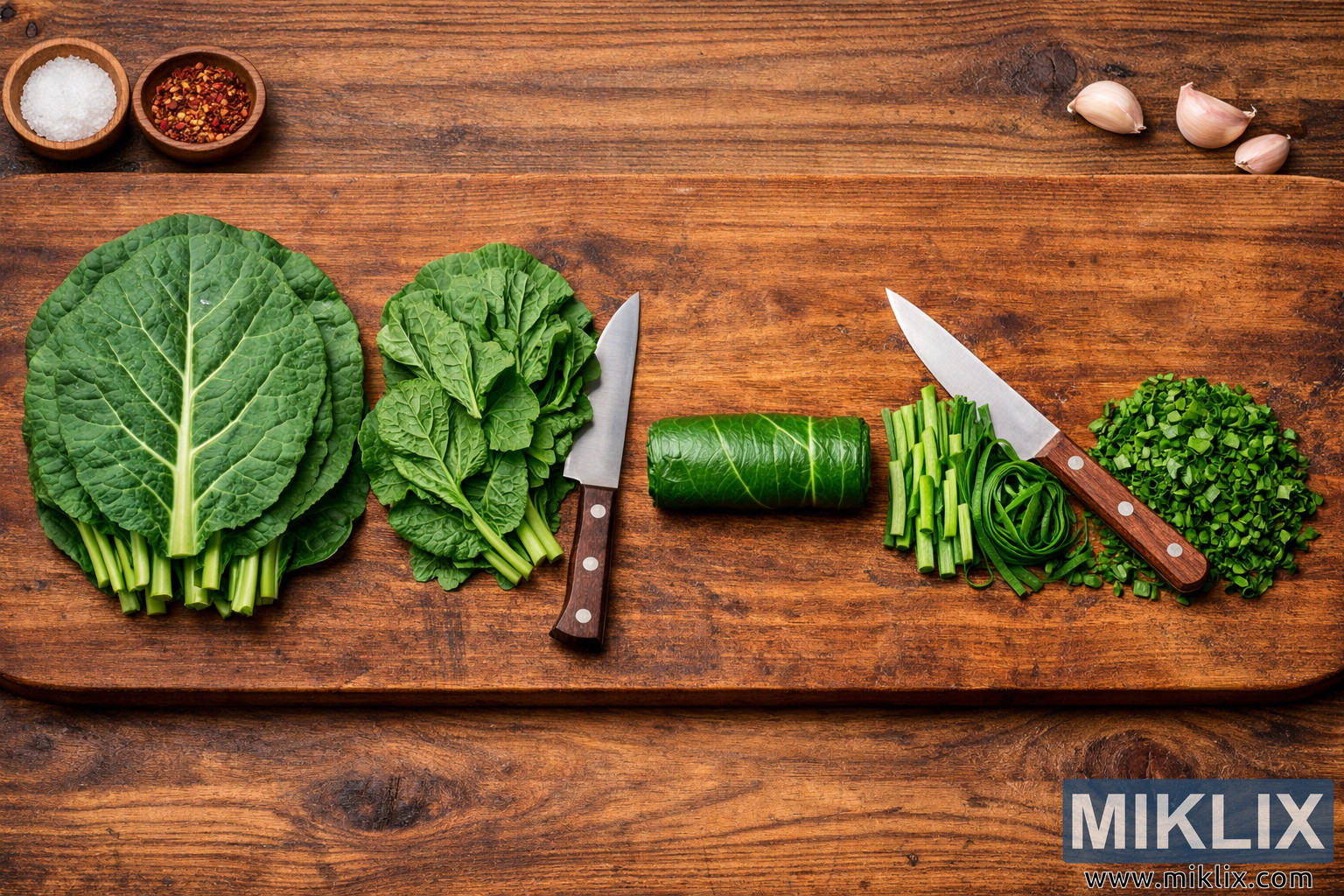
Malaking sukat (3,072 x 2,048)
Napakalaking sukat (4,608 x 3,072)
Napakalaking sukat (6,144 x 4,096)
Katawa-tawang laki (1,048,576 x 699,051)
- Nag-a-upload pa rin... ;-)
Paglalarawan ng larawan
This high-resolution landscape photograph captures the entire process of preparing collard greens, presented in five distinct stages across a rustic wooden cutting board. The composition is carefully arranged from left to right, guiding the viewer through each step of transformation—from whole leaves to finely chopped greens—while maintaining a natural, earthy aesthetic that evokes the warmth of home cooking.
On the far left, the first stage features a fresh bunch of collard greens with large, dark green leaves stacked neatly. The leaves are broad and slightly glossy, their thick stems gathered at the bottom of the bunch. The texture of the leaves is crisp and veined, suggesting freshness and vitality. The lighting highlights the deep green hues, contrasting beautifully with the warm brown tones of the cutting board beneath. Small bowls of coarse salt and red pepper flakes rest in the upper left corner, adding a touch of culinary context and visual balance. A bottle of olive oil is partially visible, its golden color complementing the greens and wood tones.
Moving to the second stage, the collard leaves have been separated from their stems. On the left side of this section lies a pile of de-stemmed leaves, while on the right, the trimmed stems are stacked in neat, pale green bundles. Between them rests a chef’s knife with a wooden handle and stainless steel blade, symbolizing the act of preparation. The knife’s placement is deliberate, bridging the transition between raw and processed ingredients. The lighting here emphasizes the contrast between the dark leafy greens and the lighter stems, showcasing the precision of the cut.
At the center of the cutting board, the third stage displays the collard greens rolled into a tight cylinder. The roll is smooth and compact, its deep green color intensified by the surrounding warm tones of the wood. This step represents the moment before slicing—a technique often used to create uniform ribbons. The roll’s texture is highlighted by subtle shadows, giving it a three-dimensional presence that draws the eye naturally toward the next stage.
In the fourth stage, the rolled collard greens are being sliced into thin, even strips. The knife is positioned mid-cut, its blade glinting under the light. The freshly cut ribbons spill gently to the right, forming a small pile of delicate green strands. This section captures motion and craftsmanship, illustrating the precision required to achieve consistent slices. The arrangement of the knife and greens conveys a sense of rhythm and flow, as if the preparation is unfolding in real time.
Finally, on the far right, the fifth stage presents a mound of finely chopped collard greens. The pieces are small and uniform, their vibrant color intensified by the surrounding wood grain. Garlic cloves rest in the upper right corner, hinting at the next phase of cooking—sautéing or simmering. The overall composition culminates here, showing the transformation from whole leaves to ready-to-cook greens.
The cutting board itself is a key visual element, with its aged, textured surface bearing subtle knife marks that tell a story of repeated use. Its warm brown hue provides a natural backdrop that enhances the greens’ vibrancy. The lighting throughout the image is soft yet directional, emphasizing texture and color without harsh shadows. The arrangement of ingredients and tools is symmetrical yet organic, creating a sense of harmony and balance.
Every detail—from the placement of the bowls and knives to the progression of the greens—contributes to a narrative of culinary craftsmanship. The image evokes the tactile experience of cooking: the sound of chopping, the scent of fresh greens, and the anticipation of a hearty meal. It celebrates the beauty of simple ingredients and traditional preparation methods, reminding viewers that cooking is both an art and a ritual.
Overall, this photograph serves as a visual guide and artistic representation of collard greens preparation. It combines technical precision with aesthetic warmth, making it both instructional and evocative. The sequence of steps—whole leaves, de-stemmed leaves, rolled greens, sliced ribbons, and chopped pieces—illustrates the transformation of a humble vegetable into a versatile ingredient ready for cooking. The image’s composition, lighting, and textures work together to create a timeless portrayal of kitchen artistry, inviting viewers to appreciate the process as much as the result.
Ang larawan ay nauugnay sa: Collard Greens: The Leafy Green Your Diet Is Missing