
Larawan: Side-by-Side Comparison of Swiss Chard and Kale Leaves
Nai-publish:
Huling na-update: Setyembre 12, 2026 nang 2:52:36 PM UTC
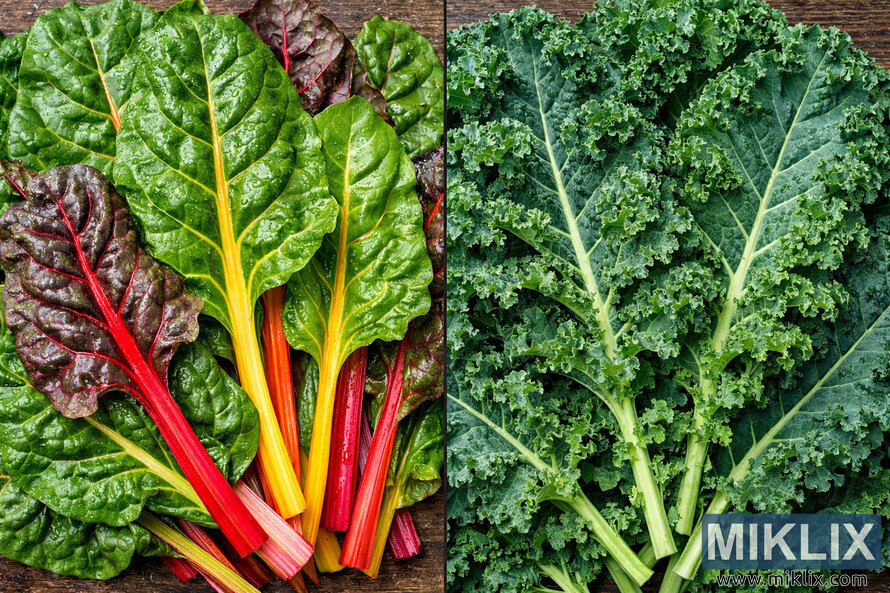
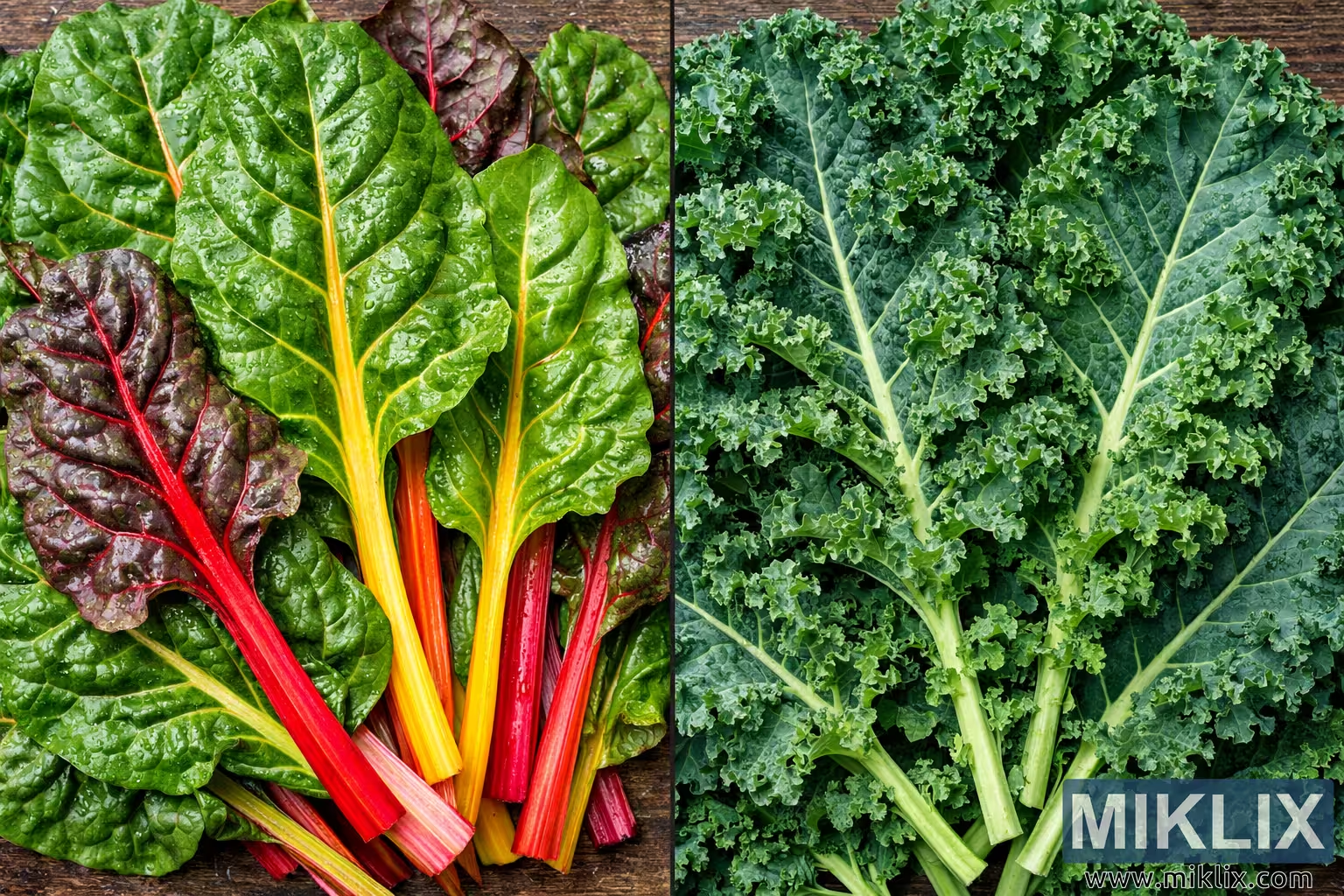
Explore a detailed visual comparison between Swiss chard and kale leaves, highlighting their distinct textures, colors, and structures in a high-resolution landscape photograph.
Side-by-Side Comparison of Swiss Chard and Kale Leaves
Mga magagamit na bersyon ng larawang ito
Ang mga larawang maaaring i-download sa ibaba ay hindi gaanong naka-compress at mas mataas ang resolution - at dahil dito, mas mataas ang kalidad - kaysa sa mga larawang naka-embed sa mga artikulo at pahina sa website na ito, na mas na-optimize para sa laki ng file upang mabawasan ang pagkonsumo ng bandwidth.
Regular na laki (1,536 x 1,024)
Malaking sukat (3,072 x 2,048)
Napakalaking sukat (4,608 x 3,072)
Napakalaking sukat (6,144 x 4,096)
Katawa-tawang laki (1,048,576 x 699,051)
- Nag-a-upload pa rin... ;-)
Paglalarawan ng larawan
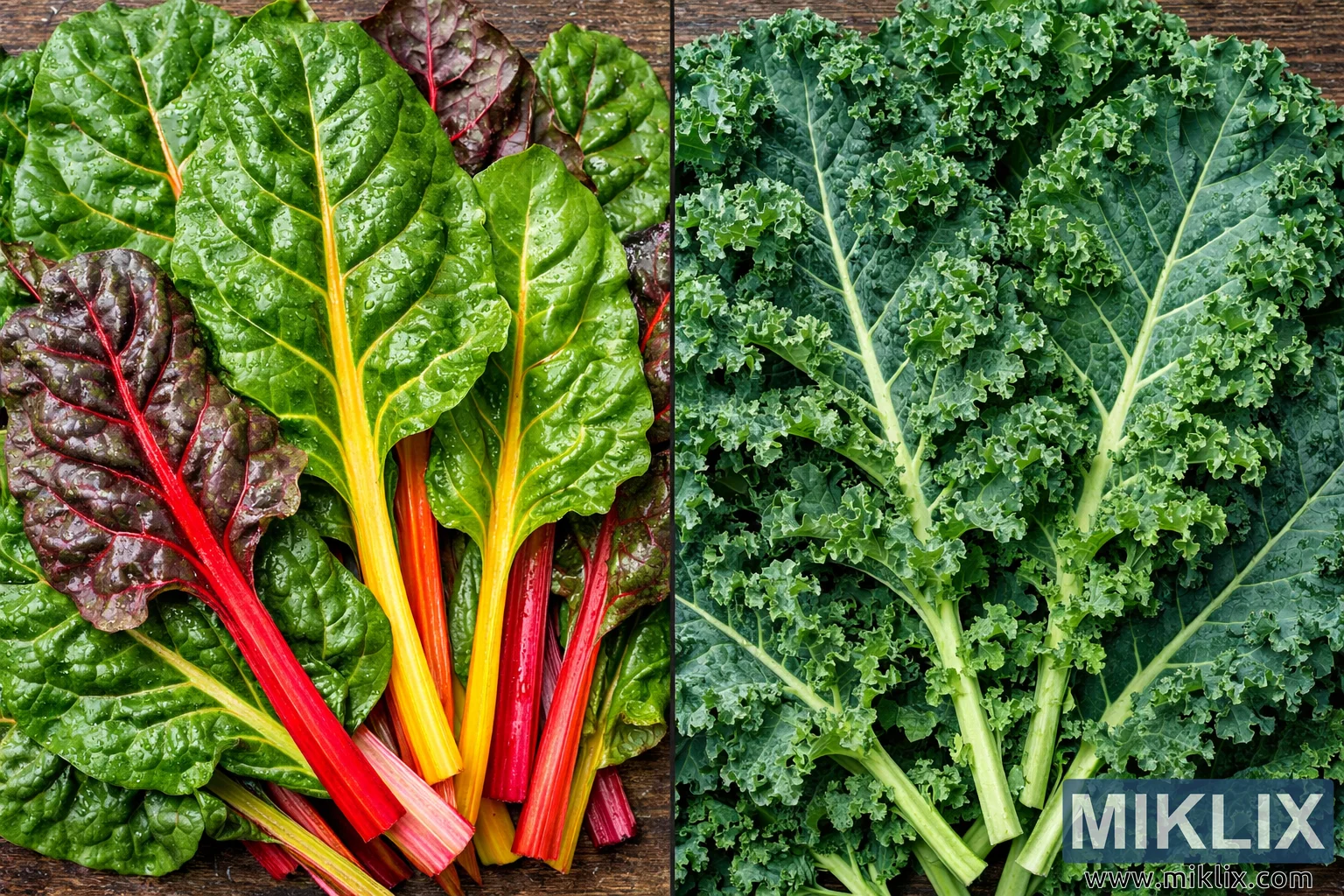
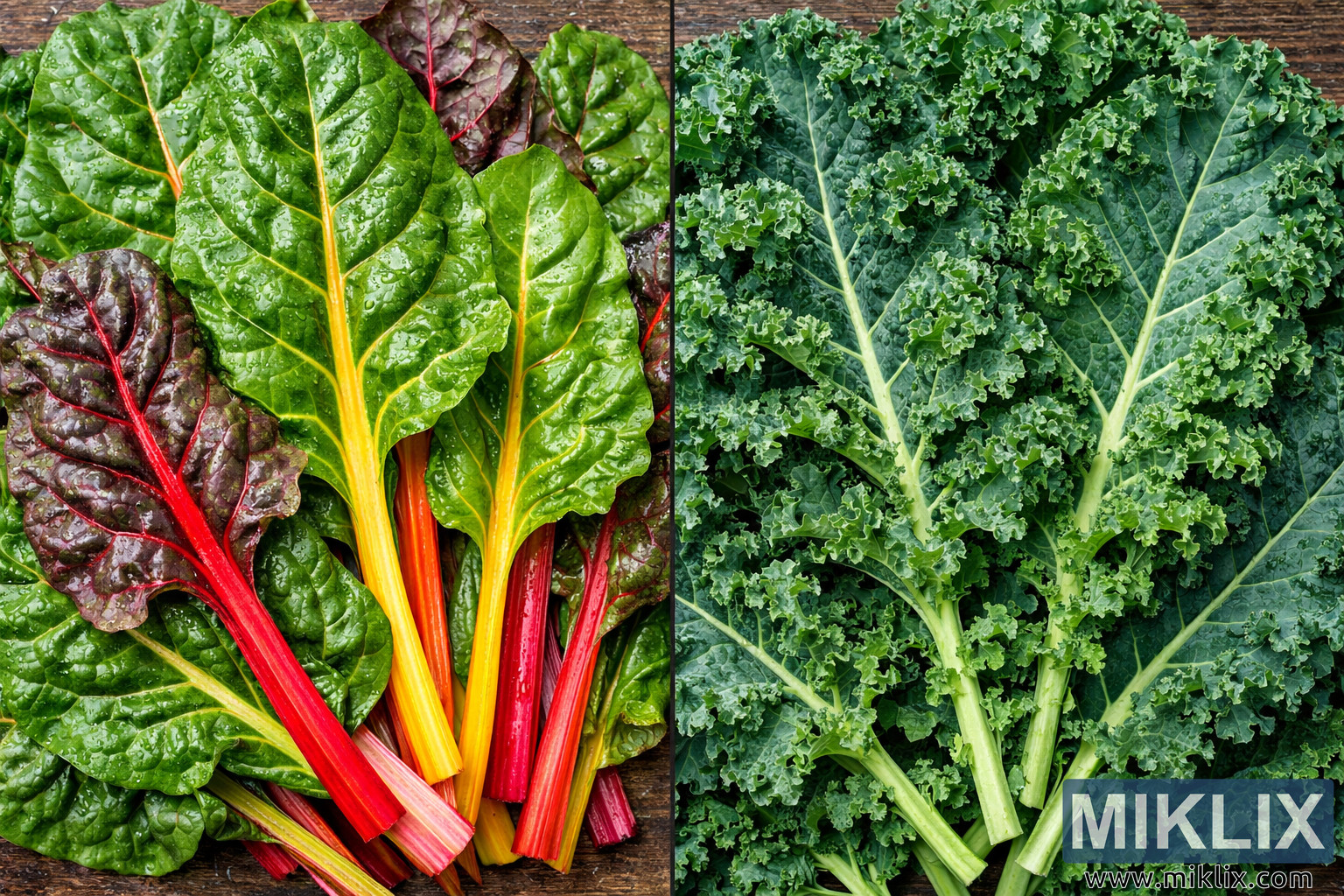
This high-resolution landscape photograph presents a meticulous side-by-side comparison of Swiss chard and kale leaves, arranged on a rustic wooden surface that serves as a natural divider between the two types of leafy greens. On the left side of the composition, the Swiss chard leaves display a striking array of colors and textures. Their broad, glossy surfaces catch the light, revealing deep green hues interlaced with vibrant veins that trace the contours of each leaf. The stems of the Swiss chard are particularly eye-catching, exhibiting a spectrum of colors ranging from crimson red to golden yellow and bright orange. These stems rise from the base of the leaves, their vivid tones contrasting beautifully against the rich green foliage. The leaves themselves are slightly crinkled, with gentle undulations that create a sense of movement and depth. Tiny droplets of water cling to the surface, adding a fresh, dewy appearance that enhances the natural vitality of the vegetable.
On the right side of the image, the kale leaves form a dense, textured cluster characterized by their distinctive curly edges and matte finish. The kale’s deep green coloration is uniform and rich, evoking a sense of robustness and earthiness. Each leaf is heavily ruffled, with intricate folds and creases that catch subtle shadows, emphasizing the complexity of its surface. The central stems of the kale are pale green and sturdy, branching out into a network of smaller veins that support the leaf’s structure. The kale leaves overlap one another, creating a layered effect that contrasts sharply with the smoother, more open arrangement of the Swiss chard. Like the chard, the kale leaves also bear small droplets of moisture, which glisten faintly under the light, suggesting freshness and recently harvested quality.
The wooden surface beneath the leaves provides a warm, organic backdrop that enhances the visual contrast between the two greens. Its natural grain and texture complement the earthy tones of the vegetables, grounding the composition in a rustic, farm-to-table aesthetic. The division between the Swiss chard and kale is clear yet harmonious, inviting viewers to appreciate the unique beauty of each plant while recognizing their shared identity as nutrient-rich leafy greens. The lighting is soft and even, illuminating both sides equally and ensuring that every vein, fold, and droplet is rendered in crisp detail. The photograph’s landscape orientation allows for a balanced presentation, giving each vegetable ample space to display its defining characteristics.
Beyond its visual appeal, the image serves as an educational comparison of two popular greens often used in healthy cooking. Swiss chard, known for its colorful stems and mild flavor, contrasts with kale’s darker, more fibrous texture and slightly bitter taste. The juxtaposition highlights not only their aesthetic differences but also their complementary roles in culinary and nutritional contexts. The Swiss chard’s vibrant palette symbolizes variety and vitality, while the kale’s deep green tones evoke strength and resilience. Together, they form a visual dialogue between color and texture, smoothness and curl, gloss and matte. The photograph captures this interplay with precision and artistry, making it both a feast for the eyes and a celebration of natural diversity.
Every detail—from the sheen of the Swiss chard to the intricate curls of the kale—has been rendered with exceptional clarity, emphasizing the organic beauty of these vegetables. The composition invites viewers to linger, to trace the veins, to notice the subtle variations in hue and form. It is a portrait of nature’s craftsmanship, a testament to the elegance found in everyday produce. The image’s high resolution ensures that even the smallest details—the fine serrations along the kale’s edges, the delicate transitions of color in the chard stems—are visible and distinct. This attention to detail transforms a simple comparison into a study of botanical artistry, where texture, color, and structure converge in perfect harmony.
In essence, this photograph is more than a visual comparison; it is an homage to the beauty of edible plants. It captures the essence of freshness, the allure of natural color, and the quiet sophistication of leafy greens. The Swiss chard and kale stand side by side, not in competition but in complement, each revealing its own story through form and hue. The result is a composition that celebrates both diversity and unity in nature’s design, rendered with clarity, balance, and an unmistakable sense of life.
Ang larawan ay nauugnay sa: Swiss Chard: Why It Is One of the Healthiest Leafy Greens