
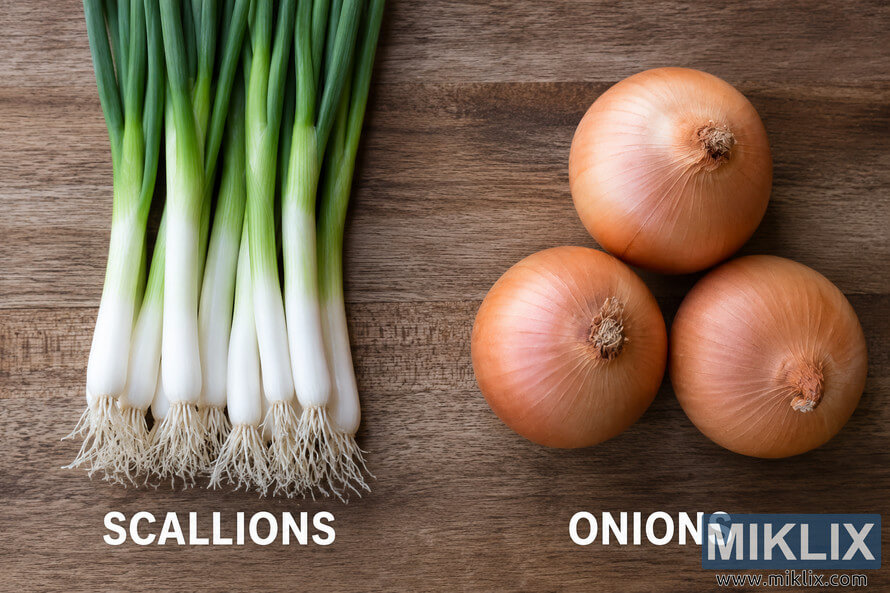
Larawan: Side-by-Side Comparison of Scallions and Regular Onions on a Wooden Surface
Nai-publish:
Huling na-update: Hunyo 12, 2026 nang 8:59:20 PM UTC
Explore a detailed side-by-side comparison of scallions and regular onions in this high-resolution landscape image. The photo highlights the visual differences between fresh green scallions and round golden onions on a rustic wooden background, making it ideal for culinary guides, educational content, food blogs, and ingredient identification resources.
Side-by-Side Comparison of Scallions and Regular Onions on a Wooden Surface
Mga magagamit na bersyon ng larawang ito
Ang mga larawang maaaring i-download sa ibaba ay hindi gaanong naka-compress at mas mataas ang resolution - at dahil dito, mas mataas ang kalidad - kaysa sa mga larawang naka-embed sa mga artikulo at pahina sa website na ito, na mas na-optimize para sa laki ng file upang mabawasan ang pagkonsumo ng bandwidth.
Regular na laki (1,536 x 1,024)
Malaking sukat (3,072 x 2,048)
Napakalaking sukat (4,608 x 3,072)
Napakalaking sukat (6,144 x 4,096)
Katawa-tawang laki (1,048,576 x 699,051)
- Nag-a-upload pa rin... ;-)
Paglalarawan ng larawan
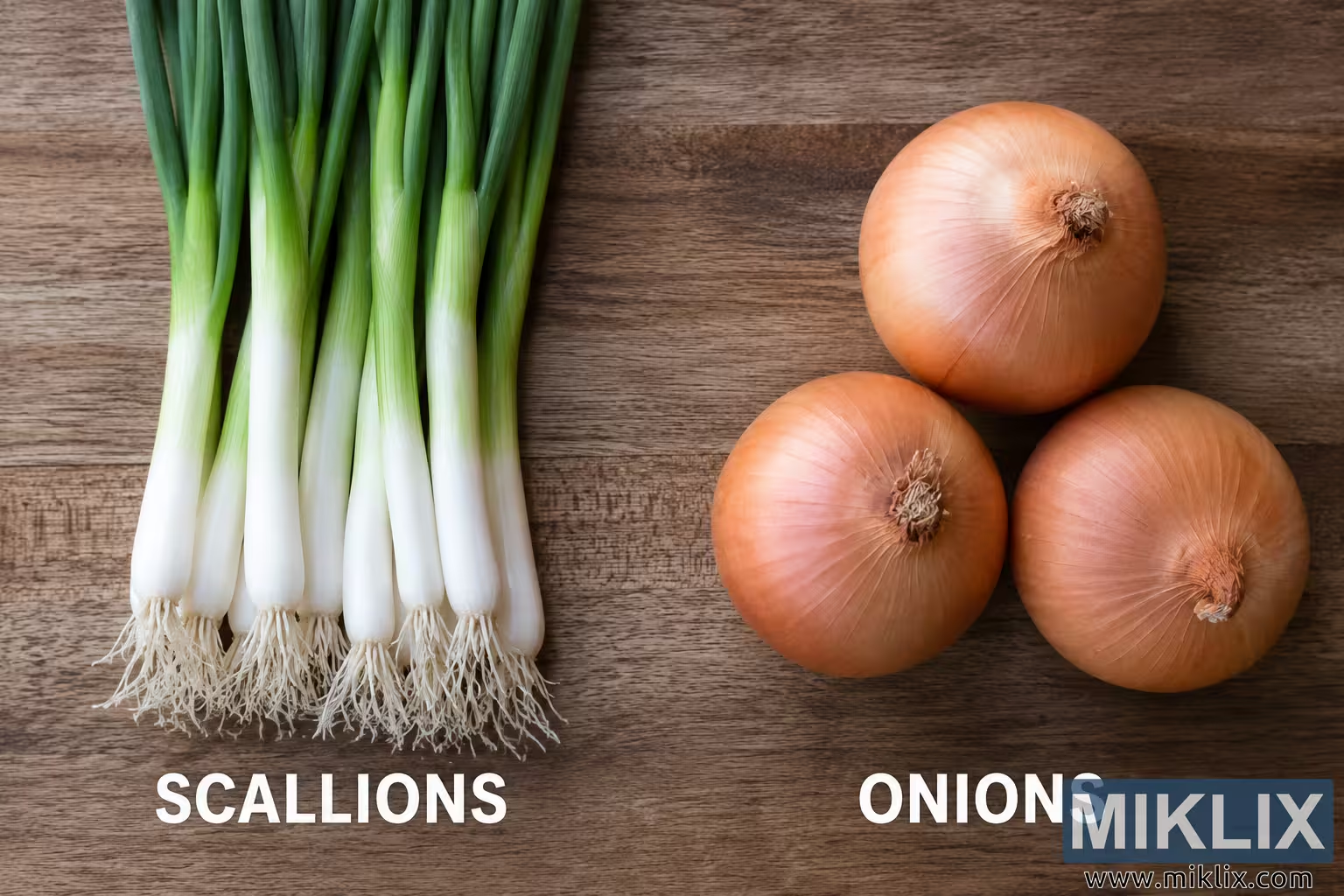
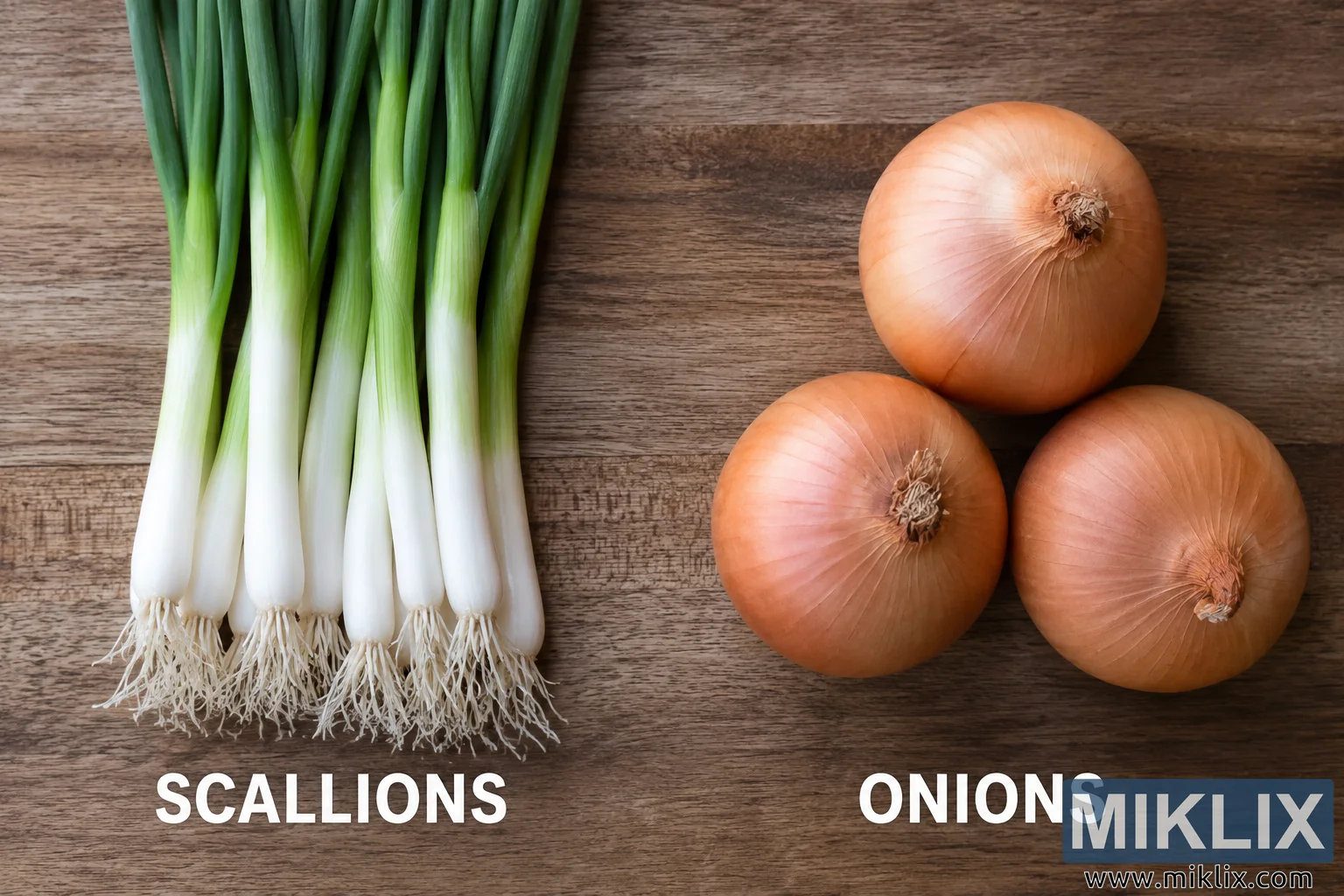
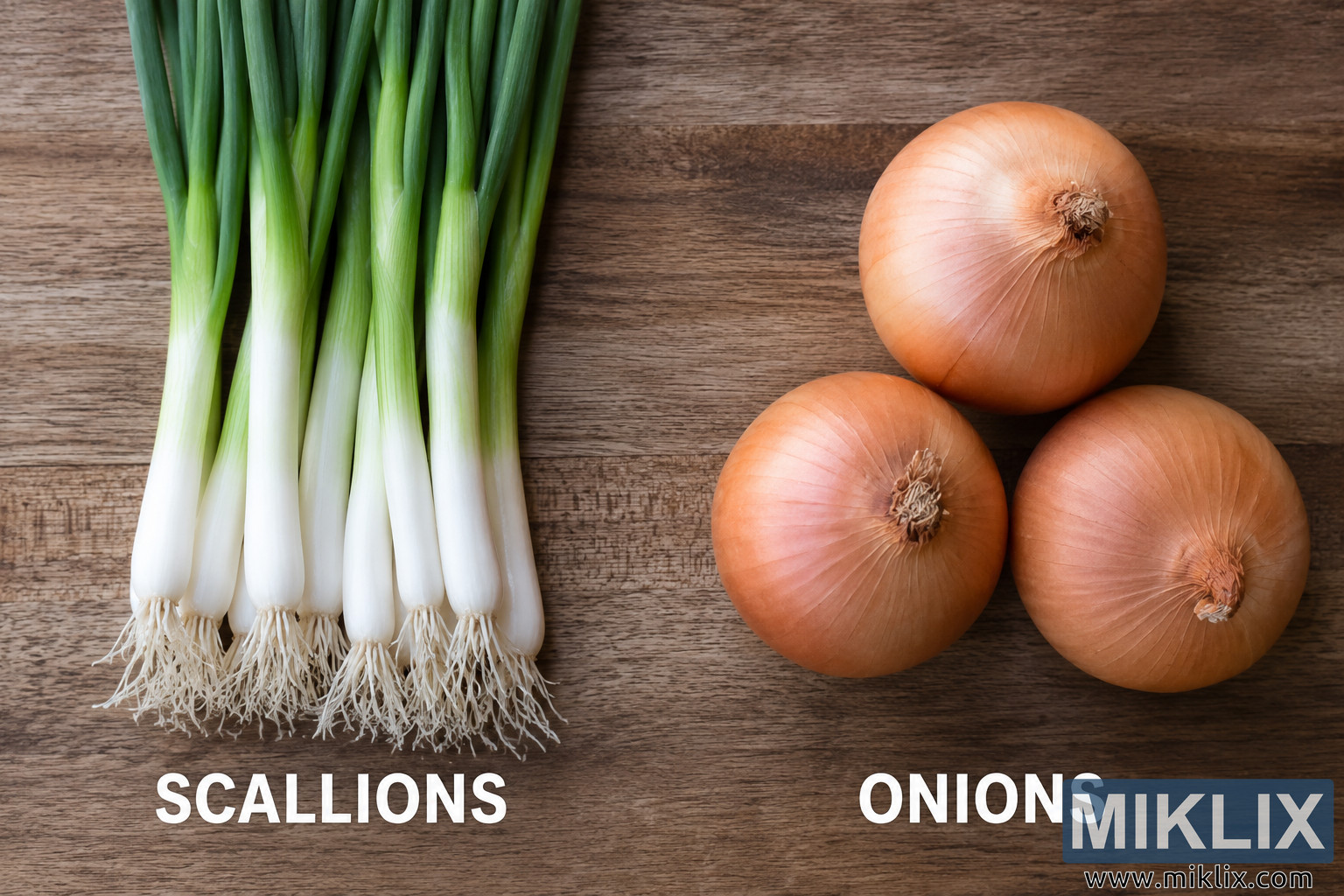
This high-resolution landscape-oriented image presents a clean and visually balanced side-by-side comparison of scallions and regular onions arranged on a rustic wooden tabletop background. The composition is divided into two clearly defined sections, allowing viewers to instantly recognize the differences between the two vegetables in terms of shape, color, texture, and structure. The lighting is soft, even, and natural, emphasizing freshness and detail without creating harsh shadows or distracting reflections. The overall aesthetic is minimalistic, educational, and highly polished, making the image suitable for cooking articles, food education materials, grocery identification guides, recipe websites, or culinary presentations.
On the left side of the image, a tightly grouped bundle of fresh scallions is displayed vertically with the green tops extending upward and the white bulb ends and roots pointing downward. The scallions appear vibrant and crisp, with deep green leaves gradually fading into pale green and bright white near the base. Fine root strands are clearly visible at the bottom, adding realism and emphasizing freshness. The stalks are smooth and tubular with slight natural curvature, and subtle color variations can be seen across the stems. The scallions occupy most of the left half of the frame, creating a strong vertical visual rhythm. Beneath the scallions, bold white text reads “SCALLIONS,” helping viewers identify the ingredient instantly. The typography is large, modern, and easy to read, contrasting strongly against the darker wooden background.
On the right side of the image, three regular onions are arranged in a triangular cluster. Each onion has a rounded shape and smooth papery outer skin in warm golden-brown and light amber tones. The onions feature visible root ends and subtle natural striping along the outer layers, showcasing realistic texture and detail. Soft highlights from the lighting accentuate the curvature of the onions and reveal delicate variations in the dry outer skin. The onions are spaced evenly to create visual balance while still appearing naturally grouped together. Their earthy tones contrast strongly with the vivid greens of the scallions on the opposite side, reinforcing the comparison between the two vegetables. Beneath the onions, large white lettering reads “ONIONS,” matching the font style and size used on the left side for consistency and symmetry.
The background consists of a medium-to-dark brown wooden tabletop with visible grain patterns and organic texture running horizontally across the image. The wood surface provides warmth and rustic character without distracting from the vegetables themselves. The neutral background tones help both the green scallions and golden onions stand out prominently. The composition is centered and symmetrical, with a noticeable empty gap between the two ingredient groups that visually separates them and reinforces the educational comparison format.
The image communicates a clear visual distinction between scallions and regular onions. The scallions appear elongated, leafy, fresh, and green, while the onions appear round, layered, dense, and earthy in color. This contrast makes the image useful for educational purposes such as explaining ingredient substitutions, identifying vegetables in recipes, or teaching culinary basics. The clean layout and high clarity also make the image suitable for web design, article headers, infographics, social media graphics, online grocery references, classroom materials, and recipe tutorials.
Overall, the image combines food photography realism with an organized comparison layout. The vegetables are photographed with exceptional sharpness and detail, highlighting texture, color transitions, and freshness. The balanced composition, readable labels, rustic wooden backdrop, and natural lighting create a visually appealing and highly informative food comparison image focused specifically on scallions and regular onions.
Ang larawan ay nauugnay sa: The Ultimate Guide to the Health Benefits of Scallions