
Image: Pride of Madeira in a Large Ceramic Container
Published: November 2, 2026 at 5:51:14 PM UTC
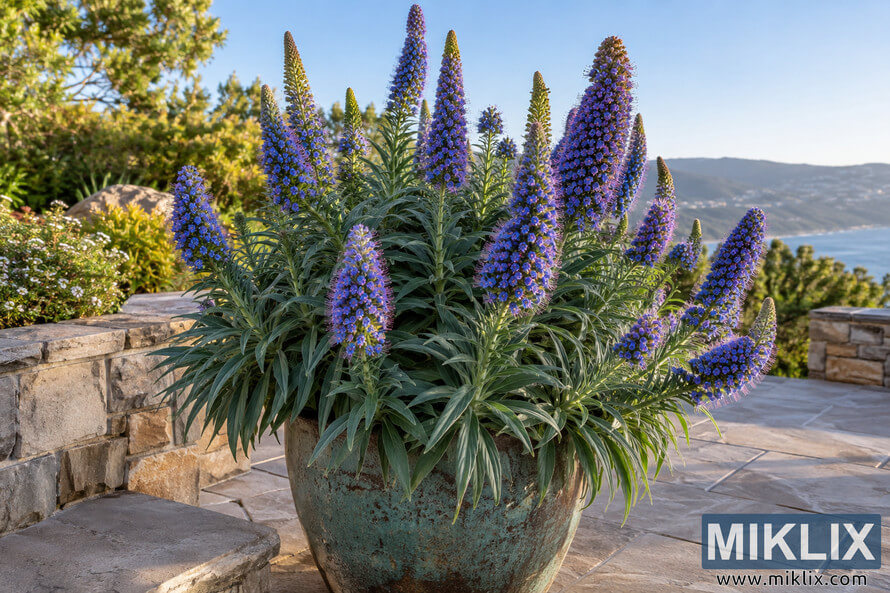
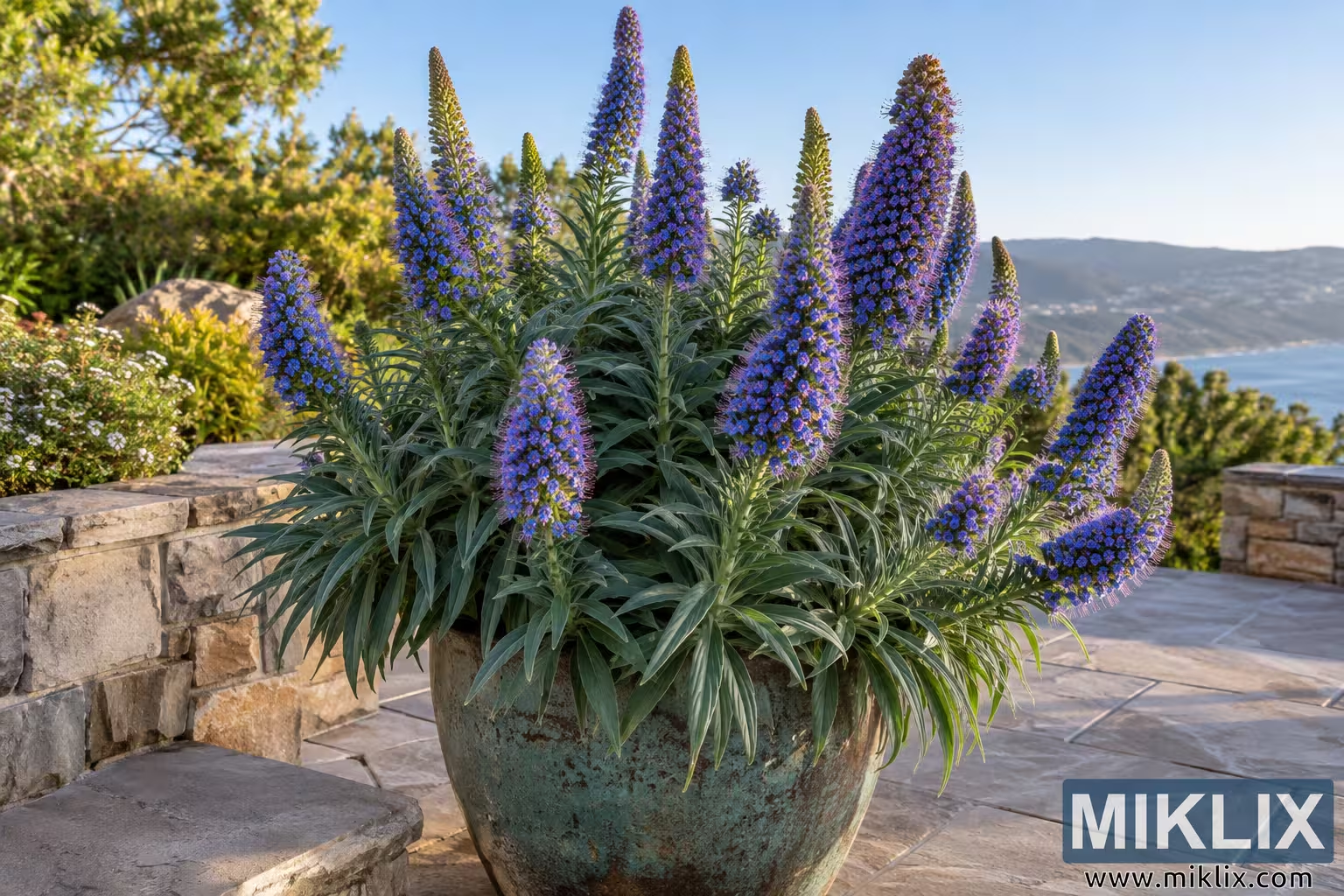
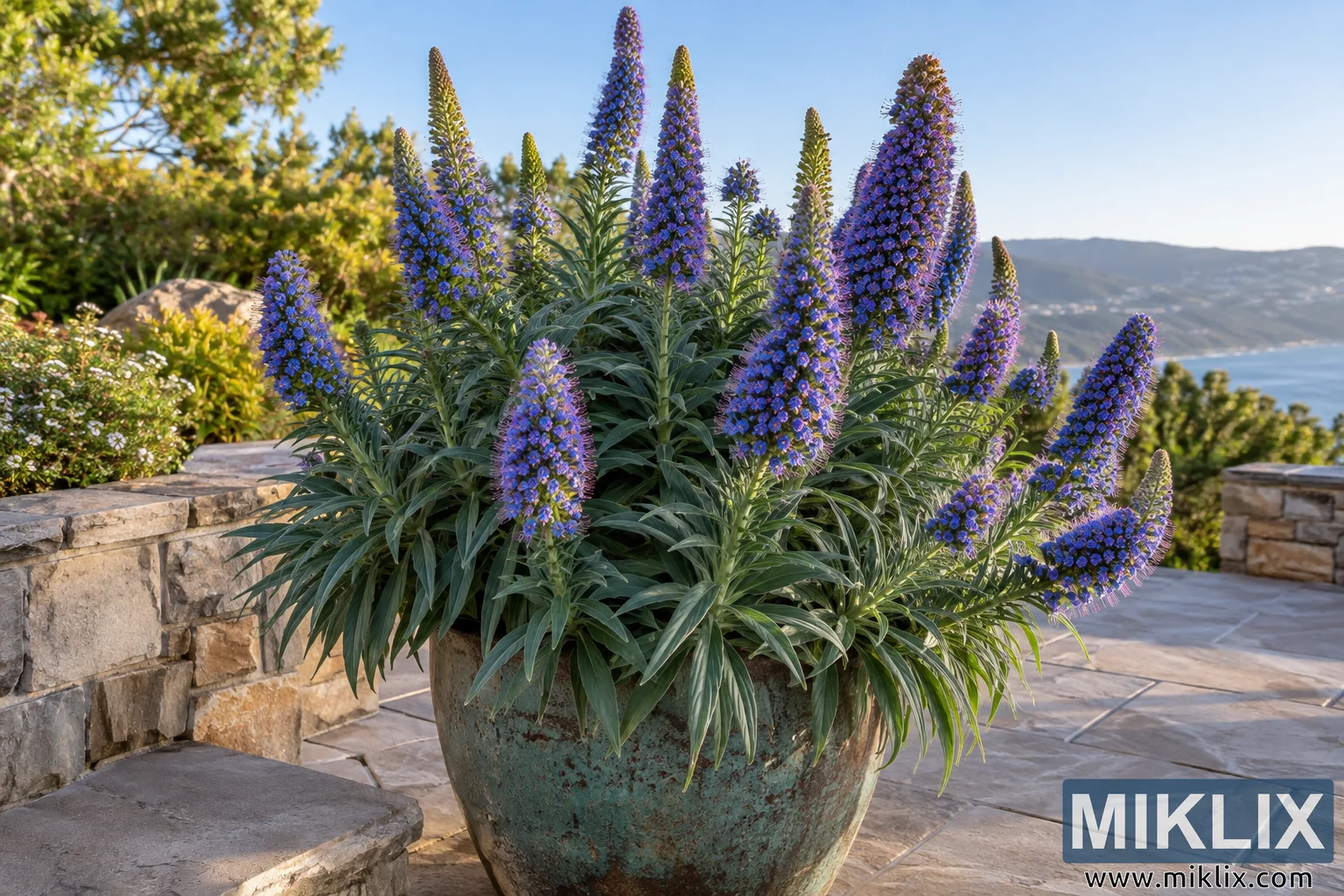
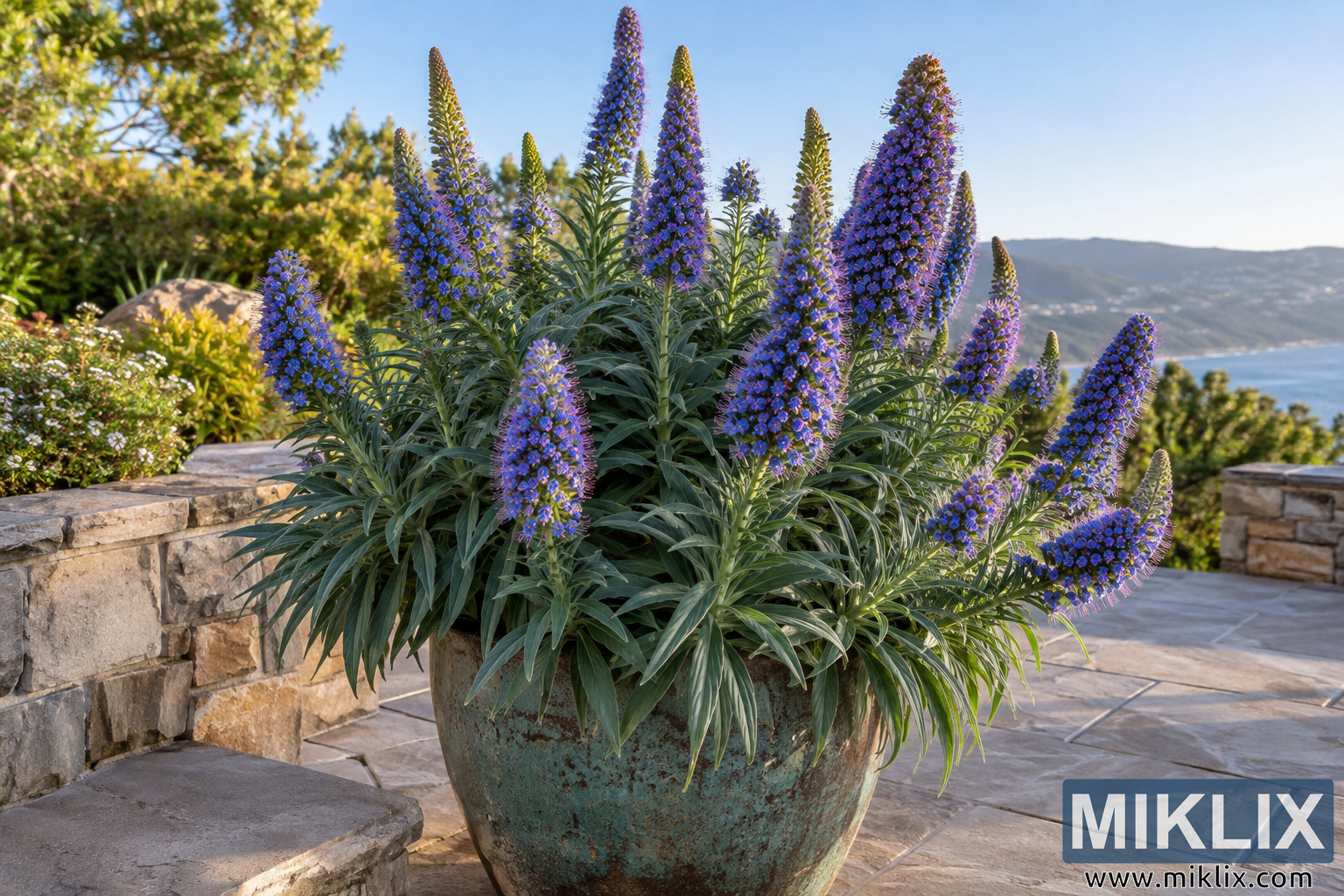
Pride of Madeira fills a large weathered teal ceramic container with blue-purple flower spikes on a sunlit stone terrace overlooking water and distant hills.
Available versions of this image
The image files available for download below are less compressed and higher resolution - and as a result of that, higher quality - than the images embedded in articles and pages on this website, which are more optimized for file size in order to reduce bandwidth consumption.
Regular size (1,536 x 1,024)
Large size (3,072 x 2,048)
Very large size (4,608 x 3,072)
Extra large size (6,144 x 4,096)
Comically large size (1,048,576 x 699,051)
- Still uploading... ;-)
Image description
A landscape-format garden photograph showing a large Pride of Madeira plant growing in a substantial round ceramic container on a stone-paved terrace. The plant dominates the center and foreground of the composition. It has dense masses of long, narrow, pointed gray-green to dark green leaves and numerous upright, tapered flower spikes. The spikes are covered with many small blue to violet-blue flowers, with some purplish and pinkish details visible around the blossoms. The flower spikes vary considerably in height and angle: several tall, nearly vertical spikes rise above the center of the plant, while shorter spikes extend around the sides, including several leaning outward to the right. Some spikes have greenish or brownish areas near their tips where flowers appear less developed or less dense. The container is broad and rounded, with a narrower base and a wide upper opening largely concealed by foliage. Its glazed surface is mottled teal, turquoise-green, dark brown, and rusty brown, giving it a weathered, irregular appearance. The planter stands directly on large rectangular paving slabs in muted beige, tan, and gray tones. Sunlight comes strongly from the right side of the scene, illuminating the flowers and foliage and creating long, soft-edged shadows across the paving. Low stone walls and masonry features surround the terrace. On the left is a substantial wall or raised structure built from irregular rectangular blocks of beige, tan, gray, and brown stone, capped by flatter stone slabs. A lower stone element occupies the bottom-left corner. On the right edge, another short stone wall or pillar is visible. Behind the planter on the left are additional garden plants, including dense green foliage, a shrub with numerous small white flowers, yellow-green vegetation, and a large rounded gray-beige rock. Taller leafy vegetation or tree branches extend into the upper-left portion of the image. Beyond the terrace and garden, the background opens onto a coastal or lakeside landscape. A blue body of water is visible on the right, bordered by distant hills or mountains extending horizontally across the image. The distant terrain appears gray-green and bluish because of atmospheric haze, with scattered pale areas that may be buildings or other landscape features, though their exact nature cannot be determined at this distance. The sky is clear and pale to medium blue, becoming brighter toward the upper right where the sunlight is strongest. The composition uses a relatively low, close viewpoint, making the flowering plant and container the clear focal point while retaining the terrace, garden, water, and hills as environmental context. The foreground plant is rendered sharply, while the distant landscape is softer. No people, animals, signs, logos, brands, labels, or readable text are visible.
The image is related to: A Complete Guide to Growing Pride of Madeira in Your Own Garden