
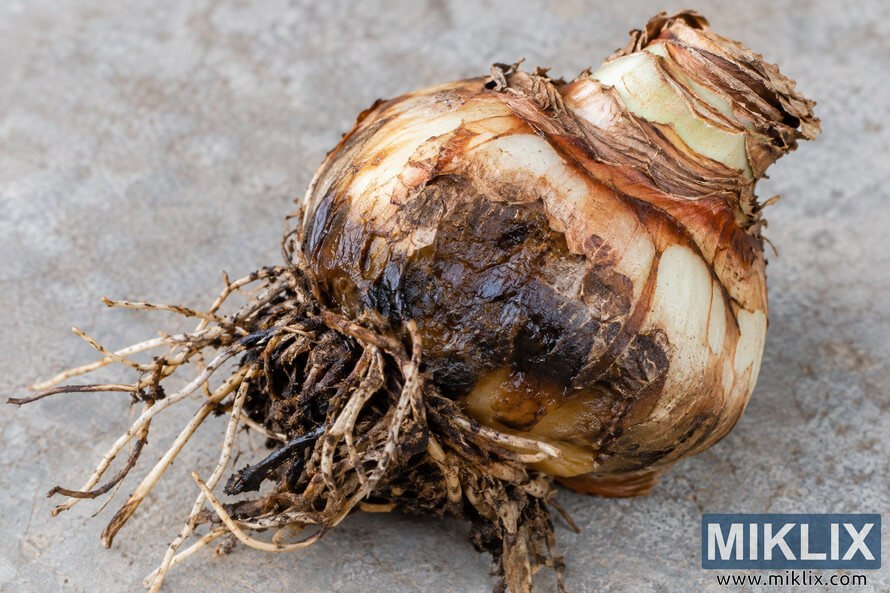
Image: Bulb Showing Severe Rot Symptoms
Published: September 27, 2026 at 8:50:33 AM UTC
Detailed close-up photograph of a bulb showing dark, wet-looking rot, deteriorated tissue, peeling outer scales, and damaged roots against a plain gray background.
Available versions of this image
The image files available for download below are less compressed and higher resolution - and as a result of that, higher quality - than the images embedded in articles and pages on this website, which are more optimized for file size in order to reduce bandwidth consumption.
Regular size (1,536 x 1,024)
Large size (3,072 x 2,048)
Very large size (4,608 x 3,072)
Extra large size (6,144 x 4,096)
Comically large size (1,048,576 x 699,051)
- Still uploading... ;-)
Image description
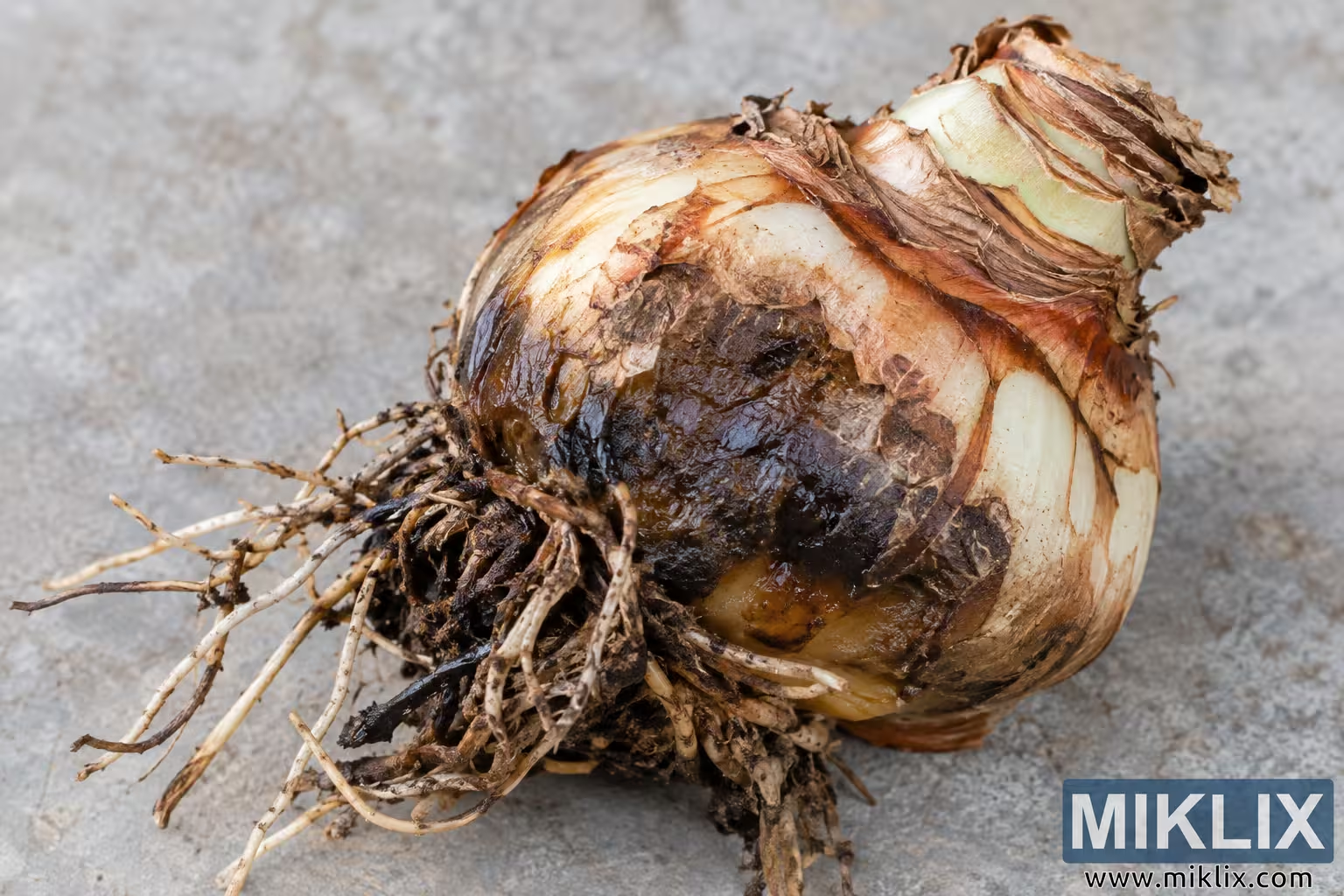
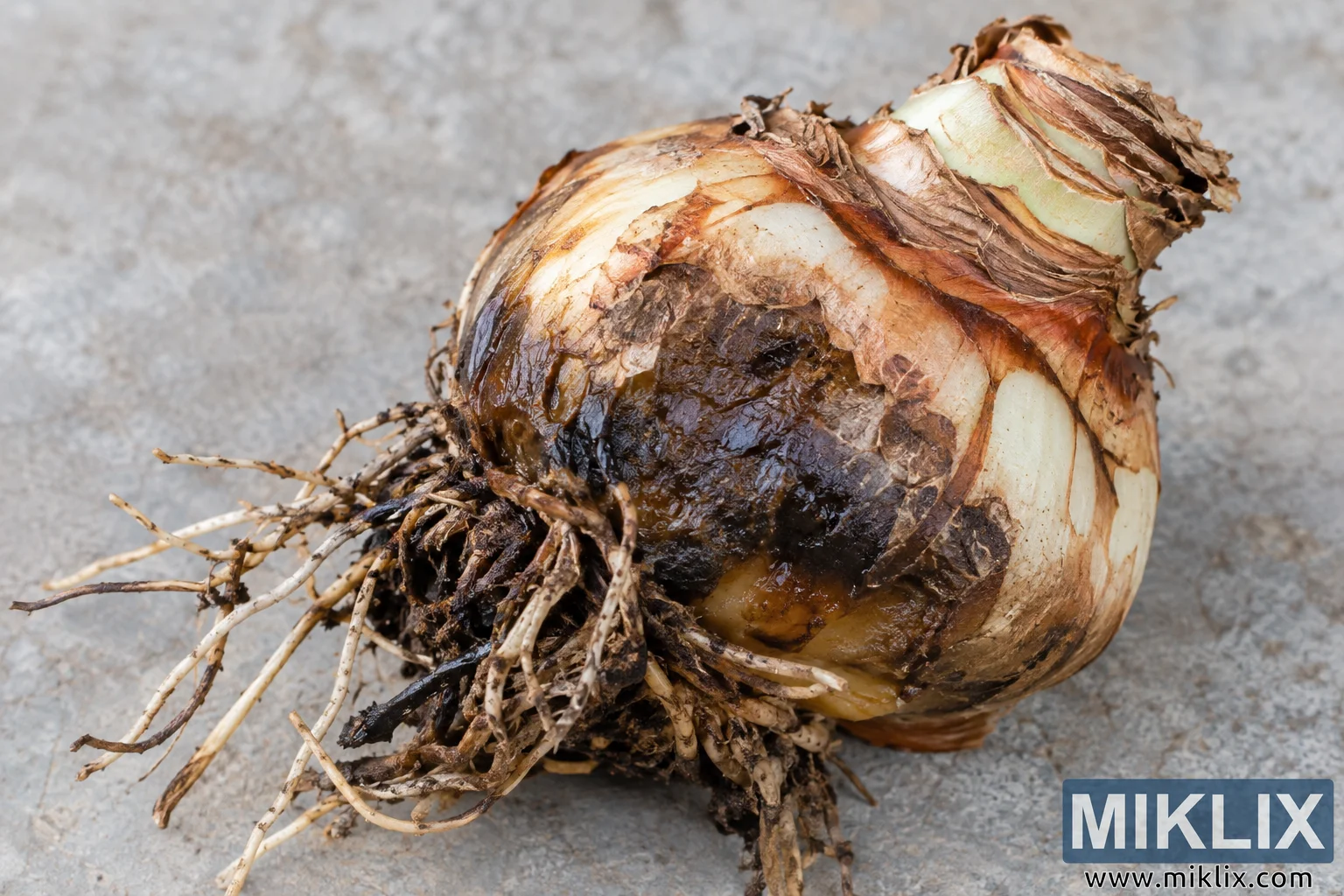
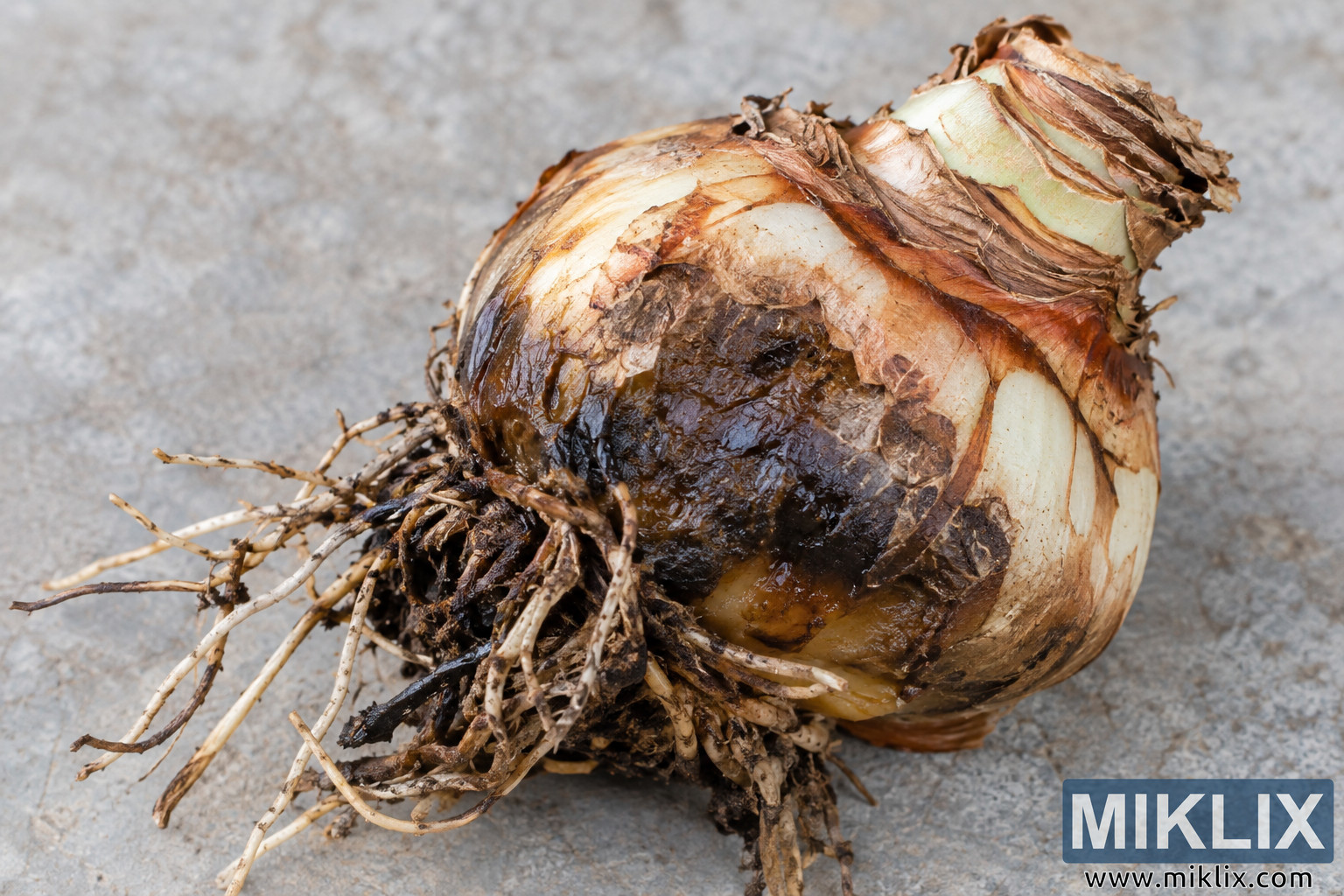
A high-resolution landscape macro photograph shows a single bulb lying diagonally on a light gray, subtly mottled stone- or concrete-like surface. The bulb occupies most of the frame, with its root end positioned toward the lower left and its cut or shortened neck extending toward the upper right. Its outer layers consist of dry, papery brown and reddish-brown scales, with areas where the covering has peeled away to expose pale cream to light greenish-white tissue. A large, irregular area of severe discoloration covers much of the visible lower and central side of the bulb. This affected tissue ranges from dark brown to nearly black and appears wet, glossy, softened, and partially collapsed, visually consistent with rot symptoms. Near the lower edge of the darkened area, some tissue is translucent yellow-brown and appears soft or degraded. Numerous thin roots extend outward from the basal end. They vary from pale cream and beige to dark brown or black; several appear shriveled or damaged, and small particles of dark soil or organic debris cling around the root mass. The bulb's neck has layered, dry brown scales surrounding exposed pale greenish-white inner tissue. Lighting is bright and diffuse, clearly revealing the glossy damaged tissue, fibrous roots, dry papery scales, and smoother exposed bulb tissue. The depth of field keeps most of the bulb and nearby roots sharply detailed while the plain gray background becomes mildly softer away from the subject. No other objects, labels, branding, people, or readable text are visible. The exact plant species and the specific cause of the visible tissue damage cannot be determined from the image alone.
The image is related to: Blood Lily: A Complete Guide to Growing It in Your Own Garden