
Growing Buttonbush: A Complete Garden Guide
Published: October 12, 2026 at 4:33:19 PM UTC
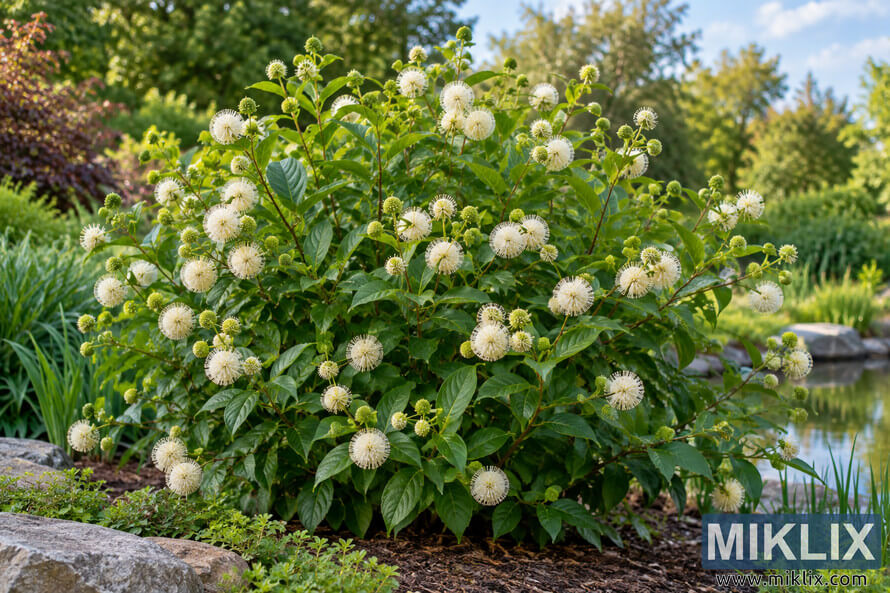
Growing Buttonbush (Cephalanthus occidentalis) can turn a damp corner into a lively garden feature. This native shrub has round flower heads, glossy leaves, and strong value for pollinators. Give it the moisture it needs, and it can become a bold focal point beside a pond, rain garden, or wet border.
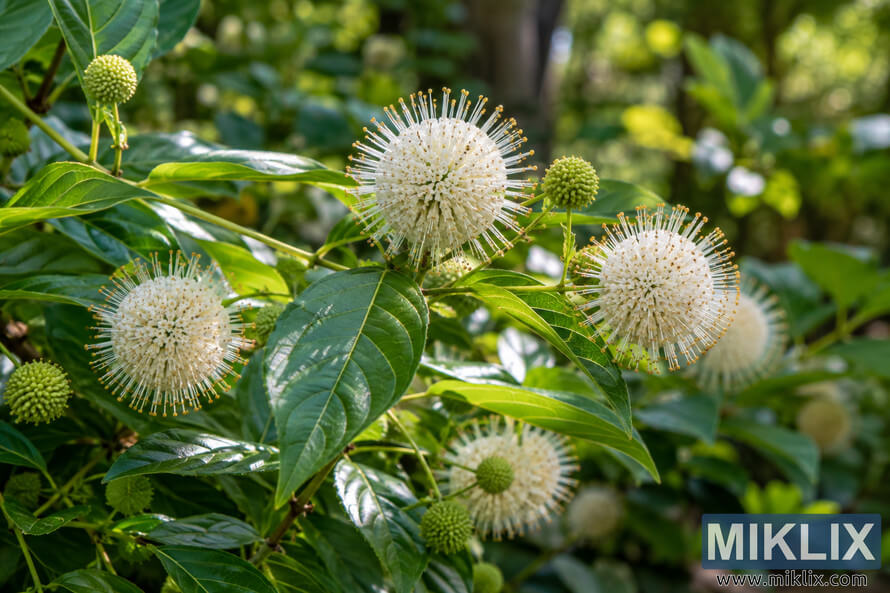
Click or tap the image for more information and higher resolutions.
What Is Buttonbush and Why Grow It?
Buttonbush, often called common buttonbush, is a deciduous shrub native to much of the United States. Its scientific name is Cephalanthus occidentalis. In natural habitats, it grows along stream edges, marsh margins, floodplains, and other places where soil stays moist.
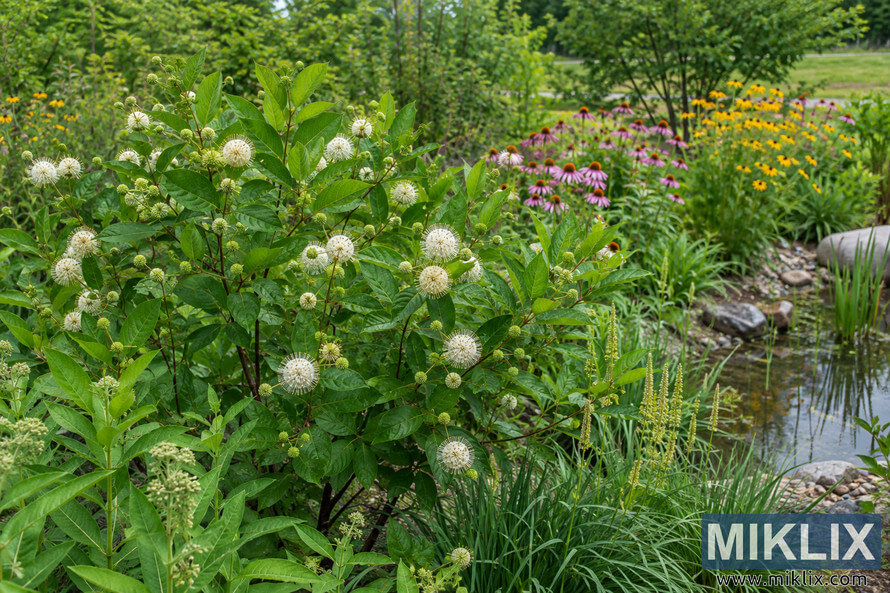
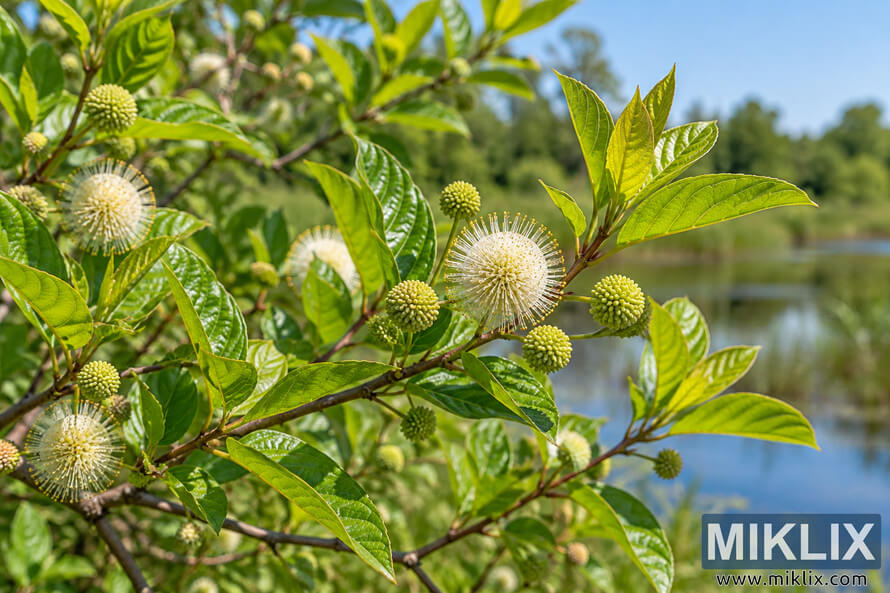
The shrub earns its name from its unusual flowers. Each flower head looks like a small round button covered with tiny tubular blooms. White flowers usually appear from late spring through summer. They attract bees, butterflies, and other pollinators. Hummingbirds may also visit the flowers while searching for insects and nectar.
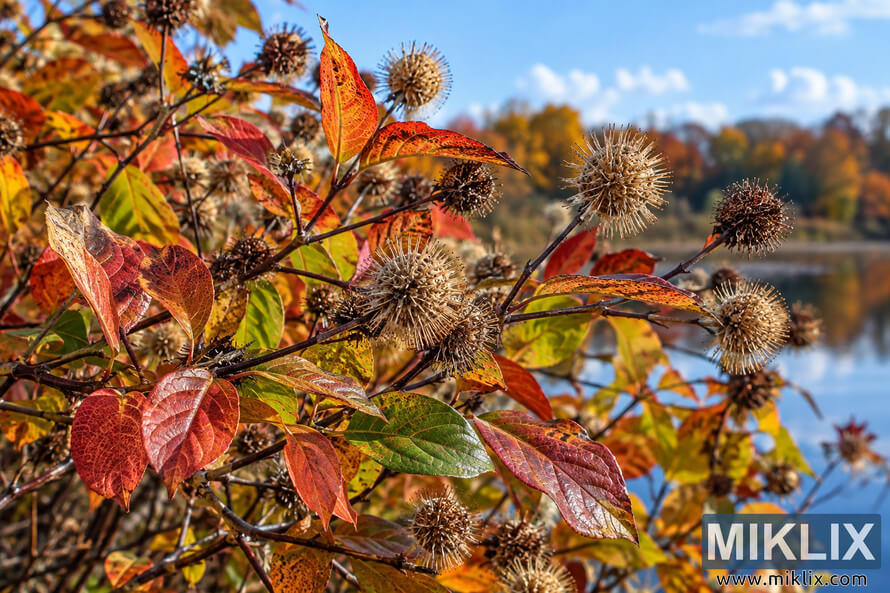
After flowering, the plant forms round seed heads. These heads add texture into fall and may provide food for wildlife. The leaves turn yellow to reddish tones before dropping. Bare branches still offer structure during winter.
Best reason to grow it: Buttonbush combines ornamental flowers with habitat value, but it is best suited to gardens that can provide steady moisture.
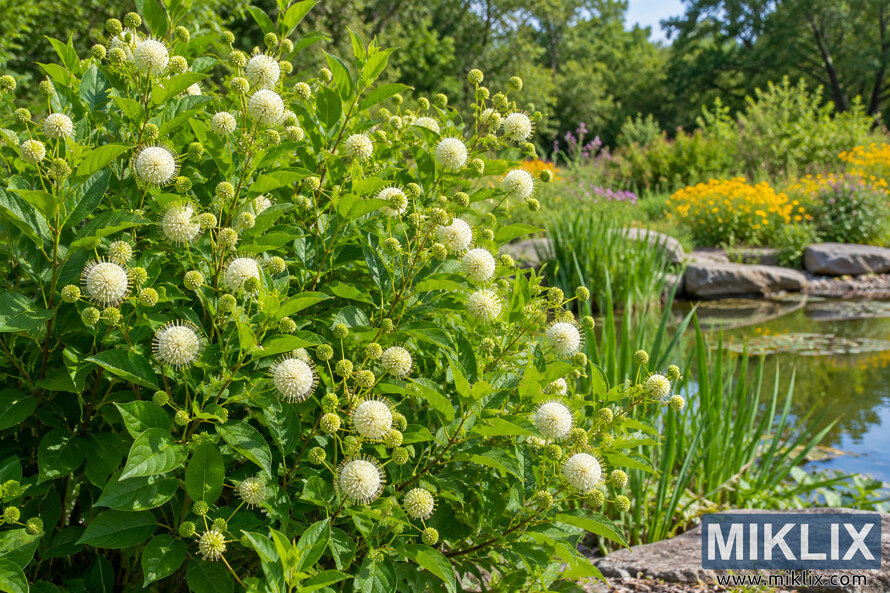
Click or tap the image for more information and higher resolutions.
How large does Cephalanthus occidentalis become?
Mature size varies with climate, moisture, soil, and pruning. A typical shrub can reach about 5 to 12 feet tall and wide. In favorable wetland conditions, some plants grow larger. Give it room to spread instead of placing it tightly beside a path, window, or small shrub.
Hardiness Zones, Flowers, and Wildlife Benefits
Cephalanthus occidentalis is generally hardy in USDA Zones 5 through 11, although local performance depends on the plant’s source and winter exposure. In colder areas, young plants need more protection than established shrubs. Check the hardiness zone for your specific cultivar before planting.
Buttonbush flowers are one of its main ornamental features. The round heads stand above the leaves on slender stems. Their shape is easy to spot from a distance, so the shrub can act as a focal point near water or at the back of a native planting.
Bees and butterflies use the flowers during the growing season. Hummingbirds may visit, especially where the shrub grows with other plants that provide cover and food. Seed heads can support birds and other wildlife, though buttonbush should not be treated as the only food source in a habitat garden.
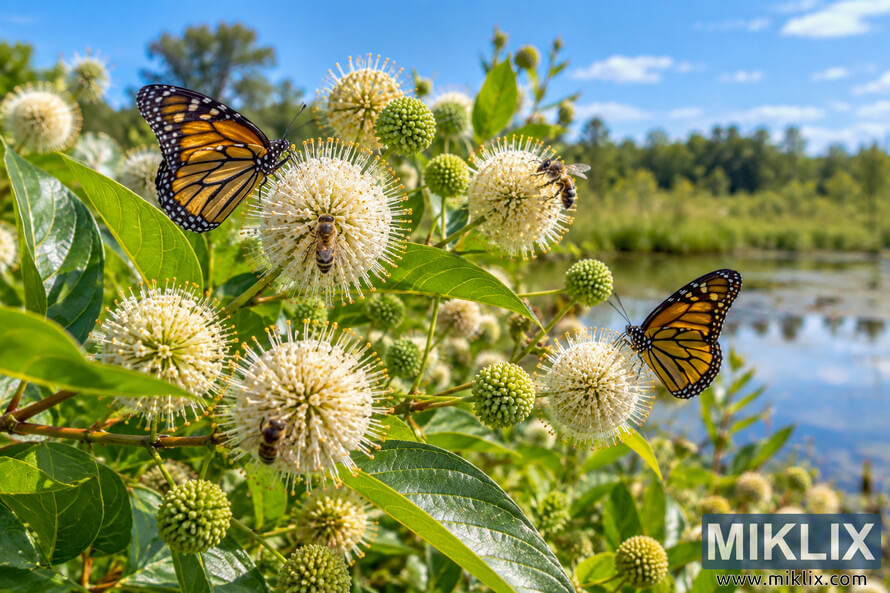
Click or tap the image for more information and higher resolutions.
Is Buttonbush deer resistant?
Buttonbush is often described as deer resistant, but no plant is completely deer-proof. Hungry deer may browse new growth, especially when other food is scarce. Use fencing or a local deer-management plan if browsing pressure is high.
Wildlife value at a glance
- Flowers support bees, butterflies, and other pollinators.
- Hummingbirds may visit flowers and hunt small insects.
- Seed heads add fall and winter interest.
- Dense growth can provide cover near wetland gardens.
Choose the Right Site for Buttonbush
Site selection determines whether this shrub thrives or struggles. Choose a place with dependable moisture, good air movement, and enough room for mature growth. A pond edge, low swale, rain garden, drainage basin, or consistently moist border can be ideal.
How much sun does Buttonbush need?
Full sun is usually the best choice. Aim for at least six hours of direct sun each day. Strong light supports better flowering and a fuller shape. Buttonbush can tolerate some shade, especially afternoon shade in hot regions, but heavy shade may reduce flowers and make growth thin.
Observe the site after rain. Water should move through the area or collect for a reasonable period, not remain stagnant for weeks unless the plant is beside a suitable wetland feature. The roots need moisture, but the planting area should still have enough oxygen for healthy growth.
Can Buttonbush grow in standing water?
Established buttonbush can tolerate standing water and periodic flooding. It is not a guarantee that every newly planted shrub will survive deep or constant water. Plant it at the edge of standing water, where roots remain moist but the crown and young stems are not buried.
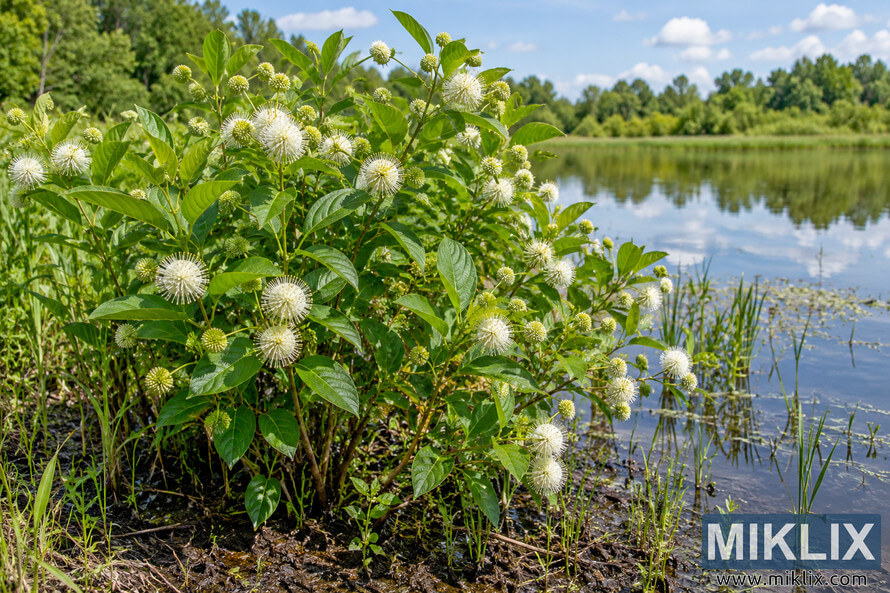
Click or tap the image for more information and higher resolutions.
Soil, Moisture, Drainage, and Rain Gardens
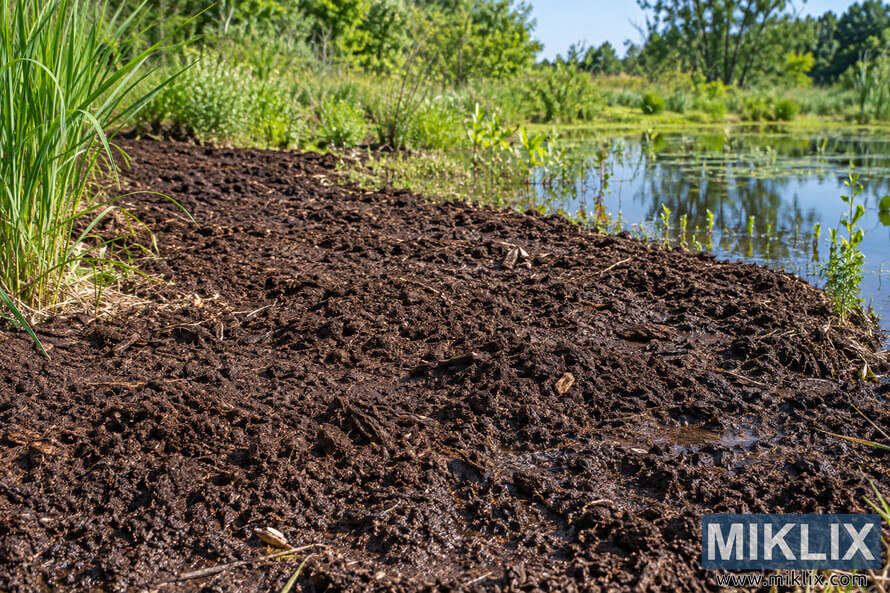
Buttonbush grows well in rich, moist soil that contains organic matter. It can handle clay, loam, and sandy soil when moisture is reliable. A slightly acidic to neutral soil is usually suitable, but a soil test is more useful than guessing from leaf color or growth alone.
In rain gardens, place the shrub in a lower or middle zone according to how quickly the area drains. The lowest section may hold water for longer periods. A higher edge may be better if the site becomes dry between storms. Watch the area through more than one season before deciding on final placement.
Do not plant buttonbush in a dry foundation bed or a hot gravel border unless you can provide regular irrigation. Short dry spells may be tolerated by established plants, but repeated drought can cause leaf drop, weak flowering, and dieback.
Click or tap the image for more information and higher resolutions.
How to improve a poor planting site
- Add compost to poor soil without creating a rich pocket that differs sharply from the surrounding ground.
- Use a shallow swale to direct rain toward the root zone.
- Apply organic mulch to slow evaporation.
- Avoid placing mulch against the main stems.
- Do not amend a wet clay site with sand alone, because the mixture can become dense.
Click or tap the image for more information and higher resolutions.
How to Plant Buttonbush Step by Step
Planting is easiest in early spring or fall when temperatures are moderate. Early spring gives roots a full season to establish. Fall planting can also work where the ground remains workable and winter arrives gradually.
- Choose a site with full sun or bright partial shade and dependable moisture.
- Water the container plant before removing it.
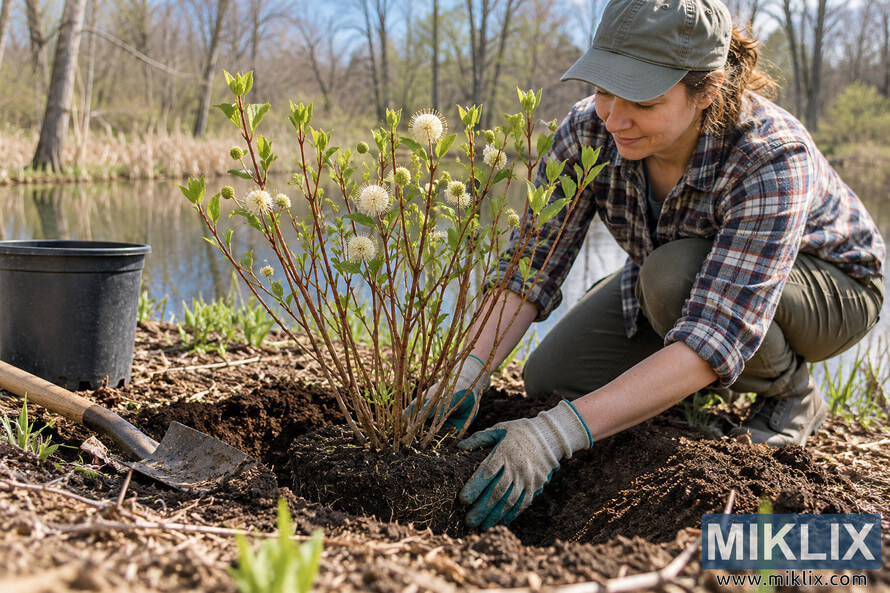
- Dig a hole about twice as wide as the root ball and no deeper than its original container depth.
- Gently loosen circling roots around the outer edge.
- Set the shrub so the top of the root ball is level with or slightly above the soil surface.
- Backfill with the soil removed from the hole.
- Water slowly to settle the soil around the roots.
- Add a thin mulch layer, leaving space around the stems.
- Water again after planting if the soil settles. Avoid burying the trunk or covering the root flare. A plant that sits too deeply may develop weak stems or poor root health.
Click or tap the image for more information and higher resolutions.
Spacing and placement
Allow about 6 to 10 feet between shrubs, depending on the expected mature size and the look you want. Use closer spacing for a loose screen, but expect more pruning and competition. For a specimen or focal point, give the shrub enough space to show its rounded shape.
Watering, Mulching, and Fertilizing
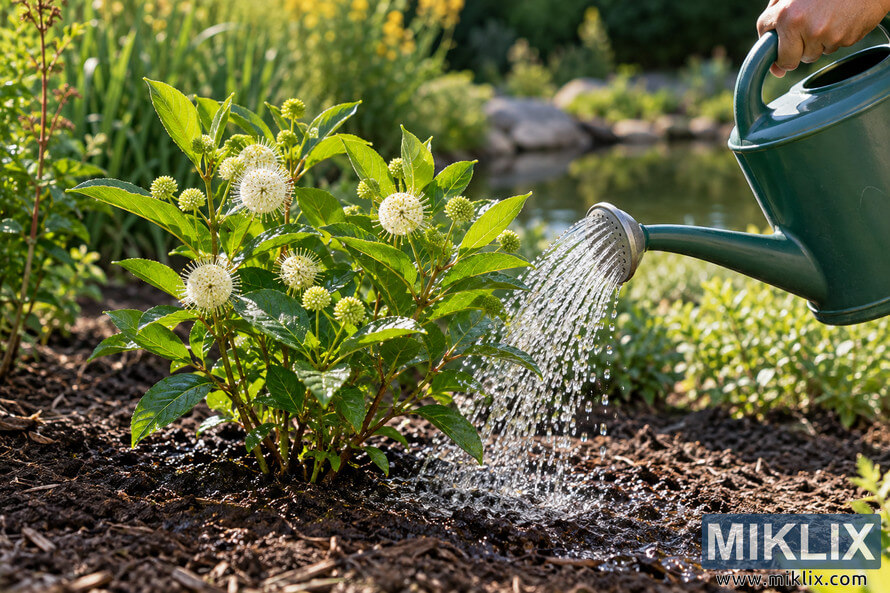
Newly planted buttonbush needs regular water while roots spread into nearby soil. Water deeply when the upper soil begins to dry, adjusting the schedule for rainfall, soil type, and temperature. The goal is steady moisture, not a fixed number of watering days.
During summer, check plants during dry spells. A young shrub may need water before an established one. Container plants dry faster than shrubs planted in the ground. Use a layer of leaf mold, compost, or shredded bark to reduce evaporation.
Click or tap the image for more information and higher resolutions.
Does Buttonbush need fertilizer?
Usually, buttonbush does not need heavy feeding when soil contains organic matter. Excess fertilizer can produce soft, leafy growth and may wash into nearby water. If growth is weak, test the soil first. Apply a balanced fertilizer only when a soil test or local extension recommendation supports it.
Watering rule: Feel the soil several inches below the surface. Water when it is beginning to dry, then allow excess water to drain away from the crown.
Pruning and Maintaining an Attractive Shrub
Buttonbush often needs little pruning. Its naturally rounded form suits informal gardens and wildlife areas. Remove dead, damaged, or crossing branches whenever you notice them. Make clean cuts just outside the branch collar.
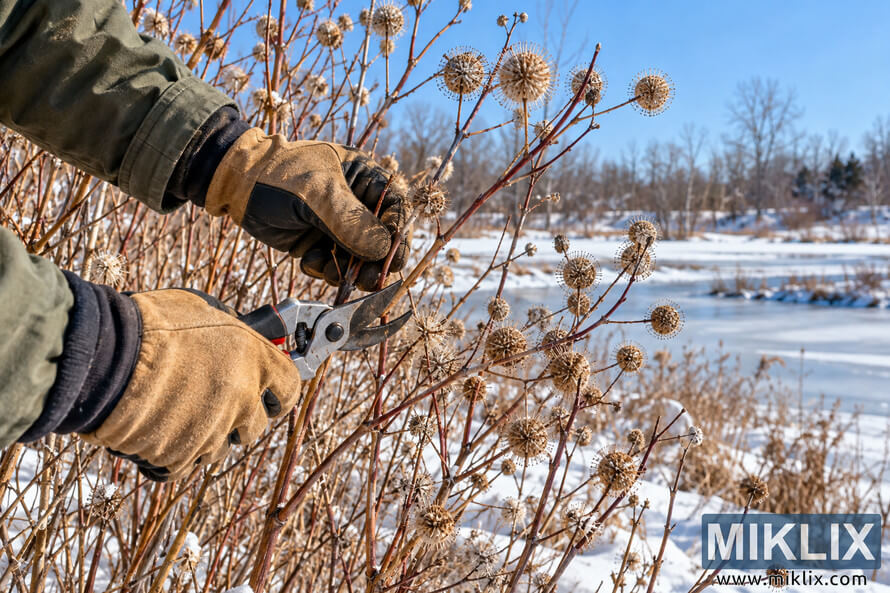
Click or tap the image for more information and higher resolutions.
When should you prune buttonbush?
Late winter is a useful time for structural pruning because the leaves are absent and the branch framework is easy to see. Avoid severe pruning unless the shrub has become too large or damaged. Heavy cuts can remove stems that would have produced flowers in the coming season.
- Remove broken or diseased branches first.
- Thin a few crowded stems at ground level.
- Shorten a branch only when it disrupts the shape or path.
- Disinfect tools between cuts when disease is suspected.
- Leave some seed heads for fall and winter interest.
Renewal pruning can help an old shrub. Remove up to one-third of the oldest stems at the base over a few seasons. This method encourages new branches without creating a bare, severely cut plant.
Propagating Cephalanthus occidentalis from Seed or Cuttings
Buttonbush can be propagated from seed, softwood cuttings, or semi-hardwood cuttings. Nursery plants are often the simplest choice for home gardeners because they establish faster and have predictable traits.
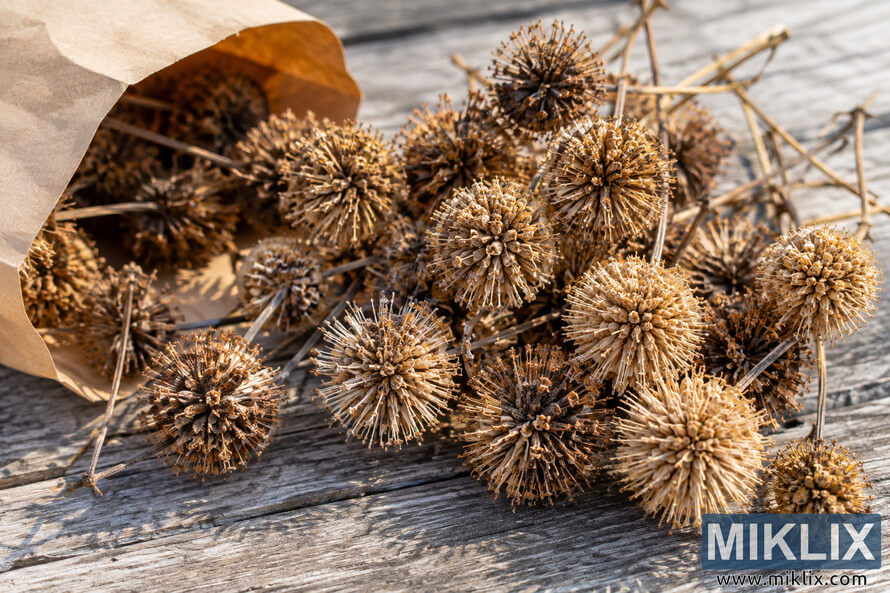
Click or tap the image for more information and higher resolutions.
Growing from seed
- Collect mature seed heads in fall when they have formed fully.
- Separate the small seeds from the dried flower material.
- Sow seeds in a moist, clean seed-starting mix.
- Keep the container in bright light and do not allow it to dry out.
- Transplant seedlings after they develop strong roots and several true leaves.
- Germination can be uneven. Keep records, label the seed source, and protect young seedlings from weeds, slugs, and rapid drying. Seed-grown plants may differ in size or flower performance from the parent shrub.
Taking cuttings
- Take healthy cuttings from actively growing stems in late spring or summer. Remove lower leaves, place the cut end in a clean rooting medium, and maintain high humidity without waterlogging the medium. Success varies, so take several cuttings rather than relying on one.
Seasonal Care from Spring Through Winter
Each season calls for a different type of attention. The best care is steady and light rather than constant intervention.
Click or tap the image for more information and higher resolutions.
Spring
Plant new shrubs in early spring, check mulch depth, and remove winter damage. Begin watching soil moisture as temperatures rise.
- Inspect stems and buds.
- Refresh a thin mulch layer.
- Water new plants during dry weather.
Summer
Protect the root zone from drying. Flowers attract pollinators, so avoid broad insecticide use while blooms are open.
- Check plants during dry spells.
- Watch for wilt and leaf damage.
- Enjoy flowers and wildlife visits.
Fall and winter
Leave some seed heads, clear diseased debris, and water before the ground freezes if fall is dry. Young shrubs may need winter protection.
- Inspect for broken branches.
- Protect exposed young roots.
- Prune structure in late winter.
Click or tap the image for more information and higher resolutions.
Winter protection
Established shrubs in suitable zones usually need little winter care. Mulch young plants after the soil cools, but do not pile mulch on the stems. In colder regions, protect the root area from rapid freeze and thaw. Container plants are more exposed and may need shelter near a protected wall or an unheated structure.
Growing Buttonbush in Containers
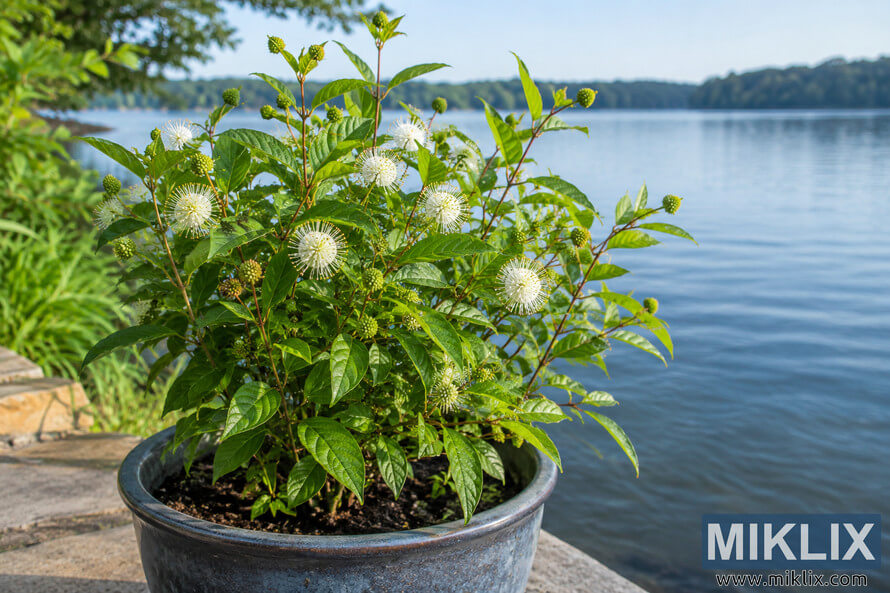
Container growing is possible, but it requires more attention than planting in the ground. Select a large pot with drainage holes and use a moisture-retentive potting mix. The container should be heavy enough to resist wind when the shrub becomes leafy.
Keep the mix evenly moist. Containers can dry quickly in full sun, especially during summer. At the same time, do not let the pot sit in a saucer of stagnant water unless the container system is designed for wetland plants.
- Choose a pot at least 20 to 24 inches wide for a young shrub.
- Use a stable container with several drainage holes.
- Place the plant where it receives full sun or bright partial shade.
- Repot when roots circle densely or water runs through too quickly.
- Protect the root ball from severe winter cold.
Container plants may remain smaller, but they still need room for roots. Prune lightly and expect more frequent watering than for an in-ground shrub.
Click or tap the image for more information and higher resolutions.
Native Plant Companions for Wet Gardens
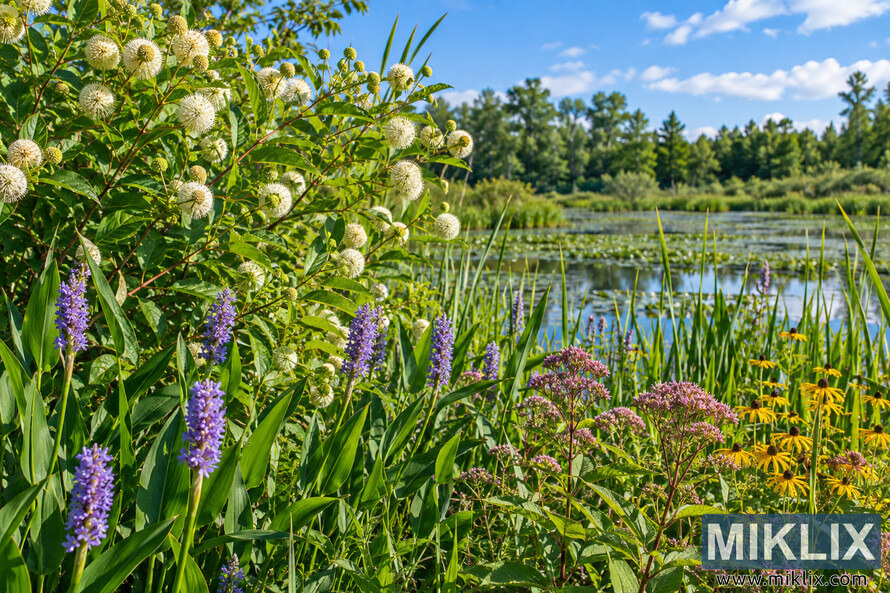
Choose companions that share the same light and moisture conditions. A layered planting looks more natural and offers wildlife food at different times of the year.
Moist sunny companions
Use sedges, rushes, swamp milkweed, blue flag iris, cardinal flower, and native asters where soil stays wet or damp.
Rain garden layers
Combine buttonbush with low sedges, mid-height grasses, and flowering perennials. Keep taller plants toward the back or center.
Wildlife structure
Include dense shrubs, seed-producing flowers, and evergreen cover nearby. This creates more value than a single isolated plant.
Do not place buttonbush beside plants that require sharply dry soil. Different moisture needs often lead to overwatering one plant or underwatering another.
Click or tap the image for more information and higher resolutions.
Common Pests, Diseases, and Growing Problems
Buttonbush is generally durable when planted in the right conditions. Most problems begin with drought, poor drainage, crowded growth, or planting too deeply.
| Problem | Likely cause | Practical response |
| Wilting leaves | Dry soil, heat, or root damage | Check moisture below the surface and water deeply when needed. |
| Yellow leaves | Water stress, poor roots, or nutrient imbalance | Check drainage and soil before adding fertilizer. |
| Few flowers | Too much shade, young age, or severe pruning | Increase light and avoid removing flowering wood. |
| Stem dieback | Winter injury, drought, or disease | Prune to healthy wood and correct site stress. |
| Chewed leaves | Caterpillars, beetles, or browsing animals | Identify the pest before using any treatment. |
Click or tap the image for more information and higher resolutions.
Safe pest management
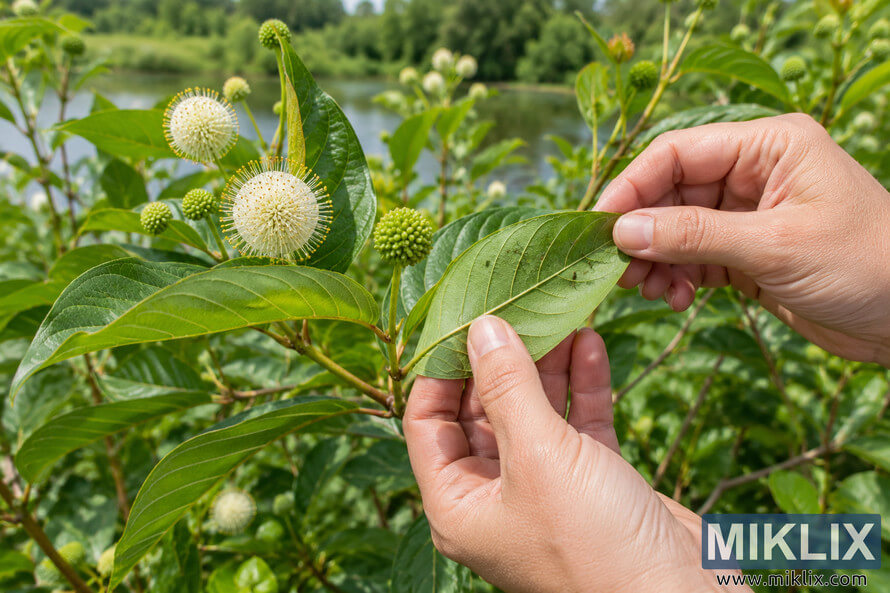
Inspect leaves, stems, and undersides before taking action. A few holes may be harmless and can support wildlife. Remove heavily damaged leaves, improve air movement, and avoid spraying flowers. Use a targeted treatment only when the pest is identified and damage is serious.
Buttonbush Troubleshooting Guide
Use these quick checks when the shrub does not look healthy.
- The shrub is failing in a dry bed: Move it during a mild season if practical, or provide consistent irrigation. A persistently dry site is not a good match.
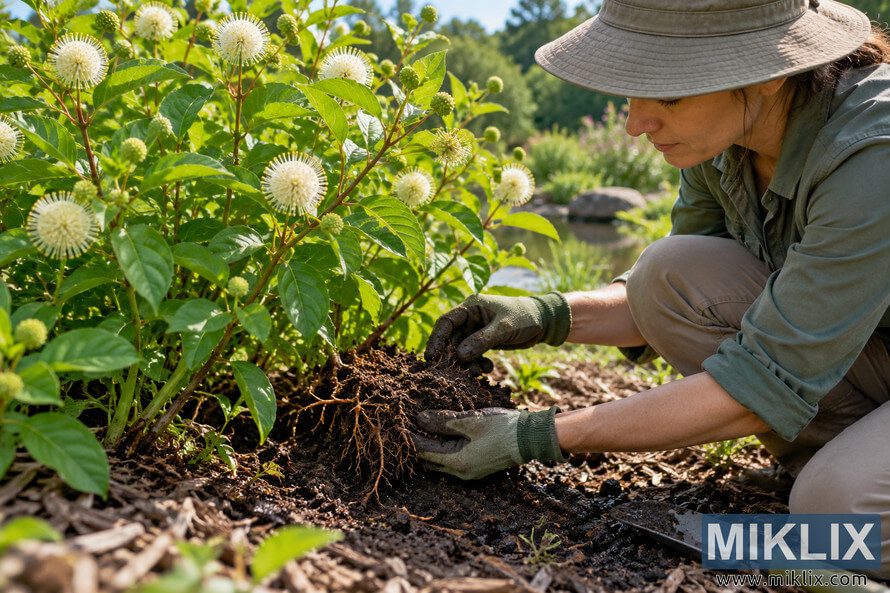
- The shrub is leaning: Check whether it was planted too deeply, receives uneven light, or has weak waterlogged roots. Correct the cause before staking.
- Leaves scorch at the edges: Look for drought, reflected heat, root restriction, or salt exposure.
- Flowers are sparse: Check sun exposure, pruning history, plant age, and moisture.
- Roots stay saturated: Confirm that the crown is above the usual water line. Move the plant to a slightly higher position if necessary.
- Growth is too large: Remove selected old stems in late winter instead of shearing the entire shrub.
Click or tap the image for more information and higher resolutions.
Buttonbush Compared with Similar Wet-Site Shrubs
Several shrubs can grow near water, but they do not all have the same form or care needs. Buttonbush is recognized by its spherical flower heads and preference for moist conditions.
Buttonbush
- Round white flower heads.
- Strong choice for wet soil and rain gardens.
- Usually deciduous with fall seed heads.
- Supports pollinators and wetland wildlife.
Willow
- Often has narrow leaves and flexible branches.
- Many species prefer wet ground.
- Can become much larger than a garden shrub.
- Form and pruning needs vary widely.
Winterberry holly
- Known for bright berries on female plants.
- Prefers moist, acidic soil in many gardens.
- Needs a suitable male pollinator for fruit.
- Flowers do not look like buttonbush heads.
These plants may complement one another, but always match the shrub to the site. A plant that can tolerate wet soil is not automatically suitable for a location with permanent deep standing water.
Frequently Asked Questions About Buttonbush
Does Buttonbush need full sun?
Full sun is preferred and usually produces the best flowers and form. Some shade is tolerated, but heavy shade may reduce flowering and create thin growth.
Can I plant Buttonbush in a rain garden?
Yes. Place it where soil stays moist and water collects for a limited period. Select a slightly higher position if the lowest basin remains flooded for long periods.
Will Buttonbush grow in standing water?
Established plants can tolerate periodic standing water. Keep the crown and main stems above the usual water level, especially while the plant is young.
Is Buttonbush native?
Common buttonbush, Cephalanthus occidentalis, is native to broad areas of North America, including many regions of the United States. Confirm local status with a state or regional native-plant source.
When is the best time to plant it?
Early spring and fall are usually good planting seasons. Avoid planting during frozen ground, extreme heat, or prolonged drought.
Should I cut Buttonbush back every year?
No. Annual shearing is not required. Remove damaged wood and use light renewal pruning in late winter when the shrub becomes crowded or too large.
A Low-Maintenance Care Plan for Healthy Buttonbush
Start with the site. Choose full sun or bright partial shade, moist soil, and enough room for mature growth. Plant the shrub at the correct depth, water it while roots establish, and mulch without covering the stems.
After establishment, focus on observation rather than constant maintenance. Check moisture during dry spells, watch for changes in leaves, and prune only when there is a clear reason. Leave some flowers and seed heads for wildlife. Avoid unnecessary fertilizer and broad insecticide use.
Buttonbush is a strong choice for gardens that embrace water. It can soften a pond edge, anchor a rain garden, and bring bees, butterflies, hummingbirds, and other wildlife into view. It is less suitable for dry sites that require frequent rescue watering.
With the right conditions, Cephalanthus occidentalis can remain attractive without demanding intensive care. Give it moisture, light, space, and time, and this distinctive native shrub can become a lasting part of a healthy garden.
Click or tap the image for more information and higher resolutions.
Further Reading
If you enjoyed this post, you may also like these suggestions:
- Beautiful Foxglove Varieties to Transform Your Garden
- 12 Stunning Delphinium Varieties to Transform Your Garden
- A Guide to the Most Beautiful Varieties of Bleeding Heart to Grow in Your Garden