
Image: Common Grapefruit Tree Pests and Organic Control Methods
Published: January 10, 2026 at 5:24:56 PM UTC
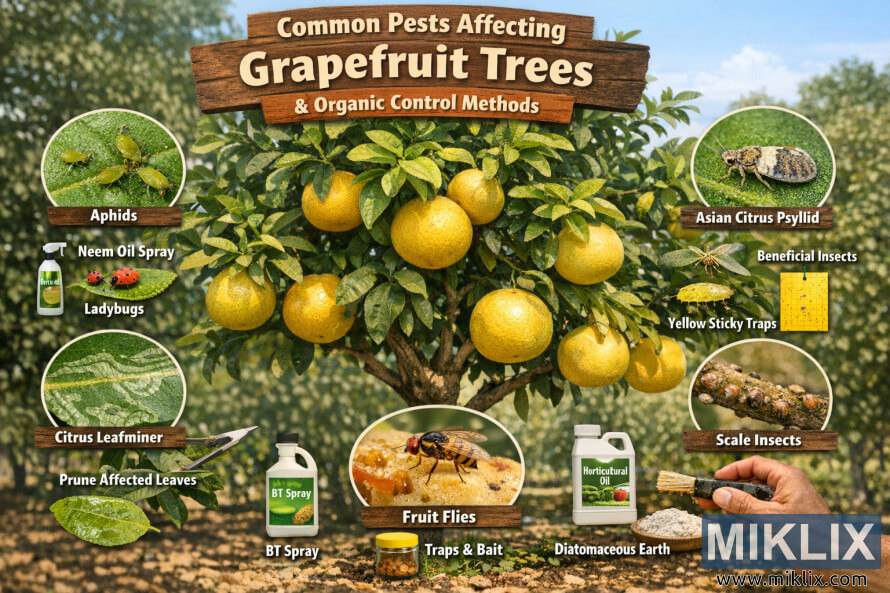
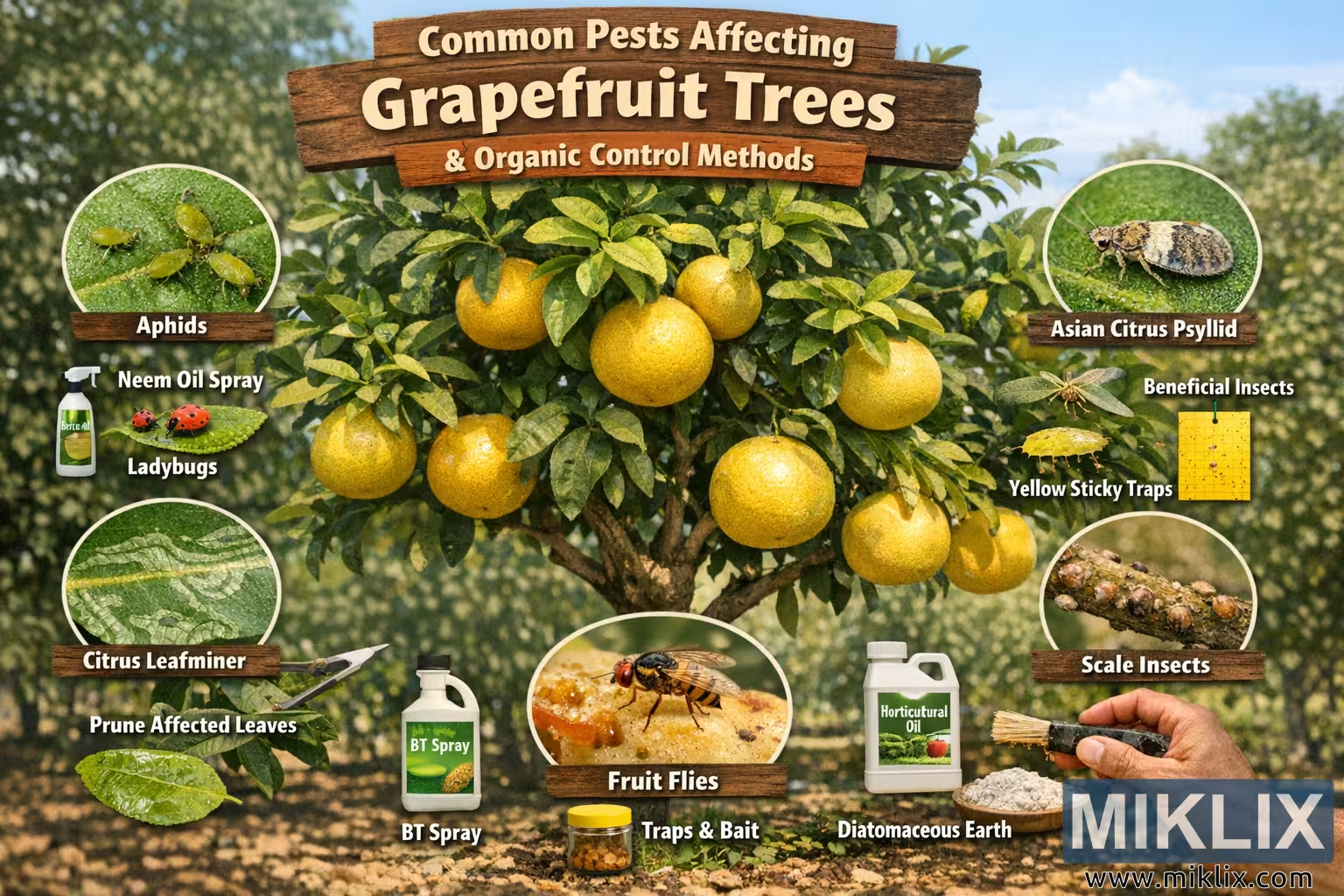
Educational infographic illustrating common pests that affect grapefruit trees and organic, eco-friendly control methods including neem oil, beneficial insects, pruning, traps, and horticultural oils.
Available versions of this image
The image files available for download below are less compressed and higher resolution - and as a result of that, higher quality - than the images embedded in articles and pages on this website, which are more optimized for file size in order to reduce bandwidth consumption.
Regular size (1,536 x 1,024)
Large size (3,072 x 2,048)
Very large size (4,608 x 3,072)
Extra large size (6,144 x 4,096)
Comically large size (1,048,576 x 699,051)
- Still uploading... ;-)
Image description
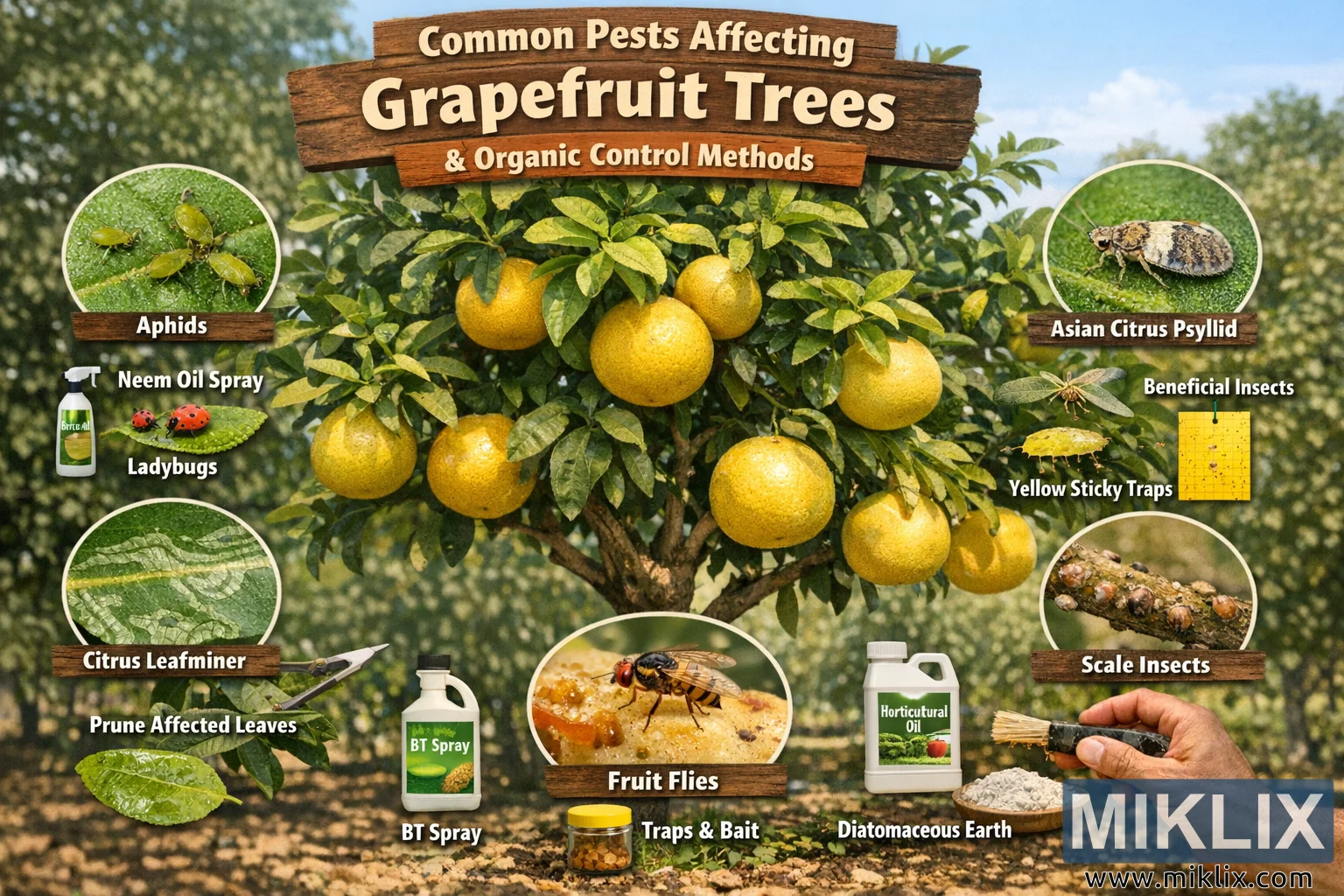
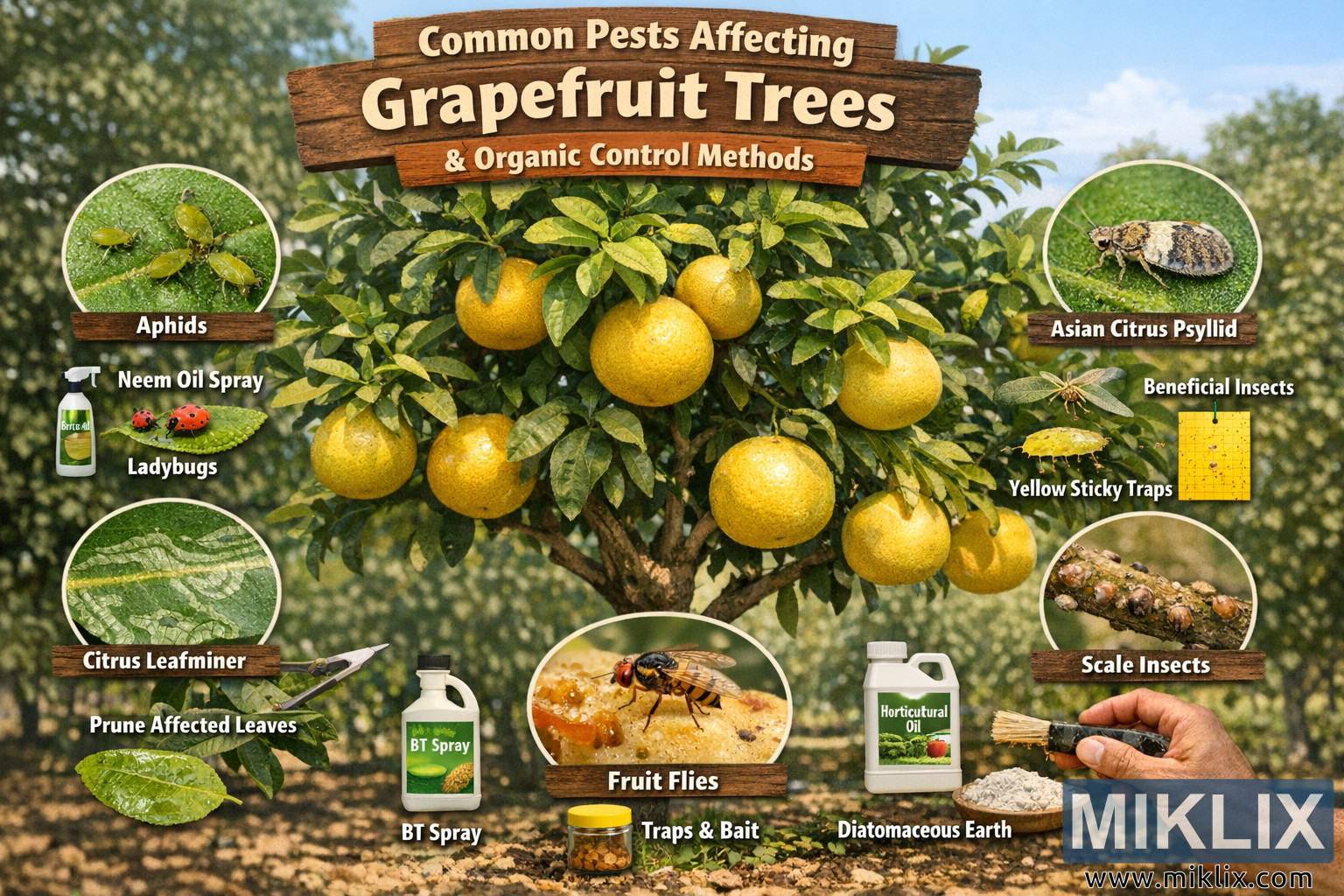
The image is a detailed, landscape-oriented educational infographic illustrating common pests that affect grapefruit trees along with organic and eco-friendly control methods. At the center of the composition is a healthy grapefruit tree growing in a sunlit orchard, its branches heavy with ripe, yellow grapefruit and glossy green leaves. The orchard background is softly blurred, suggesting depth and a natural agricultural setting while keeping the focus on the tree and the surrounding informational elements.
Across the top of the image, a rustic wooden sign displays the title “Common Pests Affecting Grapefruit Trees & Organic Control Methods,” reinforcing the educational and organic gardening theme. Surrounding the central tree are multiple circular inset images, each highlighting a specific pest commonly found on citrus trees. These close-up photographs contrast with the wider orchard view, making the pests easy to identify.
On the left side, aphids are shown clustered on a leaf, depicted as small green insects feeding on plant sap. Nearby icons and labels illustrate organic controls such as neem oil spray and ladybugs, emphasizing biological pest management. Below, another inset shows the citrus leafminer, with visible serpentine trails etched into a leaf surface. Pruning shears and text indicate pruning affected leaves as a recommended control method, alongside a bottle of BT spray.
At the bottom center, a detailed close-up of fruit flies shows an adult fly resting on citrus pulp. Accompanying visuals include traps and bait jars, highlighting non-chemical monitoring and control strategies. To the right, scale insects are shown attached to a branch, appearing as small, brown, shell-like bumps. A hand applying diatomaceous earth and a container of horticultural oil demonstrate physical and oil-based control options.
In the upper right, the Asian citrus psyllid is depicted in sharp macro detail on a leaf. Yellow sticky traps and beneficial insects are shown as organic methods to reduce psyllid populations and protect tree health. Throughout the infographic, the color palette is natural and warm, dominated by greens, yellows, and earthy browns, reinforcing the theme of sustainable agriculture.
Overall, the image combines photographic realism with clear visual labeling to educate viewers about grapefruit tree pests and environmentally responsible ways to manage them, making it suitable for gardeners, farmers, or educational materials focused on organic citrus cultivation.
The image is related to: A Complete Guide to Growing Grapefruits From Planting to Harvest