
A Complete Guide to Growing Grapefruits From Planting to Harvest
Published: January 10, 2026 at 5:24:56 PM UTC
Growing your own grapefruit trees brings the joy of harvesting fresh, juicy citrus right from your backyard. These evergreen trees not only produce delicious fruit packed with vitamins and antioxidants but also add beauty to your landscape with their glossy foliage and fragrant white blossoms.
Click or tap the image for more information and higher resolutions.
Whether you have a spacious garden or just a sunny patio, this comprehensive guide will walk you through everything you need to know about growing grapefruits successfully.
With the right care and conditions, a single grapefruit tree can produce dozens of fruits annually for decades. This guide covers selecting the perfect variety for your climate, creating ideal growing conditions, and maintaining healthy trees for maximum fruit production. Let's begin your journey to growing these golden treasures at home!
Choosing the Right Grapefruit Variety
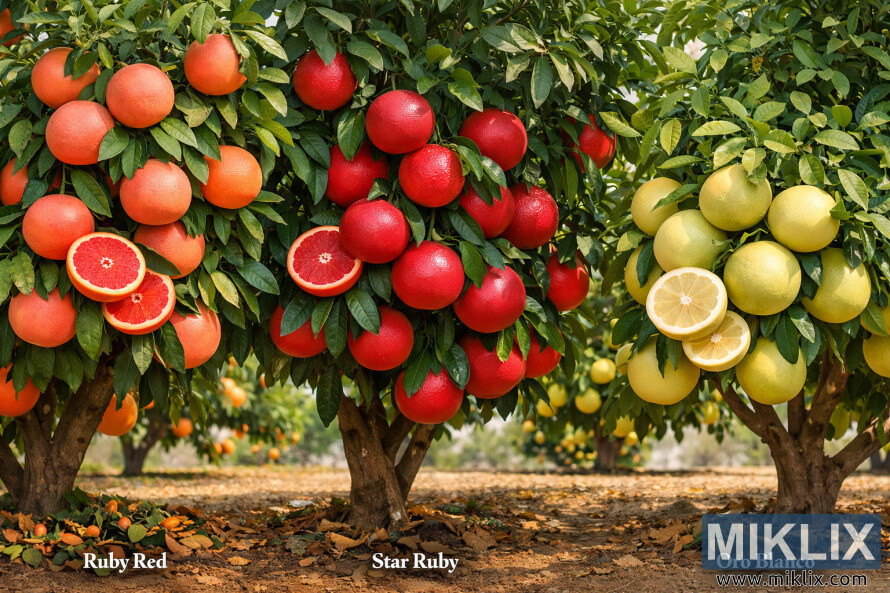
Popular grapefruit varieties: Ruby Red, Star Ruby, and Oro Blanco
Selecting the right grapefruit variety is crucial for success, especially if you're growing in a challenging climate. Here are some popular varieties to consider:
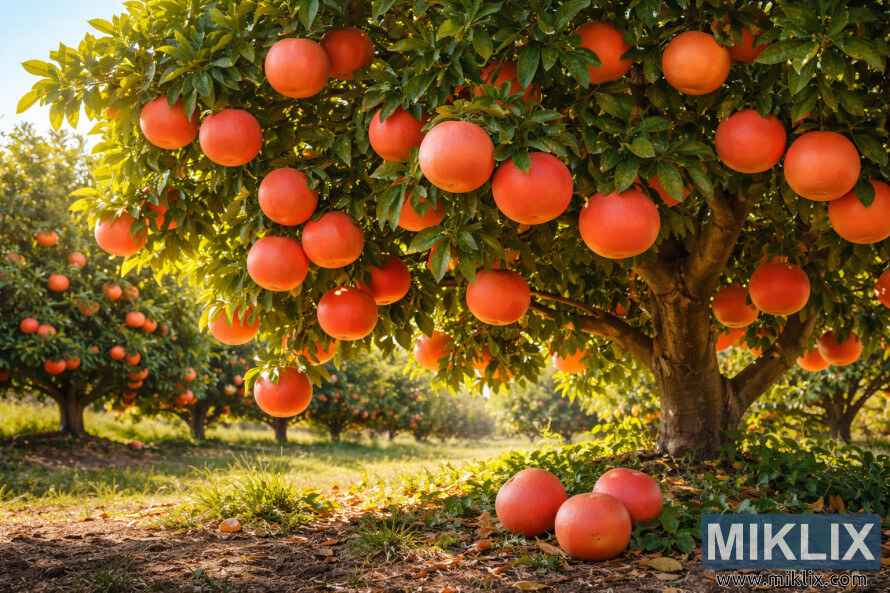
Ruby Red
- Sweet-tart, low-acid flavor
- Pink to red flesh
- Yellow skin with reddish blush
- November to May harvest
- Excellent for juicing
Click or tap the image for more information and higher resolutions.
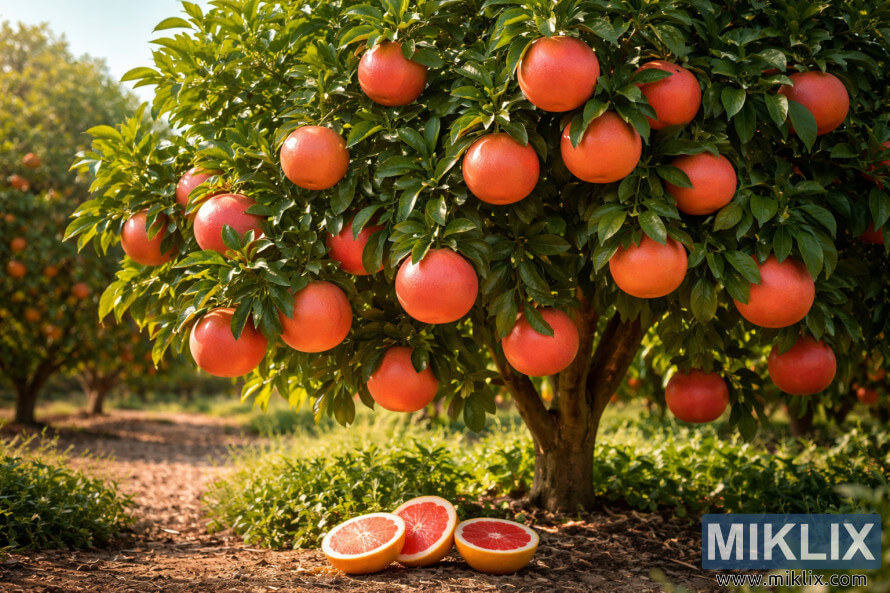
Star Ruby
- Deep ruby-red flesh
- Fewer seeds than other varieties
- Intense sweet-tart flavor
- Compact growth habit
- Good for container growing
Click or tap the image for more information and higher resolutions.
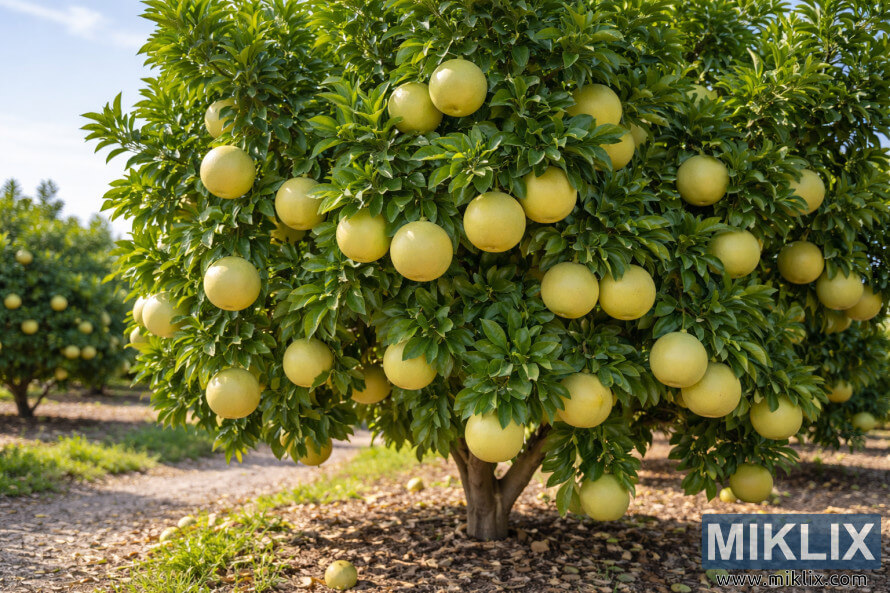
Oro Blanco
- White flesh with mild, sweet flavor
- Nearly seedless
- Thick, yellow-green rind
- Less bitter than other varieties
- Excellent for container gardening
Click or tap the image for more information and higher resolutions.
Cold-Hardy Options
While most grapefruit trees thrive in USDA zones 9-11, some varieties show better cold tolerance:
- Rio Red - Can tolerate brief exposure to temperatures around 28°F
- Duncan - Slightly more cold-hardy than other varieties
- Marsh - Shows moderate cold tolerance when established
Ideal Growing Conditions for Grapefruit Trees
Sunlight Requirements
Grapefruit trees are sun-lovers that require at least 6-8 hours of direct sunlight daily for optimal fruit production. More sunlight equals sweeter fruit and stronger trees. When choosing a planting location, select the sunniest spot in your yard, ideally with southern exposure.
Soil Conditions
The right soil is crucial for grapefruit success. These trees prefer:
- Soil type: Well-draining, sandy loam
- pH level: 6.0-6.5 (slightly acidic)
- Drainage: Excellent drainage is essential to prevent root rot
- Depth: At least 3-4 feet of good soil for root development
Pro Tip: If your native soil is heavy clay, consider planting in raised beds or large containers with a high-quality citrus soil mix. This gives you better control over soil conditions and drainage.
Temperature and Climate
Grapefruits are subtropical trees that thrive in:
- USDA hardiness zones 9-11
- Temperatures ideally between 70-85°F (21-29°C)
- Protection from frost (can be damaged below 32°F/0°C)
- Low humidity areas (reduces disease pressure)
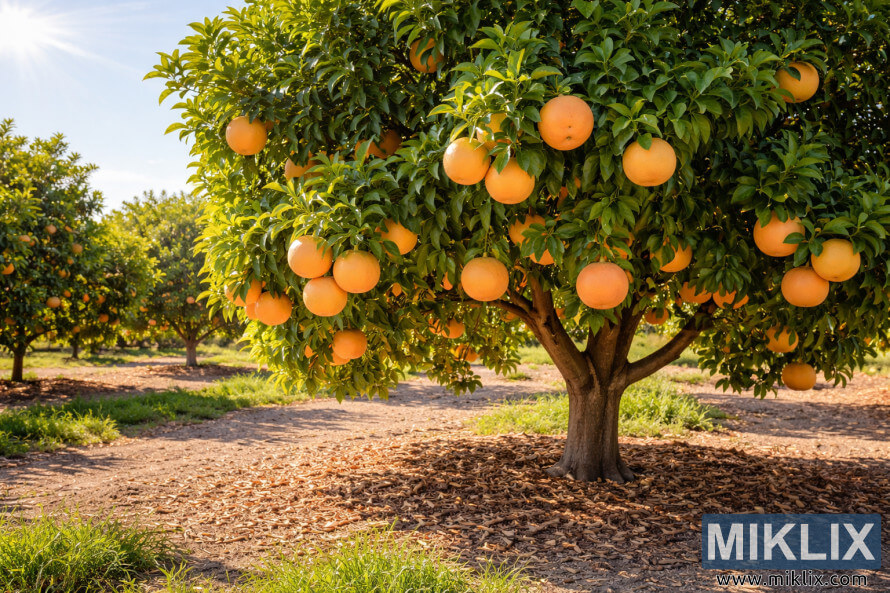
Click or tap the image for more information and higher resolutions.
Planting Your Grapefruit Tree
Proper planting technique for grapefruit trees
Planting from Saplings vs. Seeds
While growing from seeds is possible, purchasing young saplings (2-3 years old) is highly recommended for several reasons:
Grafted Saplings
- Begin fruiting in 1-3 years
- True to variety characteristics
- More disease resistant
- Already past vulnerable seedling stage
Seed-Grown Trees
- May take 7-10 years to fruit
- Unpredictable fruit quality
- Often less vigorous
- More vulnerable to diseases
Step-by-Step Planting Guide
- Timing: Plant in spring or fall when temperatures are moderate.
- Spacing: Allow 12-15 feet between trees for proper air circulation.
- Dig the hole: Make it twice as wide as the root ball but no deeper.
- Prepare the roots: Gently loosen the outer roots if pot-bound.
- Position the tree: Place it so the graft union is 4-6 inches above soil level.
- Backfill: Use native soil mixed with compost, firming gently.
- Water thoroughly: Create a basin around the tree and water deeply.
- Mulch: Apply 2-3 inches of mulch, keeping it away from the trunk.
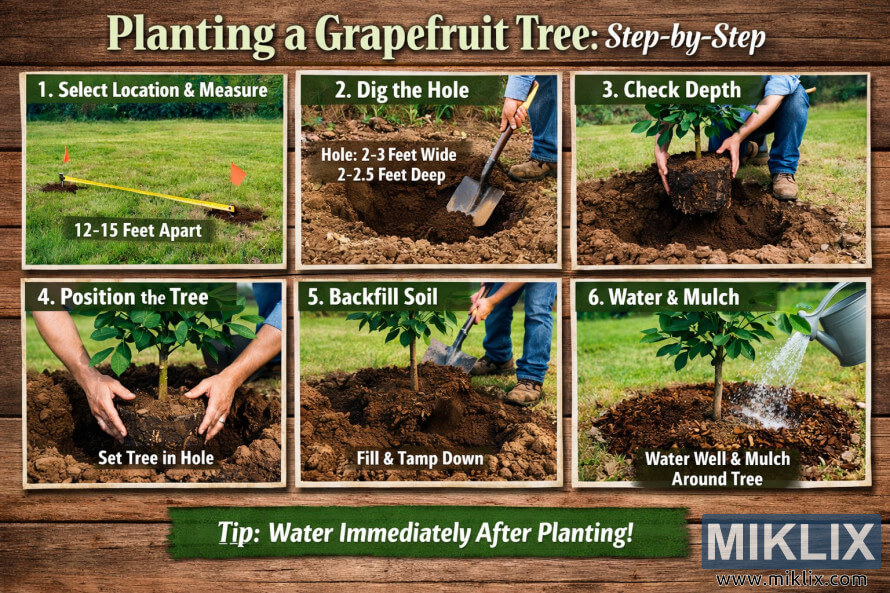
Click or tap the image for more information and higher resolutions.
Caring for Your Grapefruit Tree
Drip irrigation system providing consistent moisture to a grapefruit tree
Watering Schedule
Proper watering is crucial for grapefruit trees, especially during the first few years of establishment:
| Tree Age | Temperature | Watering Frequency | Amount |
| Newly planted | Any | Every 2-3 days | 5-10 gallons |
| 1-2 years | Below 85°F | Weekly | 10-15 gallons |
| 1-2 years | Above 85°F | Twice weekly | 10-15 gallons |
| Established (3+ years) | Below 85°F | Every 10-14 days | 15-20 gallons |
| Established (3+ years) | Above 85°F | Weekly | 15-20 gallons |
The Finger Test: Check soil moisture by inserting your finger 2-3 inches into the soil. If it feels dry at that depth, it's time to water. Always water deeply but allow the soil to dry slightly between waterings.
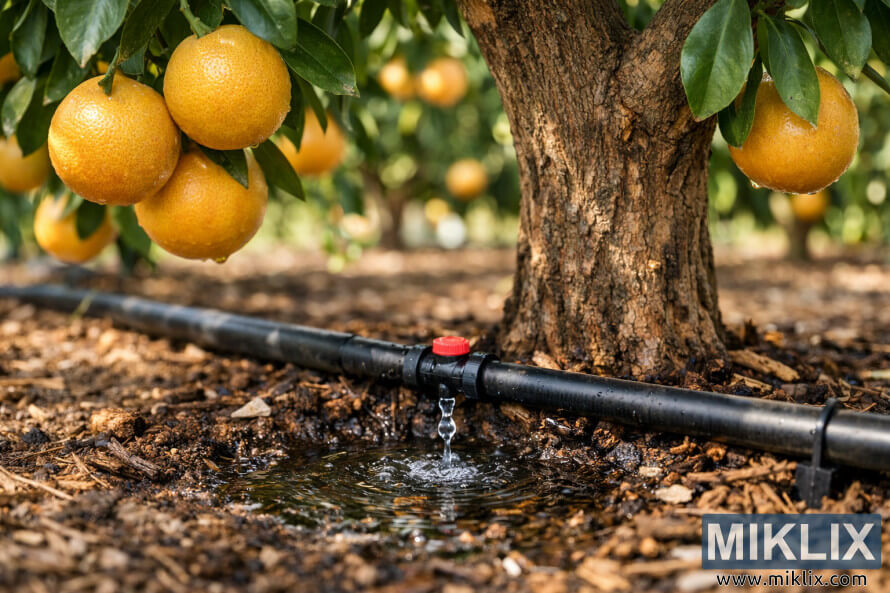
Click or tap the image for more information and higher resolutions.
Fertilization Needs
Grapefruit trees are heavy feeders that require regular fertilization for optimal growth and fruit production:
- Fertilizer type: Use a balanced citrus-specific fertilizer (e.g., 8-8-8 or 10-10-10)
- Frequency: Apply 3-4 times per year (February, May, August, October)
- Amount: Follow package directions based on tree age and size
- Application: Spread fertilizer evenly under the canopy, avoiding the trunk
- Micronutrients: Ensure the fertilizer contains iron, zinc, and manganese
Proper pruning technique for grapefruit trees
Pruning Techniques
Pruning helps maintain tree health, shape, and productivity. The best time to prune is in early spring, just before the growing season begins:
- Remove dead or diseased branches: Cut back to healthy wood
- Thin interior branches: Improve air circulation and light penetration
- Control height: Maintain at 8-12 feet for easier harvesting
- Remove suckers: Cut off growth below the graft union
- Shape the canopy: Create a balanced, open structure
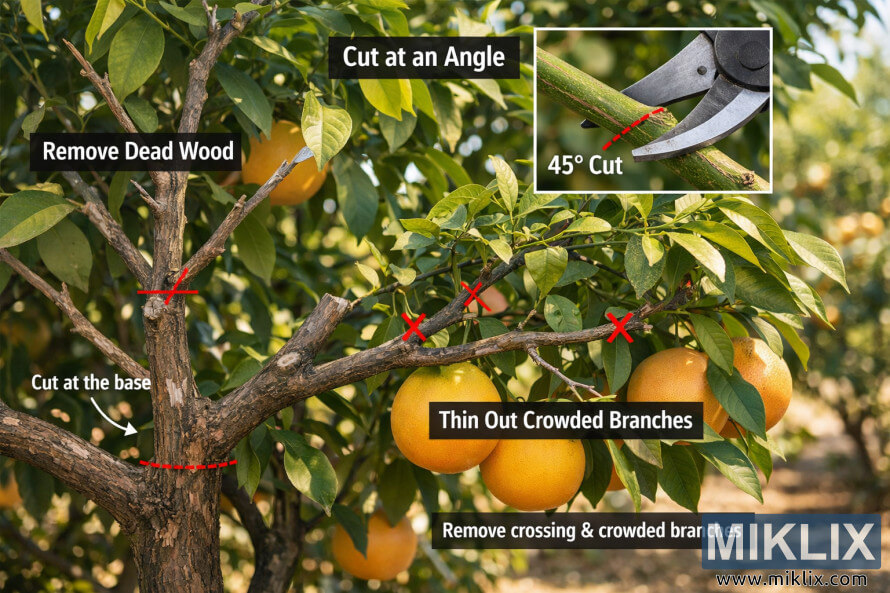
Click or tap the image for more information and higher resolutions.
Growing Grapefruits in Containers
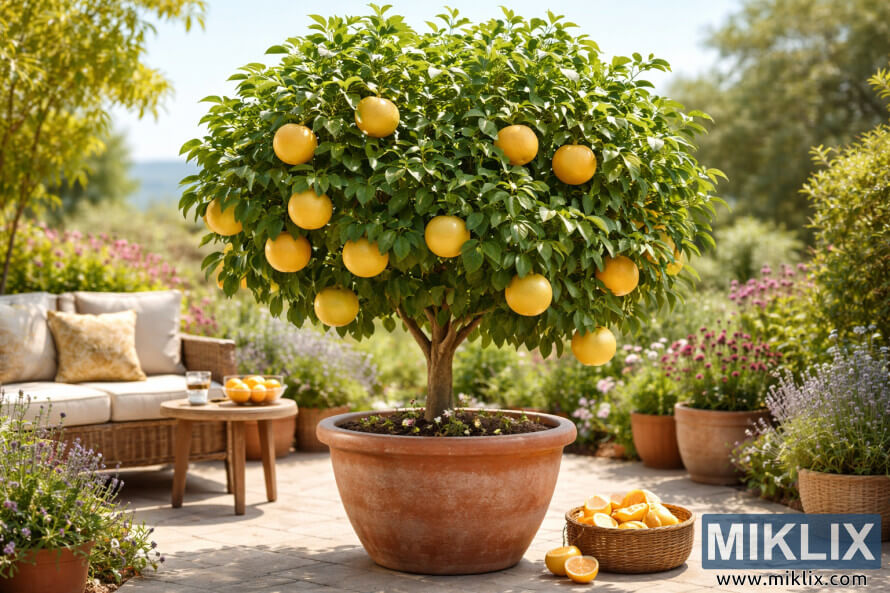
Dwarf grapefruit variety thriving in a container garden setting
Limited space doesn't mean you can't enjoy homegrown grapefruits. Container growing is perfect for small gardens, patios, or colder climates where trees need to be moved indoors for winter protection.
Container Selection
- Size: Start with a 15-gallon container, increasing to 25-30 gallons as the tree matures
- Material: Terracotta, plastic, or fabric pots all work well
- Drainage: Multiple drainage holes are essential
- Mobility: Consider a rolling plant caddy for larger containers
Container Soil Mix
Create a well-draining, nutrient-rich potting mix specifically for citrus:
- 1/3 high-quality potting soil
- 1/3 perlite or pumice (for drainage)
- 1/3 coconut coir or peat moss (for water retention)
- Add 1 cup of worm castings and 1/4 cup of slow-release citrus fertilizer
Click or tap the image for more information and higher resolutions.
Container Care Tips
Watering
- Check moisture levels daily in hot weather
- Water when top 2 inches of soil feels dry
- Ensure water drains freely from bottom holes
- Never let the container sit in standing water
Winter Protection
- Move indoors when temperatures drop below 32°F
- Place near south-facing windows
- Reduce watering frequency in winter
- Use grow lights if natural light is insufficient
Important: Container-grown citrus trees dry out much faster than those planted in the ground. During hot summer months, you may need to water daily. Always check soil moisture before watering.
Managing Pests and Diseases
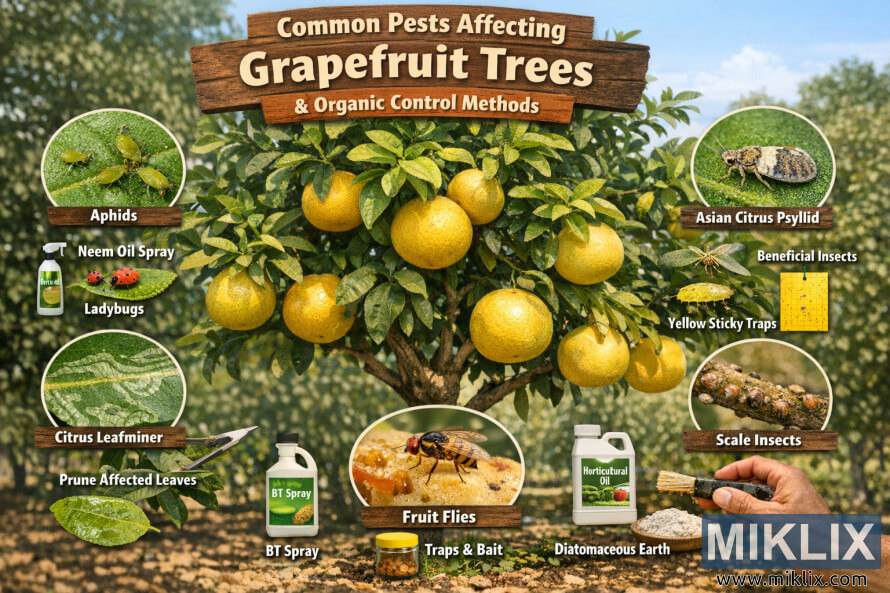
Common pests affecting grapefruit trees: aphids, leaf miners, scale, and mites
Common Pests
| Pest | Signs | Organic Control | Chemical Control |
| Aphids | Curled leaves, sticky residue | Insecticidal soap, neem oil | Pyrethrin-based sprays |
| Citrus Leaf Miner | Serpentine tunnels in leaves | Spinosad sprays | Imidacloprid |
| Scale Insects | Bumps on stems and leaves | Horticultural oil | Malathion |
| Spider Mites | Stippled leaves, fine webbing | Strong water spray, predatory mites | Miticides |
Click or tap the image for more information and higher resolutions.
Common Diseases
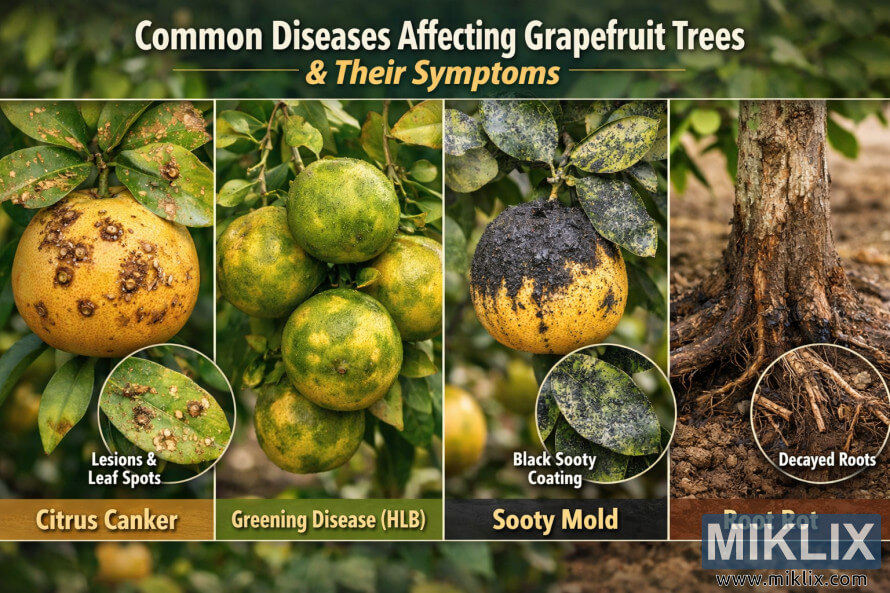
Common grapefruit diseases: citrus canker, greening, root rot, and melanose
| Disease | Symptoms | Prevention | Treatment |
| Citrus Canker | Raised lesions on leaves, fruit | Copper fungicide sprays | Remove infected parts, copper sprays |
| Root Rot | Yellowing leaves, wilting | Well-draining soil, proper watering | Reduce watering, fungicides |
| Citrus Greening (HLB) | Mottled leaves, bitter fruit | Control psyllids, certified plants | No cure, remove infected trees |
| Melanose | Rough, sandpaper texture on fruit | Prune dead wood, copper sprays | Copper fungicides |
Click or tap the image for more information and higher resolutions.
Harvesting Your Grapefruits
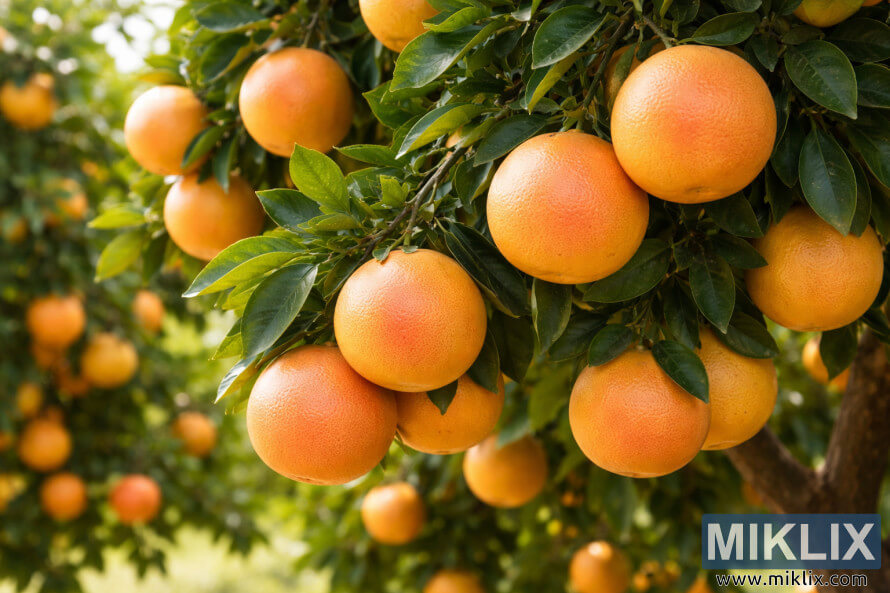
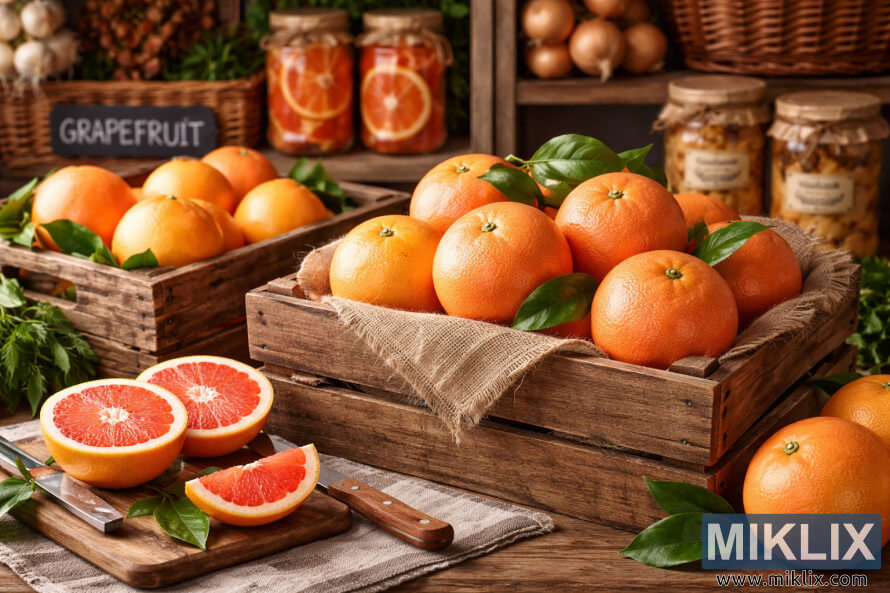
Ripe grapefruits ready for harvest, showing ideal color and size
When to Harvest
Grapefruit typically ripens 6-12 months after flowering, with the main harvest season running from late fall through spring. Unlike some fruits, grapefruits don't continue to ripen after picking, so timing is important.
Signs of Ripeness
- Color: Full yellow to yellow-orange skin (some varieties have a reddish blush)
- Size: Reached full size for the variety (typically 4-6 inches in diameter)
- Feel: Slightly soft when gently squeezed
- Weight: Feels heavy for its size, indicating juiciness
- Aroma: Sweet, citrusy smell at the stem end
Click or tap the image for more information and higher resolutions.
How to Harvest
- Use clean, sharp pruning shears or scissors
- Cut the stem about 1/4 inch above the fruit
- Avoid pulling or twisting, which can damage the tree
- Handle fruits gently to prevent bruising
- Harvest in the morning when temperatures are cooler
Expected Yield
A mature grapefruit tree (5+ years) can produce:
- In-ground trees: 20-40 fruits per season
- Container-grown trees: 5-15 fruits per season
- Production increases with tree age and proper care
Click or tap the image for more information and higher resolutions.
Storage Tips
- Room temperature: 1-2 weeks in a cool, dry place
- Refrigerator: 2-3 weeks in the crisper drawer
- On the tree: Many varieties can hang on the tree for months without deteriorating
Troubleshooting Common Problems
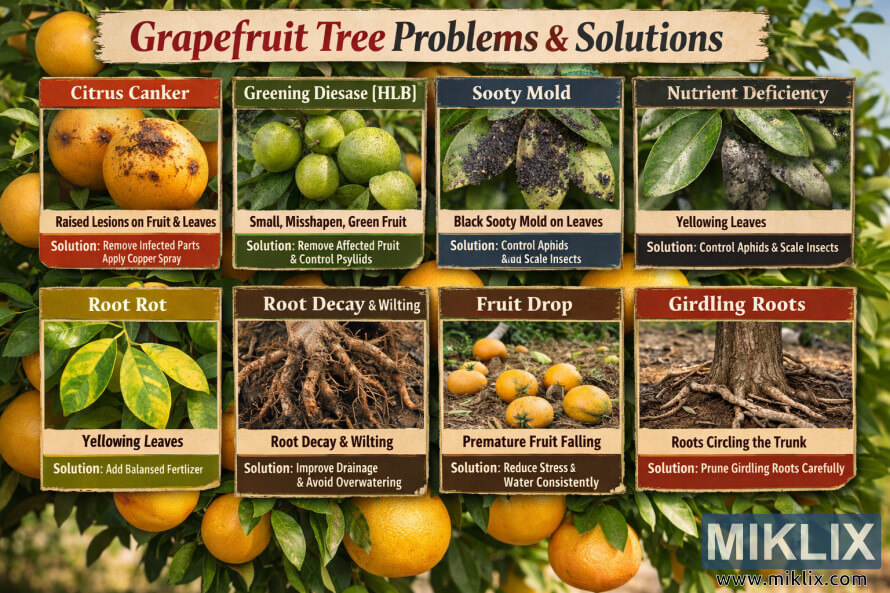
Visual guide to identifying and solving common grapefruit tree problems
Why are my grapefruit tree's leaves turning yellow?
Possible causes:
- Nutrient deficiency: Yellowing between veins often indicates iron or zinc deficiency. Apply a citrus micronutrient spray.
- Overwatering: Yellow leaves with brown tips may indicate root problems from excessive moisture. Reduce watering frequency and improve drainage.
- Underwatering: Leaves yellow and drop when the tree is drought-stressed. Increase watering consistency.
- Pest infestation: Check undersides of leaves for insects. Treat with appropriate methods if pests are present.
Why is my tree flowering but not producing fruit?
Possible causes:
- Young tree: Trees under 3-5 years old may flower but drop fruit as they focus on growth.
- Pollination issues: Lack of pollinators or extreme weather during flowering can affect fruit set.
- Nutrient imbalance: Too much nitrogen promotes leafy growth at the expense of fruit. Use a balanced fertilizer.
- Environmental stress: Temperature extremes or drought can cause fruit drop. Maintain consistent care.
Why are my grapefruits splitting before they're ripe?
Possible causes:
- Irregular watering: Fluctuations in soil moisture cause the fruit to expand and contract, leading to splits. Maintain consistent watering.
- Heavy rain after drought: Sudden uptake of water can cause splitting. Use mulch to moderate soil moisture.
- Nutrient imbalance: Calcium deficiency can weaken fruit skin. Apply a balanced citrus fertilizer.
- Pest damage: Some insects can damage the rind, creating entry points for splitting. Monitor and treat for pests.
Why is my container-grown tree dropping leaves in winter?
Possible causes:
- Normal acclimation: Some leaf drop is normal when moved indoors. The tree is adjusting to lower light.
- Temperature shock: Sudden temperature changes can cause leaf drop. Transition gradually when moving trees.
- Low humidity: Indoor heating creates dry air. Use a humidifier or pebble tray to increase humidity.
- Overwatering: Indoor trees need less water. Allow soil to dry more between waterings in winter.
Click or tap the image for more information and higher resolutions.
Conclusion: Enjoying Your Homegrown Grapefruits
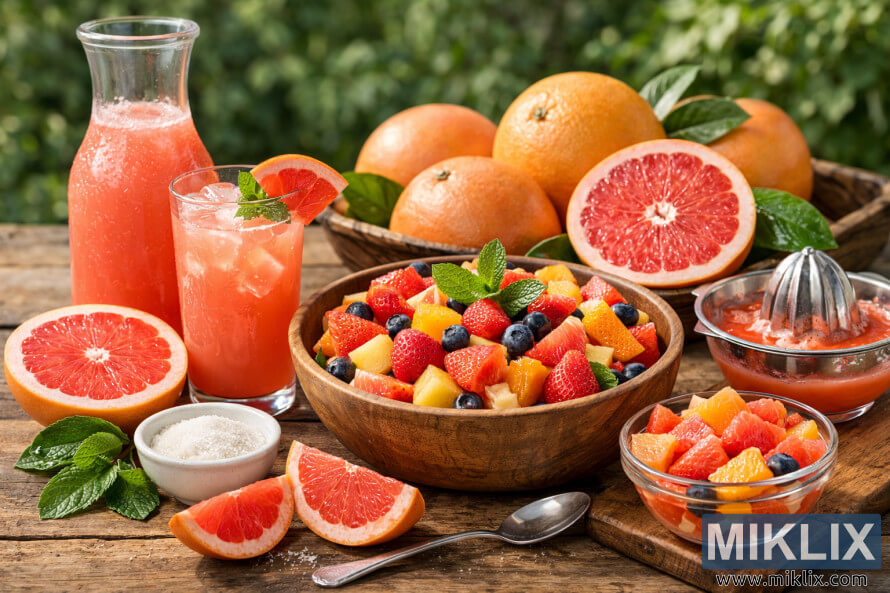
The delicious reward of growing your own grapefruits
Growing your own grapefruit trees requires patience and attention to detail, but the rewards are well worth the effort. With proper care, your trees can provide delicious, nutritious fruit for decades to come. Remember that each growing season brings new learning opportunities, and even experienced gardeners continue to refine their techniques.
Whether you're growing in the ground or in containers, the key to success lies in providing the right conditions: plenty of sunlight, well-draining soil, consistent watering, and regular feeding. By following the guidelines in this comprehensive guide, you'll be well on your way to harvesting your own juicy, flavorful grapefruits.
Click or tap the image for more information and higher resolutions.
Further Reading
If you enjoyed this post, you may also like these suggestions:
- Top Apple Varieties and Trees to Grow in Your Garden
- Growing Bell Peppers: A Complete Guide from Seed to Harvest
- A Guide to Growing the Best Kale in Your Garden