
Image: Best Practices for Long-Term Grapefruit Storage
Published: January 10, 2026 at 5:24:56 PM UTC
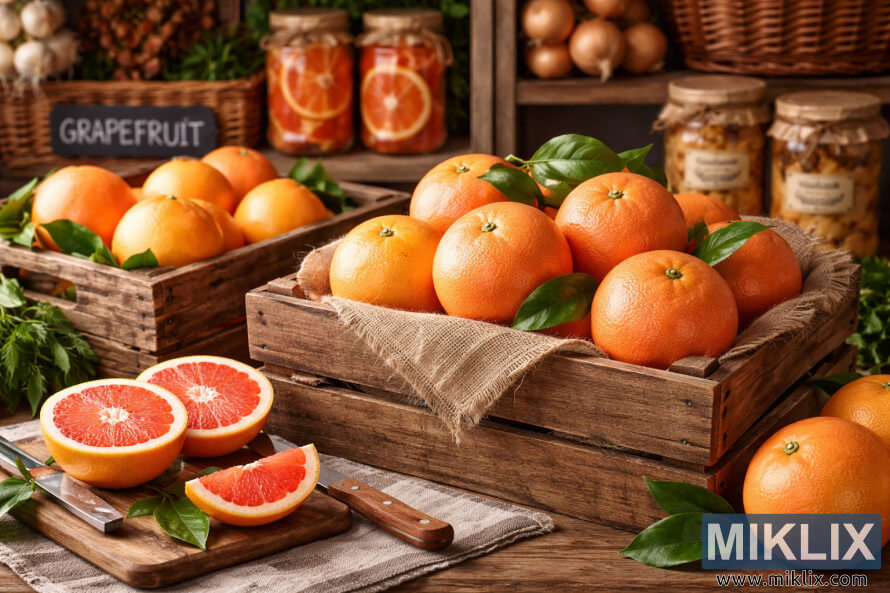
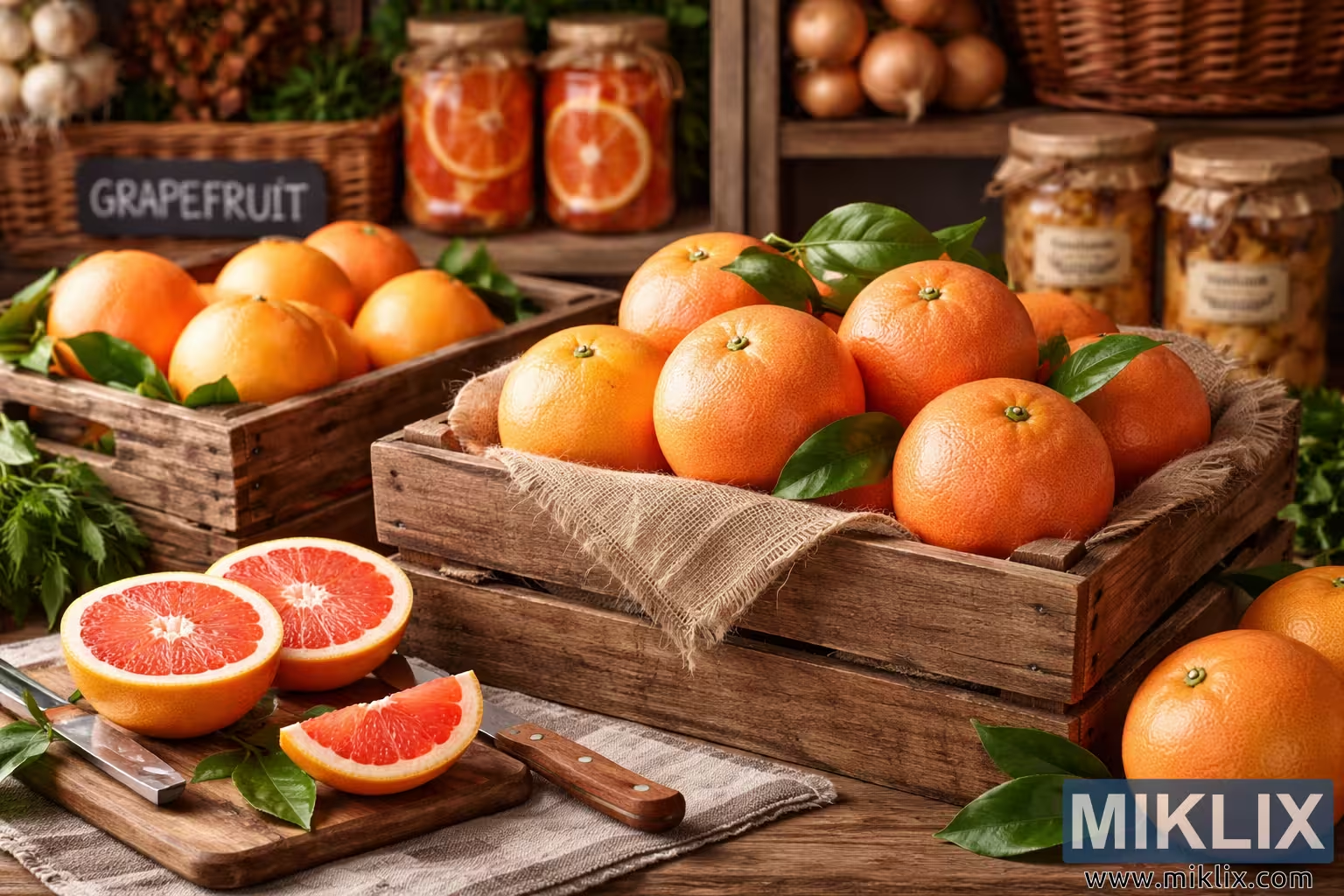
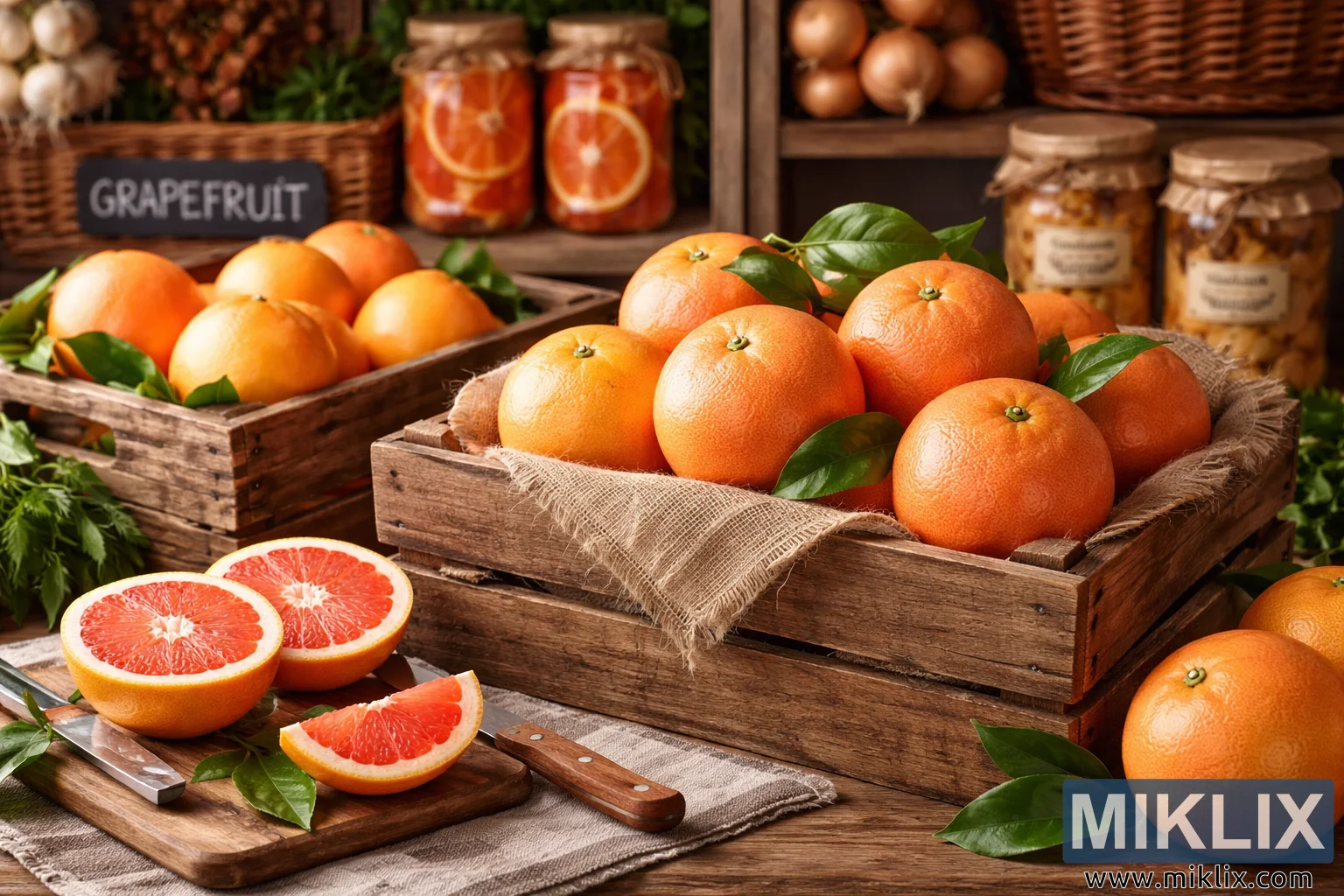
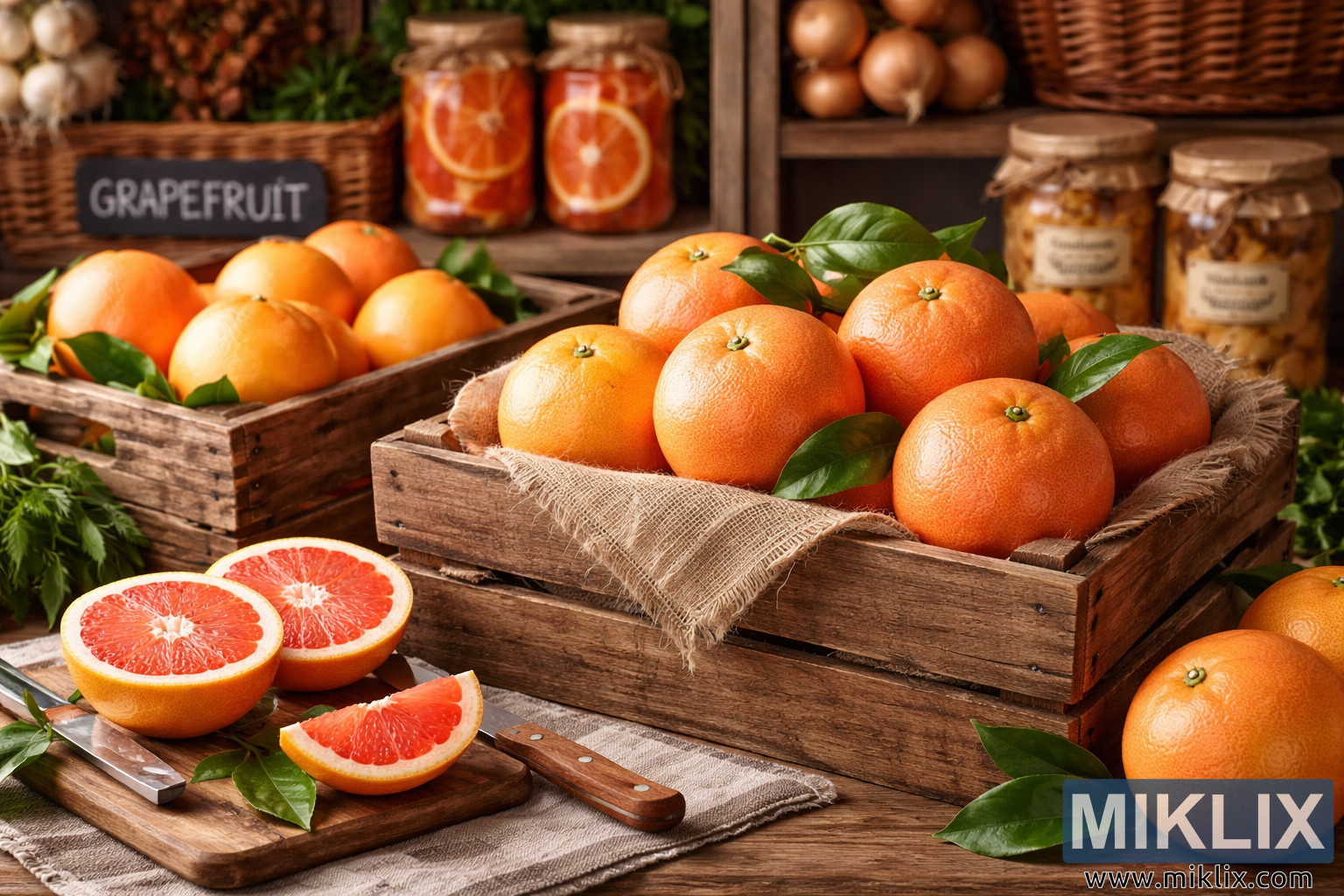
High-resolution image showing best practices for long-term grapefruit storage, featuring fresh grapefruits in ventilated wooden crates within a cool, dry pantry environment.
Available versions of this image
The image files available for download below are less compressed and higher resolution - and as a result of that, higher quality - than the images embedded in articles and pages on this website, which are more optimized for file size in order to reduce bandwidth consumption.
Regular size (1,536 x 1,024)
Large size (3,072 x 2,048)
Very large size (4,608 x 3,072)
Extra large size (6,144 x 4,096)
Comically large size (1,048,576 x 699,051)
- Still uploading... ;-)
Image description
The image presents a carefully staged, high-resolution landscape photograph illustrating best practices for long-term grapefruit storage in a rustic, pantry-like environment. In the foreground, two sturdy wooden crates sit atop a wooden work surface, each lined with coarse burlap that allows airflow while cushioning the fruit. The crates are filled with whole grapefruits that appear freshly harvested, their skins smooth, taut, and evenly colored in warm shades of orange with subtle pink undertones. Several fruits retain glossy green leaves attached to short stems, a visual cue of freshness and minimal handling. The grapefruits are arranged loosely rather than stacked tightly, emphasizing proper spacing to prevent bruising and moisture buildup during storage. In front of the crates, a wooden cutting board holds a halved grapefruit and a wedge, exposing vibrant ruby-red flesh with clearly defined segments and a moist, juicy texture. A wooden-handled knife rests nearby, suggesting inspection or rotation of stored fruit rather than active food preparation. The exposed flesh contrasts strongly with the matte peel, reinforcing the idea of quality preserved over time. Scattered green leaves around the surface add a natural, farm-to-pantry atmosphere without implying disorder. In the midground and background, open wooden shelving holds preserved foods in glass jars, baskets of onions or garlic, and fresh herbs. These elements frame the grapefruits within a broader context of traditional food storage, reinforcing the theme of a cool, dry, well-ventilated space. A small chalkboard-style label reading “Grapefruit” is visible on one shelf, subtly indicating organization and inventory management. The lighting is soft and directional, likely natural light entering from one side, creating gentle highlights on the fruit skins and soft shadows beneath the crates. This lighting choice enhances texture and realism while suggesting a cool, stable environment rather than harsh heat or direct sunlight. Overall, the image communicates cleanliness, order, and care, visually demonstrating how grapefruits should be stored: unwrapped, dry, well-spaced, protected by breathable materials, and kept in a dedicated storage area designed for longevity and quality preservation.
The image is related to: A Complete Guide to Growing Grapefruits From Planting to Harvest