
Image: Lime Tree Disease Identification Guide
Published: February 7, 2026 at 5:32:19 PM UTC
Visual guide to identifying common lime tree diseases including citrus canker, powdery mildew, leaf miner, sooty mold, and nutrient deficiency.
Available versions of this image
The image files available for download below are less compressed and higher resolution - and as a result of that, higher quality - than the images embedded in articles and pages on this website, which are more optimized for file size in order to reduce bandwidth consumption.
Regular size (1,536 x 1,024)
Large size (3,072 x 2,048)
Very large size (4,608 x 3,072)
Extra large size (6,144 x 4,096)
Comically large size (1,048,576 x 699,051)
- Still uploading... ;-)
Image description
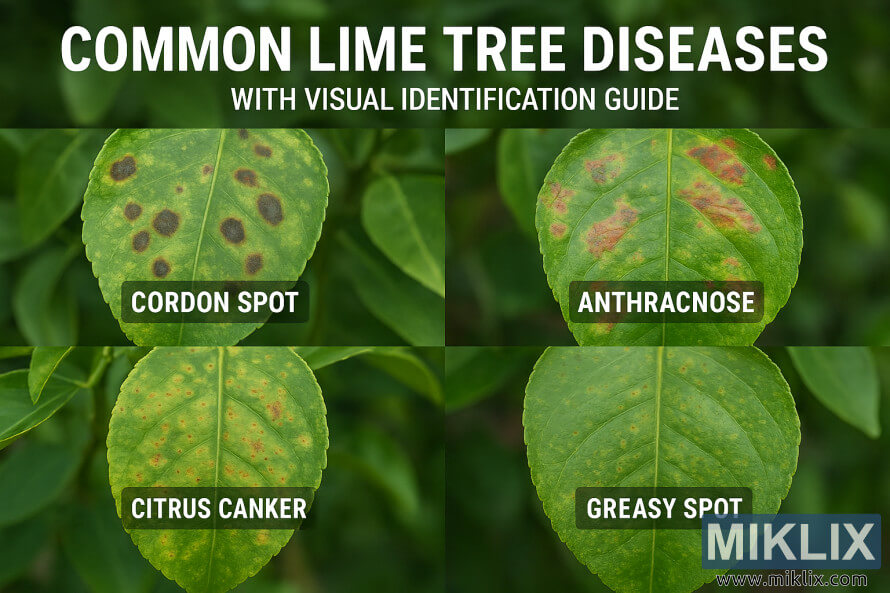
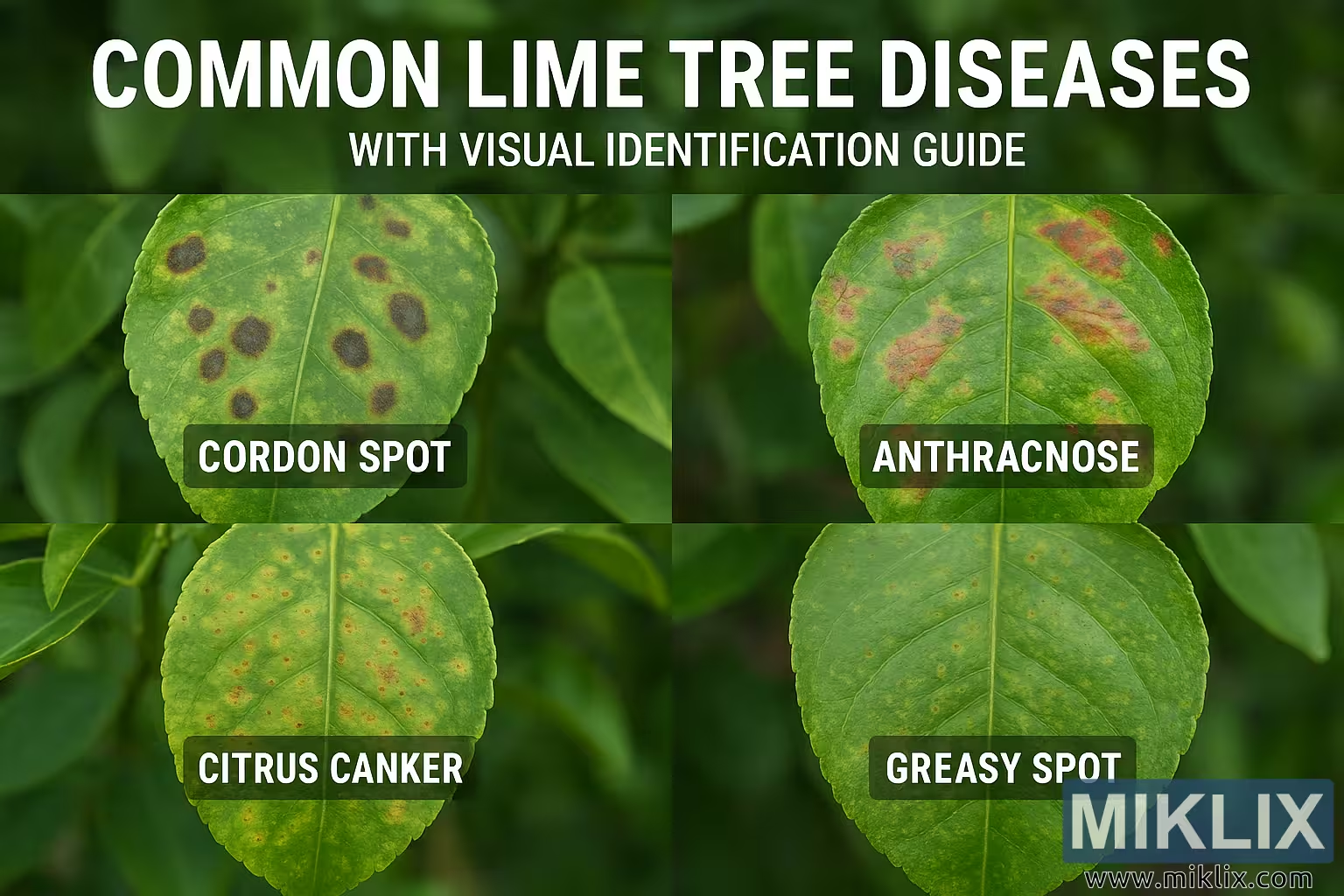
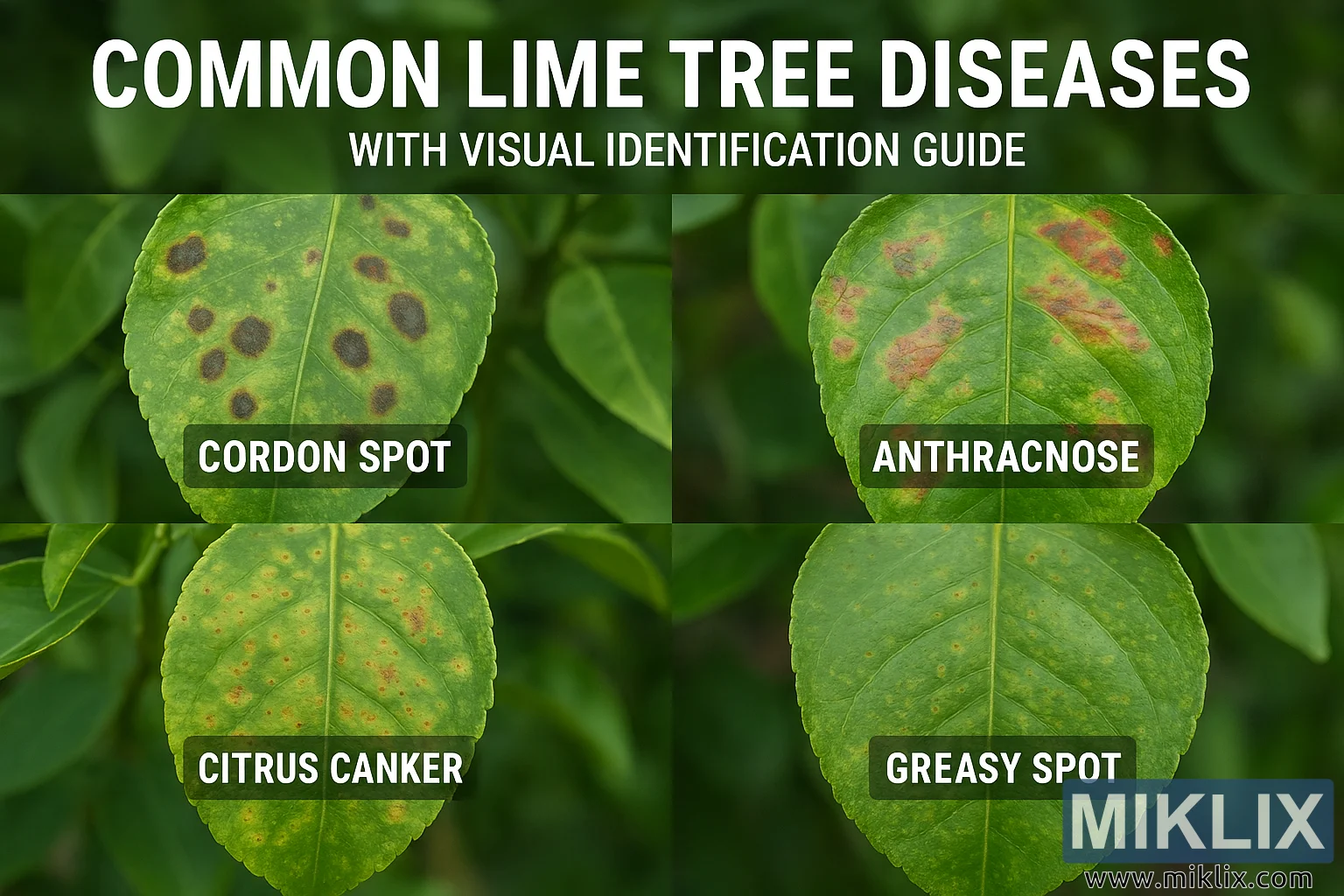
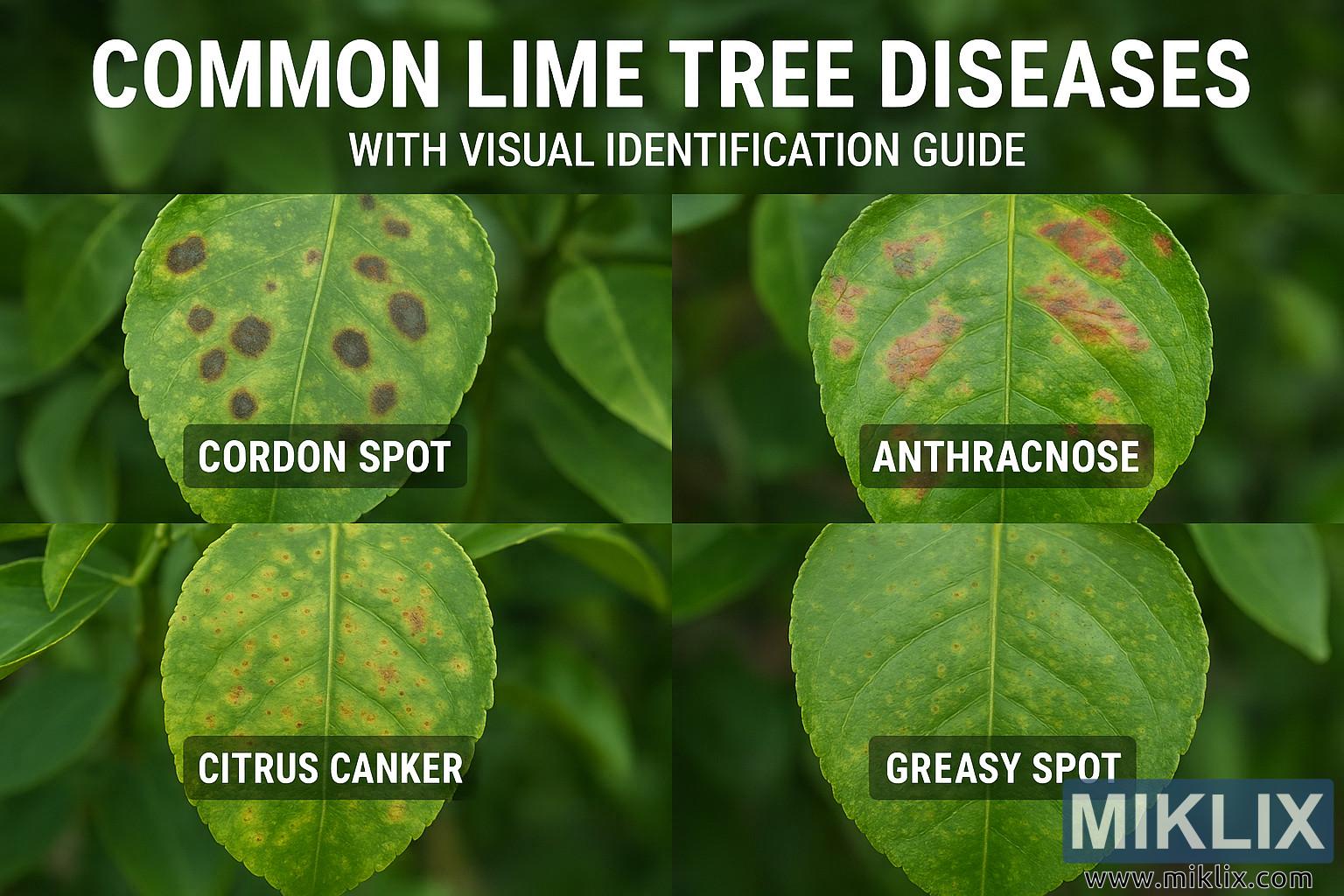
This high-resolution landscape-format educational image presents a detailed visual guide to five common lime tree diseases, designed for horticultural reference and plant pathology awareness. The image is divided into five labeled sections, each showcasing a close-up of a lime tree leaf or branch affected by a distinct disease.
The first section features **Powdery Mildew**, depicted as a lime leaf covered in a fine, white, powdery fungal coating. The mildew appears primarily on the upper surface of the leaf, forming irregular patches that obscure the natural green color. The leaf edges are slightly curled, and the background includes blurred healthy foliage for contrast.
The second section illustrates **Citrus Canker**, showing a leaf with numerous raised, light brown lesions surrounded by bright yellow halos. The lesions are scattered across the leaf surface, some merging into larger necrotic areas. The leaf texture appears rough and corky, with visible vein distortion. The background includes additional infected leaves and soft-focus branches.
The third section highlights **Leaf Miner Damage**, with a lime leaf displaying winding, silvery-white trails caused by larval feeding between leaf layers. These serpentine tunnels follow erratic paths across the leaf surface, often converging near the central vein. The leaf appears thin and slightly translucent in affected areas, with a natural green background.
The fourth section shows **Sooty Mold**, characterized by a black, velvety fungal coating covering the leaf surface. This mold grows on honeydew secretions from sap-sucking insects. The leaf underneath is barely visible, and the mold appears thickest near the midrib. The background includes other leaves with varying degrees of mold coverage.
The fifth section depicts **Nutrient Deficiency**, with a lime leaf showing interveinal chlorosis—yellowing between green veins—and mottled discoloration. The leaf edges are slightly scorched, and the overall texture is limp and thin. The background includes other symptomatic leaves and healthy foliage for comparison.
Each section is clearly labeled with the disease name in bold, white, capitalized text on a semi-transparent black banner. The lighting is natural and even, emphasizing the texture and color variations of each disease symptom. The composition is clean and symmetrical, with crisp focus on the affected leaves and soft-focus backgrounds to enhance visual clarity. This image serves as a practical diagnostic reference for gardeners, citrus growers, and plant health professionals.
The image is related to: A Complete Guide to Growing Limes in Your Home Garden