
Image: Lime Tree Leaf Deficiency Guide
Published: February 7, 2026 at 5:32:19 PM UTC
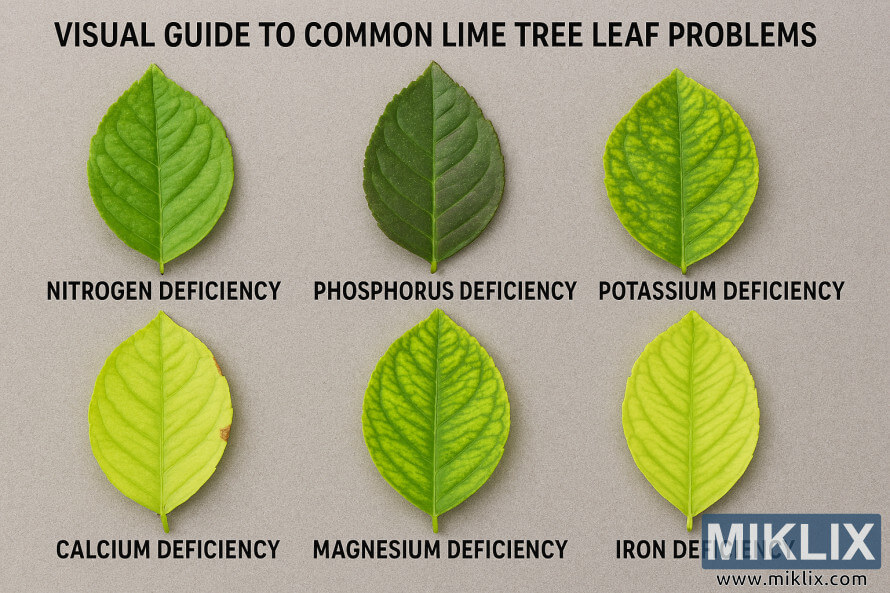
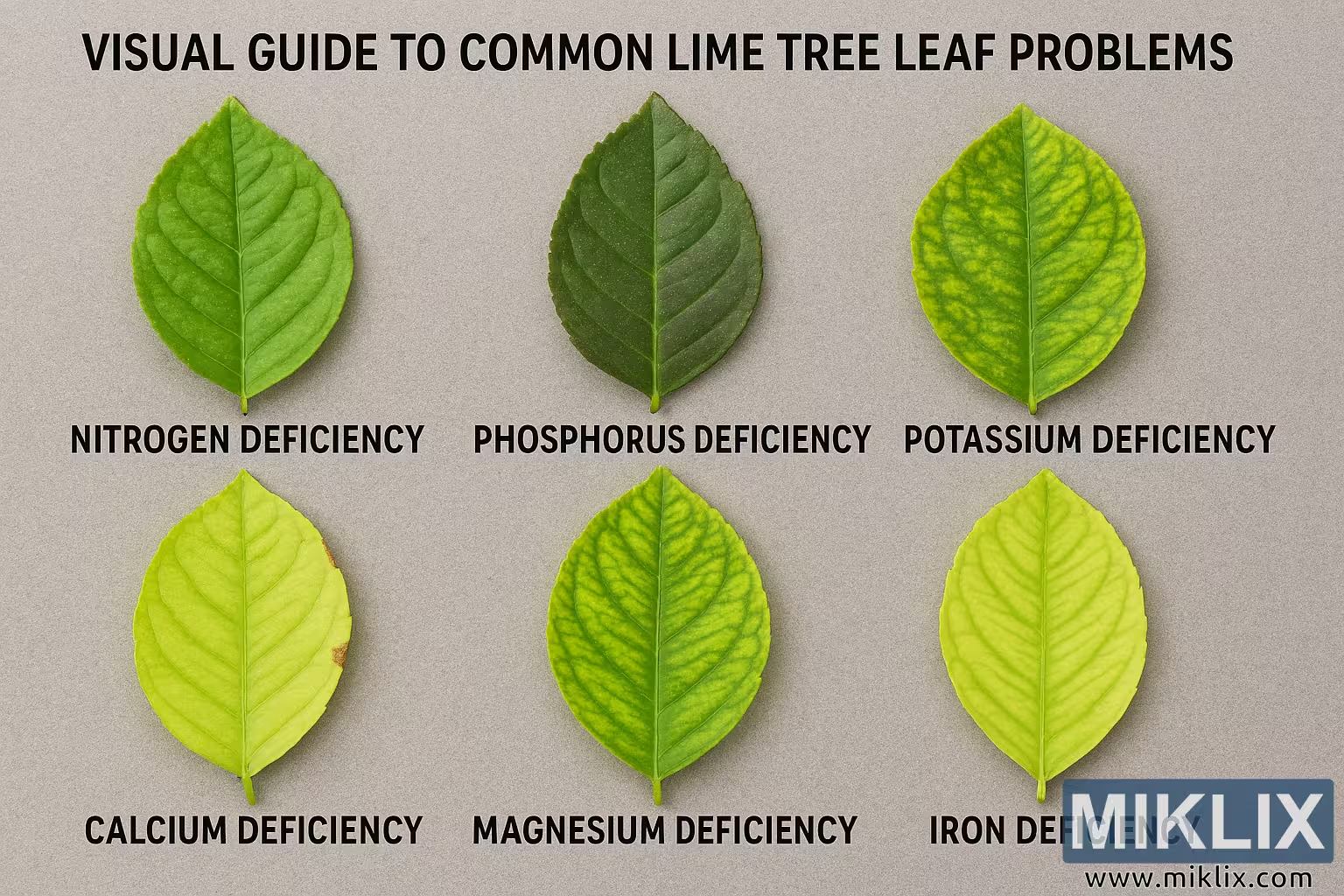
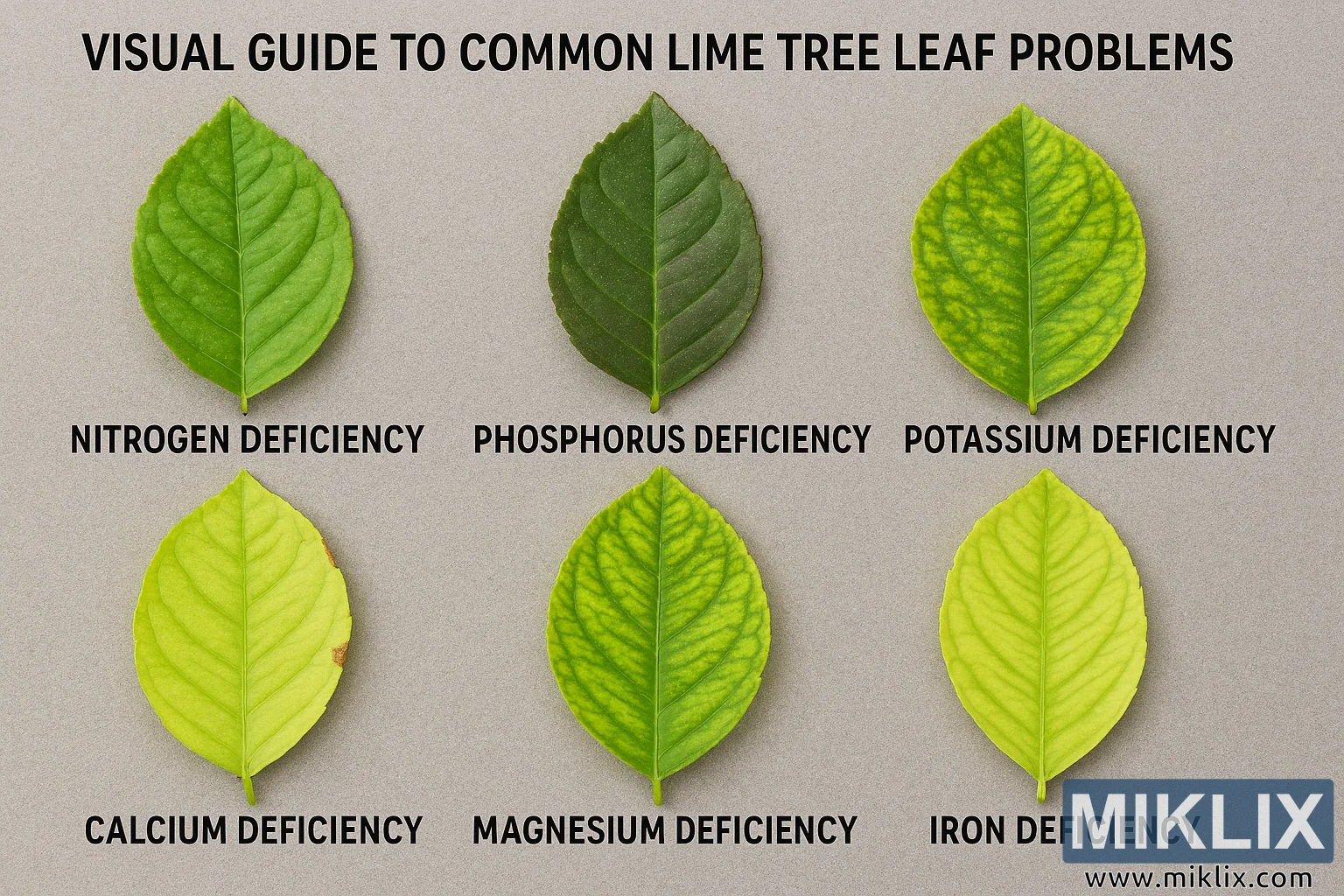
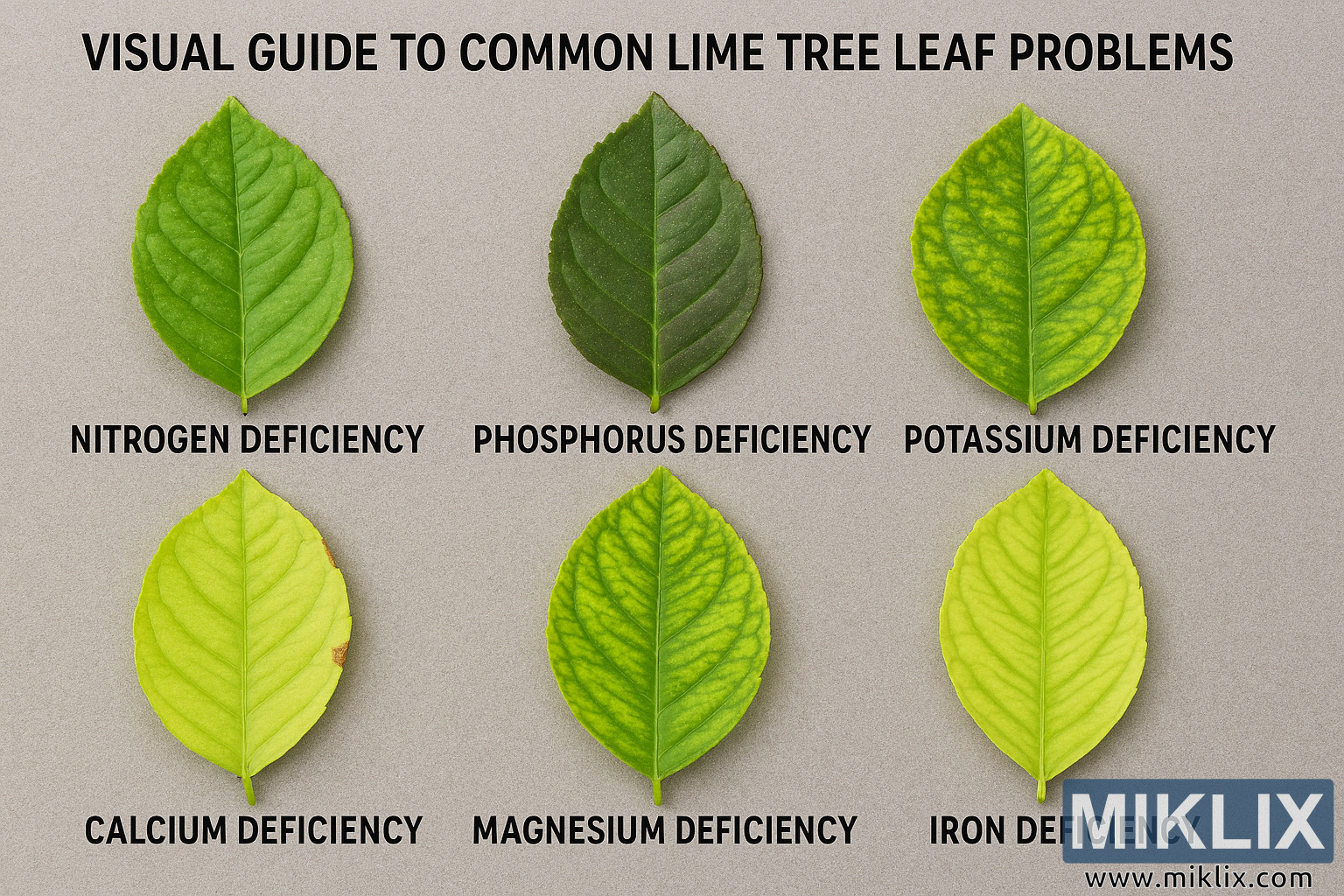
High-resolution visual guide to common lime tree leaf problems, illustrating nutrient deficiencies with labeled leaf examples for educational and horticultural use.
Available versions of this image
The image files available for download below are less compressed and higher resolution - and as a result of that, higher quality - than the images embedded in articles and pages on this website, which are more optimized for file size in order to reduce bandwidth consumption.
Regular size (1,536 x 1,024)
Large size (3,072 x 2,048)
Very large size (4,608 x 3,072)
Extra large size (6,144 x 4,096)
Comically large size (1,048,576 x 699,051)
- Still uploading... ;-)
Image description
This high-resolution landscape image presents a detailed visual guide titled \"VISUAL GUIDE TO COMMON LIME TREE LEAF PROBLEMS\". It features six lime tree leaves arranged in two horizontal rows of three, each representing a distinct nutrient deficiency. The leaves are photographed against a neutral gray textured background, which enhances the visibility of their color variations and structural details.
Each leaf is labeled with bold, uppercase black text identifying the specific deficiency it illustrates. The top row includes:
1. \"NITROGEN DEFICIENCY\": A green leaf with lighter green edges and prominent pale veins. The leaf surface is glossy, and the central vein is clearly defined, with branching secondary veins.
2. \"PHOSPHORUS DEFICIENCY\": A dark green leaf with purple discoloration along the margins and veins. The purple hues fade toward the center, creating a gradient effect.
3. \"POTASSIUM DEFICIENCY\": A leaf with irregular yellow mottling concentrated near the edges. The green areas are interspersed with yellow patches, giving a speckled appearance.
The bottom row continues with:
4. \"CALCIUM DEFICIENCY\": A pale yellow-green leaf with large, irregular brown necrotic patches along the edges. The leaf margins are slightly curled, and the damage is more pronounced near the tips.
5. \"MAGNESIUM DEFICIENCY\": A leaf showing bright yellow interveinal chlorosis, where the veins remain green but the tissue between them turns yellow. This creates a striking contrast and a net-like pattern.
6. \"IRON DEFICIENCY\": A uniformly pale yellow leaf with green veins. The yellowing is most intense near the edges, while the veins retain their green coloration, forming a clear vascular pattern.
All leaves share a similar ovate shape with pointed tips and slightly wavy margins. Their petioles are slender and green, extending from the base of each leaf. The lighting is soft and diffused, ensuring even illumination and accurate color representation.
This image serves as an educational tool for gardeners, horticulturists, and agricultural professionals, helping to identify and diagnose nutrient-related issues in lime trees. The clear labeling and photographic realism make it suitable for use in training materials, plant care guides, and visual catalogs.
The image is related to: A Complete Guide to Growing Limes in Your Home Garden