
Image: Nectarine on Tree Showing Pest and Disease Damage
Published: February 9, 2026 at 7:03:37 PM UTC
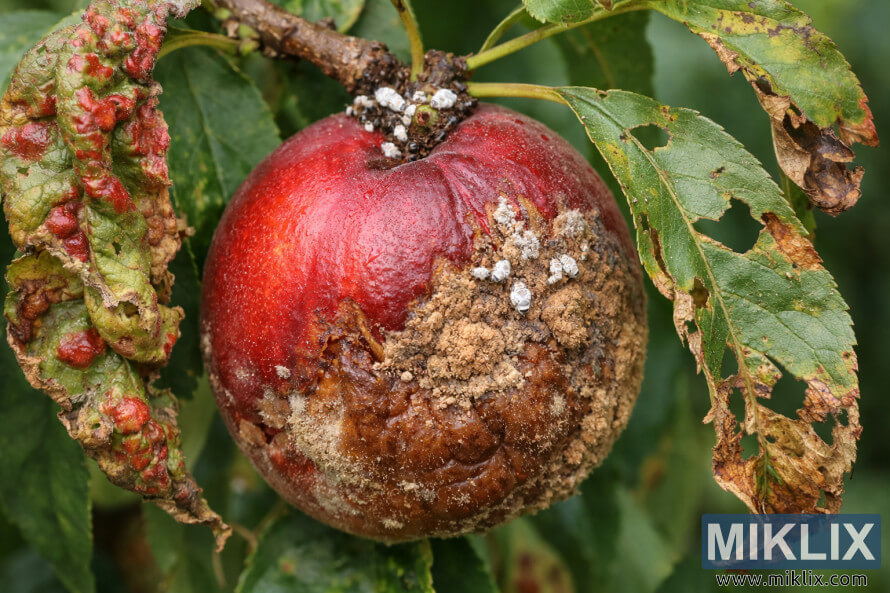
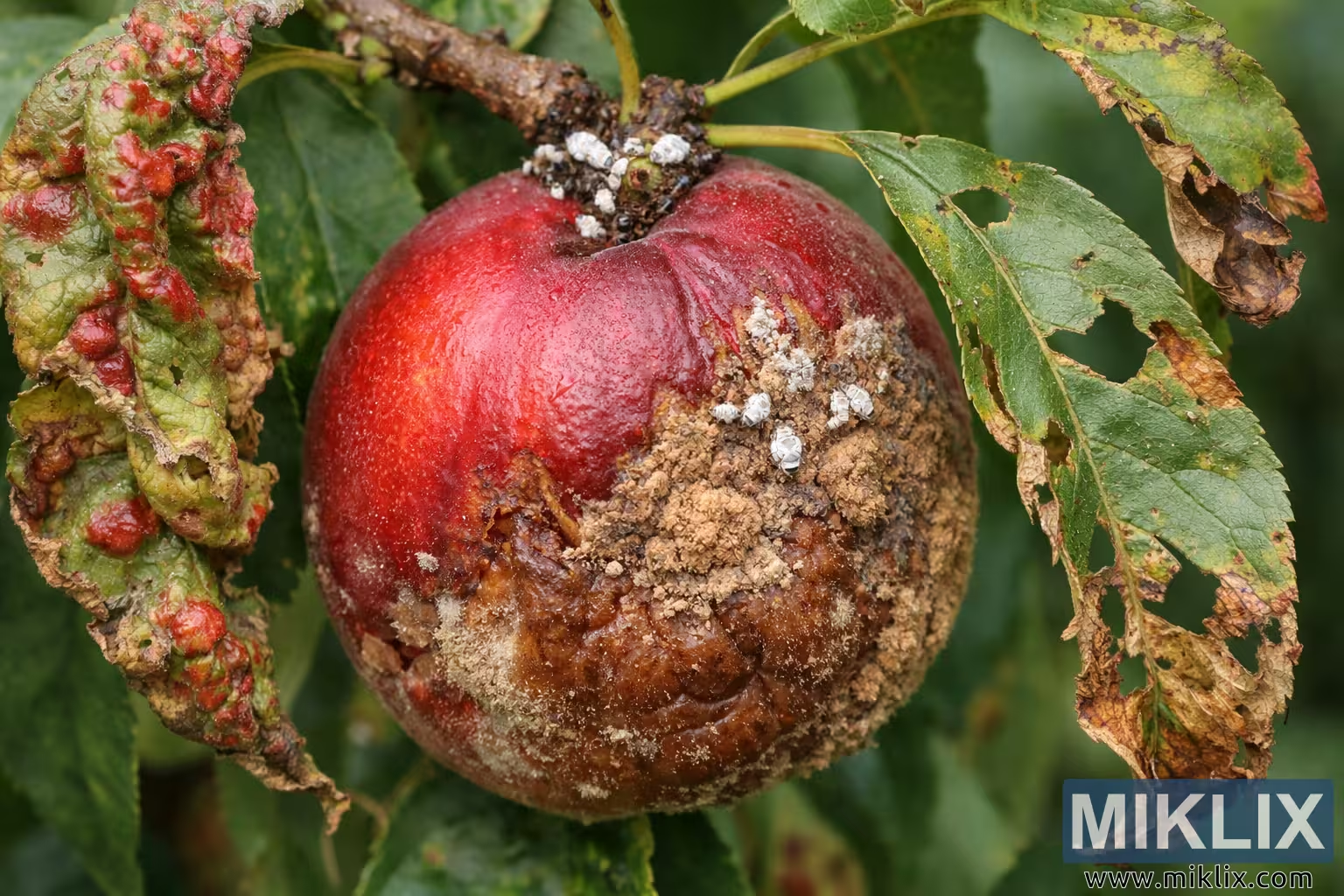
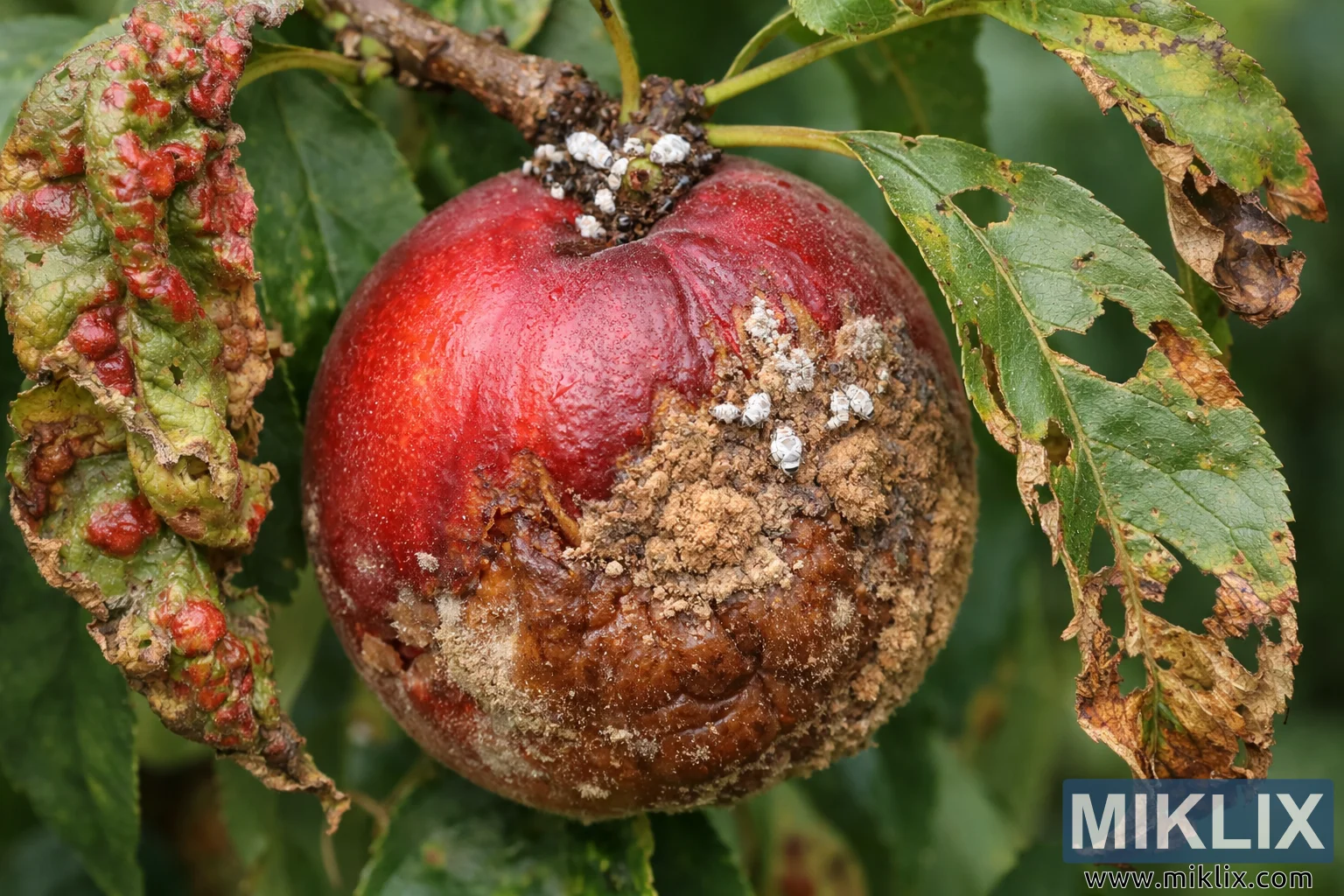
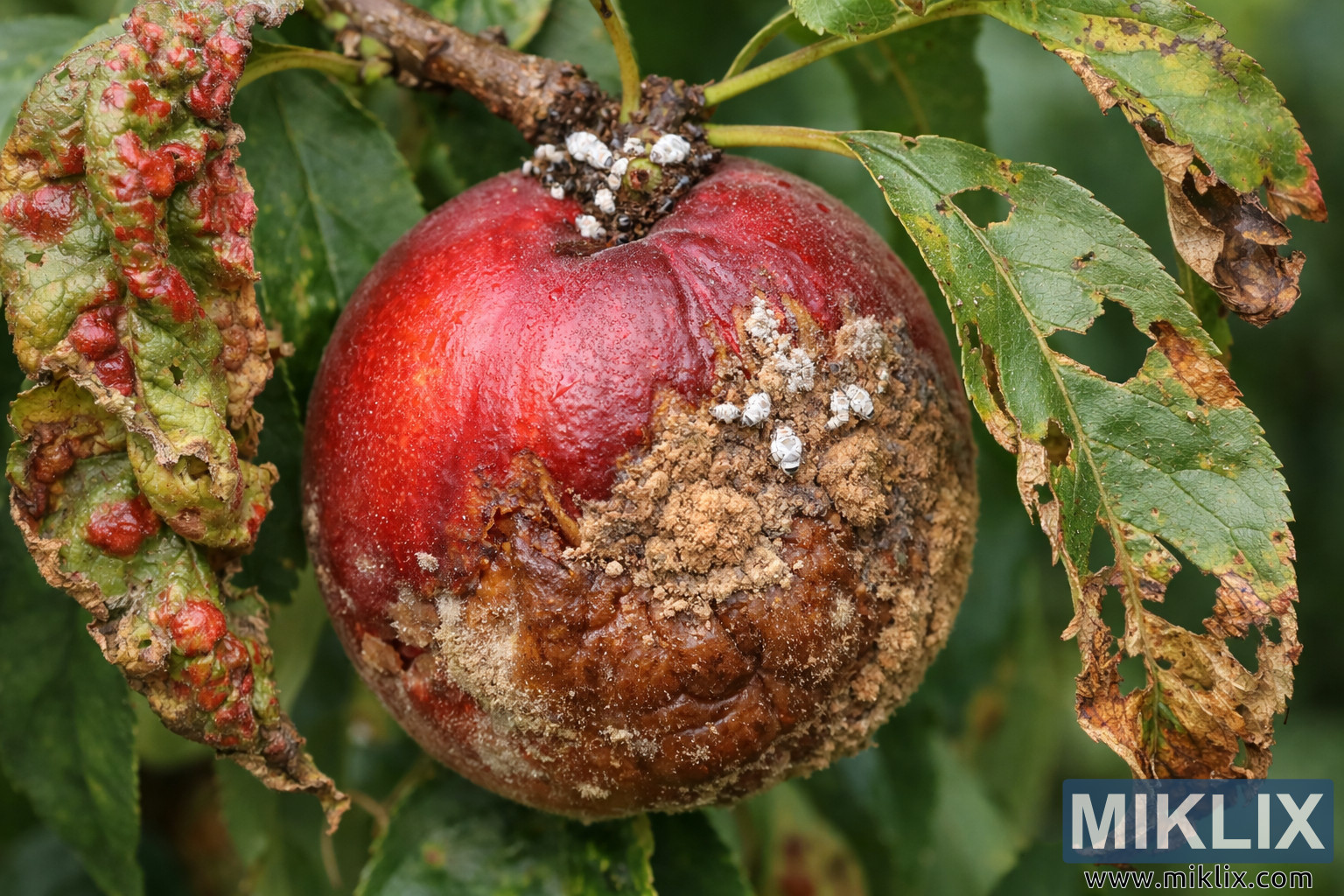
Detailed close-up photograph of a nectarine still on the tree, showing mealybug infestation, brown rot on the fruit, and surrounding leaves damaged by curl and disease.
Available versions of this image
The image files available for download below are less compressed and higher resolution - and as a result of that, higher quality - than the images embedded in articles and pages on this website, which are more optimized for file size in order to reduce bandwidth consumption.
Regular size (1,536 x 1,024)
Large size (3,072 x 2,048)
Very large size (4,608 x 3,072)
Extra large size (6,144 x 4,096)
Comically large size (1,048,576 x 699,051)
- Still uploading... ;-)
Image description
The image presents a highly detailed close-up of a ripe nectarine still attached to a tree branch, captured in a natural outdoor orchard setting. The fruit dominates the center of the frame and displays a stark contrast between apparent ripeness and advanced decay. The upper portion of the nectarine shows a glossy, deep red skin with fine surface texture and subtle moisture, suggesting maturity and recent environmental humidity. In contrast, the lower half of the fruit is severely affected by brown rot, appearing sunken, darkened, and covered with fuzzy, mold-like growth that clings unevenly to the skin. The decayed area has a granular, dusty appearance, with patches of tan and brown fungal material spreading upward from the bottom.
Clusters of white mealybugs are clearly visible around the stem cavity and along the upper side of the fruit. These insects appear as small, oval, cottony masses, grouped tightly where the fruit meets the woody branch. Their presence emphasizes pest infestation and contributes to the overall sense of agricultural stress depicted in the image.
Surrounding the nectarine are multiple leaves in varying stages of damage. On the left side, a leaf shows severe leaf curl, characterized by thickened, twisted tissue with blistered, reddish-green bumps and distorted edges. On the right side, several leaves exhibit extensive physical damage, including irregular holes, browned margins, and areas of chlorosis. Some leaf tips are dried, curled, and brittle, indicating prolonged exposure to disease, pests, or environmental stress.
The branch itself appears rough and weathered, with small cracks and natural texture visible beneath the insects. The background is softly blurred, composed of green foliage that provides context without distracting from the subject, reinforcing the close-up, diagnostic nature of the photograph. Overall, the image serves as a realistic and educational depiction of common nectarine tree problems, illustrating the combined impact of insect infestation, fungal disease, and leaf disorders on fruit quality and plant health.
The image is related to: A Complete Guide to Growing Nectarines in Your Home Garden