
A Complete Guide to Growing Nectarines in Your Home Garden
Published: February 9, 2026 at 7:03:37 PM UTC
Growing nectarines in your home garden offers a special kind of satisfaction. These smooth-skinned relatives of peaches reward gardeners with sweet, juicy fruit that tastes incomparably better than store-bought options.
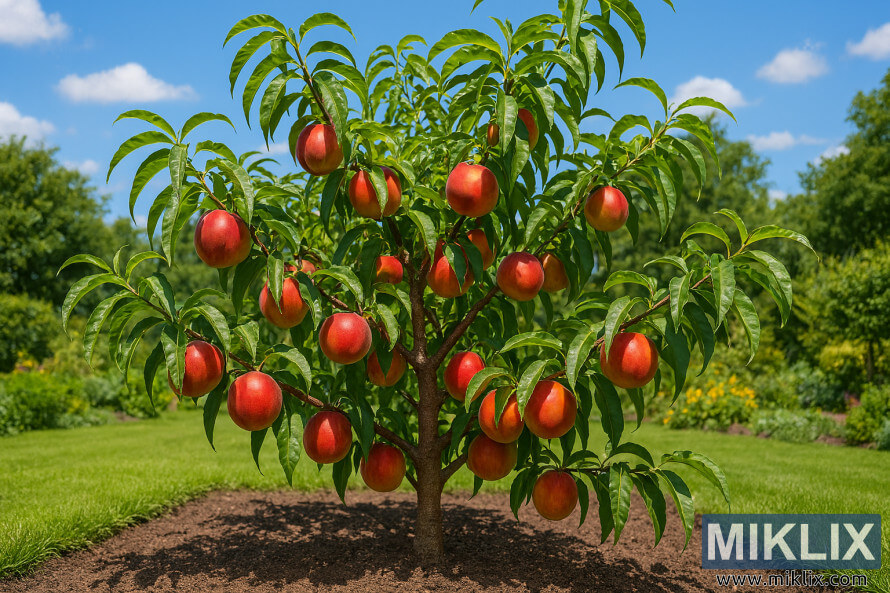
Click or tap the image for more information and higher resolutions.
While many gardeners believe nectarines are challenging to grow, with the right knowledge and care, you can enjoy bountiful harvests from your own backyard trees.
Whether you're a seasoned gardener looking to expand your orchard or a beginner eager to try your hand at fruit trees, this comprehensive guide will walk you through everything you need to know about growing nectarines successfully.
Choosing the Right Nectarine Variety
Selecting the appropriate nectarine variety is crucial for success in your specific climate and garden conditions. Unlike some fruit trees, most modern nectarine varieties are self-pollinating, meaning you only need one tree to produce fruit.
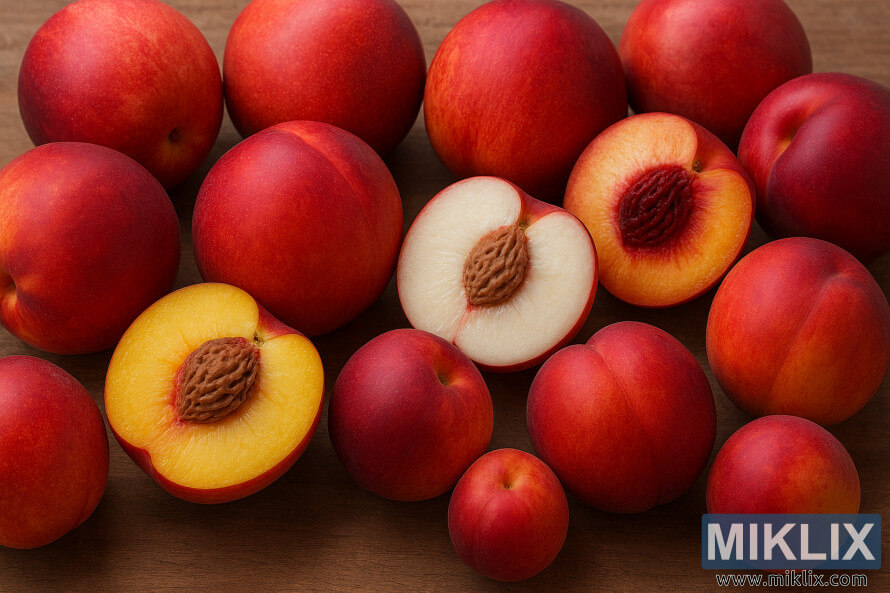
Click or tap the image for more information and higher resolutions.
Understanding Chill Hours
Nectarine trees, like other stone fruits, require a certain number of hours below 45°F (7°C) during winter dormancy to produce fruit properly. This is known as "chill hours," and it's one of the most important factors in variety selection.
| Chill Hour Requirement | Climate Zone | Example Varieties |
| Low (200-400 hours) | USDA Zones 8-10 | Desert Dawn, Sunred, Southern Belle |
| Medium (400-700 hours) | USDA Zones 7-8 | Fantasia, Flavortop, Red Gold |
| High (700+ hours) | USDA Zones 5-7 | Mericrest, Hardired, Arctic Rose |
Tree Size Options
Nectarine trees come in different sizes to suit various garden spaces:
Standard
Grows 15-25 feet tall and wide. Best for large gardens with ample space. Takes 3-5 years to bear fruit.
Semi-Dwarf
Reaches 12-15 feet tall and wide. Good compromise between yield and space. Bears fruit in 2-4 years.
Dwarf
Grows 8-10 feet tall and wide. Perfect for small gardens or containers. Often produces fruit in 2-3 years.
Popular Nectarine Varieties
When selecting a nectarine variety, consider not only chill hours but also disease resistance, flavor profile, and whether you prefer freestone (flesh separates easily from pit) or clingstone (flesh adheres to pit) types.
Yellow-Flesh Varieties
- Fantasia: Large freestone with excellent flavor. Ripens mid to late season. 500 chill hours.
- Flavortop: Medium-sized freestone with sweet, aromatic flavor. Ripens mid-season. 650 chill hours.
- Sunglo: Large freestone with excellent flavor. Good disease resistance. 800 chill hours.
White-Flesh Varieties
- Arctic Sweet: Medium-sized freestone with sweet, low-acid flavor. 700 chill hours.
- Snow Queen: Early-season white nectarine with excellent flavor. 400 chill hours.
- Arctic Jay: Large freestone with sweet flavor. Good disease resistance. 500 chill hours.
Site Selection and Planting
Proper site selection and planting techniques are crucial for the long-term success of your nectarine tree. Taking time to prepare the right location will reward you with healthier trees and better harvests.
Sunlight and Location Requirements
Nectarine trees thrive in specific conditions:
- Full sun: Nectarines require at least 6-8 hours of direct sunlight daily for optimal growth and fruit production.
- Air circulation: Good airflow helps prevent fungal diseases. Avoid planting in low spots where cold air settles.
- Protection: Some shelter from strong winds is beneficial, but don't plant too close to buildings or larger trees.
- Spacing: Allow 15-20 feet between standard trees, 12-15 feet for semi-dwarf, and 8-10 feet for dwarf varieties.
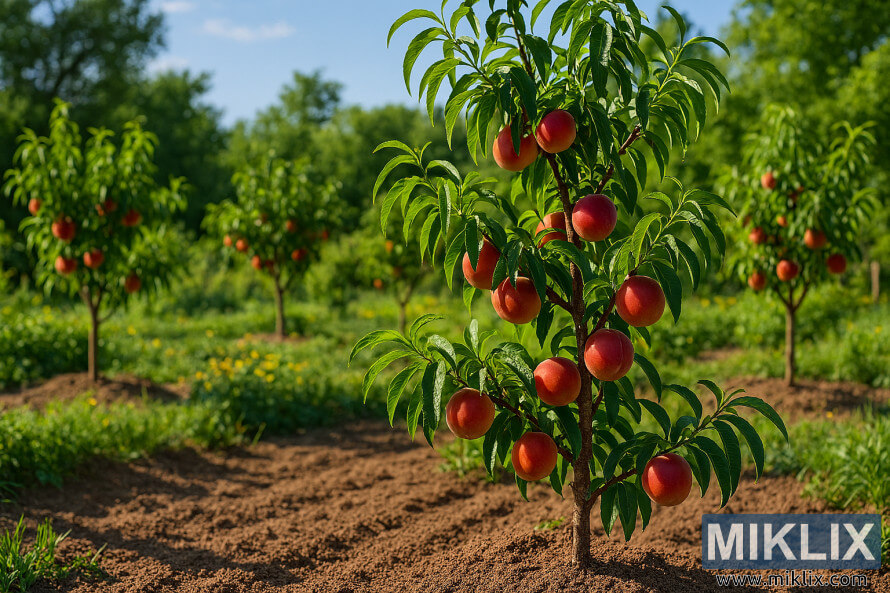
Click or tap the image for more information and higher resolutions.
Soil Requirements
Nectarines grow best in:
- Well-draining soil: Nectarines cannot tolerate wet feet. Sandy loam is ideal.
- pH level: Slightly acidic to neutral soil (pH 6.0-7.0) is preferred.
- Soil depth: At least 18-24 inches of good soil for proper root development.
Pro Tip: Before planting, conduct a soil test through your local extension office. This will help you determine if any amendments are needed to create optimal growing conditions for your nectarine tree.
Step-by-Step Planting Guide
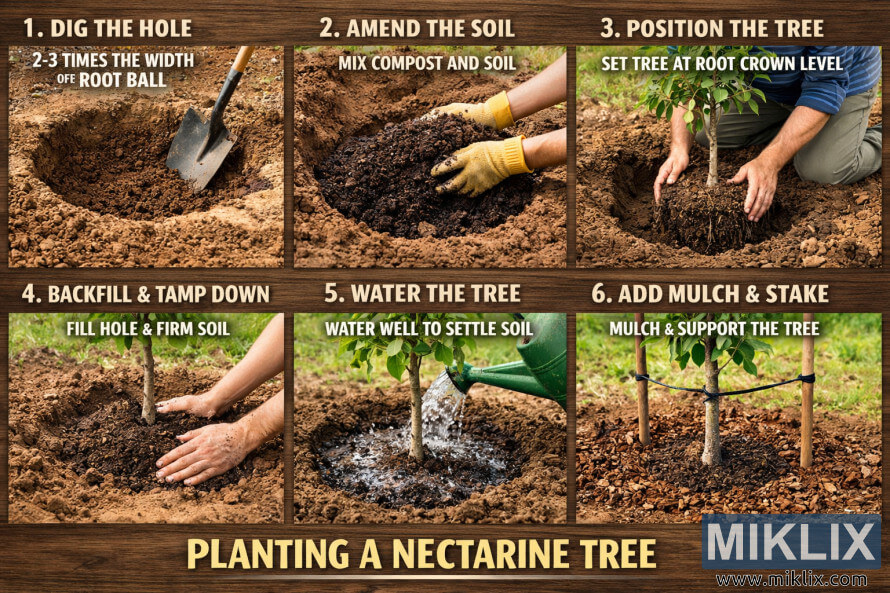
The best time to plant nectarine trees is during late winter or early spring while the tree is still dormant.
- Prepare the planting hole: Dig a hole twice as wide as the root ball and just as deep. Creating a wide hole encourages outward root growth.
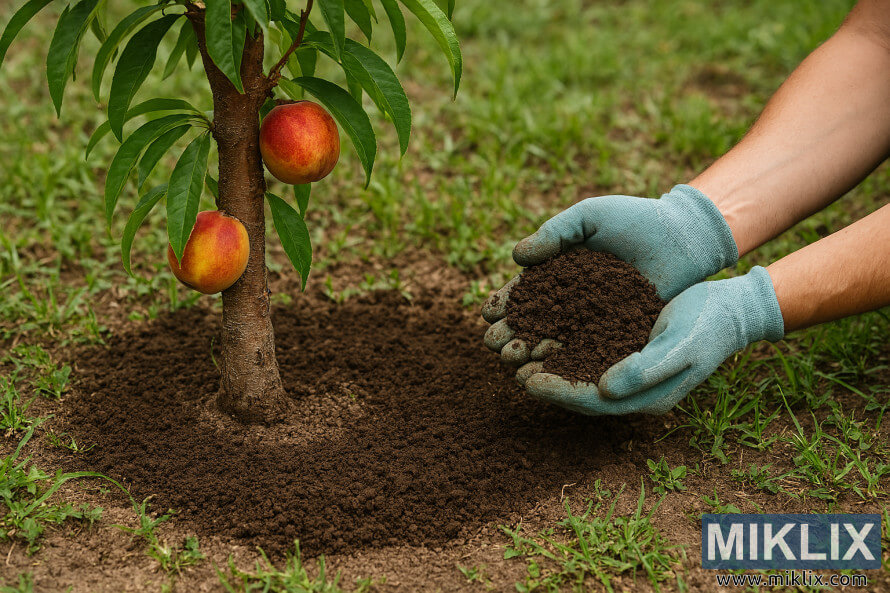
- Amend the soil: Mix the native soil with compost or well-rotted manure (about 25% amendment to 75% native soil).
- Position the tree: Place the tree in the hole, making sure the graft union (swollen area on the trunk) sits 2-3 inches above soil level.
- Backfill carefully: Fill in with the amended soil, gently tamping down to remove air pockets but not compacting too firmly.
- Water thoroughly: Create a basin around the tree and water deeply to help settle the soil.
- Mulch: Apply 2-3 inches of organic mulch in a 3-foot circle around the tree, keeping it 3-4 inches away from the trunk.
- Stake if necessary: In windy areas, stake the tree for the first year, but allow some movement to develop trunk strength.
Click or tap the image for more information and higher resolutions.
Care and Maintenance
Proper care and maintenance are essential for growing healthy nectarine trees that produce abundant, delicious fruit. Establishing good practices from the beginning will help prevent problems and ensure years of successful harvests.
Watering Guidelines
Proper watering is critical for nectarine tree health and fruit production:
Newly Planted Trees
- Water deeply 2-3 times per week for the first month
- Reduce to once weekly for the remainder of the first growing season
- Create a watering basin around the tree to direct water to roots
Established Trees
- Water deeply every 10-14 days during dry periods
- Provide approximately 1-2 inches of water per week during fruit development
- Reduce watering after harvest and during dormancy
- Avoid overhead watering to prevent disease issues
- Consider drip irrigation for efficient, targeted watering
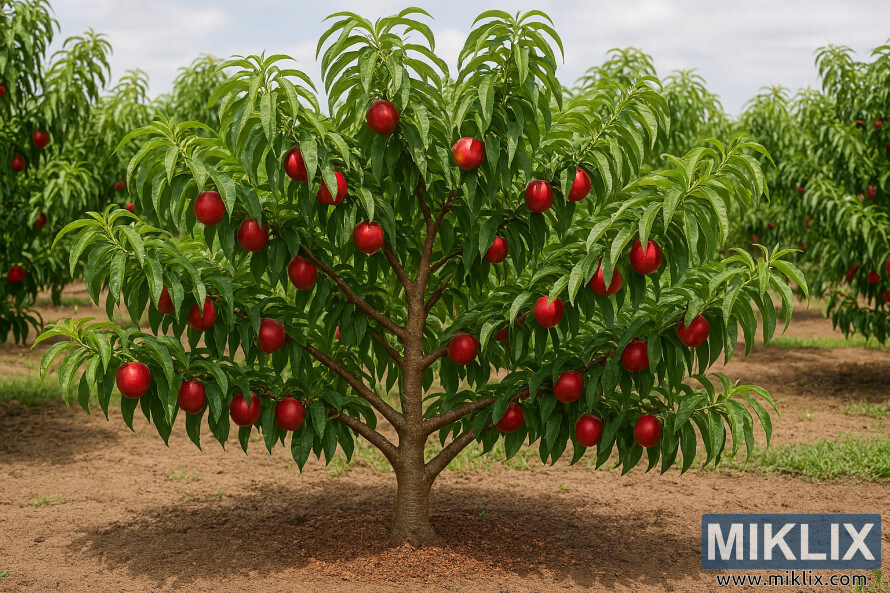
Water Check: To determine if your tree needs water, dig 4-6 inches into the soil near the drip line. If the soil feels dry at this depth, it's time to water.
Click or tap the image for more information and higher resolutions.
Fertilizing Schedule
Nectarine trees benefit from regular fertilization to support growth and fruit production:
| Tree Age | Timing | Fertilizer Type | Amount |
| First year | Early spring (after planting) | Balanced (10-10-10) | ½ cup |
| Second year | Early spring and early summer | Balanced (10-10-10) | 1 cup total, split between applications |
| Third year | Early spring and early summer | Balanced (10-10-10) | 1.5 cups total, split between applications |
| Mature trees | Early spring and post-harvest | Balanced or slightly higher nitrogen | 1 cup per inch of trunk diameter, split between applications |
For organic options, consider using compost, well-rotted manure, or organic fruit tree fertilizers. Always water thoroughly after applying fertilizer.
Click or tap the image for more information and higher resolutions.
Pruning Techniques
Proper pruning is essential for nectarine trees to develop a strong structure, promote air circulation, and maximize fruit production.
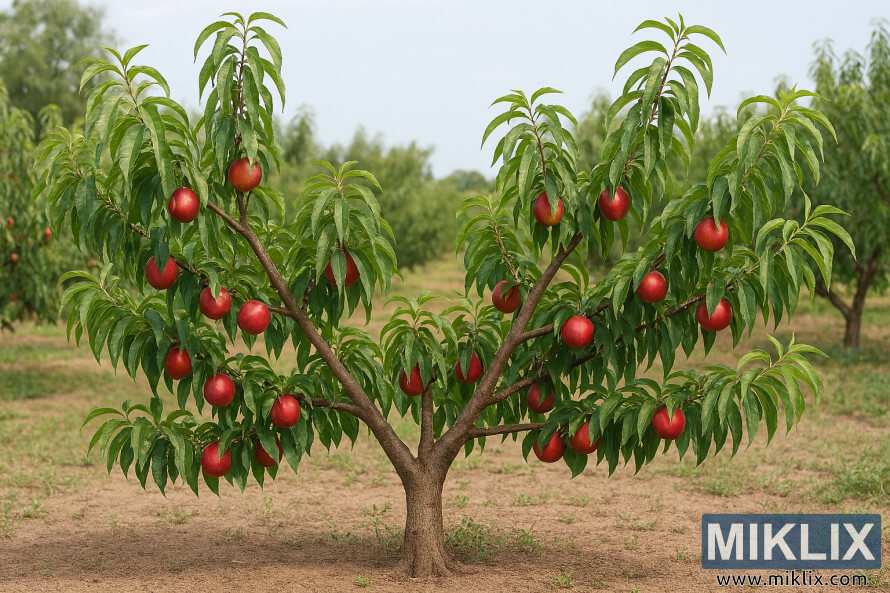
The open-center (vase) pruning structure allows light and air to reach all parts of the tree
When to Prune
The best time to prune nectarine trees is during late winter or early spring before bud break but after the threat of extreme cold has passed.
Open-Center (Vase) Pruning Method
Most nectarine trees are pruned to an open-center or vase shape, which allows sunlight to reach all parts of the tree and promotes good air circulation.
- First year: After planting, cut the main trunk back to 24-30 inches tall. Select 3-4 well-spaced branches to form the main scaffold, removing all others.
- Second year: Prune the scaffold branches back by about one-third. Remove any branches growing toward the center.
- Third year and beyond: Remove any dead, diseased, or crossing branches. Thin out dense growth to maintain the open-center structure.
Pruning Tip: Always use clean, sharp pruning tools to make clean cuts. Disinfect tools between trees with a 10% bleach solution or rubbing alcohol to prevent disease spread.
Click or tap the image for more information and higher resolutions.
Fruit Thinning
Nectarine trees often set more fruit than they can support to maturity. Thinning is essential for producing larger, better-quality fruit and preventing branch breakage.
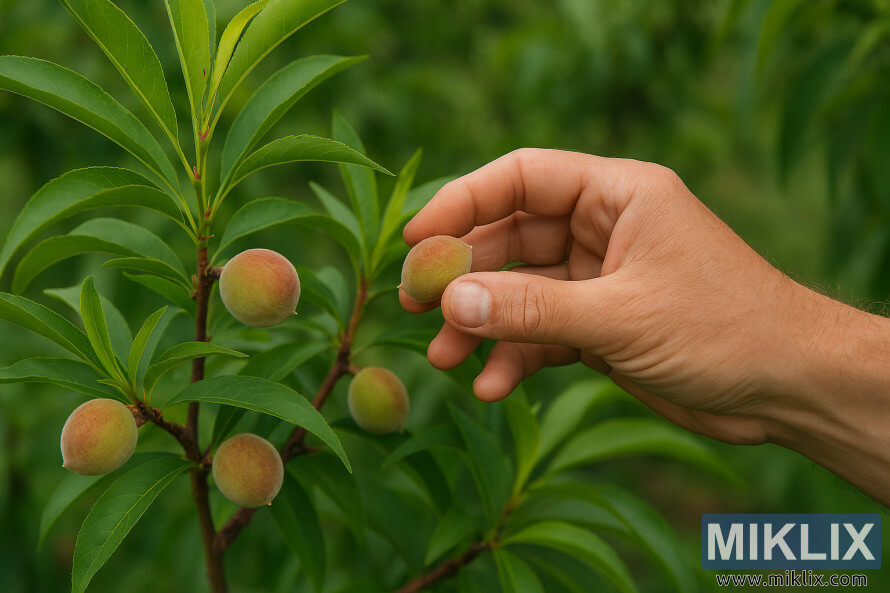
Thinning young fruits ensures larger, better-quality nectarines at harvest
- Thin fruits when they reach the size of a marble, typically 4-6 weeks after bloom.
- Space fruits 6-8 inches apart along the branch.
- Remove damaged, misshapen, or undersized fruits first.
- Thin by hand, gently twisting fruits off the branch.
Click or tap the image for more information and higher resolutions.
Managing Pests and Diseases
Nectarine trees can be susceptible to various pests and diseases. Early identification and proper management are key to maintaining tree health and ensuring a good harvest.
Common Diseases
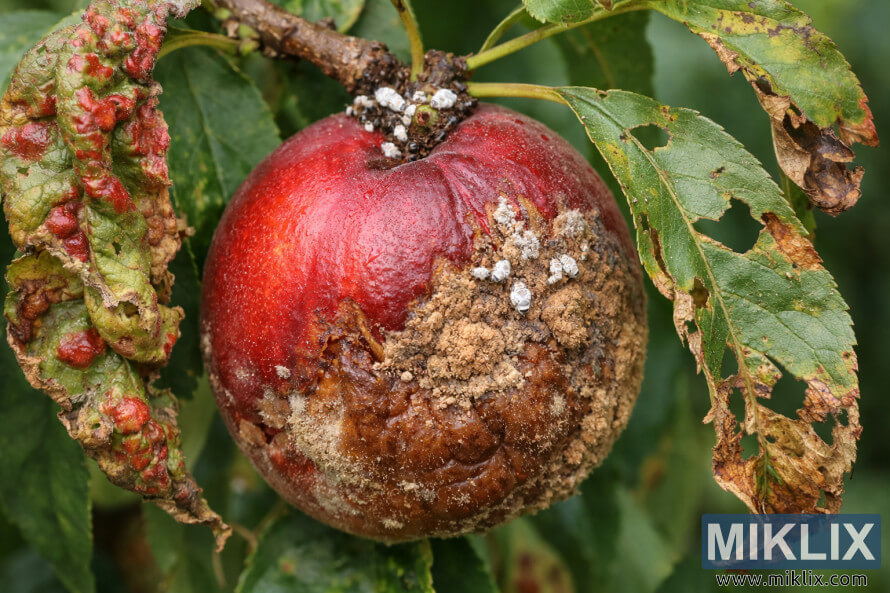
Peach Leaf Curl
Symptoms: Reddish, thickened, and distorted leaves in spring.
Prevention: Apply copper-based fungicide during dormancy (late fall after leaf drop or late winter before bud swell).
Treatment: Remove and destroy affected leaves. Spray with approved fungicide. Severe cases may require multiple dormant season treatments.
Brown Rot
Symptoms: Brown spots on fruit that spread rapidly, eventually causing mummified fruit.
Prevention: Maintain good air circulation through proper pruning. Remove all mummified fruits from the tree and ground.
Treatment: Apply fungicide during bloom and pre-harvest periods. Remove and destroy affected fruit.
Bacterial Spot
Symptoms: Small dark spots on leaves and fruit, often with a yellow halo.
Prevention: Choose resistant varieties. Avoid overhead watering.
Treatment: Copper-based sprays in early spring. Severe cases may require antibiotics (consult local extension office).
Click or tap the image for more information and higher resolutions.
Common Pests
Peach Tree Borer
Symptoms: Gummy sap mixed with sawdust at the base of the tree. Weakened tree growth.
Prevention: Maintain tree vigor. Paint lower trunk with white latex paint mixed with water (1:1) to prevent egg-laying.
Treatment: Apply appropriate insecticide to lower trunk. For organic options, beneficial nematodes can be effective.
Aphids
Symptoms: Curled, distorted leaves; sticky honeydew on leaves and branches.
Prevention: Encourage beneficial insects like ladybugs and lacewings.
Treatment: Strong spray of water to dislodge. Insecticidal soap or neem oil for larger infestations.
Oriental Fruit Moth
Symptoms: Wilting of new shoots; tunneling in fruit.
Prevention: Pheromone traps for monitoring. Good sanitation practices.
Treatment: Timing is critical. Apply appropriate insecticide based on monitoring results and local recommendations.
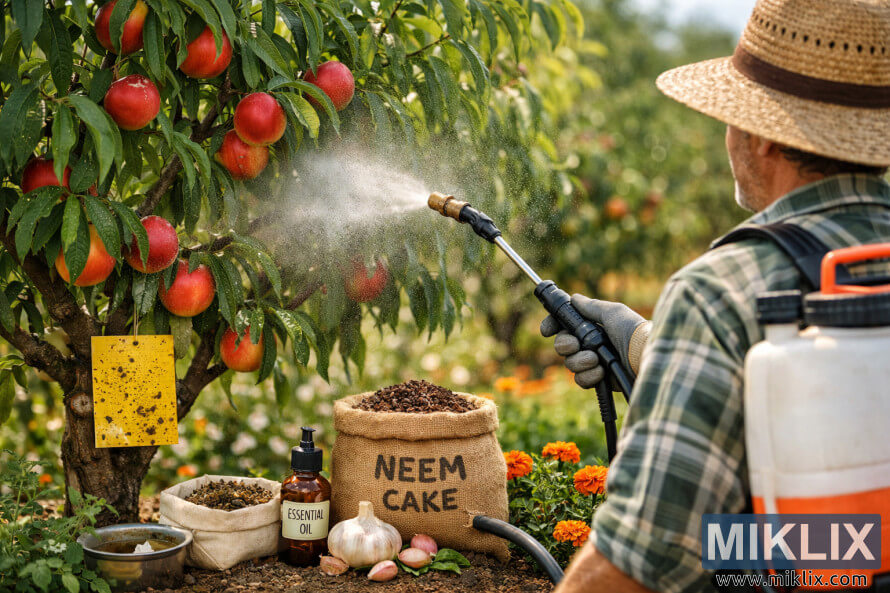
Organic Pest Management Strategies
Many gardeners prefer organic approaches to pest and disease management:
Organic methods like beneficial insects can help manage pests naturally
- Encourage biodiversity: Plant flowers that attract beneficial insects like ladybugs, lacewings, and parasitic wasps.
- Physical barriers: Use tree bands or sticky traps to prevent crawling insects from reaching branches.
- Homemade sprays: Garlic-pepper spray or neem oil can deter many common pests.
- Regular monitoring: Inspect trees weekly during growing season to catch problems early.
- Proper sanitation: Remove fallen leaves and fruit promptly to break disease cycles.
Local Resources: Contact your county extension office for specific pest and disease management recommendations for your area. Timing of treatments often varies by region.
Click or tap the image for more information and higher resolutions.
Harvesting and Storage
After all your hard work caring for your nectarine tree, harvesting at the right time ensures you'll enjoy the best possible flavor and quality from your homegrown fruit.
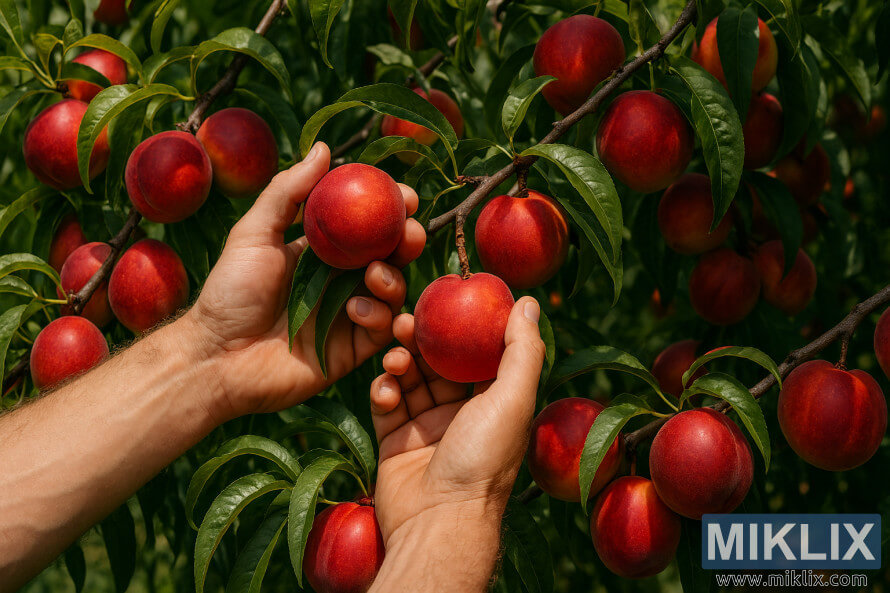
Harvest nectarines when they're fully ripe for the best flavor
When to Harvest
Nectarines don't continue to ripen significantly after being picked, so harvesting at the right stage is important:
- Color: Background color should change from green to yellow or cream (depending on variety).
- Firmness: Fruit should yield slightly to gentle pressure but not be soft.
- Aroma: Ripe nectarines have a sweet, fragrant smell.
- Ease of picking: Ripe fruit will come off the tree with a gentle twist.
Ripening Tip: Nectarines typically ripen from the inside out. If the fruit feels soft, it may already be overripe. Harvest when fruit is still slightly firm but has good color.
Harvesting Technique
Proper harvesting technique helps prevent damage to both the fruit and the tree:
- Cup the fruit gently in your palm.
- Lift and twist slightly to separate from the branch.
- Place carefully in your harvest container to avoid bruising.
- Harvest in the morning when temperatures are cooler for best flavor and storage life.
Click or tap the image for more information and higher resolutions.
Storage Methods
Fresh nectarines have a relatively short shelf life, but proper storage can help extend their usability:
Short-term Storage
- Room temperature: 2-3 days for fully ripe fruit
- Refrigerator: 5-7 days (place in perforated plastic bag in crisper drawer)
- Avoid stacking to prevent bruising
- Keep away from strong-smelling foods as nectarines absorb odors
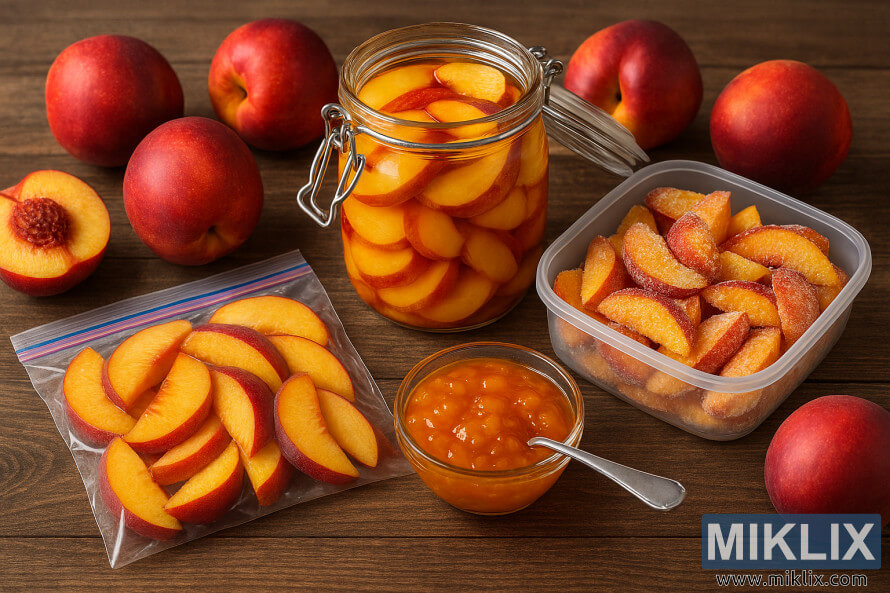
Long-term Preservation
- Freezing: Slice, treat with ascorbic acid to prevent browning, and freeze on trays before transferring to containers
- Canning: Process in light syrup using water bath canning method
- Drying: Slice thinly and use a dehydrator or low oven
- Jam and preserves: Excellent way to use fully ripe fruit
Click or tap the image for more information and higher resolutions.
Enjoying Your Harvest
Homegrown nectarines are versatile in the kitchen:
- Eat fresh as a healthy snack
- Add to fruit salads, green salads, or yogurt
- Bake into pies, cobblers, and crisps
- Grill for a caramelized flavor
- Blend into smoothies or puree for sauces
- Preserve as jam, chutney, or fruit leather
Conclusion
Growing nectarines in your own garden requires some effort and patience, but the rewards are well worth it. There's nothing quite like biting into a sun-warmed, tree-ripened nectarine that you've grown yourself. With proper variety selection, careful planting, and consistent maintenance, you can enjoy bountiful harvests of these delicious stone fruits for many years.
Remember that each growing season brings new learning opportunities. Don't be discouraged by challenges—even experienced gardeners face setbacks with fruit trees. Keep notes on what works in your specific garden conditions, and adjust your approach as needed.
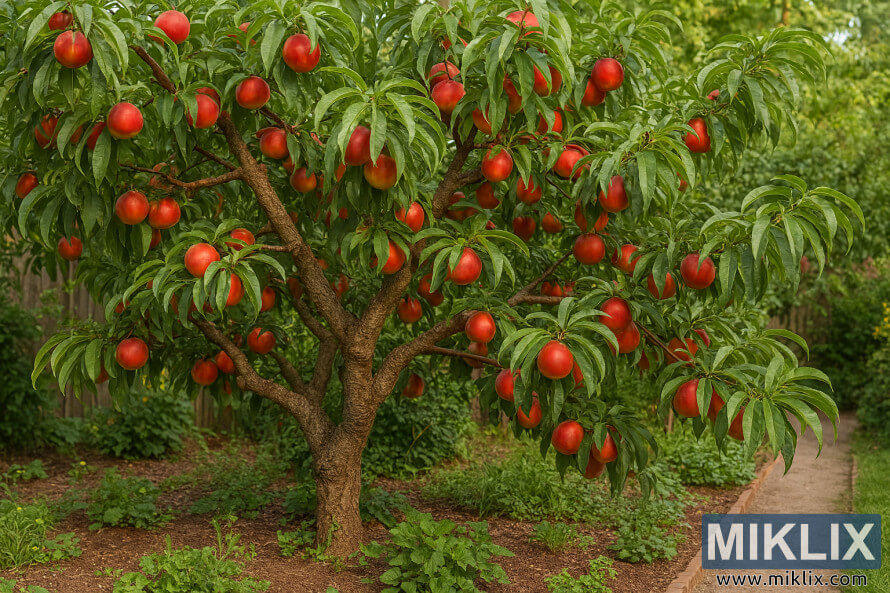
A mature, well-maintained nectarine tree can provide years of abundant harvests
Whether you're growing a single dwarf tree in a container or establishing a small orchard, the process of nurturing nectarine trees connects you to the rhythms of nature and provides a deeply satisfying gardening experience. Start with the knowledge shared in this guide, and soon you'll be enjoying the incomparable taste of homegrown nectarines.
Click or tap the image for more information and higher resolutions.
Further Reading
If you enjoyed this post, you may also like these suggestions:
- Top Apple Varieties and Trees to Grow in Your Garden
- A Guide to Growing Cantaloupes in Your Own Garden
- A Guide to Growing Horseradish in Your Own Garden