
Image: Common Pomegranate Growing Problems and Solutions
Published: January 14, 2026 at 8:30:53 PM UTC
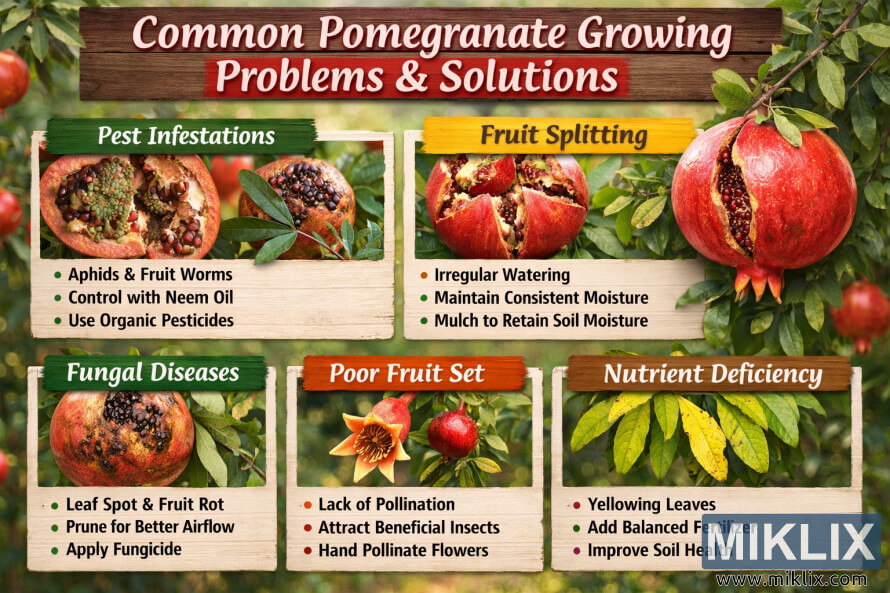
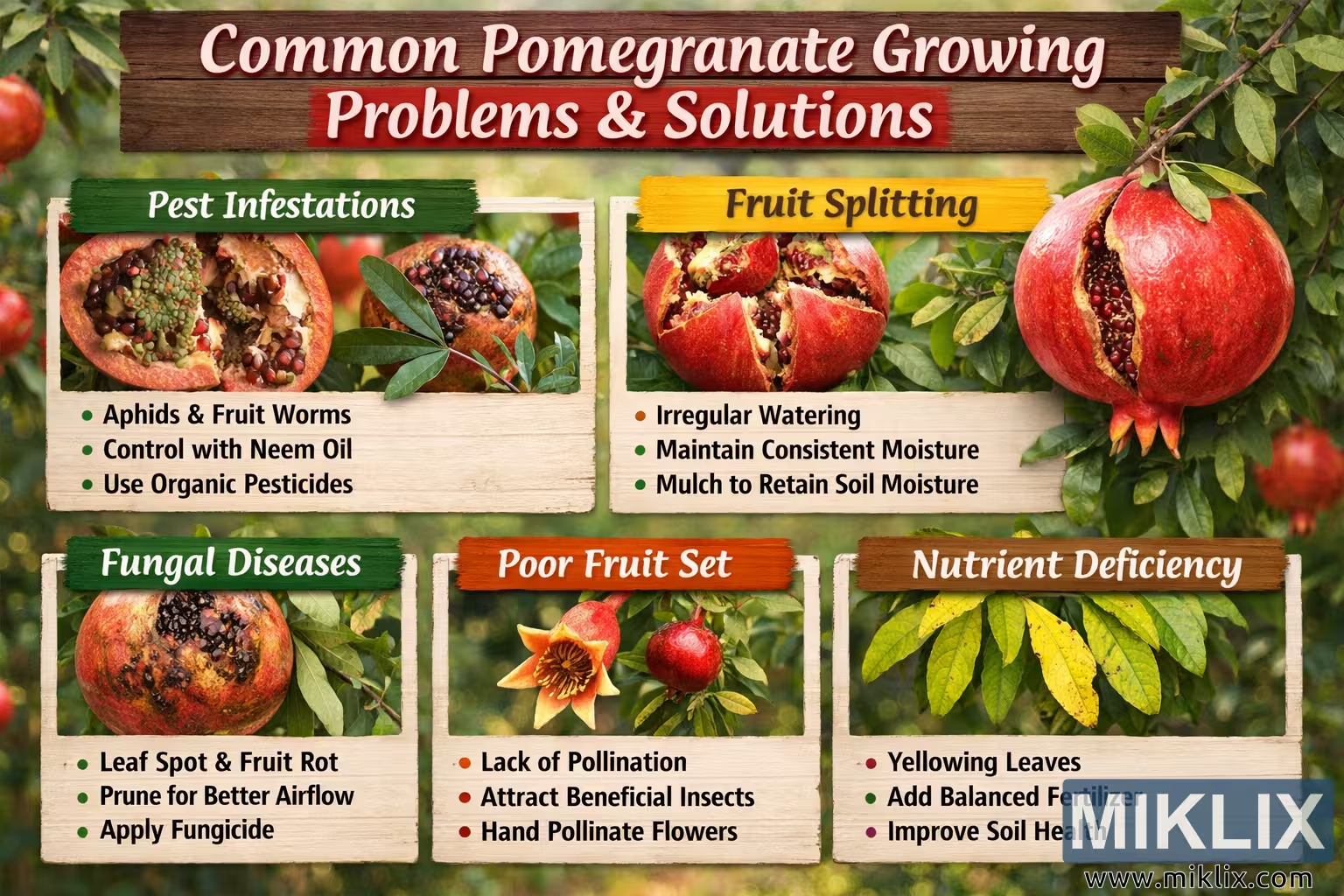
Learn how to identify and solve common pomegranate growing problems. This visual guide covers pests, fruit splitting, fungal diseases, pollination issues, and nutrient deficiencies with clear solutions.
Available versions of this image
The image files available for download below are less compressed and higher resolution - and as a result of that, higher quality - than the images embedded in articles and pages on this website, which are more optimized for file size in order to reduce bandwidth consumption.
Regular size (1,536 x 1,024)

Large size (3,072 x 2,048)
Very large size (4,608 x 3,072)
Extra large size (6,144 x 4,096)
Comically large size (1,048,576 x 699,051)
- Still uploading... ;-)
Image description
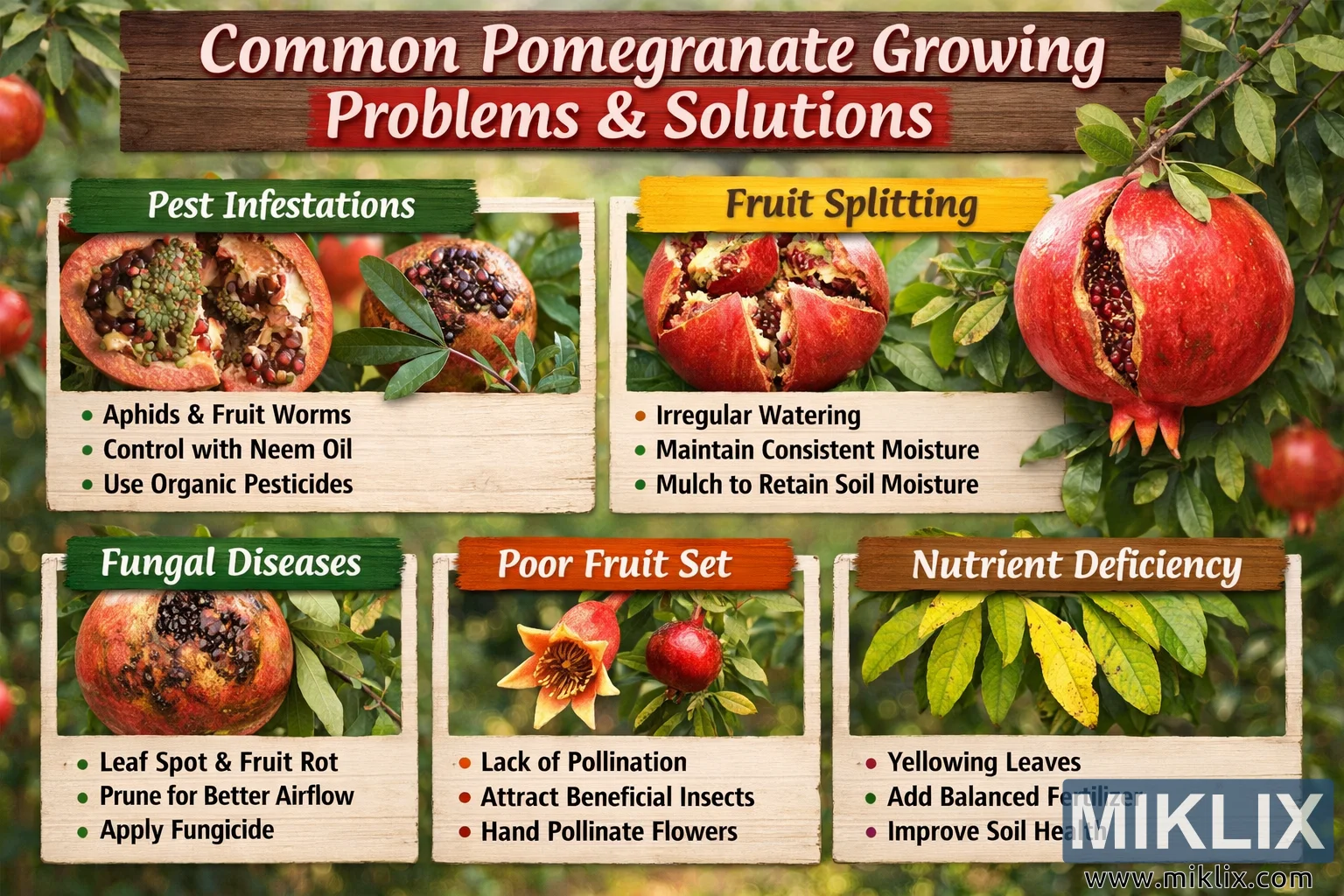
The image is a wide, landscape-oriented, photo-based infographic titled \"Common Pomegranate Growing Problems & Solutions\". It is set in a lush pomegranate orchard with soft, sunlit greenery and ripe red fruits filling the background, creating a natural gardening context. At the top center, a rustic wooden sign displays the main title in large, bold lettering, with warm red and cream tones that contrast clearly against the wood texture.
Below the title, the infographic is divided into multiple rectangular panels arranged in two rows, each framed like light wooden boards and paired with realistic close-up photographs of pomegranates, leaves, flowers, or fruit damage. The first panel on the upper left focuses on pest infestations. It shows a split pomegranate revealing damaged arils, visually representing aphids and fruit worms. Accompanying bullet points explain common pests and recommend solutions such as controlling them with neem oil and using organic pesticides.
The upper middle panel addresses fruit splitting. A vivid photograph shows a mature pomegranate cracked open on the tree, illustrating the problem clearly. The listed causes and solutions emphasize irregular watering and advise maintaining consistent soil moisture and applying mulch to help retain moisture.
On the upper right, a large image of a healthy yet split pomegranate reinforces the fruit-splitting issue, visually balancing the layout and drawing attention to one of the most common problems faced by growers.
The lower left panel covers fungal diseases. A close-up image of a pomegranate with dark spots and decay highlights leaf spot and fruit rot. The solution text recommends pruning for better airflow and applying appropriate fungicides to prevent disease spread.
The lower middle panel explains poor fruit set. It includes an image of a pomegranate flower and a small developing fruit, symbolizing pollination challenges. The bullet points mention lack of pollination and suggest attracting beneficial insects or hand-pollinating flowers to improve fruit production.
The lower right panel focuses on nutrient deficiency. A photograph of yellowing pomegranate leaves illustrates the issue clearly. The suggested solutions include adding a balanced fertilizer and improving overall soil health.
Throughout the infographic, earthy colors such as green, red, yellow, and brown dominate the palette, reinforcing an organic, garden-focused theme. The combination of photographic evidence, concise bullet points, and a clean, structured layout makes the information easy to understand and visually engaging for home gardeners and small-scale growers.
The image is related to: A Complete Guide to Growing Pomegranates at Home From Planting to Harvest