
A Complete Guide to Growing Pomegranates at Home From Planting to Harvest
Published: January 14, 2026 at 8:30:53 PM UTC
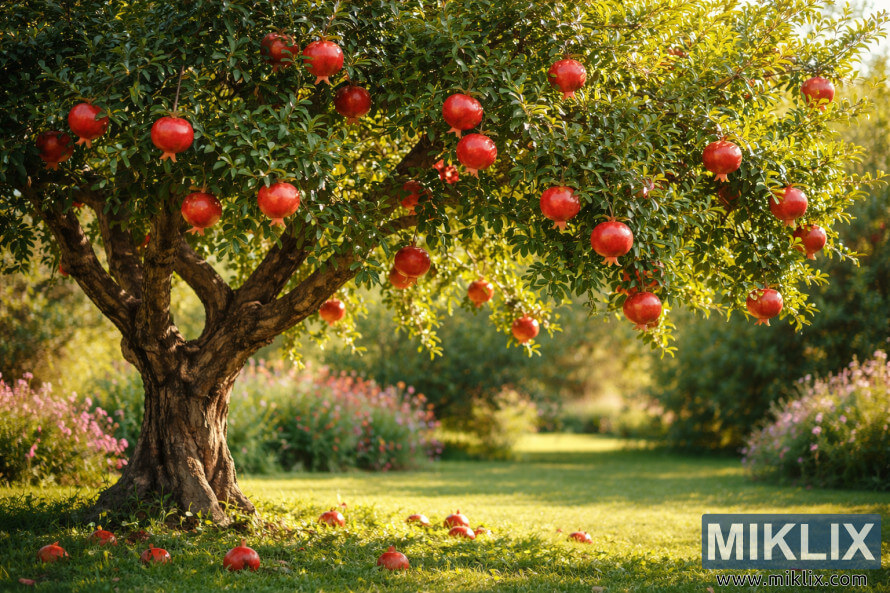
Pomegranates are jewel-like fruits packed with ruby-red seeds that offer both ornamental beauty and nutritional benefits to home gardeners. Though often associated with Mediterranean climates, these resilient trees can thrive in various regions with the right care.
Click or tap the image for more information and higher resolutions.
This comprehensive guide will walk you through everything you need to know about growing pomegranates—from selecting the perfect variety to harvesting your own sweet-tart fruits. Whether you're a beginner looking to try something new or an experienced gardener seeking to expand your orchard, pomegranates offer a rewarding growing experience with minimal maintenance once established.
Best Pomegranate Varieties for Home Gardens
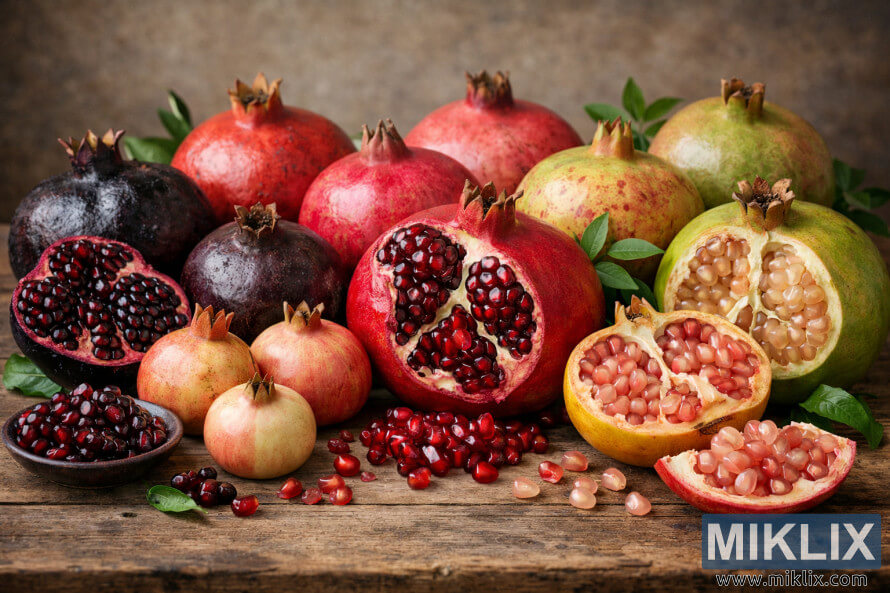
Selecting the right pomegranate variety is crucial for success in your specific climate. While there are hundreds of varieties worldwide, here are some of the most reliable options for home gardeners:
Click or tap the image for more information and higher resolutions.
Standard Varieties (Over 6 Feet Tall)
- 'Wonderful' - The most common commercial variety with large, deep red fruit and tart flavor. Zones 8-10.
- 'Salavatski' - Excellent cold hardiness (Zones 6-10) with medium-sized pink fruit and sweet-tart flavor.
- 'Angel Red' - Soft-seeded variety with juicy, sweet arils. Zones 8+.
- 'Eversweet' - Soft seeds with light red arils and clear juice, less tart than other varieties.
- 'Granada' - Darker red, less tart fruit than 'Wonderful'; ripens one month earlier.
Compact Varieties (Under 6 Feet Tall)
- 'Nana' - Dwarf variety growing 2-3 feet tall, perfect for containers or small spaces.
- 'State Fair' - Compact 5-foot tree with small fruit and profuse blooming.
- 'Red Silk' - Medium-sized tree (up to 6 feet) with sweet, medium-to-large fruits.
Cold-Hardy Varieties
- 'Russian Series' - Including 'Afganski', 'Salavatski', and 'Surh-Anor', hardy to Zone 6.
- 'Utah Sweet' - Soft-seeded with light pink arils, hardy to Zone 7 with protection.
Pro Tip: For reliable fruit production, plant at least two different pomegranate varieties. While pomegranates are self-fertile, cross-pollination can increase fruit set by up to 68%.
Climate and Soil Requirements for Growing Pomegranates
Climate Considerations
Pomegranates are heat-loving plants that thrive in regions with long, hot summers and mild winters. Here's what you need to know about their climate requirements:
- USDA Hardiness Zones: Most varieties grow best in Zones 8-10, though cold-hardy varieties can survive in Zone 6-7 with protection.
- Temperature: Pomegranates need temperatures above 85°F for at least 120 days per year for optimal fruit development.
- Cold Tolerance: Standard varieties can withstand temperatures down to 12°F, while hardier types can survive brief periods down to 7°F.
- Sun Exposure: Full sun (6-8 hours daily) is essential for flowering and fruiting.
Soil Requirements
One of pomegranate's strengths is its adaptability to various soil types, though some conditions are more favorable than others:
Ideal Soil Conditions
- Soil Type: Deep, loamy soil rich in organic matter
- pH Level: 5.5-7.2 (slightly acidic to neutral)
- Drainage: Well-draining soil is essential
Soil Adaptability
- Can grow in sandy, loamy, or clay soils with proper amendments
- Tolerates moderately acidic to slightly alkaline soils (pH 4.5-8.2)
- Moderately salt-tolerant, making them suitable for coastal areas
Testing Soil Drainage
Before planting, test your soil drainage by digging a 12-inch deep hole, filling it with water, and letting it drain. Then refill it and measure how quickly it drains. Well-draining soil should drop about 1 inch per hour. If drainage is poor, consider planting in raised beds or mounds.
Click or tap the image for more information and higher resolutions.
Step-by-Step Planting Instructions for Pomegranates
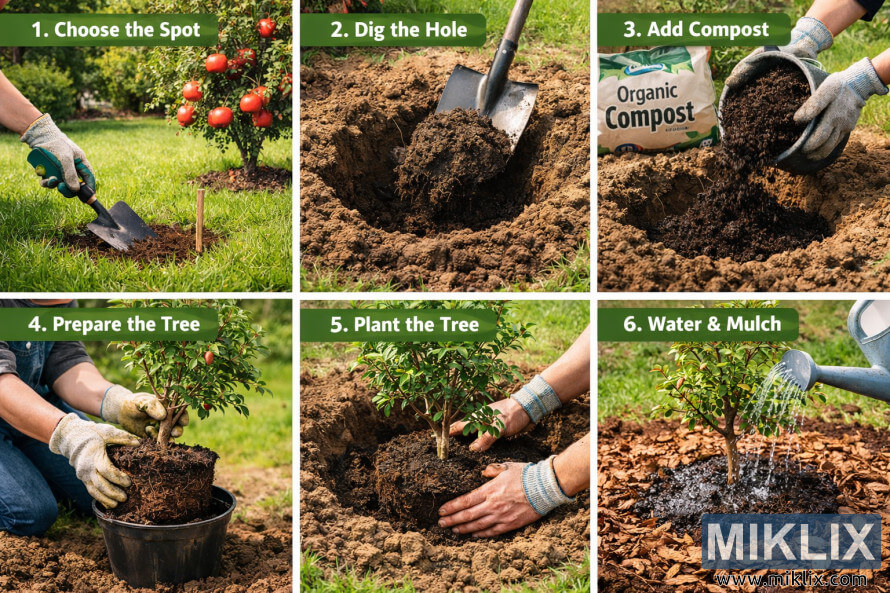
The planting process: preparing the hole, positioning the tree, and proper backfilling
Pomegranates can be grown from seeds, cuttings, or nursery plants. While seeds take longer to produce fruit (3-5 years), cuttings and nursery plants can bear fruit within 2-3 years. Here's how to plant using each method:
Planting from Nursery Stock
- Timing: Plant in early spring after the last frost for bare-root plants, or any time during the growing season for container plants.
- Spacing: Allow 15-20 feet between trees for standard varieties, or 6-10 feet for dwarf varieties.
- Digging: Dig a hole three times wider than the root ball and as deep as the root ball height.
- Soil Preparation: Mix native soil with compost at a 50:50 ratio if soil is poor.
- Positioning: Place the tree so the top of the root ball is slightly above ground level.
- Backfilling: Fill halfway, water thoroughly, then complete filling and tamp gently to remove air pockets.
- Watering: Create a water basin around the tree and water deeply.
- Mulching: Apply 2-3 inches of organic mulch, keeping it away from the trunk.
Click or tap the image for more information and higher resolutions.
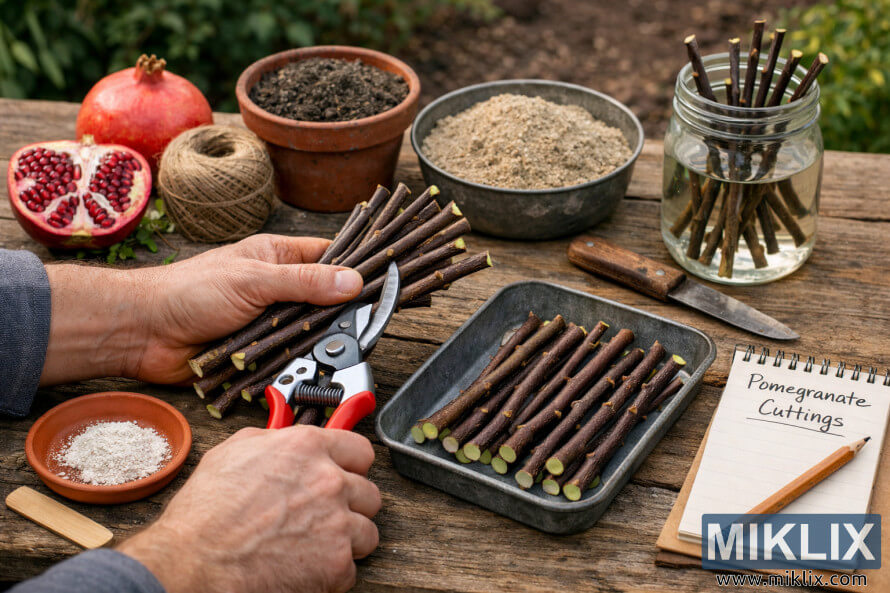
Propagating from Hardwood Cuttings
This is the most reliable method for home gardeners to propagate pomegranates:
- Timing: Take cuttings in late winter while the tree is dormant.
- Selection: Cut 10-inch sections of one-year-old wood (pencil thickness).
- Preparation: Remove all but the top few leaves and dip the cut end in rooting hormone.
- Planting: Insert cuttings 6-8 inches deep in well-draining potting mix or directly in garden soil.
- Care: Keep soil consistently moist but not soggy. Roots typically form within 1-2 months.
- Transplanting: Move to permanent location after one growing season.
Click or tap the image for more information and higher resolutions.
Growing from Seeds
While this method takes longer to produce fruit, it can be a fun project:
- Seed Collection: Extract seeds from ripe fruit and rinse off the pulp.
- Stratification: Place seeds in damp paper towels in a plastic bag and refrigerate for 30-60 days.
- Planting: Sow seeds ¼ inch deep in seed-starting mix.
- Environment: Maintain temperatures of 70-85°F and keep soil consistently moist.
- Germination: Seeds typically sprout within 30-45 days.
- Transplanting: Move seedlings to individual pots when they reach 3-4 inches tall.
- Hardening Off: Gradually expose plants to outdoor conditions before planting in the garden.
Important Note: Pomegranates grown from seed will not produce fruit identical to the parent plant. For consistent fruit quality, propagate from cuttings or purchase named varieties.
Growing Pomegranates in Containers
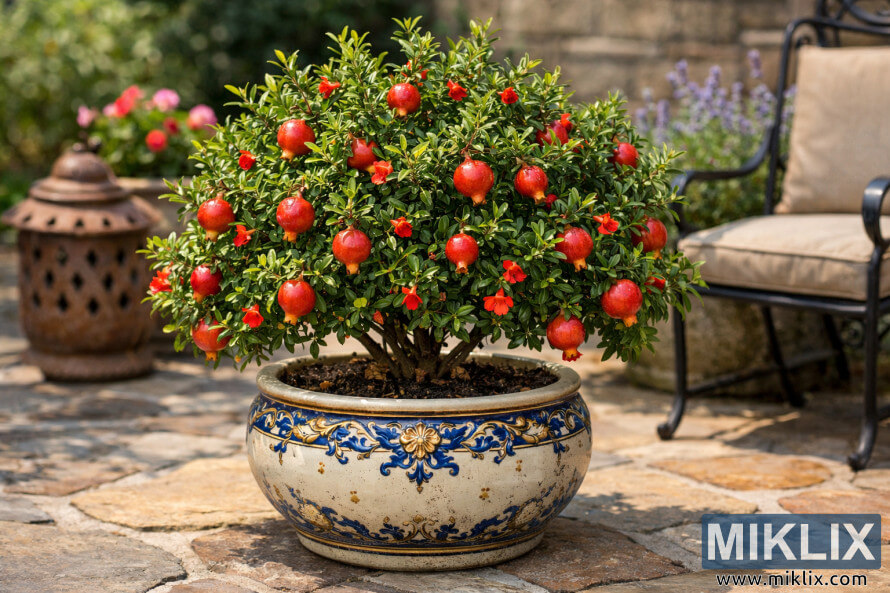
Dwarf varieties like 'Nana' are perfect for container growing on patios or balconies
Limited space? Pomegranates, especially dwarf varieties, can thrive in containers, allowing you to grow them on patios, balconies, or in regions with unsuitable soil or climate conditions:
Container Selection and Preparation
- Container Size: Start with a 15-20 gallon pot (at least 18-24 inches wide and deep).
- Material: Terracotta or wooden containers provide good insulation and drainage.
- Drainage: Ensure multiple drainage holes and add a layer of gravel at the bottom.
- Soil Mix: Use a high-quality potting mix combined with compost and perlite (50:40:10 ratio).
Container Care Tips
- Watering: Check moisture levels frequently as containers dry out faster than ground soil.
- Fertilizing: Apply a balanced, slow-release fertilizer in spring and mid-summer.
- Repotting: Move to a larger container every 2-3 years or when roots become crowded.
- Winter Protection: In Zones 7 and below, move containers to a protected area or unheated garage during winter.
Best Varieties for Containers: 'Nana', 'State Fair', and 'Red Silk' are excellent choices for container growing due to their compact size and reliable fruiting.
Click or tap the image for more information and higher resolutions.
Watering, Fertilizing, and Maintenance Schedule
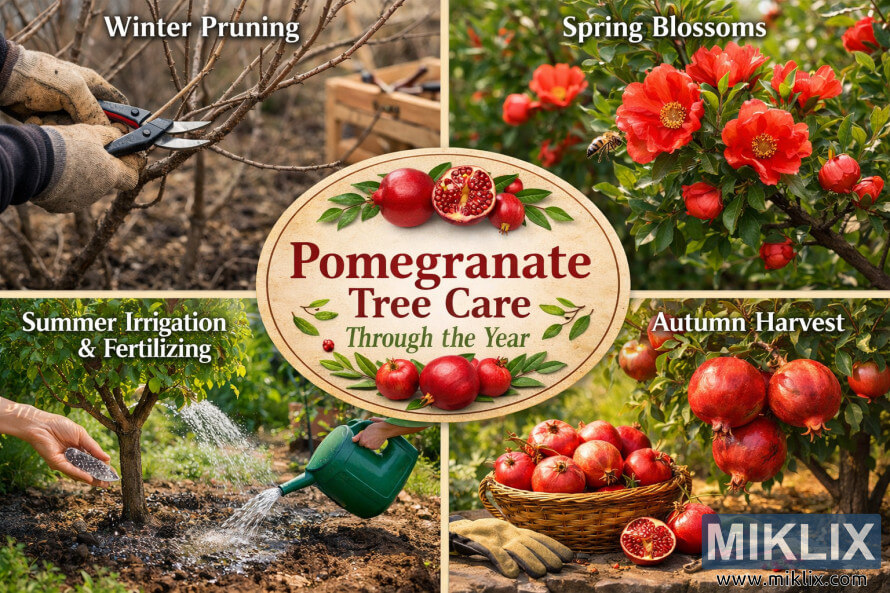
Seasonal care calendar for pomegranate trees
Pomegranates are relatively low-maintenance once established, but proper care will maximize fruit production and tree health. Here's a seasonal guide to pomegranate maintenance:
Watering Guidelines
- Establishment Period: Water deeply twice weekly for the first year.
- Established Trees: Once established, water deeply every 7-10 days during growing season.
- Summer Care: Increase watering during fruit development and hot, dry periods.
- Fall/Winter: Reduce watering in fall and minimal watering during dormancy.
- Signs of Overwatering: Yellowing leaves, soft growth, and fruit splitting.
- Signs of Underwatering: Leaf drop, wilting, and reduced fruit size.
Click or tap the image for more information and higher resolutions.
Fertilization Schedule
Pomegranates are not heavy feeders but benefit from regular, moderate fertilization:
| Season | Fertilizer Type | Application Rate | Notes |
| Early Spring | Balanced (10-10-10) | 1 oz per foot of plant height | Apply when new growth begins |
| Late Spring | Balanced (10-10-10) | 1 oz per foot of plant height | Apply after flowering begins |
| Summer | Balanced (10-10-10) | 1 oz per foot of plant height | Final feeding of the season |
| Fall/Winter | None | - | Avoid late-season fertilizing |
Caution: Avoid excessive nitrogen in late summer to early fall, as it can negatively impact fruit color and size and increase susceptibility to cold damage.
Mulching
- Apply a 2-3 inch layer of organic mulch (pine bark, compost, or pine straw).
- Keep mulch 3-4 inches away from the trunk to prevent rot.
- Refresh mulch annually in spring.
Winter Protection
In colder regions (Zones 6-7), provide winter protection:
- Paint trunks with white latex paint to prevent sunscald.
- Wrap young trees with burlap or tree wrap.
- Apply a thick layer of mulch around the base.
- For container plants, move to a protected location.
Pruning Techniques for Optimal Growth and Fruit Production
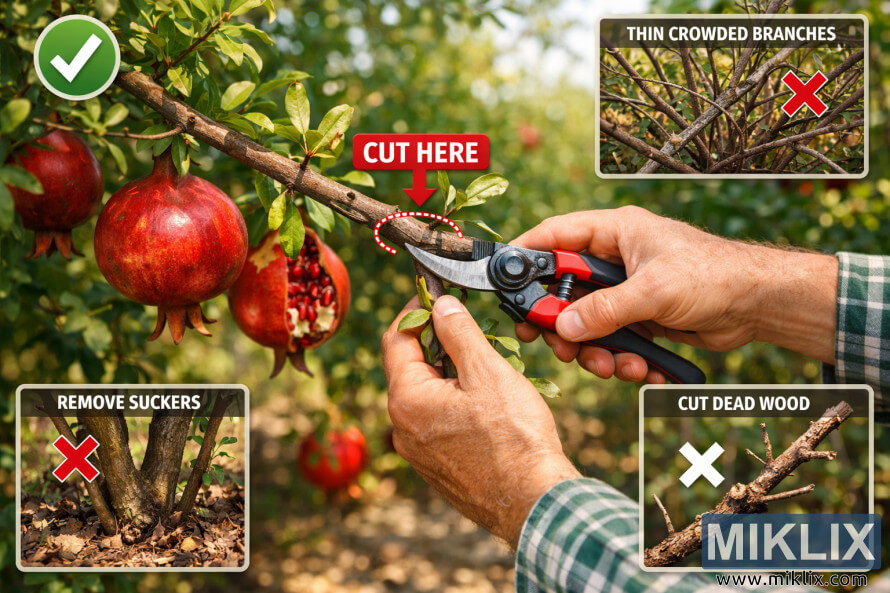
Proper pruning techniques help maintain tree structure and encourage fruiting
Proper pruning is essential for maintaining tree health, encouraging new fruiting wood, and creating an open structure that allows sunlight penetration. Pomegranates fruit primarily on 2-3 year old wood, so pruning strategy should preserve these productive branches.
Training Systems
There are two main approaches to training pomegranate trees:
Multi-Trunk System
- Allows 3-6 main trunks to develop from the base
- More resilient to freeze damage (if one trunk dies, others remain)
- Requires regular sucker removal
- Recommended for colder regions
Single-Trunk System
- Develops one main trunk with 5-6 scaffold branches
- Creates a vase-shaped structure
- Easier orchard floor maintenance
- Popular in commercial production
Pruning Calendar
- Winter (Dormant) Pruning: Major structural pruning in late winter before bud break.
- Spring Pruning: Light shaping and removal of damaged branches.
- Summer Pruning: Remove water sprouts and suckers; thin fruit if necessary.
- Fall: Minimal pruning; focus on removing broken branches only.
Step-by-Step Pruning Guide
- Remove Dead Wood: Cut out any dead, diseased, or damaged branches.
- Eliminate Suckers: Remove shoots growing from the base unless training as multi-trunk.
- Thin Interior: Remove crossing branches and those growing toward the center.
- Maintain Height: Keep height at 8-10 feet for easier harvesting by heading back tall branches.
- Shape: Maintain an open, vase-like structure to allow light penetration.
Pro Tip: Light annual pruning is better than infrequent heavy pruning, which can significantly reduce fruit production. Pomegranates bear fruit on short spurs on 2-3 year old wood, so avoid removing too much mature wood.
Click or tap the image for more information and higher resolutions.
Common Pests and Diseases with Organic Treatment Solutions
Identifying common pomegranate problems: leaf-footed bugs, leaf spot, fruit split, and aphids
Pomegranates are generally resistant to many pests and diseases, but a few common issues can arise. Here's how to identify and address them using organic methods:
Common Pests
Leaf-Footed Bugs
- Signs: Brown bugs with leaf-like expansions on legs; damaged fruit.
- Organic Control: Remove fallen fruit; introduce beneficial insects; apply insecticidal soap or neem oil.
Aphids
- Signs: Clusters of small insects on new growth; sticky honeydew.
- Organic Control: Strong water spray; insecticidal soap; encourage ladybugs and lacewings.
Mealybugs
- Signs: White, cottony masses on stems and leaves.
- Organic Control: Alcohol-soaked cotton swab for spot treatment; neem oil spray.
Scale Insects
- Signs: Small bumps on stems and branches; yellowing leaves.
- Organic Control: Dormant oil spray in winter; beneficial insects like parasitic wasps.
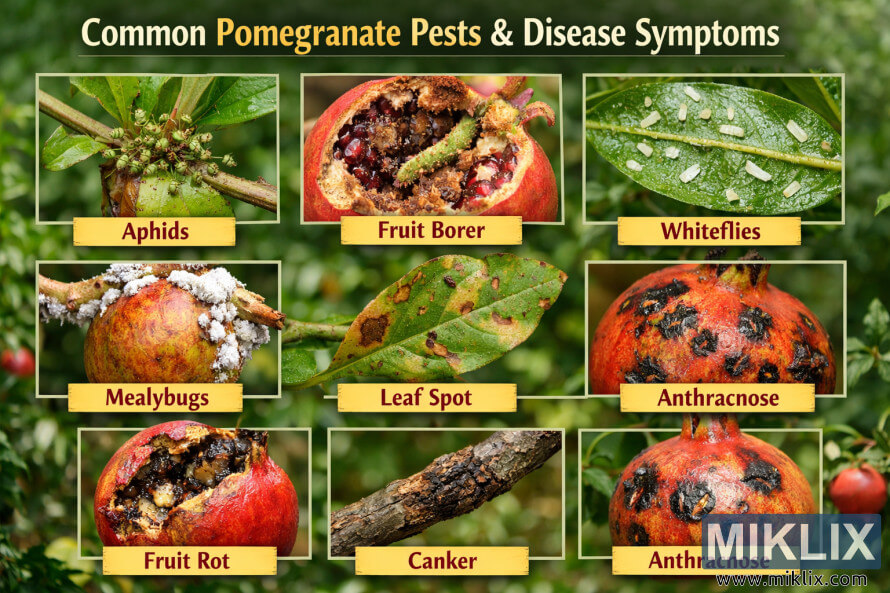
Click or tap the image for more information and higher resolutions.
Common Diseases
Leaf Spot (Cercospora)
- Signs: Dark spots on leaves; premature leaf drop.
- Organic Control: Improve air circulation; copper fungicide; remove affected leaves.
Fruit Rot (Botrytis)
- Signs: Gray mold on fruit; soft, rotting areas.
- Organic Control: Harvest promptly; improve air circulation; organic fungicides.
Root Rot
- Signs: Wilting despite adequate water; yellowing leaves.
- Organic Control: Improve drainage; avoid overwatering; add beneficial mycorrhizae.
Fruit Splitting
- Signs: Cracked fruit, especially after rain following dry periods.
- Organic Control: Maintain consistent soil moisture; mulch to retain moisture.
Preventative Organic Practices
- Companion Planting: Grow marigolds, nasturtiums, and herbs like mint to repel pests.
- Beneficial Insects: Attract ladybugs, lacewings, and predatory wasps with flowering plants.
- Proper Spacing: Allow adequate space between trees for air circulation.
- Clean Cultivation: Remove fallen fruit and leaves to prevent pest harboring.
- Neem Oil: Apply as a preventative spray every 2-3 weeks during growing season.
Organic Spray Recipe: Mix 2 tablespoons neem oil, 1 tablespoon liquid castile soap, and 1 gallon of water. Spray in the evening to avoid leaf burn and bee activity.
Harvesting Timeline and Proper Harvesting Methods
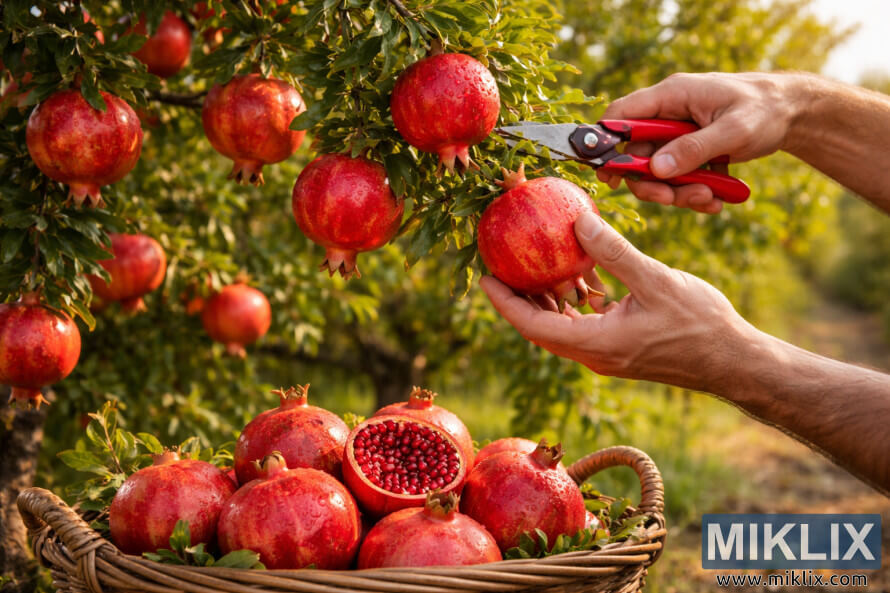
Proper harvesting technique: use pruning shears and leave a small portion of stem attached
Knowing when and how to harvest pomegranates is crucial for optimal flavor and storage life. Unlike many fruits, pomegranates don't continue to ripen after being picked, so timing is everything.
When to Harvest
Depending on variety and climate, pomegranates typically ripen from late summer through fall (August to November). Here are signs that indicate ripeness:
- Color: Skin has developed its full color (variety dependent, but usually deep red).
- Sound: When tapped, ripe fruit produces a metallic "ting" sound.
- Appearance: Skin becomes less shiny; fruit appears plump and heavy.
- Shape: Sides flatten slightly and ridges become more pronounced.
- Taste: Sample one fruit to check for sweetness and juiciness.
Harvesting Process
- Gather Tools: Sharp pruning shears or scissors; collection basket.
- Timing: Harvest on a dry day when fruit is dry to prevent mold development.
- Cutting: Cut the stem close to the fruit rather than pulling, which can damage the tree.
- Handling: Handle gently to avoid bruising or cracking the skin.
- Sorting: Separate any damaged fruit for immediate use.
Harvest Tip: Pomegranates don't all ripen at once. Plan for multiple harvests over several weeks, picking only the ripest fruit each time.
Click or tap the image for more information and higher resolutions.
Storage and Preservation of Pomegranates
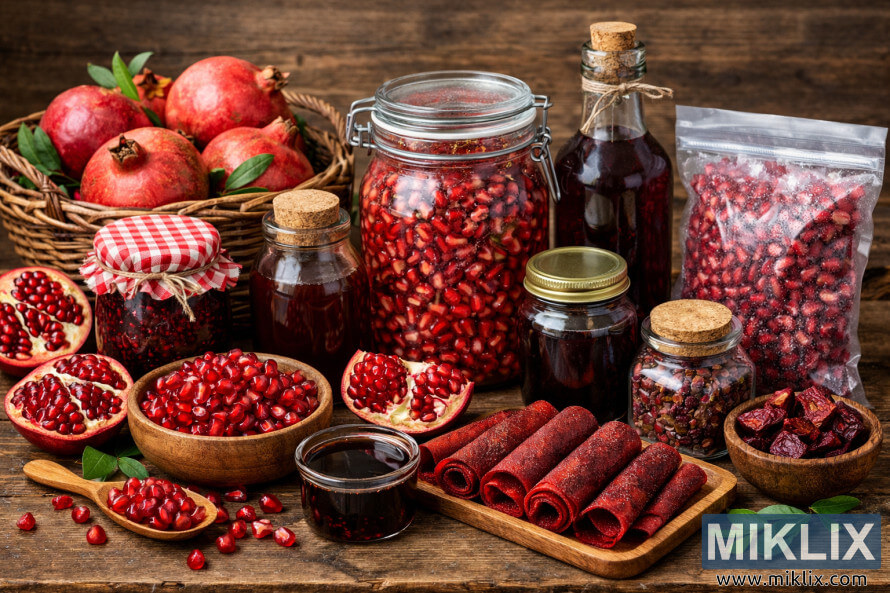
Preservation methods: whole fruit storage, freezing arils, juicing, and drying
Pomegranates are remarkably long-lasting fruits when stored properly. Here's how to preserve your harvest for maximum enjoyment:
Storing Whole Fruit
- Room Temperature: Whole pomegranates will last 1-2 weeks at room temperature in a cool, dry place.
- Refrigeration: Store in the crisper drawer for 1-2 months.
- Cool Storage: In a cool basement or root cellar (40-50°F), pomegranates can last up to 3 months.
Preserving the Arils (Seeds)
Freezing Arils
- Remove arils from fruit (see extraction method below).
- Spread in a single layer on a baking sheet.
- Freeze for 2 hours until solid.
- Transfer to freezer bags or containers.
- Frozen arils will keep for up to 12 months.
Drying Arils
- Spread clean arils on dehydrator trays.
- Dry at 135°F for 24-48 hours until completely dry.
- Store in airtight containers.
- Use in granola, baking, or as a snack.
Juicing Pomegranates
- Extraction: Press arils through a sieve or use a juicer.
- Refrigeration: Fresh juice will keep for 5-7 days refrigerated.
- Freezing: Pour into ice cube trays or freezer containers, leaving ½ inch headspace. Frozen juice keeps for up to 12 months.
- Canning: Heat juice to 190°F (not boiling), pour into sterilized jars, and process in a water bath for 10 minutes.
The easiest way to extract arils: Cut off the crown, score the rind into sections, submerge in a bowl of water, and break apart underwater. The arils will sink while the white membrane floats for easy separation.
Click or tap the image for more information and higher resolutions.
Troubleshooting Common Growing Problems
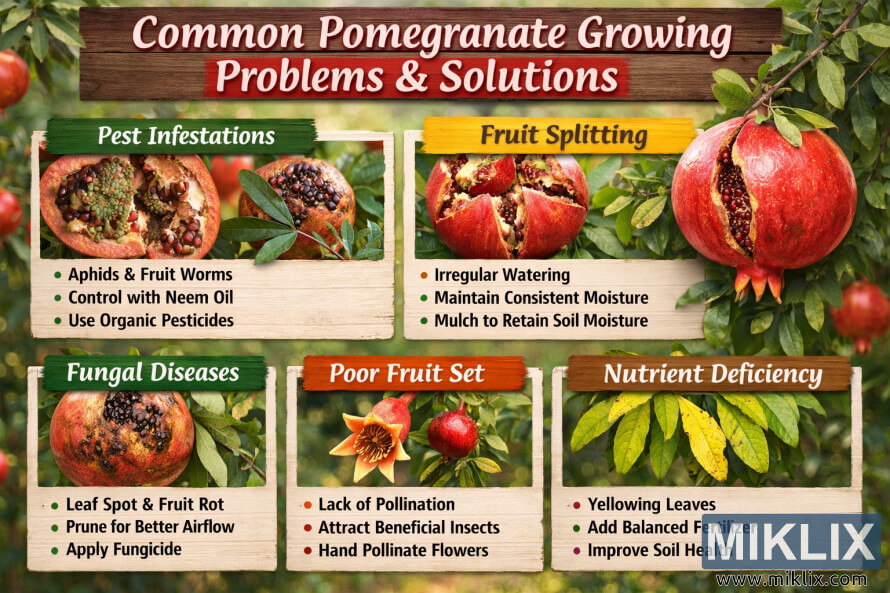
Common pomegranate problems: poor fruiting, yellowing leaves, sunscald, and fruit cracking
Even experienced gardeners encounter challenges when growing pomegranates. Here are solutions to the most common problems:
Tree Flowers But Doesn't Produce Fruit
Possible Causes:
- Insufficient pollination
- Extreme temperatures during flowering
- Excessive nitrogen fertilizer
- Young tree (less than 3 years old)
Solutions:
- Plant multiple varieties to improve cross-pollination
- Hand-pollinate flowers using a small brush
- Reduce nitrogen fertilizer and increase phosphorus
- Be patient with young trees
Fruit Splitting Before Harvest
Possible Causes:
- Irregular watering (especially sudden increase after dry period)
- Excessive rain near harvest time
- Fluctuating temperatures
Solutions:
- Maintain consistent soil moisture throughout the growing season
- Apply mulch to regulate soil moisture
- Harvest slightly earlier if heavy rain is forecast
Yellowing or Dropping Leaves
Possible Causes:
- Overwatering or poor drainage
- Nutrient deficiencies (especially zinc)
- Pest infestation
- Normal seasonal leaf drop (in fall)
Solutions:
- Improve drainage; reduce watering frequency
- Apply zinc sulfate foliar spray in spring
- Inspect for and treat pest issues
- Don't worry about fall leaf drop—pomegranates are deciduous
Sunscald on Fruit
Possible Causes:
- Excessive direct sun exposure
- Thin canopy providing insufficient shade
- High temperatures
Solutions:
- Apply kaolin clay spray to fruit
- Adjust pruning to maintain more leaf cover over fruit
- Provide shade cloth in extremely hot climates
Click or tap the image for more information and higher resolutions.
Conclusion: Enjoying the Fruits of Your Labor
Growing pomegranates can be a rewarding experience for gardeners of all skill levels. These ancient fruits offer not only ornamental beauty with their vibrant flowers and distinctive fruits but also nutritional benefits packed into their jewel-like seeds. While pomegranates do require some patience—typically taking 2-3 years before significant fruiting begins—their longevity (trees can live for decades) and relatively low maintenance needs make them an excellent investment for your garden.
Whether you're growing pomegranates in a spacious orchard, a modest backyard, or even in containers on a patio, the keys to success remain the same: provide ample sunlight, well-draining soil, consistent moisture, and appropriate seasonal care. By following the guidelines in this comprehensive guide, you'll be well on your way to harvesting your own delicious pomegranates for years to come. Remember that each growing season brings new learning opportunities, so don't be discouraged by initial challenges—pomegranates are resilient plants that often become more productive with time and attention.
Further Reading
If you enjoyed this post, you may also like these suggestions:
- Growing Green Beans: A Complete Guide for Home Gardeners
- A Complete Guide to Growing Pumpkins in Your Home Garden
- A Complete Guide to Growing Peas in Your Own Garden