
Image: Radicchio di Treviso with Elongated Torpedo-Shaped Heads
Published: February 13, 2026 at 4:33:04 PM UTC
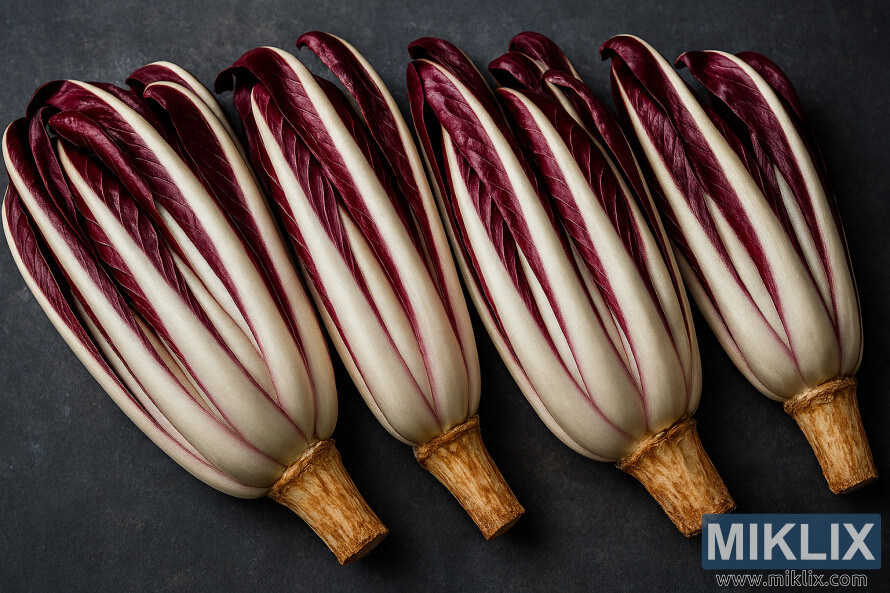
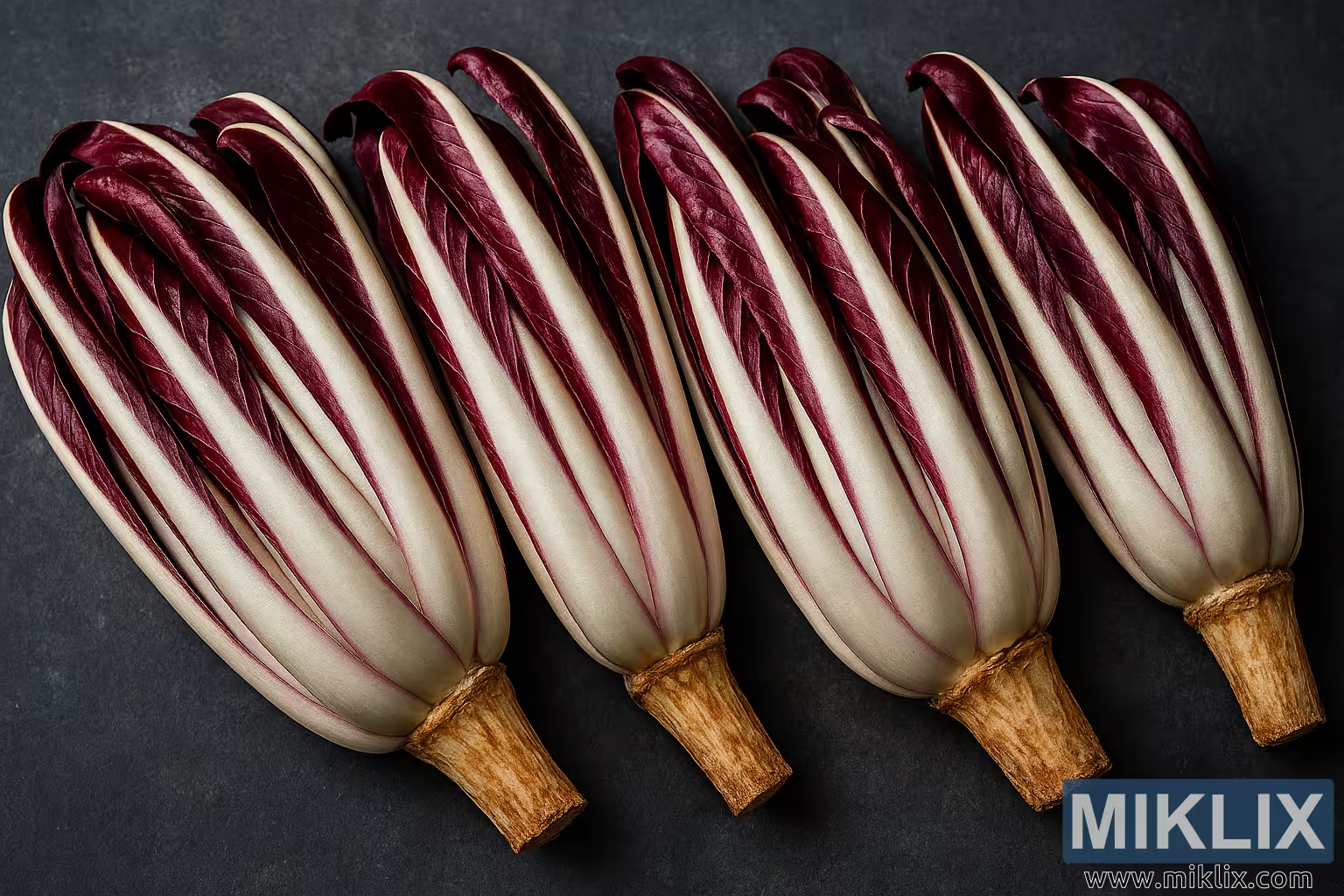
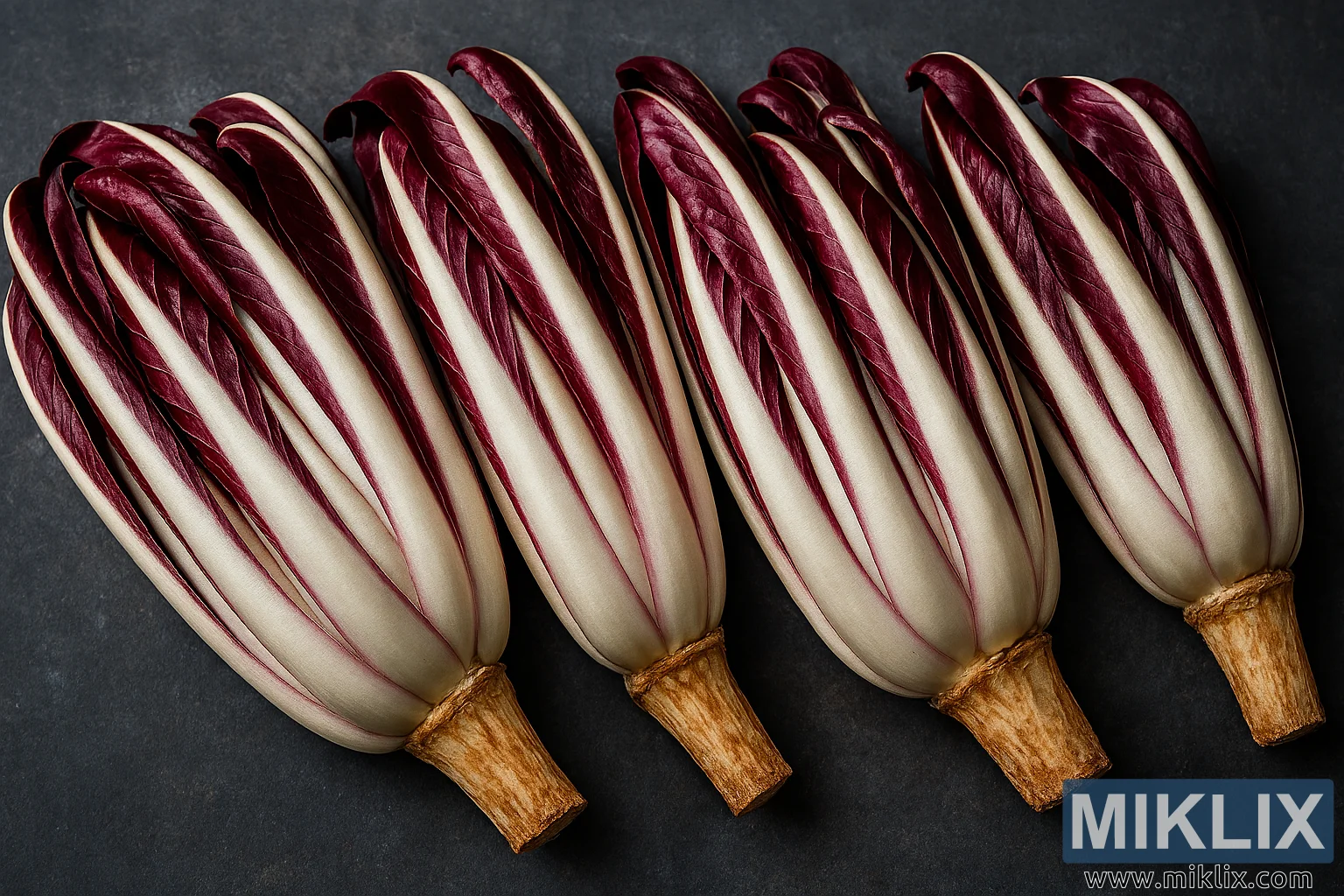
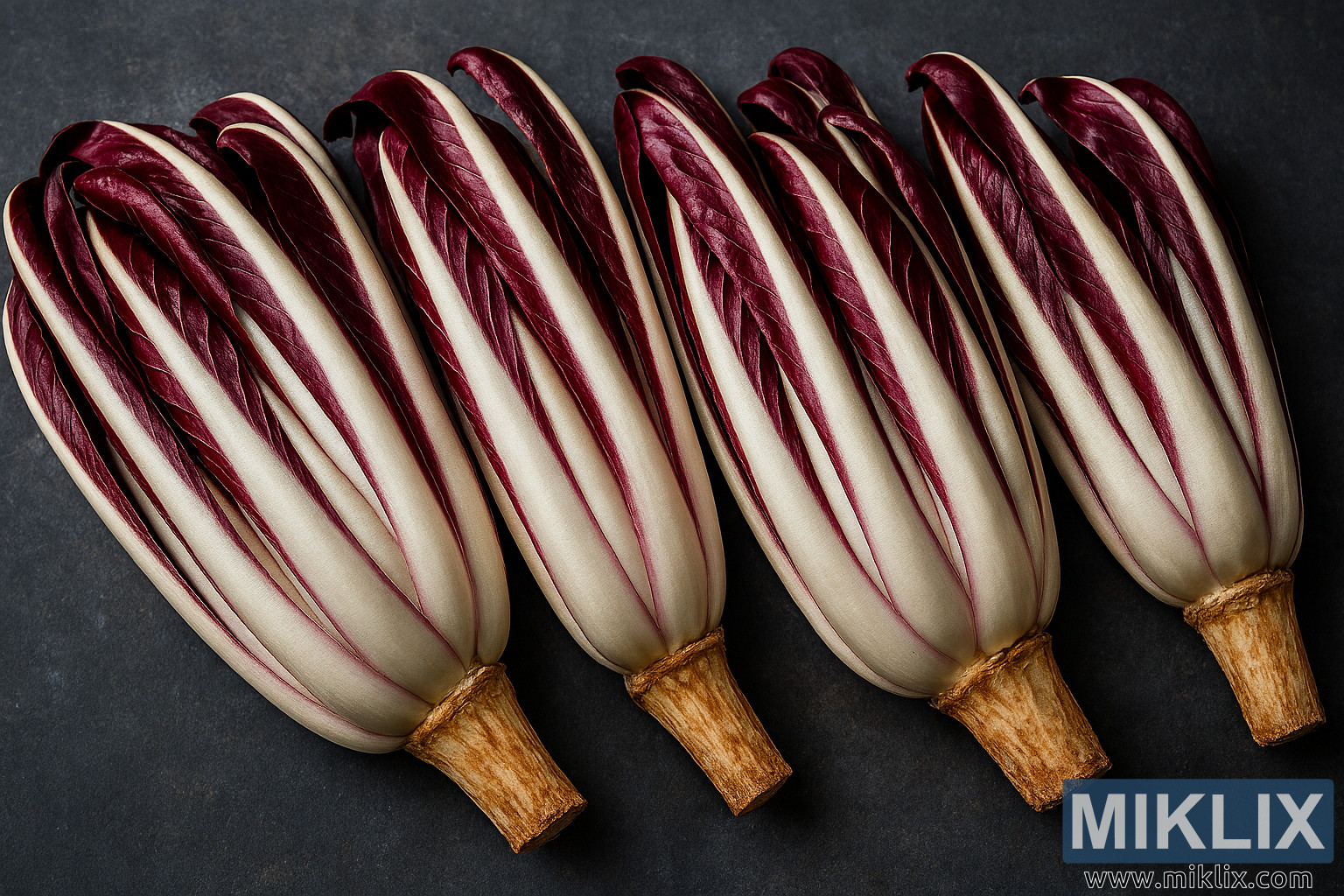
High-resolution landscape photograph of Radicchio di Treviso with elongated, torpedo-shaped heads, showing deep burgundy leaves, creamy white ribs, and trimmed roots on a dark, textured background—ideal for culinary, catalog, or educational use.
Available versions of this image
The image files available for download below are less compressed and higher resolution - and as a result of that, higher quality - than the images embedded in articles and pages on this website, which are more optimized for file size in order to reduce bandwidth consumption.
Regular size (1,536 x 1,024)
Large size (3,072 x 2,048)
Very large size (4,608 x 3,072)
Extra large size (6,144 x 4,096)
Comically large size (1,048,576 x 699,051)
- Still uploading... ;-)
Image description
A high-resolution, landscape-oriented photograph presents a neat row of Radicchio di Treviso, their elongated, torpedo-shaped heads aligned horizontally across a dark, textured surface. Each head is positioned with the pale, trimmed root ends to the right and the leafy tips extending toward the left, creating a rhythmic repetition of form and color. The radicchio heads are slender yet full, with tightly packed leaves that curve gently outward, revealing the characteristic interplay of deep burgundy and creamy white. The outer leaves display a rich, velvety burgundy tone, especially concentrated along the edges, while the inner portions transition to a lighter red that gradually merges into the thick, white central ribs. These ribs run the full length of each head, straight and prominent, giving the vegetables a sculptural, almost architectural presence.
The leaves themselves are crisp and slightly glossy, catching the soft, diffused light that falls from above and slightly to one side. This lighting creates subtle highlights along the curved surfaces of the ribs and gentle shadows in the folds between leaves, emphasizing the layered structure and natural texture. Fine veins can be seen branching from the central ribs into the burgundy leaf tissue, adding delicate linear patterns that enhance the sense of botanical detail. The edges of the leaves curl and twist just enough to suggest freshness and vitality, without appearing wilted or damaged.
At the base of each head, the roots are trimmed but still visibly fibrous, with a light brown, woody appearance. Small irregularities, such as tiny root hairs and uneven cuts, contribute to the authenticity of the scene, evoking the impression that these radicchio heads have been freshly harvested or carefully selected at a market. The roots vary slightly in thickness and length, introducing a natural variation that keeps the arrangement from feeling overly staged.
The background surface resembles dark slate or weathered stone, with a mottled mix of charcoal gray, black, and faint bluish undertones. Its rough, matte texture contrasts strongly with the smooth, glossy ribs and the velvety leaves, making the radicchio stand out as the clear focal point. Soft shadows fall beneath and between the heads, anchoring them visually to the surface and adding depth to the composition. There are no distracting elements in the frame—no labels, tools, or additional produce—so the viewer’s attention remains entirely on the Radicchio di Treviso and its distinctive form.
Overall, the image conveys a sense of refined rusticity: it feels both natural and carefully composed, suitable for use in culinary publications, product catalogs, or educational materials about Italian chicory varieties. The elongated, torpedo-shaped heads, the vivid contrast between burgundy leaves and white ribs, and the dark, understated background all work together to highlight the unique beauty and character of Radicchio di Treviso.
The image is related to: A Complete Guide to Growing Radicchio in Your Own Garden