
Image: Sweet Potato Growing Problems and Solutions Guide
Published: January 17, 2026 at 7:09:00 PM UTC
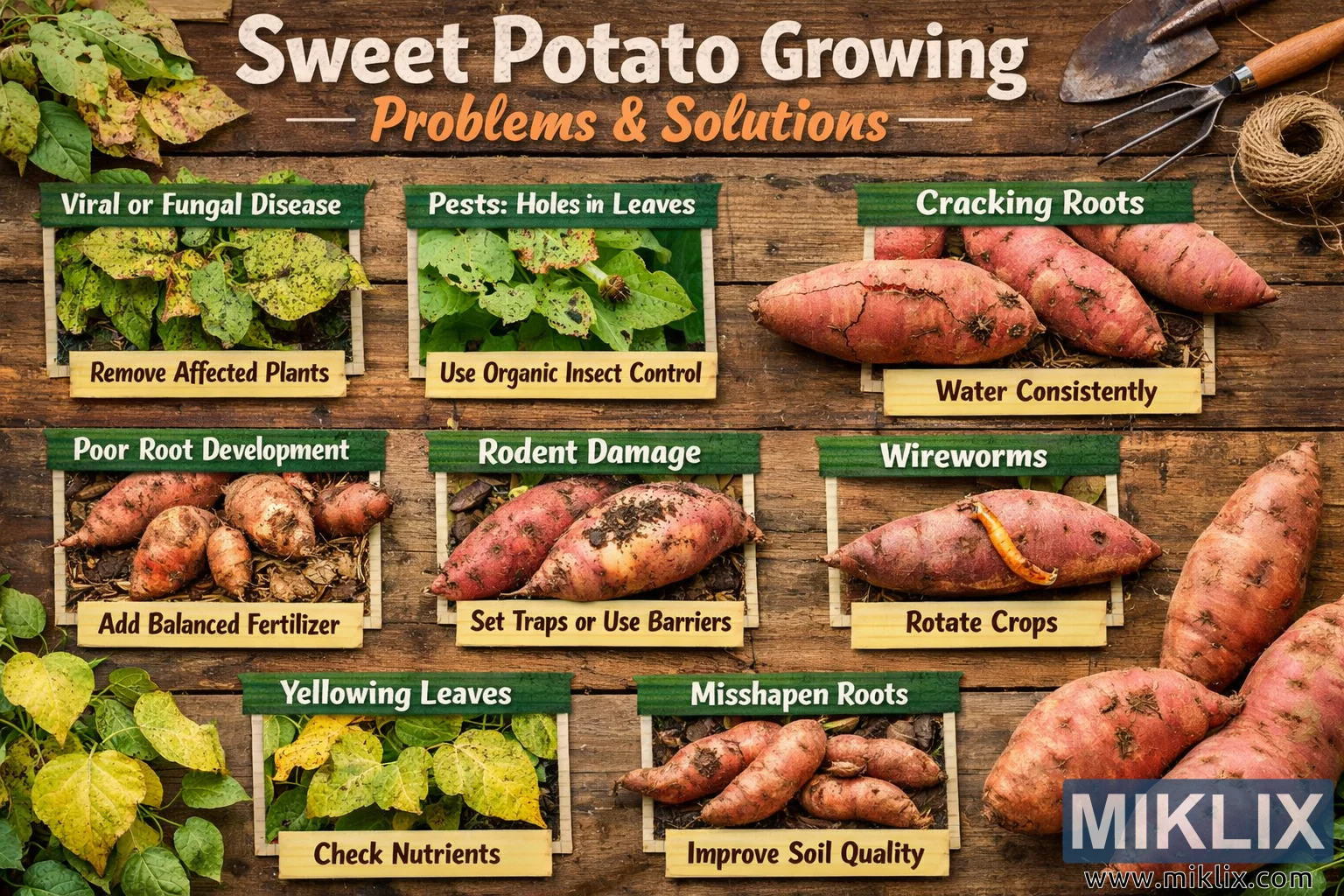
Visual guide to sweet potato growing problems and solutions, illustrating pests, diseases, nutrient issues, and root defects with clear corrective actions for gardeners.

Available versions of this image
The image files available for download below are less compressed and higher resolution - and as a result of that, higher quality - than the images embedded in articles and pages on this website, which are more optimized for file size in order to reduce bandwidth consumption.
Regular size (1,536 x 1,024)


Large size (3,072 x 2,048)
Very large size (4,608 x 3,072)
Extra large size (6,144 x 4,096)
Comically large size (1,048,576 x 699,051)
- Still uploading... ;-)
Image description
The image is a wide, landscape-oriented educational collage focused on common sweet potato growing problems and their practical solutions. The entire composition is arranged on a rustic wooden tabletop background that evokes a garden shed or potting bench, reinforcing an agricultural, hands-on theme. Across the top, a large heading reads “Sweet Potato Growing – Problems & Solutions,” styled in warm, earthy tones that match the natural subject matter. Garden tools such as a hand trowel, twine, and soil-stained textures appear subtly around the edges, adding realism and context without distracting from the main content. The collage is divided into multiple framed sections, each presenting a specific growing issue paired with a clear visual example and a short solution label. One section shows sweet potato leaves mottled with yellow and dark spots, labeled as viral or fungal disease, with the recommended action to remove affected plants. Another panel features leaves riddled with small holes caused by insects, paired with the advice to use organic insect control. Several panels focus on root-related problems: cracked sweet potatoes illustrate inconsistent watering, accompanied by the solution to water consistently; undersized or poorly formed roots highlight poor root development, with a recommendation to add balanced fertilizer; and misshapen or knobby roots point to soil issues, paired with advice to improve soil quality. Additional sections show rodent damage to tubers, suggesting the use of traps or barriers, and wireworm damage, with crop rotation presented as the solution. Yellowing leaves are shown in another panel, indicating nutrient deficiencies and prompting growers to check soil nutrients. Each problem-solution pair is visually separated with small wooden-style placards and green header labels, making the information easy to scan and understand. The sweet potatoes themselves are shown in high detail, with visible soil, natural blemishes, and realistic textures, reinforcing authenticity. Overall, the image functions as an informative, visually engaging guide for gardeners and farmers, combining clear photography, practical advice, and an earthy aesthetic to communicate how to identify and fix common sweet potato cultivation issues.
The image is related to: A Complete Guide to Growing Sweet Potatoes at Home