
A Complete Guide to Growing Sweet Potatoes at Home
Published: January 17, 2026 at 7:09:00 PM UTC
Last updated: January 22, 2026 at 9:14:28 AM UTC
Sweet potatoes are one of the most rewarding crops for home gardeners. Not only do they produce nutritious, delicious tubers, but they're also surprisingly easy to grow once you understand their basic needs.

Click or tap the image for more information and higher resolutions.
Whether you have a spacious garden or just a few containers, this comprehensive guide will walk you through everything you need to know about growing sweet potatoes, from starting slips to harvesting and storing your bounty.
Benefits of Growing Your Own Sweet Potatoes
Sweet potatoes are nutritional powerhouses packed with vitamins A and C, potassium, and fiber. When you grow them yourself, you'll enjoy several advantages over store-bought varieties:
- Superior flavor and freshness that store-bought tubers can't match
- Access to unique varieties not commonly found in supermarkets
- Complete control over growing methods (organic, no pesticides)
- Cost-effective crop with high yields from minimal space
- Beautiful ornamental vines that can serve as ground cover
- Edible leaves that provide nutritious cooking greens
- Long storage life when properly cured (up to 6-8 months)
- Satisfaction of growing your own food from start to finish
Unlike regular potatoes, sweet potatoes are part of the morning glory family (Ipomoea batatas), not the nightshade family. This means they grow differently and have unique requirements, but the effort is well worth it for the delicious harvest you'll enjoy.
Choosing the Right Sweet Potato Varieties
Sweet potato varieties differ in flavor, texture, color, and growing requirements. Selecting the right variety for your climate and preferences is crucial for success.
| Variety | Days to Maturity | Flesh Color | Best Climate | Growth Habit | Special Features |
| Beauregard | 90-100 | Orange | Adaptable, good for cooler regions | Vining | Disease resistant, high yield, most popular commercial variety |
| Centennial | 90-100 | Deep orange | Warm, Southern regions | Vining | Sweet flavor, consistent producer |
| Georgia Jet | 80-90 | Orange | Northern, shorter seasons | Vining | Fast-maturing, good for cooler climates |
| Vardaman | 100-110 | Golden orange | Southern regions | Bush-type | Compact growth, ideal for small gardens |
| Covington | 100-120 | Orange | Adaptable | Vining | Disease resistant, uniform shape, excellent storage |
| Purple | 110-120 | Purple | Warm, long seasons | Vining | High antioxidants, unique color, drier texture |
Climate Tip: For northern gardeners with shorter growing seasons, choose early-maturing varieties like Georgia Jet or Beauregard. In warmer southern regions with longer growing seasons, you'll have success with almost any variety.
How to Start Sweet Potato Slips
Unlike regular potatoes, sweet potatoes aren't grown directly from pieces of tuber. Instead, they're grown from sprouts called "slips" that grow from a mature sweet potato. You can purchase slips from garden centers or online suppliers, or grow your own from store-bought or saved sweet potatoes.
Growing Your Own Slips
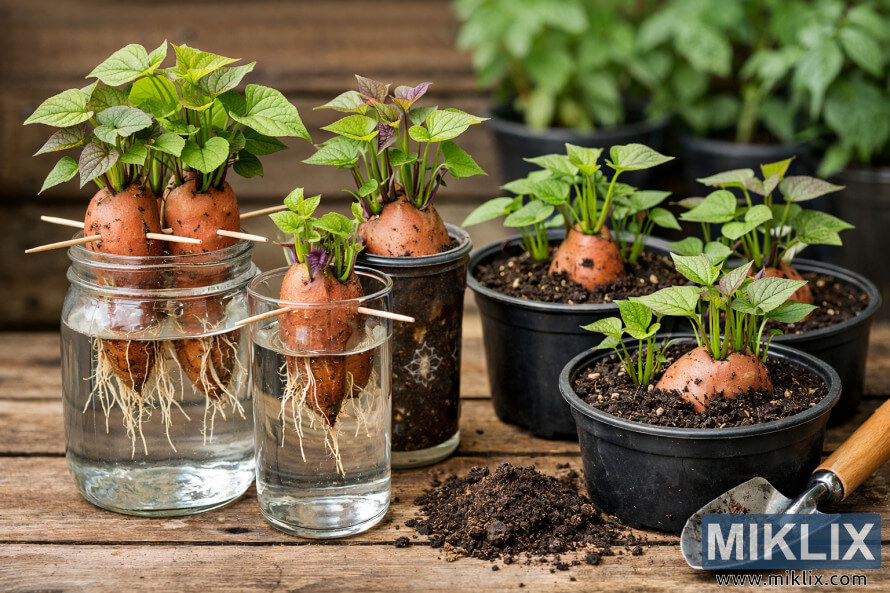
Water Method
- Select an organic sweet potato (non-organic may be treated with sprout inhibitors)
- Insert toothpicks around the middle of the potato
- Suspend the potato in a jar with the bottom half submerged in water
- Place in a warm location with indirect sunlight
- Change water every few days to prevent mold
- After 2-4 weeks, slips will begin to grow from the top
- When slips reach 4-6 inches with several leaves, gently twist them off
- Place removed slips in water until roots develop (about 1 week)
Soil Method (Faster)
- Fill a shallow container with moist potting soil
- Lay sweet potato horizontally and cover with 1-2 inches of soil
- Keep soil consistently moist but not soggy
- Place in warm location (75-80°F is ideal)
- Slips will emerge in 2-3 weeks
- When slips are 6-8 inches tall with several leaves, gently pull them from the potato
- The slips will already have roots if grown in soil
Timing Tip: Start your slips 10-12 weeks before your planned outdoor planting date. For most regions, this means starting slips in March for planting in late May or early June.
Click or tap the image for more information and higher resolutions.
Preparing Soil for Sweet Potatoes
Sweet potatoes thrive in loose, well-draining soil that allows their tubers to expand easily. Proper soil preparation is crucial for developing large, well-formed sweet potatoes.
Ideal Soil Conditions
- Soil type: Sandy loam is ideal; heavy clay soils should be amended
- pH level: 5.8-6.2 is optimal (slightly acidic)
- Temperature: Soil should be at least 65°F (18°C) at planting time
- Drainage: Excellent drainage is essential to prevent rot
Soil Preparation Steps
- Test your soil pH and amend if necessary with sulfur to lower pH or lime to raise it
- Remove all weeds, rocks, and debris from the planting area
- Loosen soil to a depth of 12-15 inches using a garden fork or tiller
- Mix in 2-3 inches of compost or well-rotted manure
- For clay soils, add additional organic matter and coarse sand to improve drainage
- Form raised ridges or mounds 8-12 inches high and 12 inches wide
- Space ridges 3-4 feet apart to allow room for vines to spread
Important: Avoid using fresh manure or high-nitrogen fertilizers, which promote leafy growth at the expense of tuber development. Sweet potatoes prefer moderate fertility with emphasis on potassium and phosphorus rather than nitrogen.

Click or tap the image for more information and higher resolutions.
Planting Sweet Potatoes
Timing is crucial when planting sweet potatoes. These tropical plants are extremely sensitive to cold and should only be planted when soil temperatures consistently stay above 65°F (18°C) and all danger of frost has passed.
When to Plant
- Plant 3-4 weeks after the last spring frost date in your area
- Soil temperature should be at least 65°F (18°C) at a 4-inch depth
- Night temperatures should consistently remain above 55°F (13°C)
- In northern regions: Late May to early June
- In southern regions: April to June
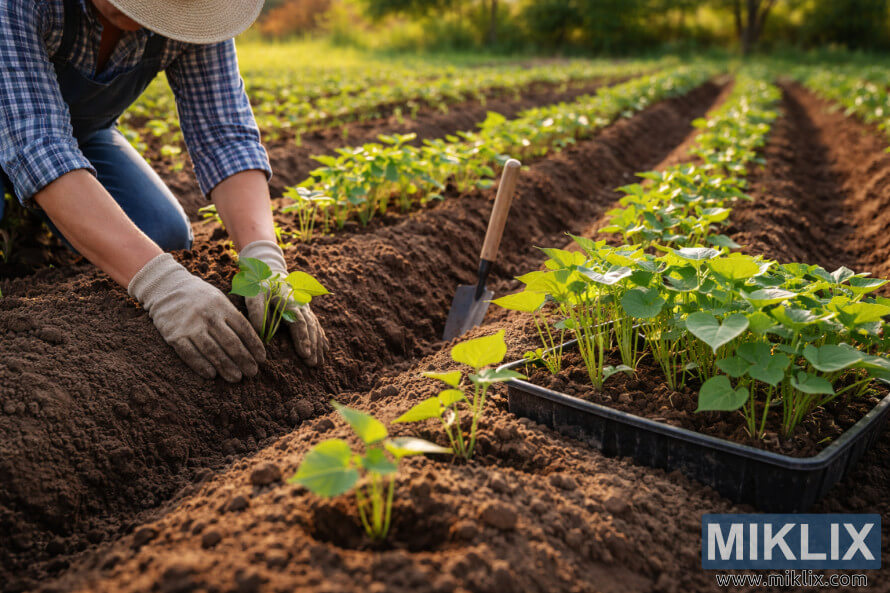
Planting in Garden Beds
- Water the planting area thoroughly the day before planting
- Create holes 4-6 inches deep along the prepared ridges
- Space holes 12-18 inches apart in rows 3-4 feet apart
- Place one slip in each hole, burying it up to the top leaves
- Firm soil gently around each slip
- Water thoroughly after planting
- Consider covering with black plastic mulch to warm soil and suppress weeds
Click or tap the image for more information and higher resolutions.
Growing in Containers
Limited space? Sweet potatoes can thrive in containers with proper care:
- Choose containers at least 18 inches deep and wide
- Ensure excellent drainage with multiple drainage holes
- Use lightweight potting mix blended with compost
- Plant 2-3 slips per large container
- Place containers in full sun
- Water more frequently than in-ground plants
Caring for Growing Sweet Potatoes
Once planted, sweet potatoes require minimal maintenance compared to many other vegetables. However, proper care during the growing season will maximize your harvest.
Watering
Sweet potatoes have moderate water needs and are somewhat drought-tolerant once established:
- Water deeply immediately after planting
- Keep soil consistently moist (but not soggy) for the first 3-4 weeks
- Once established, water deeply once a week, providing about 1 inch of water
- Reduce watering during the last 3-4 weeks before harvest to prevent splitting
- Avoid overhead watering to prevent fungal diseases
Fertilizing
Sweet potatoes don't require heavy fertilization and too much nitrogen can reduce tuber production:
- If soil was properly prepared with compost, additional fertilizer may not be needed
- If plants appear stunted, apply a balanced organic fertilizer (like 5-5-5) once, about a month after planting
- Avoid high-nitrogen fertilizers, which promote vine growth at the expense of tubers
- A foliar spray of seaweed extract midseason can provide trace minerals

Click or tap the image for more information and higher resolutions.
Weed Control
Weed control is most important during the first month after planting:
- Keep the area weed-free until vines cover the ground
- Use shallow cultivation to avoid disturbing sweet potato roots
- Apply organic mulch like straw or leaves to suppress weeds
- Black plastic mulch can warm soil and control weeds simultaneously
- Once vines spread, they naturally suppress weeds by shading the soil
Managing Pests and Diseases
Sweet potatoes are generally resistant to many common garden pests and diseases, but a few problems can occur. Prevention is the best approach for organic gardeners.
Common Pests
- Sweet Potato Weevil: The most serious pest. Adults are blue-black beetles with red midsections. Prevention includes crop rotation and using certified disease-free slips.
- Wireworms: Slender, hard-bodied larvae that tunnel through tubers. Avoid planting in recently sodded areas.
- Flea Beetles: Tiny beetles that create small holes in leaves. Row covers can protect young plants.
- Deer: Often attracted to sweet potato foliage. Fencing or repellents may be necessary.
Common Diseases
- Black Rot: Causes black spots on tubers. Use certified disease-free slips and practice crop rotation.
- Scurf: Creates dark patches on tuber skin but doesn't affect eating quality. Use clean slips and rotate crops.
- Fusarium Wilt: Causes yellowing and wilting of vines. Plant resistant varieties and rotate crops.
- Stem Rot: Causes decay at soil line. Ensure good drainage and avoid overwatering.

Click or tap the image for more information and higher resolutions.
Organic Pest Control Methods
- Use floating row covers during early growth stages
- Introduce beneficial insects like ladybugs and lacewings
- Apply diatomaceous earth around plants for crawling insects
- Spray neem oil for persistent pest problems
- Practice crop rotation (don't plant sweet potatoes in the same spot for 3-4 years)
- Remove and destroy any diseased plants immediately
Harvesting Sweet Potatoes
Harvesting sweet potatoes at the right time and with proper technique is crucial for maximizing yield and storage life. Most varieties mature in 90-120 days after planting.
When to Harvest
- Most varieties are ready to harvest 90-120 days after planting
- Harvest before soil temperatures drop below 55°F (13°C)
- In northern regions, harvest before the first frost
- Leaves may start to yellow when tubers are ready
- You can check by carefully digging up one plant to assess tuber size
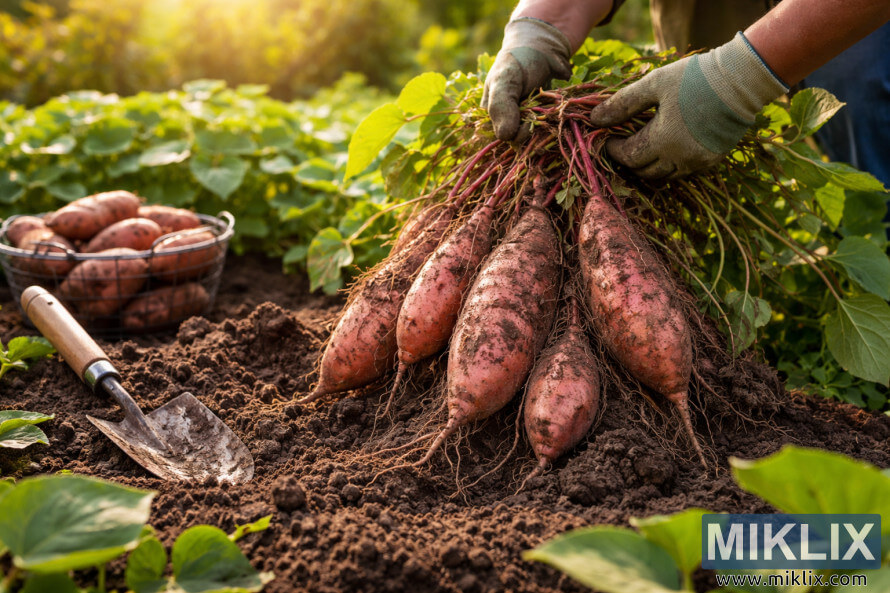
Harvesting Technique
- Choose a dry, sunny day for harvesting
- Cut away vines or pull them back from the planting area
- Use a garden fork or shovel to carefully loosen soil around plants
- Start digging 12-18 inches from the plant to avoid damaging tubers
- Gently lift tubers from the soil, being careful not to bruise or cut them
- Handle freshly harvested sweet potatoes very gently - their skins are easily damaged
- Let tubers dry on the ground for 2-3 hours if weather permits
Caution: Freshly harvested sweet potatoes are easily damaged. Never wash them before curing, and handle them as gently as eggs to prevent bruising that can lead to rot during storage.
Click or tap the image for more information and higher resolutions.
Curing and Storing Your Harvest
Proper curing and storage are essential steps that develop the sweet flavor and extend the storage life of your sweet potatoes. Don't skip this important process!
Why Curing Matters
Freshly harvested sweet potatoes are not very sweet and have thin skins that damage easily. Curing:
- Converts starches to sugars, enhancing sweetness and flavor
- Heals small wounds and toughens the skin
- Extends storage life significantly
- Improves nutritional content
Curing Process
- Brush off excess soil (do not wash tubers)
- Discard any damaged or diseased tubers
- Place sweet potatoes in a single layer in shallow boxes or baskets
- Keep in a warm (80-85°F/27-29°C), humid (85-90% humidity) location for 7-14 days
- Good locations include near a furnace, in a bathroom with a space heater, or in a warm attic
- For humidity, place a bucket of water in the room or cover with damp (not wet) towels

Click or tap the image for more information and higher resolutions.
Long-Term Storage
After curing, properly stored sweet potatoes can last 6-10 months:
- Store at 55-60°F (13-15°C) with moderate humidity (60-70%)
- Never refrigerate sweet potatoes (temperatures below 55°F cause off-flavors)
- Keep in a dark location to prevent sprouting
- Store in baskets, paper bags, or cardboard boxes with ventilation
- Check periodically and remove any that show signs of spoilage
- Handle gently to prevent bruising
Troubleshooting Common Problems
Even experienced gardeners occasionally encounter issues when growing sweet potatoes. Here are solutions to common problems:
Why are my sweet potato vines growing vigorously but producing few tubers?
This is typically caused by excessive nitrogen fertilization. Sweet potatoes need moderate fertility with an emphasis on potassium and phosphorus rather than nitrogen. Too much nitrogen promotes lush vine growth at the expense of tuber development. For future plantings, reduce nitrogen and increase potassium.
My sweet potatoes are long, thin, and stringy instead of plump. What went wrong?
This usually indicates compacted or heavy clay soil. Sweet potatoes need loose, well-draining soil to form properly. Improve soil structure by adding organic matter and sand before planting next season. Container growing is also an excellent alternative for those with heavy soils.
The sweet potatoes I harvested have cracks and splits. How can I prevent this?
Splitting is caused by fluctuations in soil moisture, especially when dry soil receives heavy rain or irrigation. Maintain consistent soil moisture throughout the growing season, and reduce watering during the final 3-4 weeks before harvest.
My sweet potato slips aren't growing well after transplanting. Why?
Newly planted slips need consistent moisture and warm temperatures to establish. If temperatures drop below 55°F (13°C) at night, growth will stall. Protect young plants with row covers or wait until soil and air temperatures are consistently warm before planting.
Can I save my own sweet potatoes for growing slips next year?
Yes! Select several perfect, medium-sized tubers from your harvest and store them separately for planting. However, if you experienced any disease issues, it's better to purchase certified disease-free slips for the next season to avoid perpetuating problems.

Click or tap the image for more information and higher resolutions.
Conclusion
Growing sweet potatoes is a rewarding experience that combines ease of cultivation with a bountiful harvest. By following the guidelines in this comprehensive guide, you'll be well on your way to producing delicious, nutritious sweet potatoes that far surpass anything available in stores.
Remember that sweet potatoes are adaptable plants that can thrive in various conditions as long as their basic needs for warmth, drainage, and moderate fertility are met. Whether you're growing in traditional garden beds or containers, the principles remain the same.
Further Reading
If you enjoyed this post, you may also like these suggestions:
- A Guide to the Best Varieties of Serviceberry Trees to Plant in Your Garden
- Growing Blackberries: A Guide for Home Gardeners
- Complete Guide to Growing Loquat Trees in Your Home Garden