
Image: Ladybugs Feeding on Aphids on Artichoke Plant
Published: January 23, 2026 at 10:07:09 PM UTC
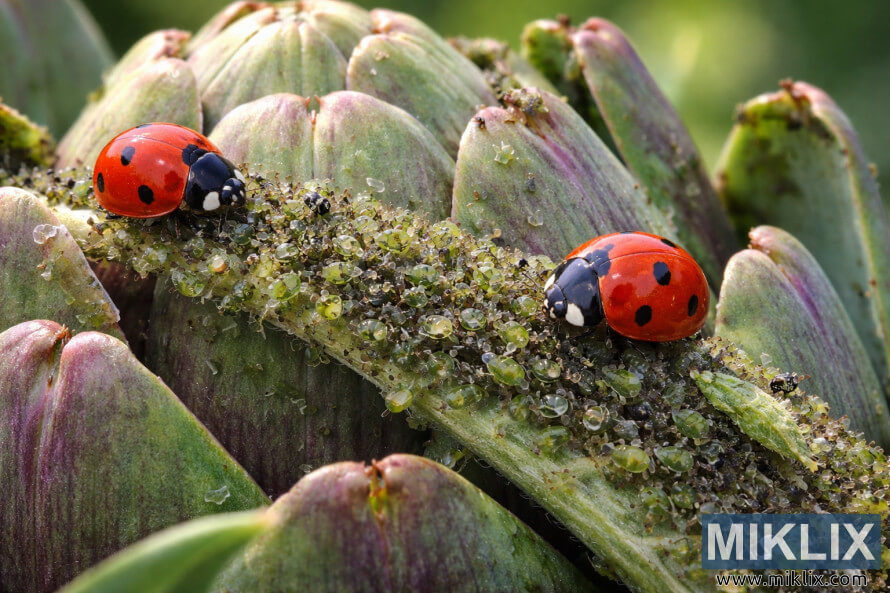
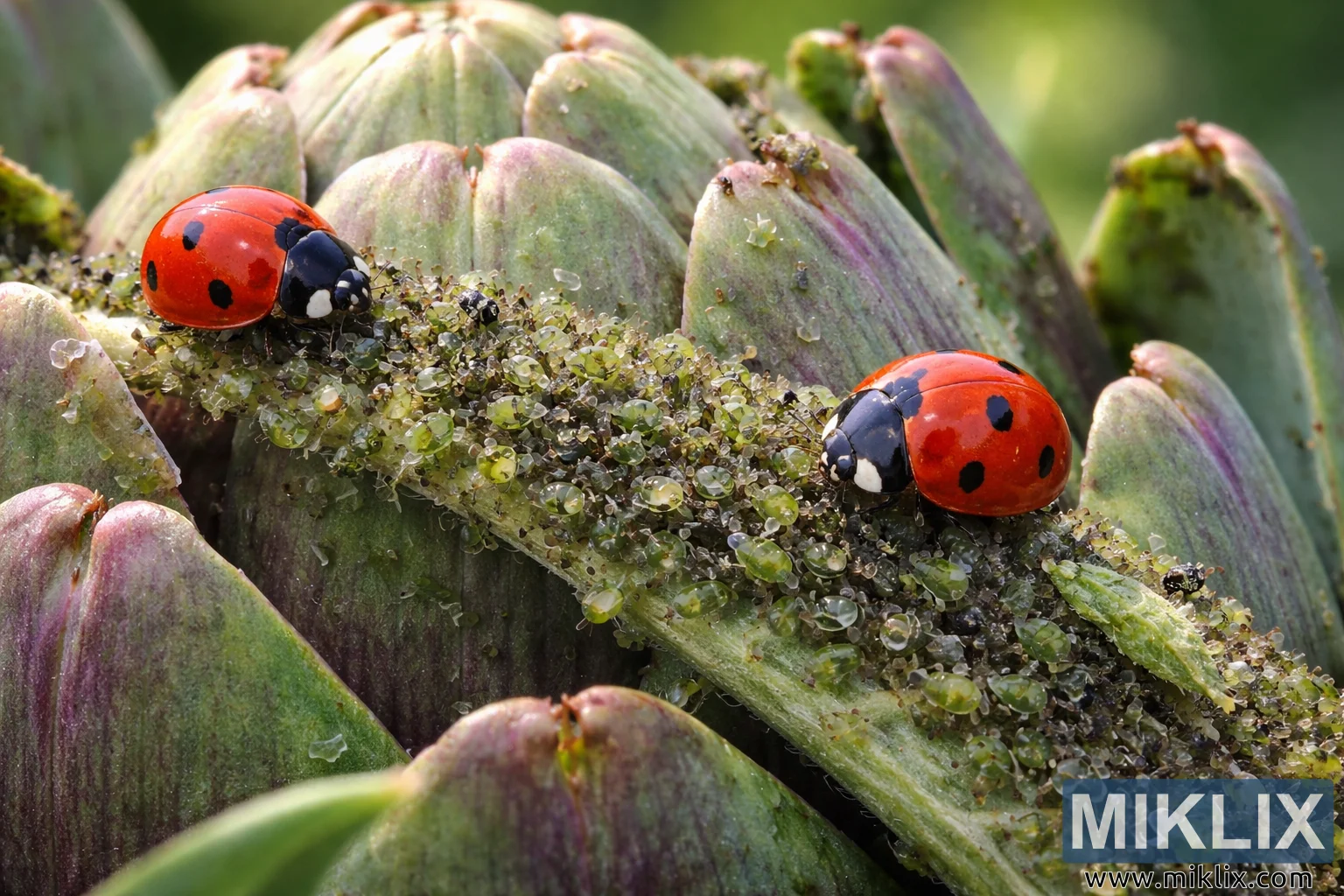
High-resolution macro image showing ladybugs feeding on aphids on artichoke leaves, illustrating natural pest control and plant-insect interactions.
Available versions of this image
The image files available for download below are less compressed and higher resolution - and as a result of that, higher quality - than the images embedded in articles and pages on this website, which are more optimized for file size in order to reduce bandwidth consumption.
Regular size (1,536 x 1,024)


Large size (3,072 x 2,048)
Very large size (4,608 x 3,072)
Extra large size (6,144 x 4,096)
Comically large size (1,048,576 x 699,051)
- Still uploading... ;-)
Image description
The image presents a highly detailed macro photograph showing a dense colony of aphids covering the surface of an artichoke plant. The composition is tightly framed, filling the landscape-oriented image with overlapping artichoke bracts and stems rendered in shades of muted green, pale purple, and soft gray. The plant tissue appears thick and slightly waxy, with fine ridges, veins, and subtle color transitions that give the leaves a sculptural, almost architectural quality. Across the central stem and adjoining leaf surfaces, hundreds of aphids cluster together, creating a textured living layer. The aphids are small, translucent to yellow-green insects with oval bodies, visible legs, and tiny antennae, some showing darker internal markings. Their bodies glisten slightly, suggesting natural moisture or honeydew, and a few shed skins are visible among them, adding to the sense of biological activity and realism. Two adult ladybugs dominate the scene as natural predators. They are positioned prominently on the aphid-covered stem, their rounded, glossy red elytra contrasting sharply with the subdued tones of the plant and the pale aphids. Each ladybug displays distinct black spots and a black head with white markings near the eyes. Their polished surfaces reflect light, drawing immediate attention and visually anchoring the image. One ladybug appears slightly closer to the viewer, while the second sits farther along the stem, creating depth and a gentle diagonal flow across the frame. The ladybugs’ legs and mouthparts are visible, suggesting active feeding behavior, reinforcing the ecological interaction taking place. In the background, the artichoke bracts curve outward and upward, softly blurred due to shallow depth of field. This selective focus isolates the aphids and predators, emphasizing the micro-ecosystem unfolding on the plant. The lighting is natural and diffuse, likely daylight, with no harsh shadows. It highlights fine surface details such as the aphids’ semi-transparent bodies, the matte texture of the artichoke leaves, and the reflective sheen of the ladybugs’ shells. Overall, the image conveys a vivid and educational snapshot of biological pest control, illustrating the balance between plant, pest, and predator. It combines scientific clarity with aesthetic appeal, making it suitable for agricultural, ecological, or educational contexts where close observation of natural interactions is essential.
The image is related to: A Guide to Growing Artichokes in Your Own Garden