
A Guide to Growing Artichokes in Your Own Garden
Published: January 23, 2026 at 10:07:09 PM UTC
Growing artichokes in your garden offers both visual appeal and culinary rewards. With their striking silvery-green leaves and delicious edible flower buds, artichokes make a stunning addition to any garden space.
Click or tap the image for more information and higher resolutions.
While often associated with Mediterranean climates, these impressive plants can thrive in various regions with the right care. This guide will walk you through everything you need to know to successfully grow your own artichokes, whether you're in a warm coastal area or a cooler northern climate.
Understanding Artichokes
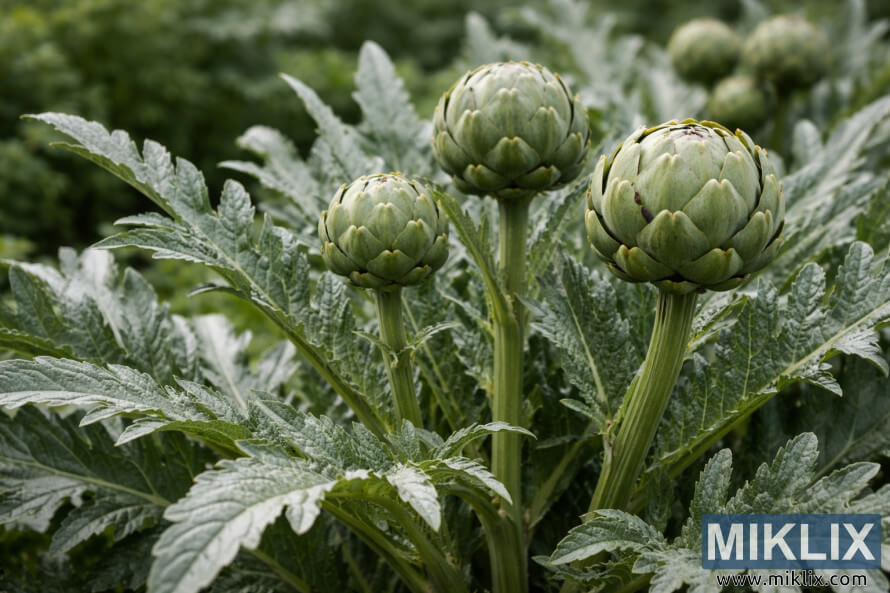
Globe artichoke plants add striking architectural elements to any garden
The globe artichoke (Cynara scolymus) is a member of the thistle family, grown for its tender, edible flower buds. What we eat as the "artichoke" is actually the immature flower bud before it blooms. If left unharvested, these buds would open into spectacular purple-blue thistle-like flowers.
Artichokes have a fascinating history in North American gardens. Thomas Jefferson reportedly cultivated them at Monticello as early as 1767. Today, while commercial production is concentrated along coastal California, home gardeners across various climate zones can successfully grow these impressive plants.
Did You Know? Artichokes are perennial plants in mild climates (Zones 7-11), living for up to 5 years. In colder regions (Zones 3-6), they can be grown as annuals with special techniques.
Climate & Growing Conditions
Artichokes naturally prefer mild, coastal-like conditions with cool, foggy summers and mild winters. However, with the right approach, gardeners in various climates can enjoy success.
Growing as Perennials (Zones 7-11)
In these milder climates, artichokes can live for several years, producing harvests annually. Plants will die back in winter and regrow in spring. In zones 8-9, they may need winter protection with mulch during occasional freezes.
Growing as Annuals (Zones 3-6)
In colder regions, artichokes can be grown as annuals by starting them early indoors and using specific varieties bred for annual production. With proper timing and care, you can still enjoy a good harvest in a single season.
Ideal Growing Conditions
| Requirement | Ideal Conditions | Notes |
| Sunlight | Full sun to partial shade | Minimum 6 hours of direct sunlight daily; some afternoon shade is beneficial in hot climates |
| Soil Type | Light, fertile, well-drained | Sandy or loamy soil is best; heavy clay soils should be amended |
| Soil pH | 6.0-7.0 | Slightly acidic to neutral |
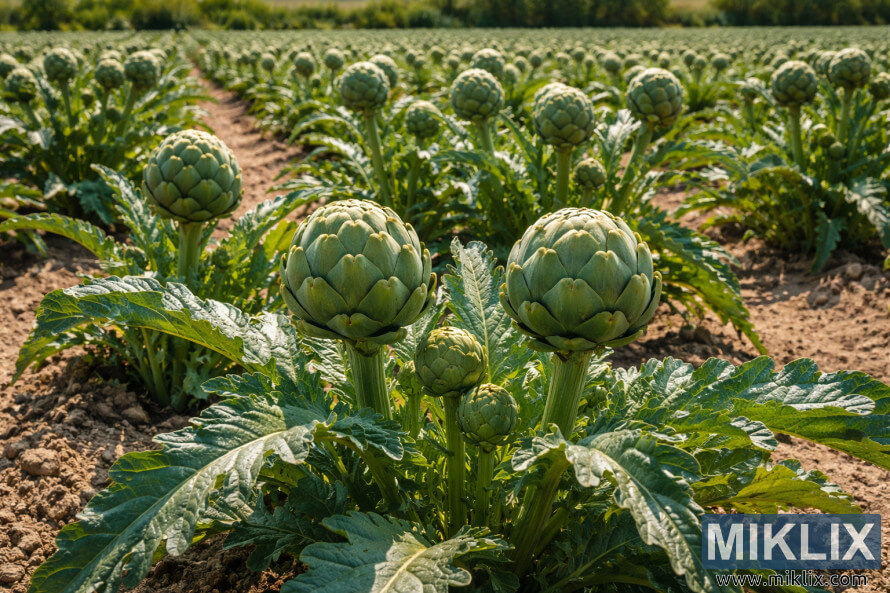
| Spacing | 3-4 feet apart | Rows 4-6 feet apart; plants can reach 3-4 feet tall and wide |
| Temperature | 60-70°F (15-21°C) | Tolerates light frost but not hard freezes |
Click or tap the image for more information and higher resolutions.
Starting Artichokes
There are two primary methods for starting artichokes in your garden: from seed or from divisions/nursery starts. Each approach has its advantages depending on your climate and growing goals.
Starting from Seed
Starting artichokes from seed is economical and allows you to try different varieties. This method is particularly important for gardeners in colder climates growing artichokes as annuals.
When to Start Seeds
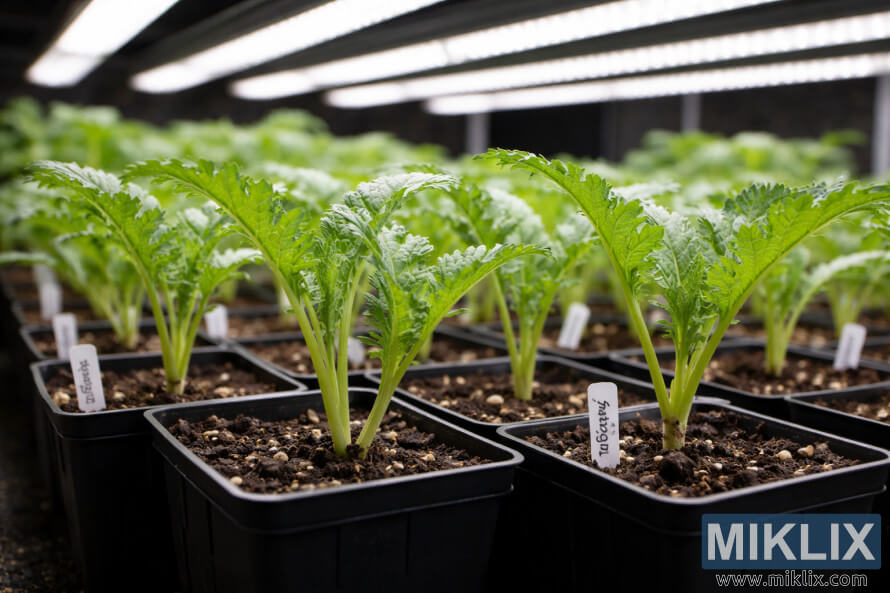
- Start seeds indoors 8-10 weeks before your last spring frost date
- Seeds germinate best at temperatures between 70-80°F (21-27°C)
- Use a heat mat to maintain consistent soil temperature
- Expect germination in 10-14 days
Seed Starting Process
- Fill seed-starting containers with quality seed-starting mix
- Plant seeds ¼ inch deep
- Keep soil consistently moist but not waterlogged
- Once seedlings have 3-4 true leaves, transplant to 4-inch pots
- Grow at 60-70°F during day and 50-60°F at night
Vernalization for Annual Growing: For annual production in cold climates, artichoke plants need a period of cool temperatures (45-50°F) for about 10 days to trigger bud formation. This can be achieved by gradually acclimating seedlings to outdoor conditions when temperatures are above freezing but still cool.
Click or tap the image for more information and higher resolutions.
Starting from Divisions or Nursery Plants
In warmer climates where artichokes grow as perennials, you can purchase established plants from nurseries or divide existing plants. This method gives you a head start on the growing season.
Advantages of Nursery Plants
- Faster time to harvest
- Higher success rate for beginners
- Guaranteed variety selection
- No need for seed-starting equipment
Planting Process
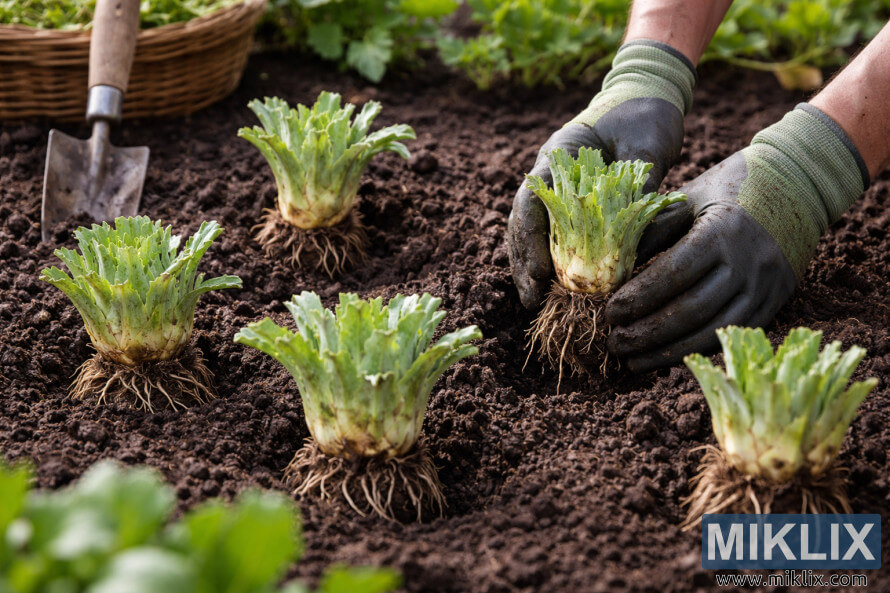
- Prepare planting hole twice as wide as the root ball
- Mix compost into the native soil
- Place plant at same depth it was growing in container
- Backfill with soil mixture and firm gently
- Water thoroughly after planting
Click or tap the image for more information and higher resolutions.
Using Divisions
In established perennial plantings, you can divide artichoke plants every 3-4 years in early spring. Dig up the crown and separate offshoots with roots attached, then replant immediately.
Recommended Artichoke Varieties
For Annual Production
- Imperial Star - Specifically bred for annual production, produces buds in first year from seed
- Colorado Star - Annual variety with purple buds
- Opera - Early maturing with good cold tolerance
For Perennial Gardens
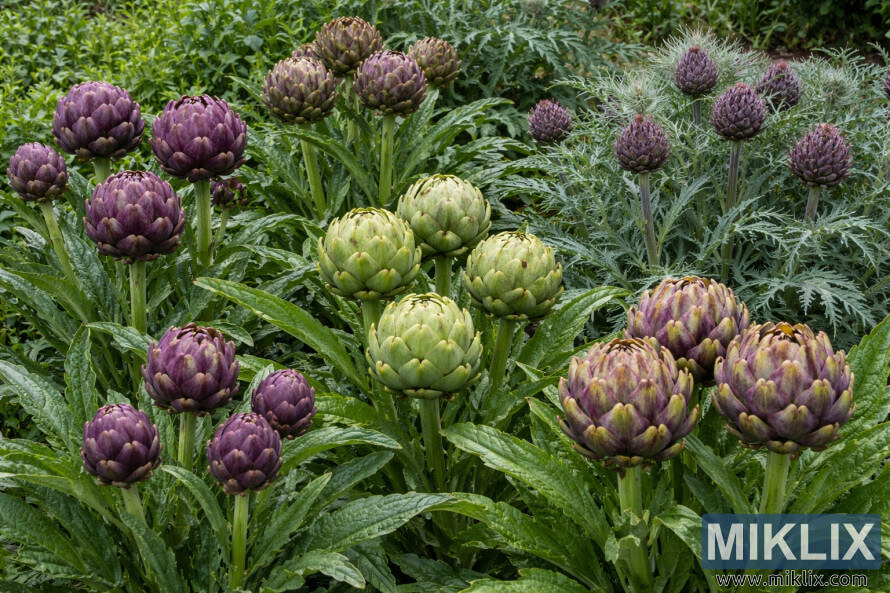
- Green Globe - Traditional variety with excellent flavor
- Big Heart - Thornless variety with large buds
- Violetto - Italian heirloom with purple buds
For Container Growing
- Tempo - Compact variety suitable for large containers
- Purple of Romagna - Italian variety with good container adaptation
- Emerald - Compact plant with good production
Click or tap the image for more information and higher resolutions.
Care and Maintenance
Proper care is essential for healthy artichoke plants and abundant harvests. These plants are heavy feeders and require consistent attention throughout the growing season.
Watering
Artichokes need consistent moisture to produce tender, flavorful buds. Inconsistent watering can lead to tough, bitter artichokes.
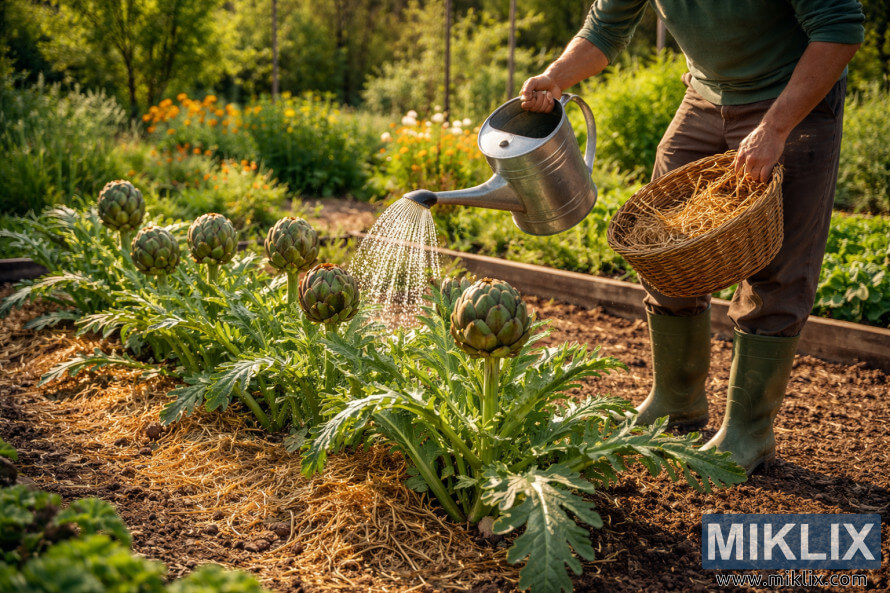
- Water deeply and infrequently rather than frequent shallow watering
- Provide 1-2 inches of water per week, adjusting for rainfall
- Water at the base of plants to keep foliage dry and prevent disease
- Increase watering during bud formation and hot, dry periods
- Reduce watering in fall for perennial plants to prepare for dormancy
Fertilizing
As heavy feeders, artichokes benefit from regular fertilization throughout the growing season.
- Before planting, incorporate compost or well-rotted manure into the soil
- Apply a balanced organic fertilizer (like 10-10-10) at planting time
- Side-dress with compost or balanced fertilizer when plants are 6 inches tall
- Apply additional fertilizer when buds begin to form
- For perennials, feed again in early spring when new growth appears
Click or tap the image for more information and higher resolutions.
Mulching
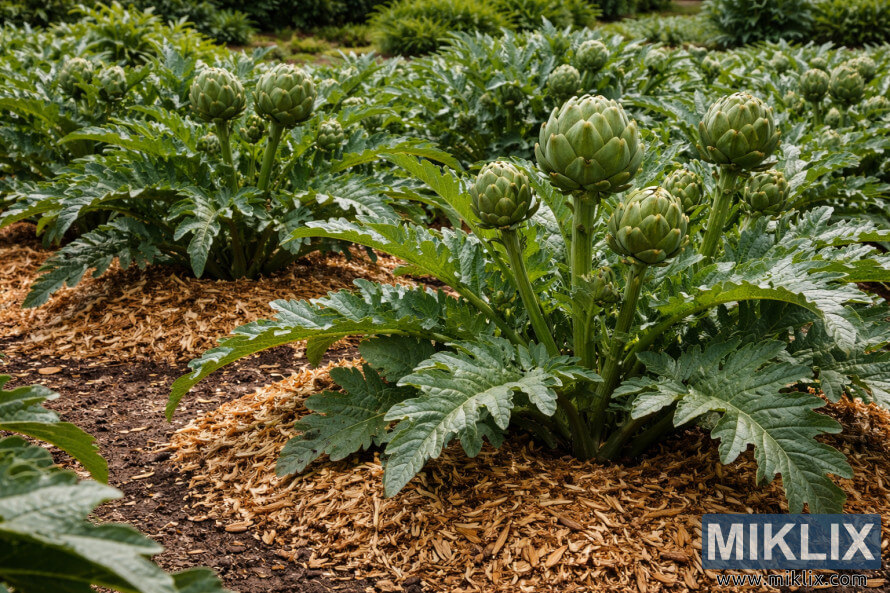
Mulch serves multiple purposes in artichoke cultivation, helping to conserve moisture, suppress weeds, and regulate soil temperature.
- Apply a 3-4 inch layer of organic mulch around plants after they're established
- Keep mulch a few inches away from the stems to prevent rot
- Use straw, shredded leaves, or aged wood chips
- In hot climates, mulch helps keep soil cooler
- For perennial plants in zones 7-8, apply extra mulch in fall for winter protection
Click or tap the image for more information and higher resolutions.
Winter Care for Perennial Plants
In zones where artichokes grow as perennials, proper winter care ensures plants survive to produce again the following year.
For Zones 8 and Warmer
- After fall harvest, cut plants back to ground level
- Cover with 3-4 inches of organic mulch
- Remove mulch gradually in spring as temperatures warm
For Zones 6-7 (Marginal Areas)
- Cut plants back to about 12 inches tall
- Mound organic mulch over plants
- Cover with an inverted bushel basket or large pot
- Add another layer of mulch over and around the covering
- Drape with waterproof cover, securing edges
- Remove protection after danger of hard frost has passed
Harvesting Artichokes
Knowing when and how to harvest artichokes is crucial for enjoying them at their peak flavor and tenderness. The timing of your harvest will depend on whether you're growing them as annuals or perennials.
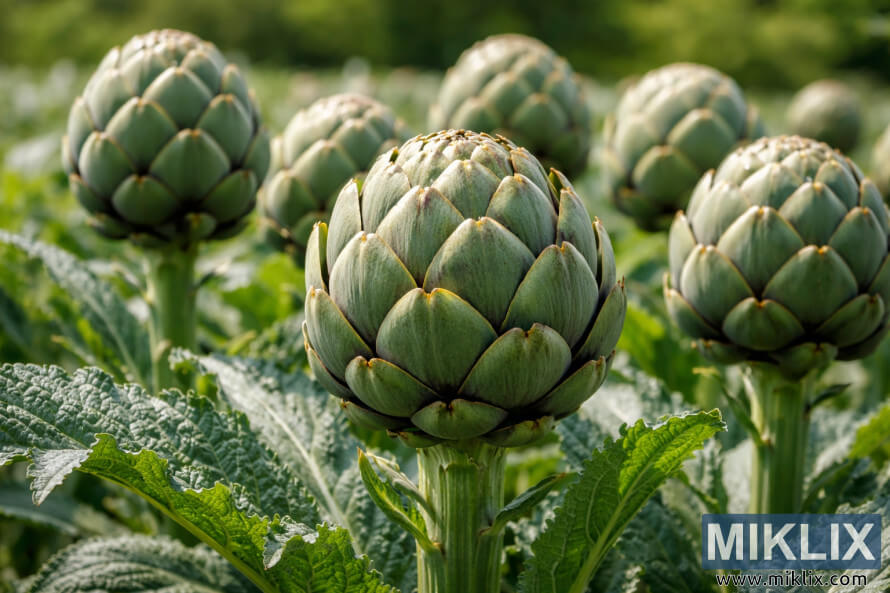
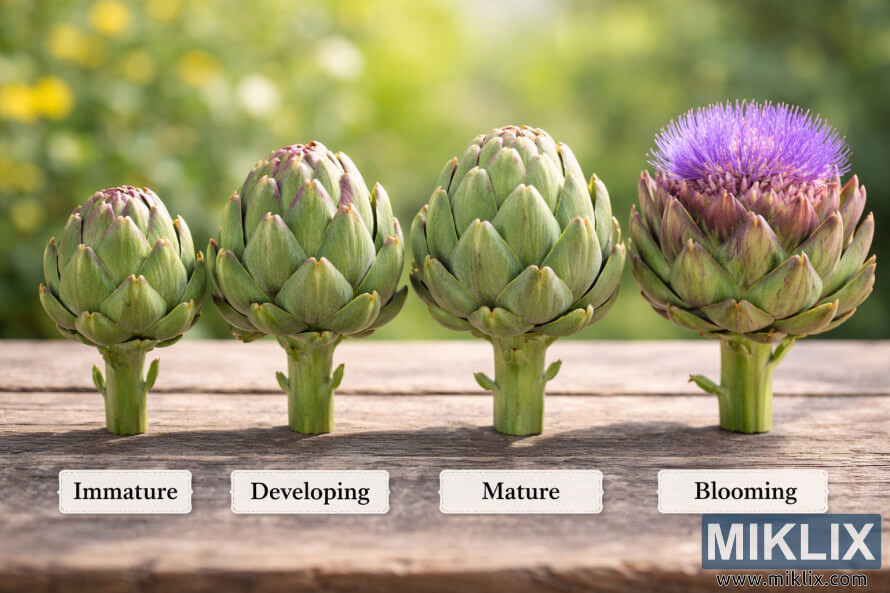
Harvest artichokes when buds are tight and firm, before bracts begin to separate
When to Harvest
- Harvest main buds when they reach 3-5 inches in diameter
- Buds should be tight and compact with closed bracts (scales)
- For perennial plants, first harvest usually occurs in spring of the second year
- For annual plants, harvest typically begins in mid to late summer
- Secondary buds will develop after the main bud is harvested
Click or tap the image for more information and higher resolutions.
How to Harvest
- Use a sharp knife or pruning shears
- Cut the stem 1-3 inches below the bud
- Harvest the main (terminal) bud first when it reaches full size
- After harvesting the main bud, smaller side buds will develop
- Continue harvesting side buds as they reach suitable size
Artichoke development stages: from young bud to open flower
Post-Harvest Care
Proper handling after harvest ensures the best flavor and extends storage life.
- Refrigerate harvested artichokes immediately
- Store unwashed in a perforated plastic bag
- Artichokes will keep for up to two weeks in the refrigerator
- For perennial plants, cut stems back to the ground after the final harvest
- In warm climates, cutting plants back by a third in midsummer may produce a fall crop
Baby Artichokes: Don't discard smaller side buds! These "baby artichokes" are delicious and often more tender. They can be cooked whole and have less developed "choke" inside.
Click or tap the image for more information and higher resolutions.
Common Pests and Problems
While artichokes are generally robust plants, they can face several challenges. Identifying and addressing these issues promptly will help ensure a successful harvest.
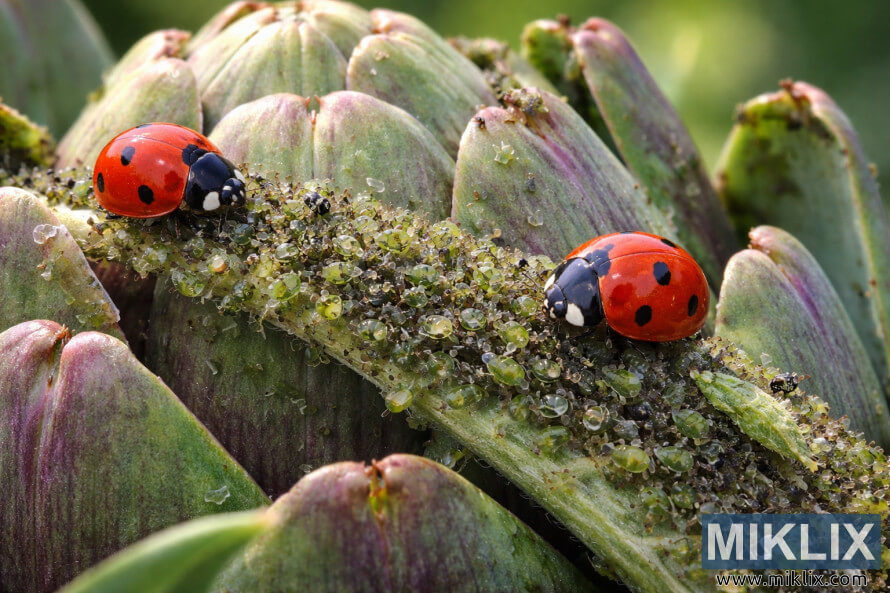
Aphids are common pests on artichokes but can be controlled with natural predators
Pest Management
| Pest | Signs | Organic Solutions |
| Aphids | Clusters of small insects on leaves and buds; sticky residue | Strong spray of water; insecticidal soap; encourage natural predators like ladybugs |
| Slugs and Snails | Holes in leaves; slime trails | Diatomaceous earth barriers; beer traps; hand-picking at night |
| Plume Moths | Tunnels in stems and buds | Remove affected parts; beneficial nematodes; Bacillus thuringiensis (Bt) |
| Earwigs | Ragged holes in leaves | Rolled newspaper traps; oil traps; diatomaceous earth |
Disease Management
| Disease | Symptoms | Prevention & Treatment |
| Botrytis Blight (Gray Mold) | Gray fuzzy growth on leaves and buds | Improve air circulation; avoid overhead watering; remove affected parts; apply neem oil |
| Powdery Mildew | White powdery coating on leaves | Adequate spacing; milk spray (1:10 ratio with water); potassium bicarbonate |
| Root Rot | Wilting despite adequate water; yellowing leaves | Improve drainage; avoid overwatering; plant in raised beds if soil is heavy |
| Curly Dwarf Virus | Stunted growth; curled, yellow leaves | Control aphids (vectors); remove and destroy affected plants; use virus-free stock |
Environmental Issues
Common Challenges
- Drought stress causing tough, bitter buds
- Waterlogged soil leading to root rot
- Extreme heat causing plants to bolt
- Cold damage in marginal zones
- Nutrient deficiencies from poor soil
Prevention Strategies
- Consistent watering schedule
- Improve drainage with raised beds
- Provide afternoon shade in hot climates
- Proper winter protection in zones 6-7
- Regular soil testing and amendment
Warning: If artichoke plants show signs of severe disease or virus infection, it's often best to remove them completely to prevent spread to other plants. Start fresh with new, disease-free plants in a different location.
Click or tap the image for more information and higher resolutions.
Conclusion
Growing artichokes in your garden can be a rewarding experience that provides both ornamental beauty and delicious harvests. While these unique plants have specific requirements, they're surprisingly adaptable to different growing conditions with the right care.
Whether you're growing artichokes as perennials in a mild climate or as annuals in a colder region, the keys to success are proper soil preparation, consistent care, and timely harvesting. The silvery-green foliage adds a striking architectural element to your garden, and the delicious buds offer a gourmet treat that's difficult to find in stores.
Don't be intimidated by artichokes' reputation as a specialty crop. With the information in this guide, even beginning gardeners can successfully grow these impressive plants. Start with just a few plants, and you'll soon discover why gardeners have been cultivating artichokes for centuries.
Happy growing!
Click or tap the image for more information and higher resolutions.
Frequently Asked Questions
How long does it take to grow artichokes from seed to harvest?
When growing artichokes as annuals from seed, expect 85-100 days from transplanting to harvest. The total time from seed to harvest is typically 150-180 days, depending on growing conditions. For perennial plantings, the first significant harvest usually comes in the second year.
Can artichokes be grown in containers?
Yes, artichokes can be grown in containers, but they need large pots (at least 24 inches in diameter and 24 inches deep) due to their extensive root systems. Use a high-quality potting mix enriched with compost, ensure excellent drainage, and water consistently. Container-grown artichokes may be smaller than garden-grown plants but can still produce good harvests.
Why are my artichoke buds small and tough?
Small, tough artichoke buds are usually caused by stress factors like inconsistent watering, nutrient deficiencies, or extreme temperatures. Ensure plants receive regular deep watering, adequate fertilization, and protection from extreme heat. Harvesting at the right time (before buds begin to open) also ensures tender artichokes.
How many artichokes will one plant produce?
A mature artichoke plant typically produces 5-8 buds per season when grown as an annual, and up to 20-30 buds when grown as a perennial in its second and subsequent years. Each plant will produce one large primary bud and several smaller secondary buds. Production varies based on variety, growing conditions, and care.
Further Reading
If you enjoyed this post, you may also like these suggestions:
- Complete Guide to Growing Your Own Quince Trees
- Growing Honeyberries in Your Garden: A Guide to a Sweet Spring Harvest
- A Guide to Growing the Best Figs in Your Own Garden