
Image: Halved Honeydew Melon with Pale Green Flesh
Published: February 19, 2026 at 5:33:20 PM UTC
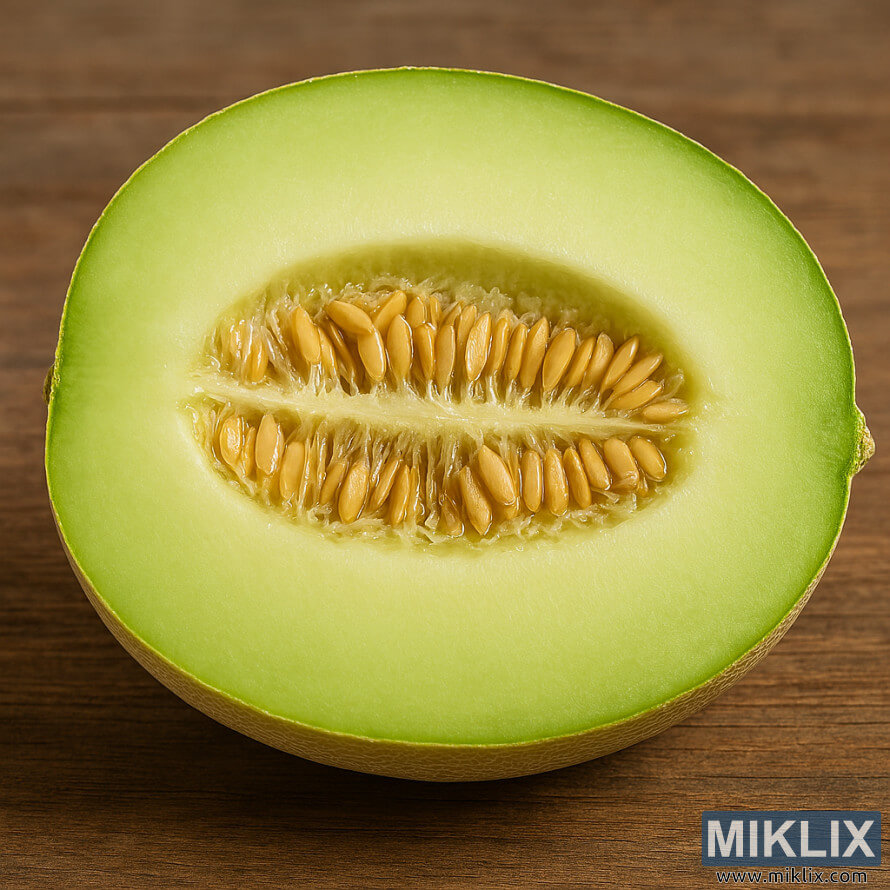
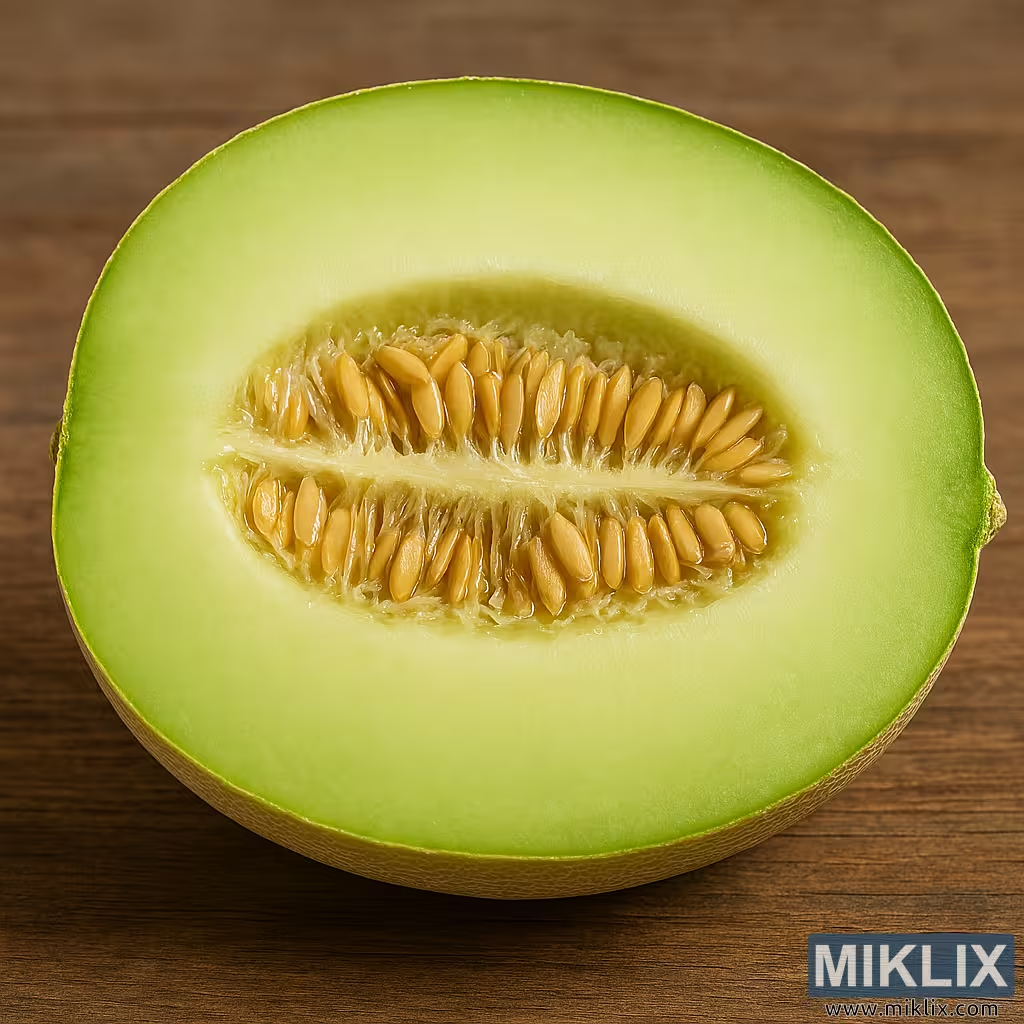
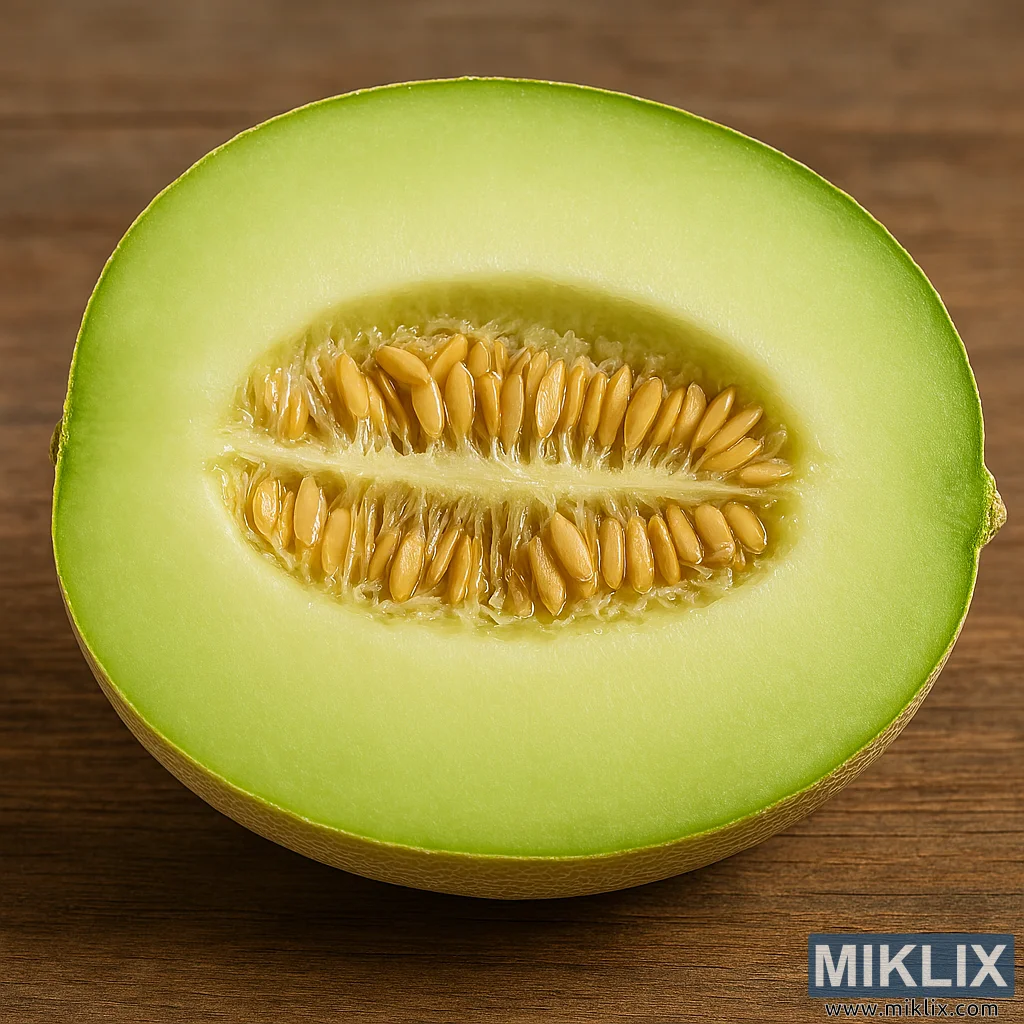
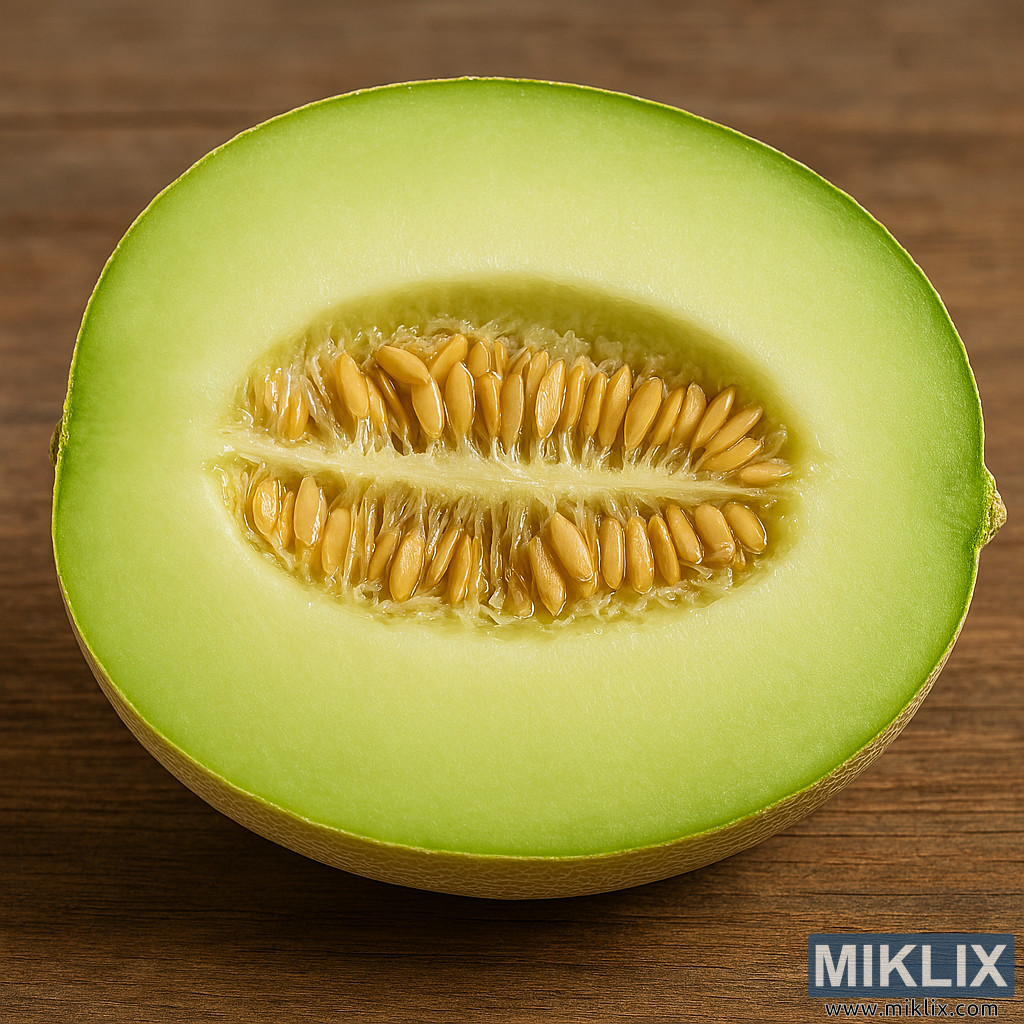
High-resolution image of a ripe honeydew melon halved to reveal its pale green flesh and seed cavity, set on a warm wooden surface.
Available versions of this image
The image files available for download below are less compressed and higher resolution - and as a result of that, higher quality - than the images embedded in articles and pages on this website, which are more optimized for file size in order to reduce bandwidth consumption.
Regular size (1,024 x 1,024)
Large size (2,048 x 2,048)
Very large size (3,072 x 3,072)
Extra large size (4,096 x 4,096)
Comically large size (1,048,576 x 1,048,576)
- Still uploading... ;-)
Image description
A high-resolution landscape photograph captures a ripe honeydew melon sliced cleanly in half and placed on a warm-toned wooden surface. The melon is centered in the frame, showcasing its pale green flesh and intricate seed cavity with exceptional clarity and detail.
The outer rind of the honeydew is a muted yellow-green, slightly rough in texture, and covered with a fine network of netting that hints at its ripeness. The rind transitions sharply into the smooth, moist interior flesh, which glows with a pale green hue. This flesh is subtly glossy, with a gradient that becomes lighter as it approaches the rind, emphasizing the melon’s freshness and juiciness.
At the heart of the melon lies the seed cavity, a central oval-shaped depression filled with tightly packed, golden-brown seeds. These seeds are plump, oval, and slightly translucent, arranged in overlapping rows that follow the natural curve of the cavity. Surrounding the seeds is a fibrous, gelatinous matrix—off-white and glistening—composed of stringy, semi-translucent strands that cling to both the seeds and the adjacent flesh. This fibrous material adds visual complexity and realism to the composition.
The wooden surface beneath the melon is medium brown with warm undertones, featuring visible grain lines, knots, and subtle imperfections that lend a rustic charm. The horizontal orientation of the wood grain complements the landscape framing of the image, creating a natural visual flow. The surface appears slightly weathered, with soft lighting enhancing its texture without overpowering the subject.
Lighting in the image is soft and diffuse, likely natural daylight, which casts gentle shadows and highlights across the melon and the wood. This lighting enhances the depth and dimensionality of the scene, drawing attention to the moist sheen of the flesh and the intricate details of the seed cavity.
The composition is tightly framed, with the halved melon occupying the central visual space. The close-up perspective allows for an intimate view of the fruit’s textures and structures, emphasizing the contrast between the smooth flesh, rough rind, and fibrous seed cavity. The image is both aesthetically pleasing and scientifically accurate, suitable for culinary, educational, or promotional use.
Overall, the photograph presents a vivid and realistic portrayal of a ripe honeydew melon, highlighting its freshness, internal anatomy, and natural beauty in a balanced and visually engaging manner.
The image is related to: A Guide to Growing Honeydew Melon in Your Own Garden