
Image: Horseradish Leaves Damaged by Flea Beetles
Published: February 3, 2026 at 5:27:16 PM UTC
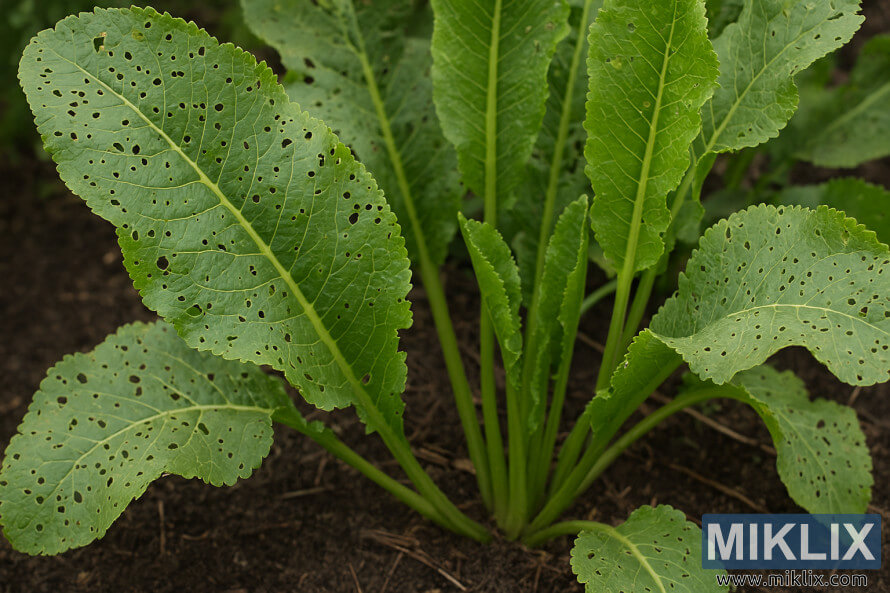
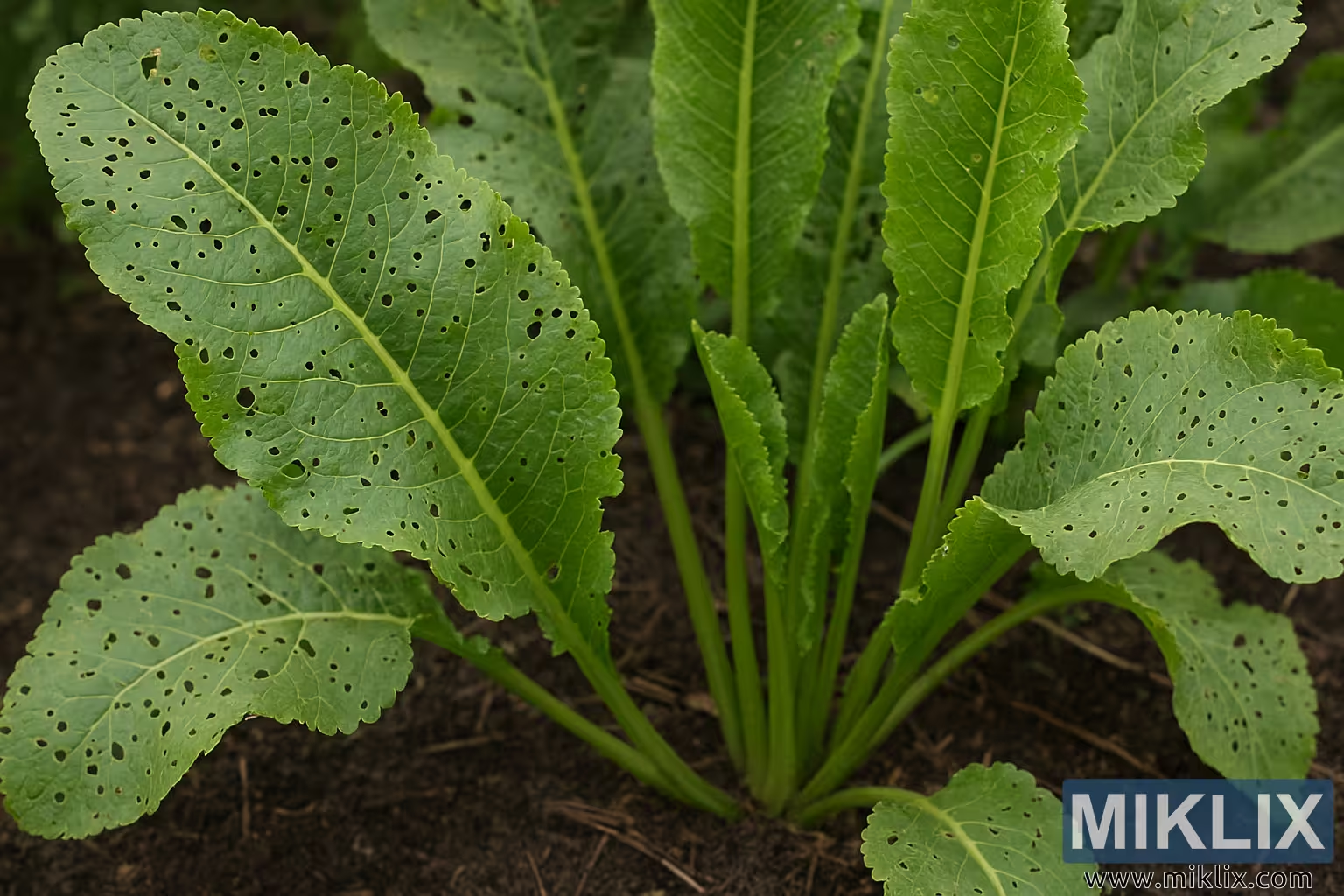
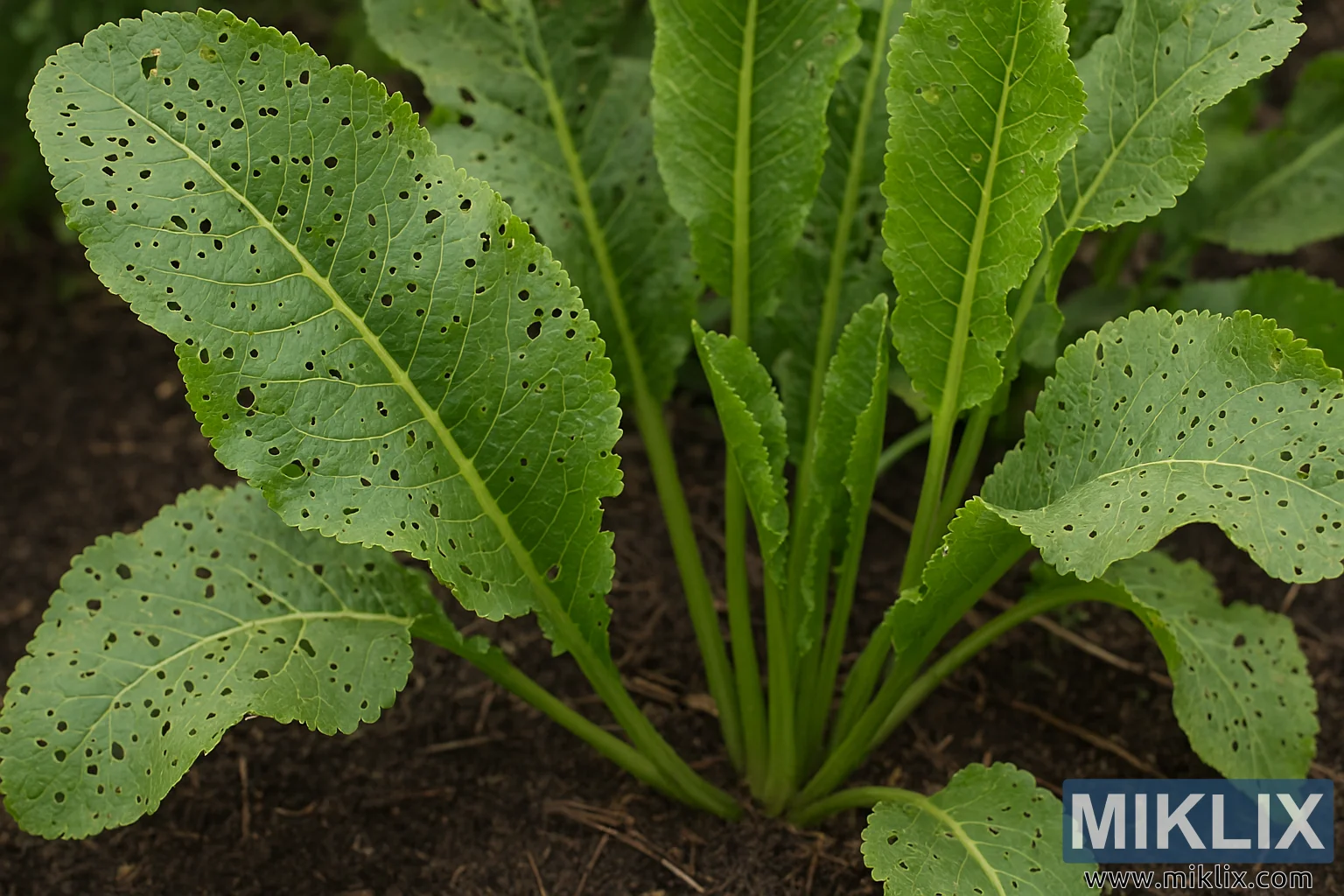
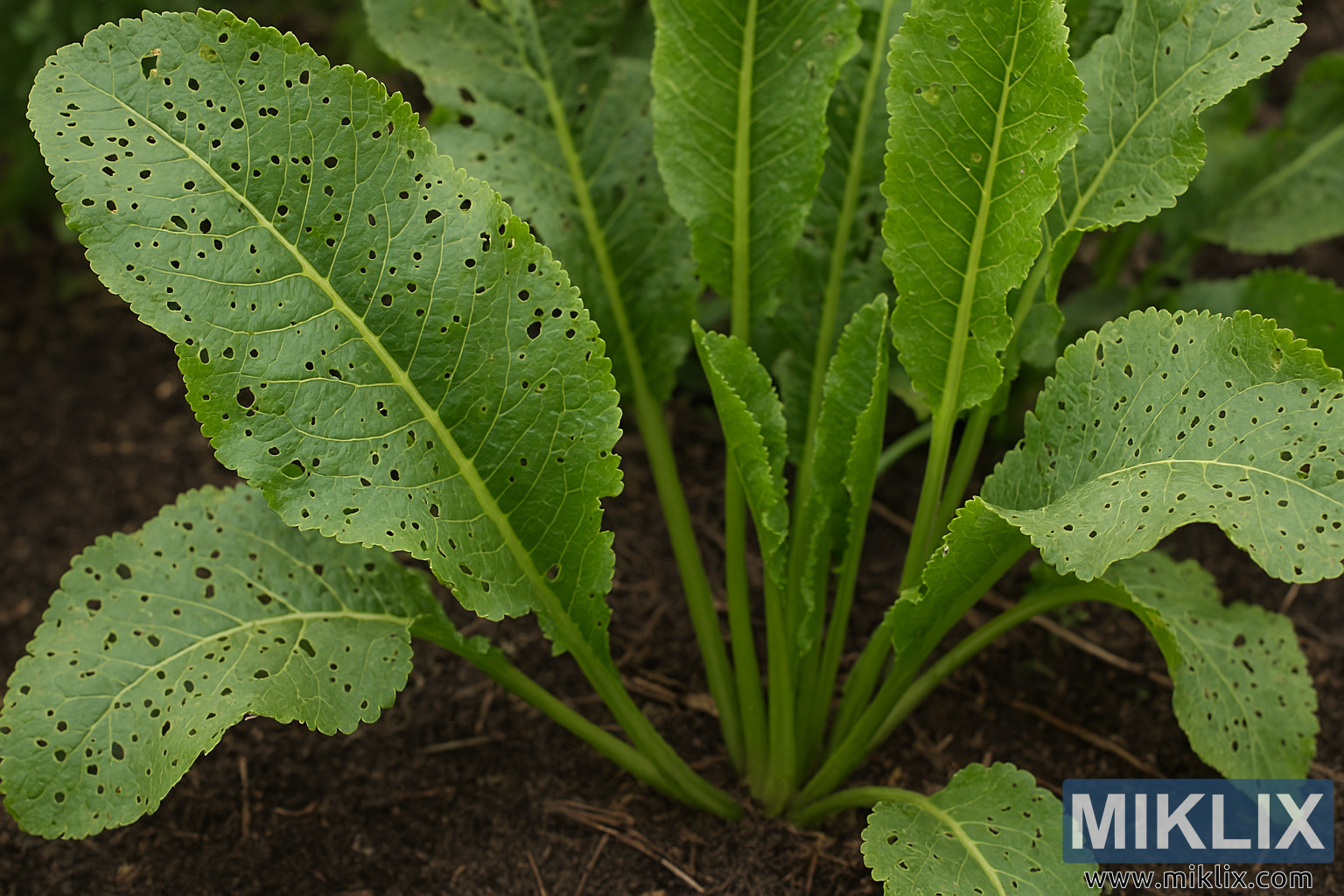
Detailed image of horseradish leaves showing characteristic flea beetle damage with small holes and curled edges.
Available versions of this image
The image files available for download below are less compressed and higher resolution - and as a result of that, higher quality - than the images embedded in articles and pages on this website, which are more optimized for file size in order to reduce bandwidth consumption.
Regular size (1,536 x 1,024)
Large size (3,072 x 2,048)
Very large size (4,608 x 3,072)
Extra large size (6,144 x 4,096)
Comically large size (1,048,576 x 699,051)
- Still uploading... ;-)
Image description
This high-resolution landscape photograph captures a close-up view of horseradish (Armoracia rusticana) leaves exhibiting characteristic damage caused by flea beetles. The image focuses on a cluster of large, green leaves emerging from a central base, each leaf displaying numerous small, irregularly shaped holes scattered across its surface. These holes vary in size, ranging from tiny pinpricks to larger voids, and are distributed unevenly, indicating active feeding by flea beetles.
The leaves are vibrant green with subtle variations in hue, some areas appearing slightly lighter or darker due to natural shading and leaf texture. Prominent veins run through each leaf, with a central vein extending from the base to the tip and branching into smaller lateral veins. The leaf surfaces are slightly wrinkled and textured, enhancing the visibility of the damage. The edges of several leaves are curled or uplifted, a common response to pest stress.
In the foreground, the most heavily damaged leaf is positioned slightly to the left, its surface densely perforated and its edges curling inward. This leaf overlaps another large leaf to the right, which also shows extensive damage. Both are sharply in focus, revealing the fine details of the holes and leaf structure. Behind them, additional leaves are visible, slightly blurred to create depth, but still showing signs of similar damage.
The stems of the horseradish plant are thick, smooth, and pale green, emerging from the soil at the base of the plant. They support the damaged leaves and converge toward the center of the image. The soil is dark brown, moist, and rich in organic matter, with scattered dried plant debris such as twigs and dead leaves visible at the bottom of the frame. This organic layer adds realism and context to the garden setting.
The lighting is soft and natural, likely from diffused daylight, which enhances the textures and colors without harsh shadows. The composition is balanced, with the most damaged leaves occupying the central and left portions of the frame, while the background provides environmental context. The image conveys a clear botanical narrative of pest impact, useful for educational, agricultural, or diagnostic purposes.
Overall, the photograph offers a detailed and realistic portrayal of flea beetle damage on horseradish leaves, emphasizing the visual symptoms and environmental setting in a scientifically accurate and aesthetically composed manner.
The image is related to: A Guide to Growing Horseradish in Your Own Garden