
Image: Horseradish Root with White Rust Disease
Published: February 3, 2026 at 5:27:16 PM UTC
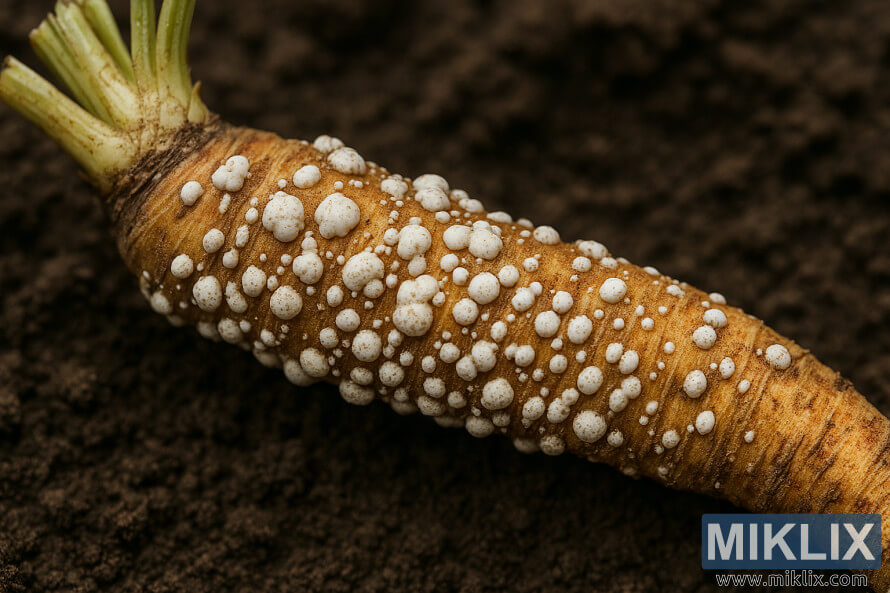
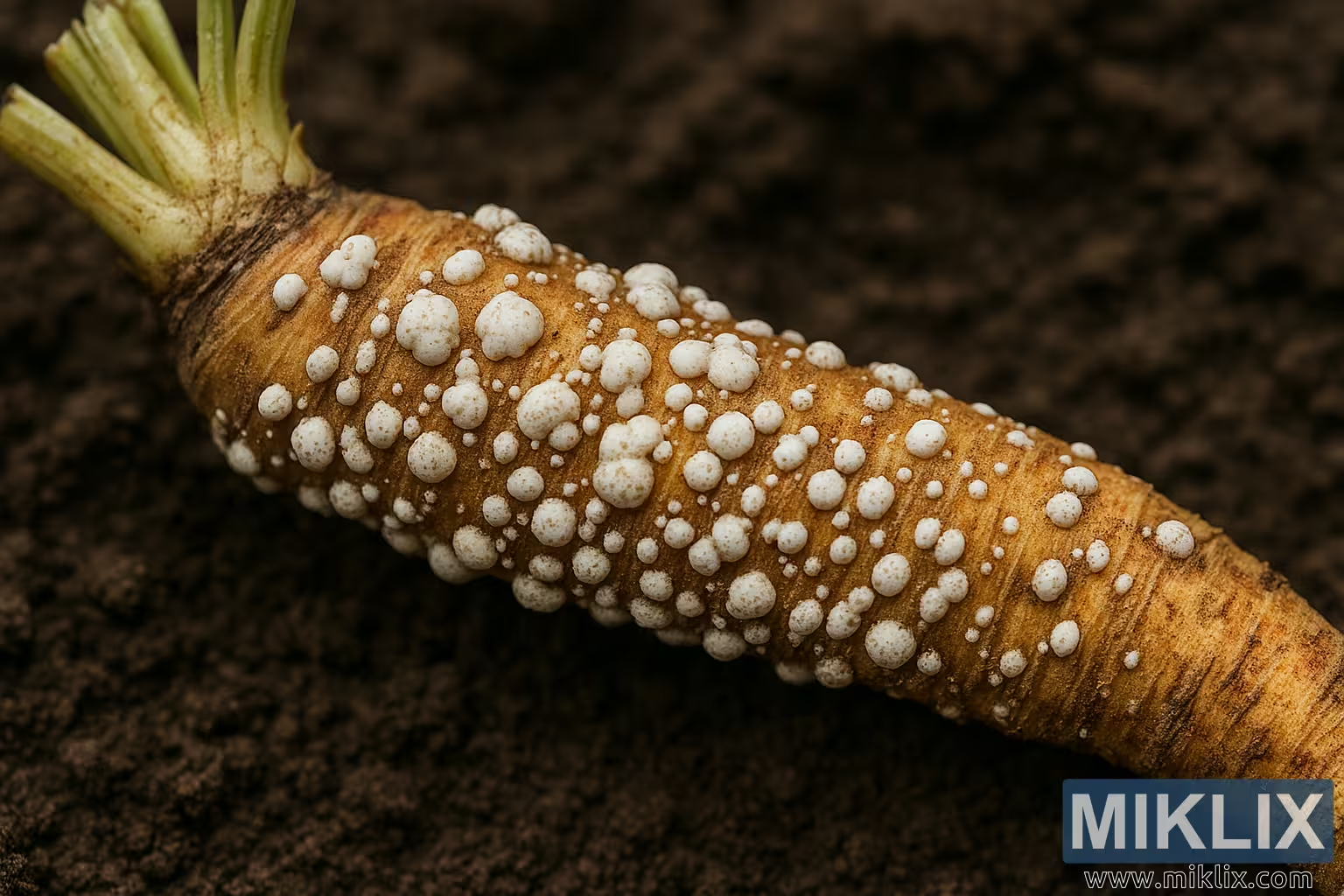
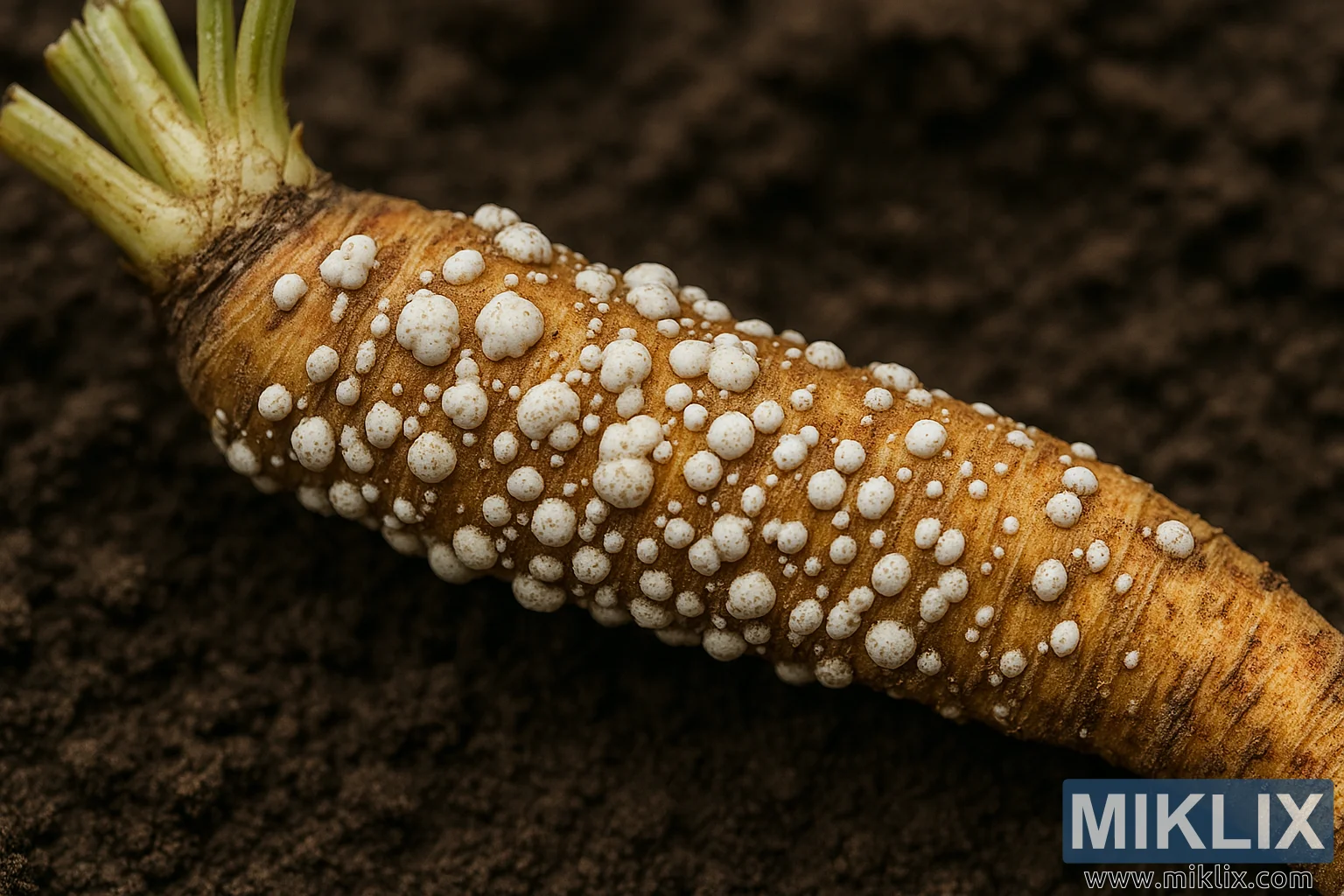
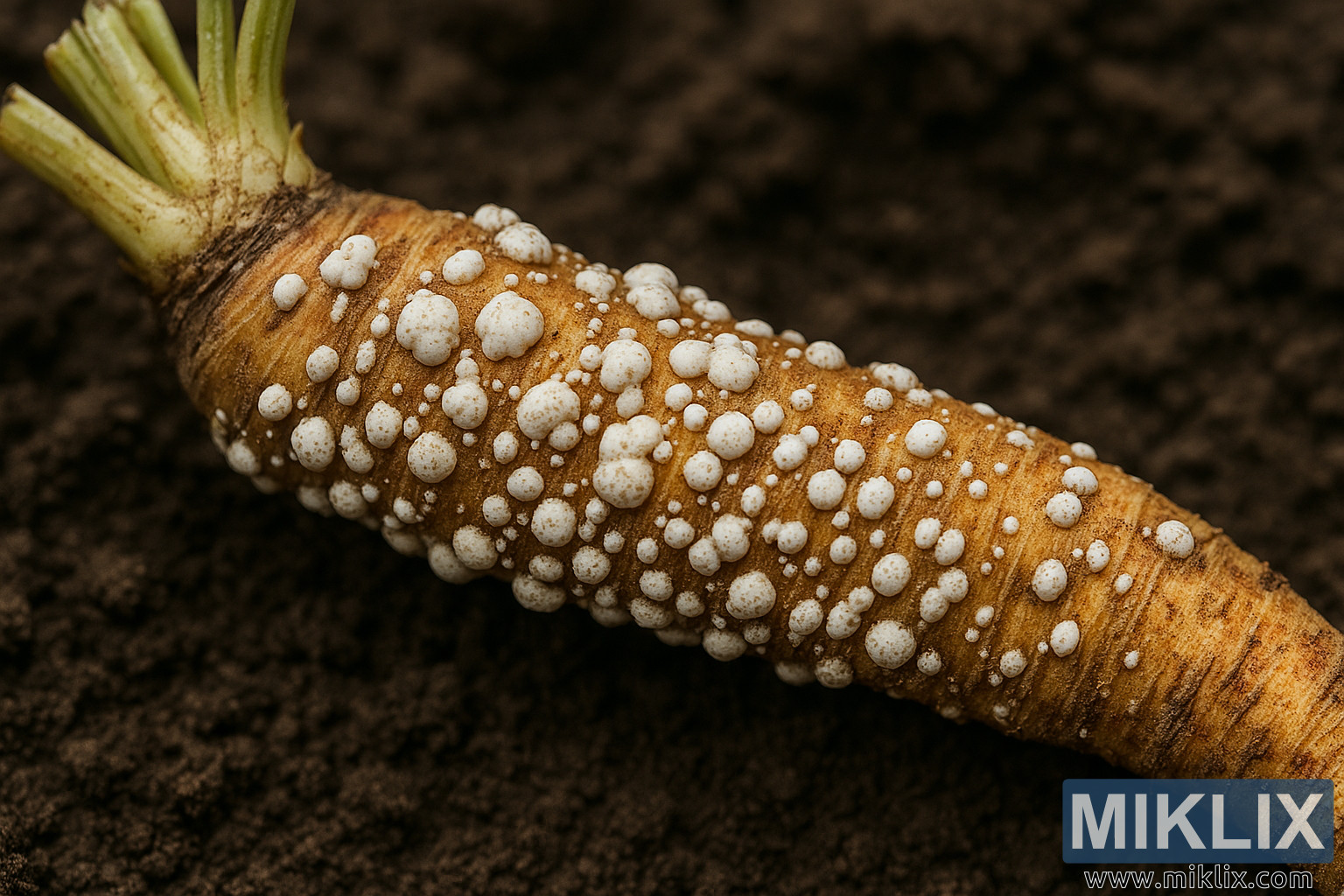
High-resolution image of a horseradish root infected with white rust disease, featuring white pustules and detailed root texture.
Available versions of this image
The image files available for download below are less compressed and higher resolution - and as a result of that, higher quality - than the images embedded in articles and pages on this website, which are more optimized for file size in order to reduce bandwidth consumption.
Regular size (1,536 x 1,024)
Large size (3,072 x 2,048)
Very large size (4,608 x 3,072)
Extra large size (6,144 x 4,096)
Comically large size (1,048,576 x 699,051)
- Still uploading... ;-)
Image description
This high-resolution landscape-oriented image presents a close-up view of a horseradish root (Armoracia rusticana) affected by white rust disease, caused by the pathogen Albugo candida. The root lies horizontally across a dark, textured soil background, occupying the central visual field from left to right. The composition emphasizes botanical realism and diagnostic clarity, making it suitable for educational, agricultural, and scientific contexts.
The horseradish root is cylindrical and tapers slightly toward the right end. Its surface is rough and fibrous, with a light brown to reddish-brown coloration. Prominent longitudinal ridges and shallow grooves run along the root’s length, contributing to its rugged texture. The left end of the root features remnants of green stems, which are slightly wilted and display pale green bases transitioning to darker green tips. These stems are twisted and ridged, with some tips showing signs of desiccation.
The defining feature of the image is the presence of white rust pustules scattered across the root’s surface. These pustules are small, raised, and irregularly shaped, ranging from 1 to several millimeters in diameter. They appear as bright white, powdery clusters that contrast sharply with the darker root skin. The pustules are concentrated in patches, particularly along the midsection and upper ridges of the root, with some areas showing dense aggregations and others more sparsely affected. Their texture is slightly granular, and they protrude subtly from the root surface, indicating active infection.
The soil beneath the root is dark brown and clumpy, composed of small aggregates and organic particles. Its uneven surface provides a naturalistic backdrop that enhances the visibility of the root and pustules. The lighting is soft and diffused, eliminating harsh shadows and allowing for even illumination across the subject. This lighting choice highlights the textures and color variations without overexposing any part of the image.
The depth of field is shallow, keeping the root and pustules in sharp focus while gently blurring the background soil. This photographic technique draws attention to the pathological features and botanical details, ensuring that viewers can clearly observe the symptoms of white rust disease.
Overall, the image combines scientific accuracy with aesthetic clarity, making it ideal for use in plant pathology guides, agricultural diagnostics, and educational materials focused on crop diseases and root morphology.
The image is related to: A Guide to Growing Horseradish in Your Own Garden