
Image: Healthy vs Problematic Lemongrass Leaves
Published: February 4, 2026 at 5:58:36 PM UTC
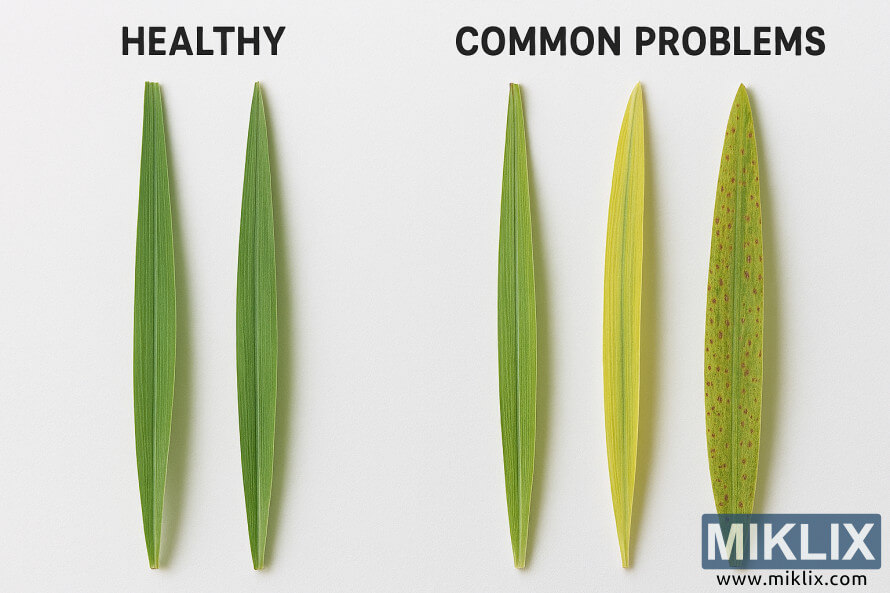
High-resolution image comparing healthy lemongrass leaves to those affected by yellowing and fungal spotting, useful for botanical education and plant care.
Available versions of this image
The image files available for download below are less compressed and higher resolution - and as a result of that, higher quality - than the images embedded in articles and pages on this website, which are more optimized for file size in order to reduce bandwidth consumption.
Regular size (1,536 x 1,024)
Large size (3,072 x 2,048)
Very large size (4,608 x 3,072)
Extra large size (6,144 x 4,096)
Comically large size (1,048,576 x 699,051)
- Still uploading... ;-)
Image description
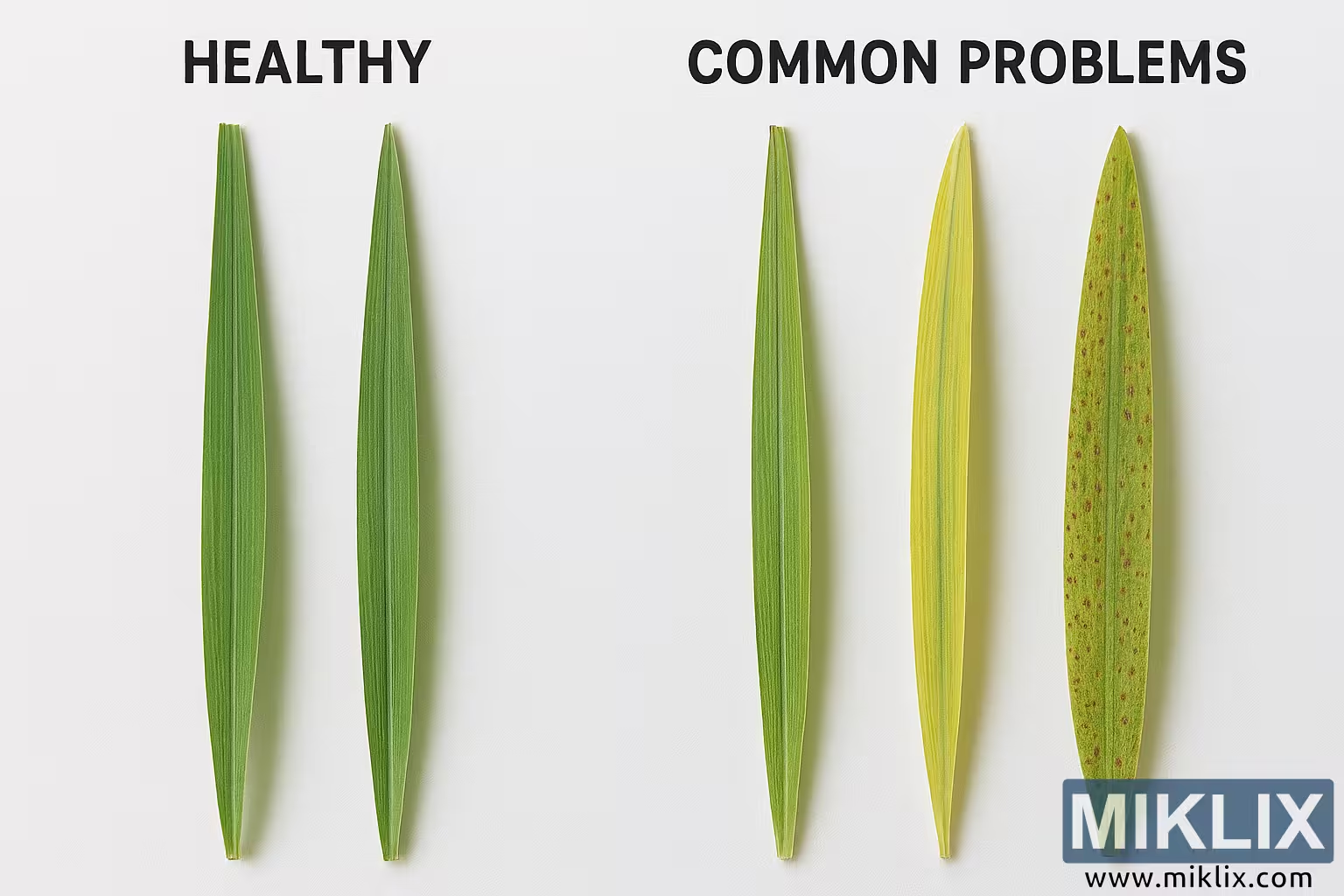
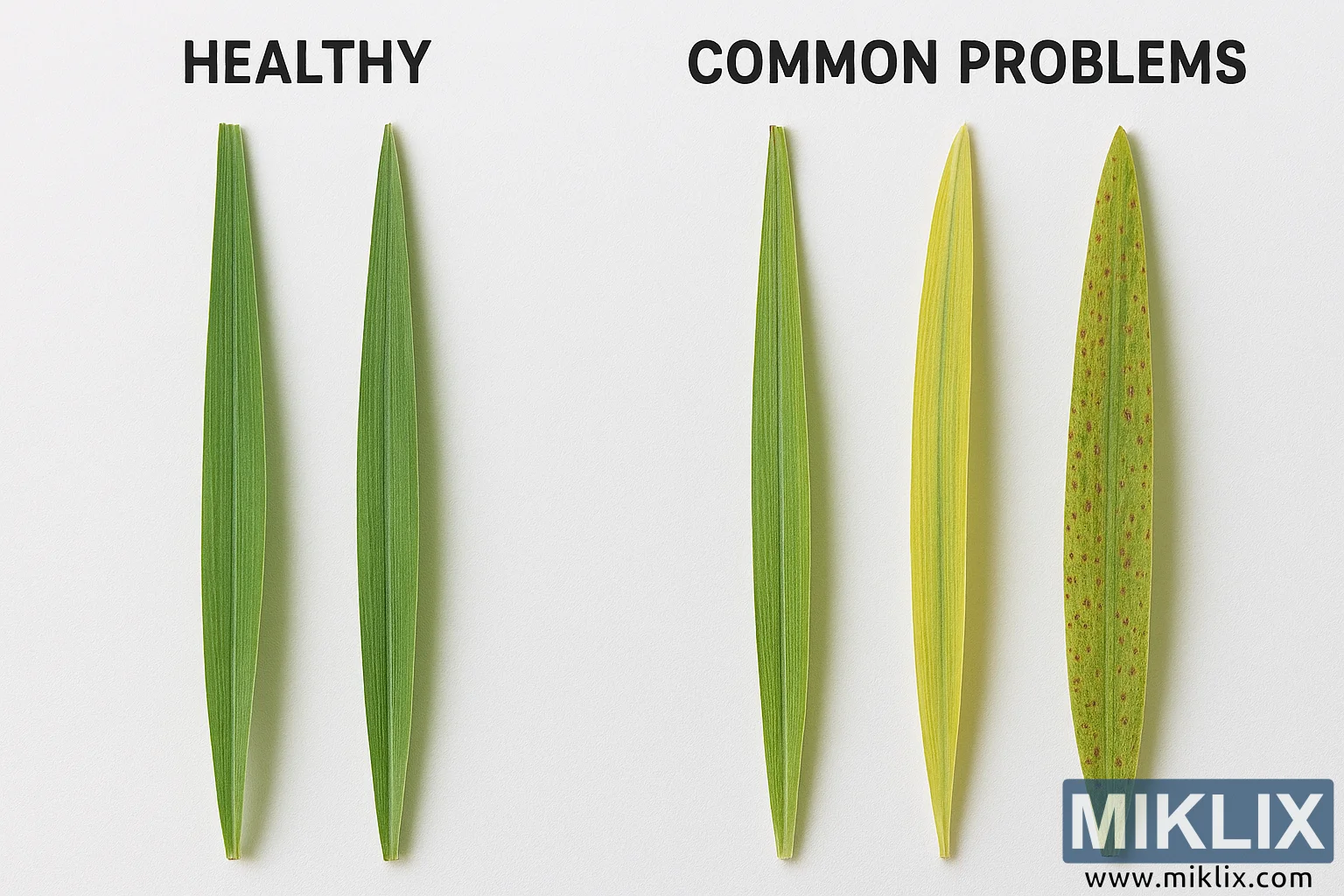
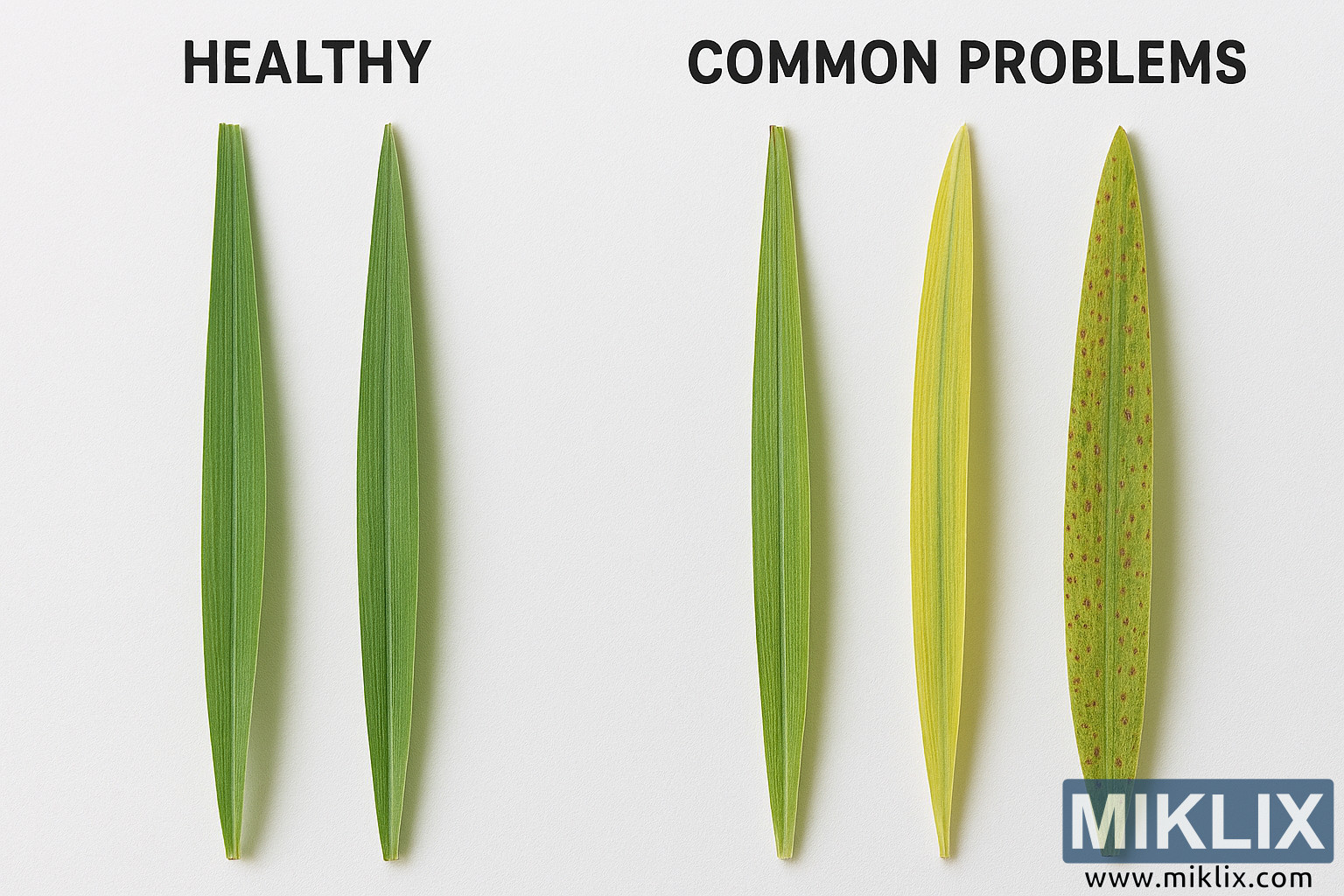
This high-resolution landscape-oriented image presents a clear botanical comparison between healthy lemongrass leaves and those exhibiting common problems. The composition is divided into two equal vertical sections, each labeled in bold, uppercase sans-serif font: "HEALTHY" on the left and "COMMON PROBLEMS" on the right. The labels are centered above their respective leaf pairs, providing immediate visual categorization.
On the left side, under the "HEALTHY" label, two lemongrass leaves are displayed. These leaves are long, slender, and vibrant green, with a smooth surface and subtle parallel venation running the length of each blade. Their edges are straight and clean, tapering to fine points at the tips. The coloration is consistent throughout, with a slightly lighter green hue along the central vein, indicating optimal chlorophyll distribution and hydration. These leaves exemplify ideal lemongrass health, suitable for culinary and medicinal use.
On the right side, under the "COMMON PROBLEMS" label, two lemongrass leaves illustrate typical issues encountered in cultivation. The first leaf shows pronounced yellowing, especially along the central vein and upper half. This discoloration transitions from green at the edges to pale yellow at the tip, suggesting nutrient deficiency or overwatering. The leaf’s edges are slightly wavy, and its texture appears less taut than the healthy examples.
The second problematic leaf is marked by numerous small, irregularly shaped brown spots scattered across its surface. These spots vary in size and density, with a higher concentration toward the upper half. The surrounding tissue shows signs of chlorosis and mild necrosis, indicating fungal infection or pest damage. The leaf’s surface is rougher, and its edges are slightly curled and uneven, further emphasizing its compromised condition.
The image is set against a clean white background with even, natural lighting that enhances the visibility of each leaf’s texture, color, and structural details. The composition is symmetrical and educational, designed to aid gardeners, botanists, and students in identifying and diagnosing lemongrass health issues. The clarity and realism of the photograph make it suitable for use in plant care guides, agricultural training materials, and botanical catalogs.
The image is related to: A Guide to Growing Lemon Grass in Your Garden