
Image: Comparison of Healthy Spinach Plant and One with Bolting and Nutrient Deficiency
Published: December 8, 2025 at 12:33:38 PM UTC
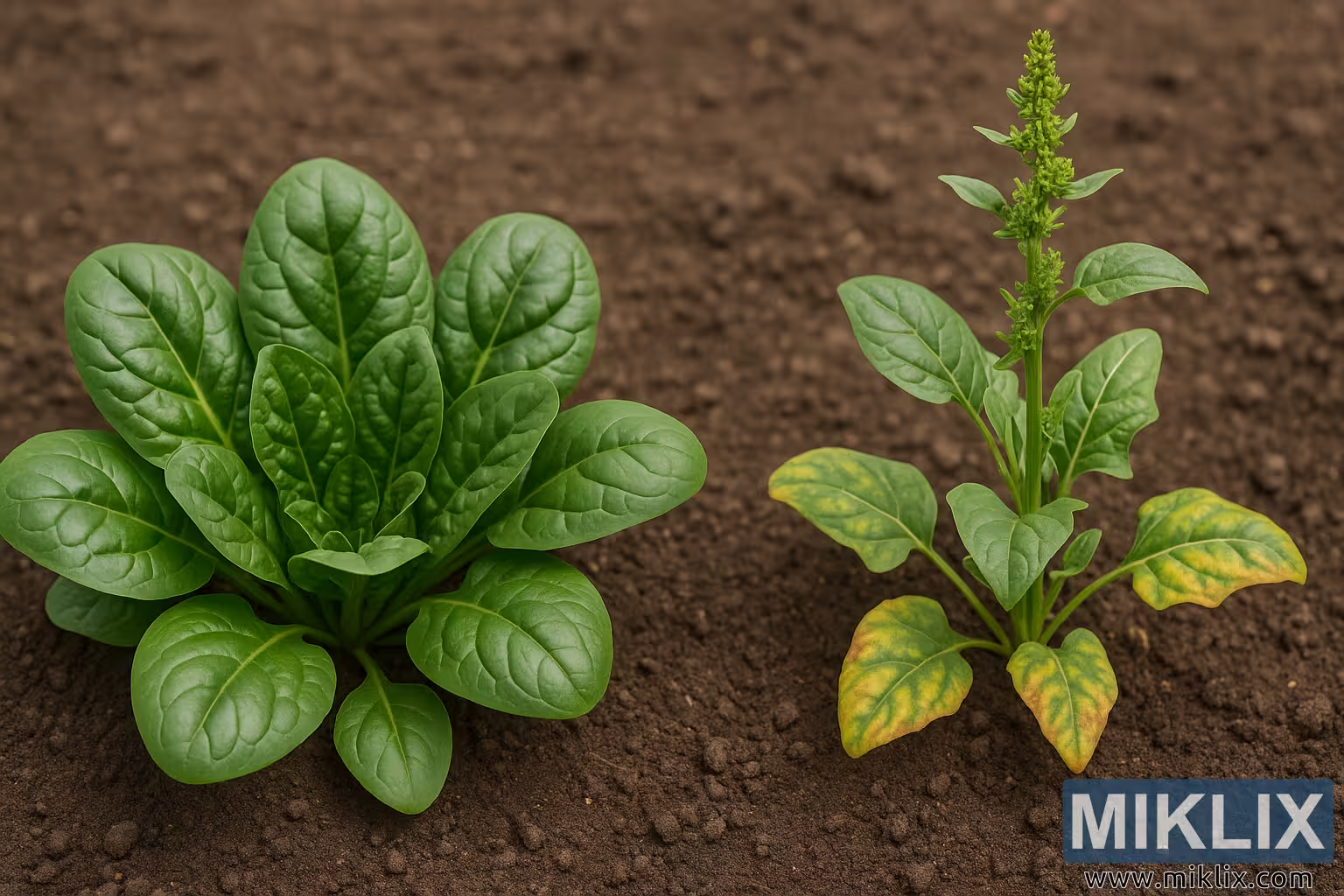
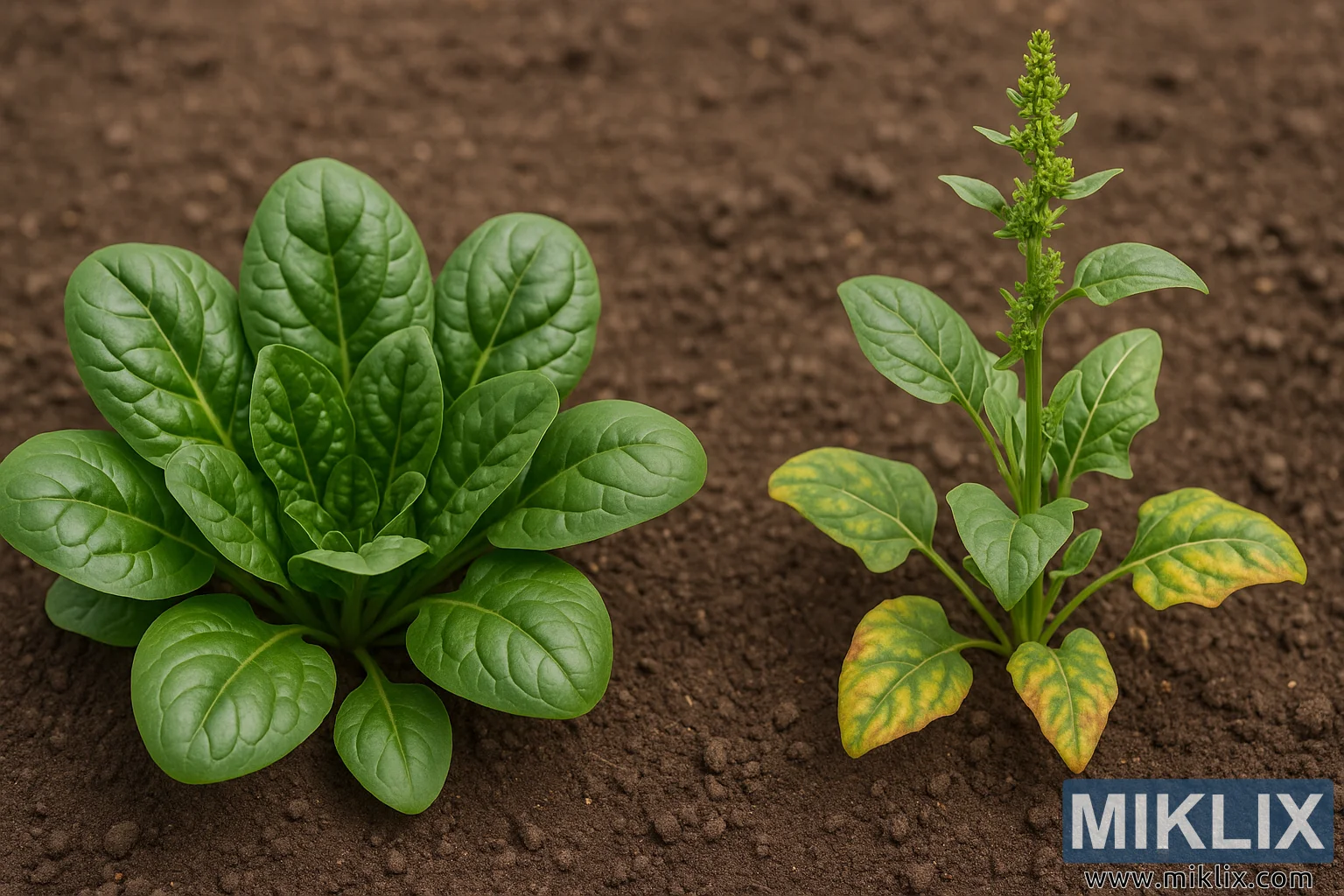
A detailed visual comparison between a healthy spinach plant and one affected by bolting and nutrient deficiency, showing clear differences in leaf color, structure, and growth form in natural soil.

Available versions of this image
The image files available for download below are less compressed and higher resolution - and as a result of that, higher quality - than the images embedded in articles and pages on this website, which are more optimized for file size in order to reduce bandwidth consumption.
Regular size (1,536 x 1,024)

Large size (3,072 x 2,048)
Very large size (4,608 x 3,072)
Extra large size (6,144 x 4,096)
Comically large size (1,048,576 x 699,051)
- Still uploading... ;-)
Image description
The image presents a high-resolution, landscape-oriented photograph showing two spinach plants growing side by side in well-tilled, dark brown soil. The scene is illuminated by soft natural daylight, emphasizing the vivid contrasts between the two specimens. On the left side of the image stands a healthy spinach plant characterized by dense, low-lying, and robust foliage. Its leaves are broad, smooth, and richly green, with slightly curved edges and a glossy surface that reflects light evenly. The leaves are symmetrically arranged in a compact rosette pattern, hugging the soil surface closely — an indicator of vigorous vegetative growth and optimal health. The veins are clearly visible but not pronounced, suggesting good hydration and nutrient uptake. The overall impression is one of balance and vitality, typical of a spinach plant in its prime growing phase.
In stark contrast, the plant on the right side displays clear physiological and developmental abnormalities associated with bolting and nutrient deficiency. This plant is taller and more elongated, having shifted from a vegetative to a reproductive phase. From its center rises a slender, vertical flowering stalk topped with small clusters of immature flower buds — a defining sign of bolting, which occurs when environmental stress or maturity triggers premature seed formation. The lower leaves of this plant are pale green to yellowish, with distinct interveinal chlorosis and mild necrotic browning at the edges. These discolorations are symptomatic of nutrient deficiencies, likely involving nitrogen or magnesium depletion. The leaf surfaces appear less glossy and more textured, with visible curling and reduced turgor pressure. Unlike the healthy plant, this specimen’s growth pattern is open and sparse, with greater stem elongation and fewer leaves concentrated around the base.
The soil beneath both plants is dark, fine-textured, and slightly moist, offering a consistent neutral background that enhances the visual contrast between the two subjects. No other vegetation or distracting elements are present in the frame, allowing the viewer to focus entirely on the morphological differences between the healthy and stressed spinach plants. The composition is balanced and instructive, making it suitable for use in educational, scientific, or agricultural contexts. It effectively communicates the physiological transformation that spinach undergoes during bolting, as well as the visible manifestations of nutrient deficiency. The comparison encapsulates a key concept in horticulture and crop science — how environmental conditions and nutrient availability directly influence plant morphology, health, and productivity. Overall, the image captures both aesthetic and didactic value: it is visually appealing while serving as a precise and informative illustration of plant health diagnostics.
The image is related to: A Guide to Growing Spinach in Your Home Garden