
Image: Spinach Growing with Companion Plants in a Thriving Garden Bed
Published: December 8, 2025 at 12:33:38 PM UTC
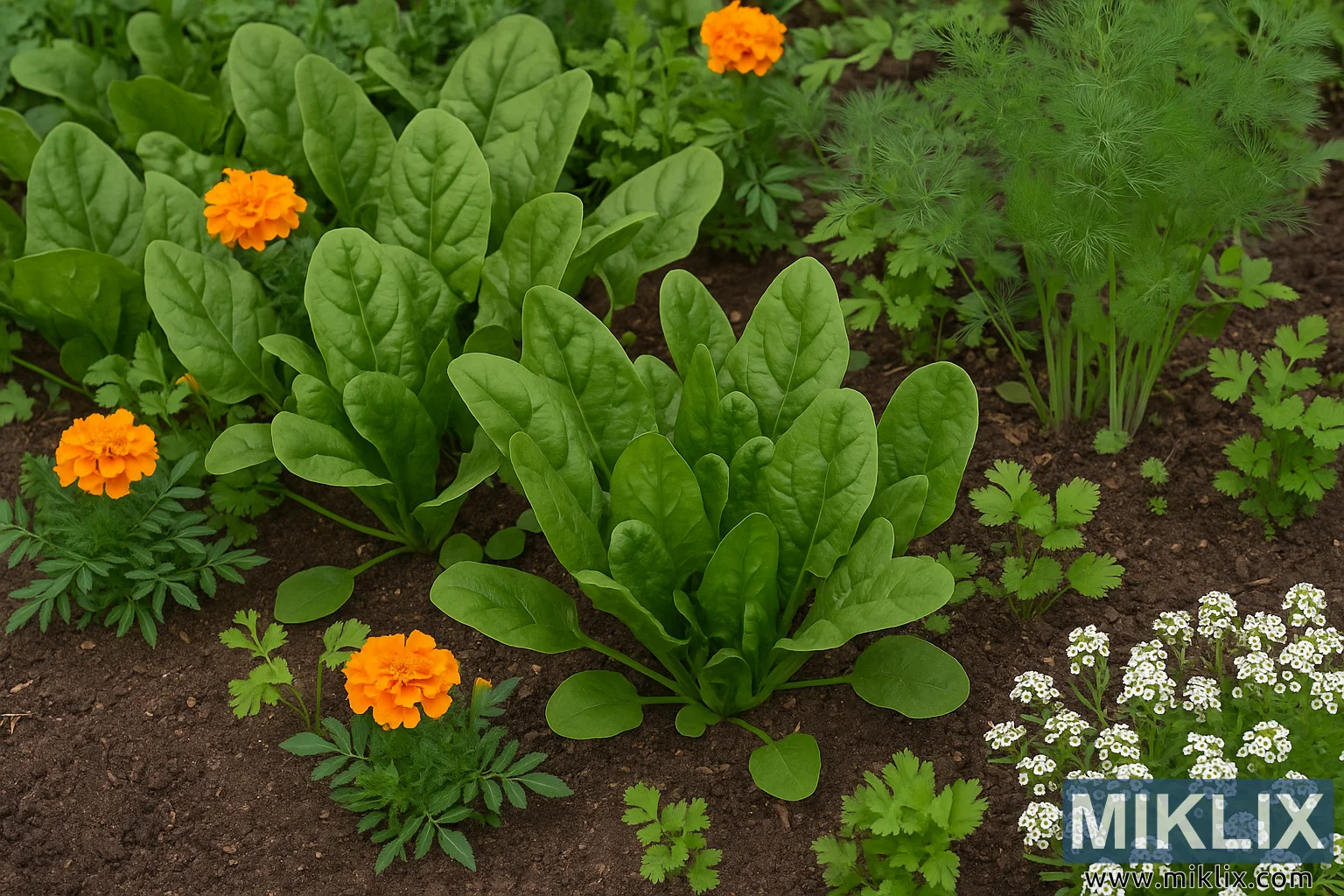
A vibrant garden bed featuring healthy spinach growing with beneficial companion plants like marigolds, dill, cilantro, and alyssum, demonstrating natural pest control and soil health benefits.

Available versions of this image
The image files available for download below are less compressed and higher resolution - and as a result of that, higher quality - than the images embedded in articles and pages on this website, which are more optimized for file size in order to reduce bandwidth consumption.
Regular size (1,536 x 1,024)


Large size (3,072 x 2,048)
Very large size (4,608 x 3,072)
Extra large size (6,144 x 4,096)
Comically large size (1,048,576 x 699,051)
- Still uploading... ;-)
Image description
This high-resolution landscape photograph captures a beautifully maintained garden bed bursting with life and color. In the foreground, several thriving spinach plants (Spinacia oleracea) display lush, dark-green leaves that are broad, glossy, and slightly crinkled — an indication of healthy growth and rich soil conditions. The spinach occupies the center of the bed, standing as the focal point of the composition. Surrounding the spinach are a variety of beneficial companion plants, each chosen for their complementary qualities in supporting growth, pest management, and biodiversity.
Scattered among the spinach are bright orange marigolds (Tagetes spp.), their vivid blossoms providing striking contrast against the green foliage. Marigolds are well-known for their pest-repellent properties, helping to deter aphids, nematodes, and other garden pests through their natural scent and root secretions. Their lush, dark-green pinnate leaves complement the spinach visually while playing a key ecological role.
In the midground, feathery dill (Anethum graveolens) plants reach upward, their fine, lace-like foliage creating a soft, airy texture that contrasts beautifully with the spinach’s dense leaves. Dill attracts beneficial insects such as ladybugs and parasitic wasps, which help control aphid populations. Nearby, sprigs of cilantro (Coriandrum sativum) grow low to the ground, offering both culinary and ecological benefits; its aromatic leaves repel harmful insects while drawing in pollinators and predatory species.
At the right edge of the frame, clusters of delicate white alyssum (Lobularia maritima) blossoms form a dense carpet of flowers. The alyssum’s small blooms not only provide aesthetic appeal but also attract hoverflies and bees, enhancing pollination and ecosystem health within the bed. The combination of these species demonstrates thoughtful companion planting — an organic gardening strategy where compatible plants are grown together to promote mutual growth and protect against pests naturally.
The soil itself is dark, crumbly, and rich in organic matter, suggesting good fertility and moisture retention. A light layer of mulch can be seen in some areas, helping to regulate soil temperature and prevent weed growth. The overall lighting in the photograph is soft and natural, suggesting a mild, overcast day that provides even illumination across the plants without harsh shadows. In the background, hints of additional greenery extend beyond the main bed, giving context to a larger, thriving garden environment.
This image not only captures the beauty of a well-planned vegetable and herb garden but also illustrates the principles of sustainable horticulture. By combining edible crops like spinach with flowering allies such as marigolds and alyssum, the scene conveys harmony between productivity and ecological balance — a living example of how biodiversity supports plant health and soil vitality in small-scale organic gardening systems.
The image is related to: A Guide to Growing Spinach in Your Home Garden