
Image: Comparison of Healthy and Diseased Aronia Plants
Published: December 3, 2025 at 9:32:44 PM UTC
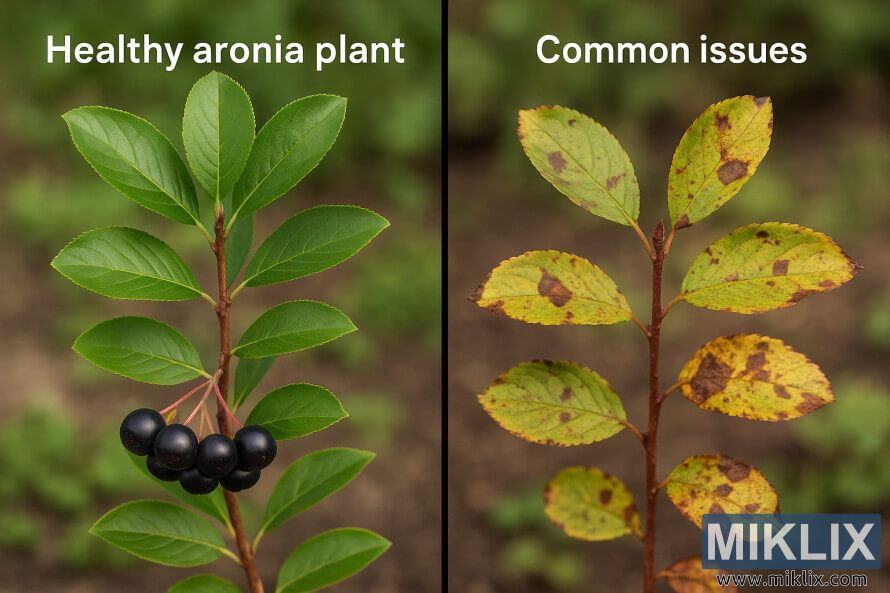
A detailed visual comparison of healthy versus diseased aronia plants. The image contrasts vibrant, healthy foliage and berries with yellowing leaves and brown spots, illustrating common plant health issues.
Available versions of this image
The image files available for download below are less compressed and higher resolution - and as a result of that, higher quality - than the images embedded in articles and pages on this website, which are more optimized for file size in order to reduce bandwidth consumption.
Regular size (1,536 x 1,024)


Large size (3,072 x 2,048)
Very large size (4,608 x 3,072)
Extra large size (6,144 x 4,096)
Comically large size (1,048,576 x 699,051)
- Still uploading... ;-)
Image description
This landscape-oriented photograph presents a clear visual comparison between a healthy aronia plant and one suffering from common issues such as nutrient deficiency, leaf spot, or fungal infection. The image is divided vertically into two equal halves by a thin black line. On the left side, labeled 'Healthy aronia plant,' the plant exhibits vibrant green foliage with smooth, glossy leaves that have no visible blemishes or discoloration. The leaves are symmetrical, firm, and well-arranged along a reddish-brown stem, reflecting a well-nourished and thriving specimen. Below the leaves hang several clusters of ripe, dark purple to nearly black aronia berries, which are round, full, and plump — a hallmark of good fruit development and optimal growing conditions. The lighting is soft and natural, highlighting the sheen of the leaves and berries without harsh shadows.
In contrast, the right side of the image, labeled 'Common issues,' displays a visibly weaker aronia plant with leaves showing various symptoms of stress and disease. The foliage is pale yellow-green, indicating possible nutrient deficiencies such as nitrogen or magnesium shortage. Brown and black necrotic spots are scattered irregularly across the leaf surfaces, suggesting fungal or bacterial leaf spot infections, which are frequent problems in humid growing conditions. Some leaves exhibit curling or partial wilting, and there is a general lack of the luster and vigor seen on the healthy side. The stem appears thinner and slightly discolored, and the absence of berries reflects poor reproductive performance. Together, these details create a stark visual dichotomy that effectively illustrates how environmental conditions, soil health, or pest management can dramatically impact aronia plant vitality.
The background is softly blurred, keeping the focus squarely on the two plant specimens. The soil and faint greenery in the distance hint at a garden or orchard environment, reinforcing the context of field observation. The even lighting and neutral background tone provide excellent color contrast, allowing the viewer to easily discern the differences in leaf color, shape, and health status. The text labels in clean white font at the top of each section provide immediate clarity, ensuring that the comparison can be quickly understood even without prior botanical knowledge.
Overall, the image serves as an educational and diagnostic visual aid, ideal for horticultural guides, agricultural training, or scientific presentations on plant health. It demonstrates not only the appearance of a well-maintained aronia plant but also the telltale signs of common diseases and deficiencies that can hinder growth. The composition is both informative and aesthetically balanced, conveying the contrast between vitality and decline in a way that is accessible to students, gardeners, and researchers alike.
The image is related to: A Guide to Growing the Best Aronia Berries in Your Garden