
Image: Proper Drip Irrigation Setup for Elderberry Plants
Published: November 11, 2025 at 9:12:17 PM UTC
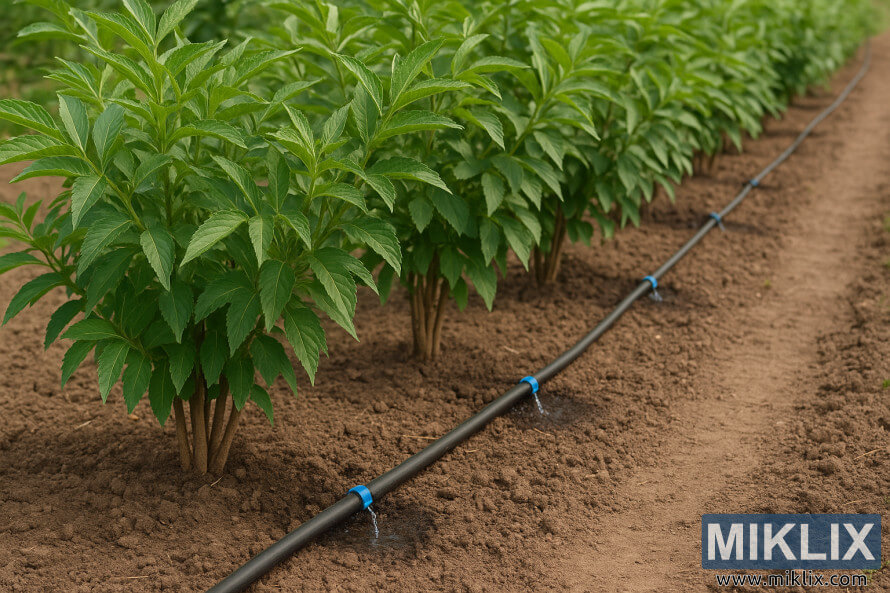
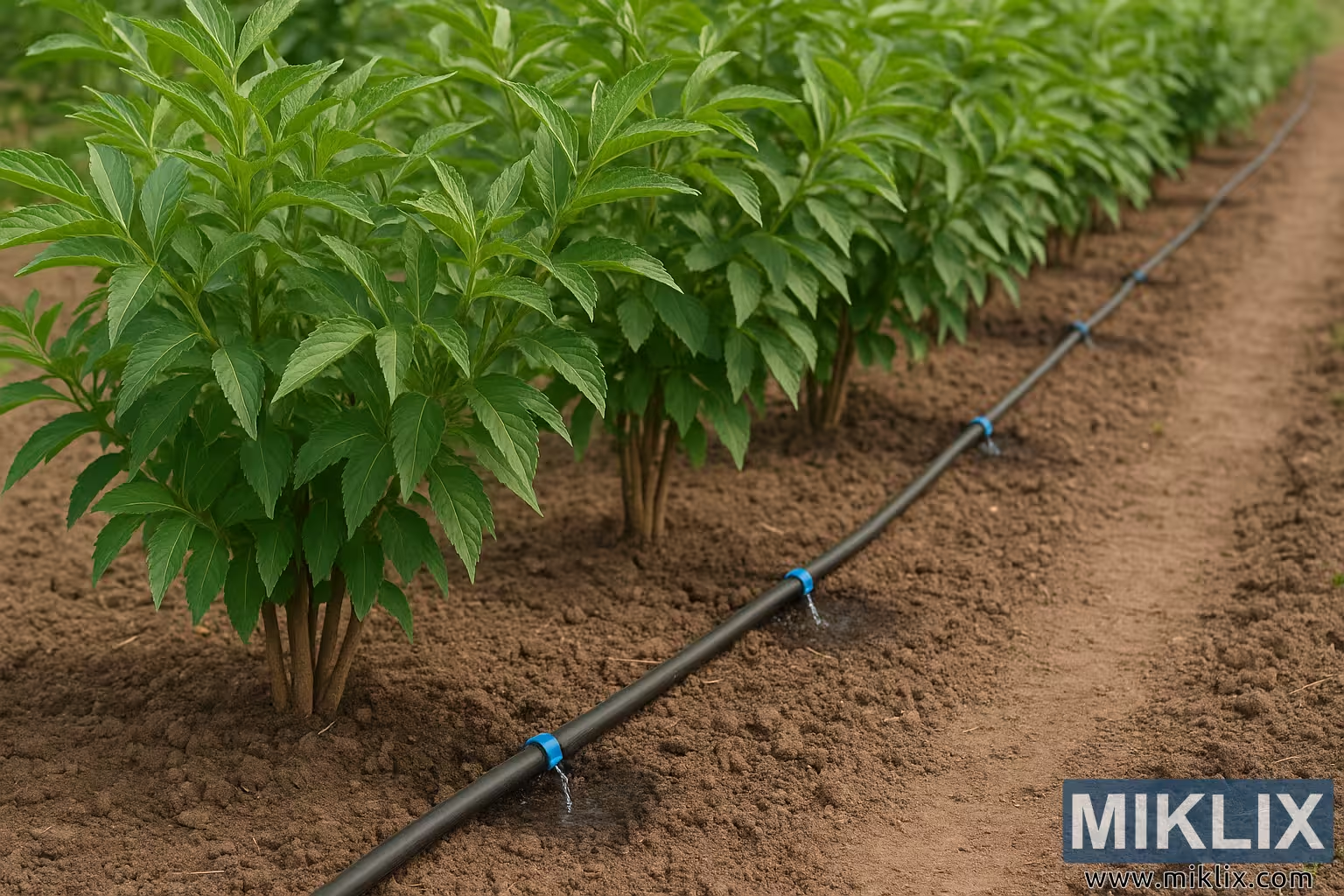
A detailed photo showing an ideal drip irrigation system for elderberry plants, demonstrating precise water delivery through emitters at the base of lush green shrubs growing in well-prepared soil.
Available versions of this image
The image files available for download below are less compressed and higher resolution - and as a result of that, higher quality - than the images embedded in articles and pages on this website, which are more optimized for file size in order to reduce bandwidth consumption.
Regular size (1,536 x 1,024)
Large size (3,072 x 2,048)
Very large size (4,608 x 3,072)
Extra large size (6,144 x 4,096)
Comically large size (1,048,576 x 699,051)
- Still uploading... ;-)
Image description
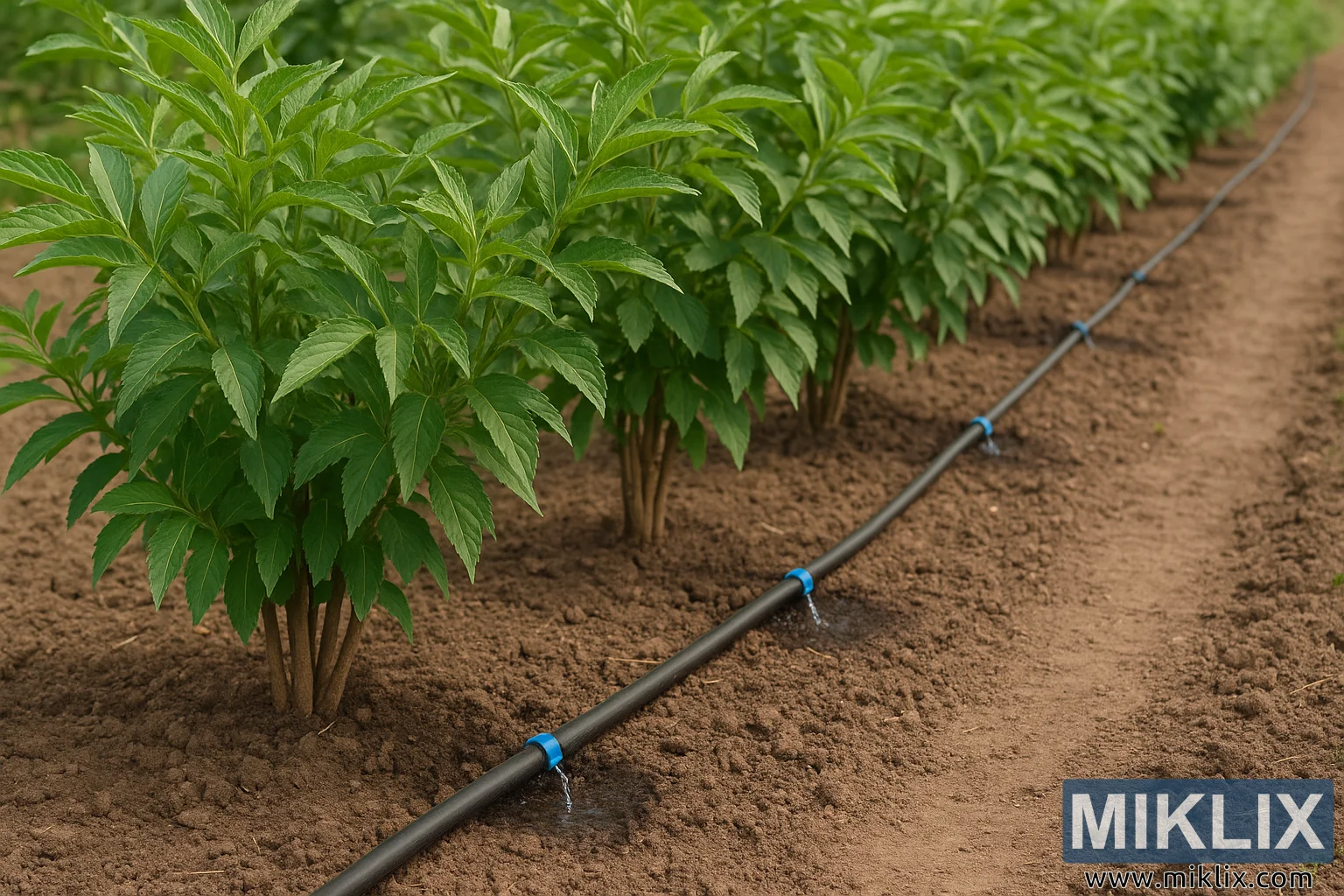
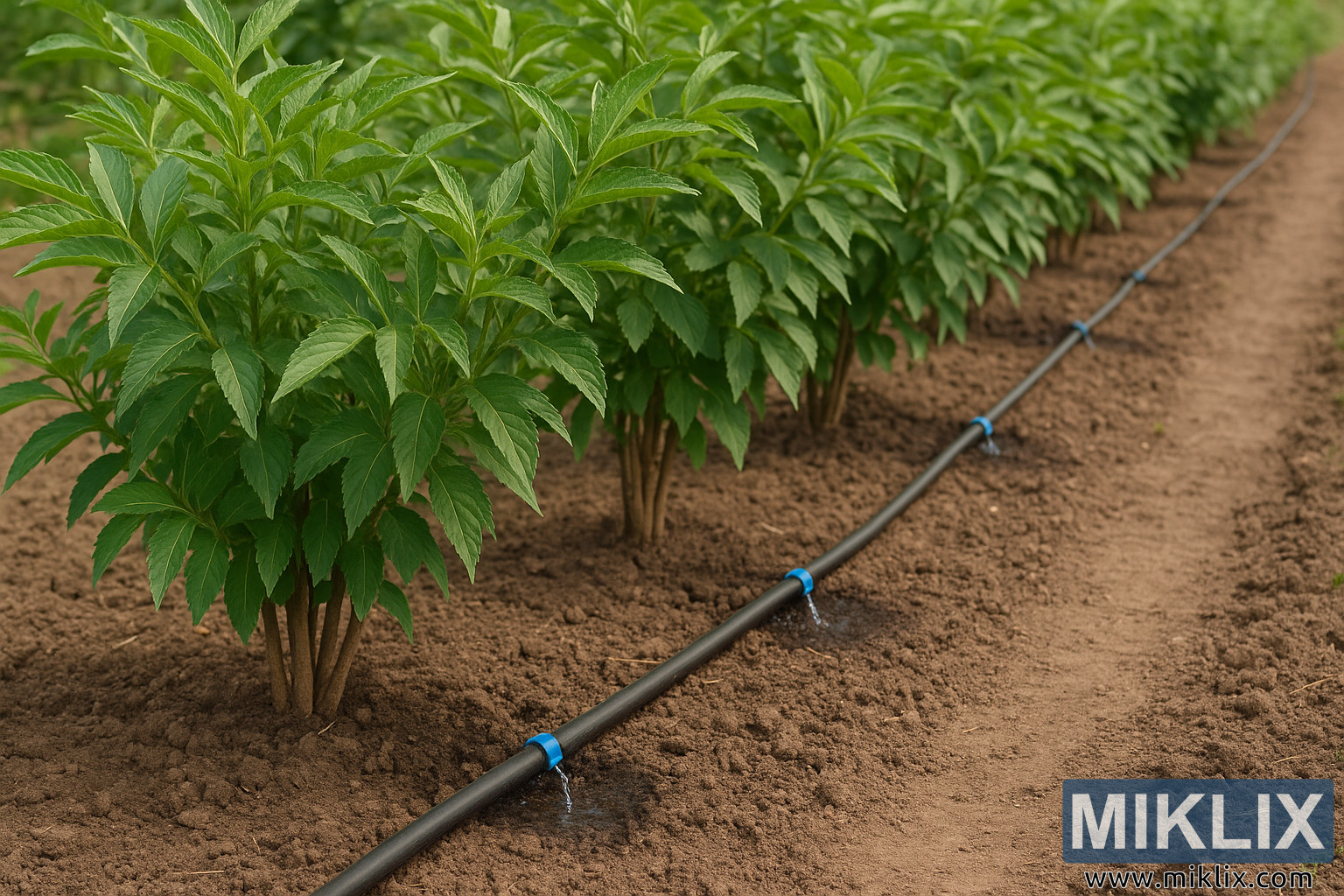
The image captures a high-resolution, landscape-oriented view of a properly installed drip irrigation system serving a row of thriving elderberry (Sambucus) plants in a well-maintained agricultural setting. In the foreground, the dark, fertile soil appears freshly tilled, its texture even and soft, suggesting recent cultivation or soil preparation. Running parallel through the field is a black polyethylene drip line positioned neatly along the base of the elderberry row. The tubing is fitted with blue-tipped emitters spaced evenly to correspond with the plants' root zones. Tiny, precise droplets of water can be seen trickling from the emitters onto the soil surface, forming small, damp patches that indicate efficient water distribution with minimal waste.
The elderberry plants themselves are young but well-established, with strong, woody lower stems branching into lush, dense canopies of elongated, serrated leaves. The leaves exhibit a vibrant green coloration and a slightly glossy texture, reflecting good health and adequate moisture. Each plant is evenly spaced, ensuring ample airflow and light penetration, both crucial for disease prevention and optimal growth. The alignment of the plants and irrigation tubing emphasizes agricultural precision and sustainable management practices.
In the midground, the drip line and elderberry row extend diagonally across the frame, drawing the viewer’s eye toward the horizon. This creates a sense of depth and continuity, implying a large-scale plantation or commercial berry operation. The soil between the rows remains dry and compacted, serving as a walking path for maintenance access—another hallmark of efficient field design. Beyond the first few rows, the image gently fades into a soft background blur of more greenery, indicating additional elderberry rows continuing into the distance.
Natural sunlight bathes the entire scene, producing warm highlights on the leaves and subtle shadows beneath the foliage, suggesting either early morning or late afternoon light—ideal times for irrigation to minimize evaporation losses. The photo’s composition conveys both technical accuracy and aesthetic harmony, balancing agricultural utility with visual appeal.
Overall, the image serves as an educational and professional example of best practices in drip irrigation for perennial fruit crops. It demonstrates key horticultural principles: correct emitter placement at the plant base, consistent soil moisture without oversaturation, clear weed-free ground, and uniform plant spacing. This setup supports healthy root development, water efficiency, and long-term productivity—making it an ideal reference for farmers, horticulturists, or educators focused on sustainable irrigation methods for elderberry cultivation.
The image is related to: A Guide to Growing the Best Elderberries in Your Garden