
Image: Demonstration of Methods for Removing Elderberries from Stems
Published: November 11, 2025 at 9:12:17 PM UTC
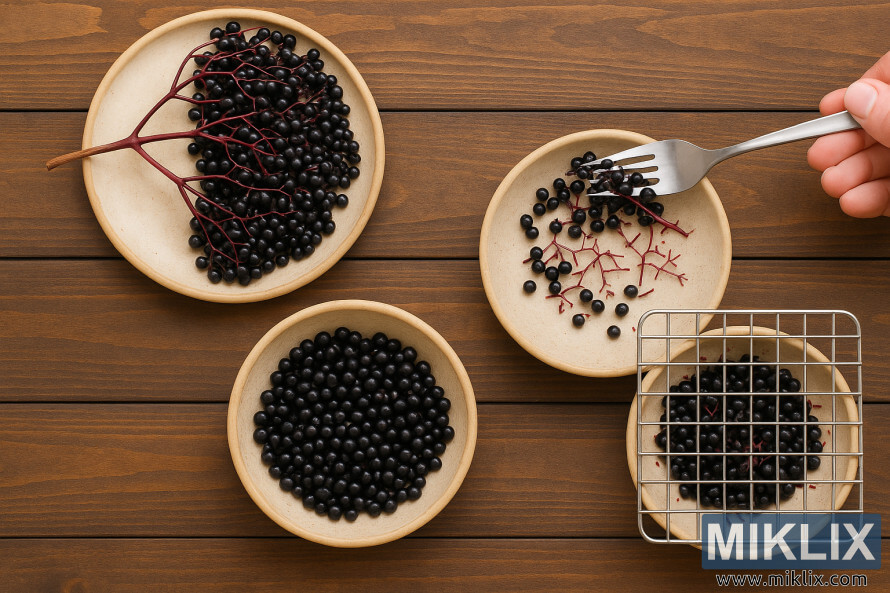
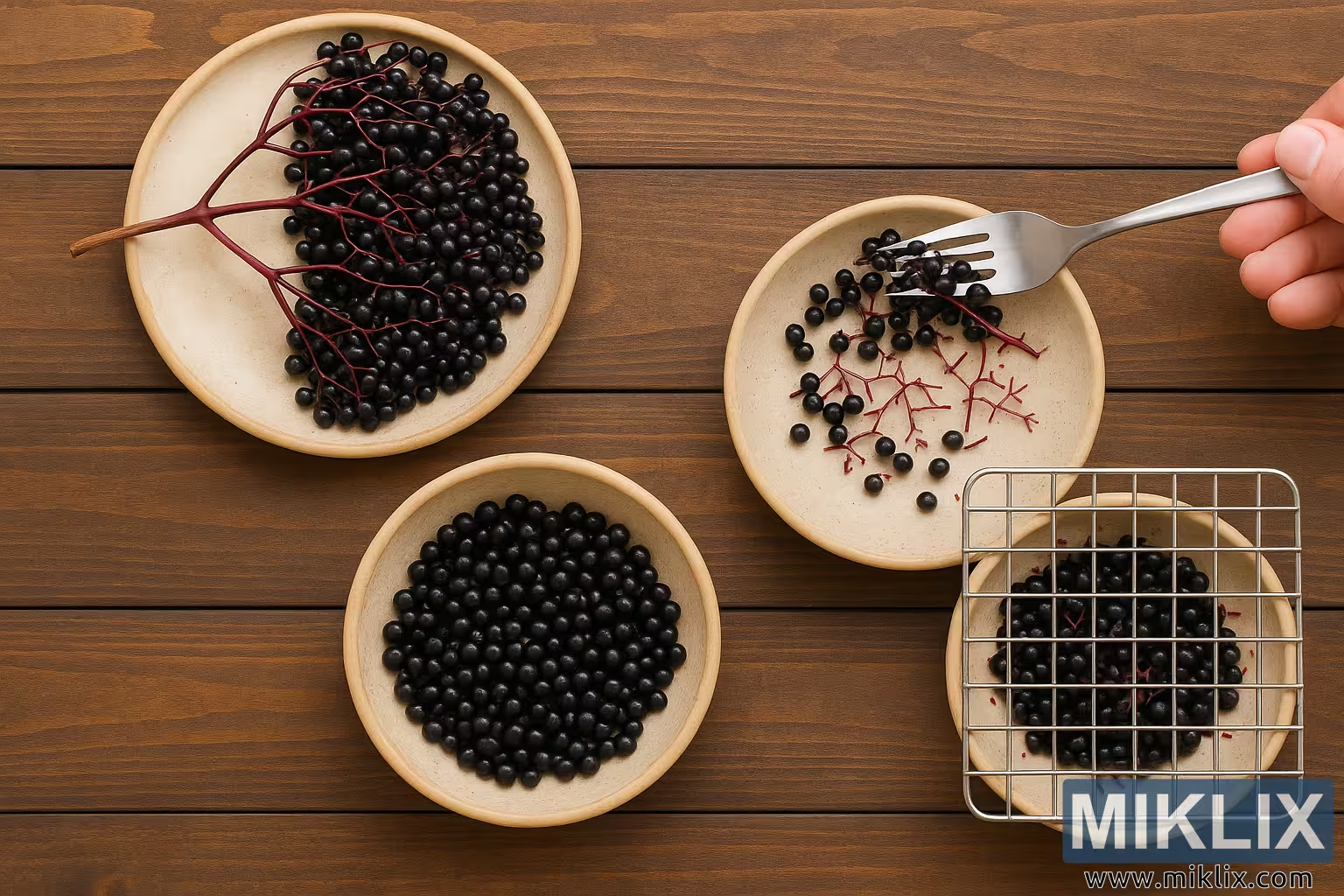
A detailed photo demonstrating three common methods for detaching elderberries from their stems: hand removal, using a fork, and pressing through a wire rack, all arranged neatly on a wooden surface.
Available versions of this image
The image files available for download below are less compressed and higher resolution - and as a result of that, higher quality - than the images embedded in articles and pages on this website, which are more optimized for file size in order to reduce bandwidth consumption.
Regular size (1,536 x 1,024)
Large size (3,072 x 2,048)
Very large size (4,608 x 3,072)
Extra large size (6,144 x 4,096)
Comically large size (1,048,576 x 699,051)
- Still uploading... ;-)
Image description
This high-resolution, landscape-oriented photograph provides a clear and educational demonstration of three traditional methods used to remove elderberries from their stems. The scene is set on a rustic wooden surface with visible natural grain, warm brown tones, and soft, even lighting that highlights the rich color and texture of the berries. The arrangement is clean and deliberate, designed to show each method distinctly while maintaining a visually harmonious composition.
In the upper left portion of the frame, a shallow beige ceramic bowl holds a fresh cluster of elderberries still attached to their deep red stems. The berries are glossy and plump, nearly spherical, their dark purplish-black hue contrasting with the lighter, earthen tones of the bowl and tabletop. The stems form an intricate branching pattern, demonstrating the natural structure of an elderberry cluster before processing. This section represents the starting point — the berries in their original, harvested state.
To the right, another bowl displays the use of a metal fork for detaching the berries. A human hand enters the frame from the right edge, grasping the fork at an angle, with its prongs gently pulling the berries away from the stems. Several loose berries have already fallen into the bowl below, while some remain attached to small stem fragments, illustrating the intermediate stage of removal. The hand and utensil introduce an element of human activity and practicality, bridging the instructional and domestic aspects of the process.
In the bottom section of the image, two more bowls continue the visual narrative. The lower-left bowl contains fully separated elderberries, round and uniform in size, filling the shallow dish almost to the edge. Their shiny surfaces catch the light, emphasizing freshness and ripeness. This bowl represents the result of hand-removal — a slower but precise method often favored for small batches or delicate handling.
Adjacent to it, in the bottom-right corner, a wire cooling rack sits neatly atop another beige bowl. Some elderberries are visible beneath the grid, while a few stems remain trapped in the metal squares. This arrangement demonstrates the 'through-the-rack' technique, where clusters are pressed or rubbed against a wire grid, allowing ripe berries to drop through while stems remain above. The method is efficient for larger quantities and is commonly used in kitchen or home-processing settings.
The overall color palette is natural and cohesive, dominated by warm wood tones, muted beige ceramics, deep purple-black berries, and the subtle glint of the silver fork and wire rack. The photograph’s composition balances practicality and aesthetics, offering both visual appeal and instructional clarity. It captures the essence of small-batch food preparation and traditional preservation methods, evoking a sense of care, patience, and respect for natural ingredients. The image could easily serve in educational materials, culinary blogs, or botanical guides focused on foraging, cooking, or herbal preparation techniques.
The image is related to: A Guide to Growing the Best Elderberries in Your Garden