
Image: Healthy vs. Problematic Wheatgrass Comparison
Published: February 18, 2026 at 6:16:53 PM UTC
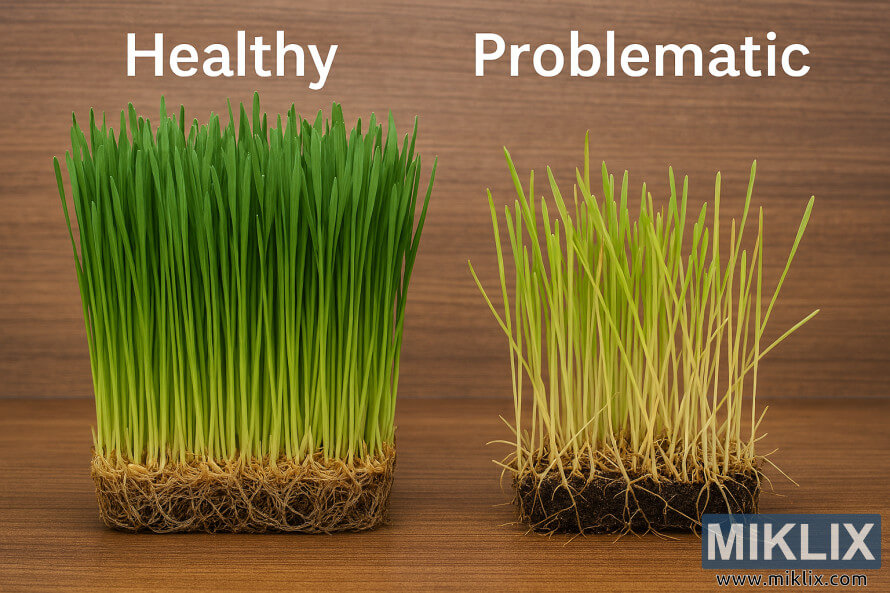
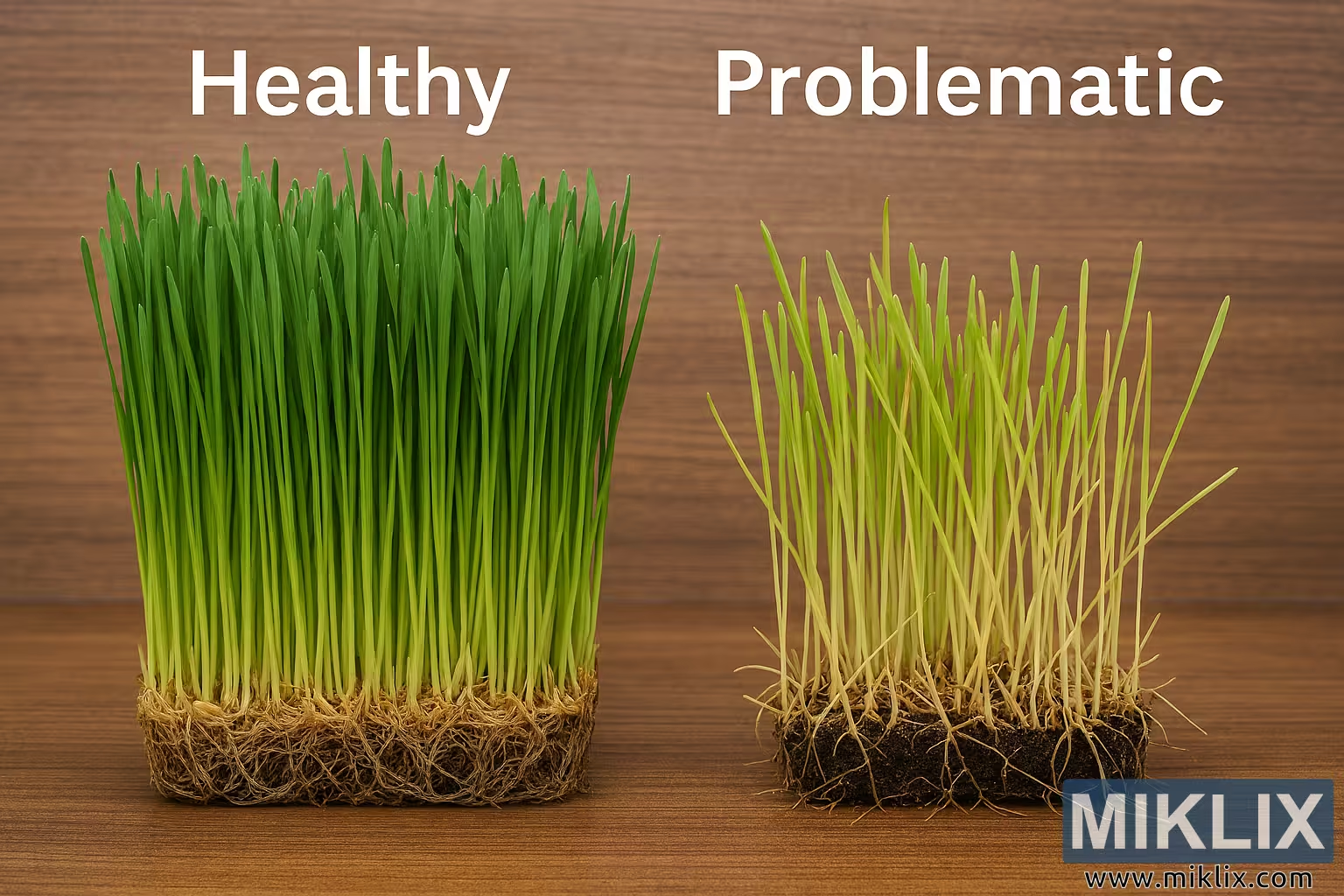
Visual comparison of healthy and problematic wheatgrass trays showing differences in color, density, and root structure.
Available versions of this image
The image files available for download below are less compressed and higher resolution - and as a result of that, higher quality - than the images embedded in articles and pages on this website, which are more optimized for file size in order to reduce bandwidth consumption.
Regular size (1,536 x 1,024)
Large size (3,072 x 2,048)
Very large size (4,608 x 3,072)
Extra large size (6,144 x 4,096)
Comically large size (1,048,576 x 699,051)
- Still uploading... ;-)
Image description
This high-resolution landscape image presents a clear side-by-side comparison of two wheatgrass trays, labeled "Healthy" and "Problematic," placed on a warm-toned wooden surface with a horizontal grain pattern. The composition is symmetrical, with each tray occupying equal space in the frame, allowing for direct visual contrast.
On the left, the "Healthy" wheatgrass tray showcases a dense cluster of vibrant green blades. Each blade stands tall and straight, with a consistent height and rich coloration. The green hue is deep and uniform, transitioning slightly darker toward the base. The blades are slim and firm, indicating optimal hydration and nutrient uptake. Beneath the grass, a thick mat of light brown, fibrous roots is visible, tightly interwoven and covering the soil almost entirely. The roots appear robust and healthy, forming a dense network that supports the lush growth above. The soil beneath is dark and barely visible due to the root density.
On the right, the "Problematic" wheatgrass tray reveals a stark contrast. The blades are sparse, uneven in height, and display a mix of pale green and yellow tones. Many blades are wilted, leaning or collapsing, with tips that appear dry or discolored. The overall appearance suggests nutrient deficiency, poor hydration, or disease. The root system is noticeably thinner and less developed, with fewer visible fibers and more exposed dark soil. The roots are lighter in color and loosely arranged, lacking the dense interweaving seen in the healthy tray.
The lighting in the image is soft and even, enhancing the natural colors and textures without casting harsh shadows. The wooden surface adds warmth and contrast, emphasizing the organic nature of the subject. The labels "Healthy" and "Problematic" are written in bold, white, sentence-case letters above each tray, clearly identifying the condition of each sample.
This image is ideal for educational, agricultural, or wellness contexts, illustrating the visual indicators of healthy versus stressed wheatgrass. It highlights key differences in blade color, density, posture, and root development, offering a clear reference for growers, educators, and health enthusiasts.
The image is related to: A Guide to Growing Wheatgrass at Home