
Image: Healthy Corn Plant vs Nutrient Deficient Corn Plant Comparison
Published: March 13, 2026 at 8:38:18 PM UTC
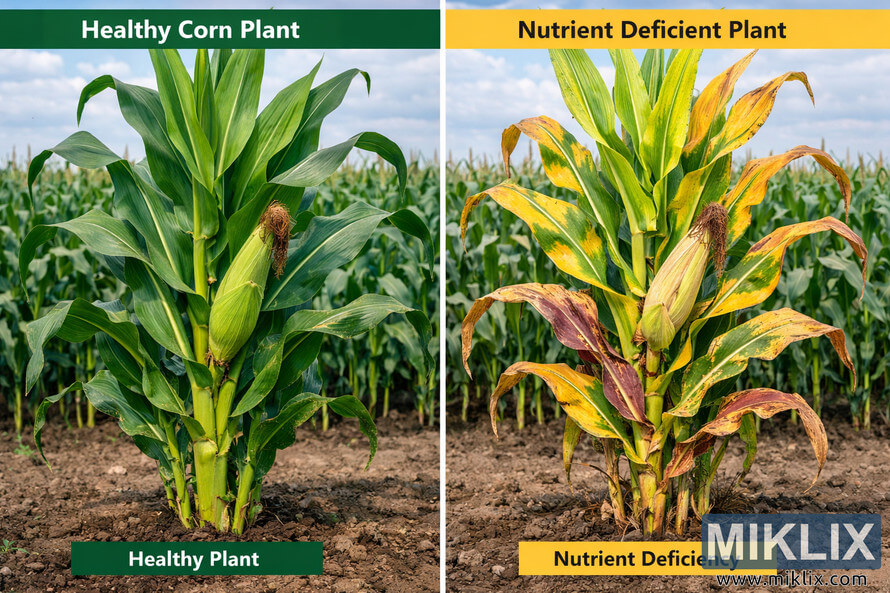
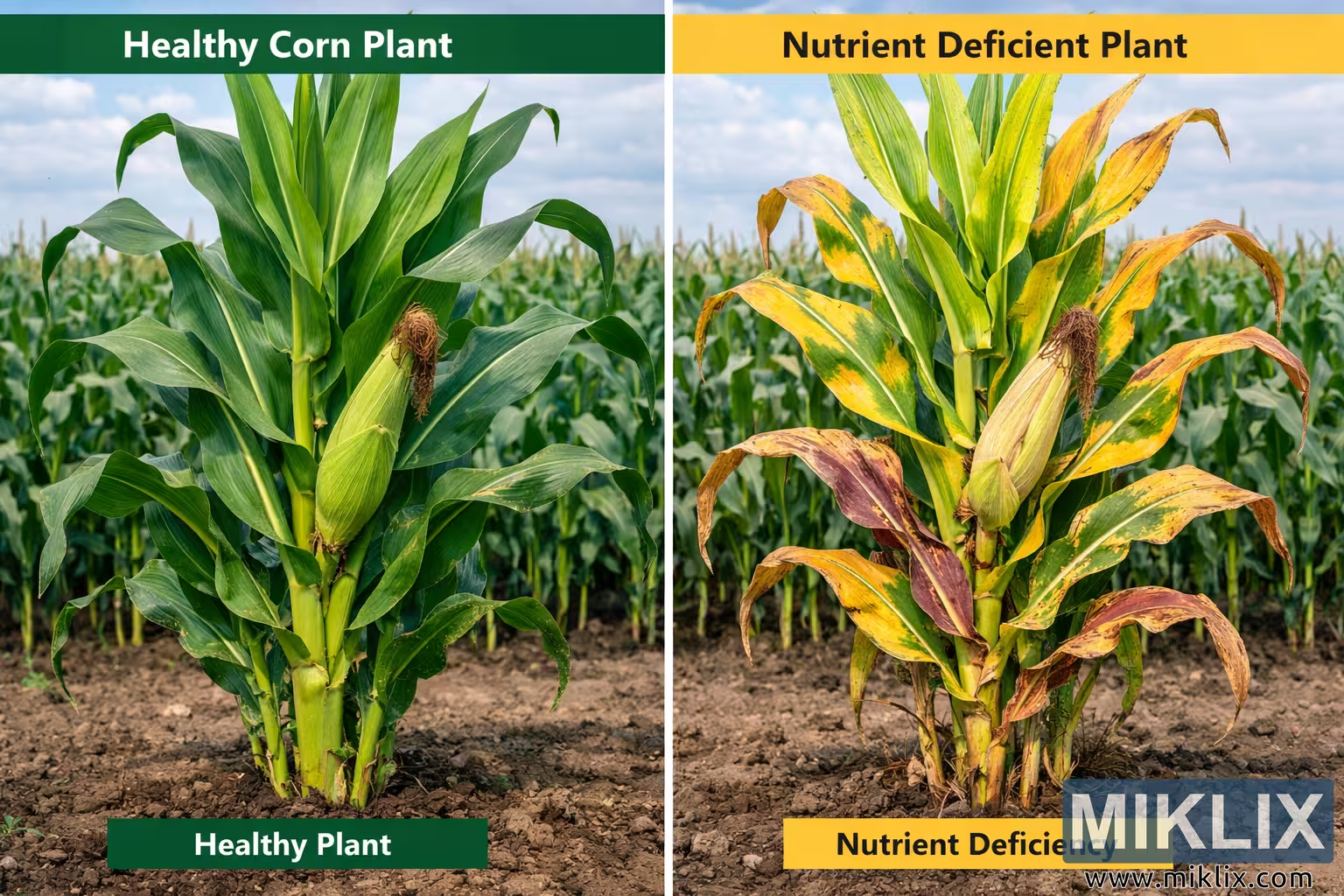
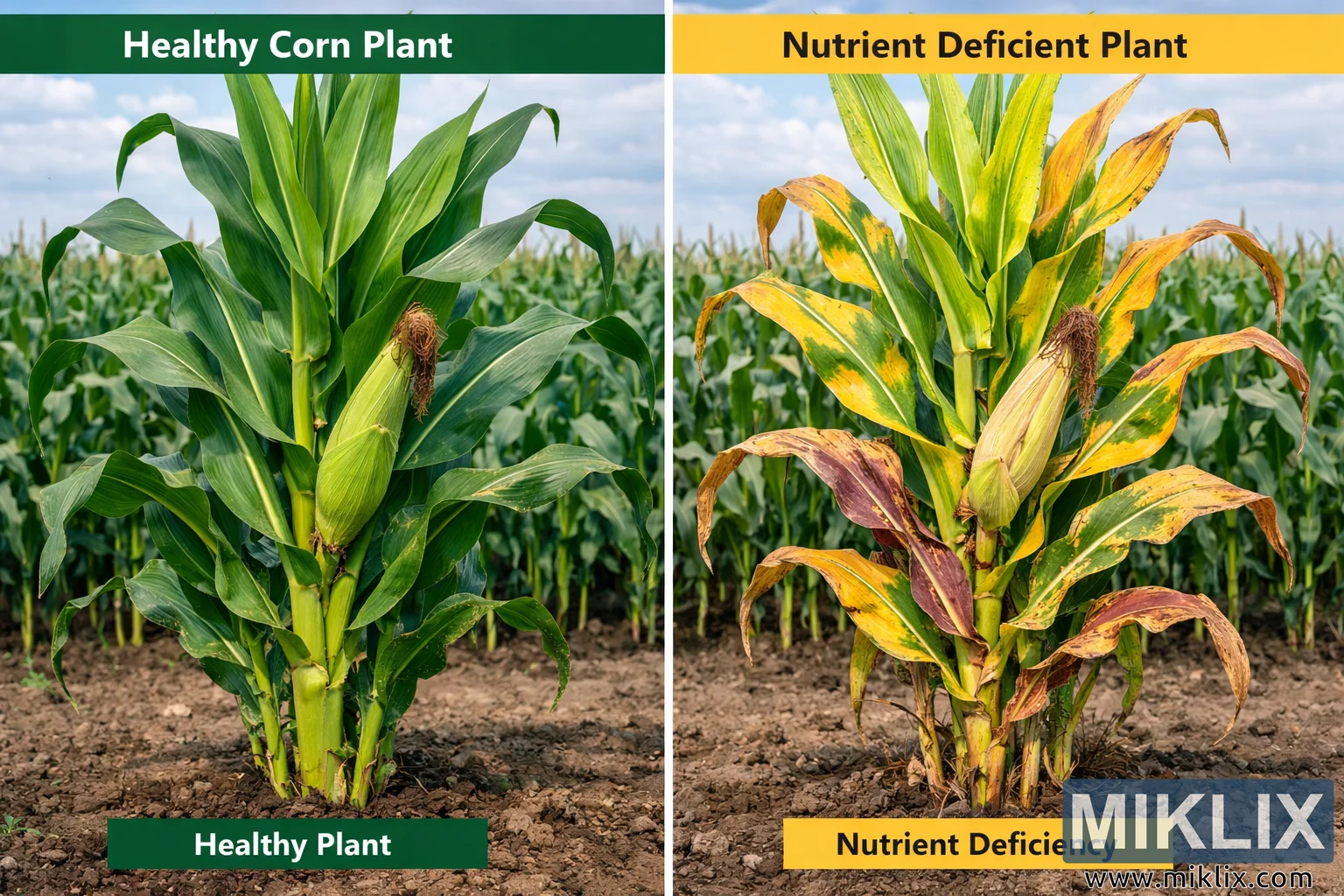
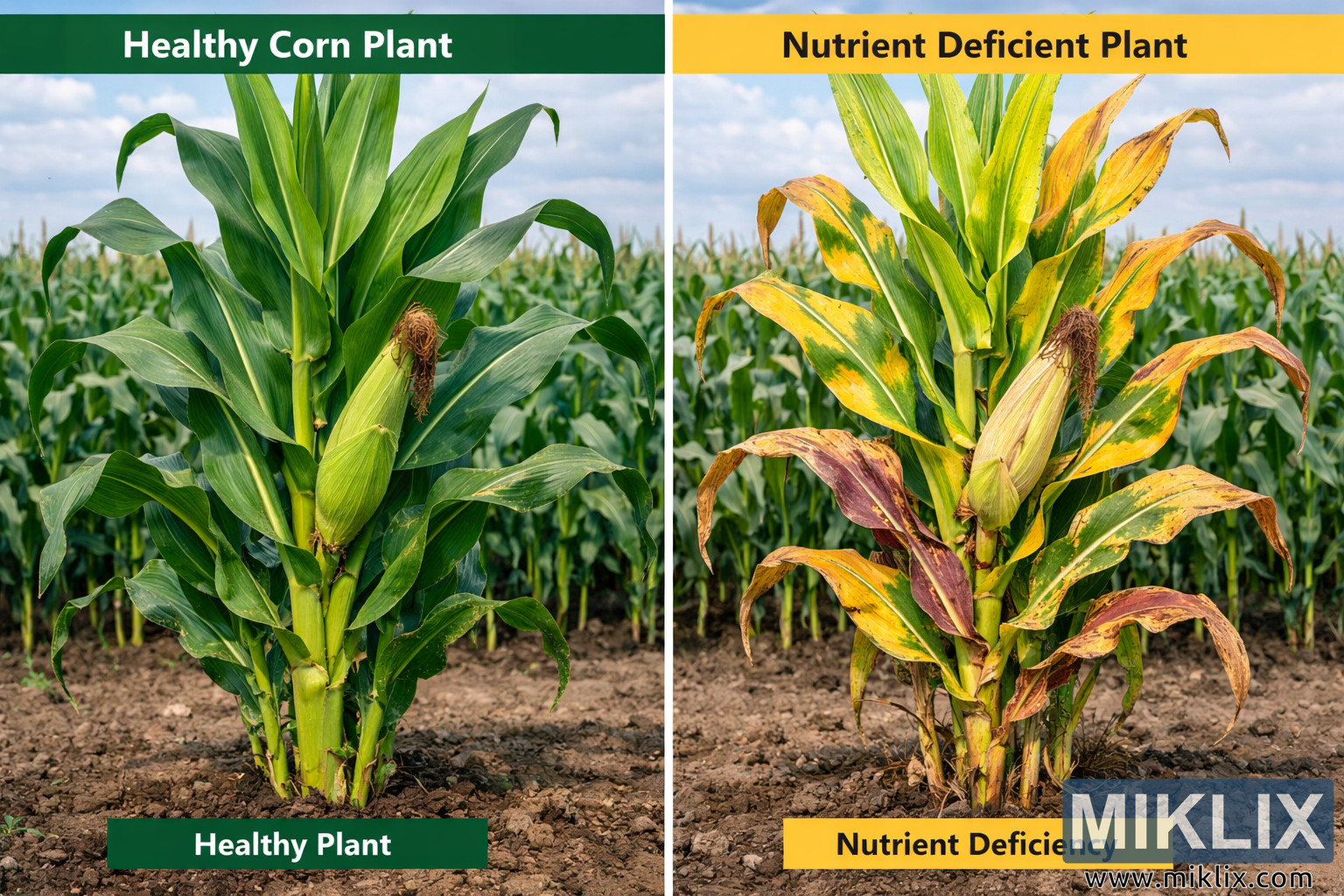
Visual comparison of a healthy corn plant and a nutrient deficient corn plant, highlighting leaf color changes, growth differences, and visible stress symptoms in maize crops.
Available versions of this image
The image files available for download below are less compressed and higher resolution - and as a result of that, higher quality - than the images embedded in articles and pages on this website, which are more optimized for file size in order to reduce bandwidth consumption.
Regular size (1,536 x 1,024)
Large size (3,072 x 2,048)
Very large size (4,608 x 3,072)
Extra large size (6,144 x 4,096)
Comically large size (1,048,576 x 699,051)
- Still uploading... ;-)
Image description
This image presents a side-by-side comparison of two corn (maize) plants growing in an agricultural field, illustrating the visual differences between a healthy plant and a plant affected by nutrient deficiency. The photograph is arranged in a landscape orientation and divided vertically into two halves to make the comparison clear and easy to interpret. The background in both halves shows a cultivated cornfield with multiple rows of maize plants extending into the distance under a lightly clouded sky, creating a realistic farming environment.
On the left side of the image, a healthy corn plant stands upright with a strong, thick stalk emerging from well-structured soil. The plant displays lush, vibrant green leaves that are wide, smooth, and evenly colored from base to tip. The leaves grow upward and outward in a symmetrical pattern, indicating vigorous growth and sufficient nutrient availability. A well-developed ear of corn is visible on the stalk, partially covered by a healthy green husk, with brown corn silk emerging naturally from the tip. The plant appears robust and balanced, with no visible discoloration, necrosis, or structural damage. The soil around the plant looks stable and well-formed, reinforcing the impression of favorable growing conditions. A green label above and below the plant identifies it as a "Healthy Corn Plant" or "Healthy Plant," emphasizing its optimal condition.
On the right side of the image, a contrasting corn plant demonstrates clear signs of nutrient deficiency. Although the plant is roughly similar in size, its leaves exhibit significant discoloration and stress symptoms. Many leaves have turned yellow or pale green, with irregular patches of brown and dry tissue along the edges and surfaces. Some leaves appear curled, wilted, or partially damaged, suggesting impaired nutrient uptake and reduced physiological performance. The stalk appears less vigorous, and the overall structure of the plant looks less symmetrical and less stable than the healthy plant. The ear of corn present on the plant is smaller and appears less developed, with husk leaves that look slightly stressed. The soil beneath this plant is similar to the healthy side, highlighting that the key difference lies in plant nutrition rather than the immediate physical environment. A yellow banner above and below this plant identifies it as a "Nutrient Deficient Plant" or "Nutrient Deficiency," visually reinforcing the educational comparison.
Overall, the image functions as an agricultural learning tool designed to help farmers, students, agronomists, and crop advisors visually recognize the differences between well-nourished maize plants and those suffering from nutrient stress. By placing the plants side-by-side in the same field context, the photograph clearly highlights how nutrient deficiencies manifest through changes in leaf color, plant vigor, and ear development.
The image is related to: Growing Corn: Your Complete Guide to Sweet Success in the Garden