
Image: Honeyberry Bush with Protective Bird Netting
Published: December 2, 2025 at 9:54:38 PM UTC
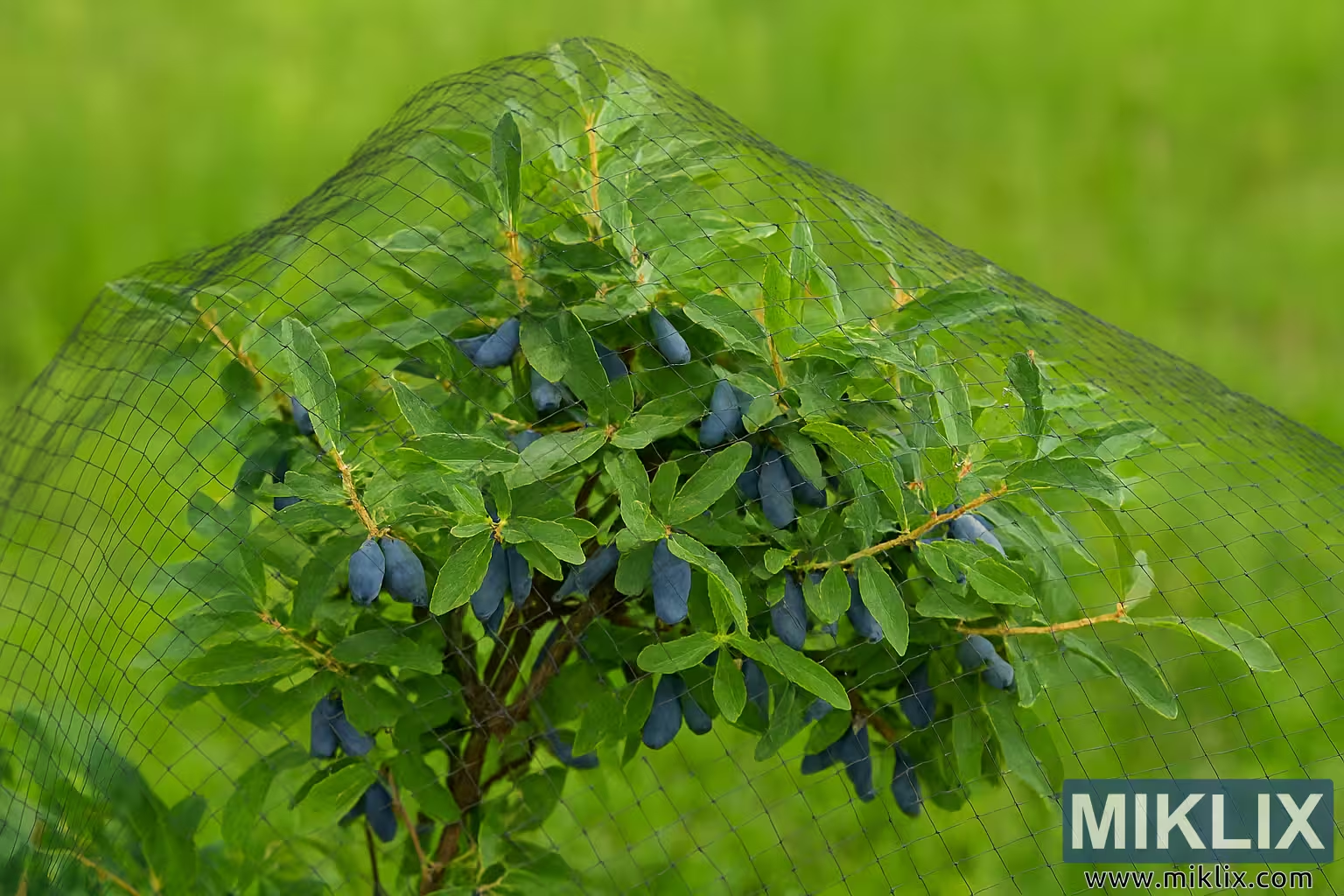
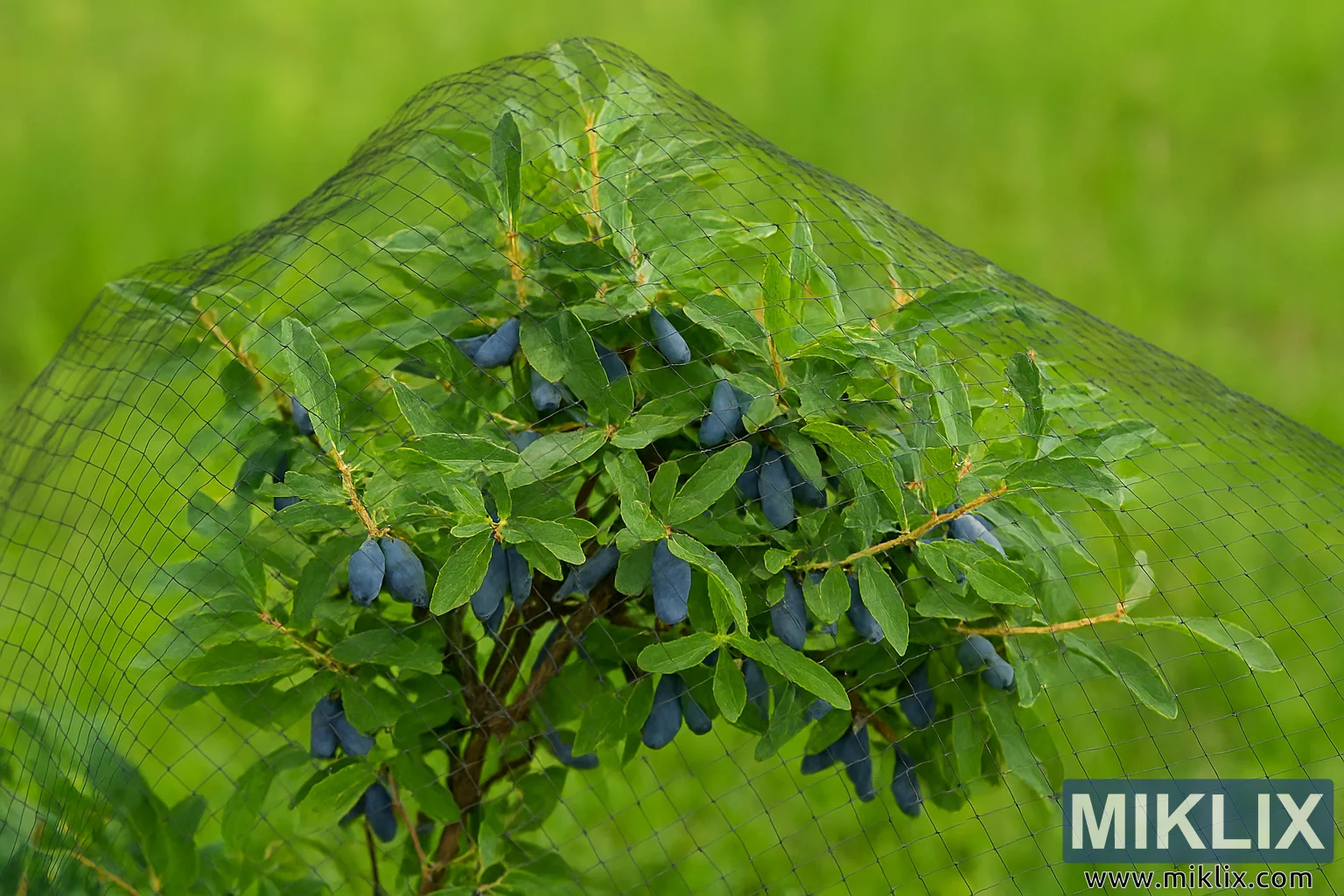
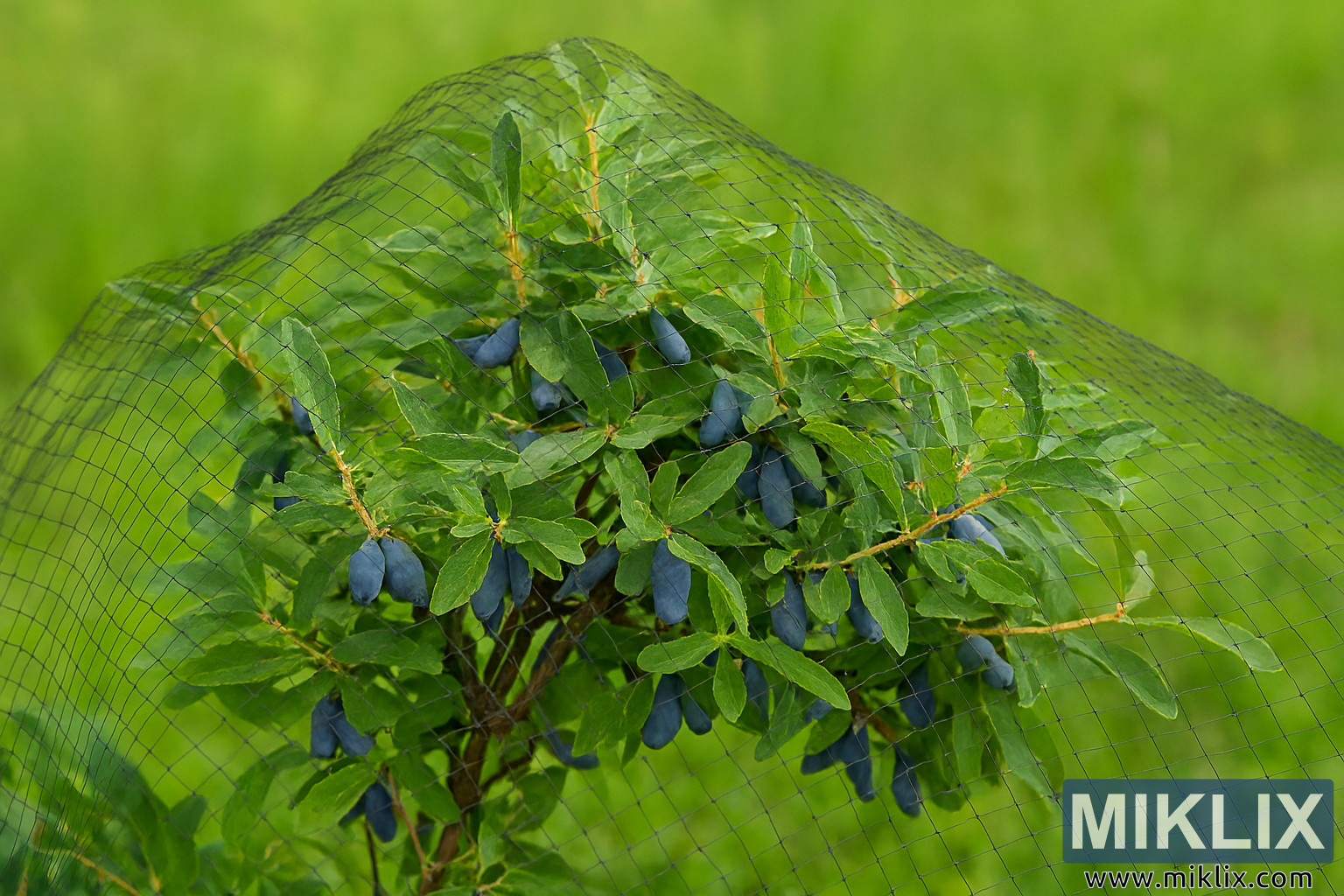
High-resolution photo of a honeyberry bush draped in bird netting, showing lush green leaves and ripening blue berries protected from bird damage.

Available versions of this image
The image files available for download below are less compressed and higher resolution - and as a result of that, higher quality - than the images embedded in articles and pages on this website, which are more optimized for file size in order to reduce bandwidth consumption.
Regular size (1,536 x 1,024)
Large size (3,072 x 2,048)
Very large size (4,608 x 3,072)
Extra large size (6,144 x 4,096)
Comically large size (1,048,576 x 699,051)
- Still uploading... ;-)
Image description
The image presents a detailed, high-resolution view of a honeyberry (Lonicera caerulea) bush that has been carefully protected with bird netting to safeguard its ripening fruit. The bush is captured in landscape orientation, filling the frame with lush, vibrant foliage and clusters of deep blue berries. The protective netting, made of fine black plastic mesh, is draped over the entire plant, its grid-like pattern clearly visible as it conforms to the contours of the branches and leaves. The netting is taut in some areas and looser in others, creating subtle folds and shadows that add texture and depth to the composition.
The honeyberry bush itself is dense and vigorous, with elliptical leaves that are a lively green, some showing slight variations in hue from bright lime to deeper forest tones. The leaves are arranged alternately along the woody stems, their surfaces smooth and slightly glossy, catching the natural daylight. Prominent central veins run through each leaf, and the edges are gently curved, giving the foliage a soft, organic rhythm. Interspersed among the leaves are the ripening honeyberries, which are elongated and oval in shape, with a matte, powdery bloom on their skin that gives them a dusty blue appearance. Some berries are fully ripe, displaying a rich indigo color, while others are still maturing, appearing lighter in tone. They hang in small clusters, attached by short stems that emerge from the woody branches hidden beneath the foliage.
The branches themselves, though partially obscured, are visible in places where the leaves part. They are brownish and slightly rough in texture, crisscrossing within the bush to form a sturdy framework that supports the abundant growth. The interplay of branches, leaves, and berries creates a layered effect, with the netting overlaying it all as a protective barrier. The netting’s fine mesh contrasts with the natural irregularity of the plant, emphasizing the human intervention designed to preserve the fruit from bird damage.
The background of the image is softly blurred, consisting of a grassy field with varying shades of green. This out-of-focus backdrop provides a natural context without distracting from the main subject. The overall lighting is natural and diffused, suggesting a slightly overcast day or filtered sunlight, which enhances the colors of the foliage and berries without harsh shadows. The composition is balanced, with the bush slightly off-center, allowing the viewer’s eye to travel across the netting, leaves, and berries in a natural flow. The photograph conveys both the beauty of the plant in its fruiting stage and the practical measures taken to ensure a successful harvest. It captures the intersection of nature and cultivation, highlighting the delicate balance between protecting crops and preserving their natural appeal.
The image is related to: Growing Honeyberries in Your Garden: A Guide to a Sweet Spring Harvest