
Growing Honeyberries in Your Garden: A Guide to a Sweet Spring Harvest
Published: December 2, 2025 at 9:54:38 PM UTC
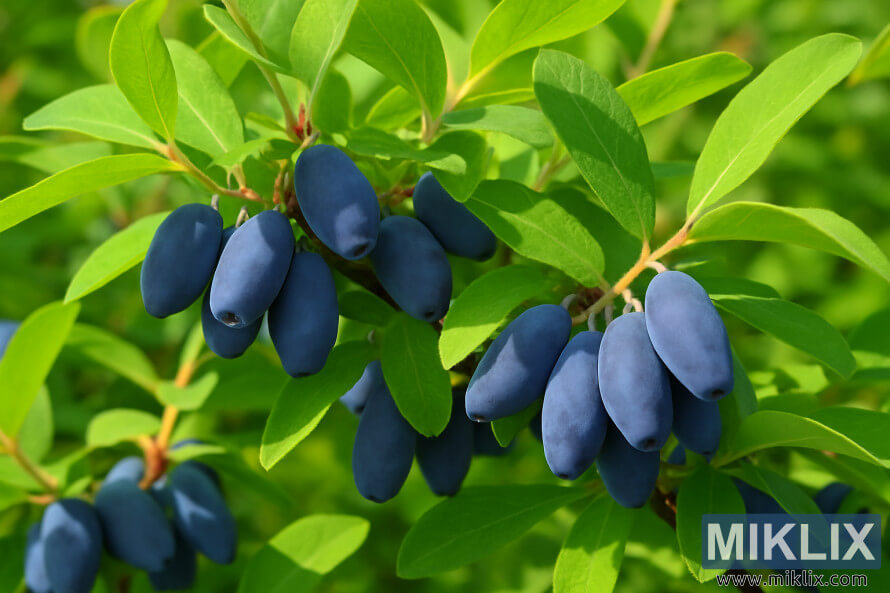
Honeyberries are one of gardening's best-kept secrets – a cold-hardy, early-ripening berry that's packed with flavor and antioxidants. If you're looking to add something unique to your garden that produces fruit before strawberries and blueberries, honeyberries (Lonicera caerulea) deserve a prime spot in your planting plans.
Click or tap the image for more information and higher resolutions.
This comprehensive guide will walk you through everything you need to know about growing these remarkable berries, from selecting the right varieties to harvesting your first delicious crop.
What Are Honeyberries? An Introduction to This Unique Fruit
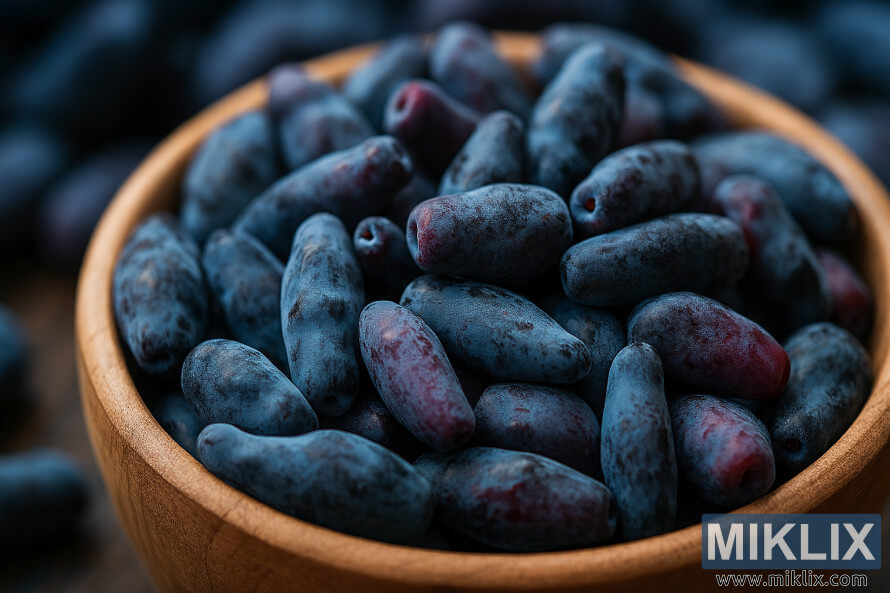
Honeyberries, also known as haskap berries or blue honeysuckle, are members of the honeysuckle family (Caprifoliaceae). Unlike ornamental honeysuckles, these varieties produce edible, elongated blue berries that ripen in late spring to early summer – often before any other berries in your garden.
Native to northern regions including Russia, Japan, and Canada, honeyberries have been cultivated for centuries but have only recently gained popularity in North American and European gardens. Their remarkable cold hardiness (surviving temperatures as low as -40°F) makes them suitable for growing in zones 2-9, far exceeding the range of most berry crops.
Taste Profile and Culinary Uses
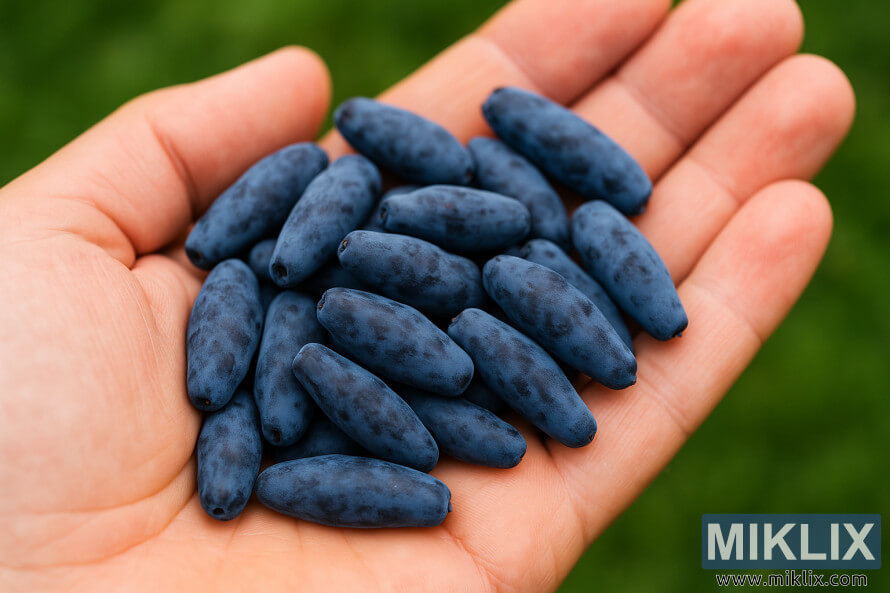
Honeyberries offer a complex flavor that combines elements of blueberry, raspberry, and blackberry with subtle notes of honey. The taste varies by variety, with some being sweeter and others having a more tart profile. Their versatility in the kitchen makes them perfect for:
- Fresh eating (especially the sweeter varieties)
- Jams, jellies, and preserves
- Baking in pies, muffins, and breads
- Smoothies and juices
- Syrups and dessert toppings
- Wine and liqueur making
Nutritional Benefits
These berries aren't just delicious – they're nutritional powerhouses packed with:
- High levels of antioxidants (more than blueberries)
- Abundant vitamin C (3-4 times more than blueberries)
- Essential minerals including potassium and manganese
- Anthocyanins that contribute to heart health
- Anti-inflammatory compounds
- Dietary fiber for digestive health
Click or tap the image for more information and higher resolutions.
Climate and Soil Requirements for Growing Honeyberries
One of the greatest advantages of growing honeyberries is their adaptability to various growing conditions. Unlike fussy berries like blueberries that require specific soil pH, honeyberries are much more forgiving while still delivering excellent harvests.
Climate Considerations
Honeyberries are exceptionally cold-hardy, making them perfect for northern gardens, but they can also thrive in warmer regions with some considerations:
| Climate Zone | Suitability | Special Considerations |
| Cold (Zones 2-4) | Excellent | Plant in full sun; early-blooming varieties work well |
| Moderate (Zones 5-6) | Very Good | Choose mid to late-blooming varieties to avoid spring frost damage |
| Warm (Zones 7-8) | Good | Provide afternoon shade; select late-blooming varieties |
| Hot (Zone 9) | Fair | Partial shade required; may have reduced yields; container growing recommended |
Soil Requirements
Unlike blueberries that demand acidic soil, honeyberries adapt to a wide range of soil conditions:
- pH Range: 5.5-7.5 (slightly acidic to neutral)
- Soil Type: Well-draining loam is ideal, but they tolerate clay soils better than most berries
- Organic Matter: Benefits from rich organic content; add compost when planting
- Moisture: Prefers consistently moist but not waterlogged soil
- Drainage: Good drainage is essential; avoid areas where water pools
Click or tap the image for more information and higher resolutions.
Step-by-Step Honeyberry Planting Guide
Proper planting is crucial for establishing healthy, productive honeyberry bushes that will reward you with bountiful harvests for decades. Follow these detailed steps for the best results.
Selecting the Perfect Location
Before you dig any holes, take time to find the ideal spot for your honeyberry plants:
- Sunlight: Full sun in northern climates (zones 2-4); partial afternoon shade in warmer regions (zones 5-9)
- Spacing: Allow 4-5 feet between plants and 6-8 feet between rows
- Protection: Choose a location with some wind protection if possible
- Companion Plants: Avoid planting near trees that will compete for resources
- Access: Ensure easy access for maintenance and harvesting

Click or tap the image for more information and higher resolutions.
Soil Preparation Steps
Prepare your soil thoroughly before planting to give your honeyberries the best start:
- Test your soil pH and nutrient levels (ideal pH: 5.5-7.5)
- Remove all weeds, grass, and debris from the planting area
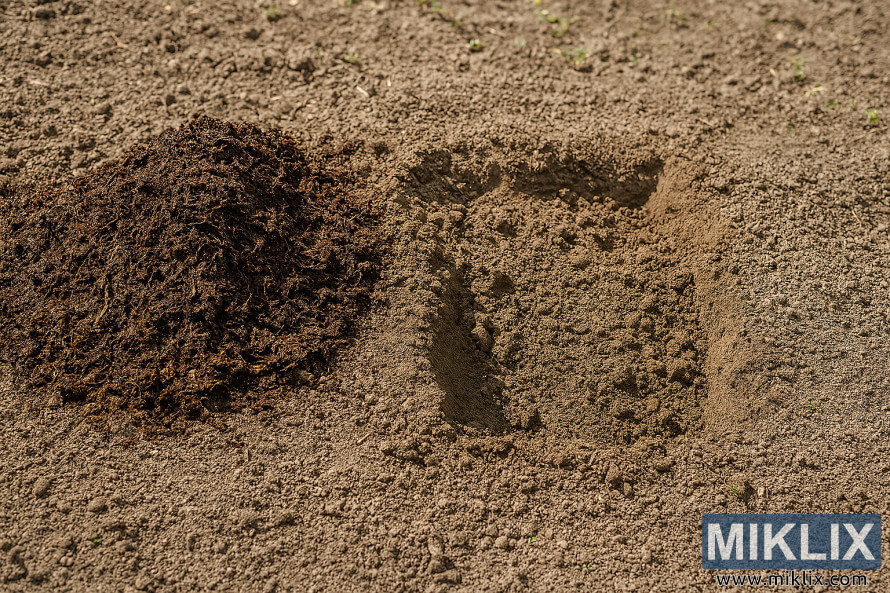
- Dig a hole twice as wide as the root ball and equally deep
- Mix the removed soil with 25-30% compost or well-rotted manure
- If planting multiple bushes, prepare all holes before beginning to plant
Planting Process
Follow these steps when planting your honeyberry bushes:
- If plants are potted, carefully remove them without disturbing the root ball
- Gently loosen any circling roots to encourage outward growth
- Place the plant in the hole at the same depth it was growing in its container
- Backfill with the soil-compost mixture, firming gently to remove air pockets
- Water thoroughly after planting to settle the soil around roots
- Apply 2-3 inches of organic mulch around the plant, keeping it away from the stems
Important Pollination Note
Honeyberries require cross-pollination between compatible varieties to produce fruit. Always plant at least two different varieties that bloom at the same time for successful pollination and fruit production.

Click or tap the image for more information and higher resolutions.
Honeyberry Care and Maintenance Guide
Honeyberries are relatively low-maintenance compared to many other fruits, but proper care will maximize your harvests and keep plants healthy for decades.
Watering Requirements
Proper watering is essential, especially during the establishment phase and fruiting periods:
- New Plants: Water deeply twice weekly for the first month after planting
- Established Plants: Provide 1-2 inches of water weekly during growing season
- Fruiting Period: Increase watering slightly when berries are developing
- Winter: Water occasionally during dry winter periods when ground isn't frozen
- Containers: Container-grown plants need more frequent watering
Fertilizing Schedule
Honeyberries aren't heavy feeders but benefit from regular, moderate fertilization:
- First Year: Apply a balanced organic fertilizer in spring after planting
- Established Plants: Apply compost or aged manure in early spring
- Additional Feeding: A light application of balanced fertilizer after fruiting
- Avoid: High-nitrogen fertilizers that promote leaf growth over fruit production
- Container Plants: Feed monthly with diluted liquid organic fertilizer during growing season
Pruning Techniques
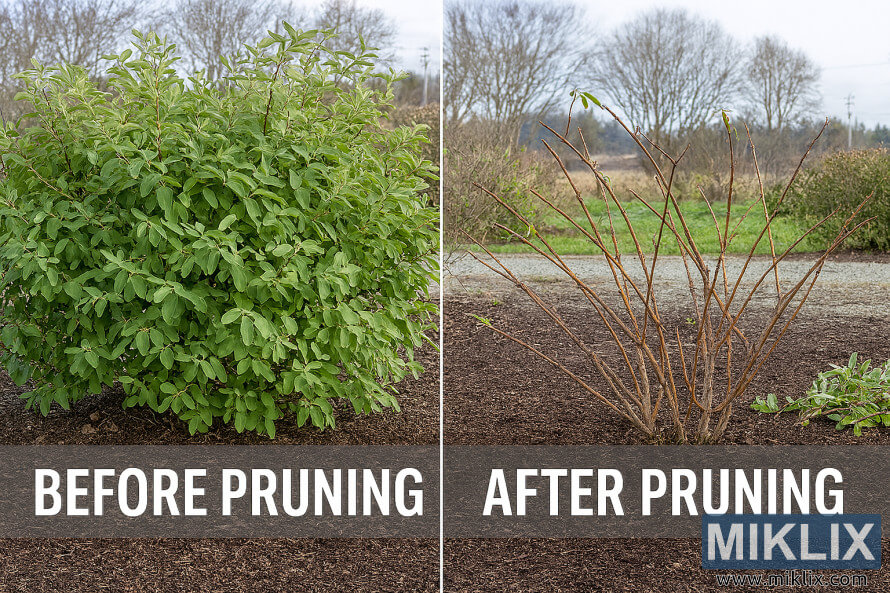
Proper pruning keeps plants productive and healthy:
- Young Plants (Years 1-3): Minimal pruning needed; remove only damaged branches
- Mature Plants: Prune after harvest in summer
- What to Remove: Dead wood, crossing branches, and old unproductive stems
- Rejuvenation: Every 3-4 years, remove 1/3 of the oldest stems to ground level
- Shape Maintenance: Keep center somewhat open for air circulation
Click or tap the image for more information and higher resolutions.
Mulching Benefits
A good mulch layer provides multiple benefits for honeyberry plants:
- Conserves soil moisture during dry periods
- Suppresses weed growth around plants
- Moderates soil temperature fluctuations
- Adds organic matter to soil as it breaks down
- Prevents soil erosion and compaction
Apply 2-3 inches of organic mulch such as wood chips, straw, or shredded leaves, keeping it a few inches away from the stems to prevent rot.
Pollination Requirements and Companion Planting
Understanding pollination needs is crucial for successful honeyberry growing. These plants have specific requirements that must be met for fruit production.
Pollination Essentials
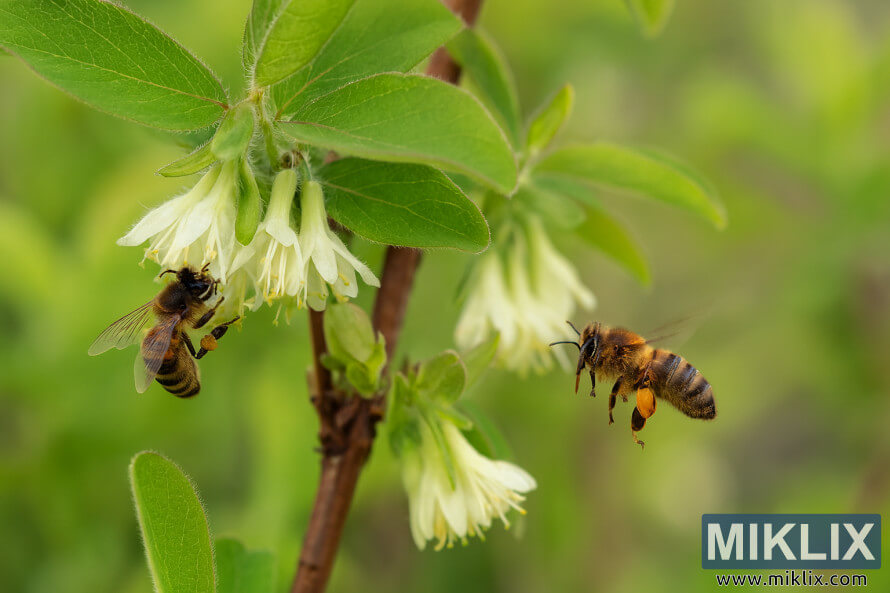
Honeyberries are not self-fertile and require cross-pollination between compatible varieties:
- Plant at least two different compatible varieties within 50 feet of each other
- Choose varieties with overlapping bloom times for successful pollination
- Early-blooming varieties should be paired with other early bloomers
- Mid and late-season varieties should be matched accordingly
- Bees are the primary pollinators for honeyberry flowers
| Bloom Time | Compatible Varieties | Best For Zones |
| Early Season | Blue Bird, Blue Belle, Blue Moon | 2-4 |
| Mid Season | Aurora, Borealis, Tundra, Indigo Gem | 3-6 |
| Late Season | Blue Banana, Boreal Blizzard, Blue Treasure | 5-9 |
Click or tap the image for more information and higher resolutions.
Beneficial Companion Plants
While honeyberries grow well on their own, certain companion plants can enhance their growth and productivity:
Plants That Attract Pollinators
- Lavender - attracts bees and beneficial insects
- Borage - continuous blue flowers beloved by bees
- Calendula - attracts pollinators and beneficial insects
- Catmint - long-blooming pollinator magnet
- Comfrey - attracts pollinators and accumulates nutrients
Plants That Improve Soil
- Clover - fixes nitrogen and attracts pollinators
- Yarrow - accumulates nutrients and attracts beneficial insects
- Chives - repels pests and attracts pollinators
- Chamomile - improves soil and attracts beneficial insects
- Nasturtium - acts as trap crop for aphids
Common Pests and Diseases: Prevention and Treatment
One of the advantages of growing honeyberries is their natural resistance to many common berry pests and diseases. However, they can still face some challenges that gardeners should be aware of.
Potential Pest Issues
Birds
Birds love honeyberries and can quickly harvest your entire crop if left unprotected.
Organic Solutions:
- Cover plants with bird netting when berries begin to ripen
- Install reflective tape or bird scare devices
- Use decoy predators like owl statues (move regularly)
Aphids
These small sap-sucking insects can sometimes infest new growth.
Organic Solutions:
- Spray plants with strong water stream to dislodge aphids
- Apply insecticidal soap for larger infestations
- Encourage beneficial insects like ladybugs and lacewings

Click or tap the image for more information and higher resolutions.
Potential Disease Issues
Powdery Mildew
White powdery coating on leaves that can appear in humid conditions.
Organic Solutions:
- Ensure good air circulation through proper spacing and pruning
- Apply organic fungicides containing potassium bicarbonate
- Spray diluted milk solution (1:10 milk to water ratio)
Root Rot
Caused by overwatering or poor drainage, leading to yellowing leaves and decline.
Organic Solutions:
- Improve drainage in planting area
- Avoid overwatering; allow soil to dry slightly between waterings
- Apply beneficial mycorrhizal fungi when planting
Preventative Care Is Key
The best defense against pests and diseases is maintaining healthy plants through proper watering, fertilization, and pruning. Stressed plants are more susceptible to problems, while vigorous plants can often resist minor pest and disease pressure.
Harvesting, Storage, and Using Your Honeyberries
The reward for all your care comes at harvest time. Knowing when and how to harvest honeyberries ensures you'll enjoy the best flavor and maximum storage life.
When to Harvest
Timing is crucial when harvesting honeyberries:
- Honeyberries are typically the first berries to ripen in the garden (May-June)
- Berries turn blue 2-3 weeks before they're fully ripe
- Wait until berries are completely blue throughout (check by squeezing gently)
- For sweetest flavor, wait 1-2 weeks after berries turn fully blue
- Taste test is the best indicator of ripeness
- Harvest window is typically 2-3 weeks for each variety
Harvesting Techniques
Use these methods for efficient harvesting without damaging plants:
- Hand-pick berries individually for the gentlest harvest
- Place a sheet beneath plants and gently shake branches for faster harvesting
- Harvest in the morning when temperatures are cooler
- Use shallow containers to prevent crushing berries at the bottom
- Remove any leaves, stems, or unripe berries after harvesting

Click or tap the image for more information and higher resolutions.
Storage Methods
Properly stored honeyberries can be enjoyed fresh or preserved for later use.
| Storage Method | Preparation | Expected Shelf Life |
| Refrigeration | Store unwashed in breathable container | 1-2 weeks |
| Freezing | Freeze on tray then transfer to containers | Up to 1 year |
| Dehydrating | Dry at 135°F until leathery | 6-12 months |
| Canning (Jam/Jelly) | Process according to tested recipes | 1-2 years |
Delicious Ways to Use Honeyberries
Honeyberries are versatile in the kitchen and can be used in many of the same ways as blueberries:
Fresh Uses
- Eat directly as a snack
- Add to breakfast cereals and yogurt
- Mix into fresh fruit salads
- Top pancakes and waffles
- Blend into smoothies
Click or tap the image for more information and higher resolutions.
Preserved Uses
- Make jams, jellies, and preserves
- Bake into muffins, pies, and cobblers
- Create syrups for pancakes or ice cream
- Ferment into wine or liqueurs
- Freeze for year-round use

Click or tap the image for more information and higher resolutions.
Troubleshooting Common Honeyberry Growing Problems
Even with proper care, you may encounter some challenges when growing honeyberries. Here are solutions to the most common problems gardeners face.
Plants Not Producing Fruit
Possible Causes:
- Lack of compatible pollinator variety nearby
- Plants too young (may take 2-3 years to begin fruiting)
- Late frost damaged flowers
- Insufficient sunlight
- Improper pruning removed flower buds
Solutions:
- Plant a compatible variety within 50 feet
- Be patient with young plants
- Protect flowers from late frosts with covers
- Ensure plants receive adequate sunlight
- Prune only after fruiting
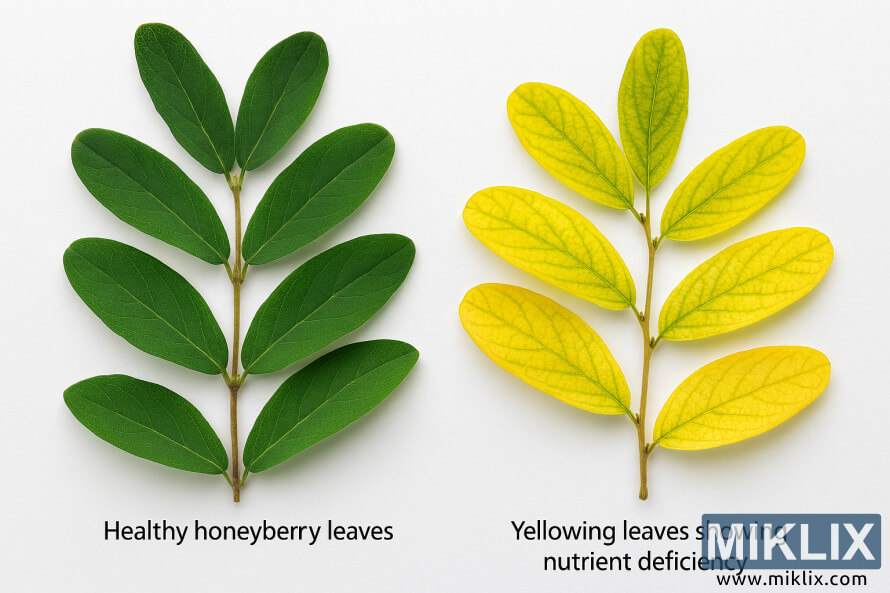
Yellowing Leaves
Possible Causes:
- Overwatering or poor drainage
- Nutrient deficiencies
- Root damage
- Normal seasonal changes (in fall)
Solutions:
- Improve drainage and adjust watering schedule
- Apply balanced organic fertilizer
- Avoid disturbing roots during weeding
- No action needed for fall yellowing
Small or Sour Berries
Possible Causes:
- Harvesting too early
- Insufficient water during berry development
- Variety characteristics (some are naturally tart)
- Poor pollination
Solutions:
- Wait 1-2 weeks after berries turn blue before harvesting
- Ensure consistent watering during fruiting
- Try different varieties for sweeter taste
- Improve pollination by planting compatible varieties
Slow Growth
Possible Causes:
- Poor soil conditions
- Insufficient water or nutrients
- Competition from nearby plants
- Too much shade
Solutions:
- Amend soil with compost and organic matter
- Establish regular watering and fertilizing schedule
- Keep area around plants weed-free
- Ensure adequate sunlight exposure
Click or tap the image for more information and higher resolutions.
Recommended Honeyberry Varieties for Different Climates
Selecting the right honeyberry varieties for your climate is essential for success. Here are top-performing varieties grouped by climate suitability.
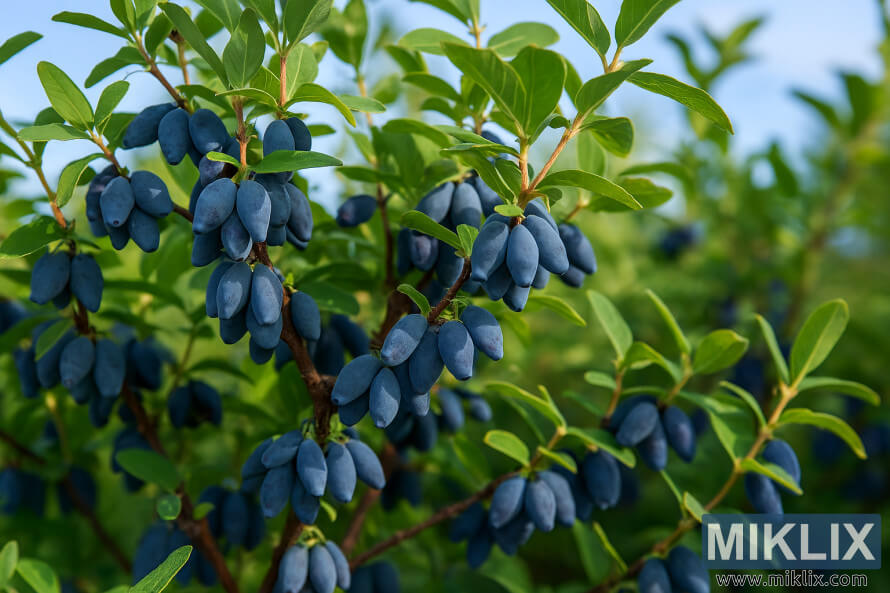
Cold Climate Varieties (Zones 2-4)
- Aurora - Large, sweet berries, excellent productivity
- Borealis - Compact plant (3-4 ft), sweet berries, good for small spaces
- Tundra - Medium-sized sweet fruit, excellent cold hardiness
- Indigo Gem - Productive, reliable, good flavor balance
- Berry Blue - Excellent pollinator, very cold hardy
Click or tap the image for more information and higher resolutions.
Moderate Climate Varieties (Zones 5-6)
- Blue Banana - Large elongated berries, sweet flavor
- Boreal Blizzard - Very large berries, excellent taste
- Blue Moon - Good productivity, balanced flavor
- Honeybee - Excellent pollinator, good producer
- Blue Forest - Compact growth, reliable production
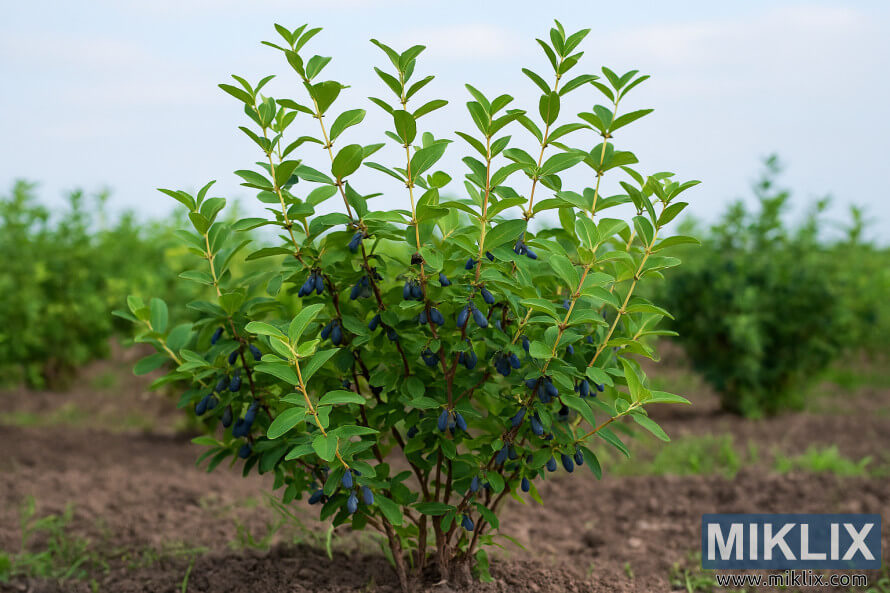
Click or tap the image for more information and higher resolutions.
Warmer Climate Varieties (Zones 7-9)
- Blue Velvet - Later blooming, heat tolerant
- Blue Treasure - Adaptable to warmer zones, late bloomer
- Strawberry Sensation - Unique flavor, heat tolerant
- Myberry Sweet - Extra sweet berries, late blooming
- Blue Pacific - Developed for milder climates
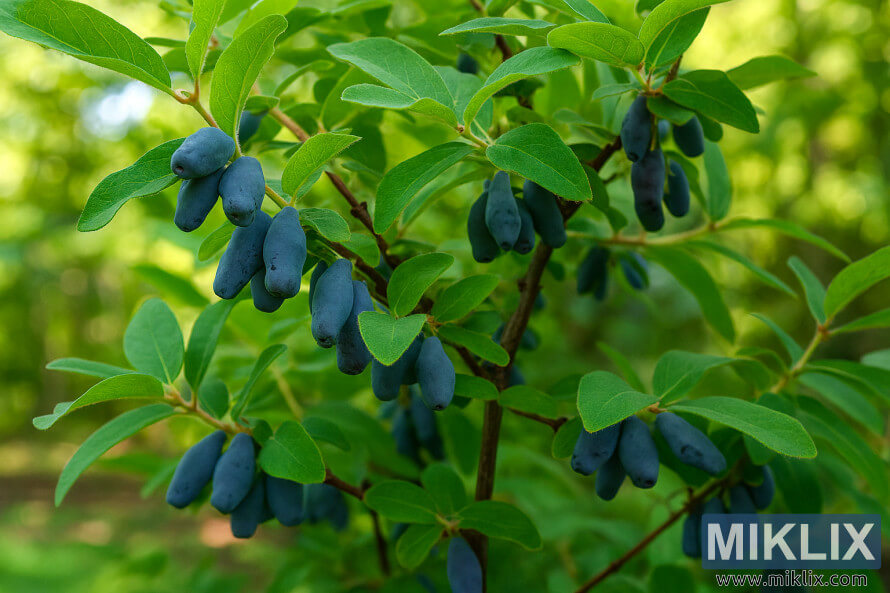
Click or tap the image for more information and higher resolutions.
Conclusion: Enjoying the Fruits of Your Labor
Growing honeyberries offers a unique and rewarding experience for gardeners of all skill levels. These hardy, early-ripening berries provide a delicious harvest when few other fruits are available, and their adaptability to different growing conditions makes them accessible to gardeners across most of North America.
With proper variety selection, planting, and care, your honeyberry bushes can provide bountiful harvests for decades to come. The minimal pest and disease issues, combined with straightforward maintenance requirements, make honeyberries an excellent choice for both beginning gardeners and experienced fruit growers looking to diversify their gardens.
As you enjoy your first honeyberry harvest, remember that these plants improve with age. Each year, your bushes will grow larger and more productive, rewarding your initial investment with increasing yields of nutritious, flavorful berries that can be enjoyed fresh or preserved in countless ways.
Whether you're growing honeyberries in a dedicated fruit garden, as part of an edible landscape, or in containers on a patio, these remarkable plants deserve a place in your gardening plans. Start your honeyberry journey today, and you'll be enjoying these unique fruits for many seasons to come.
Further Reading
If you enjoyed this post, you may also like these suggestions:
- Growing Corn: Your Complete Guide to Sweet Success in the Garden
- A Guide to Growing Artichokes in Your Own Garden
- A Guide to Growing Lettuce in Your Own Garden