
Image: Heat-Tolerant Honeyberry Shrub in Southern Garden
Published: December 2, 2025 at 9:54:38 PM UTC
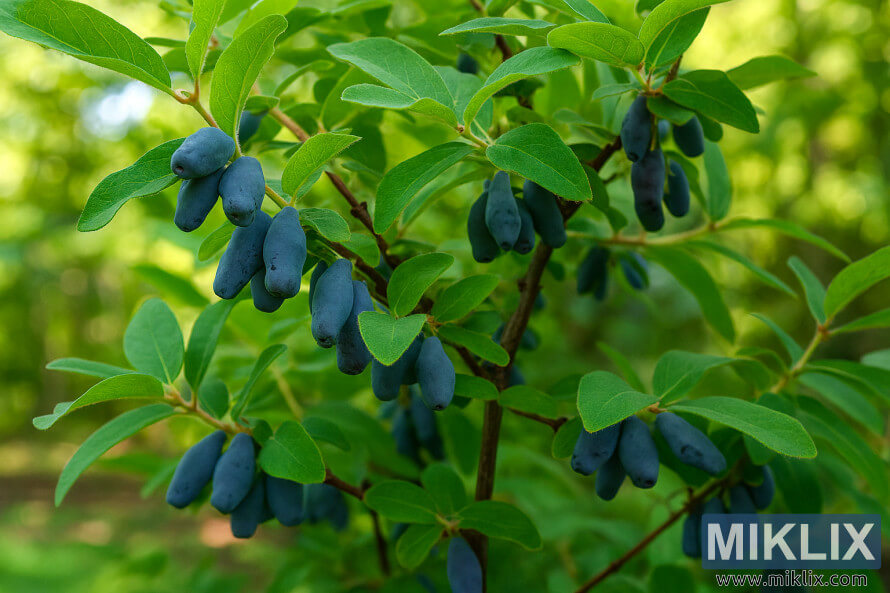
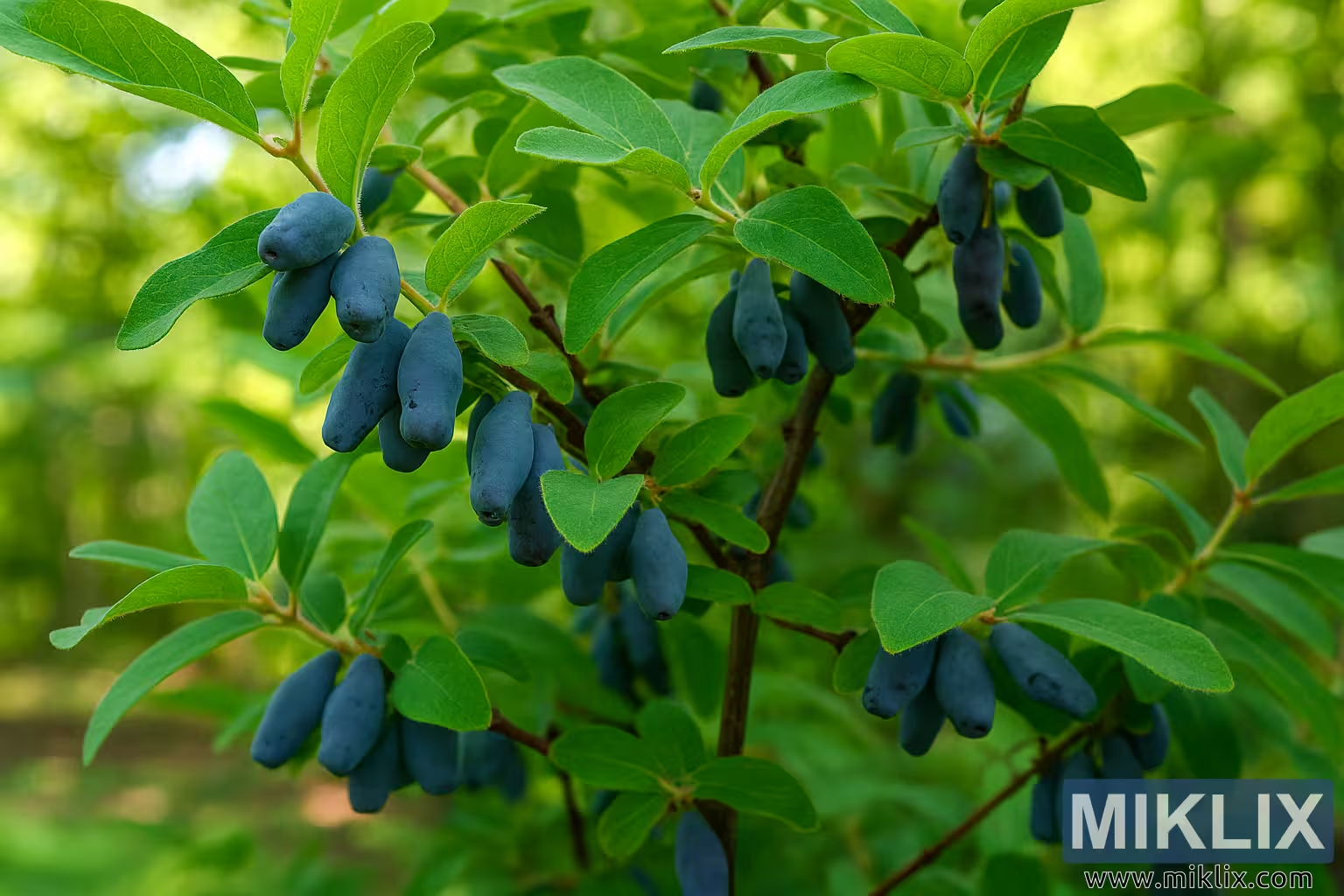
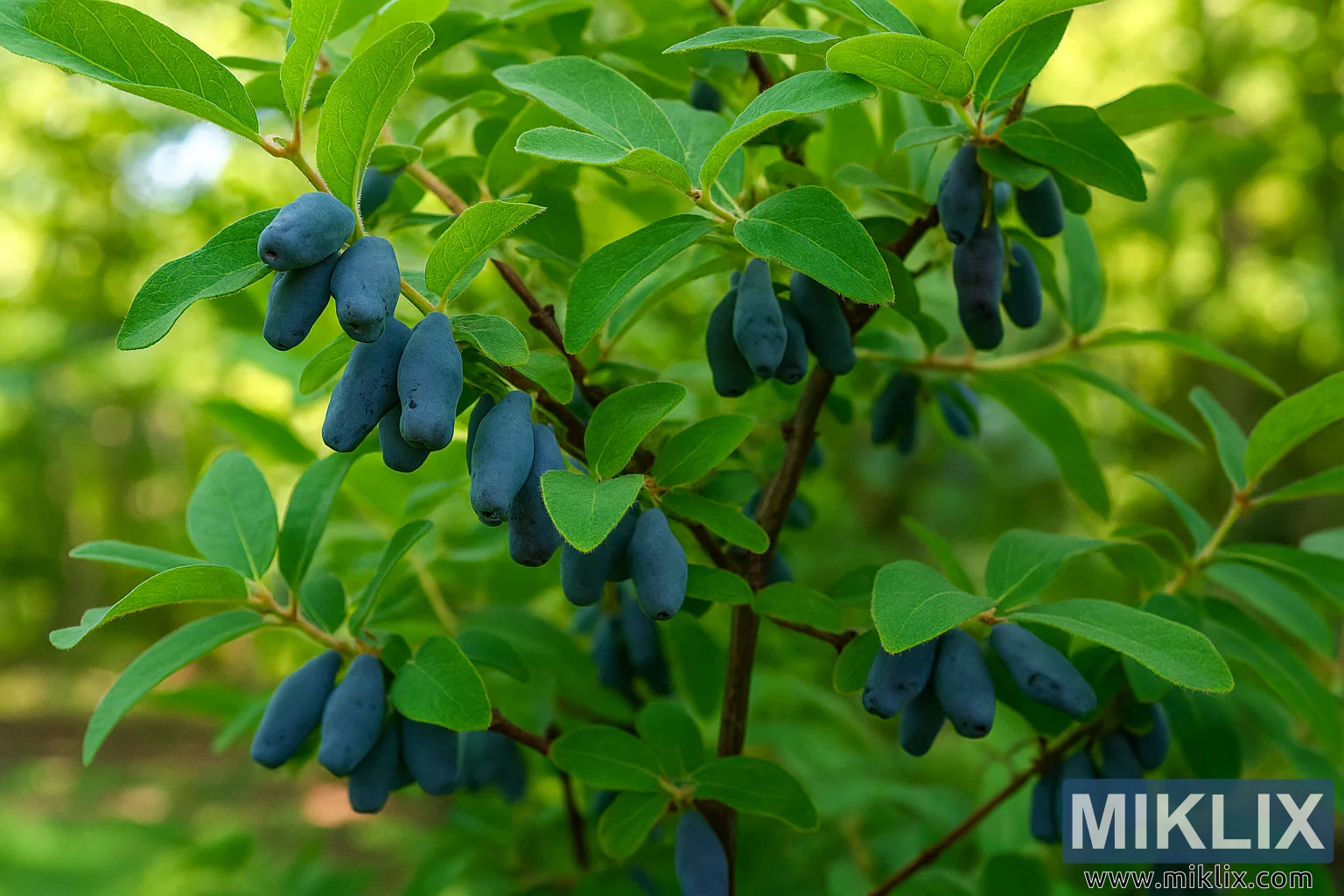
High-resolution photo of a heat-tolerant honeyberry variety thriving in a southern garden with partial shade, featuring clusters of bluish-purple berries among lush green foliage.
Available versions of this image
The image files available for download below are less compressed and higher resolution - and as a result of that, higher quality - than the images embedded in articles and pages on this website, which are more optimized for file size in order to reduce bandwidth consumption.
Regular size (1,536 x 1,024)

Large size (3,072 x 2,048)
Very large size (4,608 x 3,072)
Extra large size (6,144 x 4,096)
Comically large size (1,048,576 x 699,051)
- Still uploading... ;-)
Image description
This high-resolution landscape-oriented photograph captures a thriving honeyberry (Lonicera caerulea) shrub specifically bred for heat tolerance, making it well-suited for southern gardens where partial shade is common. The focal point of the image is a dense cluster of elongated, bluish-purple berries that hang gracefully from slender, reddish-brown branches. Each berry is coated with a delicate, powdery bloom that softens its deep coloration, giving the fruit a velvety, matte appearance. The berries vary slightly in size and shape, with some appearing more plump and curved, while others are slimmer and still ripening. Their arrangement across the branches creates a natural rhythm that draws the eye from left to right across the frame.
Surrounding the berries is a lush canopy of elliptical leaves, each with a pointed tip and faintly wavy edges. The leaves are a vibrant green, with visible veins radiating from the central midrib toward the margins. Their surfaces catch the dappled sunlight filtering through the overhead canopy, producing a subtle interplay of light and shadow that enhances the texture of the foliage. The reddish-brown branches, though slender, provide a sturdy framework for the fruit and leaves, their slightly rough bark adding an earthy contrast to the smooth berries and glossy leaves.
The background of the image is softly blurred, achieved through a shallow depth of field that isolates the honeyberry shrub from its surroundings. Hints of other garden plants and trees can be seen in the distance, rendered in varying shades of green and gold. The blurred backdrop suggests a warm, inviting garden environment, with sunlight filtering through layers of foliage to create a gentle, diffused glow. This effect not only highlights the honeyberries in the foreground but also conveys the sense of a thriving, biodiverse garden space.
The overall composition is carefully balanced: the largest cluster of berries occupies the left side of the frame, while the right side is filled with a mixture of leaves and smaller berry clusters. This asymmetry creates visual interest without overwhelming the viewer. The contrast between the cool tones of the berries and the warm greens of the leaves is striking, emphasizing the plant’s ornamental as well as edible qualities.
The photograph communicates more than just botanical detail—it tells the story of a plant adapted to thrive in challenging conditions. Honeyberries are traditionally associated with cooler climates, but this heat-tolerant variety demonstrates resilience and versatility, offering gardeners in southern regions the opportunity to cultivate a fruit that is both nutritious and visually appealing. The partial shade setting underscores the adaptability of the plant, showing that it can flourish even in less-than-ideal light conditions.
Every element of the image—from the crisp textures of the leaves to the soft bloom on the berries—contributes to a sense of abundance and vitality. The photograph captures not only the physical characteristics of the honeyberry shrub but also the atmosphere of a flourishing garden where nature and cultivation harmonize. It is a portrait of resilience, beauty, and productivity, encapsulated in a single frame that celebrates the potential of this remarkable fruit-bearing plant.
The image is related to: Growing Honeyberries in Your Garden: A Guide to a Sweet Spring Harvest