
Image: Varieties of Shallots Displayed with Color and Size Differences
Published: March 22, 2026 at 9:44:00 PM UTC
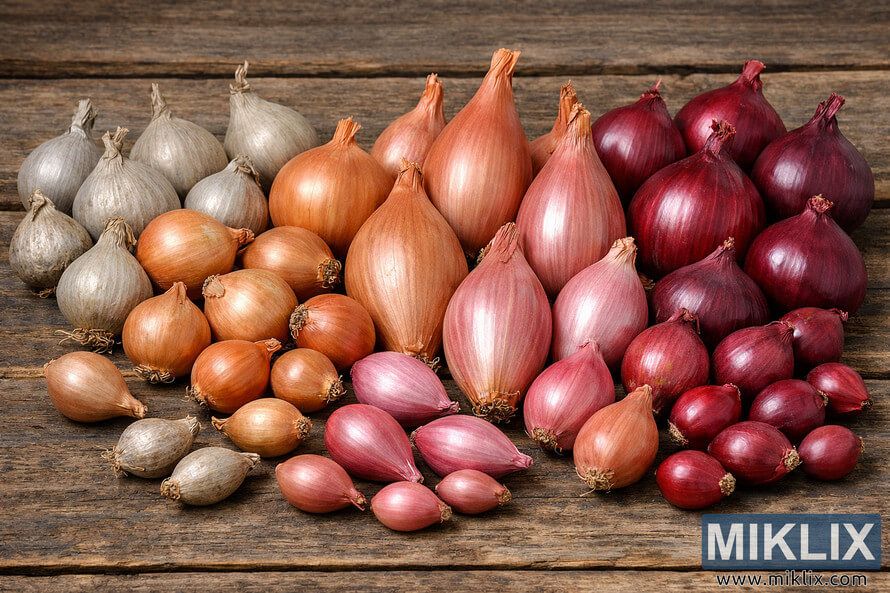
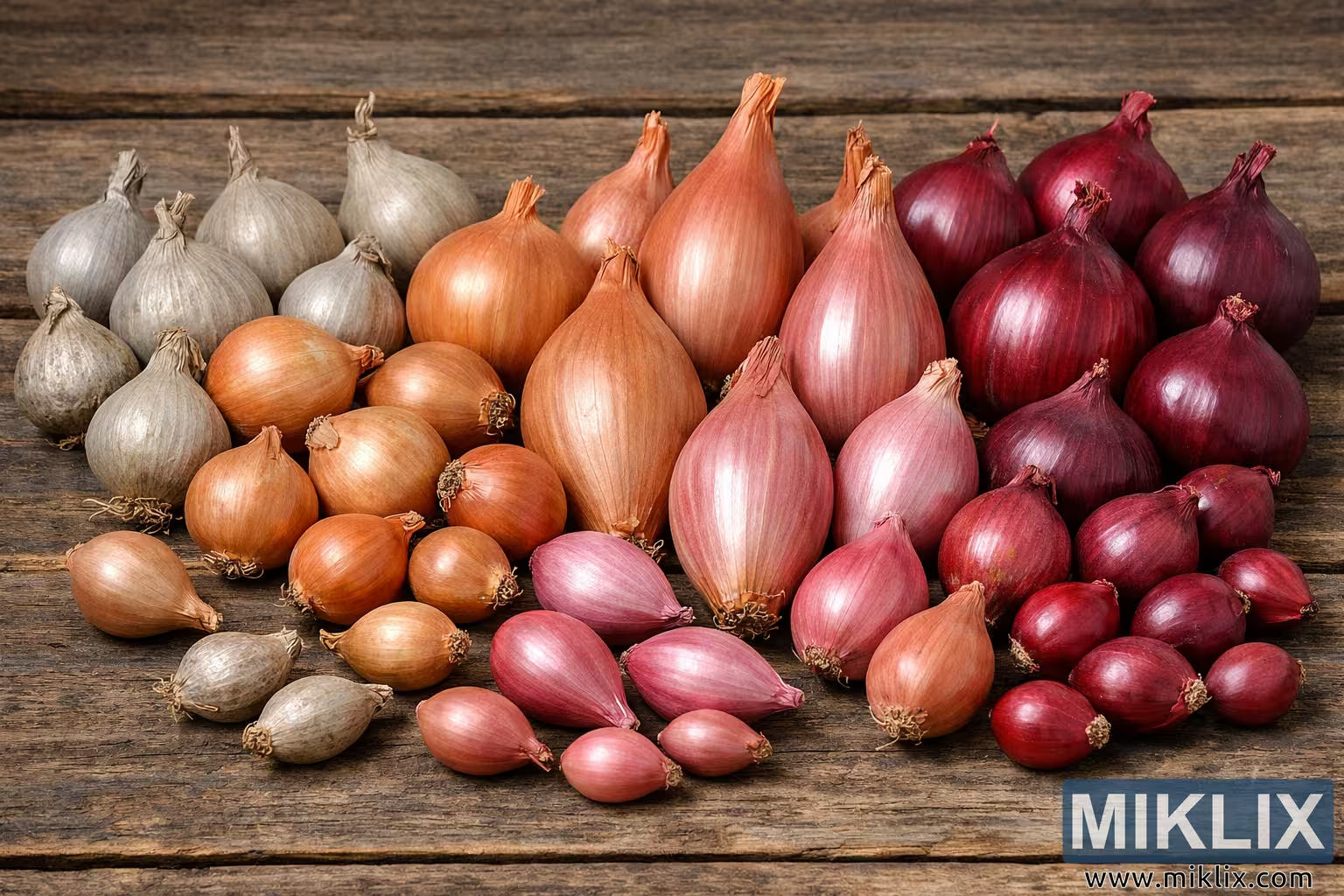
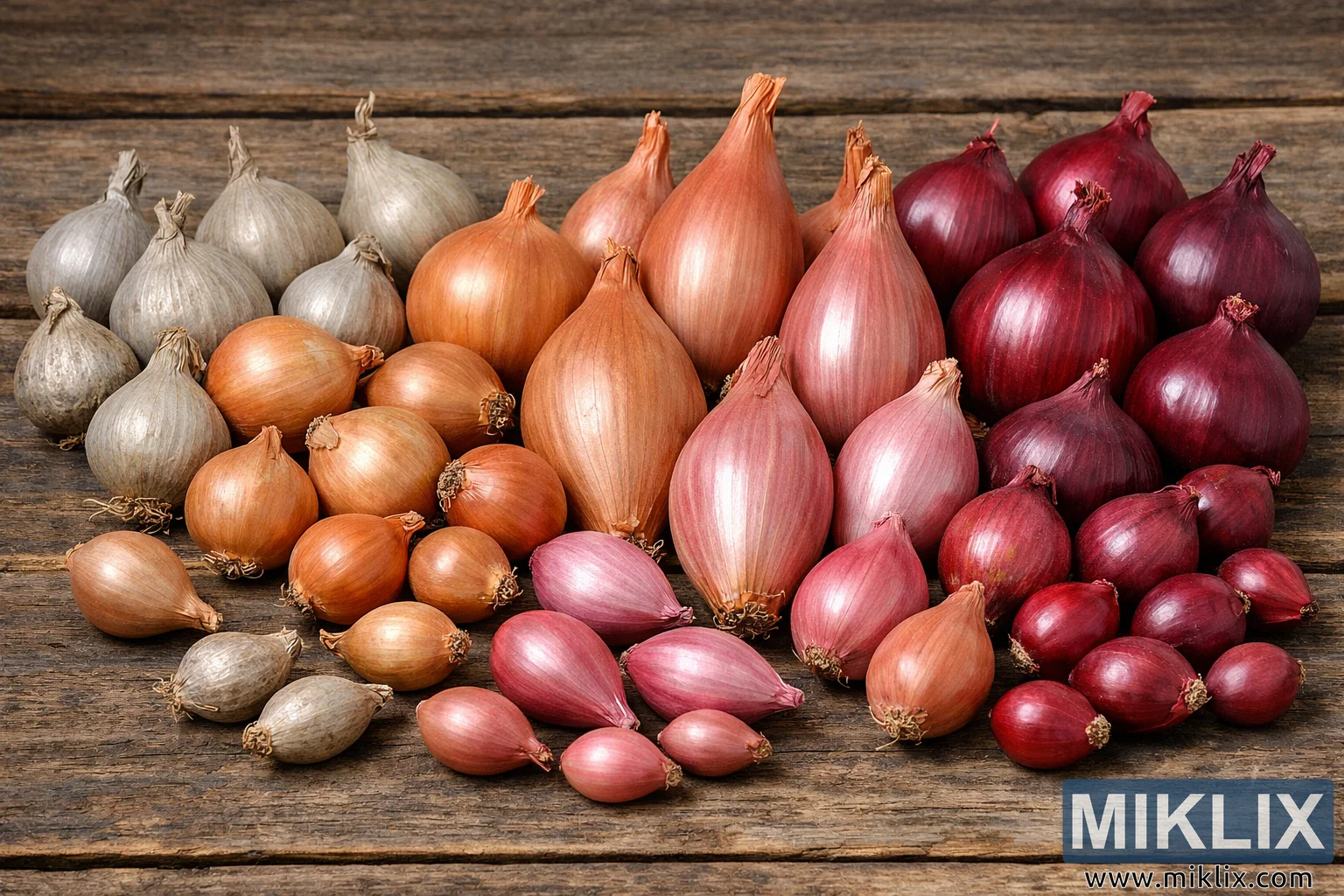
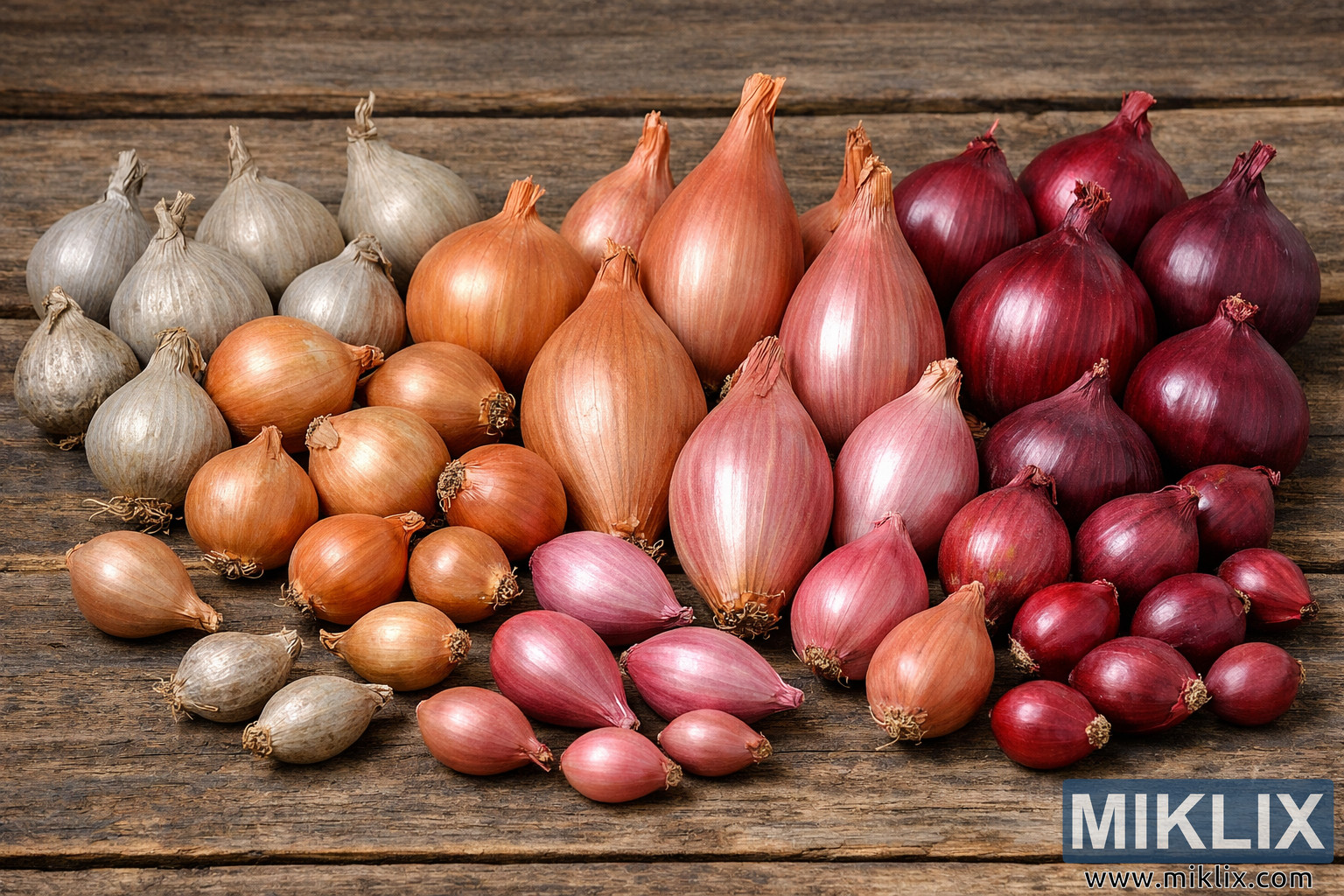
A collection of shallot varieties displayed on a rustic wooden background, highlighting differences in size, shape, and skin color ranging from gray and golden to pink and deep red.
Available versions of this image
The image files available for download below are less compressed and higher resolution - and as a result of that, higher quality - than the images embedded in articles and pages on this website, which are more optimized for file size in order to reduce bandwidth consumption.
Regular size (1,536 x 1,024)
Large size (3,072 x 2,048)
Very large size (4,608 x 3,072)
Extra large size (6,144 x 4,096)
Comically large size (1,048,576 x 699,051)
- Still uploading... ;-)
Image description
The image shows an organized display of multiple shallot varieties arranged across a rustic wooden tabletop. The composition is photographed in landscape orientation, allowing the viewer to see a wide assortment of bulbs positioned in neat rows that emphasize their diversity in size, shape, and color. The weathered wooden boards beneath the shallots provide a textured, natural background with visible grain patterns and warm brown tones that contrast with the smooth, papery skins of the bulbs.
Starting on the left side of the image, several pale gray and silvery shallots are grouped together. These bulbs are smaller and slightly elongated, with muted skins that appear almost dusty gray. Their narrow tops taper gently upward while their rounded bases rest against the wood, with dried root fibers visible at the bottom. Nearby, a cluster of golden and light brown shallots forms the next visual transition. These have warm amber tones and smooth skins that catch the soft lighting, creating subtle highlights along their curved surfaces.
Toward the center of the arrangement, the shallots increase in size and become more elongated. Some appear teardrop-shaped, with prominent shoulders and pointed tops. Their colors shift from light copper and tan into soft rose and pink hues. The larger bulbs stand upright or lean slightly against one another, creating a natural yet carefully arranged pattern. The gentle shadows cast beneath them help define their rounded forms and give the scene a sense of depth.
Moving further to the right side of the image, the palette deepens into richer red and burgundy tones. These shallots have glossy skins that reflect the light more strongly, emphasizing their smooth outer layers. Some are small and oval, while others are larger and more bulbous. The deep red shades contrast strikingly with the lighter varieties on the left side of the composition.
In the foreground, several smaller shallots are scattered in a loose line, adding a sense of scale and variation. Their arrangement appears intentional but natural, as though the bulbs were sorted and placed for comparison. The overall composition highlights the botanical diversity within shallots, showcasing differences in coloration, size, and shape while maintaining a cohesive and visually balanced presentation.
The lighting is soft and even, likely natural or diffused studio light, which enhances the subtle textures of the skins without creating harsh shadows. This careful illumination reveals delicate striations and thin layers in the shallot skins while preserving the earthy warmth of the wooden surface beneath them. The image ultimately functions both as a visually appealing still-life and as an informative display of the visual diversity found among different shallot varieties.
The image is related to: Growing Shallots: Your Complete Guide to a Bountiful Harvest