
Image: Collage of Short-Term and Long-Term Endive Storage Methods
Published: March 4, 2026 at 8:33:46 PM UTC
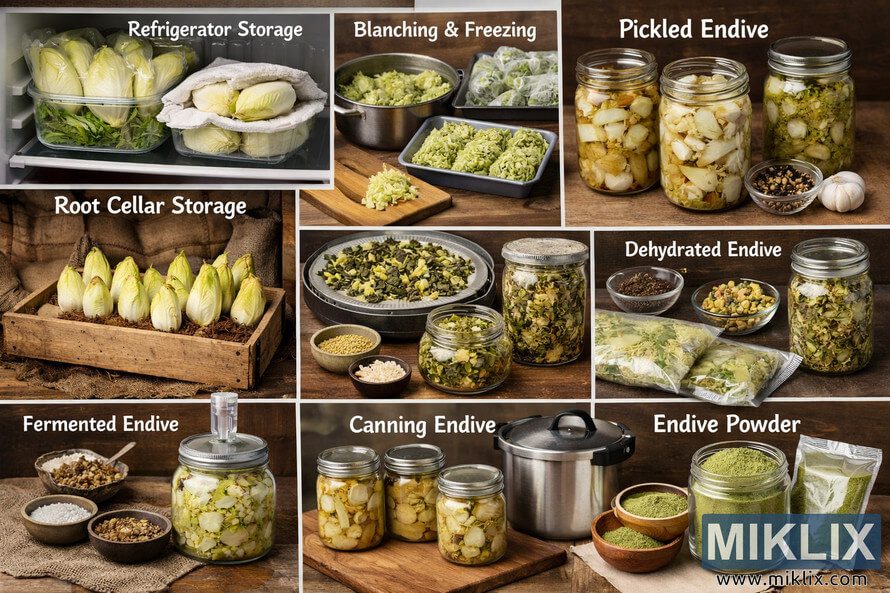
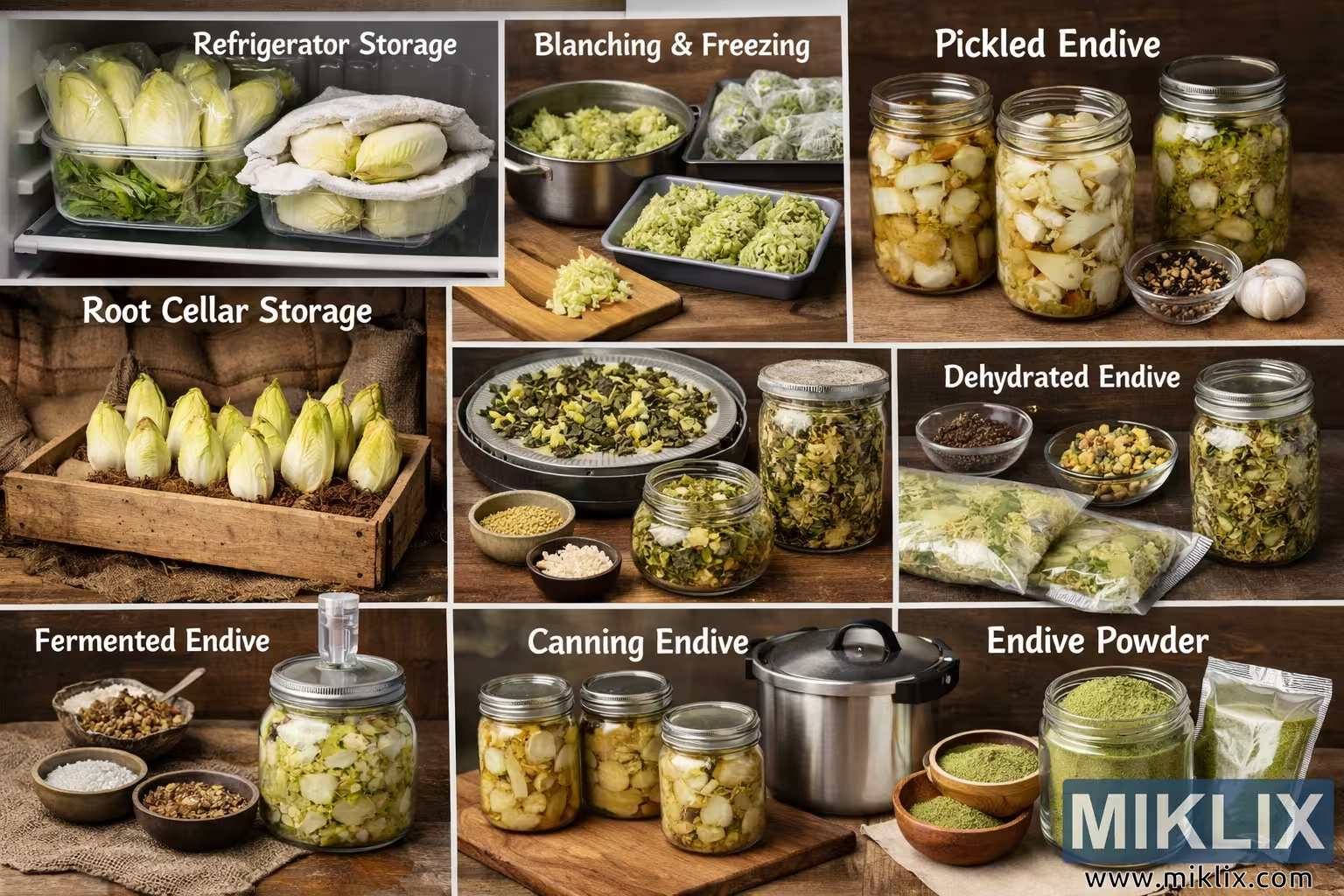
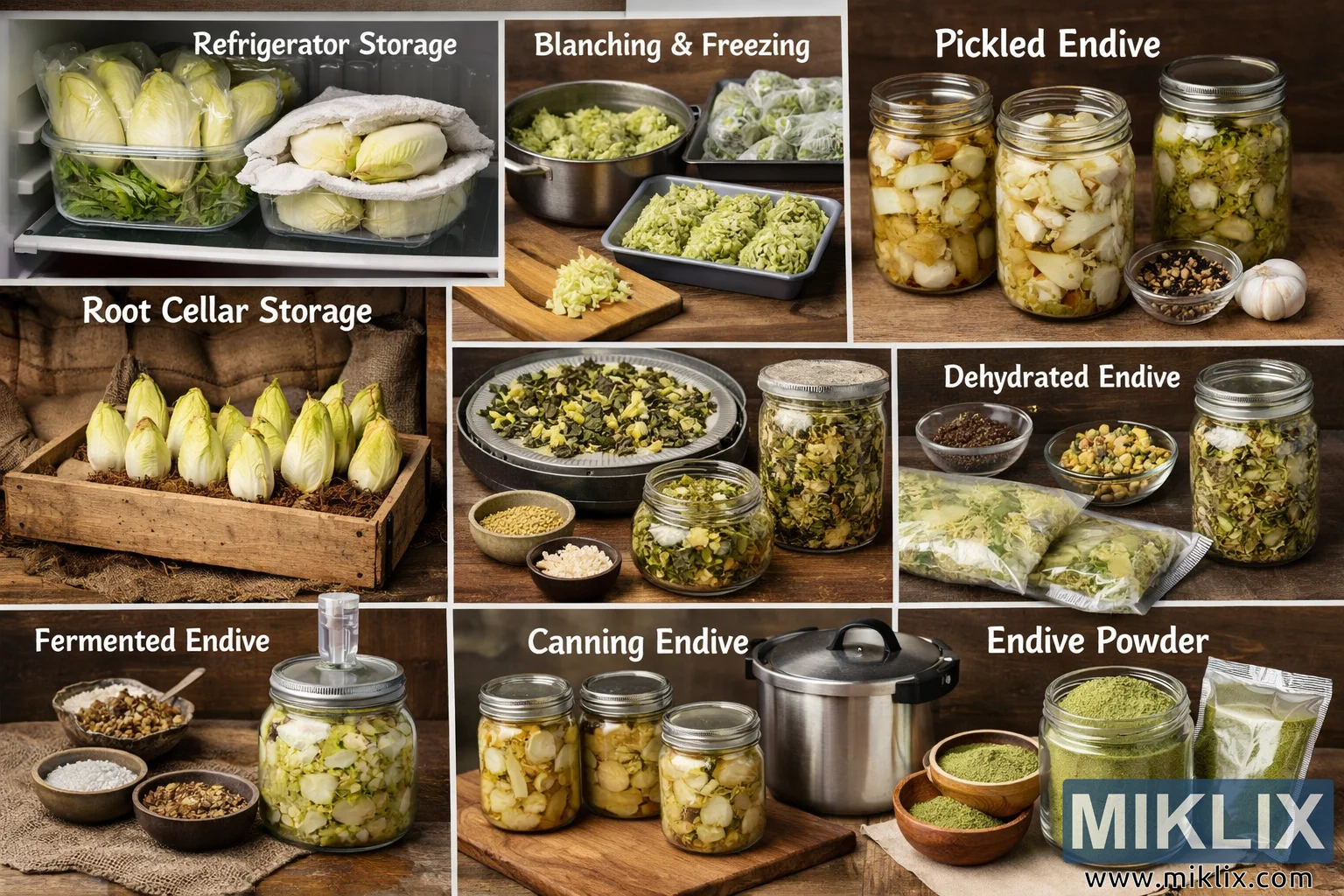
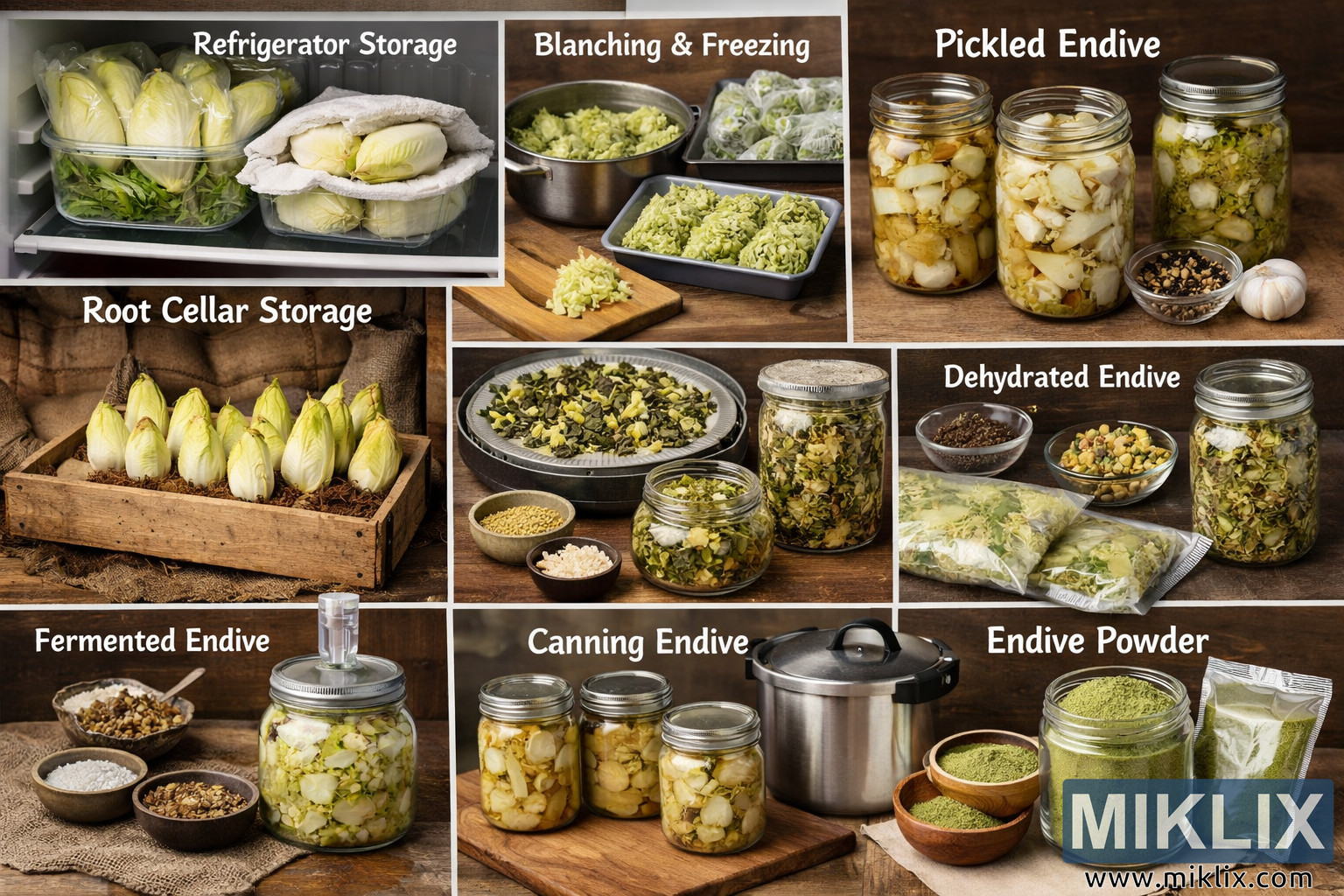
High-resolution landscape collage illustrating practical short-term and long-term storage methods for harvested endive, from refrigeration and freezing to pickling, fermenting, dehydrating, canning, and powdering.
Available versions of this image
The image files available for download below are less compressed and higher resolution - and as a result of that, higher quality - than the images embedded in articles and pages on this website, which are more optimized for file size in order to reduce bandwidth consumption.
Regular size (1,536 x 1,024)
Large size (3,072 x 2,048)
Very large size (4,608 x 3,072)
Extra large size (6,144 x 4,096)
Comically large size (1,048,576 x 699,051)
- Still uploading... ;-)
Image description
This high-resolution landscape collage presents a comprehensive visual guide to storing harvested endive using a range of short-term and long-term preservation methods. The image is arranged in a grid-style layout with clearly defined sections, each depicting a different storage technique in a realistic kitchen or rustic food-preparation setting. In the upper left section, fresh whole endive heads are shown neatly arranged inside a refrigerator drawer, some wrapped in a damp cloth and others placed in breathable containers, illustrating proper short-term refrigeration to maintain crispness and prevent moisture loss. Adjacent to this, a blanching and freezing setup displays chopped endive in a pot of hot water, followed by drained pieces spread on a tray and sealed in freezer-safe bags, highlighting a practical approach for extending shelf life while preserving color and texture.
Another section features jars of pickled endive submerged in a clear brine with visible spices and herbs, suggesting a tangy preservation method suitable for pantry storage. Nearby, a rustic wooden crate filled with whole endive heads resting in straw evokes traditional root cellar storage, emphasizing cool, dark conditions for longer-lasting freshness. In the center area, dehydrated endive leaves are spread across drying trays and stored in glass jars, their texture visibly crisp and lightweight, demonstrating moisture removal as an effective long-term strategy.
The collage also includes a fermentation scene, where chopped endive is tightly packed into a glass jar with salt and seasonings, topped with a fermentation weight and lid, signaling a probiotic-rich preservation technique. In another panel, several sealed mason jars of canned endive stand beside a pressure canner, representing shelf-stable storage achieved through heat processing. Finally, a section dedicated to endive powder shows finely ground, green powder in bowls and airtight containers, indicating how fully dehydrated leaves can be blended into a versatile seasoning or nutritional supplement.
Throughout the collage, the textures of fresh leaves, glass jars, metal lids, wooden surfaces, and natural fibers create a warm, practical atmosphere that blends modern kitchen tools with traditional food preservation methods. The lighting is soft yet clear, emphasizing the pale green and creamy white tones of the endive in its various forms. Together, these scenes provide an informative and visually engaging overview of how endive can be stored immediately after harvest for short-term use or preserved through multiple techniques for extended availability, reducing waste and maximizing the value of a successful crop.
The image is related to: How to Grow Your Own Endive: A Complete Beginner's Guide