
How to Grow Your Own Endive: A Complete Beginner's Guide
Published: March 4, 2026 at 8:33:46 PM UTC
Growing your own endive opens up a world of fresh, crisp greens right from your backyard. This versatile vegetable from the chicory family offers a unique bitter flavor that elevates salads and cooked dishes alike. Whether you want Belgian endive for elegant appetizers or curly endive for hearty salads, this guide walks you through every step of the growing process.
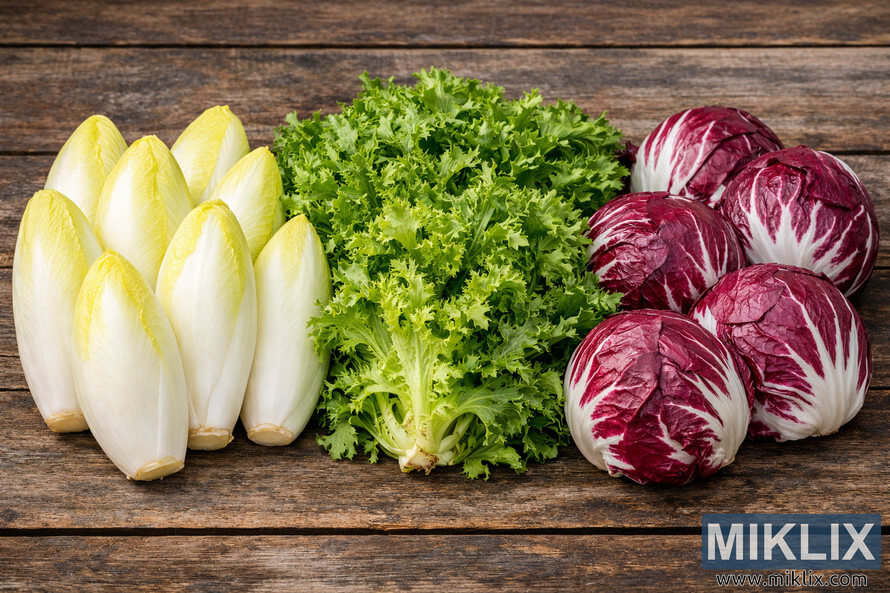
Click or tap the image for more information and higher resolutions.
Many people find endive intimidating to grow. In fact, it's one of the more forgiving greens for home gardeners. With proper planning and basic care, you can harvest fresh endive throughout the cool season. This article covers everything from selecting the right variety to storing your harvest.
Endive belongs to the chicory family and comes in several distinct forms. Each variety offers different textures, flavors, and growing requirements. Understanding these differences helps you choose the right type for your garden and culinary needs.
Understanding Endive: Varieties and Characteristics
Belgian Endive (Witloof Chicory)
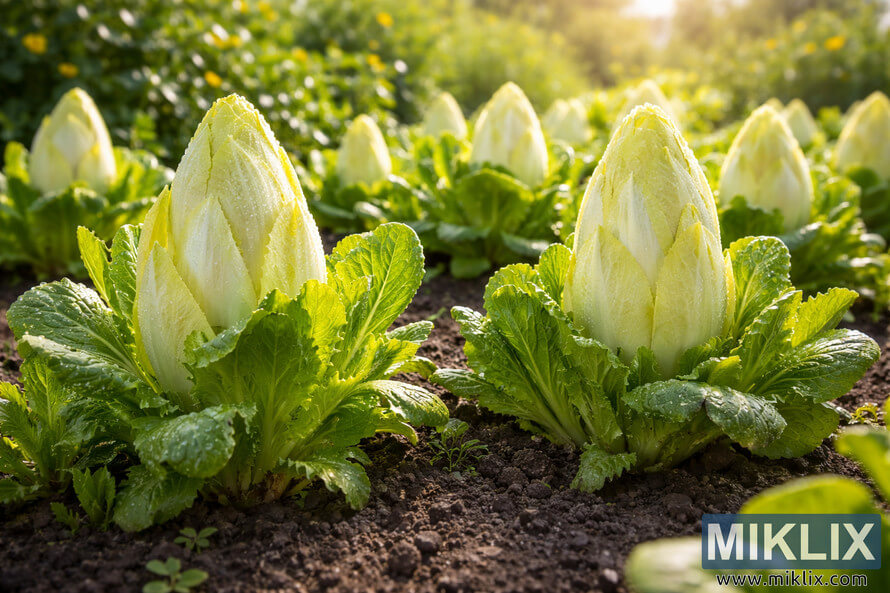
Belgian endive produces tight, torpedo-shaped heads with pale yellow-white leaves. This variety requires a two-stage growing process. First, you grow the plant outdoors to develop roots. Then you force the heads indoors in darkness during winter months.
The flavor profile is mildly bitter with a crisp texture. Belgian endives work beautifully in raw salads or as vessels for appetizers. Many people appreciate the elegant presentation this variety brings to any dish.
Click or tap the image for more information and higher resolutions.
Curly Endive (Frisée)
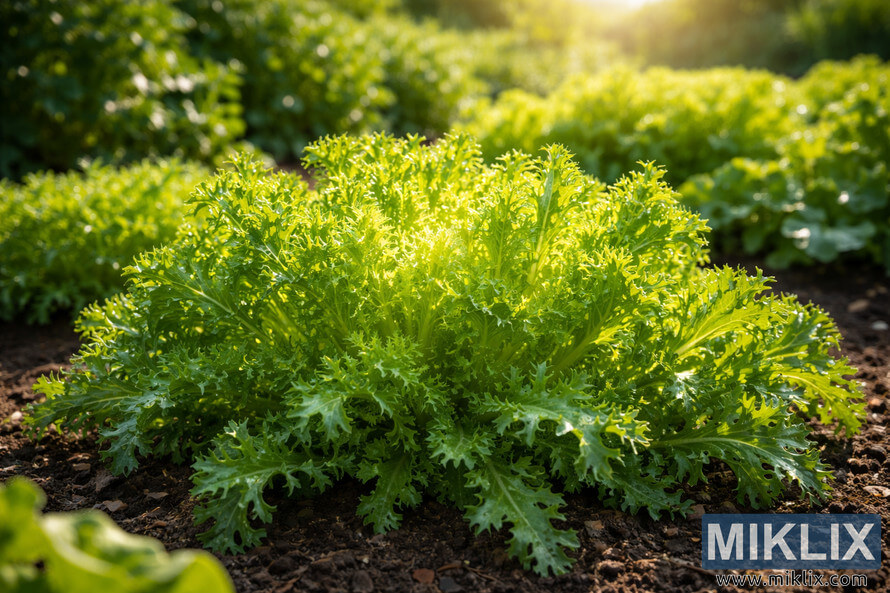
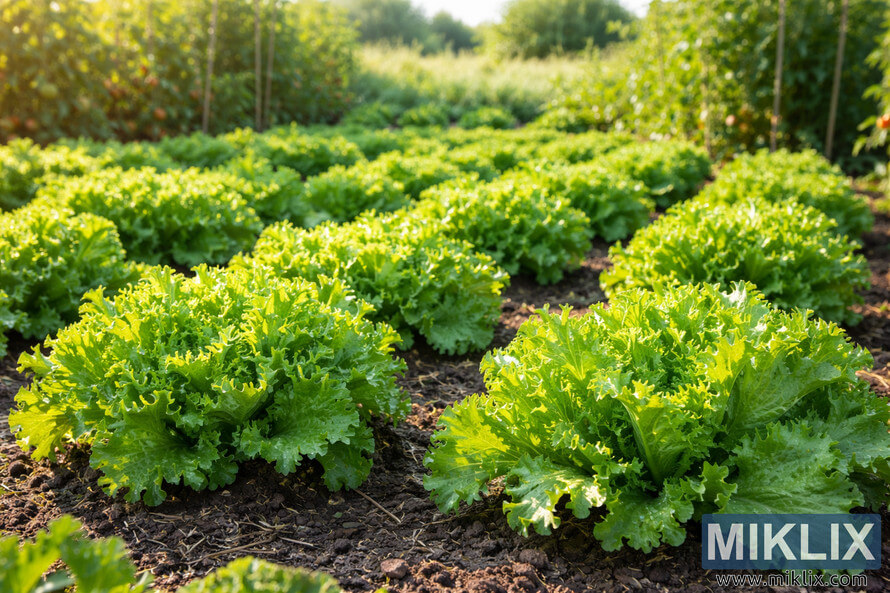
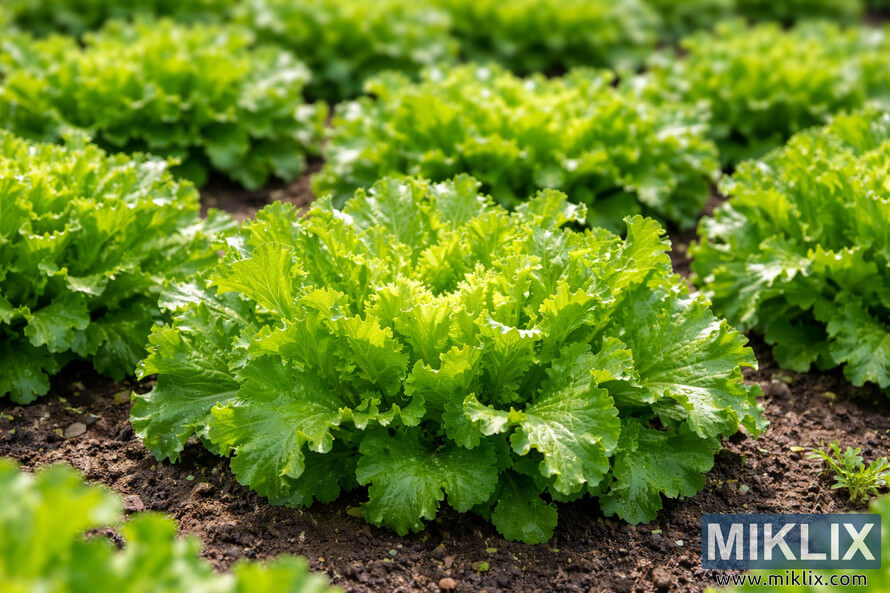
Curly endive features feathery, frilled leaves that form loose heads. The outer leaves show darker green color while inner leaves remain pale yellow. This plant grows more straightforwardly than Belgian endive and doesn't require forcing.
The texture is crisp and the bitterness is more pronounced than Belgian endive. Frisée adds wonderful contrast to salads and pairs well with bacon and poached eggs. The frilly leaves catch dressing beautifully.
Click or tap the image for more information and higher resolutions.
Escarole (Broad-Leaf Endive)
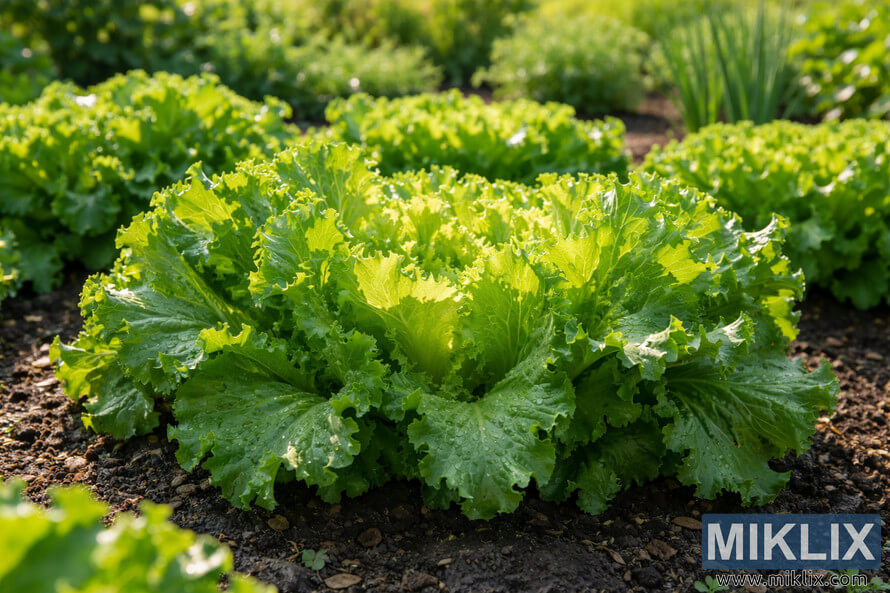
Escarole produces broad, slightly curved leaves that form loose heads. The leaves are less bitter than curly endive, especially the pale inner leaves. This variety tolerates heat better than other endive types.
Escarole works well both raw in salads and cooked in soups or sautéed as a side dish. The sturdy leaves hold up well to cooking, making this a versatile option for your garden.
Click or tap the image for more information and higher resolutions.
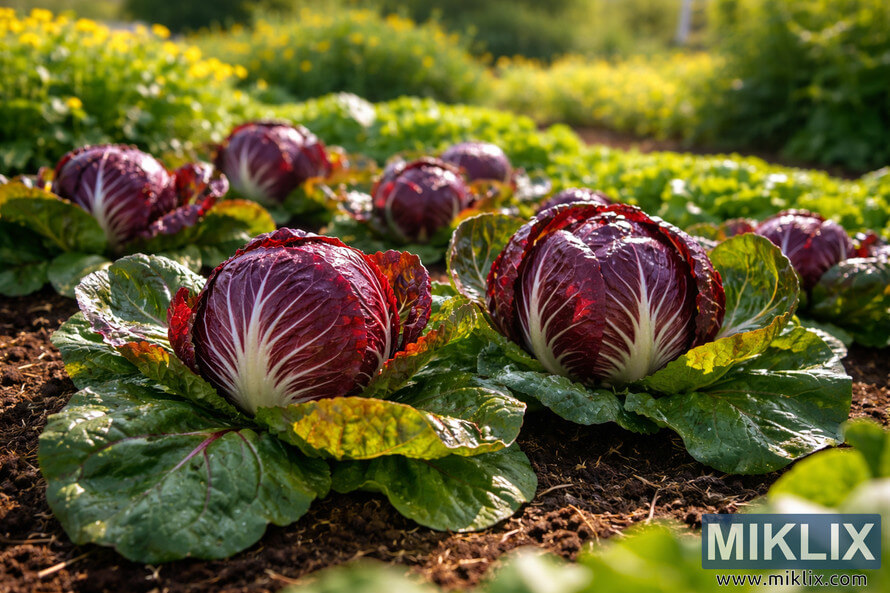
Radicchio
Radicchio is actually a type of chicory but often grouped with endives. It forms tight, round heads with deep red or purple leaves and white veins. The color intensifies in cool weather.
This variety offers the most pronounced bitter flavor of all the endive family members. The striking color makes it a favorite for adding visual interest to salads. Grilling reduces the bitterness and brings out natural sweetness.
Click or tap the image for more information and higher resolutions.
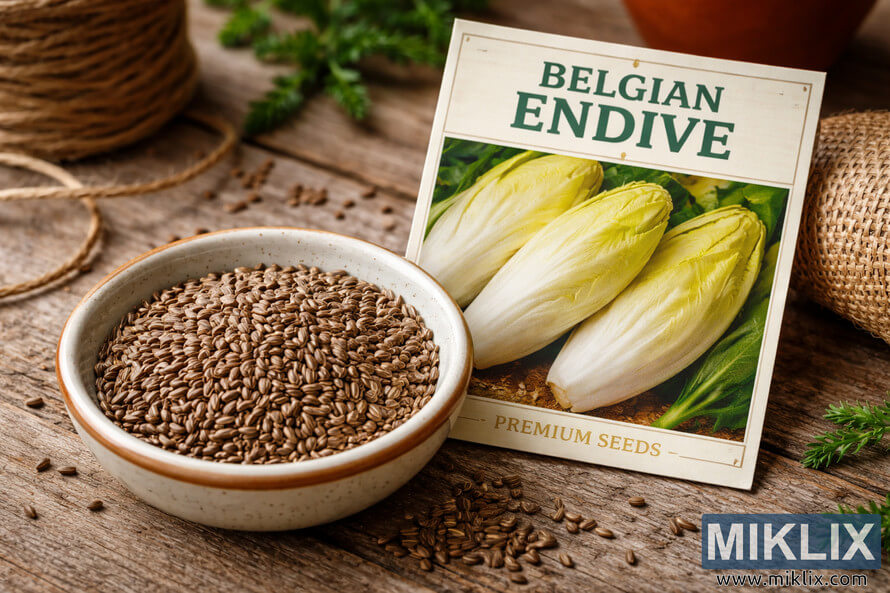
Belgian Endive Seeds
Best for forcing indoors during winter. Produces elegant, pale heads perfect for appetizers and gourmet salads. Growing time is longer but results are impressive.
- Requires two-stage growing process
- Mild, sophisticated flavor
- Perfect for special occasions
- Cold-hardy variety
Click or tap the image for more information and higher resolutions.
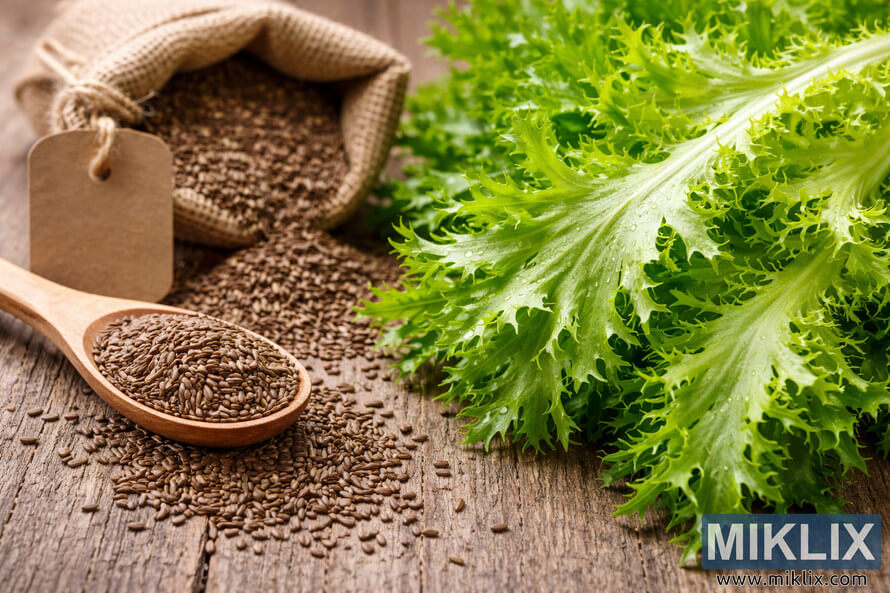
Curly Endive (Frisée) Seeds
Easiest variety for beginners. Grows quickly and doesn't require forcing. Beautiful frilly texture adds interest to any salad. More cold-tolerant than lettuce.
- Simple, straightforward growing
- Distinctive curly texture
- Excellent for fall gardens
- Continuous harvest possible
Click or tap the image for more information and higher resolutions.
Climate and Growing Conditions for Endive
Endive thrives in cool weather conditions. Understanding your climate helps you time plantings correctly. This plant performs best when temperatures remain moderate, making it ideal for spring and fall gardens.
USDA Hardiness Zones
Endive grows successfully in USDA zones 4 through 9. The plant tolerates light frosts and actually develops better flavor after exposure to cool temperatures. Gardeners in zones 8 and 9 can grow endive through winter months.
Northern gardeners in zones 4 and 5 should focus on spring and fall plantings. The summer heat in these zones often causes endive to bolt. Southern gardeners can enjoy endive as a winter crop when other greens struggle.
Temperature Requirements
Ideal growing temperatures for endive range from 60 to 70 degrees Fahrenheit. The plant tolerates temperatures down to 25 degrees Fahrenheit once established. Young seedlings need protection from hard freezes below 28 degrees.
Heat above 75 degrees causes several problems. The leaves become more bitter. The plant tends to bolt and produce flowers prematurely. Growth slows significantly in hot weather. Plan your planting schedule to avoid peak summer heat.
Sunlight Needs
Endive requires full sun for best growth, meaning at least 6 hours of direct sunlight daily. However, in warmer climates, afternoon shade helps prevent bolting. The plant tolerates partial shade better than many vegetables.
In spring gardens, choose a location with full sun exposure. For fall plantings, a spot with morning sun and afternoon shade works well. This arrangement keeps plants cooler during the warmest part of the day.
Planting Tip: Start seeds 4 to 6 weeks before your last spring frost for spring crops. For fall harvest, plant 8 to 10 weeks before your first expected frost date. This timing ensures plants mature during optimal cool weather.
Click or tap the image for more information and higher resolutions.
Preparing Soil for Endive Success
Proper soil preparation sets the foundation for healthy endive plants. These greens need well-draining soil rich in organic matter. Taking time to improve your soil pays off with vigorous growth and better yields.
Soil Type and Structure
Endive grows best in loamy soil that drains well but retains moisture. Heavy clay soils cause root problems and poor growth. Sandy soils dry out too quickly and lack nutrients. Amending your soil improves results regardless of your starting point.
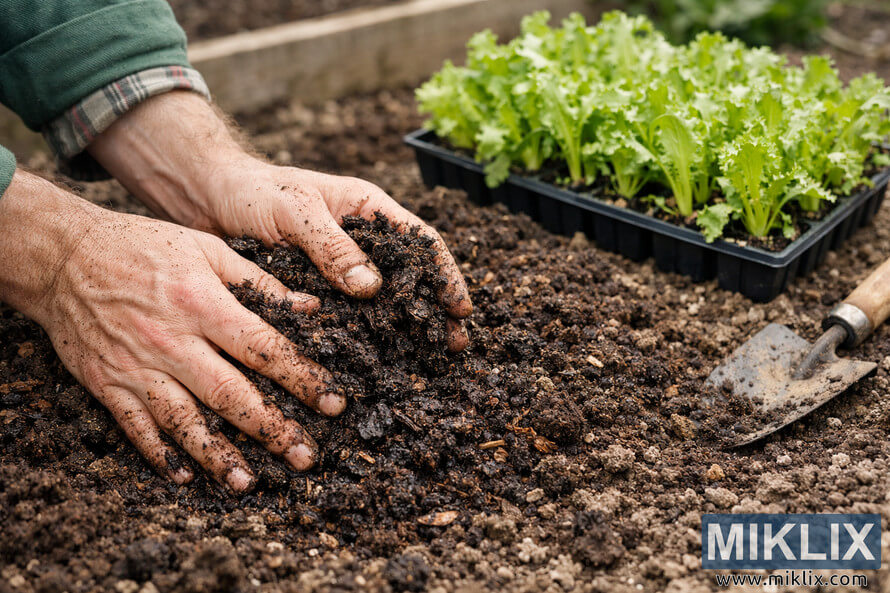
Add 2 to 3 inches of compost to your planting area. Work it into the top 6 to 8 inches of soil. This organic matter improves drainage in clay soils and increases water retention in sandy soils. The compost also provides essential nutrients.
pH Levels
Endive prefers slightly acidic to neutral soil with a pH between 5.5 and 6.5. Most garden soils fall within this range naturally. Testing your soil pH removes guesswork and helps prevent nutrient deficiencies.
If your soil pH falls outside the ideal range, amendments can help. Add lime to raise pH in acidic soils. Use sulfur to lower pH in alkaline soils. Make these adjustments several weeks before planting to allow time for the soil to stabilize.
Nutrient Requirements
Endive needs moderate fertility to produce lush leaves. Too much nitrogen causes excessive leaf growth with poor flavor. Balanced nutrition produces the best results.
Before planting, work in a balanced organic fertilizer at the rate recommended on the package. Alternatively, use well-aged compost as your primary nutrient source. This approach provides steady nutrition without overfeeding.
Click or tap the image for more information and higher resolutions.
Planting Your Endive: Seeds and Spacing
Successful endive growing starts with proper planting techniques. Whether you start from seeds or transplants, following best practices ensures strong plants. Getting spacing right from the start prevents crowding issues later.
Seeds vs. Transplants
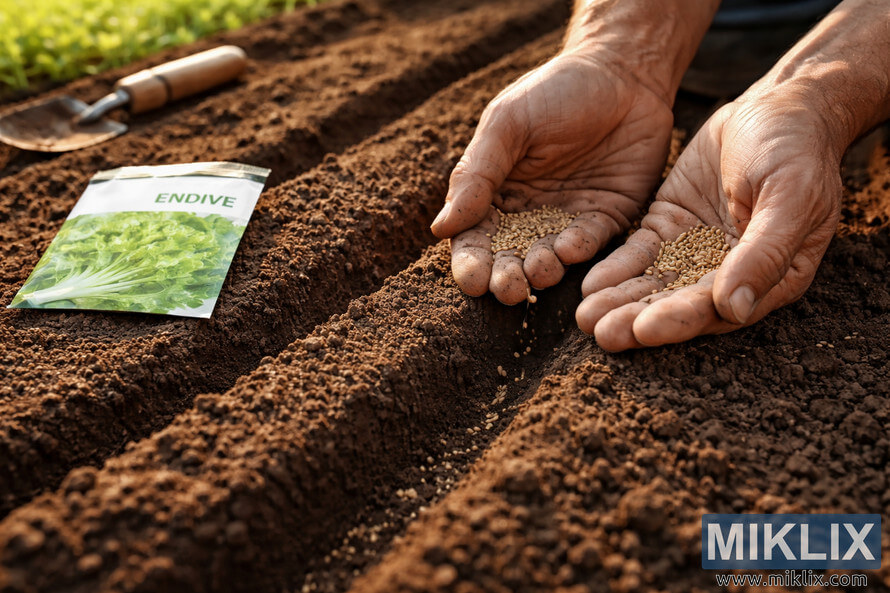
Direct seeding works well for endive in most situations. Seeds germinate reliably when soil temperatures reach 50 degrees Fahrenheit. This method avoids transplant shock and produces sturdy plants.
Starting transplants indoors gives you a head start on the season. Begin seeds indoors 4 to 6 weeks before your planned transplant date. Use cell trays or small pots filled with seed-starting mix. Transplant seedlings when they have 3 to 4 true leaves.
Click or tap the image for more information and higher resolutions.
Proper Spacing
Space endive plants 8 to 12 inches apart in rows. Curly endive and escarole need the wider spacing as they form larger heads. Belgian endive can be planted closer at 8-inch intervals since you'll harvest the roots.
Allow 18 to 24 inches between rows for easy access and good air circulation. Proper spacing prevents disease problems and makes maintenance easier. Crowded plants compete for nutrients and light, reducing overall yields.
Succession Planting
Plant new seeds every 2 to 3 weeks for continuous harvest. This strategy extends your harvest period from a few weeks to several months. Stop planting about 8 weeks before summer heat arrives.
Resume succession planting in late summer for fall crops. Start plantings 10 to 12 weeks before your first expected frost. These late plantings often produce the best quality endive due to cool autumn temperatures.
Direct Seeding Steps
- Prepare soil by removing weeds and rocks, then rake smooth
- Create shallow furrows about 1/4 inch deep
- Sow seeds thinly along the row, spacing them 2 inches apart
- Cover seeds lightly with fine soil or compost
- Water gently but thoroughly using a fine spray
- Keep soil consistently moist until germination occurs
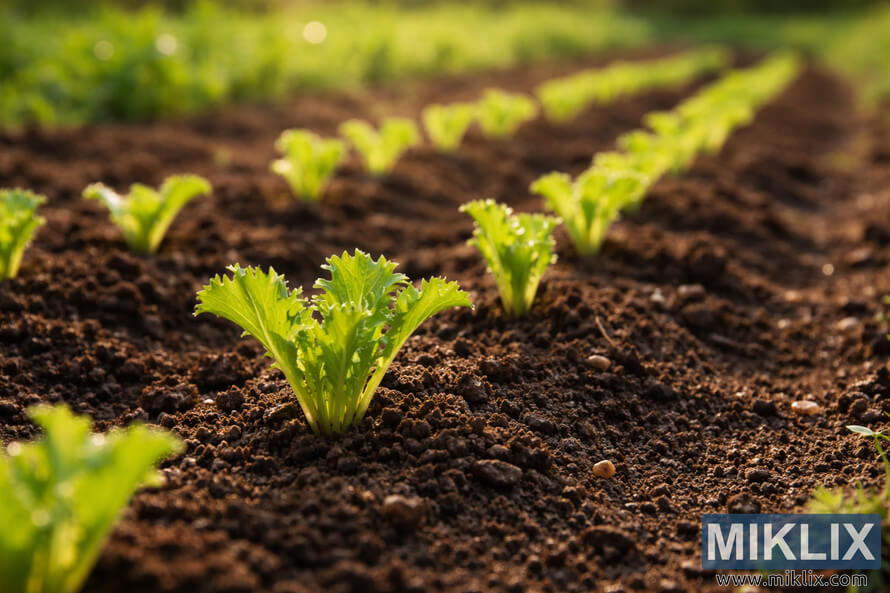
- Thin seedlings to final spacing when they reach 3 inches tall
Click or tap the image for more information and higher resolutions.
Watering and Irrigation for Endive Plants
Consistent moisture keeps endive growing steadily and prevents bitterness. These plants need regular water but dislike soggy conditions. Finding the right balance produces the best quality leaves.
Water Requirements
Endive needs about 1 to 1.5 inches of water per week. This amount includes rainfall, so adjust your watering schedule based on weather conditions. Deep, infrequent watering encourages stronger root development than shallow, frequent watering.
Feel the soil 2 inches below the surface to check moisture levels. Water when the top 2 inches feel dry. Sandy soils require more frequent watering than clay soils. Container-grown endive needs daily watering in warm weather.
Best Watering Methods
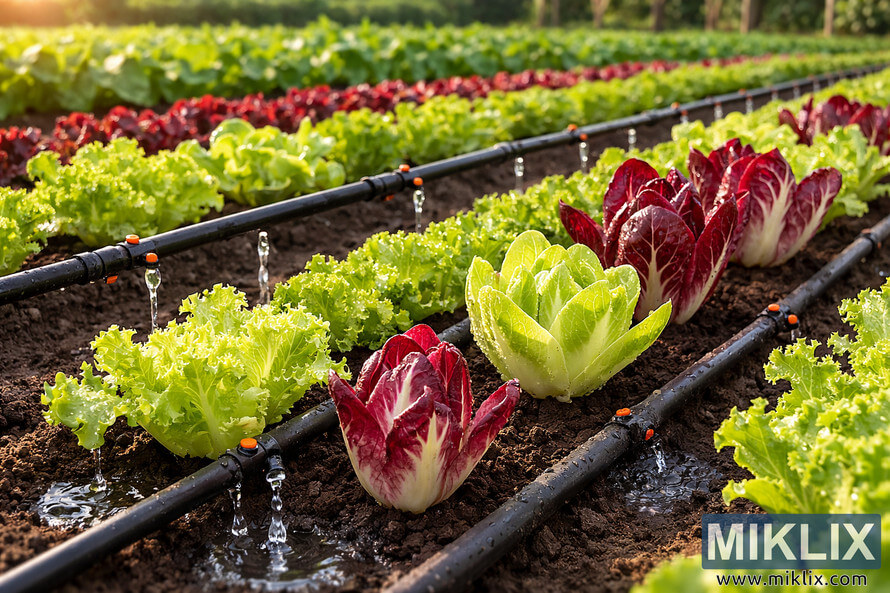
Drip irrigation or soaker hoses provide ideal moisture delivery for endive. These methods keep water off the leaves, reducing disease risk. The slow application rate allows soil to absorb water without runoff.
If hand watering, apply water at the base of plants early in the morning. This timing allows leaves to dry before evening, preventing fungal diseases. Avoid overhead watering late in the day when possible.
Mulching Benefits
Apply 2 to 3 inches of organic mulch around endive plants. Straw, shredded leaves, or grass clippings work well. Mulch conserves moisture, moderates soil temperature, and suppresses weeds.
Keep mulch an inch or two away from plant stems to prevent rot. Refresh mulch as needed throughout the growing season. In fall gardens, mulch provides extra cold protection for extended harvests.
Click or tap the image for more information and higher resolutions.
Feeding Your Endive: Fertilization Schedule
Endive benefits from light, regular feeding throughout the growing season. These greens are moderate feeders that respond well to balanced nutrition. Over-fertilizing causes problems, so less is often more.
Initial Fertilization
If you added compost at planting time, your endive may not need additional fertilizer for the first few weeks. Rich soil provides enough nutrients for early growth. Wait until plants are established before applying supplemental fertilizer.
For soil that wasn't amended with compost, apply a balanced organic fertilizer at planting. Use a formula like 5-5-5 or 10-10-10 at half the recommended rate. This conservative approach prevents burning young plants.
Ongoing Nutrition
Feed established endive plants every 3 to 4 weeks during active growth. Use liquid fish emulsion or seaweed fertilizer diluted to half strength. These gentle fertilizers provide steady nutrition without overwhelming plants.
Side-dress plants with compost midway through the growing season. Simply spread a thin layer of compost around the base of each plant. This method releases nutrients slowly over time.
Watch for Over-Fertilization
Excessive nitrogen causes dark green, overly lush growth with increased bitterness. If leaves look too dark or grow too rapidly, reduce fertilizer applications. Yellow leaves may indicate nutrient deficiency or other problems.
Managing Pests and Diseases Organically
Endive faces fewer pest and disease problems than many vegetables. However, certain issues do occur. Recognizing problems early and using organic solutions keeps your crop healthy without harsh chemicals.
Common Pests
Aphids
These small, soft-bodied insects cluster on new growth and leaf undersides. They suck plant sap and can transmit diseases. Heavy infestations cause distorted growth and sticky honeydew on leaves.
Spray aphids off with a strong stream of water. Apply insecticidal soap for persistent problems. Encourage beneficial insects like ladybugs and lacewings that feed on aphids. Plant flowers nearby to attract these helpful predators.
Slugs and Snails
These mollusks chew irregular holes in leaves, especially on young plants. They feed at night and hide during the day. Damage appears worse in damp, shady conditions.
Hand-pick slugs and snails in early morning or evening. Set out shallow dishes of beer to trap them. Diatomaceous earth sprinkled around plants creates a barrier. Copper tape around raised beds repels these pests effectively.
Leaf Miners
The larvae of small flies tunnel through leaves, creating winding trails. While rarely fatal, damage makes leaves unappealing. Multiple generations can occur in one season.
Remove and destroy affected leaves to break the lifecycle. Floating row covers prevent adult flies from laying eggs. Keep the garden clean of debris that harbors pupae.
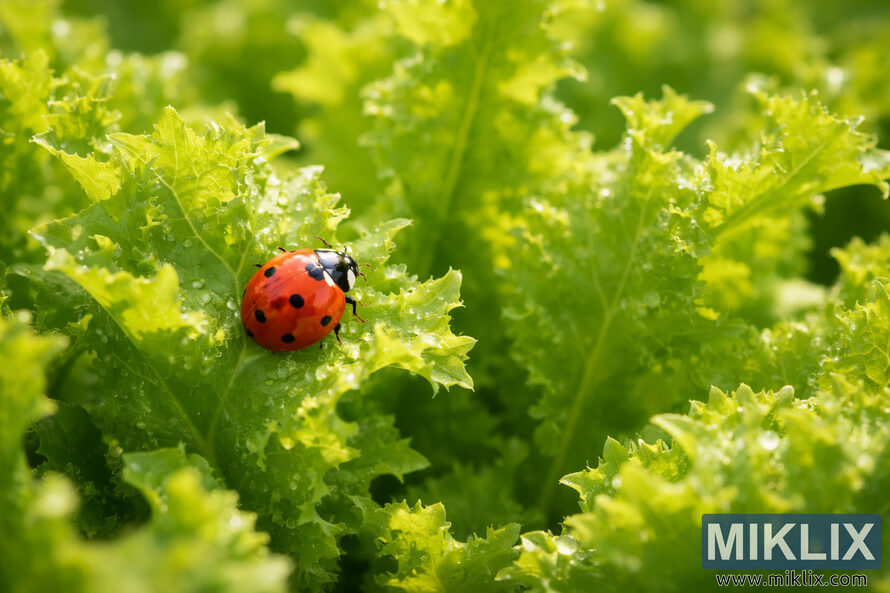
Click or tap the image for more information and higher resolutions.
Disease Prevention
Downy Mildew
This fungal disease causes yellow patches on upper leaf surfaces with fuzzy gray growth underneath. It thrives in cool, wet conditions. Severe infections can destroy entire plants.
Improve air circulation through proper spacing and weed control. Water early in the day so leaves dry quickly. Remove infected leaves immediately. Apply organic fungicides containing copper if needed.
Bottom Rot
This soil-borne disease affects leaves touching the ground. Brown, slimy patches develop on lower leaves. The problem worsens in wet conditions with poor drainage.
Ensure good drainage in planting beds. Avoid overwatering and water at soil level rather than overhead. Mulch helps keep leaves off soil. Remove affected leaves and improve air flow around plants.
Harvesting Endive at Peak Quality
Knowing when and how to harvest endive ensures the best flavor and texture. Different varieties require slightly different approaches. Proper harvesting technique encourages continued production from some types.
When to Harvest Curly Endive and Escarole
These varieties are ready 85 to 100 days after planting, depending on the specific cultivar. Harvest when heads reach full size but before plants begin to bolt. Morning harvest captures maximum crispness.
You can harvest entire heads by cutting at the base, just above soil level. Alternatively, pick outer leaves individually for continuous harvest. The plant continues producing new leaves from the center when you use this method.
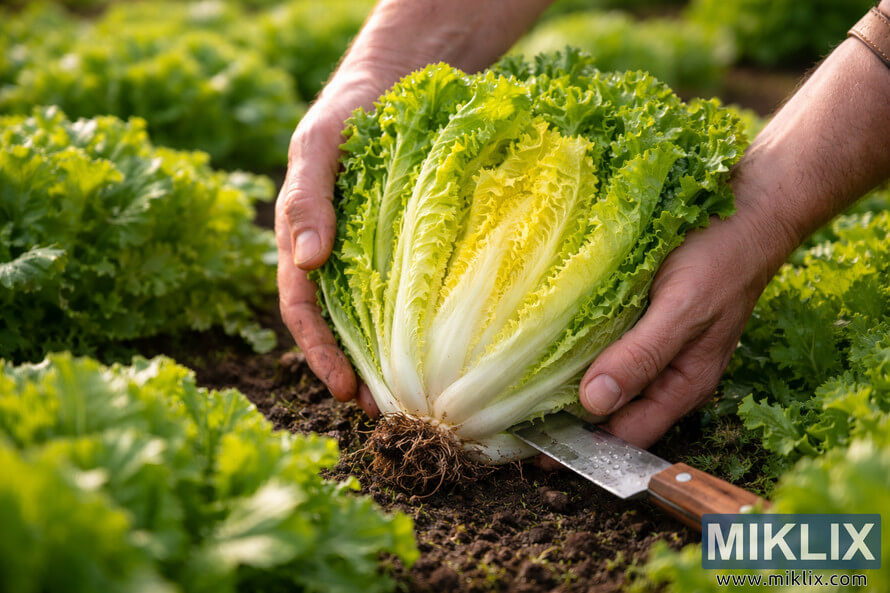
Click or tap the image for more information and higher resolutions.
Blanching for Milder Flavor
Blanching reduces bitterness in curly endive and escarole. About 2 to 3 weeks before harvest, gather outer leaves up and tie them loosely. This blocks light from reaching inner leaves.
The inner leaves turn pale yellow or white and develop milder flavor. Check plants every few days during blanching. Harvest promptly once desired color develops to prevent rot in the wrapped leaves.
Belgian Endive Harvest Process
Belgian endive requires a two-stage process. First, grow plants in the garden until fall. The leaves die back after frost, which is normal. Dig up roots carefully in late fall before the ground freezes hard.
Cut off remaining leaves 1 inch above the crown. Trim roots to 8 inches long. Store roots in damp sand in a cool location for forcing later. Force roots in darkness at 50 to 60 degrees Fahrenheit for 3 to 4 weeks until tight heads form.
Radicchio Harvesting
Radicchio develops best color and flavor after exposure to cold temperatures. Light frosts actually improve the taste. Harvest when heads feel firm and have reached full size, typically 3 to 4 inches across.
Cut heads at the base, leaving roots in the ground. In mild climates, the roots may produce a second crop of smaller heads. Water the remaining stumps and wait for new growth to emerge.
Harvest Timing Guide
Use these maturity dates as guidelines for harvest planning. Actual timing varies based on variety, weather, and growing conditions.
- Curly Endive: 85-95 days from seed
- Escarole: 85-100 days from seed
- Belgian Endive: 110-150 days total (including forcing)
- Radicchio: 80-90 days from seed
Signs of Readiness
Look for these indicators that your endive is ready for harvest and at peak quality.
- Heads reach expected size for variety
- Leaves are crisp and turgid
- Inner leaves are well-formed
- No sign of bolting (flower stalk formation)
Storing and Preserving Your Endive Harvest
Proper storage extends the life of your endive harvest. Fresh endive keeps longer than most salad greens when handled correctly. Different varieties have varying storage capabilities.
Short-Term Storage
Refrigerate endive immediately after harvest for best quality. Wrap unwashed heads loosely in damp paper towels, then place in plastic bags. Store in the vegetable crisper drawer where humidity is higher.
Curly endive and escarole keep 5 to 7 days when properly stored. Belgian endive lasts up to 2 weeks. Radicchio has the longest storage life at 2 to 3 weeks. Check stored greens regularly and remove any yellowing leaves.
Washing Before Storage
Never wash endive before storing unless you plan to use it immediately. Excess moisture promotes decay. Wash just before using by separating leaves and rinsing in cool water.
Curly endive needs thorough washing to remove dirt trapped in the frilly leaves. Soak in a basin of cool water, swishing gently. Lift out and repeat if needed. Dry thoroughly in a salad spinner or on clean towels.
Freezing Endive
Endive doesn't freeze well for raw use. The texture becomes limp and watery after thawing. However, you can freeze blanched endive for use in cooked dishes like soups and stews.
Blanch clean leaves in boiling water for 2 minutes. Plunge into ice water immediately to stop cooking. Drain thoroughly and pack into freezer bags, removing as much air as possible. Frozen endive keeps 8 to 10 months.
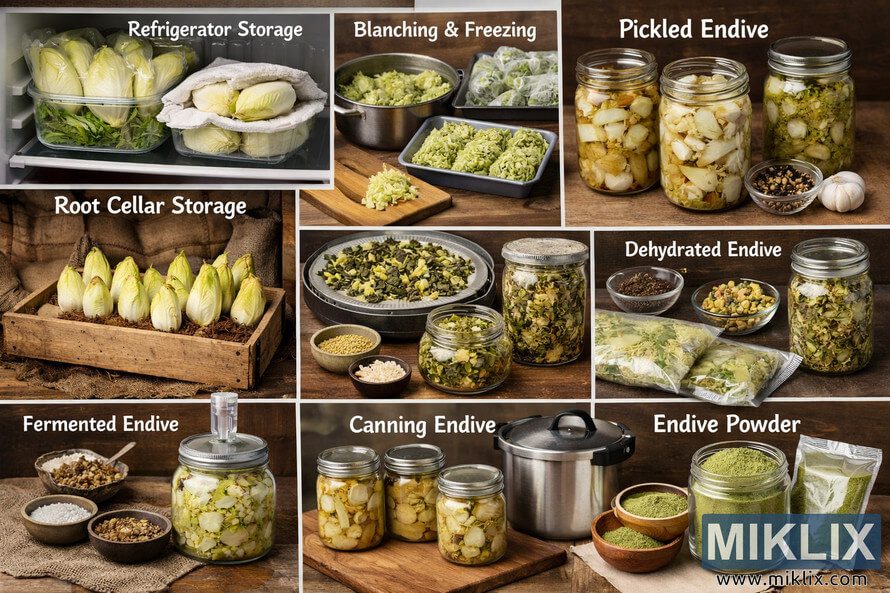
Click or tap the image for more information and higher resolutions.
Culinary Uses and Nutritional Benefits
Endive brings both nutrition and flavor to your table. This versatile vegetable works in various dishes beyond basic salads. Understanding its nutritional profile and culinary applications helps you make the most of your harvest.
Nutritional Profile
Endive is low in calories but rich in nutrients. One cup of chopped endive contains only 8 calories. It provides excellent amounts of vitamin K, vitamin A, and folate. The vegetable also offers fiber, potassium, and vitamin C.
The bitter compounds in endive may support digestive health and liver function. These same compounds stimulate appetite and aid digestion. Regular consumption of bitter greens fits well into a balanced diet.
Using Endive Raw
Raw endive adds crunch and complexity to salads. The bitter flavor balances sweet ingredients like fruits and balsamic vinegar. Mix different endive varieties for interesting color and texture contrasts.
Belgian endive leaves make elegant appetizer vessels. Fill individual leaves with cheese spreads, seafood salads, or vegetable mixtures. The natural boat shape holds fillings perfectly for party presentations.
Slice radicchio thinly and add to slaws and grain bowls. The purple color adds visual appeal. Curly endive works beautifully in classic French salad with warm bacon dressing and poached eggs.
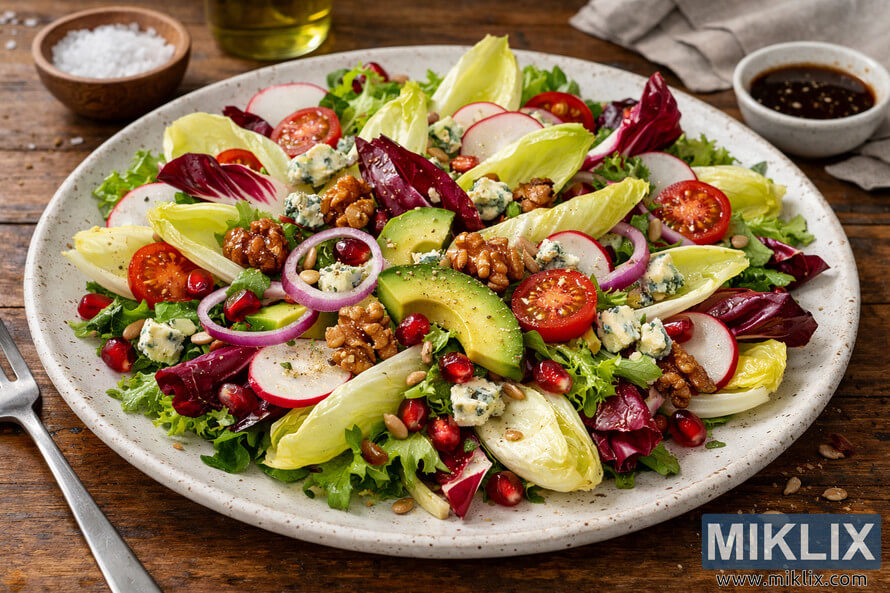
Click or tap the image for more information and higher resolutions.
Cooking with Endive
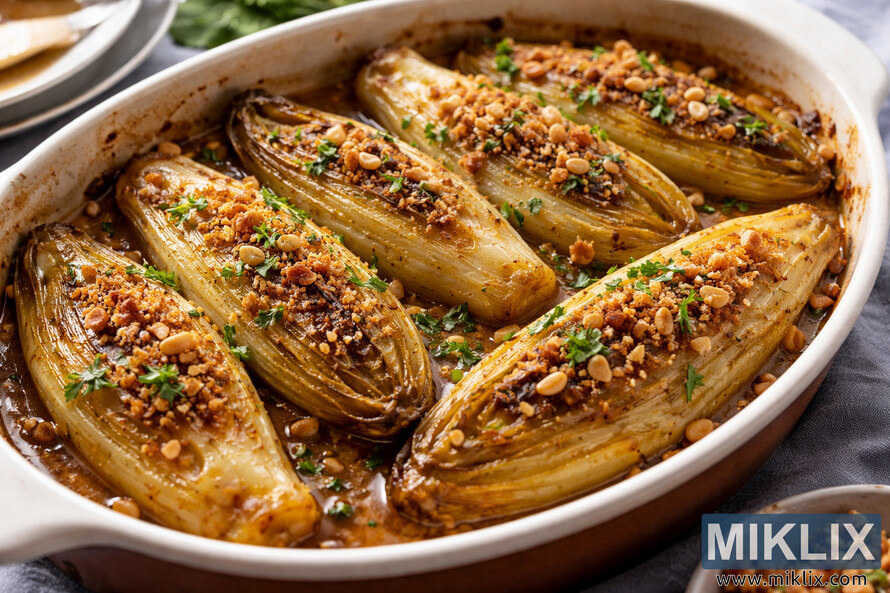
Cooking mellows endive's bitterness and develops sweet, caramelized flavors. Braising Belgian endives in butter creates a classic French side dish. The heads become tender and golden with a sweet-bitter taste.
Add chopped escarole to soups during the last few minutes of cooking. It wilts like spinach but maintains more texture. Italian wedding soup traditionally includes escarole for this reason.
Grill radicchio wedges brushed with olive oil for a dramatic side dish. The high heat caramelizes the sugars and reduces bitterness. Grilled radicchio pairs wonderfully with grilled meats and aged cheeses.
Quick Endive Recipe Ideas
- Belgian endive boats with blue cheese and walnuts
- Frisée salad with bacon lardons and poached egg
- Braised Belgian endives with butter and lemon
- Grilled radicchio with balsamic glaze
- Escarole and white bean soup
- Radicchio and pear salad with gorgonzola
Click or tap the image for more information and higher resolutions.
Start Growing Endive Today
Growing your own endive rewards you with fresh, flavorful greens throughout the cool season. This guide has covered everything from selecting varieties to harvesting and storage. With proper timing and basic care, endive thrives in home gardens.
The key to success lies in matching your growing schedule to cool weather periods. Spring and fall plantings produce the highest quality endive. Proper spacing, consistent moisture, and organic soil amendments support healthy growth.
Remember that endive tolerates cold better than heat. Plan accordingly in your climate zone. The distinctive bitter flavor adds sophistication to salads and cooked dishes alike. Each variety offers unique characteristics worth exploring.
Start small with one or two varieties to learn their growth habits. Success with endive opens the door to growing other chicory family members. Your garden will provide fresh greens when many other vegetables have finished for the season.
Click or tap the image for more information and higher resolutions.
Further Reading
If you enjoyed this post, you may also like these suggestions:
- A Guide to the Best Tomato Varieties to Grow Yourself
- Growing Asparagus: A Complete Guide for Home Gardeners
- A Guide to Growing Bok Choy in Your Own Garden