
Image: Okra Growing Across Different Regional Climates
Published: March 17, 2026 at 9:37:34 PM UTC
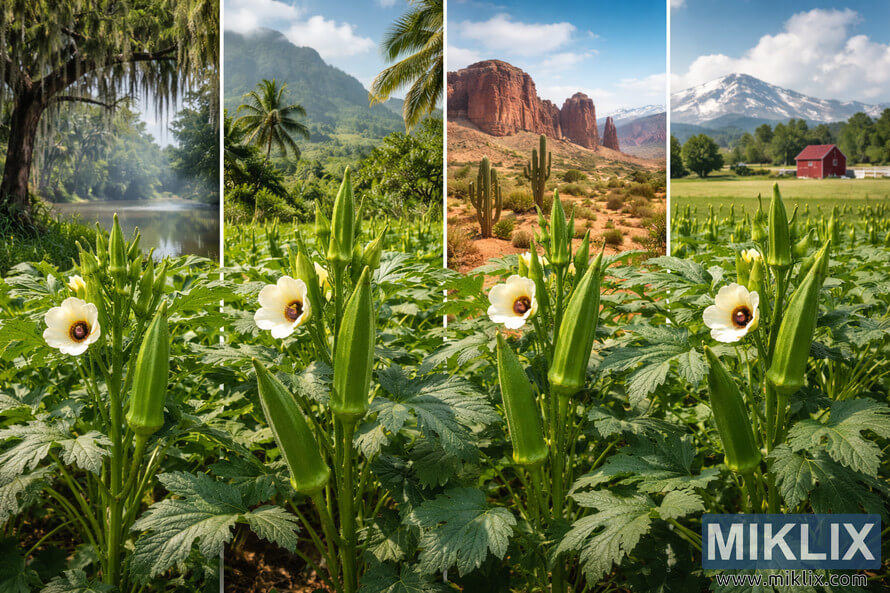
High-resolution landscape image of okra plants thriving across four regional climates—swamp, tropical, desert, and temperate farmland—illustrating the crop’s adaptability to diverse environments.
Available versions of this image
The image files available for download below are less compressed and higher resolution - and as a result of that, higher quality - than the images embedded in articles and pages on this website, which are more optimized for file size in order to reduce bandwidth consumption.
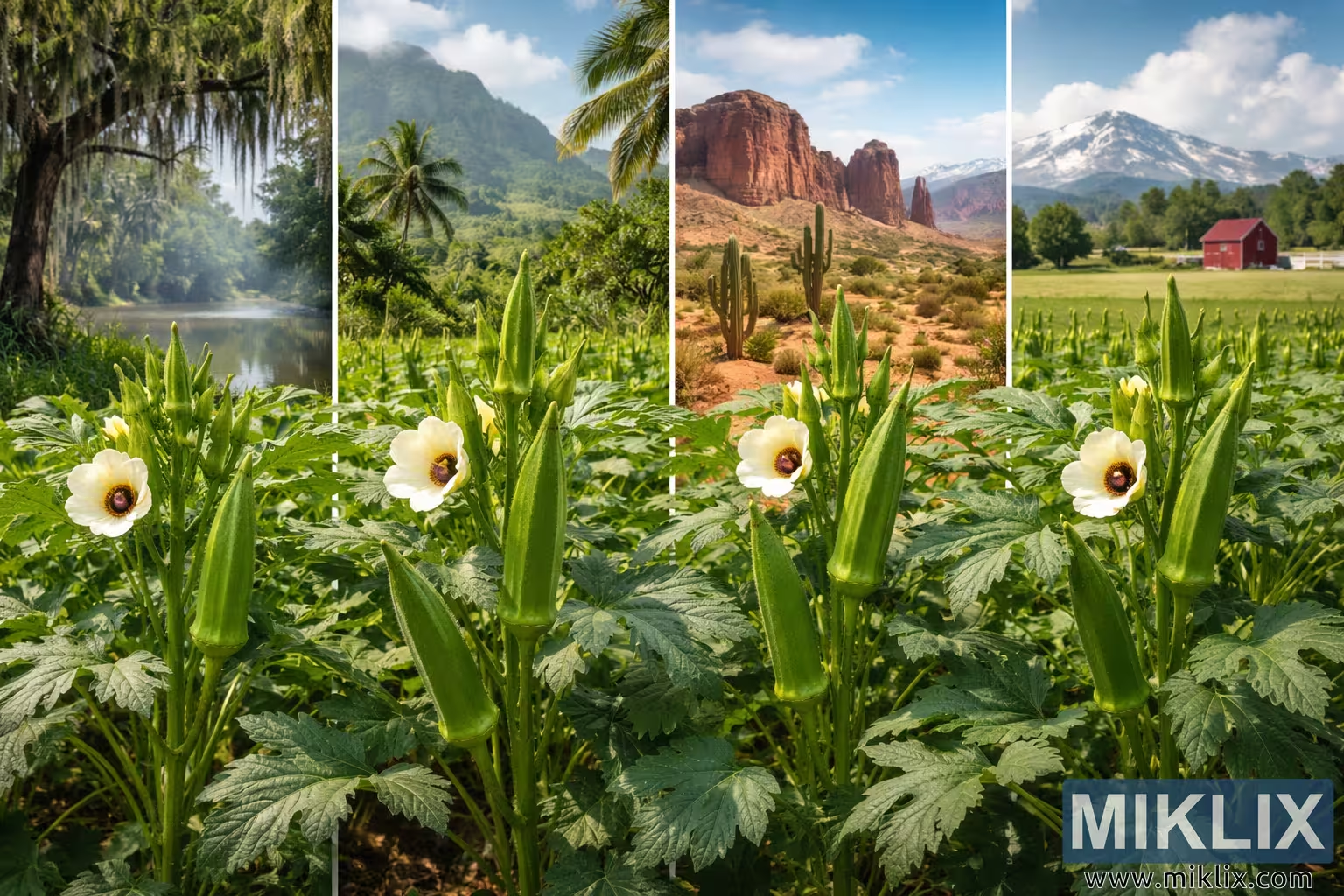
Regular size (1,536 x 1,024)
Large size (3,072 x 2,048)
Very large size (4,608 x 3,072)
Extra large size (6,144 x 4,096)
Comically large size (1,048,576 x 699,051)
- Still uploading... ;-)
Image description
A high-resolution landscape photograph presents a visually divided scene that illustrates okra plants growing in several contrasting regional climates. The composition is arranged horizontally and split into four vertical sections, each representing a distinct environment where okra cultivation might occur. In the foreground across all sections, lush green okra plants dominate the image, with broad leaves, pale yellow blossoms with deep purple centers, and several elongated green pods rising upright from sturdy stems. The consistent foreground plants create continuity while the background landscapes shift dramatically, highlighting environmental diversity.
On the far left, the background depicts a humid swamp environment. Tall trees draped with moss hang over calm water, and soft morning-like light filters through dense foliage. The atmosphere appears moist and verdant, with thick vegetation and reflections shimmering on the water surface. The okra plants in this section appear vibrant and healthy, benefiting from the abundant humidity and rich soil typical of wetland regions.
Moving to the second section, the environment transitions into a tropical climate. Palm trees sway slightly against a lush mountainous backdrop, and the vegetation appears dense and intensely green. The lighting is bright and warm, suggesting strong sunlight common to tropical regions. The okra plants here stand among thick greenery, illustrating how the crop thrives in hot, humid climates with plentiful rainfall.
The third section introduces a starkly different desert environment. Red rock formations and sandy terrain dominate the landscape, with scattered cacti and sparse shrubs dotting the ground. The sky is clear and blue, and the sunlight appears strong and direct. Despite the arid surroundings, the okra plants in the foreground remain green and productive, emphasizing the plant’s resilience and ability to grow with irrigation or adapted farming techniques in dry climates.
Finally, the far-right section portrays a temperate agricultural landscape. Rolling green fields stretch toward distant snow-capped mountains, and a red barn stands beside a white fence, evoking a classic rural farm setting. The sky is bright with scattered clouds, and the lighting suggests a mild, sunny day. Here the okra plants appear neatly integrated into cultivated farmland, demonstrating how the crop can also grow successfully in managed temperate environments.
Across the entire panorama, the repeating foreground of okra plants ties the four environments together, while the shifting backgrounds highlight how dramatically climate and geography can vary. The image communicates the adaptability of okra cultivation across multiple ecosystems—from wetlands and tropical jungles to deserts and temperate farms—while maintaining a realistic, photographic style with crisp detail, vivid colors, and balanced midday lighting.
The image is related to: The Complete Guide to Growing Okra in Your Home Garden