
The Complete Guide to Growing Okra in Your Home Garden
Published: March 17, 2026 at 9:37:34 PM UTC
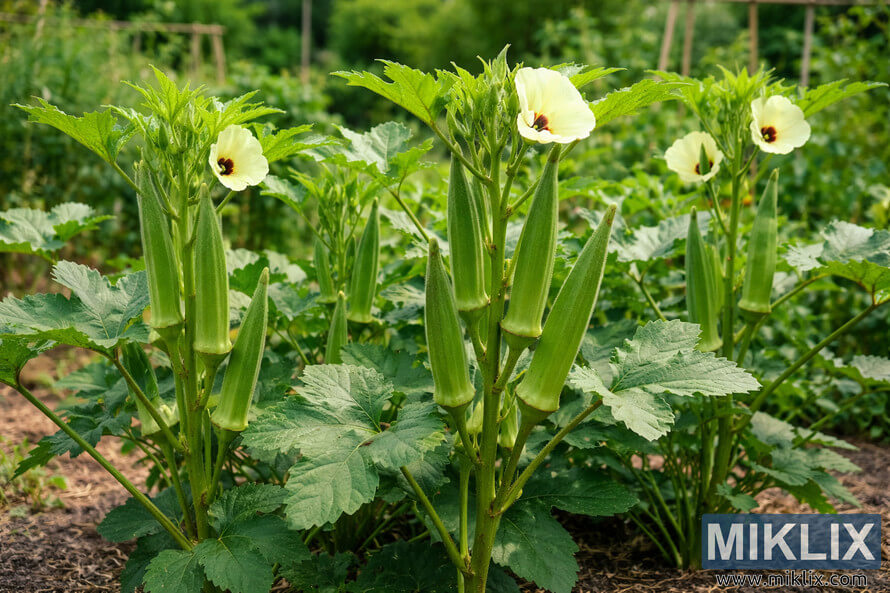
Okra transforms backyard gardens into productive spaces that yield fresh, nutritious pods throughout summer. This heat-loving vegetable thrives where other crops struggle, making it perfect for warm-season gardening. Whether you dream of fresh okra for cooking or want to expand your vegetable garden variety, this comprehensive guide delivers everything you need for success.
Click or tap the image for more information and higher resolutions.
Growing okra rewards patient gardeners with abundant harvests. The plants produce beautiful flowers that develop into edible pods within days. Home gardeners appreciate how okra plants continue producing throughout the growing season with minimal maintenance.
This guide covers every aspect of okra cultivation. You'll discover climate requirements, soil preparation techniques, planting instructions, and pest management strategies. Each section provides practical advice based on proven growing methods.
Understanding Okra: Benefits and Characteristics
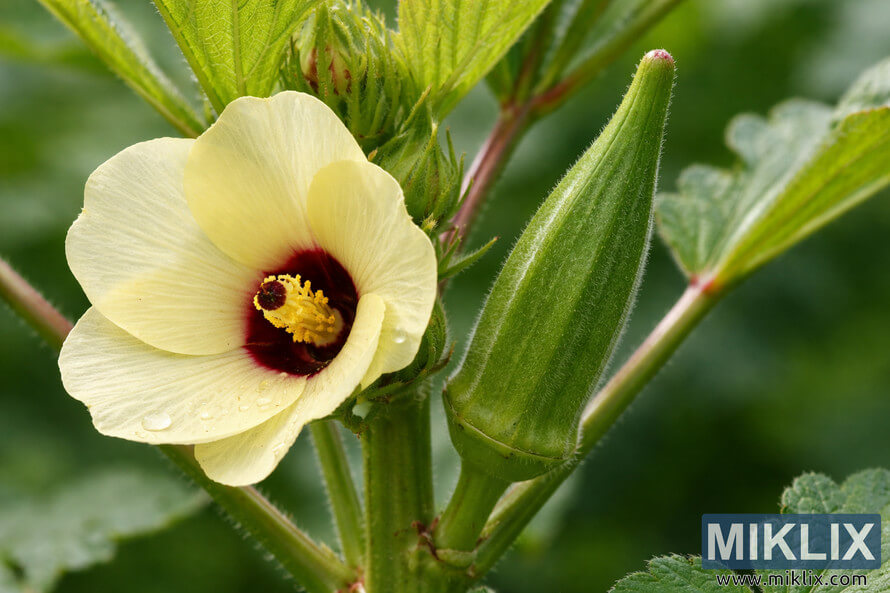
Okra (Abelmoschus esculentus) belongs to the mallow family, related to hibiscus and cotton. The plant originates from tropical regions and thrives in heat that would stress many garden vegetables. Okra plants display distinctive characteristics that make them both productive and ornamental.
Click or tap the image for more information and higher resolutions.
Nutritional Value and Culinary Uses
Okra pods provide excellent nutrition for health-conscious gardeners. The vegetable delivers vitamin C, folate, and dietary fiber in every serving. Many cuisines worldwide feature okra in traditional dishes, from Southern gumbo to Middle Eastern stews.
Fresh okra from your garden tastes significantly better than store-bought options. Young pods harvested at peak freshness offer tender texture without excessive sliminess. Home gardeners control harvest timing for optimal flavor and texture.
Growth Habits and Plant Structure
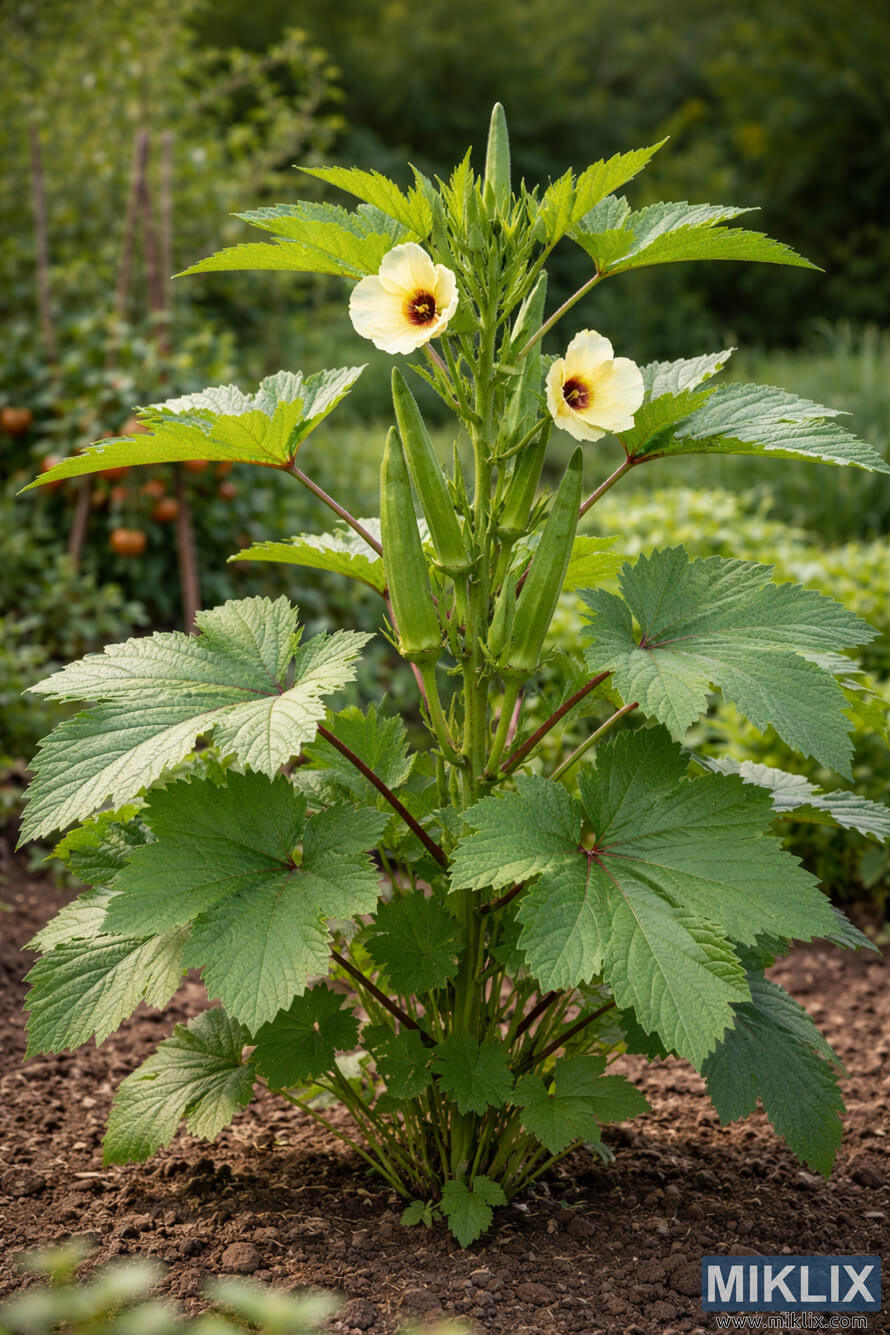
Okra plants develop into substantial specimens that can reach several feet tall during the growing season. Standard varieties typically grow three to four feet tall, while some cultivars stretch to six feet or more. The plants feature sturdy stems that support heavy pod production.
Physical Characteristics
- Large, lobed leaves that resemble maple or hibiscus foliage
- Upright growth habit with strong central stem
- Yellow or cream flowers with burgundy centers
- Fuzzy pods that develop quickly after flowering
- Deep taproot system for drought tolerance
Click or tap the image for more information and higher resolutions.
Why Grow Your Own Okra
Home-grown okra offers advantages that make the effort worthwhile. Fresh pods develop better flavor and texture compared to commercial varieties bred for shipping durability. Garden-fresh okra maintains peak quality because you harvest exactly when pods reach ideal size.
Gardening Tip: Okra plants produce decorative flowers that add beauty to vegetable gardens. The blooms resemble tropical hibiscus and attract pollinators throughout summer. Many gardeners incorporate okra into ornamental borders where the tall plants create dramatic backdrops.
Growing okra provides satisfaction beyond the harvest. The plants thrive in challenging heat when other vegetables struggle. Okra transforms difficult growing conditions into productive garden space, utilizing full sun areas that might otherwise remain unused during peak summer.
Best Climate and Growing Conditions for Okra
Okra thrives in specific climate conditions that mirror its tropical origins. Understanding these requirements helps gardeners determine whether okra suits their location and when to plant for maximum success. The crop demands consistent heat throughout its growing season.
Temperature Requirements
Heat drives successful okra production more than any other factor. The plants require warm soil for germination and hot air temperatures for vigorous growth. Cold weather stunts okra development and can kill young seedlings exposed to unexpected frost.
Soil temperatures must reach at least 65°F before planting okra seeds. Optimal germination occurs when soil warms to 70-75°F or higher. Many experienced gardeners wait until consistent warm weather arrives rather than rushing spring planting.
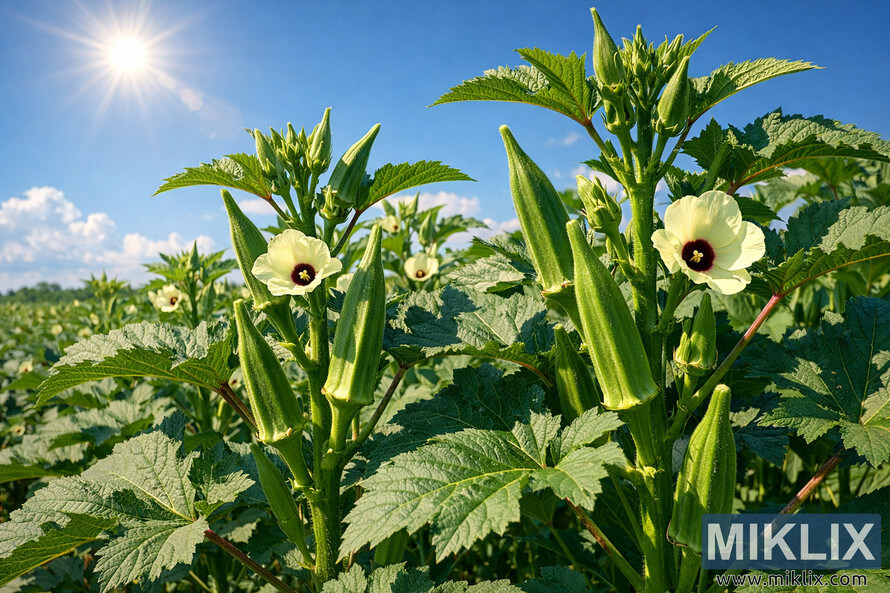
Temperature Guidelines: Okra seeds germinate poorly in cool soil below 65°F. Air temperatures above 85°F promote the fastest growth and heaviest pod production. The plants continue thriving even when temperatures exceed 95°F, conditions that stress tomatoes and other common garden vegetables.
Click or tap the image for more information and higher resolutions.
Sunlight Needs
Full sun exposure proves essential for productive okra plants. The crop requires minimum six hours of direct sunlight daily, though eight or more hours produces better results. Okra planted in partial shade develops slowly and yields fewer pods.
Garden locations receiving maximum sun throughout the day create ideal conditions. Southern or western exposures typically provide the consistent full sun okra plants crave. Avoid planting near tall structures or trees that cast afternoon shadows across the garden bed.
Humidity and Moisture Considerations
Okra tolerates humidity better than many vegetables but doesn't require tropical moisture levels. The plants adapt to varying humidity conditions across different growing regions. Both humid Southern gardens and drier Western climates can support successful okra cultivation.
Ideal Climate Zones
Okra grows best in USDA hardiness zones 7-11 where long, hot summers provide extended growing seasons. Northern gardeners in zones 5-6 can grow okra successfully by choosing fast-maturing varieties and starting seeds indoors.
- Southern states offer perfect natural conditions
- Midwest regions provide adequate summer heat
- Northern areas need season extension techniques
- Western gardens require consistent irrigation
Season Length Requirements
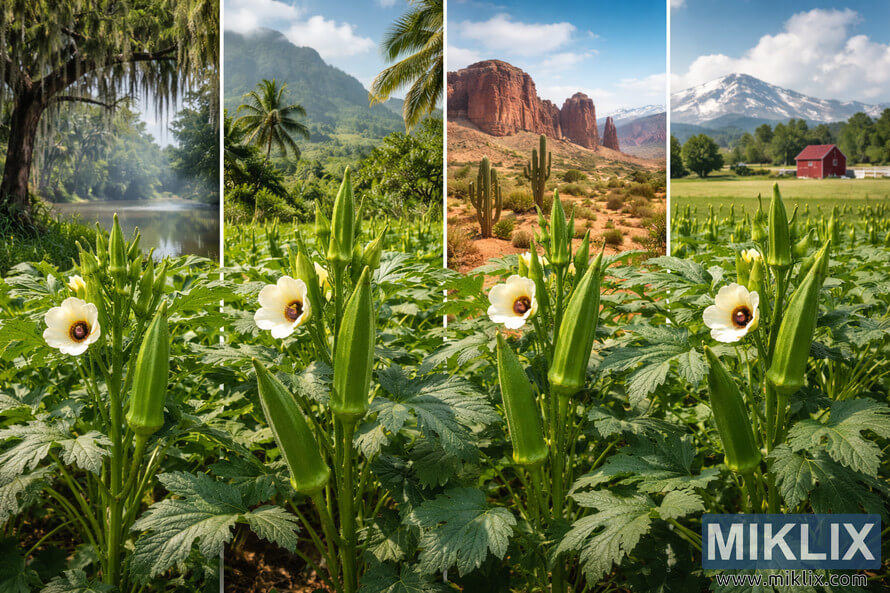
Okra needs 50-65 days from planting to first harvest depending on variety. The plants continue producing until frost ends the growing season. Longer summers allow extended harvests that can last three to four months.
- Minimum 90-day frost-free period required
- Longer seasons increase total yield dramatically
- First frost terminates all okra production
- Fall planting possible in warmest regions
Click or tap the image for more information and higher resolutions.
Frost Sensitivity
Frost kills okra plants immediately and completely. Even light frost that barely touches other vegetables will destroy okra foliage and end the season. Gardeners must time plantings to avoid both spring and fall frost events.
Spring planting should wait until all frost danger passes and soil warms adequately. Fall frost dates determine when production ends in most regions. Southern gardeners enjoy months of harvest time, while northern growers face shorter windows between frost events.
Critical Timing: Never plant okra seeds or transplant seedlings before your last spring frost date. The plants cannot recover from cold damage. Wait an additional two weeks after the frost-free date for soil to warm sufficiently. This patience prevents germination failures and establishes healthier plants.
Soil Requirements and Preparation for Growing Okra
Proper soil conditions set the foundation for healthy okra plants and abundant harvests. The crop tolerates various soil types but performs best when gardeners optimize key characteristics. Preparation work before planting pays dividends throughout the growing season.
Soil Type and Texture
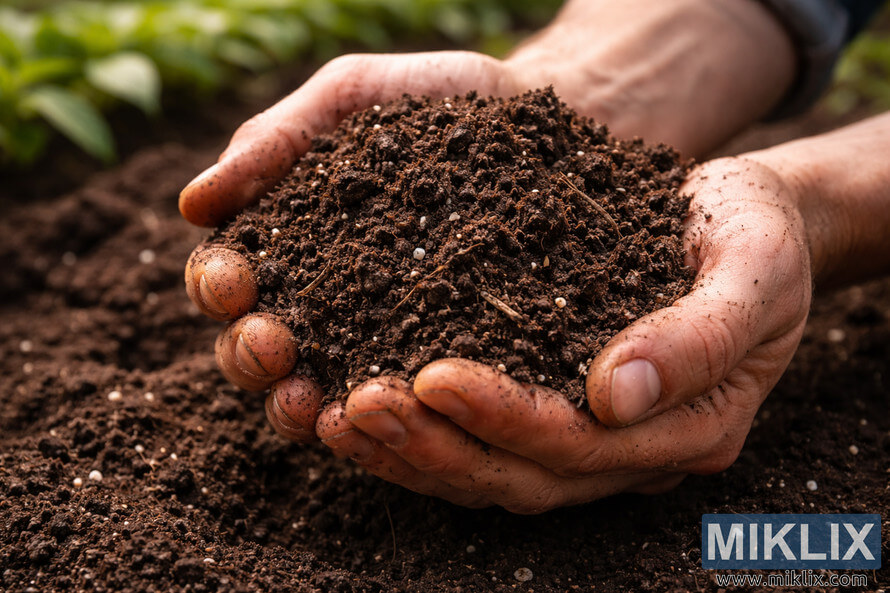
Okra adapts to different soil textures but thrives in well-drained loam. Sandy soils work well because they warm quickly in spring and prevent waterlogging around roots. Clay soils can support okra if amended properly to improve drainage.
Heavy clay requires significant amendment with organic matter before planting okra. Work compost, aged manure, or other organic materials into clay soil to lighten texture and improve drainage. This preparation prevents root rot and allows better root development.
Click or tap the image for more information and higher resolutions.
pH Levels and Nutrient Balance
Okra plants prefer slightly acidic to neutral soil with pH between 6.0 and 7.0. Most garden soils fall within this range naturally, but testing confirms actual conditions. Soil pH affects nutrient availability and influences plant health significantly.
| Soil Characteristic | Optimal Range | Acceptable Range | Poor Conditions |
| pH Level | 6.5-6.8 | 6.0-7.0 | Below 5.5 or above 7.5 |
| Organic Matter | 5-8% | 3-10% | Below 2% |
| Drainage Rate | 1-2 inches per hour | 0.5-3 inches per hour | Standing water or instant drainage |
| Nitrogen (N) | Medium | Low to High | Severely deficient |
| Phosphorus (P) | Medium to High | Low to High | Severely deficient |
Preparing the Garden Bed
Site preparation begins several weeks before planting okra seeds. This advance work allows amendments to integrate fully and soil structure to settle into ideal condition. Thorough preparation reduces problems throughout the growing season.
- Clear the planting area: Remove all weeds, grass, and debris from the designated okra garden space. Existing vegetation competes with okra plants for nutrients and water.
- Test soil conditions: Conduct pH and nutrient tests to identify necessary amendments. Home test kits provide adequate information for most garden situations.
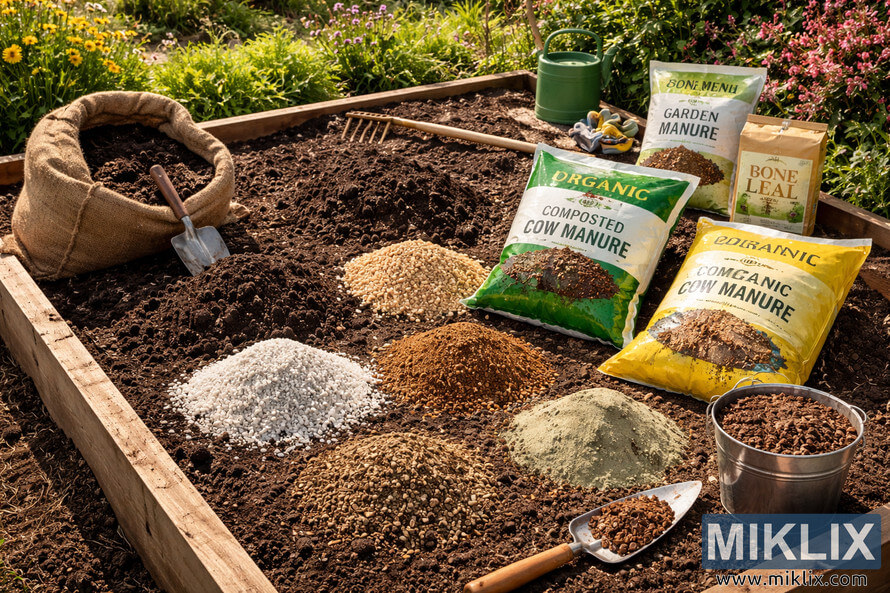
- Add organic matter: Spread 2-4 inches of compost, aged manure, or other organic material across the planting area. Work it into the top 8-12 inches of soil.
- Adjust pH if needed: Apply lime to raise pH or sulfur to lower it based on test results. Follow package directions for application rates.
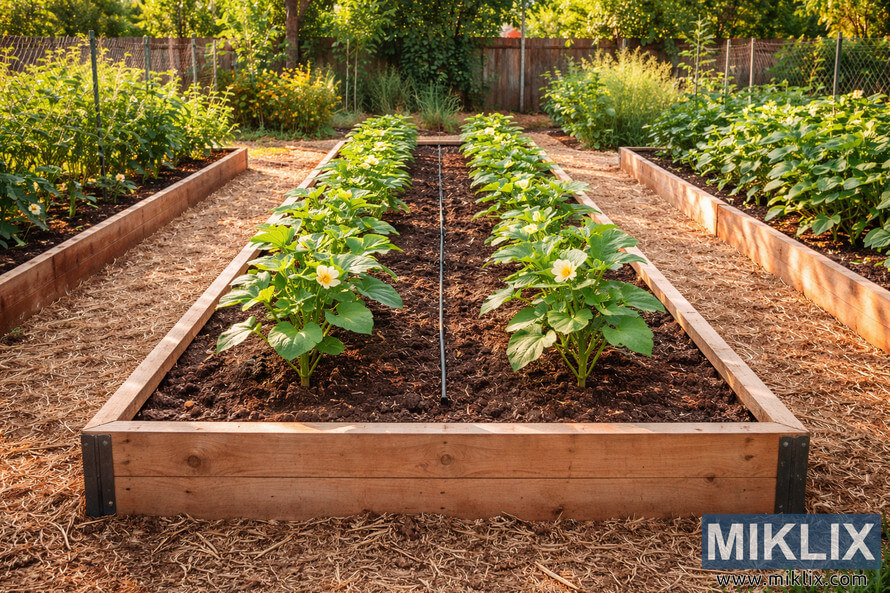
- Create proper drainage: Form raised beds or mounds in areas with drainage concerns. Elevating the planting surface prevents waterlogged conditions around okra roots.
- Allow settling time: Let prepared beds rest for two to three weeks before planting. This settling period allows amendments to integrate and soil biology to stabilize.
Click or tap the image for more information and higher resolutions.
Improving Drainage and Soil Structure
Excellent drainage ranks among the most critical factors for okra success. The plants develop deep taproots that rot in waterlogged soil. Standing water after rain or irrigation signals drainage problems that require correction before planting.
Testing Drainage
- Simple percolation tests reveal drainage characteristics. Dig a hole one foot deep and fill it with water. Well-drained soil absorbs the water within a few hours. Soil that remains saturated for twelve hours or more needs improvement.
- Heavy clay with poor drainage benefits from raised bed construction. Elevation creates better drainage conditions even when underlying soil drains slowly. Raised beds also warm faster in spring, promoting earlier planting.
Soil Amendment Recipe: Create ideal okra soil by mixing existing garden soil with equal parts compost and one part perlite or coarse sand. This combination improves drainage while increasing organic matter content. The improved texture supports strong root development and healthy plant growth.
Click or tap the image for more information and higher resolutions.
Essential Soil Testing and Amendment Tools
Professional soil preparation makes the difference between average and exceptional okra harvests. These recommended tools help you create perfect growing conditions.
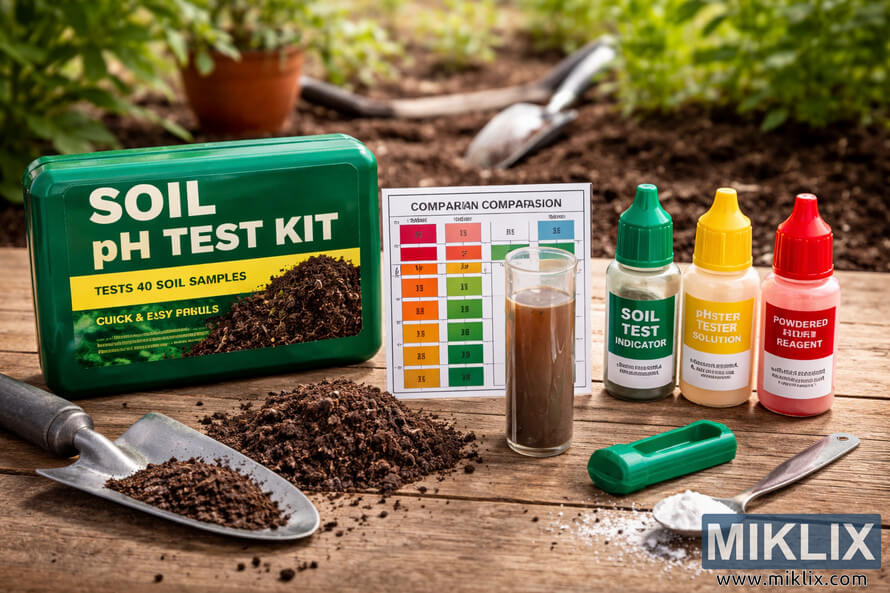
Soil pH Test Kit
Accurate testing reveals exact pH levels and guides amendment decisions. Digital meters provide instant readings for confident soil management.
Click or tap the image for more information and higher resolutions.
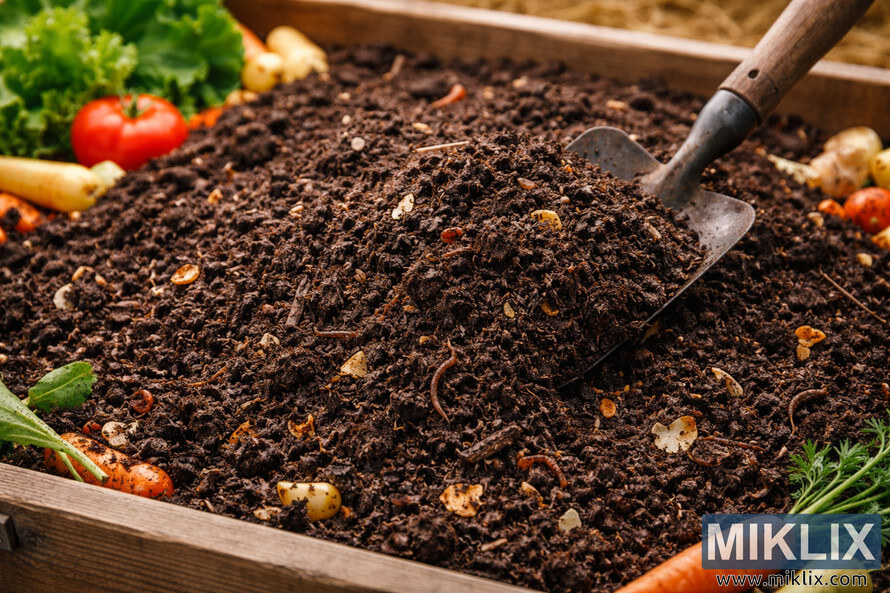
Premium Organic Compost
High-quality compost enriches soil structure and feeds beneficial microorganisms. Well-aged material integrates smoothly without burning plant roots.
Click or tap the image for more information and higher resolutions.
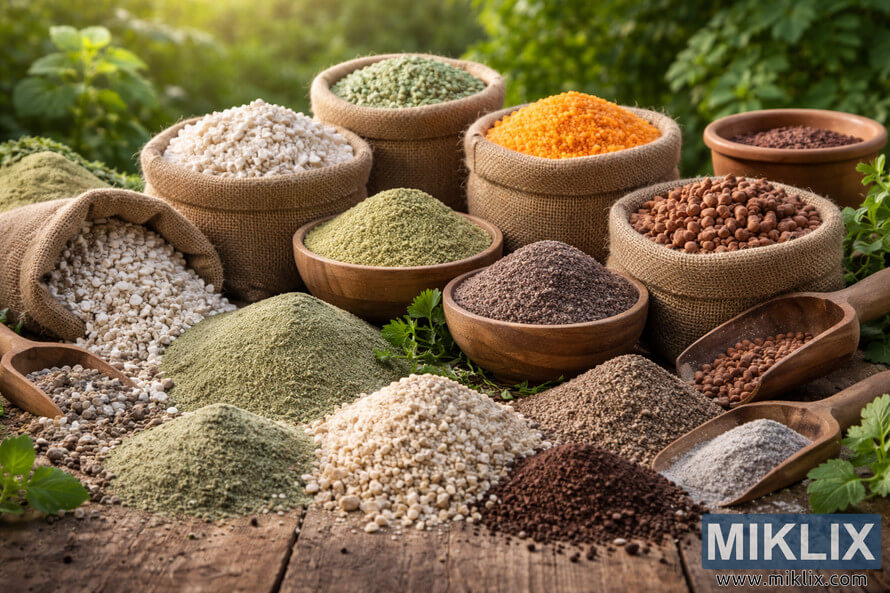
pH Adjustment Amendments
Targeted amendments correct pH imbalances for optimal nutrient availability. Choose agricultural lime or elemental sulfur based on test results.
Click or tap the image for more information and higher resolutions.
Planting Okra: Timing, Spacing, and Technique
Successful okra cultivation begins with proper planting practices. Timing, spacing, and planting depth all influence germination rates and subsequent plant development. Following proven planting guidelines establishes healthy plants that produce abundantly throughout the growing season.
When to Plant Okra
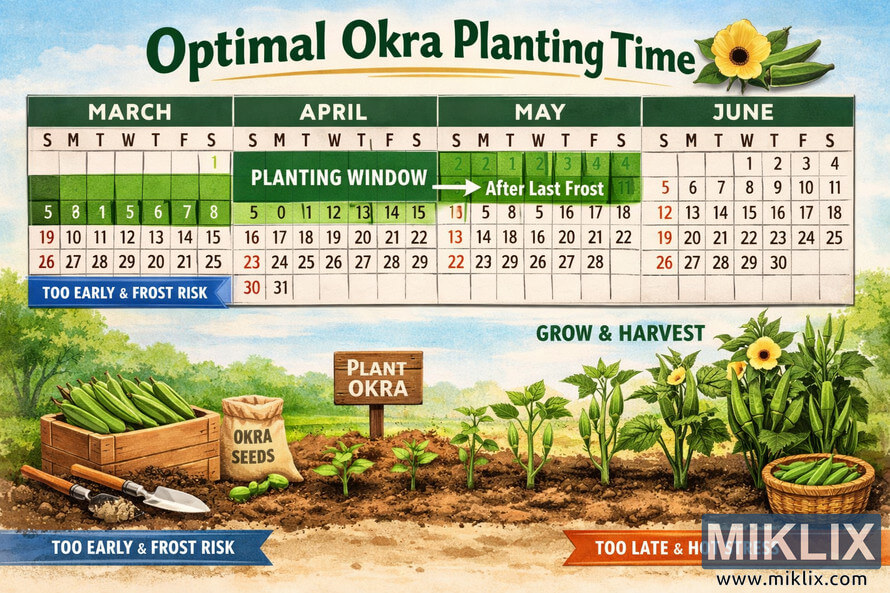
Timing determines planting success more than any other single factor. Okra seeds require warm soil to germinate reliably. Planting too early results in poor germination or rotting seeds, while optimal timing produces vigorous seedlings.
Wait until soil temperatures consistently measure 65°F or higher at planting depth. Most regions reach appropriate temperatures two to three weeks after the last expected spring frost date. Southern gardeners can often plant in mid-spring, while northern gardens require patience until late spring or early summer.
Season Extension Strategy: Northern gardeners maximize growing time by starting okra seeds indoors four to six weeks before the last frost date. Transplant seedlings outdoors only after soil warms adequately and nighttime temperatures stay above 55°F consistently.
Click or tap the image for more information and higher resolutions.
Direct Seeding vs. Transplanting
Direct seeding works well in most okra-growing regions and remains the preferred method. The plants develop strong taproots that establish better from direct-sown seeds. Transplanting works but requires extra care to avoid disturbing the developing root system.
Direct Seeding Benefits
- Taproots develop naturally without disturbance
- Plants establish stronger drought tolerance
- No transplant shock delays growth
- Less labor and materials required
- Works perfectly in warm-season regions
When to Transplant
- Short growing seasons require head start
- Northern gardens benefit from indoor starting
- Precise plant placement needed
- Containers limit direct seeding space
- Challenging pest pressure at germination
Proper Spacing Requirements
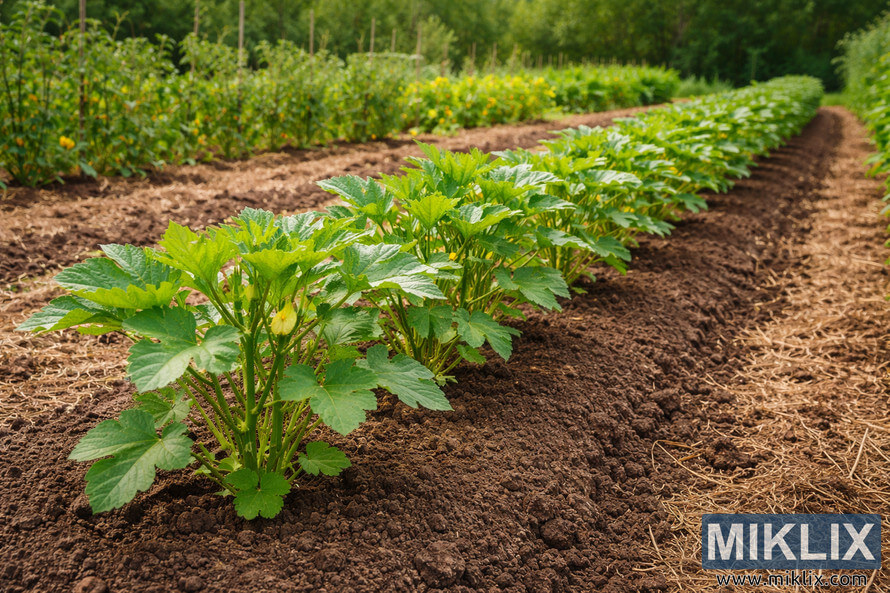
Okra plants need adequate space for full development and good air circulation. Crowded plants compete for resources and become more susceptible to disease problems. Proper spacing allows each plant to reach maximum productive potential.
Space okra plants twelve to eighteen inches apart within rows. Larger varieties require the wider spacing for adequate development. Rows should be spaced three to four feet apart to allow comfortable harvest access and promote air circulation between plants.
| Variety Type | Within Row Spacing | Between Row Spacing | Container Size |
| Dwarf Varieties | 12 inches | 3 feet | 5-gallon minimum |
| Standard Varieties | 15 inches | 3-4 feet | 7-gallon minimum |
| Tall Varieties | 18 inches | 4 feet | 10-gallon minimum |
Click or tap the image for more information and higher resolutions.
Planting Depth and Seed Preparation
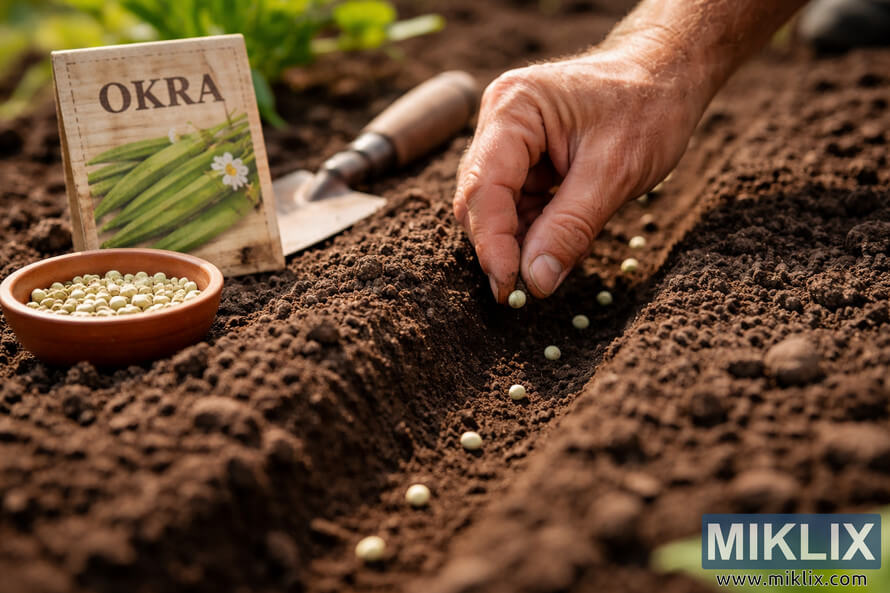
Plant okra seeds one-half to one inch deep in prepared soil. Deeper planting delays emergence, while shallow seeds may dry out before germinating. Consistent depth across all plantings promotes even germination timing.
Soaking okra seeds overnight before planting speeds germination significantly. The hard seed coat softens in water, allowing moisture to penetrate more easily. This simple preparation reduces germination time by several days.
- Prepare seeds: Place okra seeds in room-temperature water and soak for 12-24 hours before planting. Drain excess water before sowing.
- Create planting furrows: Form shallow trenches at the appropriate depth using a hoe or garden tool. Maintain consistent depth throughout the row.
- Place seeds: Drop two to three seeds at each planting spot at the desired spacing. Multiple seeds ensure adequate germination despite potential losses.
- Cover seeds: Gently cover with loose soil and firm lightly to ensure good seed-to-soil contact. Avoid heavy compaction that hinders emergence.
- Water thoroughly: Provide gentle but thorough watering immediately after planting. Keep soil consistently moist until seedlings emerge.
- Thin seedlings: Once seedlings develop two to three true leaves, thin to one plant per location. Choose the strongest seedling at each spot.
Click or tap the image for more information and higher resolutions.
Special Considerations for Container Growing
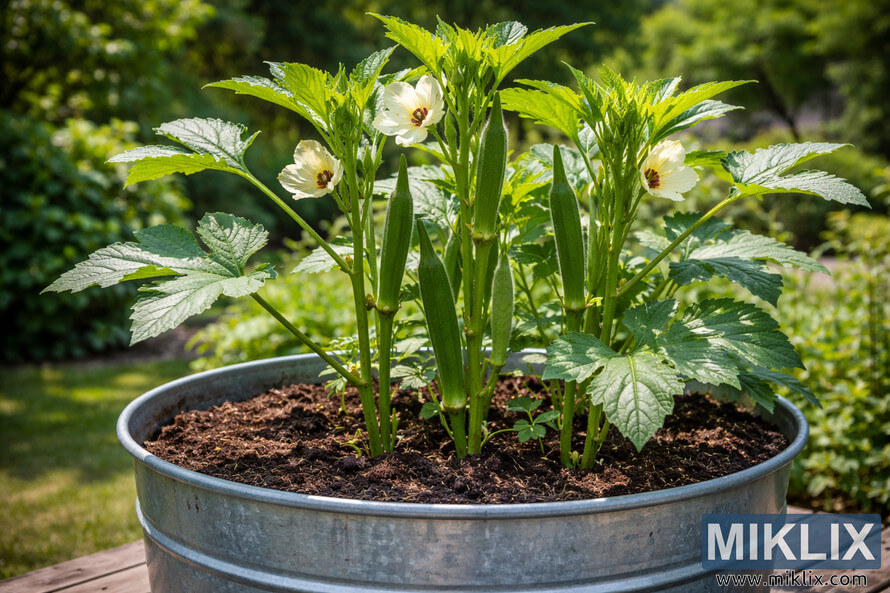
Container cultivation works well for okra in small spaces or where soil conditions prove challenging. Large containers provide sufficient root space for productive plants. Dwarf varieties adapt particularly well to container growing.
Container Requirements
- Choose containers at least five gallons for dwarf varieties and seven to ten gallons for standard okra types. Drainage holes are absolutely essential to prevent waterlogged soil. Dark containers absorb heat and warm soil faster, promoting better growth.
- Fill containers with high-quality potting mix designed for vegetables. Garden soil compacts in containers and drains poorly. Quality potting mix provides proper drainage while retaining adequate moisture for consistent plant growth.
Quick Start Method: Warm soil faster using black plastic mulch over planting beds. Lay plastic two weeks before planting to capture solar heat. Cut planting holes through the plastic when ready to sow seeds. This technique advances planting dates by one to two weeks in cooler regions.
Click or tap the image for more information and higher resolutions.
Choosing the Best Okra Varieties for Your Garden
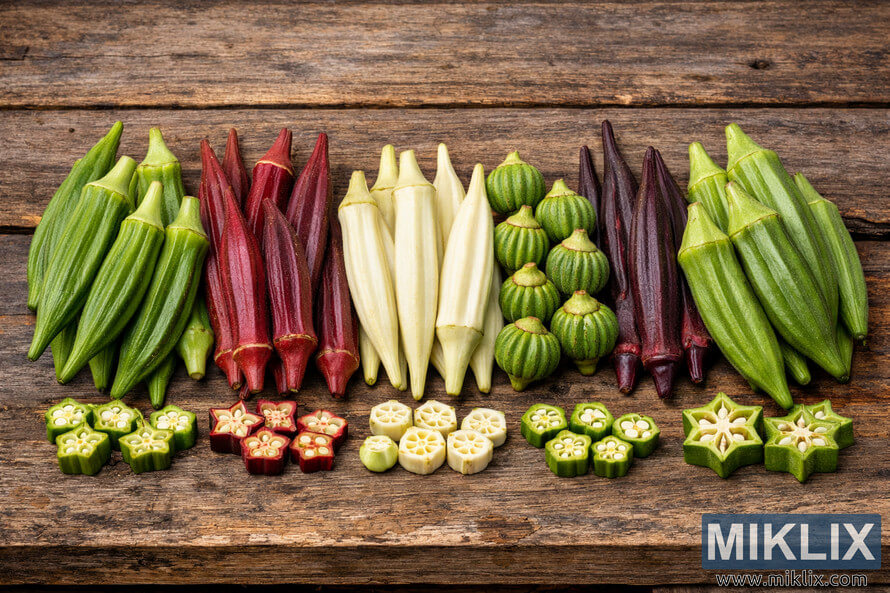
Okra varieties differ in height, pod characteristics, and maturity timing. Selecting appropriate varieties for your specific garden conditions and preferences increases success and satisfaction. Consider climate, space limitations, and intended use when choosing varieties.
Click or tap the image for more information and higher resolutions.
Standard Green Varieties
Traditional green okra varieties dominate home gardens because of reliable performance and familiar appearance. These varieties produce classic green pods that work perfectly for all culinary applications. Most green varieties mature within 50-60 days from planting.
Clemson Spineless
The most popular okra variety for home gardens combines reliable production with tender, spineless pods. Plants grow four to five feet tall and produce abundantly throughout summer. Clemson Spineless performs well across diverse growing regions and tolerates heat exceptionally.
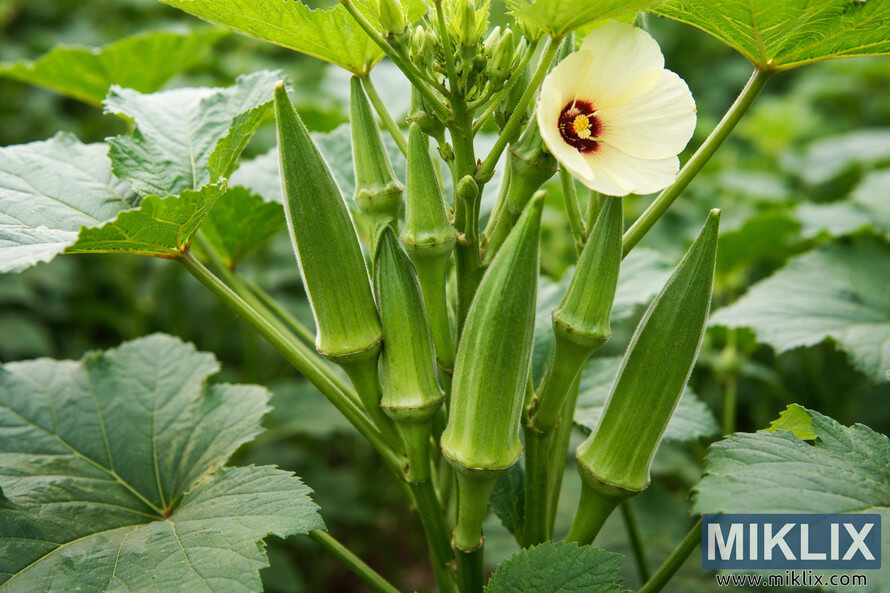
Click or tap the image for more information and higher resolutions.
Annie Oakley II
Compact plants perfect for smaller gardens reach only three to four feet tall while maintaining excellent production. The variety matures quickly, producing harvestable pods within 50 days. Annie Oakley II works particularly well in containers and intensive planting schemes.
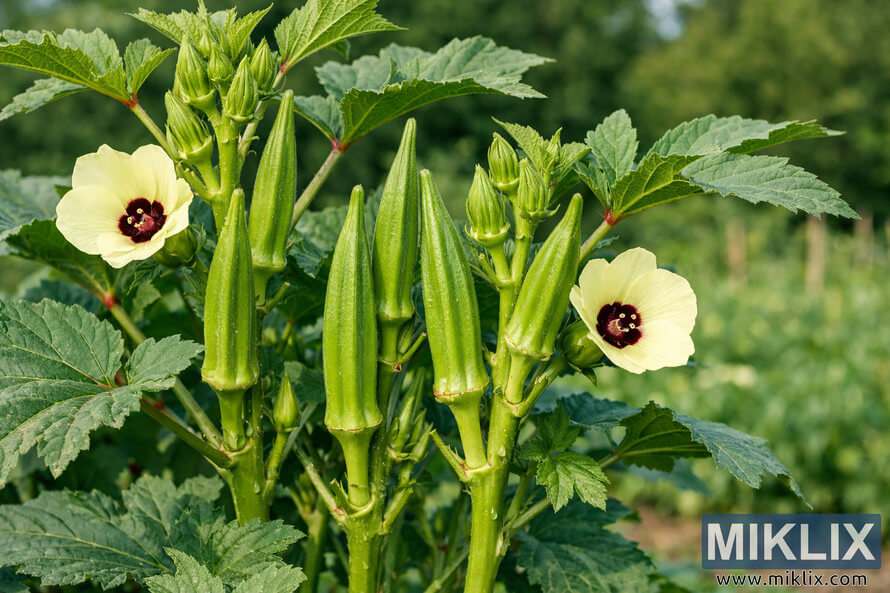
Click or tap the image for more information and higher resolutions.
Emerald
Tall, productive plants generate heavy yields of smooth, spineless pods ideal for fresh eating and freezing. Emerald handles heat stress better than many varieties and continues producing when temperatures soar. The variety reaches six to eight feet tall in optimal conditions.
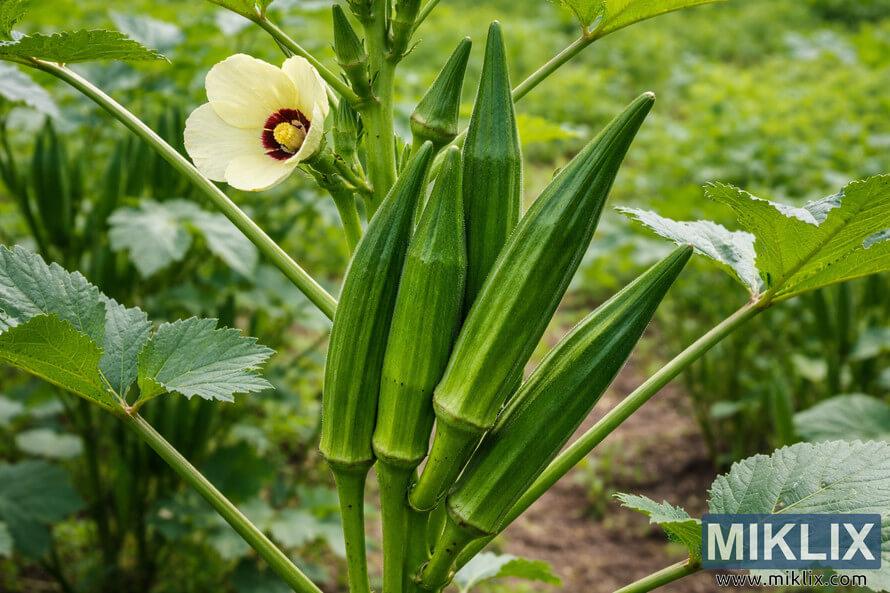
Click or tap the image for more information and higher resolutions.
Colorful and Specialty Varieties
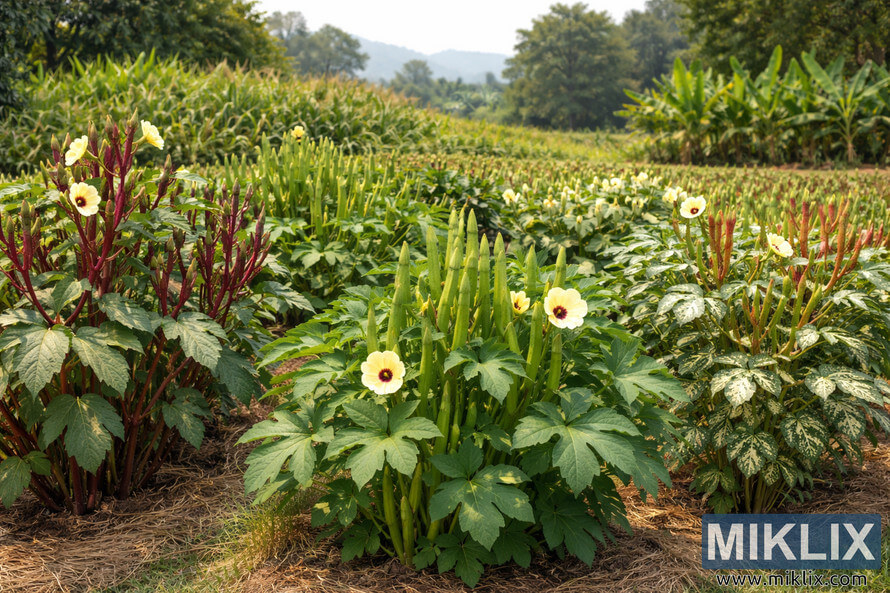
Specialty okra varieties add visual interest to gardens while providing excellent eating quality. Red and burgundy varieties produce stunning pods that rival flowers for ornamental value. These varieties maintain similar growing requirements to standard green types.
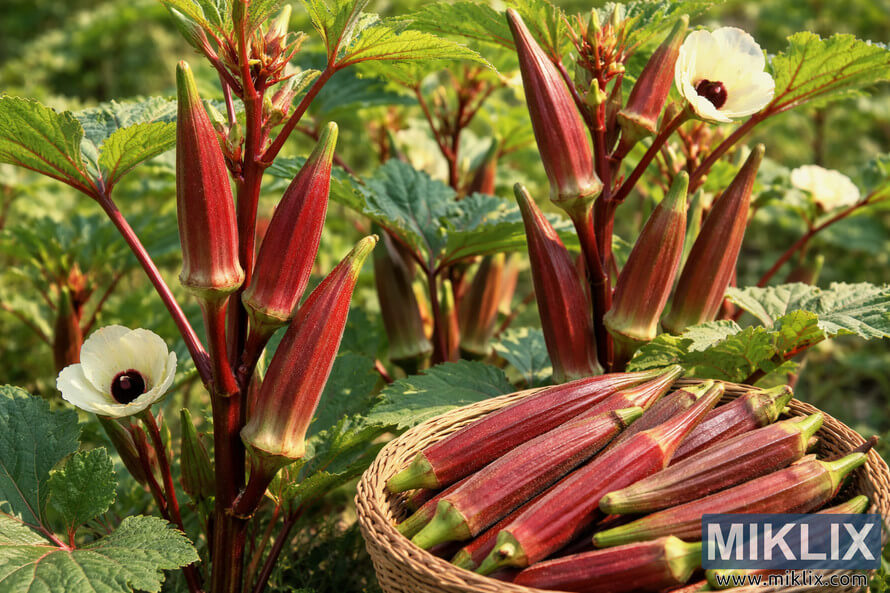
Red Burgundy
Deep red pods create striking contrast against green foliage. Red Burgundy performs as productively as green varieties while adding ornamental value to vegetable gardens. The pods turn green when cooked but maintain excellent flavor and texture.
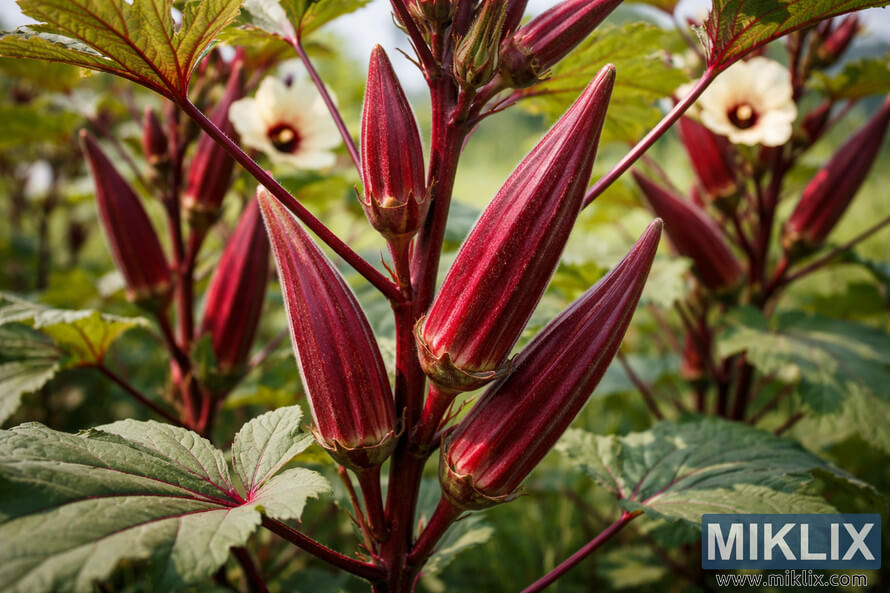
Click or tap the image for more information and higher resolutions.
Hill Country Red
Heirloom variety produces bright red pods with tender texture perfect for fresh eating. The plants demonstrate excellent heat tolerance and drought resistance. Hill Country Red grows five to six feet tall with heavy pod production throughout the season.
Click or tap the image for more information and higher resolutions.
Dwarf Varieties for Small Spaces
Compact okra varieties suit container growing and small garden situations perfectly. These varieties maintain productive capacity while requiring significantly less vertical space. Dwarf types work well on patios, balconies, and intensive garden beds.
Best Dwarf Varieties
- Baby Bubba produces full-size pods on plants only two to three feet tall
- Cajun Delight grows compactly to three feet with spineless pods
- Lee maintains dwarf habit with exceptional productivity
- Candle Fire offers burgundy pods on compact two-foot plants
- Evertender stays small while producing tender, ribless pods
Regional Variety Recommendations
Climate influences variety selection significantly. Some varieties handle specific regional challenges better than others. Matching varieties to local conditions improves success rates and reduces maintenance requirements.
| Region | Recommended Varieties | Key Characteristics |
| Northern Gardens (Zones 5-6) | Annie Oakley II, Cajun Delight, Baby Bubba | Fast maturity, compact growth, shorter season needs |
| Midwest (Zones 6-7) | Clemson Spineless, Emerald, Lee | Heat tolerance, reliable production, standard season length |
| South (Zones 8-9) | Clemson Spineless, Hill Country Red, Emerald | Extended season, extreme heat tolerance, drought resistance |
| Deep South (Zones 10-11) | Louisiana Green Velvet, Emerald, Red Burgundy | Continuous production, humidity tolerance, longest season |
Variety Trial Strategy: Plant two or three different varieties in your first okra-growing season. Compare performance, pod quality, and productivity under your specific conditions. This experimentation identifies the best varieties for your garden and personal preferences, guiding future planting decisions.
Click or tap the image for more information and higher resolutions.
Watering and Irrigation Guidelines for Okra
Proper moisture management keeps okra plants healthy and productive throughout the growing season. The crop requires consistent watering but tolerates drought better than many garden vegetables. Understanding when and how much to water produces the strongest plants and best pod quality.
Water Requirements Through Growth Stages
Okra water needs vary depending on plant development stage. Young seedlings require consistent moisture for establishment, while mature plants become more drought-tolerant. Adjusting watering practices to match plant maturity optimizes growth and resource use.
Seedling stage demands the most attention to moisture. Keep soil consistently moist but not waterlogged during germination and early development. Once plants establish and develop deep taproots, they tolerate drier conditions between watering sessions.
Establishment Phase (0-4 weeks)
- Water daily or every other day to keep soil moist
- Provide 1-2 inches of water per week total
- Never allow soil surface to dry completely
- Use gentle watering to avoid washing away seeds
- Morning watering prevents disease problems
Production Phase (4+ weeks)
- Deep watering once or twice weekly works best
- Provide 1-2 inches of water per week depending on weather
- Allow soil to dry slightly between watering sessions
- Increase frequency during extreme heat or drought
- Continue consistent moisture during pod production
Click or tap the image for more information and higher resolutions.
Watering Methods and Best Practices
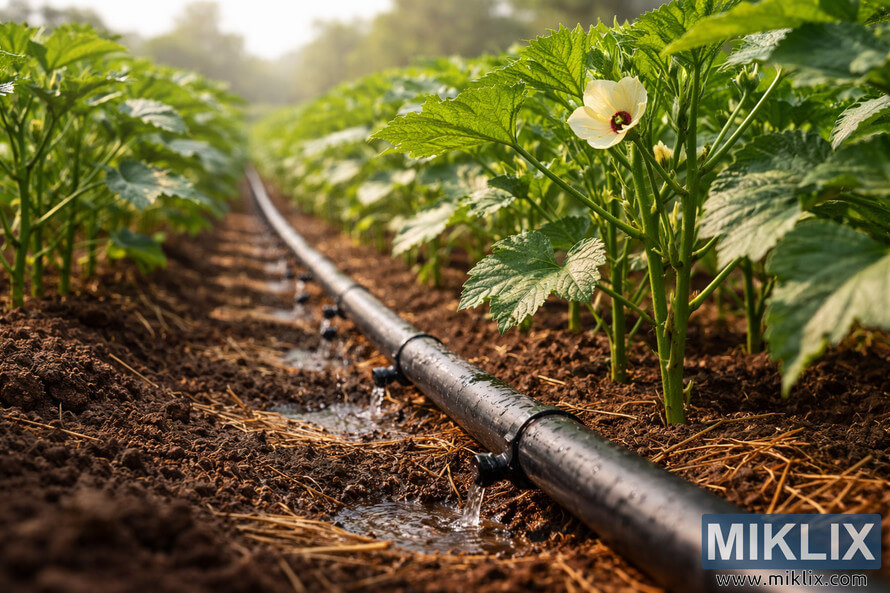
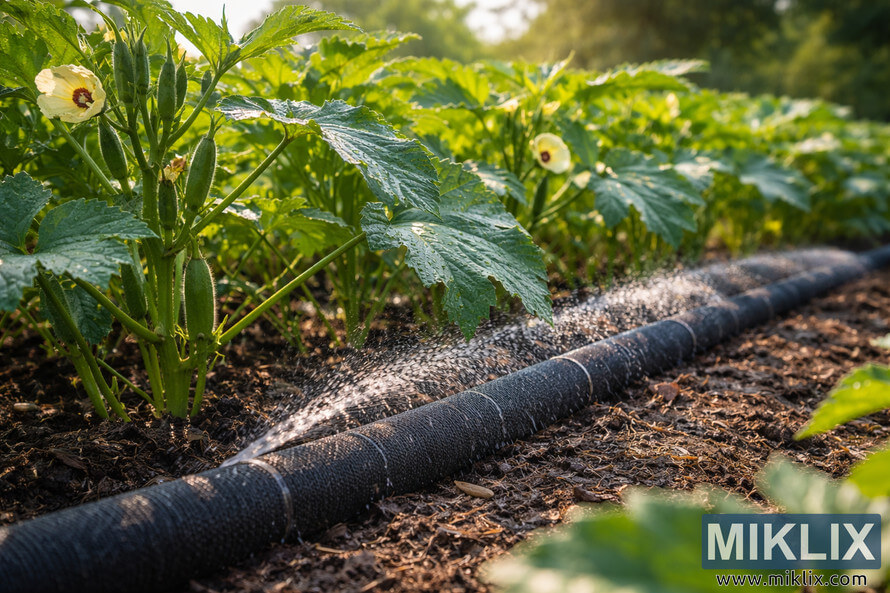
Different irrigation methods suit various garden situations. Drip irrigation provides the most efficient water delivery directly to root zones. Soaker hoses offer similar benefits with simpler installation. Overhead watering works but wastes water through evaporation and promotes foliar diseases.
Water early in the day whenever possible. Morning irrigation allows foliage to dry before evening, reducing disease risks. Wet leaves overnight create favorable conditions for fungal and bacterial problems that affect okra plants.
Click or tap the image for more information and higher resolutions.
Signs of Water Stress and Overwatering
Learning to recognize moisture problems helps gardeners adjust watering practices appropriately. Both underwatering and overwatering create distinctive symptoms. Regular observation allows early intervention before serious damage occurs.
Underwatering Symptoms
- Leaves droop and wilt during afternoon heat
- Leaf edges turn brown and crispy
- Pods develop slowly or become tough
- Plants appear stunted with slow growth
- Lower leaves yellow and drop prematurely
- Flowers drop without forming pods
Overwatering Symptoms
- Leaves yellow but remain soft and wilted
- Soil stays constantly wet and muddy
- Root rot causes plant collapse
- Fungal diseases appear on leaves and stems
- Stunted growth despite adequate nutrients
- Foul smell from soil indicates anaerobic conditions
Mulching for Moisture Retention
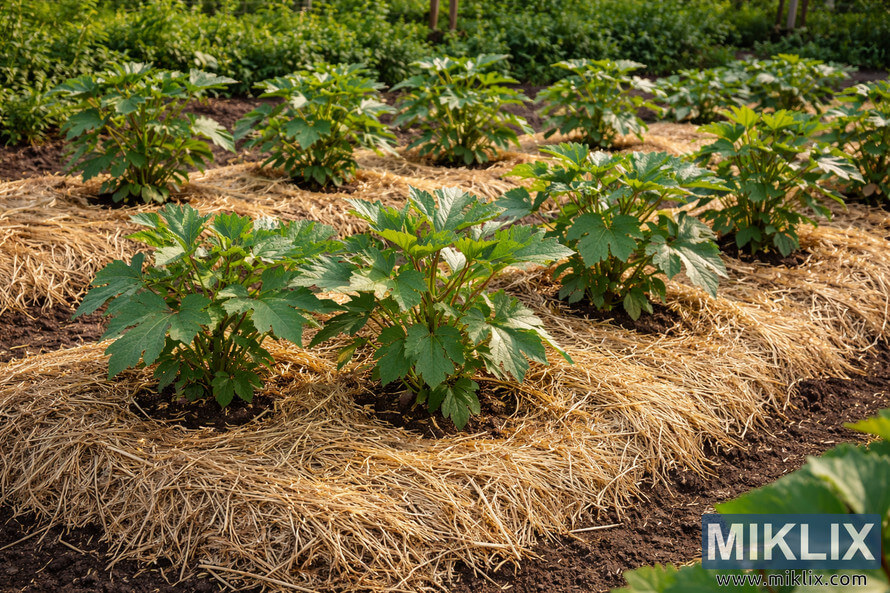
Organic mulch around okra plants conserves soil moisture dramatically. A two to three-inch mulch layer reduces evaporation, moderates soil temperature, and suppresses weed competition. Proper mulching cuts watering frequency significantly during hot summer weather.
Apply mulch after soil warms thoroughly and plants establish. Early mulching can slow soil warming in spring. Use straw, shredded leaves, grass clippings, or wood chips as effective mulch materials. Keep mulch a few inches away from plant stems to prevent rot issues.
Soil Moisture Test: Check soil moisture by inserting your finger two to three inches deep near plant roots. Soil should feel slightly damp at this depth. If it feels completely dry, plants need water. If mud forms around your finger, drainage problems or overwatering exist.
Click or tap the image for more information and higher resolutions.
Container Watering Considerations
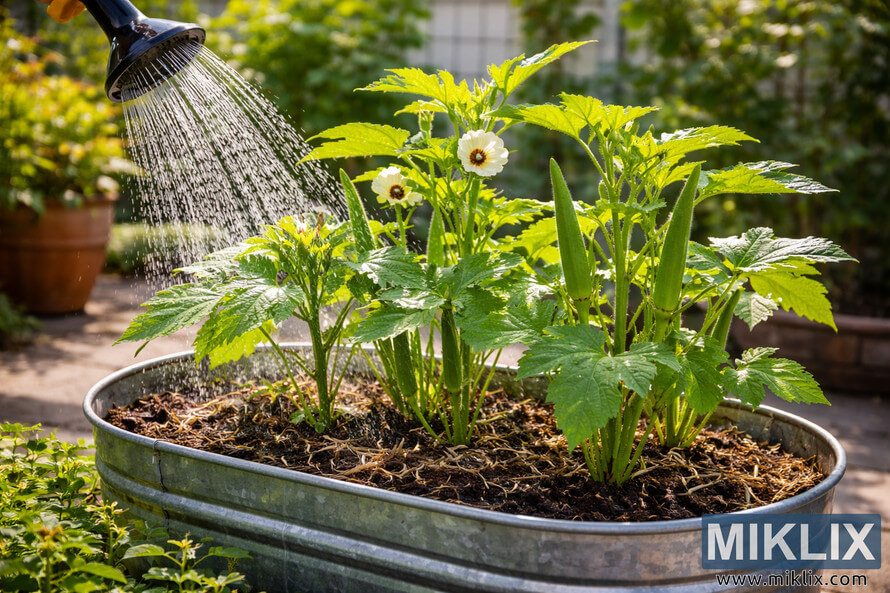
Containers require more frequent watering than in-ground plantings because limited soil volume dries quickly. Large containers help by providing more soil volume that retains moisture longer. Check container soil daily during hot weather to prevent water stress.
Container Water Management
Water containers thoroughly until excess drains from bottom holes. This ensures complete soil saturation and prevents dry pockets. Empty saucers after watering to prevent roots sitting in standing water.
Container okra may require daily watering during peak summer heat. Morning watering works best, but containers drying by afternoon need additional water. Use your finger to check soil moisture regularly rather than following a rigid schedule.
Click or tap the image for more information and higher resolutions.
Rainfall and Supplemental Irrigation
Natural rainfall reduces or eliminates the need for supplemental irrigation. Track rainfall amounts using a rain gauge to determine if additional watering becomes necessary. One inch of rainfall generally provides adequate weekly moisture during active growth.
Drought Tolerance Reality: While okra tolerates drought better than tomatoes and peppers, consistent moisture produces better yields and higher quality pods. Drought-stressed plants become tough and fibrous. Maintain regular watering for optimal production even though plants survive dry periods.
Fertilization and Nutrition Needs for Okra
Proper nutrition supports vigorous okra growth and heavy pod production. The crop requires balanced fertilization throughout the growing season to maintain productivity. Understanding nutrient needs and application timing maximizes plant health and harvest yields.
Pre-Planting Soil Preparation
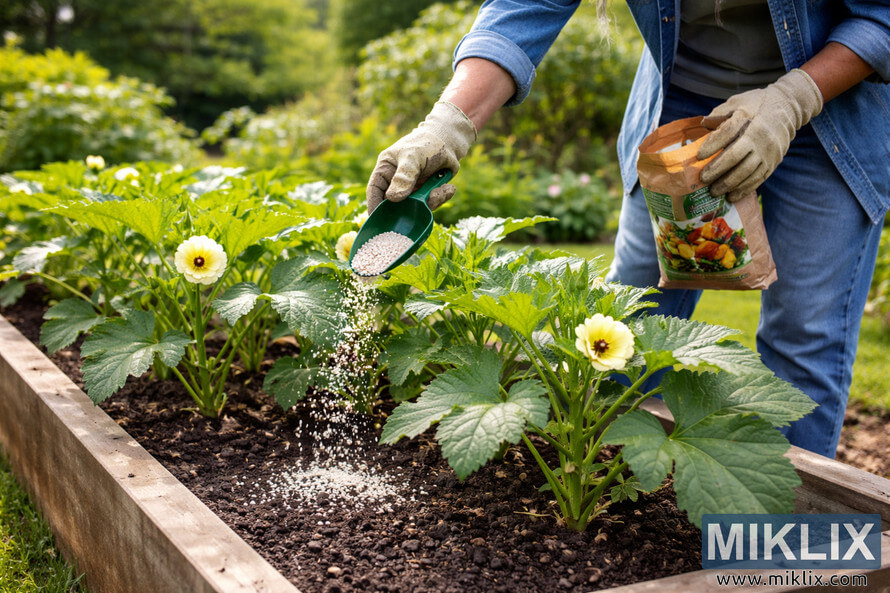
Incorporating organic matter and fertilizer before planting establishes a nutrient foundation for the season. Compost provides slow-release nutrients while improving soil structure. This advance preparation supports young plants during critical establishment phases.
Work a balanced fertilizer into planting beds one to two weeks before sowing seeds. A 10-10-10 or similar balanced formula provides appropriate nutrition for initial growth. Follow package application rates based on garden size and soil test recommendations.
Click or tap the image for more information and higher resolutions.
Nutrient Requirements Through Growth Stages
Okra nutrient needs shift as plants develop. Young plants require nitrogen for leaf and stem development. Once flowering begins, phosphorus and potassium become more important for flower and pod production. Adjusting fertilization addresses these changing needs.
| Growth Stage | Primary Nutrient Needs | Fertilizer Type | Application Timing |
| Seedling (0-3 weeks) | Nitrogen for foliage growth | Balanced 10-10-10 or starter fertilizer | At planting, then 2 weeks after emergence |
| Vegetative (3-6 weeks) | Nitrogen, moderate P and K | Higher nitrogen like 15-5-10 | Every 3-4 weeks |
| Flowering/Fruiting (6+ weeks) | Phosphorus and potassium for pods | Lower nitrogen like 5-10-10 | Every 4-6 weeks during production |
Application Methods and Frequency
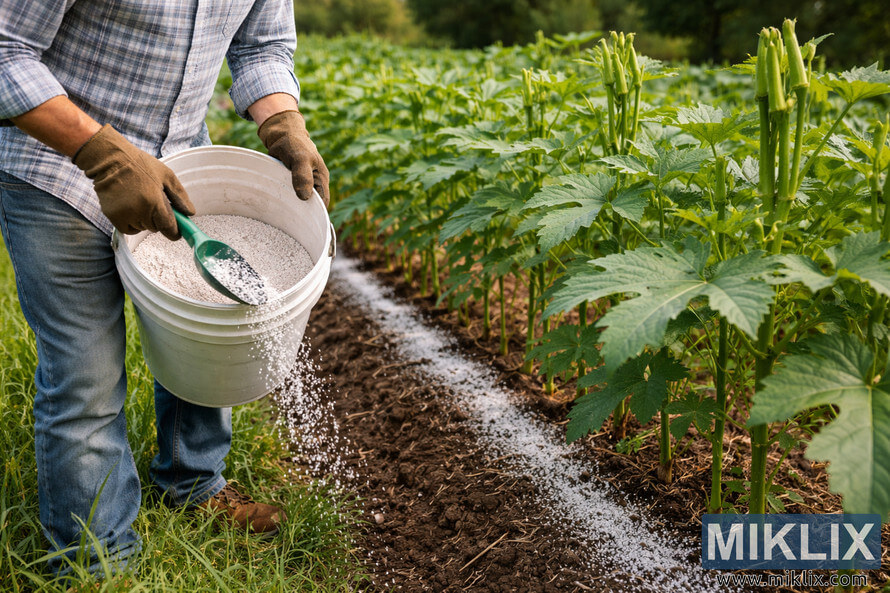
Side-dressing provides efficient fertilizer delivery to established plants. Scatter granular fertilizer alongside plant rows about six inches from stems. Water thoroughly after application to dissolve nutrients and carry them into the root zone.
Click or tap the image for more information and higher resolutions.
Apply fertilizer every three to six weeks depending on product type and soil fertility. Organic fertilizers require more frequent application than synthetic options because they release nutrients more slowly. Container-grown okra needs more frequent fertilization than garden plants.
- Initial application: Apply balanced fertilizer at planting time, working it into the top few inches of soil before sowing seeds.
- Two-week boost: Side-dress seedlings two weeks after emergence with balanced fertilizer to support establishment.
- Monthly feeding: Continue monthly applications through the growing season using appropriate fertilizer for current growth stage.
- Flowering transition: Switch to lower-nitrogen formula when flowers appear to promote pod production over foliage.
- Production maintenance: Maintain regular feeding schedule during harvest to support continuous pod development.
Organic Fertilizer Options
Organic fertilizers provide slow nutrient release while building soil health. Compost, aged manure, and organic fertilizer blends work excellently for okra. These materials feed both plants and beneficial soil organisms for long-term garden improvement.
Compost
Well-aged compost provides balanced nutrition and improves soil structure. Apply one to two inches around plant bases every four to six weeks. Compost feeds plants gradually while encouraging beneficial microbial activity in soil.
Fish Emulsion
Liquid fish emulsion delivers quick nitrogen boost for rapid greening. Dilute according to package directions and apply as foliar spray or soil drench. Use during vegetative growth for maximum leaf development.
Kelp Meal
Seaweed-based fertilizer provides trace minerals and growth hormones. Mix into soil at planting or use as side-dressing. Kelp meal enhances overall plant health and stress resistance throughout the season.
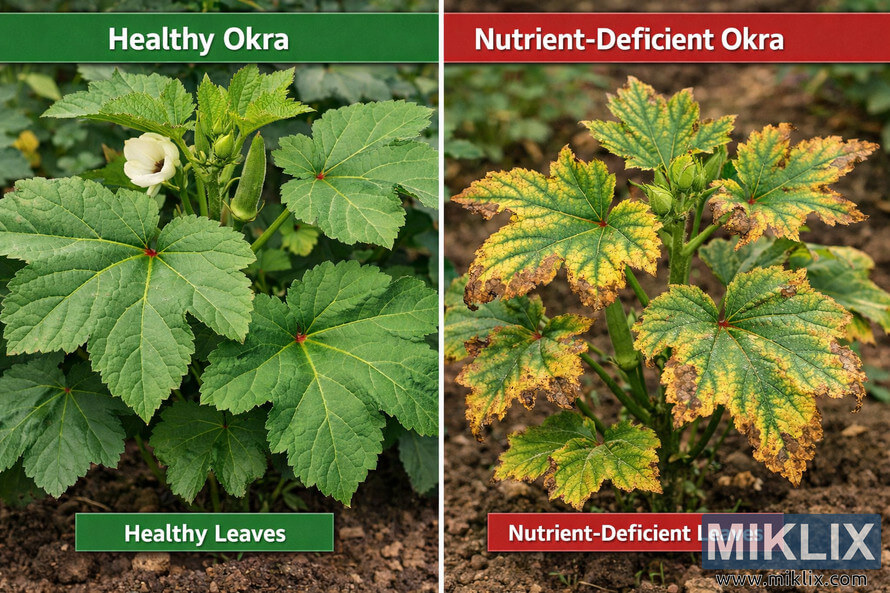
Recognizing Nutrient Deficiencies
Nutrient deficiency symptoms appear as distinct patterns on leaves and growth. Learning to identify common deficiencies allows quick correction before yields suffer. Most problems respond rapidly to appropriate fertilization.
Common Deficiency Symptoms
- Nitrogen: Overall yellowing starting with older leaves, stunted growth, pale color
- Phosphorus: Purple or dark red leaf tints, poor flower formation, slow maturity
- Potassium: Brown leaf edges, weak stems, poor pod development
- Magnesium: Yellowing between leaf veins while veins stay green
- Iron: New leaves yellow with green veins, occurs in high-pH soil
Correction Strategies
- Apply nitrogen-rich fertilizer for yellowing leaves and slow growth
- Use bone meal or phosphorus fertilizer for purple tinting
- Add potassium sulfate for brown leaf margins
- Apply Epsom salts for magnesium deficiency correction
- Use foliar iron spray or adjust soil pH for iron issues
Click or tap the image for more information and higher resolutions.
Over-Fertilization Problems
Excessive fertilization causes problems as serious as deficiencies. Too much nitrogen produces lush foliage with reduced pod production. Salt buildup from over-fertilization damages roots and causes leaf burn. Balance proves more important than heavy feeding.
Fertilizer Burn Prevention: Always water thoroughly after applying granular fertilizer. This dissolves nutrients and carries them into soil rather than allowing salt concentration around roots. Keep granular fertilizer at least six inches away from plant stems to prevent direct contact damage.
Container Fertilization Specifics
Container-grown okra requires more frequent fertilization than garden plants. Limited soil volume means nutrients wash through with regular watering. Liquid fertilizers work particularly well for containers, providing immediate nutrition that doesn't require soil breakdown.
Container Feeding Schedule: Feed container okra every two weeks with half-strength liquid fertilizer. This frequent, diluted approach prevents salt buildup while maintaining consistent nutrition. Flush containers monthly with plain water to leach accumulated salts from potting mix.
Common Pests and Diseases Affecting Okra Plants
Okra plants face various pest and disease challenges throughout the growing season. Early identification and prompt management prevent serious damage to crops. Understanding common problems and effective organic solutions helps gardeners maintain healthy, productive plants.
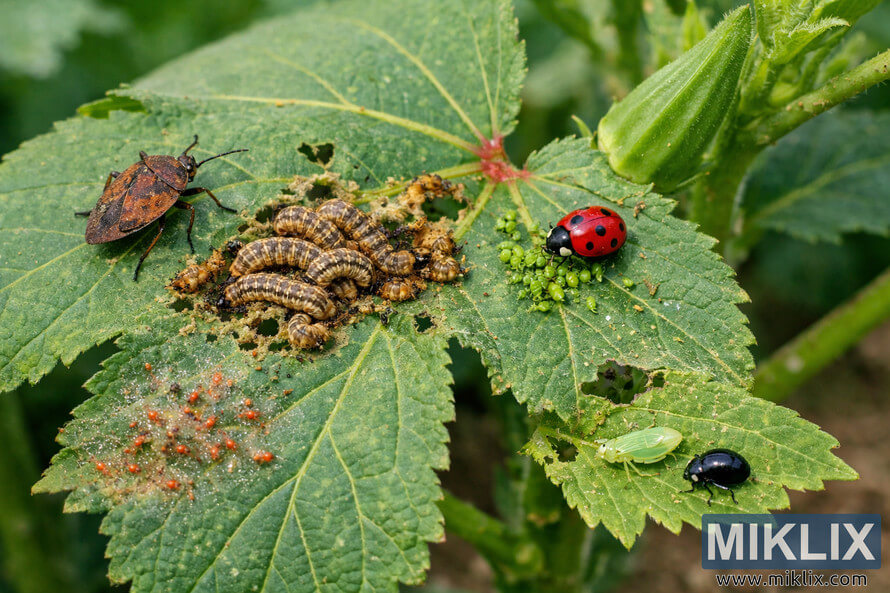
Common Insect Pests
Several insect species target okra plants for feeding. Most problems remain manageable with vigilant monitoring and appropriate intervention. Regular inspection allows early detection before pest populations explode and cause significant damage.
Click or tap the image for more information and higher resolutions.
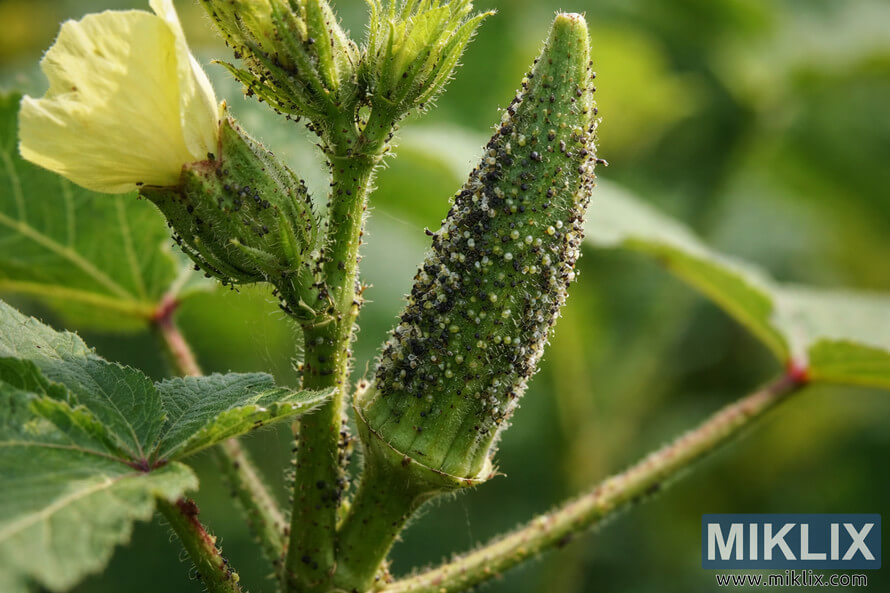
Aphids
Small, soft-bodied insects cluster on tender new growth and leaf undersides. Aphids suck plant juices, causing curled and distorted leaves. Heavy infestations produce sticky honeydew that promotes sooty mold growth. The pests reproduce rapidly, building large populations quickly.
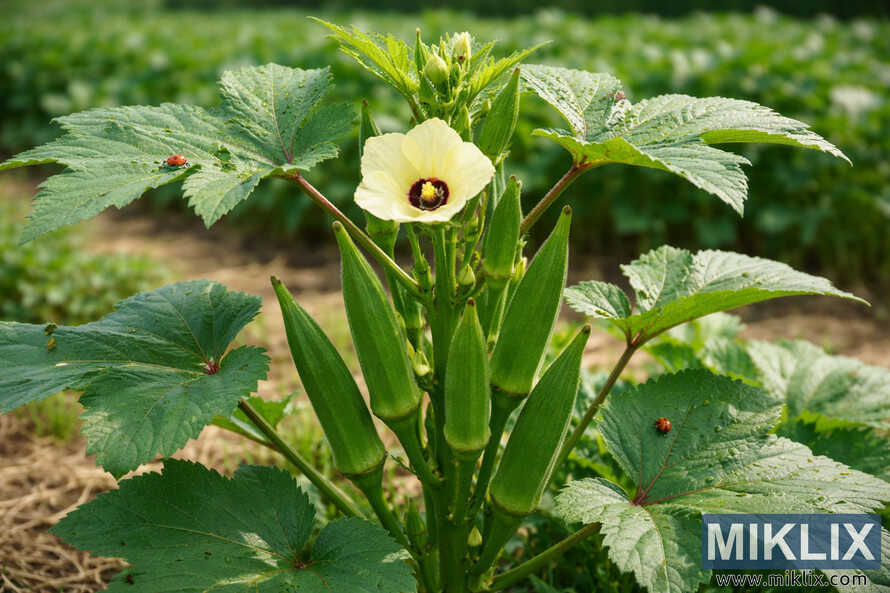
Control aphids by spraying plants with strong water streams to dislodge insects. Insecticidal soap provides effective organic control when sprayed directly on aphid colonies. Beneficial insects like ladybugs and lacewings naturally reduce aphid populations in balanced gardens.
Click or tap the image for more information and higher resolutions.
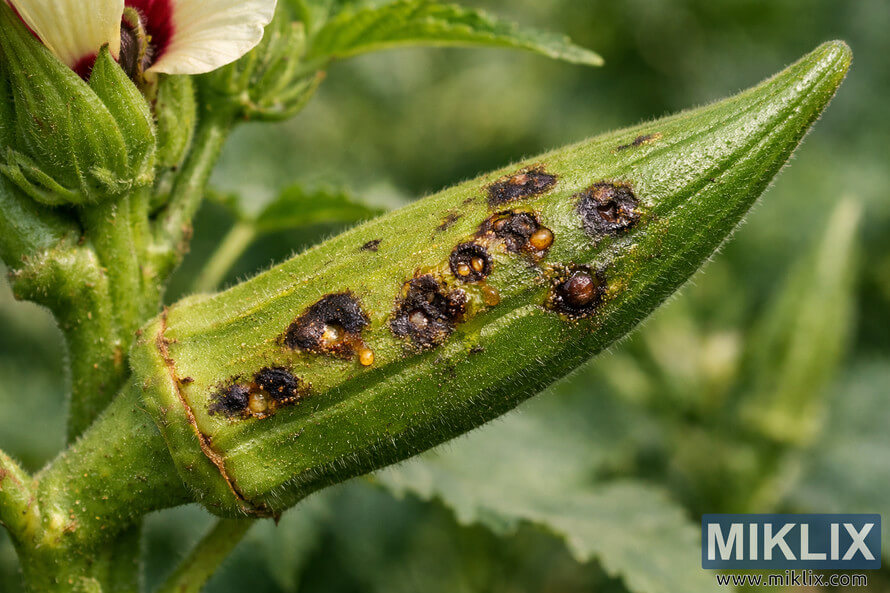
Stink Bugs
Shield-shaped insects feed on developing pods, causing scarring and deformity. Stink bugs inject digestive enzymes that create sunken spots on pods. Damaged areas turn brown and tough, reducing harvest quality. The pests move quickly and fly readily when disturbed.
Hand-picking provides effective control for small populations. Check plants daily during peak season and remove visible bugs. Kaolin clay spray creates protective barrier that deters feeding. Row covers exclude stink bugs from young plants until they grow large enough to withstand damage.
Click or tap the image for more information and higher resolutions.
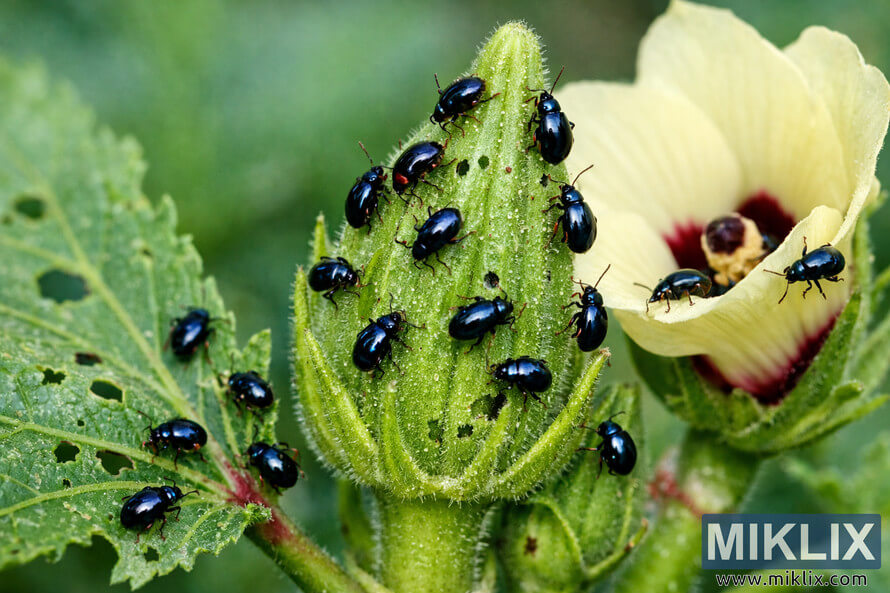
Flea Beetles
Tiny jumping beetles chew numerous small holes in leaves, creating characteristic shothole appearance. Heavy feeding on young seedlings can seriously stunt or kill plants. Adult beetles overwinter in garden debris and emerge as temperatures warm in spring.
Protect young plants with lightweight row covers until they grow large enough to tolerate beetle damage. Neem oil spray repels flea beetles and disrupts their feeding behavior. Maintain healthy, fast-growing plants that can tolerate some feeding damage without serious setbacks.
Click or tap the image for more information and higher resolutions.
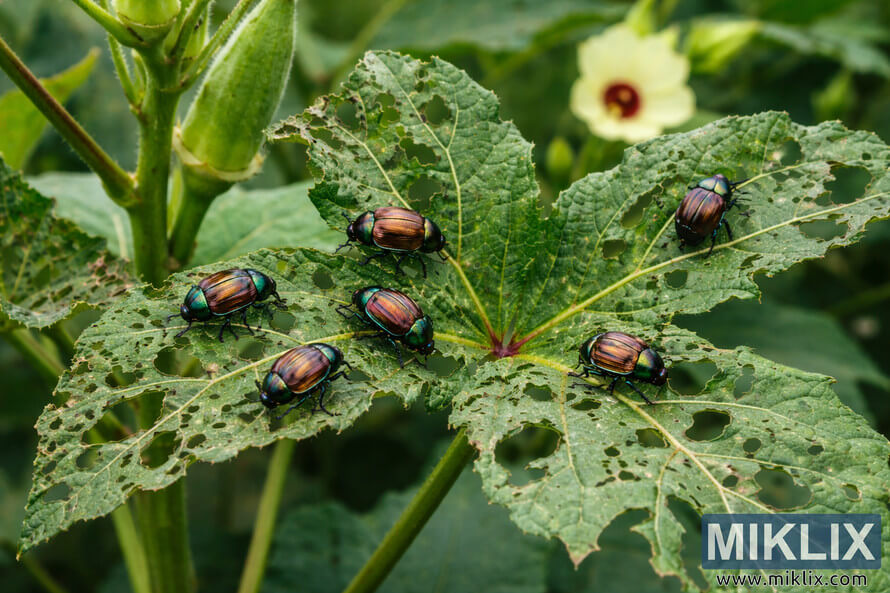
Japanese Beetles
Metallic green and copper beetles skeletonize leaves by consuming tissue between veins. Japanese beetles often feed in groups, quickly defoliating plants if left unchecked. The pests prefer full sun locations and feed most actively during warm afternoons.
Organic Control Methods
- Hand-pick beetles in early morning when sluggish
- Shake plants over bucket of soapy water to collect beetles
- Apply neem oil as feeding deterrent
- Use beetle traps away from garden to lure pests
- Encourage birds and beneficial insects that prey on beetles
Click or tap the image for more information and higher resolutions.
Disease Problems
Fungal and bacterial diseases occasionally affect okra plants, particularly during humid weather. Proper spacing for air circulation and avoiding overhead watering helps prevent many disease issues. Early recognition allows prompt treatment before diseases spread.
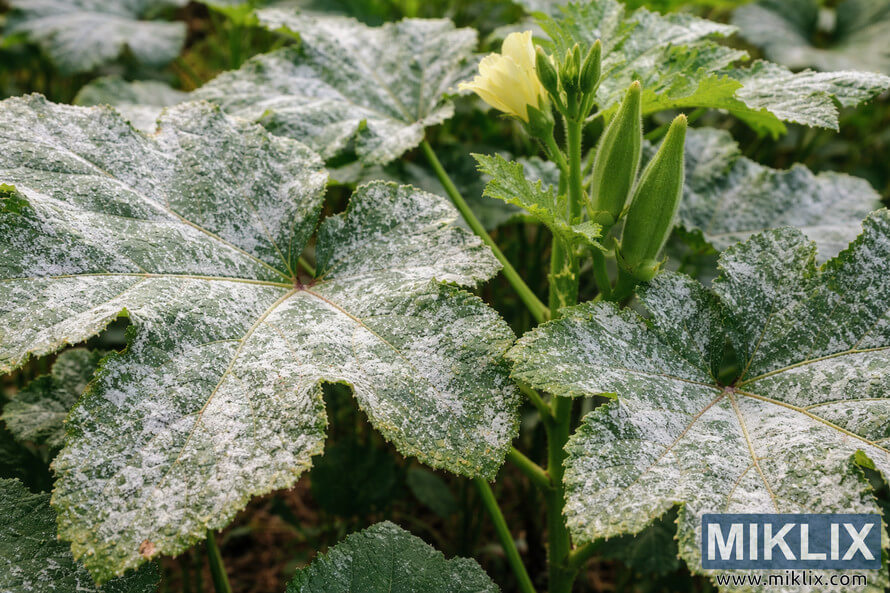
Powdery Mildew
White powdery coating develops on leaf surfaces, spreading rapidly during warm days and cool nights. Severe infections cause leaves to yellow and drop prematurely. Powdery mildew reduces plant vigor and pod production through repeated defoliation.
Improve air circulation by spacing plants properly and removing lower leaves that touch soil. Spray plants with baking soda solution (one tablespoon per gallon water) as preventive treatment. Sulfur-based fungicides provide organic control for established infections.
Click or tap the image for more information and higher resolutions.
Fusarium Wilt
Soil-borne fungal disease causes plants to wilt and die despite adequate moisture. Infected plants show yellowing that progresses from bottom to top. The disease often affects only one plant or a few plants in a row rather than the entire planting.
No cure exists for fusarium wilt once plants become infected. Remove and destroy affected plants to prevent disease spread. Practice crop rotation, avoiding planting okra or related crops in infected areas for at least three years. Choose resistant varieties when available for disease-prone locations.
Click or tap the image for more information and higher resolutions.
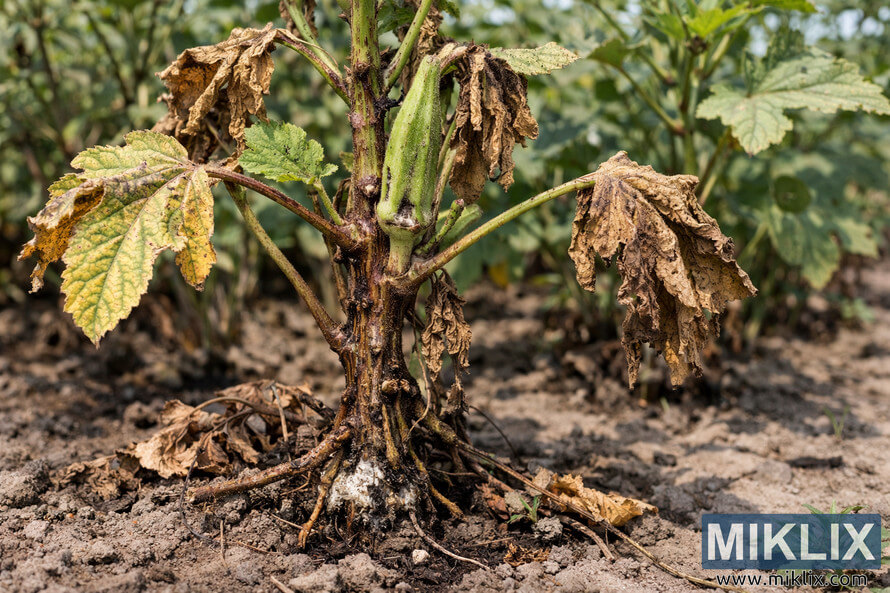
Southern Blight
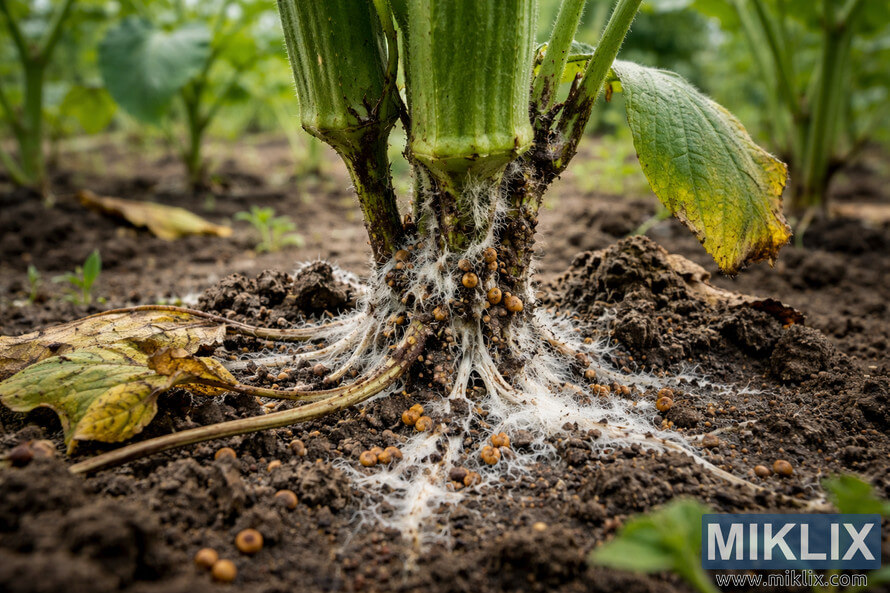
Fungal disease affects plant stems at soil level, causing sudden wilting and collapse. White fungal growth with small round structures appears on infected stems. The disease thrives in hot, humid conditions with temperatures above 85°F.
Prevent southern blight by avoiding stem damage during cultivation and maintaining proper plant spacing. Remove infected plants immediately, including surrounding soil. Apply mulch around plants but keep it several inches away from stems to prevent favorable conditions for fungus development.
Click or tap the image for more information and higher resolutions.
Integrated Pest Management Strategies
Combining multiple control methods provides the most effective long-term pest and disease management. Integrated approaches reduce reliance on any single control method while building garden ecosystem health. This comprehensive strategy maintains productive plants with minimal intervention.
Preventive Measures
- Plant okra in full sun with proper spacing for air circulation
- Water at soil level in morning to keep foliage dry
- Rotate planting locations yearly to disrupt pest and disease cycles
- Remove plant debris promptly to eliminate overwintering sites
- Encourage beneficial insects with diverse plantings
- Maintain plant health through proper fertilization and watering
- Monitor plants regularly for early problem detection
Control Actions
- Hand-pick visible pests during daily garden walks
- Use targeted organic sprays only when necessary
- Apply treatments in early morning or evening to protect beneficial insects
- Rotate control methods to prevent pest resistance development
- Remove heavily infected leaves or plants promptly
- Use physical barriers like row covers for vulnerable plants
- Keep detailed records of problems and effective treatments
Click or tap the image for more information and higher resolutions.
Recommended Organic Pest Control Solutions
Effective organic products help manage okra pests while protecting beneficial insects and garden ecosystem health. These proven solutions work when applied correctly as part of comprehensive pest management.
Neem Oil Concentrate
Botanical insecticide disrupts feeding and reproduction of many pests. Mix with water according to label directions and spray thoroughly. Works against aphids, beetles, and various other okra pests. Apply in evening to minimize beneficial insect exposure.
Insecticidal Soap
Contact spray controls soft-bodied insects like aphids effectively. Safe for use around vegetables with short pre-harvest interval. Spray directly on pests for best results. Reapply after rain or every five to seven days as needed.
Harvesting Okra: Timing and Technique
Proper harvest timing determines okra pod quality and encourages continued production. Young, tender pods provide the best eating experience while maintaining plant productivity. Understanding when and how to harvest maximizes both quality and quantity throughout the growing season.
When to Harvest Okra Pods
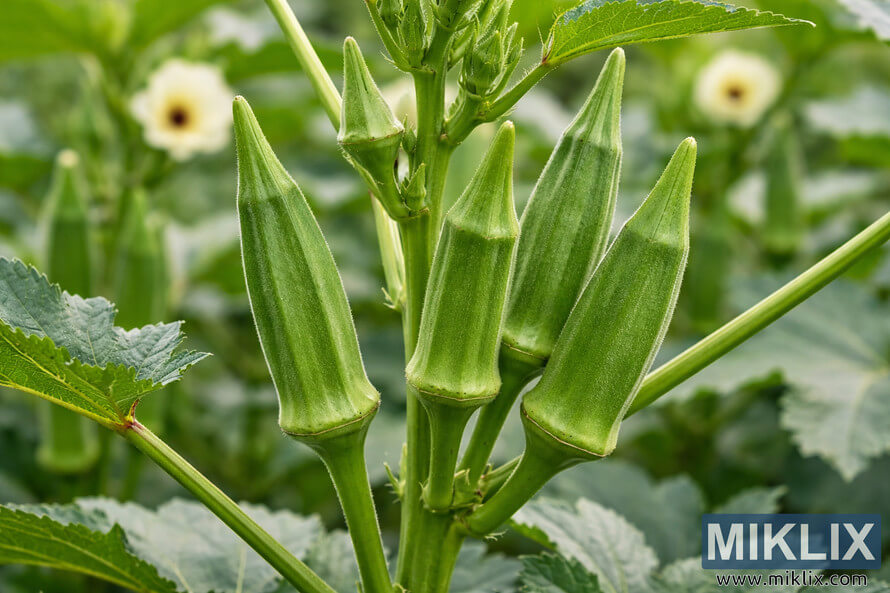
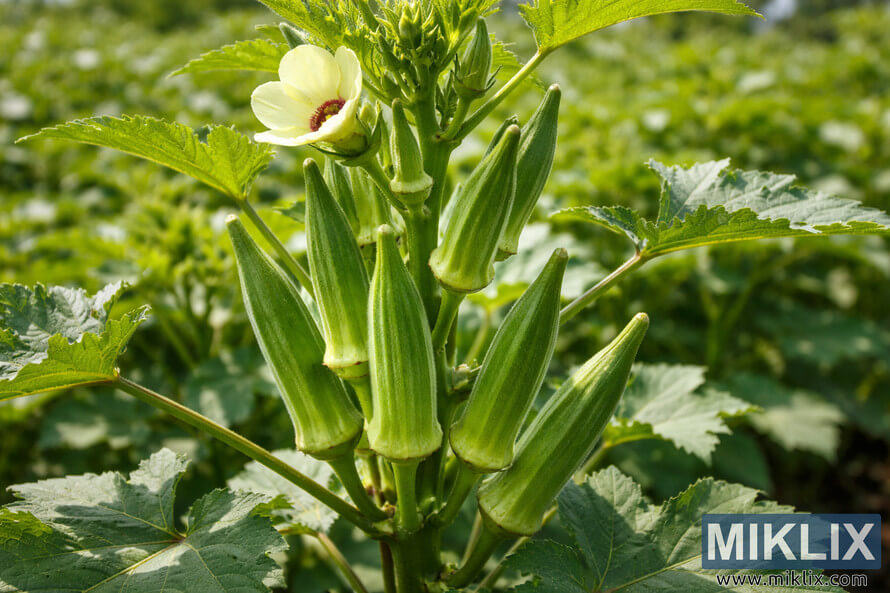
Okra pods reach harvest size quickly after flowers fade. Most varieties produce ready-to-pick pods within three to four days after flowering. Young pods between two and four inches long offer the most tender texture and best flavor for fresh eating.
Pod size preferences vary by intended use and personal taste. Smaller pods around two to three inches provide the most tender eating. Larger pods up to four inches work well for cooking in stews and gumbo. Pods beyond five inches become fibrous and tough regardless of preparation method.
Click or tap the image for more information and higher resolutions.
Harvest Frequency and Technique
Regular harvesting proves essential for continued okra production. Pick pods every one to two days during peak season to maintain plant productivity. Leaving mature pods on plants signals them to stop flowering and producing new pods.
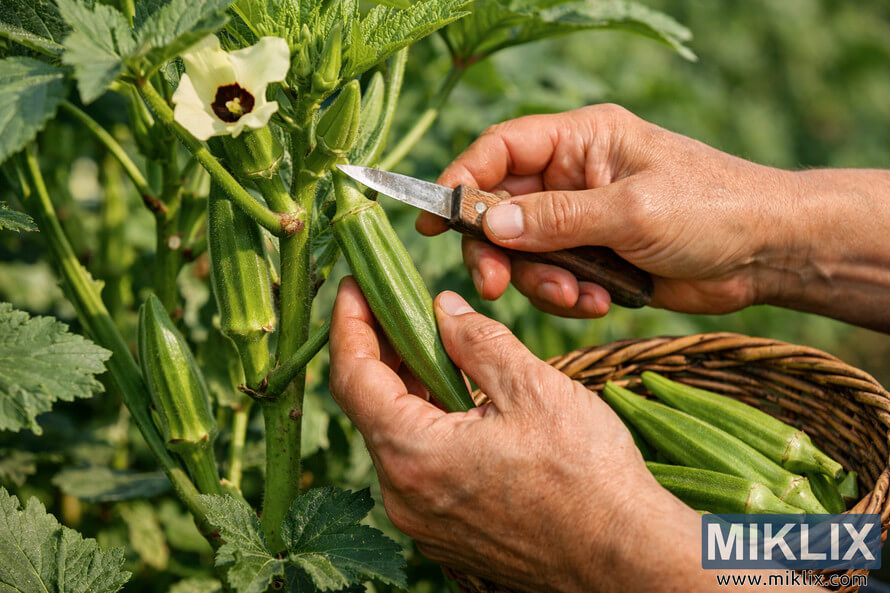
Use sharp pruning shears or a knife to cut pods from plants. Clean cuts heal quickly and prevent stem damage that invites disease. Avoid pulling or twisting pods, which can damage stems and reduce future production. Cut stems just above the pod cap.
- Wear gloves: Some varieties have tiny spines on pods and leaves that irritate skin. Long sleeves and gloves prevent discomfort during harvest.
- Check plants carefully: Okra pods hide among foliage, especially on tall plants. Look thoroughly to avoid missing ready pods.
- Cut cleanly: Make cuts close to the pod without damaging the main stem. Clean cuts prevent disease entry points.
- Harvest consistently: Pick pods at two to four inches for best quality. Never let pods exceed five inches unless saving for seed.
- Work during cooler hours: Harvest in morning or evening when temperatures moderate. Plants and harvested pods handle better in cooler conditions.
Click or tap the image for more information and higher resolutions.
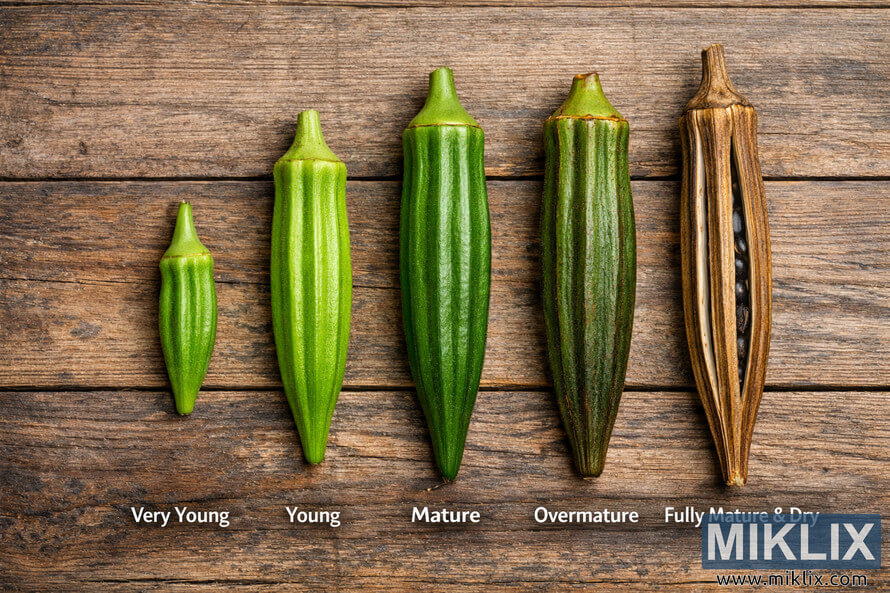
Signs of Pod Maturity
Several indicators reveal when okra pods move past prime harvest stage. Learning these signs helps gardeners pick at optimal maturity for tender, flavorful pods. Over-mature pods compromise eating quality significantly.
Perfect Harvest Indicators
- Pods measure two to four inches long
- Bright green color without browning
- Pods snap cleanly when bent slightly
- Tips remain pointed and closed
- Surface feels slightly fuzzy but tender
- Pods cut easily with light pressure
Over-Mature Warning Signs
- Pods exceed five inches in length
- Color darkens or shows browning
- Pods bend without snapping
- Tips begin opening and showing seeds
- Surface becomes woody and tough
- Pods resist cutting with knife
Click or tap the image for more information and higher resolutions.
Post-Harvest Handling
Proper handling after harvest maintains pod quality until use. Okra pods deteriorate rapidly at room temperature, especially in hot weather. Quick cooling and appropriate storage preserve fresh flavor and texture.
Refrigerate harvested okra promptly after picking. Store unwashed pods in perforated plastic bags in the vegetable crisper. Properly stored fresh okra maintains quality for two to three days. Wash pods just before using rather than immediately after harvest.
Extended Storage: Freeze excess okra for long-term storage. Blanch whole small pods in boiling water for three minutes, then plunge into ice water. Drain thoroughly and pack in freezer bags. Frozen okra maintains quality for up to twelve months.
Encouraging Continued Production
Frequent harvesting stimulates okra plants to produce more flowers and pods. Removing mature pods prevents seed development that signals plants to stop producing. This simple practice extends harvest periods significantly.
Feed plants every four to six weeks during harvest to support continued production. The energy required for constant pod development depletes soil nutrients. Regular feeding maintains plant vigor throughout the extended harvest season.
Size Matters: Pods that grow beyond four to five inches become tough and fibrous regardless of variety. The texture changes cannot be reversed through cooking. Pick all pods at the proper size to maintain tenderness and encourage new pod development.
Click or tap the image for more information and higher resolutions.
Late Season Considerations
Production naturally slows as days shorten and temperatures cool in late summer. Continue harvesting remaining pods until frost threatens. The final harvest should remove all pods before cold weather arrives and terminates plant growth.
Save seeds from a few healthy, mature pods if desired. Allow pods to dry completely on plants, then harvest when brown and brittle. Extract seeds by breaking open dried pods. Store seeds in cool, dry conditions for planting next season.
Tips for Maximizing Okra Yield
Strategic gardening practices significantly increase okra production beyond basic growing methods. Implementing proven yield-boosting techniques helps gardeners harvest more pods from the same space. These approaches combine proper care with smart management for optimal results.
Optimizing Plant Spacing
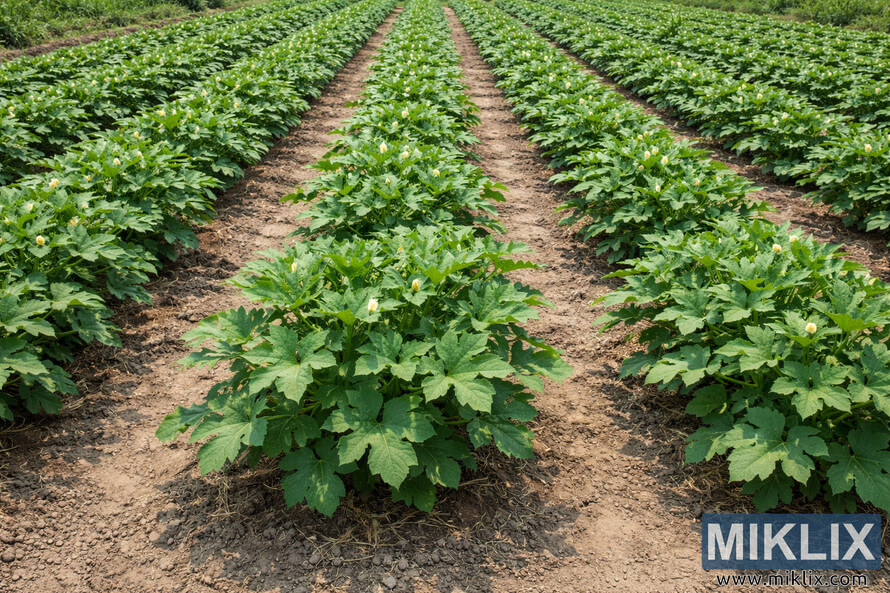
Proper plant density balances individual plant productivity with total garden yield. Closer spacing increases total plants per area but may reduce individual plant size. Finding the optimal balance for your variety and conditions maximizes overall harvest.
Standard spacing of twelve to fifteen inches within rows works for most varieties. Tighter spacing up to ten inches can work with dwarf varieties in fertile soil with excellent care. Wider spacing to eighteen inches benefits tall varieties that develop large canopies.
Click or tap the image for more information and higher resolutions.
Succession Planting Strategy
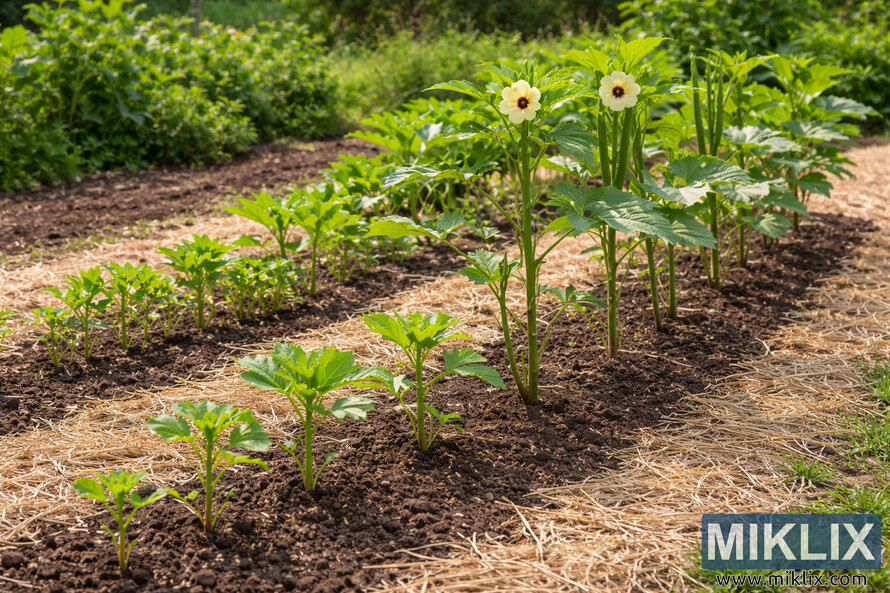
Staggered planting dates extend harvest periods and prevent glut situations. Rather than planting all okra at once, make two or three smaller plantings spaced three weeks apart. This approach provides steady pod production throughout summer instead of overwhelming early harvests.
Succession Planting Schedule
Plant first okra crop when soil reaches 65°F consistently. Make second planting three weeks later. Northern gardeners can plant twice; southern regions with long seasons support three or more successive plantings.
Each successive planting produces heavy yields at different times. Early plantings mature first, then younger plants take over production as older ones slow. This strategy prevents the common problem of too many pods ripening simultaneously.
Click or tap the image for more information and higher resolutions.
Pruning for Increased Production
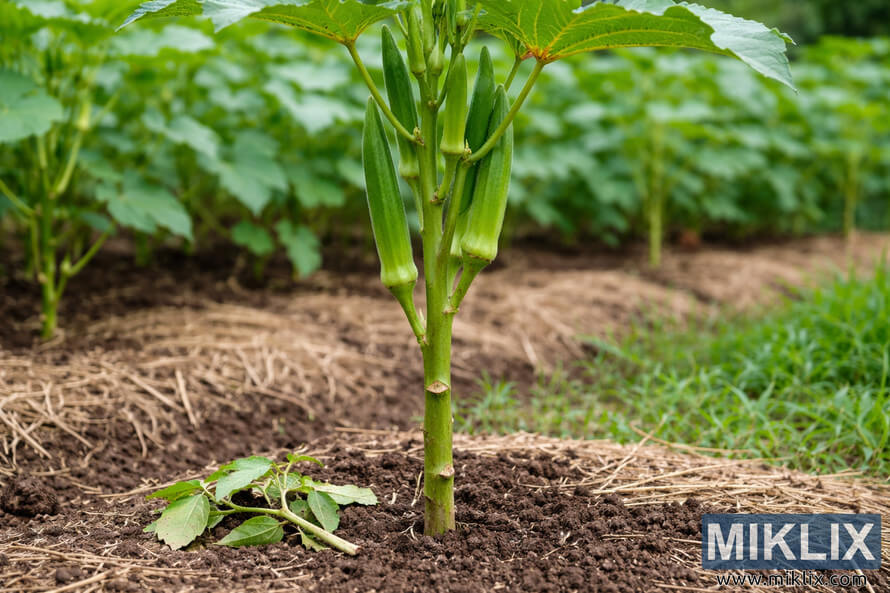
Selective pruning directs plant energy into pod production rather than excessive vegetative growth. Removing lower leaves improves air circulation and concentrates resources into upper portions where pods form. This technique works particularly well with tall varieties.
Remove bottom leaves once plants reach three feet tall and produce their first pods. Take off leaves below the lowest pods, leaving four to six inches of bare stem. Continue removing lower leaves as plants grow taller and produce pods higher on stems.
Click or tap the image for more information and higher resolutions.
Side-Dressing and Foliar Feeding
Supplemental feeding during production maintains plant vigor and supports continuous pod development. Side-dress established plants with compost or balanced fertilizer every four weeks. This regular nutrition replacement prevents depletion that slows production.
Foliar feeding provides quick nutrient boost during peak production periods. Spray diluted liquid fertilizer or compost tea on leaves every two weeks during heavy pod production. Foliage absorbs nutrients directly, providing rapid response without waiting for soil uptake.
Foliar Feed Recipe: Mix one tablespoon liquid kelp fertilizer and one tablespoon fish emulsion per gallon of water. Spray on leaf surfaces until dripping in early morning or evening. This combination delivers nitrogen for growth plus trace minerals for overall plant health.
Water Management for Peak Production
Consistent moisture throughout the growing season maintains steady pod production. Irregular watering causes stress that reduces yields and affects pod quality. Establishing reliable irrigation routines prevents production gaps from moisture fluctuations.
Production-Focused Watering
- Provide one to two inches water weekly during production
- Water deeply to encourage strong root development
- Maintain consistent moisture rather than alternating wet and dry
- Increase watering frequency during extreme heat
- Use mulch to stabilize soil moisture levels
Signs of Optimal Moisture
- Leaves remain turgid throughout the day
- New growth appears vigorous and healthy
- Pods develop quickly after flowering
- Plants maintain deep green color
- Flowers set pods reliably without dropping
Temperature and Timing Optimization
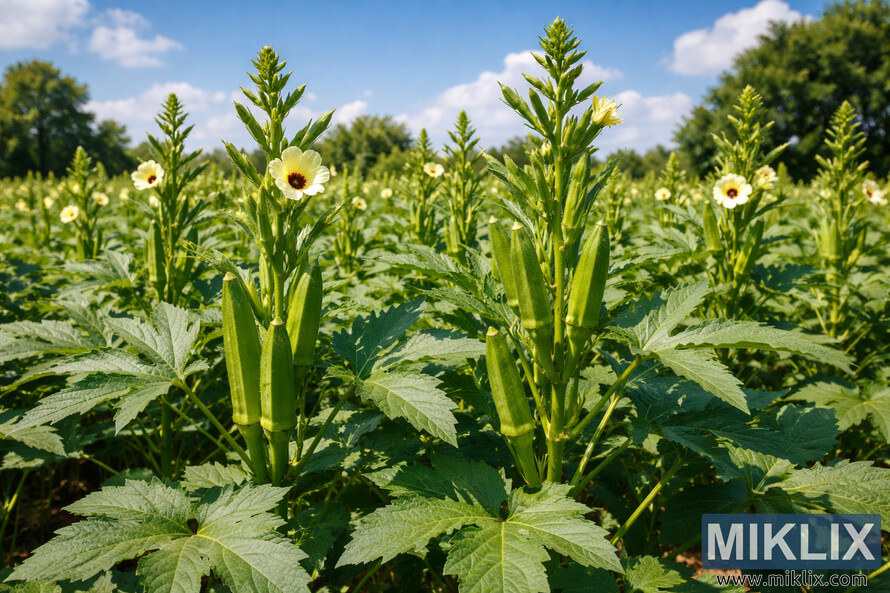
Okra produces most heavily during the hottest part of summer when temperatures consistently exceed 85°F. Timing plantings to ensure plants reach maturity during peak heat maximizes production. This strategy takes full advantage of okra's heat-loving nature.
Northern gardeners should plant as soon as soil warms adequately to ensure maximum time in peak summer heat. Southern growers can time plantings to have multiple crops producing during different parts of the long hot season. Both strategies align production with ideal temperatures.
Click or tap the image for more information and higher resolutions.
Variety Selection for Maximum Yield
Choosing high-yielding varieties appropriate for your region dramatically affects total production. Some varieties naturally produce more pods per plant than others. Researching top performers for your climate and growing conditions increases harvest potential.
High-Yielding Varieties
- Clemson Spineless produces reliably heavy crops across regions
- Annie Oakley II combines compact size with exceptional production
- Louisiana Green Velvet excels in extended hot-season areas
- Emerald delivers outstanding yields on tall plants
- Burgundy Red produces heavily while adding ornamental value
- Cajun Delight offers excellent production on space-saving plants
Extending the Harvest Season
Protecting plants from early fall frost extends productive harvest periods. Row covers or temporary cold frames shelter plants during light frost events. This protection can add two to four weeks of production in regions with early fall frost.
Season Extension Technique: Monitor weather forecasts in late summer for frost warnings. Cover okra plants with lightweight fabric or plastic sheeting before frost arrives. Remove covers once temperatures rise above freezing. This simple protection extends harvest until hard freeze finally ends the season.
Common Mistakes to Avoid When Growing Okra
Understanding frequent okra-growing errors helps gardeners prevent problems before they occur. Learning from common mistakes saves time, reduces frustration, and increases success rates. These insights come from accumulated experience of numerous gardeners facing similar challenges.
Planting Too Early
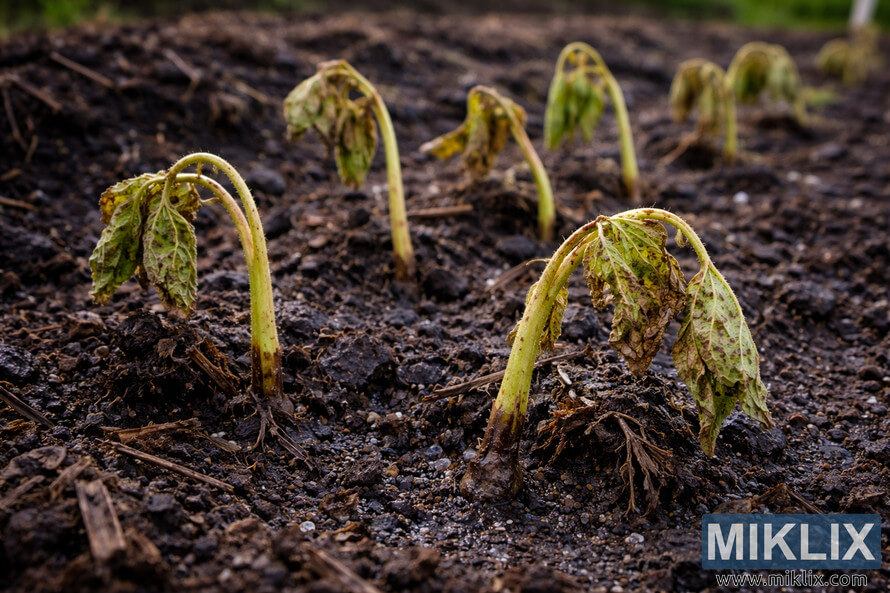
- The most frequent okra mistake involves planting before soil and weather warm adequately. Gardener enthusiasm leads to early planting that results in poor germination or stunted seedlings. Cool soil temperatures prevent proper seed germination regardless of optimism.
- Wait patiently for soil to reach minimum 65°F at planting depth. Use a soil thermometer rather than guessing based on air temperature or calendar dates. The two-week wait after last frost date allows adequate soil warming in most regions.
- Temperature Reality Check: Okra seeds may sit dormant in cool soil for weeks without germinating, then rot as soil organisms attack them. Cold-soil planting wastes seeds and garden space while delaying actual crop establishment. Patience with timing produces better results than rushing spring planting.
Click or tap the image for more information and higher resolutions.
Inadequate Spacing
Overcrowding okra plants creates multiple problems that reduce yields and increase disease pressure. Crowded plants compete for light, nutrients, and water. Poor air circulation in dense plantings promotes fungal diseases and pest problems.
Problems from Crowding
- Reduced air circulation promotes disease
- Shading limits photosynthesis and pod production
- Competition for nutrients stunts all plants
- Difficult harvest access damages plants
- Pest problems concentrate in dense foliage
- Individual plants produce fewer pods
Proper Spacing Benefits
- Full sun exposure maximizes photosynthesis
- Good air circulation prevents disease
- Individual plants reach full potential
- Easy harvest access reduces damage
- Better pest monitoring and control
- Overall higher total yield per square foot
Inconsistent Harvesting
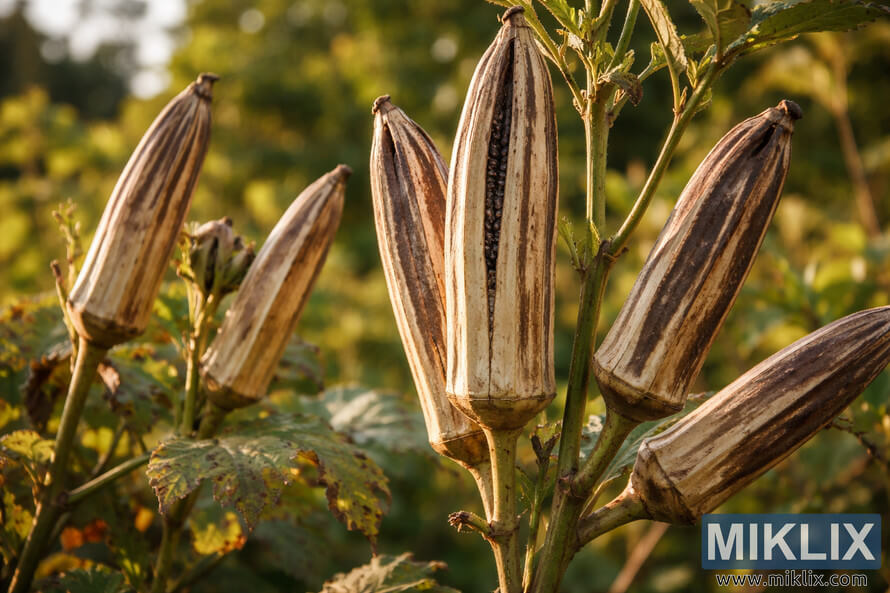
Failing to harvest pods regularly ranks among the most yield-limiting mistakes. Skipping harvest for even a few days allows pods to over-mature. These large, tough pods signal plants to stop flowering and producing new pods.
Check plants every one to two days during peak production. Harvest all pods at two to four inches length. Remove any over-mature pods immediately even if too tough for eating. This removal restarts pod production that mature pods suppress.
Click or tap the image for more information and higher resolutions.
Neglecting Soil Preparation
Skipping thorough soil preparation before planting compromises the entire season's production. Poor soil limits root development and nutrient availability. The time invested in proper preparation returns multiplied yields throughout the growing season.
Test soil pH and amend as needed before planting. Work in several inches of compost or aged manure to improve structure and fertility. Create raised beds or mounds in areas with drainage concerns. This advance work establishes conditions for optimal plant performance.
Over-Fertilizing with Nitrogen
Excessive nitrogen fertilization produces lush green foliage with disappointing pod production. The plants grow tall and leafy but form few flowers and pods. Balance proves more important than heavy feeding for okra cultivation.
Nitrogen Balance: Use balanced fertilizers during early growth, then switch to lower-nitrogen formulas when flowering begins. High phosphorus and potassium levels during production support pod formation better than continued heavy nitrogen application. The 5-10-10 ratio works well during fruiting stages.
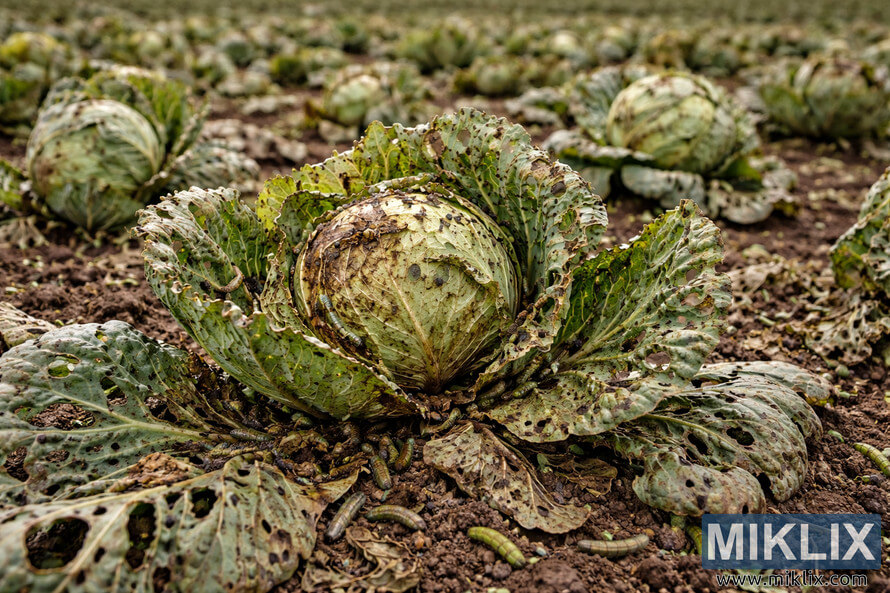
Ignoring Pest Problems
Delayed response to pest issues allows populations to explode and cause serious damage. Early intervention when pest numbers remain low proves far more effective than fighting large infestations. Regular monitoring enables prompt action before problems escalate.
Walk through the okra garden every few days checking plants carefully. Look for pest insects, egg masses, and early damage symptoms. Hand-pick pests or apply appropriate organic controls when first noticed. This vigilance prevents minor issues from becoming major problems.
Click or tap the image for more information and higher resolutions.
Improper Watering Practices
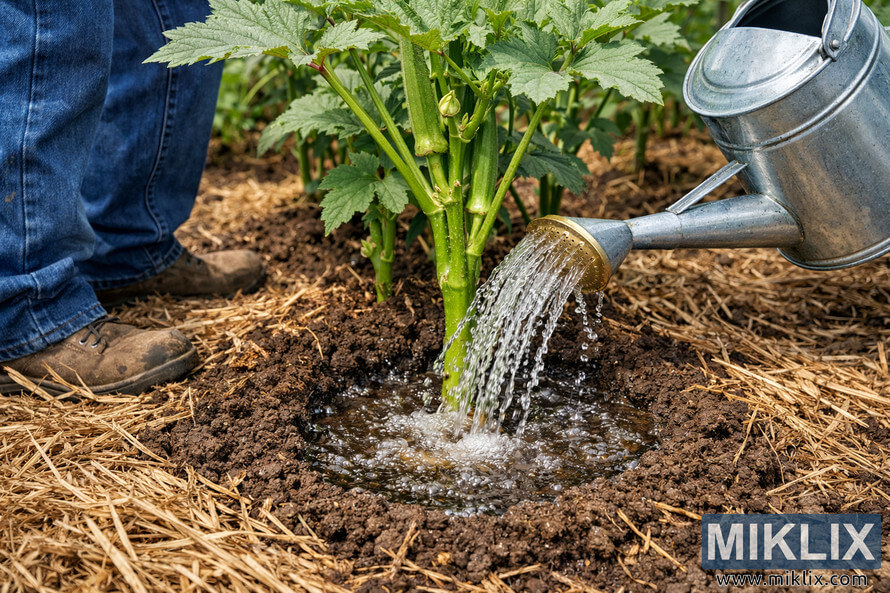
Both overwatering and underwatering stress okra plants and reduce production. Shallow frequent watering encourages weak surface roots instead of deep drought-tolerant root systems. Heavy irregular watering creates wet-dry cycles that stress plants.
Correct Watering Approach
- Water deeply to encourage root depth
- Allow soil surface to dry between sessions
- Maintain consistent schedule rather than sporadic heavy watering
- Water at soil level instead of overhead
- Apply water in morning for disease prevention
- Adjust frequency based on weather conditions
Click or tap the image for more information and higher resolutions.
Neglecting Container Maintenance
Container-grown okra requires more attention than garden plantings but often receives less. Small soil volumes dry quickly and deplete nutrients faster. Ignoring these increased needs results in stunted plants with poor production.
Check container moisture daily during hot weather. Feed container plants every two to three weeks with diluted fertilizer. Flush containers monthly with plain water to prevent salt buildup. These extra steps ensure container okra performs as well as garden-grown plants.
Giving Up on Northern Growing
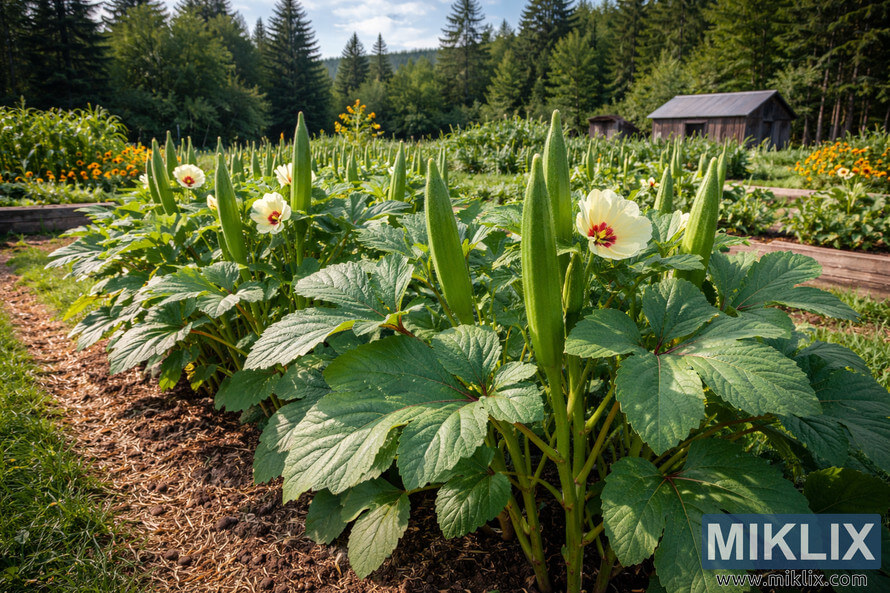
Northern gardeners sometimes avoid okra believing their climate unsuitable. While okra prefers long hot summers, successful cultivation occurs in surprisingly cool regions with proper variety selection and timing. Many northern gardeners enjoy excellent okra harvests using adapted techniques.
Northern Success Strategy: Choose fast-maturing varieties like Annie Oakley II or Clemson Spineless. Start seeds indoors four to six weeks before last frost. Use black plastic mulch to warm soil. Plant in hottest, sunniest garden location. These adjustments allow successful okra cultivation well into zone 5 and sometimes zone 4.
Click or tap the image for more information and higher resolutions.
Conclusion: Your Path to Okra Growing Success
Growing okra rewards gardeners with abundant harvests of nutritious, versatile pods throughout summer. This heat-loving vegetable thrives where many crops struggle, making productive use of hot weather and full sun exposure. Success requires understanding okra's specific needs and applying proper cultivation techniques.
Start with proper timing and soil preparation. Wait for warm soil temperatures before planting seeds or transplants. Prepare beds with organic matter and ensure excellent drainage. These foundational steps establish conditions for healthy plant development and heavy production.
Maintain consistent care throughout the growing season. Provide adequate water, especially during establishment and pod production. Feed plants regularly to support continuous flowering and pod formation. Monitor for pests and diseases, intervening promptly when problems appear.
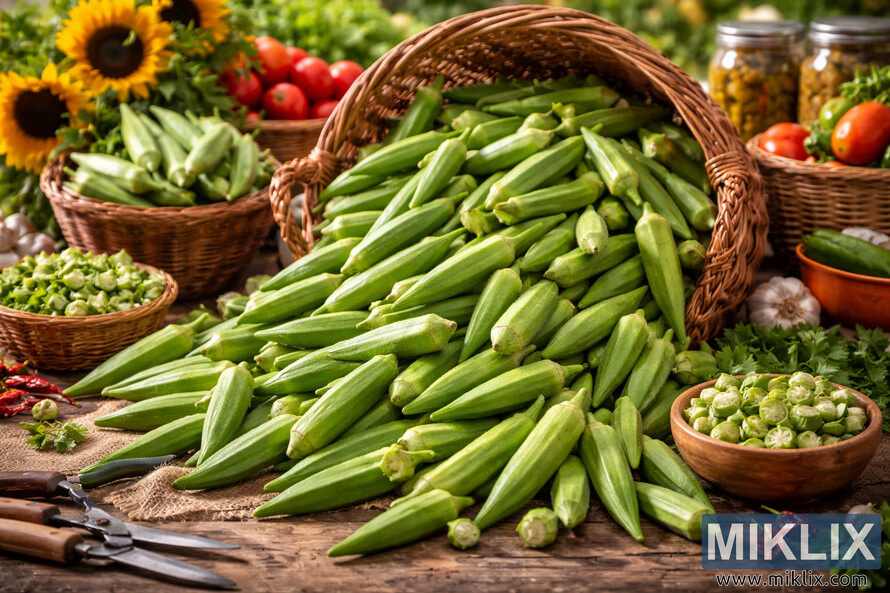
Harvest frequently to maintain production and ensure tender pod quality. Pick pods every one to two days when they reach two to four inches long. Regular harvesting signals plants to continue producing rather than setting seed and stopping pod formation.
Learn from experience and adapt techniques to your specific conditions. Every garden presents unique challenges and opportunities. Observe how plants respond to your care and adjust practices accordingly. Keep records of what works well and what needs improvement for future seasons.
Click or tap the image for more information and higher resolutions.
Key Success Factors
- Proper timing for warm soil and weather
- Full sun exposure throughout the day
- Well-drained soil enriched with organic matter
- Consistent moisture during growing season
- Regular feeding to support production
- Frequent harvest at optimal pod size
- Vigilant pest and disease monitoring
Beginner-Friendly Approaches
- Start with proven varieties like Clemson Spineless
- Direct seed in garden for simplest method
- Use mulch to reduce watering needs
- Set regular harvest schedule to prevent missed pods
- Choose container growing for small spaces
- Learn to recognize common problems early
- Join gardening communities for support and advice
The satisfaction of harvesting home-grown okra surpasses store-bought options in both quality and freshness. Fresh pods maintain peak flavor and tender texture impossible to find in commercial produce. Growing your own okra connects you directly with your food while providing nutritious additions to summer meals.
Whether growing okra in expansive garden beds or compact containers, the crop adapts to various situations with proper care. Small-space gardeners succeed with dwarf varieties, while those with room can enjoy tall, heavily-productive plants. The versatility makes okra accessible to gardeners with diverse circumstances.
Begin your okra-growing journey with confidence based on the comprehensive information provided throughout this guide. Apply these proven techniques in your garden and adjust as you gain experience. Each season brings new learning opportunities and improved results as your skills develop.
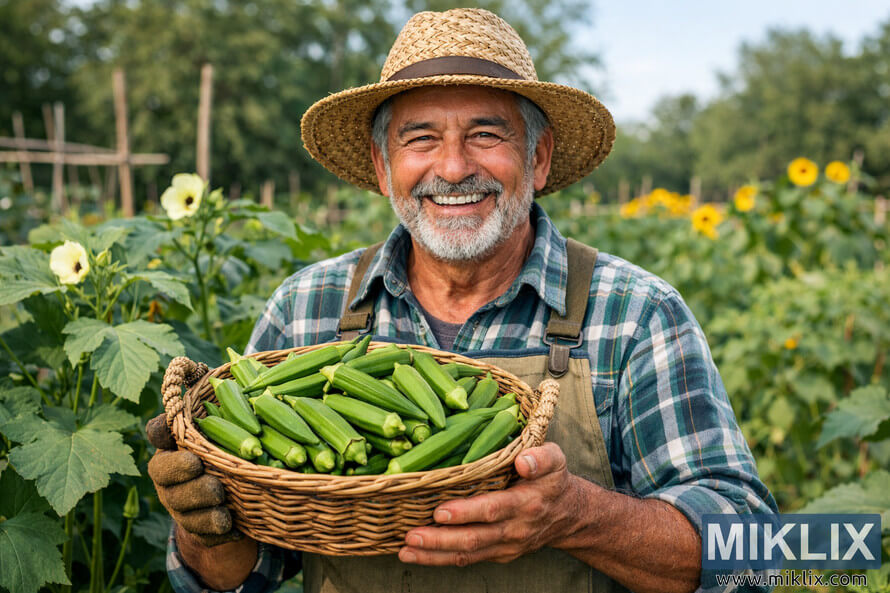
The time invested in growing okra returns abundant harvests of fresh, nutritious pods throughout the hottest months. This productive crop transforms challenging summer heat into gardening success. Your efforts cultivating okra will reward you with delicious pods for fresh eating, cooking, and preserving well beyond the growing season.
Click or tap the image for more information and higher resolutions.
Further Reading
If you enjoyed this post, you may also like these suggestions:
- How to Grow Radishes: Your Complete Beginner's Guide to a Perfect Harvest
- A Complete Guide to Growing Kiwis at Home
- Growing Apricots: A Guide to Sweet Homegrown Fruit