
Image: Wooden Raised Bed Garden for Growing Okra with Drip Irrigation
Published: March 17, 2026 at 9:37:34 PM UTC
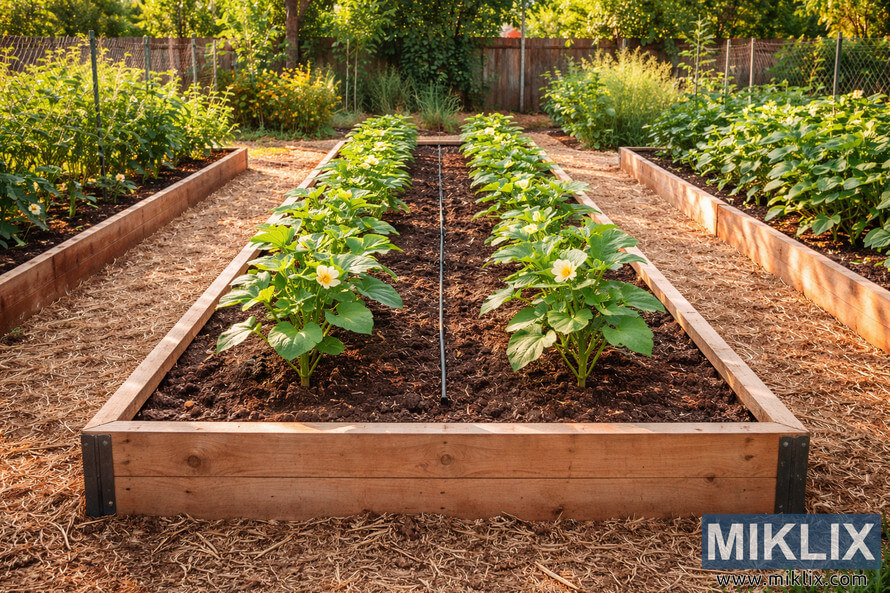
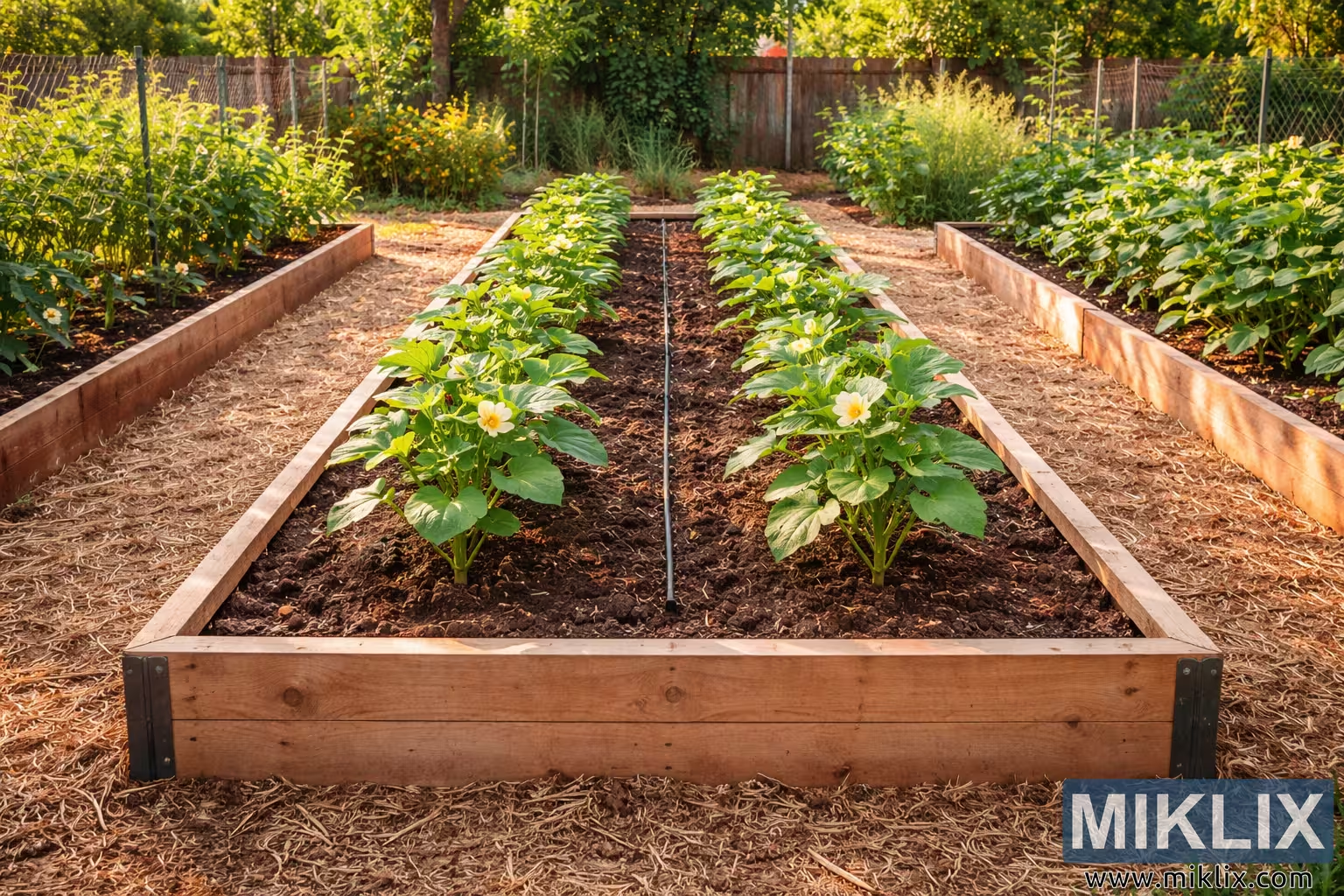
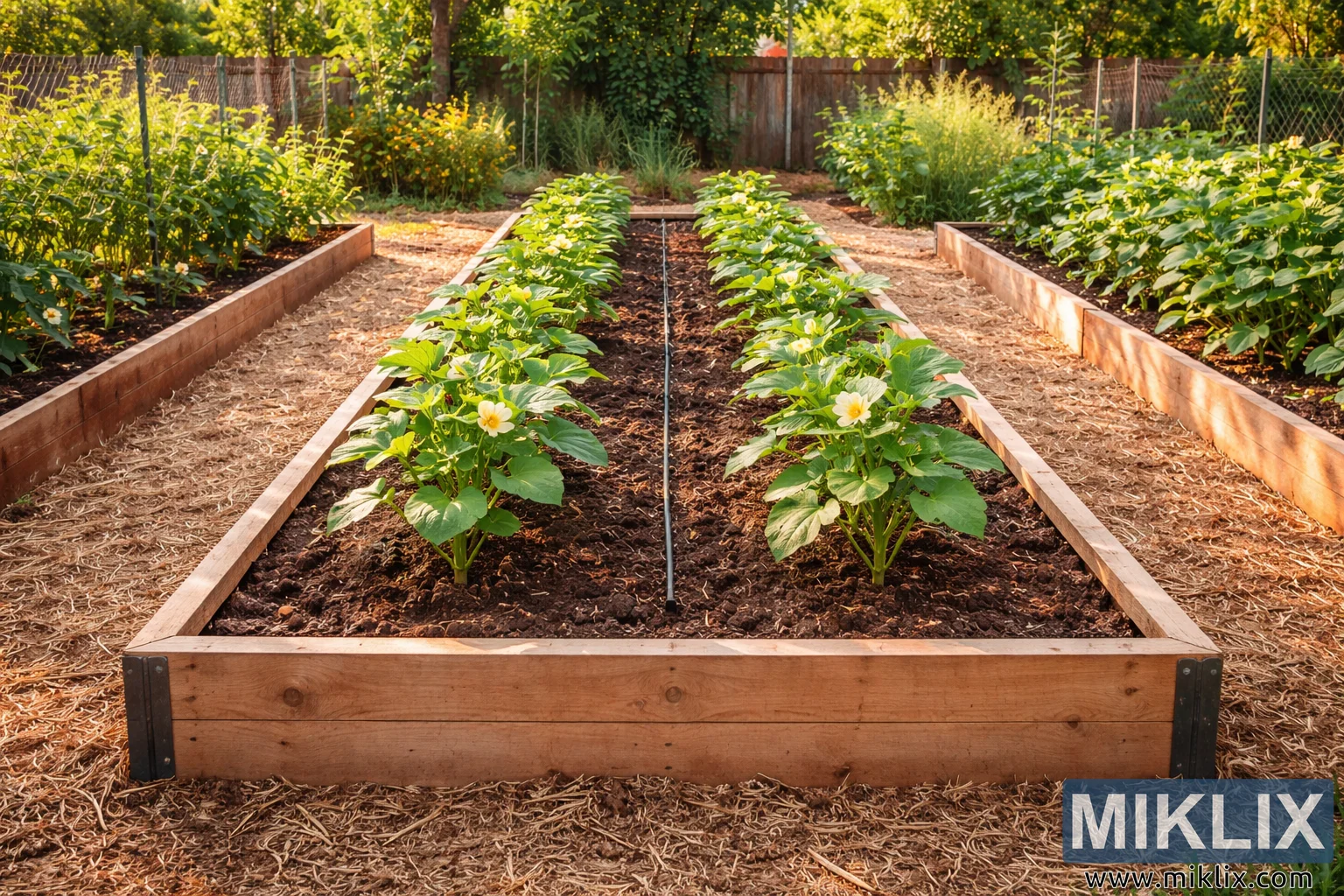
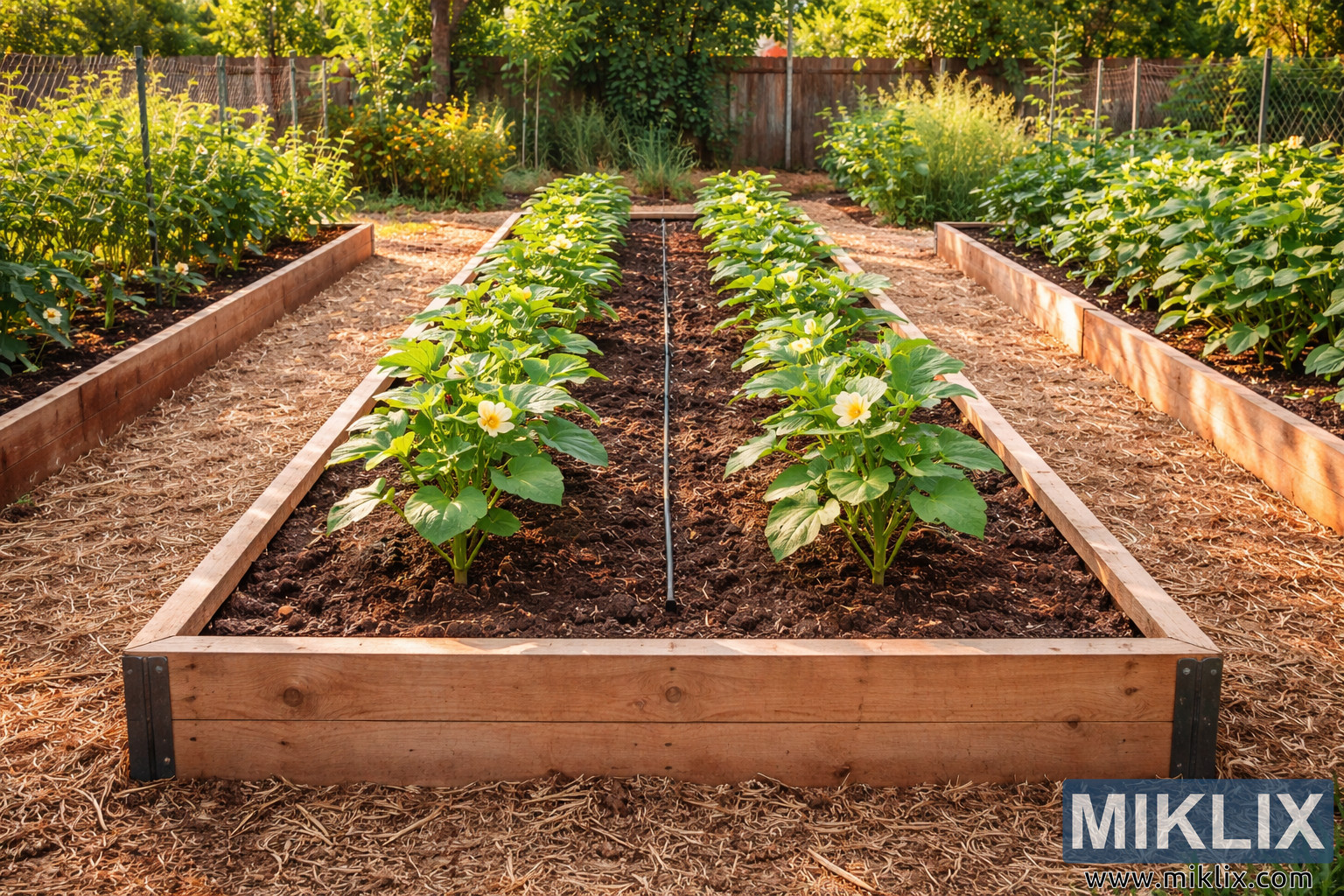
High-resolution photo of a wooden raised garden bed designed for okra cultivation, showing healthy plants, rich soil, and drip irrigation in a well-maintained backyard garden.
Available versions of this image
The image files available for download below are less compressed and higher resolution - and as a result of that, higher quality - than the images embedded in articles and pages on this website, which are more optimized for file size in order to reduce bandwidth consumption.
Regular size (1,536 x 1,024)
Large size (3,072 x 2,048)
Very large size (4,608 x 3,072)
Extra large size (6,144 x 4,096)
Comically large size (1,048,576 x 699,051)
- Still uploading... ;-)
Image description
The image shows a carefully constructed wooden raised garden bed designed for cultivating okra in a well-organized backyard vegetable garden. The raised bed is built from natural wooden planks that appear sturdy and untreated, giving the structure a warm, earthy tone that blends naturally with the surrounding environment. Metal corner brackets reinforce each corner of the bed, indicating a durable construction method meant to withstand outdoor conditions and regular gardening use.
Inside the bed lies rich, dark soil that appears freshly prepared and well-aerated. Two neat rows of young okra plants grow along the length of the bed. The plants are evenly spaced, demonstrating thoughtful planning for airflow and plant development. Each plant features broad green leaves with a slightly textured surface, and several of them display delicate pale yellow flowers with darker centers, characteristic of okra plants. The healthy foliage and blossoms suggest the plants are thriving and entering an early productive stage.
Running straight down the center of the bed is a drip irrigation line. The narrow black tubing is positioned precisely between the rows of plants, allowing water to be delivered slowly and efficiently to the root zone of each plant. This irrigation method helps conserve water while ensuring consistent moisture levels in the soil, which is important for successful vegetable cultivation.
The raised bed itself sits within a larger garden layout that includes pathways covered with light brown mulch or wood chips. These paths provide clean access for gardeners while helping suppress weeds and retain soil moisture. On both sides of the central bed, additional raised beds can be seen, filled with other leafy vegetables and garden plants, creating a symmetrical and well-maintained garden space.
The garden is surrounded by lush greenery, including shrubs, trees, and flowering plants that form a natural border around the area. A wooden fence runs along the back of the garden, providing privacy and a rustic backdrop. Warm late-afternoon sunlight filters through the surrounding foliage, casting soft highlights and gentle shadows across the garden beds. This lighting enhances the vivid greens of the plants and the rich browns of the soil and wood, creating a calm and inviting atmosphere.
Overall, the scene captures a thriving vegetable garden with a focus on practical raised-bed construction for okra cultivation. The combination of organized planting, efficient irrigation, and natural materials demonstrates a thoughtful approach to home gardening that balances productivity, sustainability, and aesthetic appeal.
The image is related to: The Complete Guide to Growing Okra in Your Home Garden