
Image: Soil Amendment Minerals for Gardening and Agriculture
Published: March 17, 2026 at 9:37:34 PM UTC
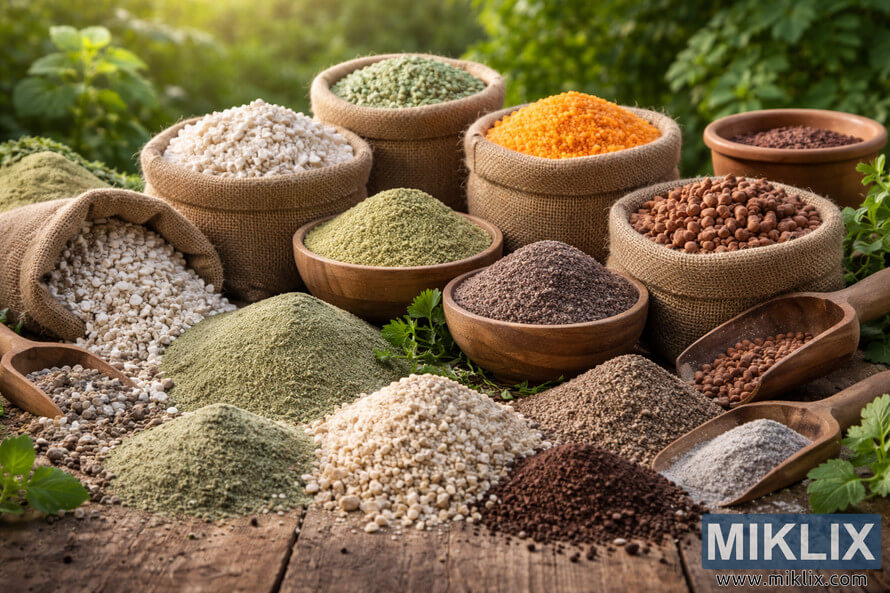
High-resolution image showing various soil amendment minerals including perlite, limestone, greensand, gypsum, sulfur, and rock phosphate displayed in bowls and burlap sacks on a rustic wooden table surrounded by garden plants.
Available versions of this image
The image files available for download below are less compressed and higher resolution - and as a result of that, higher quality - than the images embedded in articles and pages on this website, which are more optimized for file size in order to reduce bandwidth consumption.
Regular size (1,536 x 1,024)
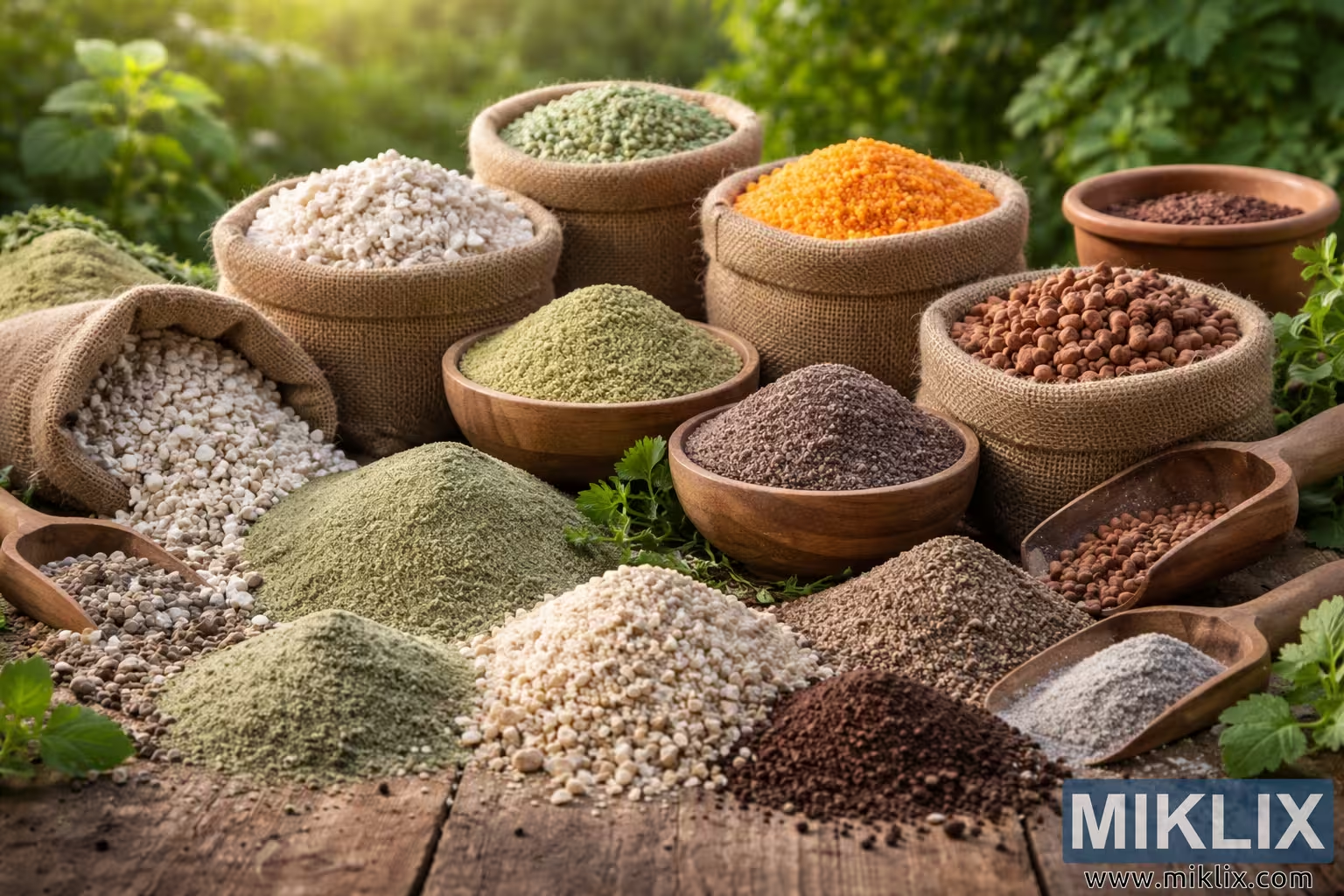
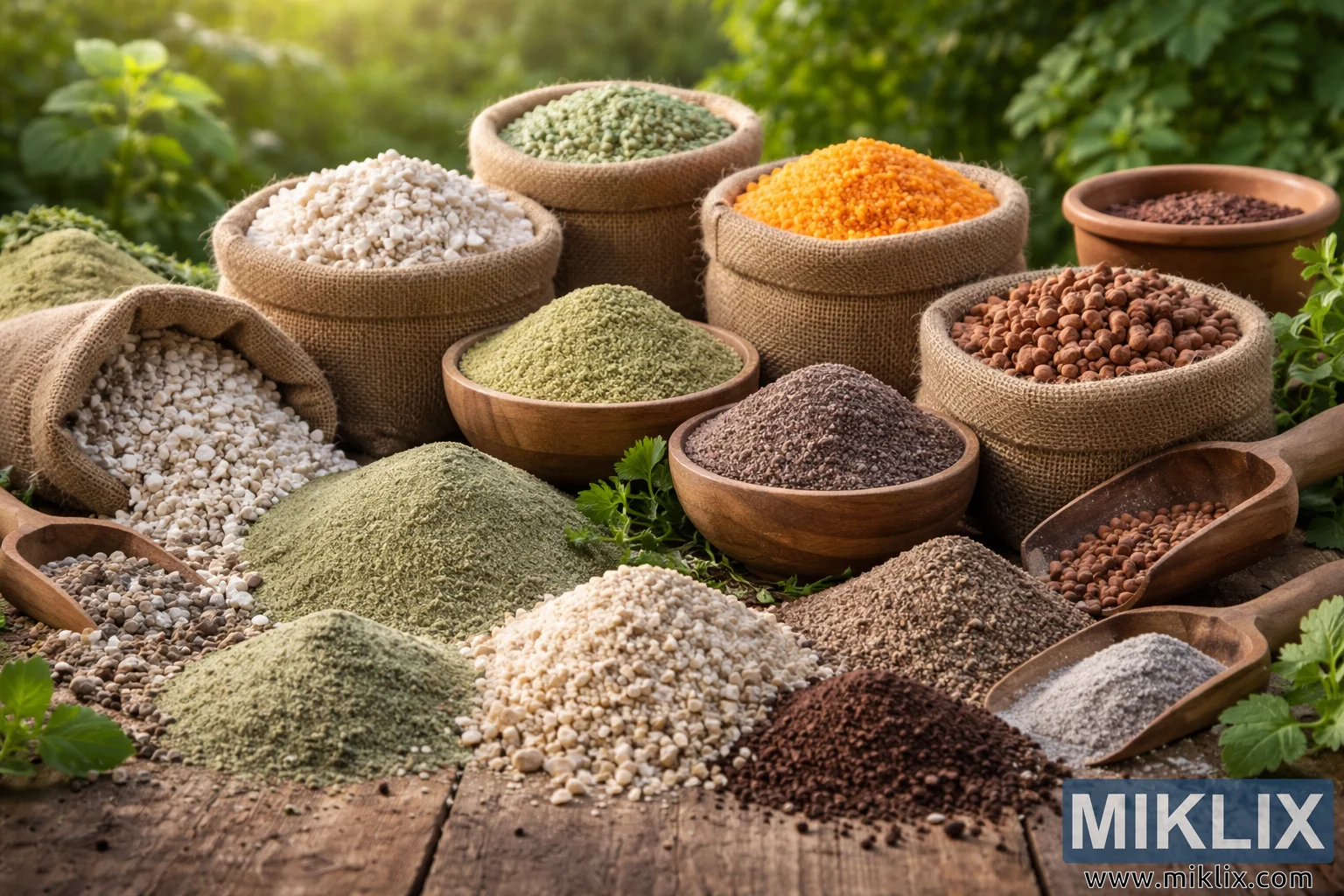
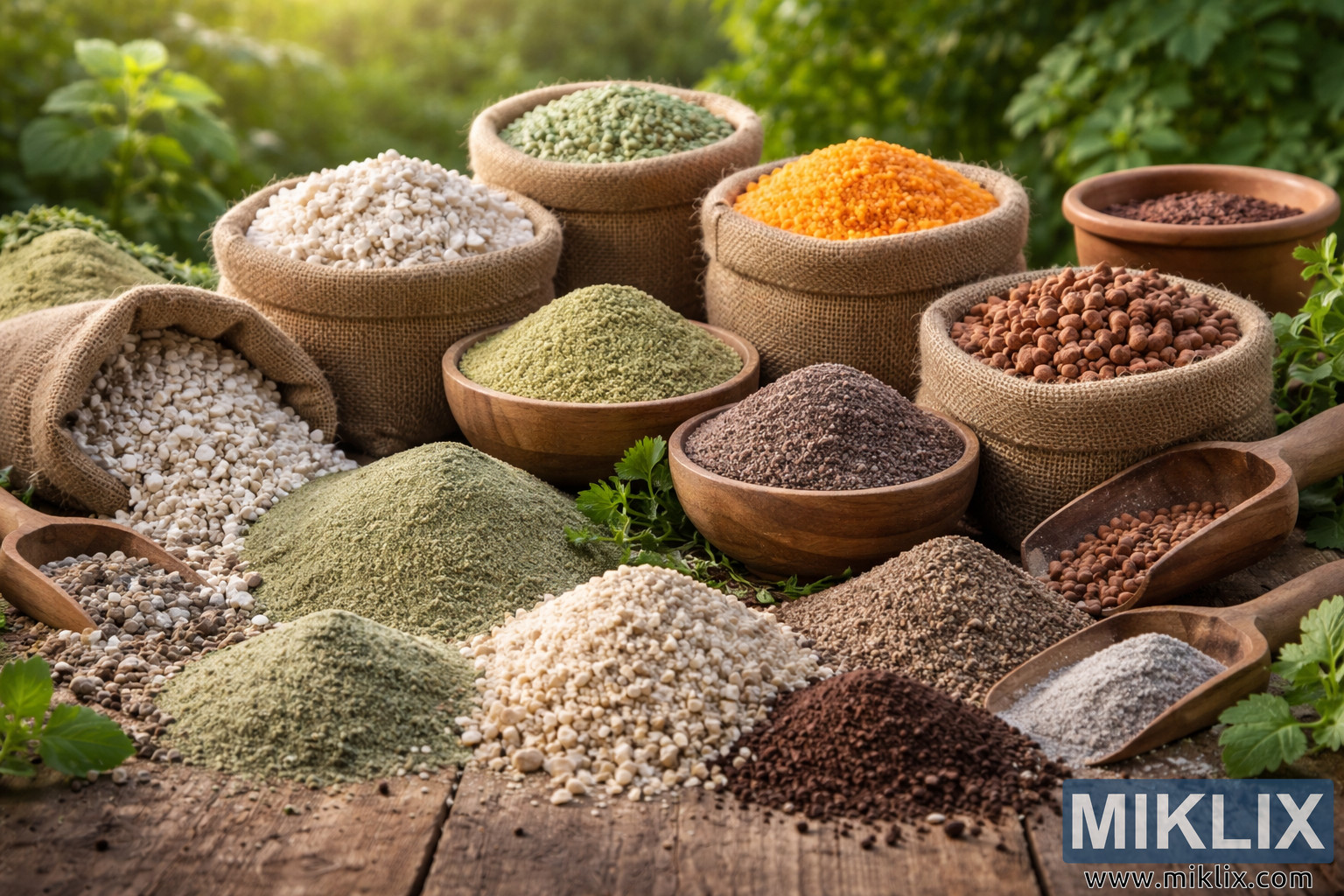
Large size (3,072 x 2,048)
Very large size (4,608 x 3,072)
Extra large size (6,144 x 4,096)
Comically large size (1,048,576 x 699,051)
- Still uploading... ;-)
Image description
A high-resolution landscape photograph displays a carefully arranged assortment of soil amendment minerals commonly used in gardening, horticulture, and agriculture. The scene is set outdoors on a rustic wooden surface that resembles a weathered potting bench or garden table. Warm natural daylight illuminates the arrangement, highlighting the textures, colors, and granular structures of the materials. Soft greenery and blurred foliage in the background create a calm garden atmosphere, suggesting the amendments are intended for healthy soil and thriving plants.
Across the foreground and middle of the composition, small mounds of mineral soil additives are displayed directly on the wooden surface as well as in wooden bowls, scoops, and burlap sacks. Each pile differs in texture and color, visually emphasizing the diversity of natural mineral inputs used to improve soil fertility and structure. One mound consists of bright white, lightweight perlite pieces, recognizable by their irregular, porous shapes that help aerate soil and improve drainage. Nearby, a pale gray powdery pile resembles agricultural gypsum, commonly used to improve soil structure and supply calcium and sulfur.
Several other piles display earthy tones ranging from light beige to deep brown and reddish hues. A coarse, tan mixture resembles crushed limestone or dolomitic lime, materials often added to raise soil pH and provide calcium and magnesium. A darker brown granular pile suggests rock phosphate, valued as a slow-release phosphorus source that supports root development and flowering. Another greenish mound likely represents greensand, a mineral rich in potassium and trace elements that helps improve soil conditioning.
In the background, burlap sacks filled with additional mineral amendments stand upright, their rough fabric texture reinforcing the natural, agricultural theme. One sack contains small orange-yellow granules resembling elemental sulfur or a sulfur-based soil amendment used to lower soil pH. Another holds round brown pellets that resemble mineral fertilizer prills or clay-based soil conditioners. A sack of pale stones and another bowl of greenish powder further illustrate the variety of textures and particle sizes present in soil mineral supplements.
Wooden scoops and bowls are positioned around the arrangement, suggesting practical use by gardeners or farmers measuring and applying these materials to soil. A few sprigs of fresh herbs and leaves are scattered around the display, visually connecting the minerals with plant growth and sustainable cultivation. The composition combines earthy colors, natural materials, and organic textures to communicate the concept of soil health, nutrient balance, and environmentally conscious gardening practices.
Overall, the image presents a visually rich overview of mineral soil amendments, highlighting their natural origins and their essential role in improving soil fertility, structure, and long-term plant productivity in gardens, farms, and landscaping projects.
The image is related to: The Complete Guide to Growing Okra in Your Home Garden