
Image: Okra Plant Showing Fusarium Wilt Symptoms
Published: March 17, 2026 at 9:37:34 PM UTC
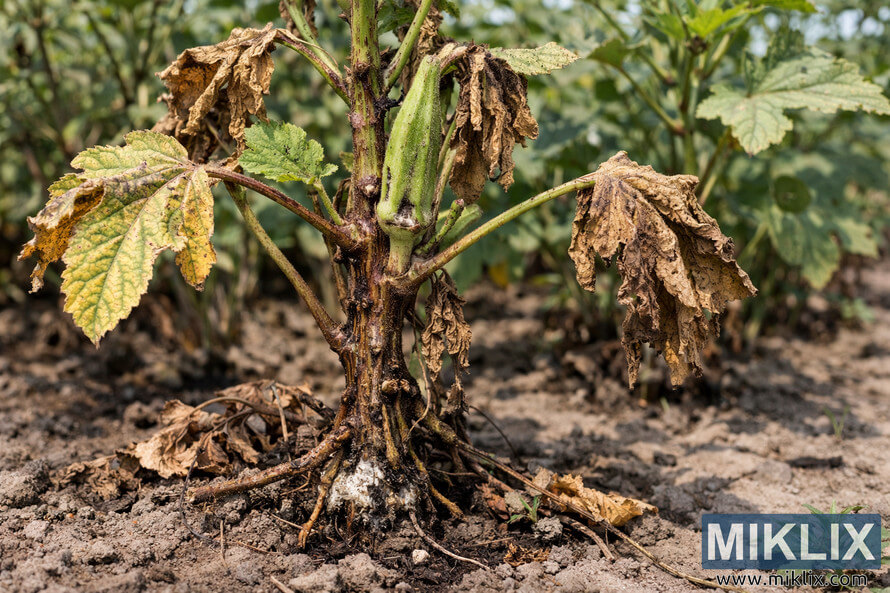
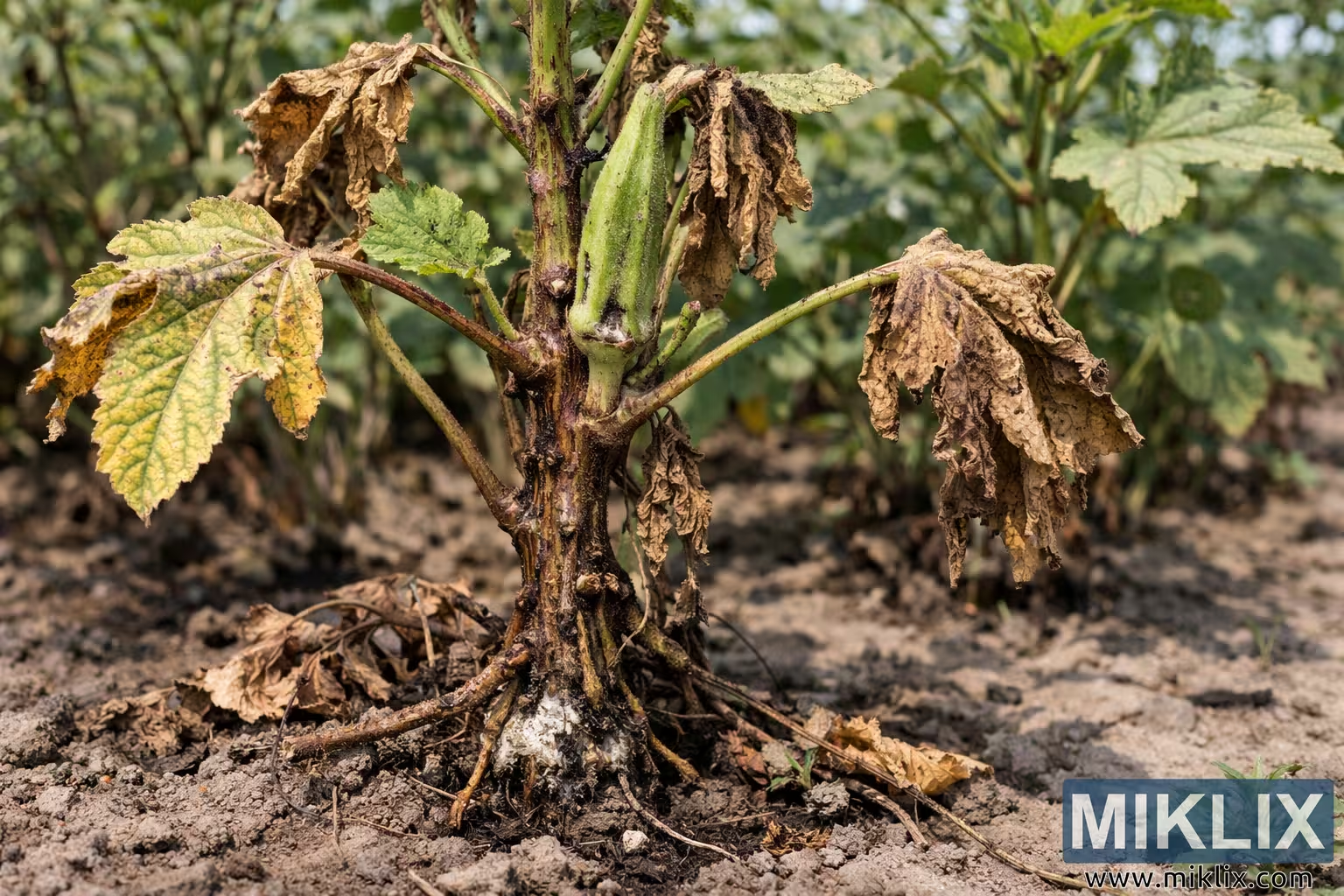
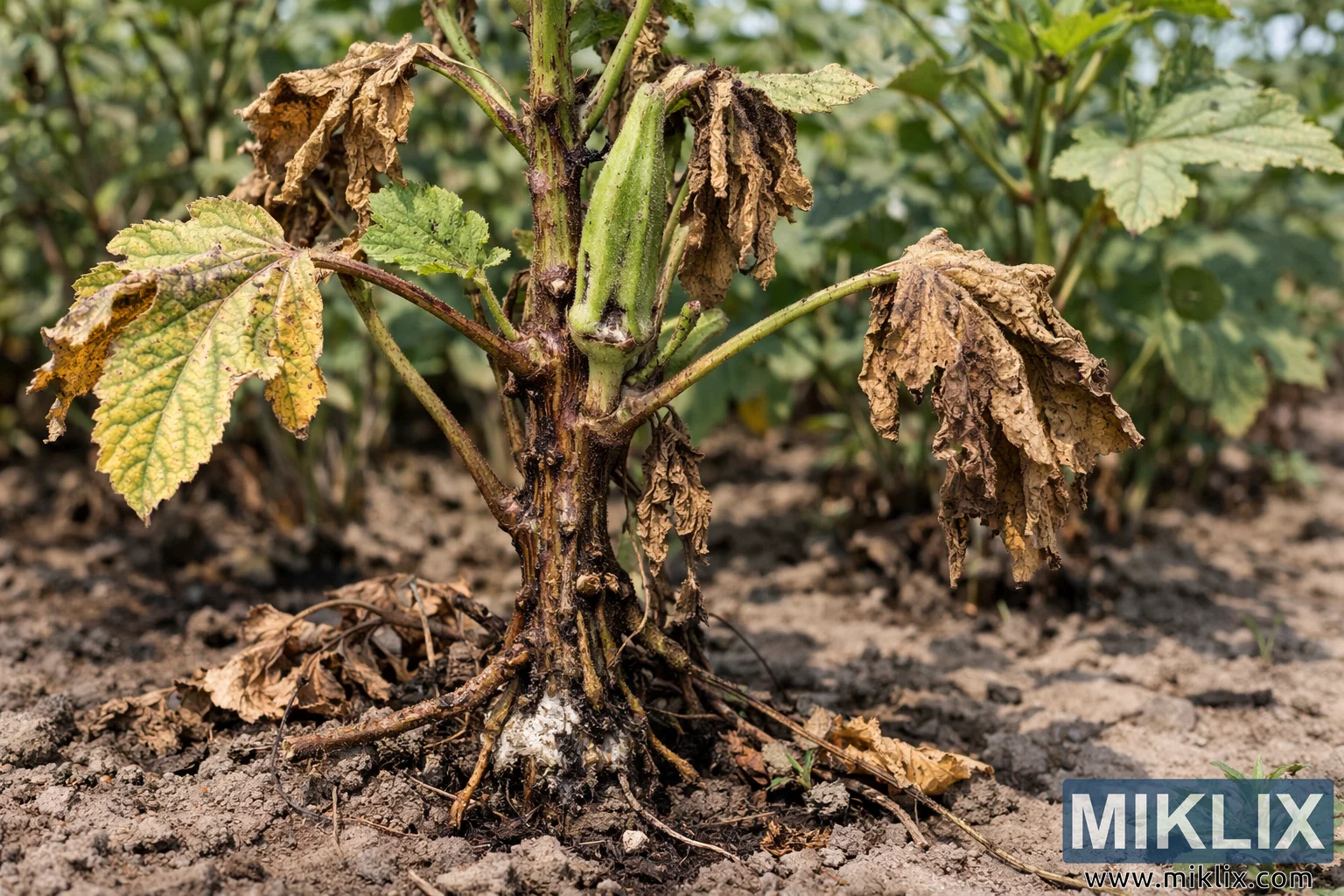
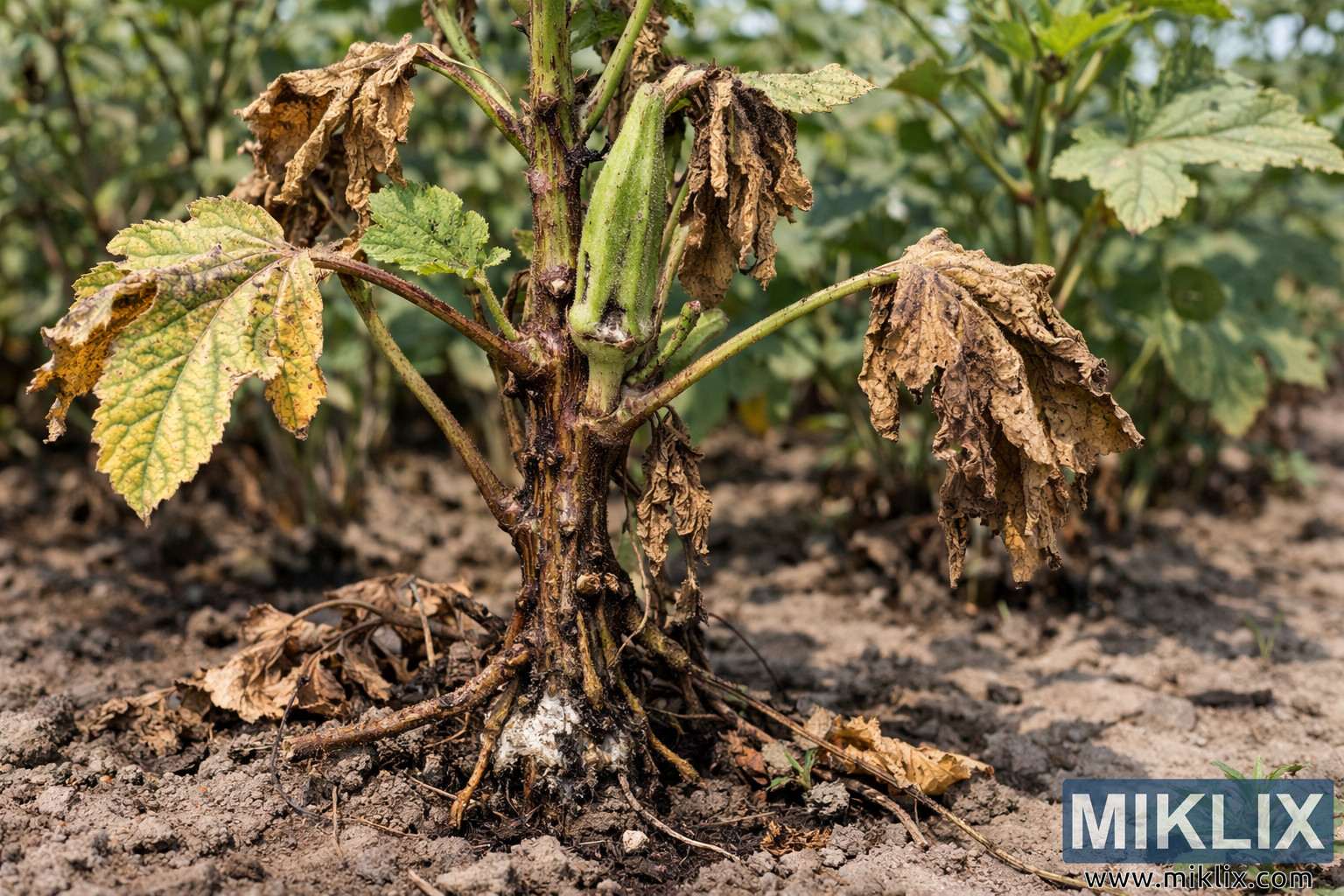
Photograph of an okra plant infected with Fusarium wilt showing yellowing leaves, wilting foliage, and stem discoloration at the soil line in a cultivated field.
Available versions of this image
The image files available for download below are less compressed and higher resolution - and as a result of that, higher quality - than the images embedded in articles and pages on this website, which are more optimized for file size in order to reduce bandwidth consumption.
Regular size (1,536 x 1,024)
Large size (3,072 x 2,048)
Very large size (4,608 x 3,072)
Extra large size (6,144 x 4,096)
Comically large size (1,048,576 x 699,051)
- Still uploading... ;-)
Image description
The image shows a close-up, landscape-oriented photograph of an okra plant growing in cultivated soil and displaying clear symptoms of Fusarium wilt infection. The plant stands in the center of the frame, rooted in dry, lightly compacted soil with small clumps and scattered organic debris visible around the base. The camera angle is slightly low and forward-facing, allowing a detailed view of the lower stem, root crown, and surrounding ground surface.
The okra plant appears severely stressed and diseased. Several of its leaves are wilted, shriveled, and discolored. Some leaves remain partially green but show yellowing along the veins and margins, while others have turned brown and brittle, hanging limply from the stems. The contrast between the remaining green foliage and the dry, curled brown leaves highlights the progressive decline typical of Fusarium wilt infections.
At the base of the plant, the stem shows visible darkening and necrotic discoloration where it meets the soil. The tissue appears rough and slightly cracked, suggesting damage caused by the soil-borne fungal pathogen that infects the plant through the roots and spreads upward through the vascular system. The root crown area appears weakened, with exposed roots visible just above the soil surface. These roots look thin and stressed, with patches of discoloration that suggest reduced vitality.
A few immature okra pods are visible attached to the central stem. They remain green but appear slightly undersized compared with what would be expected from a healthy plant. Their presence suggests the plant was once productive but is now declining due to the disease affecting its vascular transport system.
The background is softly blurred, showing additional okra plants growing in rows across the field. Some of these plants appear healthier with fuller green leaves, while others show mild signs of stress, hinting at the potential spread of disease within the crop. The shallow depth of field keeps the infected plant as the primary focal point while still providing context of an agricultural setting.
Natural daylight illuminates the scene, casting soft shadows and emphasizing the textures of the leaves, stem, and soil. The overall composition conveys the visible impact of Fusarium wilt on okra plants, highlighting typical symptoms such as leaf yellowing, wilting, stem discoloration near the soil line, and gradual plant decline within a cultivated field environment.
The image is related to: The Complete Guide to Growing Okra in Your Home Garden