
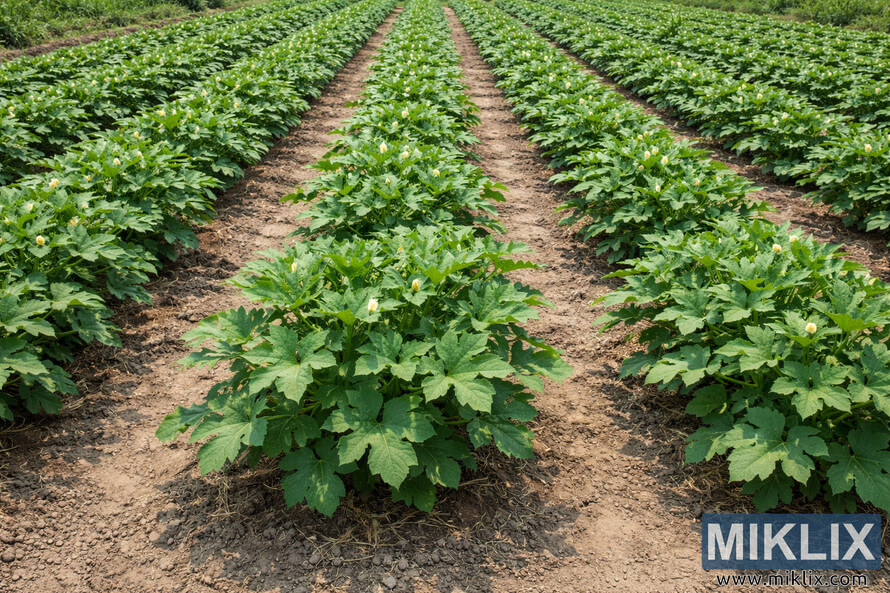
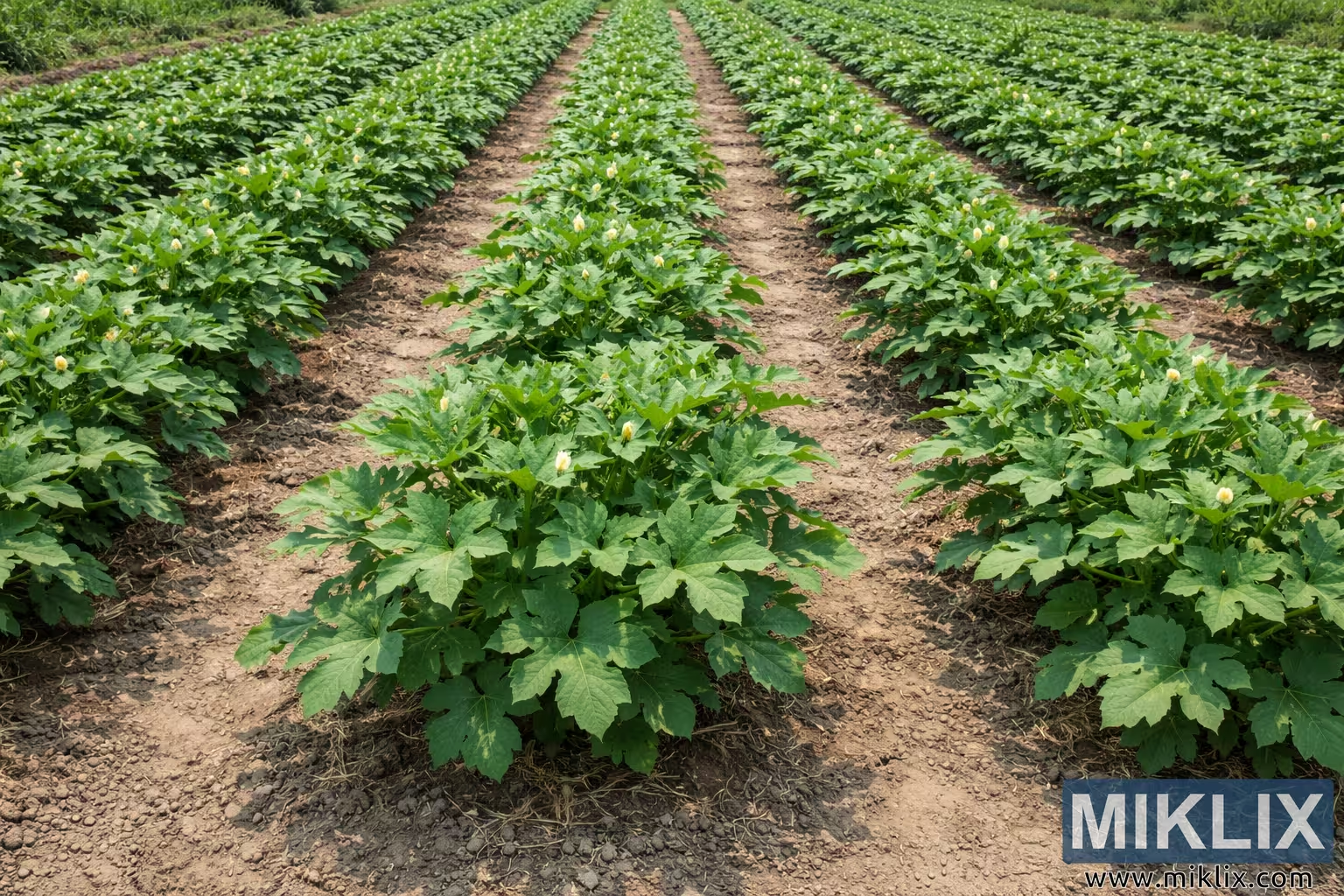
Image: Well-Spaced Okra Plants Showing Optimal Field Density
Published: March 17, 2026 at 9:37:34 PM UTC
High-resolution image of evenly spaced okra plants growing in organized rows, demonstrating optimal plant density and healthy crop development in a cultivated field.
Available versions of this image
The image files available for download below are less compressed and higher resolution - and as a result of that, higher quality - than the images embedded in articles and pages on this website, which are more optimized for file size in order to reduce bandwidth consumption.
Regular size (1,536 x 1,024)

Large size (3,072 x 2,048)
Very large size (4,608 x 3,072)
Extra large size (6,144 x 4,096)
Comically large size (1,048,576 x 699,051)
- Still uploading... ;-)
Image description
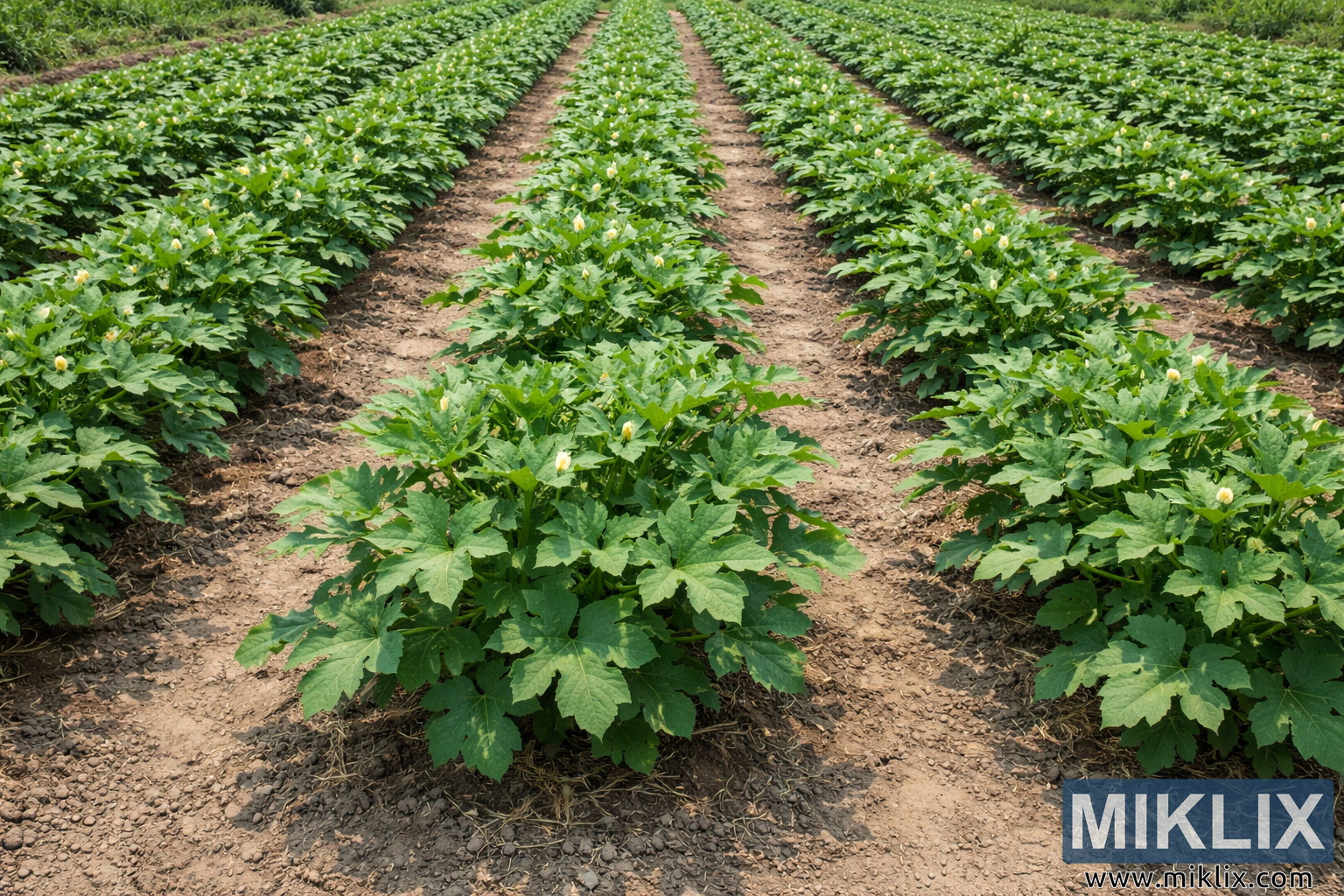
The image presents a wide, landscape-oriented view of a well-maintained agricultural field planted with okra. The composition emphasizes orderly cultivation and optimal plant spacing, with multiple long rows of thriving okra plants stretching into the distance. Each row is clearly separated by evenly spaced soil pathways, creating a repeating pattern that visually guides the eye toward the horizon. The plants are arranged in straight lines, demonstrating careful field planning and agricultural management practices designed to support healthy growth, efficient airflow, and ease of maintenance.
The okra plants appear vigorous and healthy, displaying lush green foliage with broad, lobed leaves characteristic of the crop. The leaves form dense but controlled canopies around each plant, indicating that the spacing allows sufficient room for the plants to develop without overcrowding. Small pale-yellow blossoms can be seen emerging among the foliage, signaling active flowering and the early stages of fruit production. The blossoms add subtle color variation against the dominant green tones of the leaves.
The soil between the rows is exposed and appears well-cultivated, with a slightly coarse texture and light brown coloration. The soil pathways are clean and free from weeds, reinforcing the impression of attentive farm management. The consistent width of the rows suggests deliberate spacing designed to allow workers or machinery to move easily through the field for irrigation, inspection, harvesting, and other routine tasks.
Lighting in the scene suggests bright daytime conditions, with natural sunlight evenly illuminating the plants and soil. The lighting highlights the texture of the leaves and casts soft shadows beneath the plants, adding depth and dimensionality to the field. The uniform illumination also helps emphasize the strong geometric pattern created by the repeating rows of crops.
As the rows extend farther into the background, the plants gradually become smaller and more densely packed in appearance due to perspective, reinforcing the scale of the cultivated area. The orderly structure of the planting creates a visually pleasing rhythm across the frame and conveys the concept of efficient agricultural design.
Overall, the image effectively illustrates optimal planting density for okra cultivation. The plants have adequate space to grow, sunlight can reach the foliage, and airflow between plants is likely sufficient to reduce disease pressure. The clean pathways and structured layout further demonstrate good farming practices that support healthy crop development and productive yields.
The image is related to: The Complete Guide to Growing Okra in Your Home Garden