
Image: Proper Deep Watering Technique for Okra Plants
Published: March 17, 2026 at 9:37:34 PM UTC
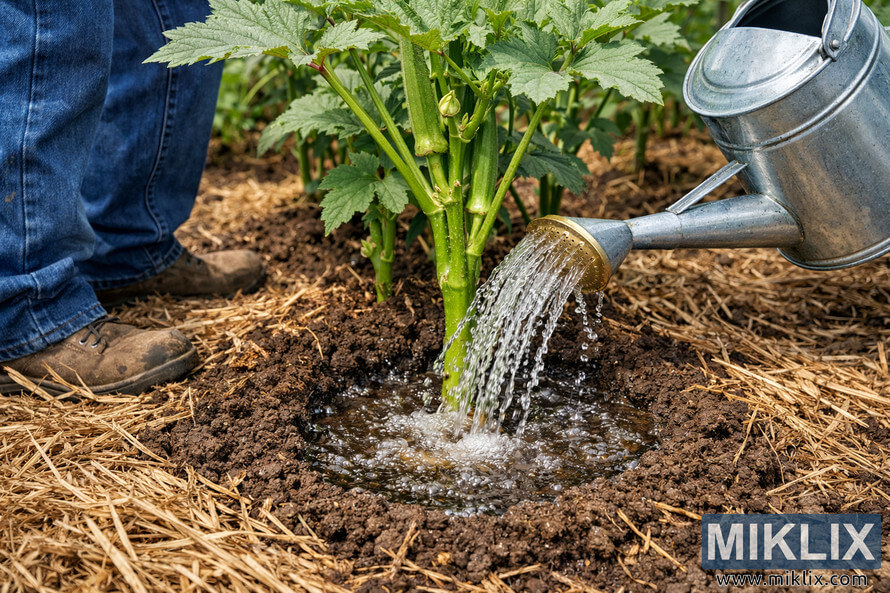
Close-up garden scene showing the proper deep watering technique for okra plants, with water soaking slowly into mulched soil around the plant’s base.
Available versions of this image
The image files available for download below are less compressed and higher resolution - and as a result of that, higher quality - than the images embedded in articles and pages on this website, which are more optimized for file size in order to reduce bandwidth consumption.
Regular size (1,536 x 1,024)
Large size (3,072 x 2,048)
Very large size (4,608 x 3,072)
Extra large size (6,144 x 4,096)
Comically large size (1,048,576 x 699,051)
- Still uploading... ;-)
Image description
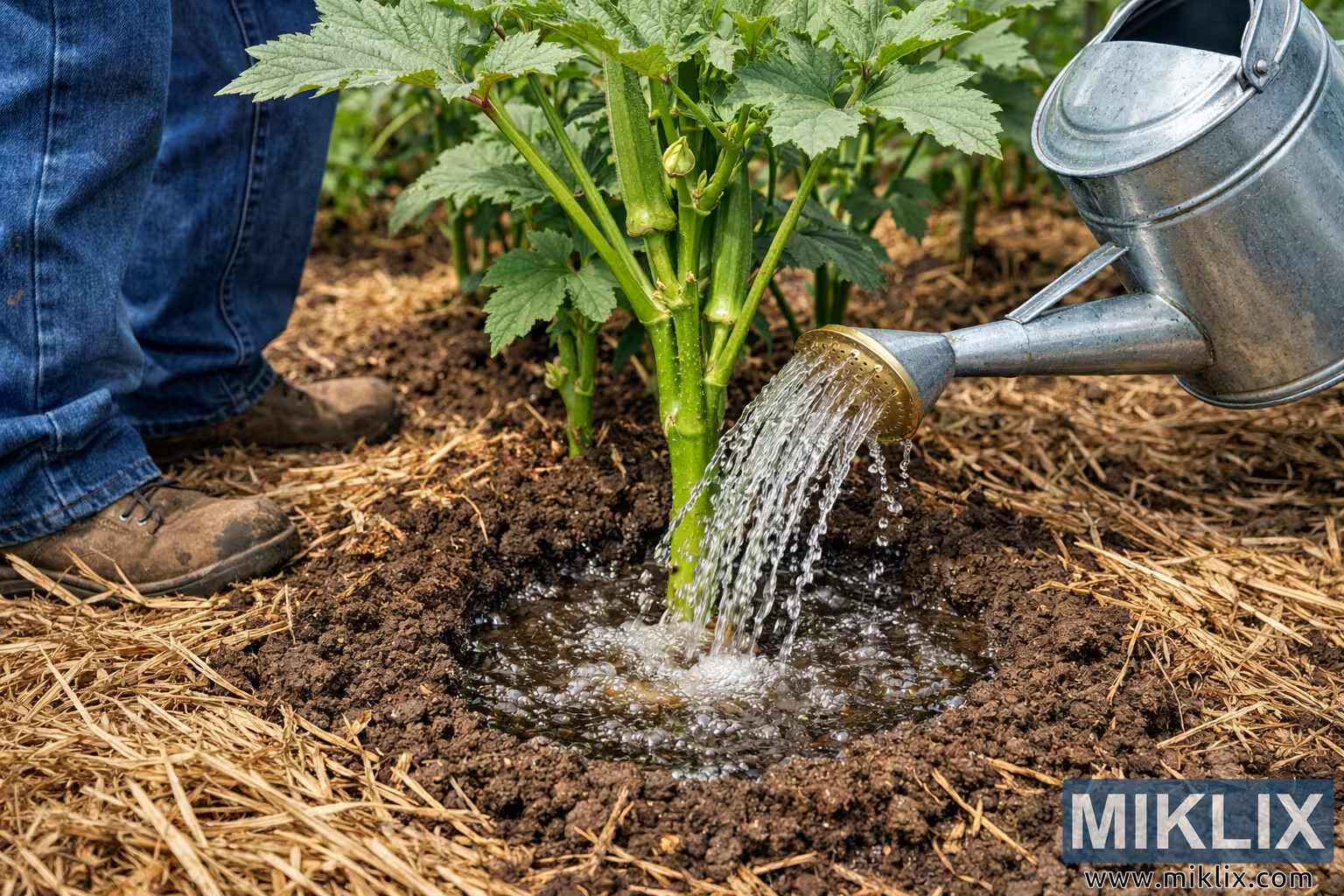
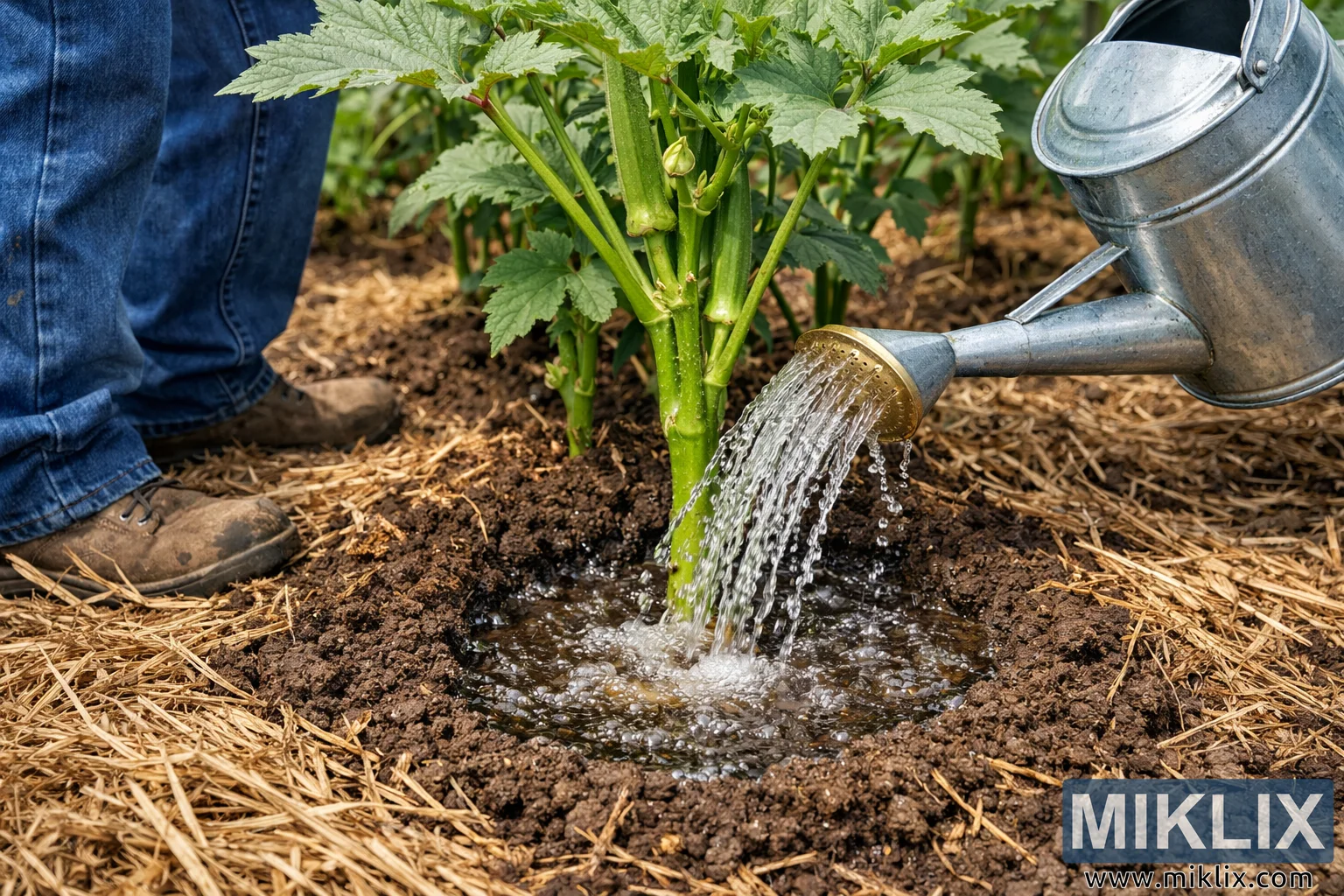
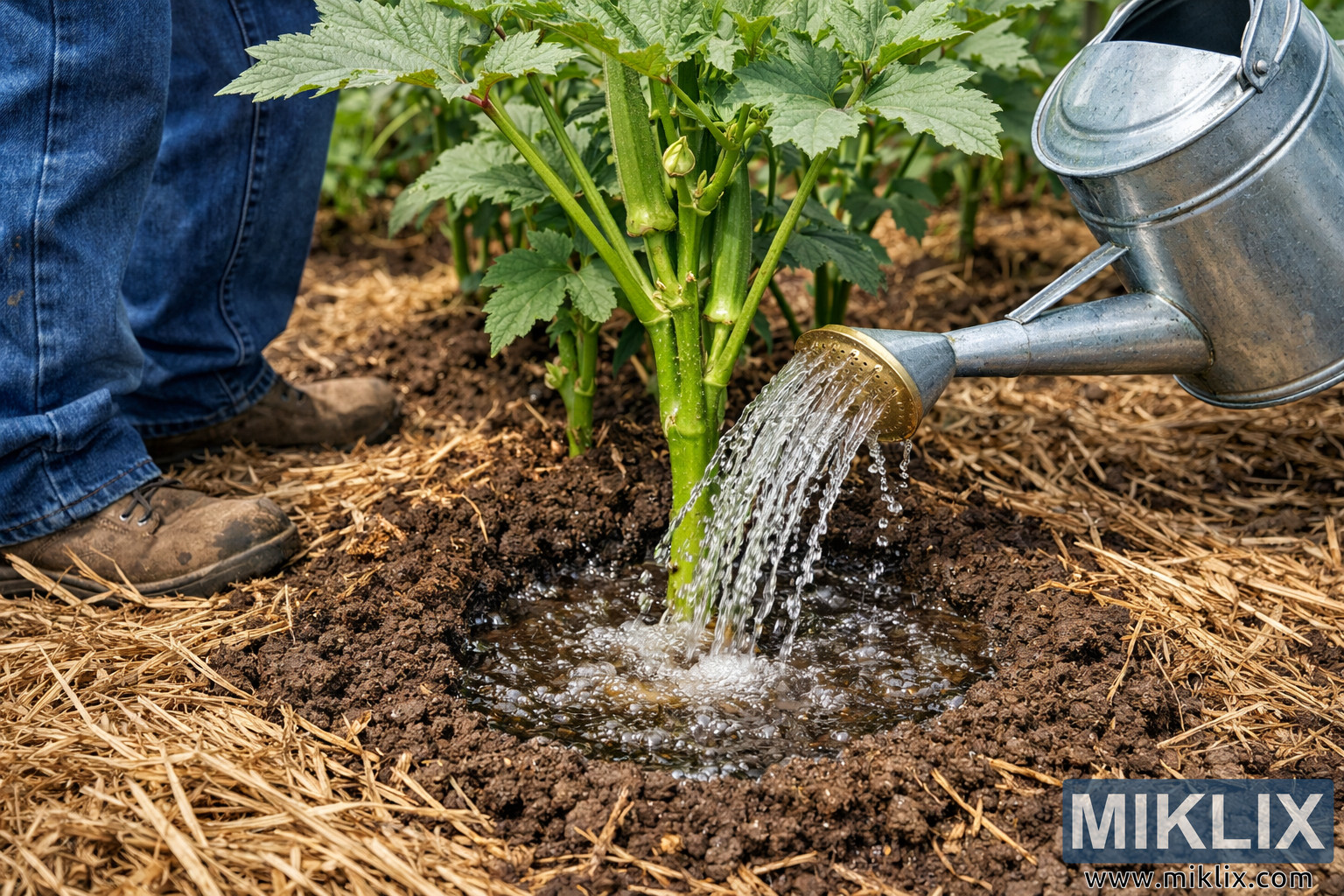
A detailed, landscape-oriented photograph captures a practical demonstration of the proper deep watering technique for okra plants in a sunlit vegetable garden. The image focuses closely on a single healthy okra plant standing upright in rich, dark soil. The plant’s thick green stem rises from the center of a small circular basin formed in the soil around its base. Large, jagged-edged leaves spread outward from the stem, displaying a vibrant green color that suggests a thriving, well-maintained plant. Several young okra pods and buds are visible along the stem, indicating an active growing stage.
The soil around the plant is carefully shaped into a shallow watering ring that helps contain water near the roots. This basin is currently filling with water being poured from a classic metal watering can positioned on the right side of the frame. The watering can’s long spout and rose head release a gentle shower of water that spreads evenly over the soil surface. As the water flows into the basin, it begins to pool temporarily before gradually soaking into the earth. Small bubbles and ripples appear where the water meets the soil, visually illustrating how deep watering allows moisture to penetrate down toward the plant’s root zone.
Golden straw mulch surrounds the basin, covering the broader garden bed. The mulch layer helps retain soil moisture, regulate temperature, and reduce evaporation while also suppressing weeds. The contrast between the light straw mulch and the darker exposed soil of the watering basin highlights the deliberate design of the watering area. The mulch is slightly parted near the stem so water can reach the soil directly rather than being blocked by the straw.
On the left side of the image, the lower legs and boots of the gardener are partially visible. The gardener wears worn brown work boots and blue denim jeans, suggesting hands-on gardening work. Their stance beside the plant conveys careful attention as they direct the watering can toward the base of the plant rather than spraying the leaves. This technique helps reduce disease risk while ensuring the plant’s root system receives adequate hydration.
In the softly blurred background, additional okra plants grow in neat rows, creating a sense of a well-organized vegetable garden. Warm natural sunlight illuminates the scene, highlighting the textures of the leaves, soil, and straw. The overall composition clearly demonstrates a key gardening practice: watering deeply at the base of the plant so moisture penetrates the soil and supports strong root development. The photograph effectively combines practical instruction with a natural garden setting, making the deep watering method for okra both visually clear and easy to understand.
The image is related to: The Complete Guide to Growing Okra in Your Home Garden