
Image: Organic vs Conventional Ginger Rhizomes for Planting
Published: January 9, 2026 at 4:46:37 PM UTC
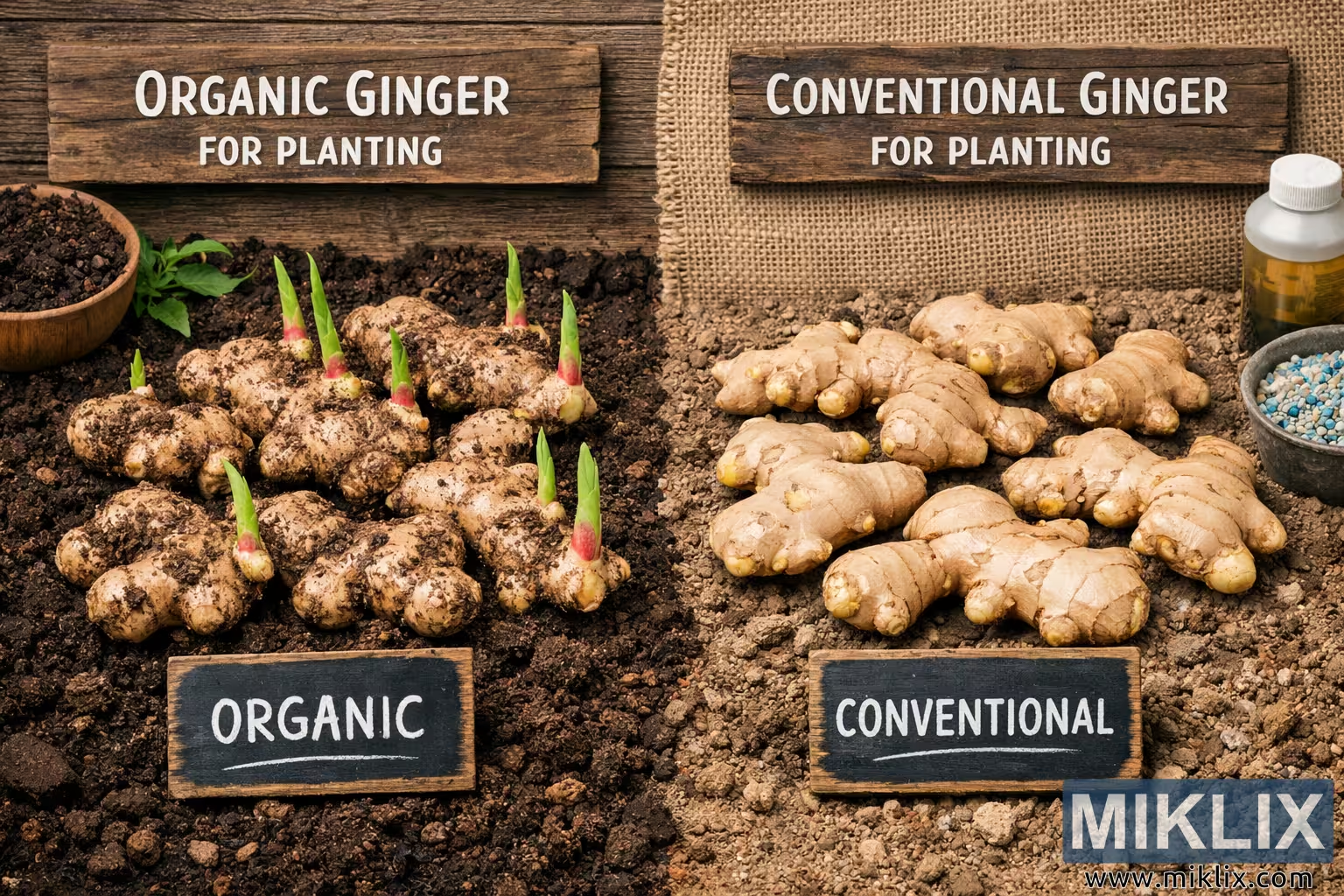
Landscape image comparing organic and conventional ginger rhizomes for planting, highlighting visual differences in sprouting, soil, and cultivation style.
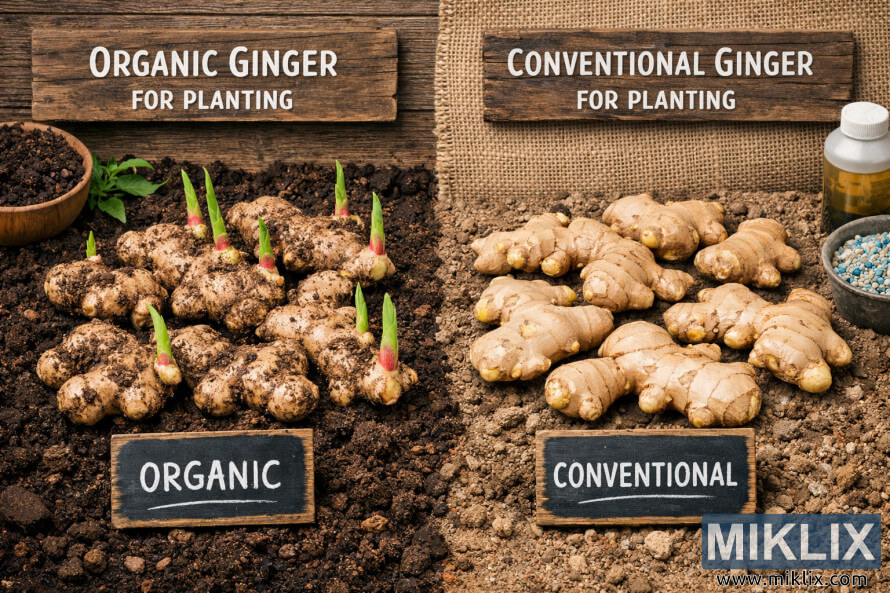
Available versions of this image
The image files available for download below are less compressed and higher resolution - and as a result of that, higher quality - than the images embedded in articles and pages on this website, which are more optimized for file size in order to reduce bandwidth consumption.
Regular size (1,536 x 1,024)
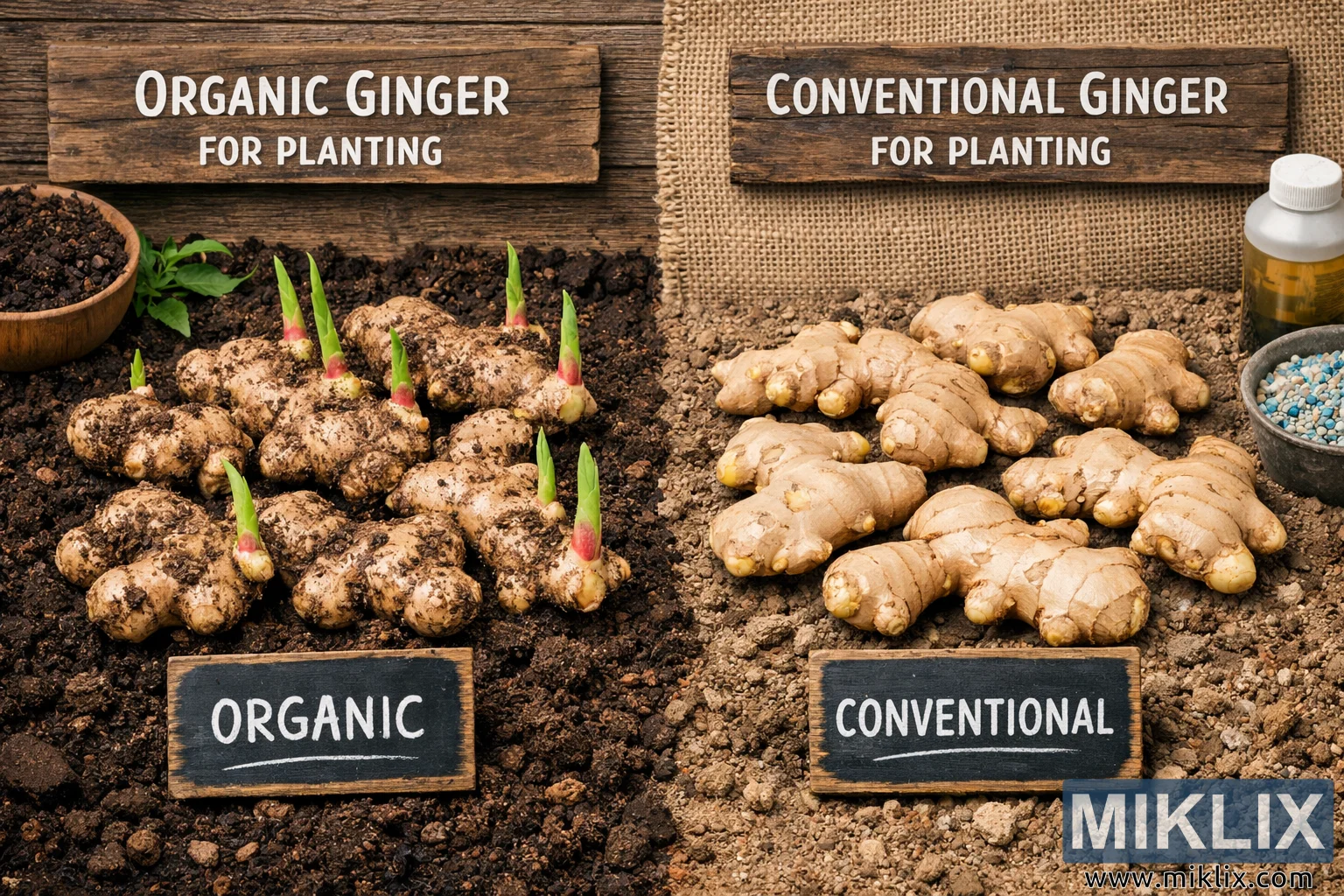
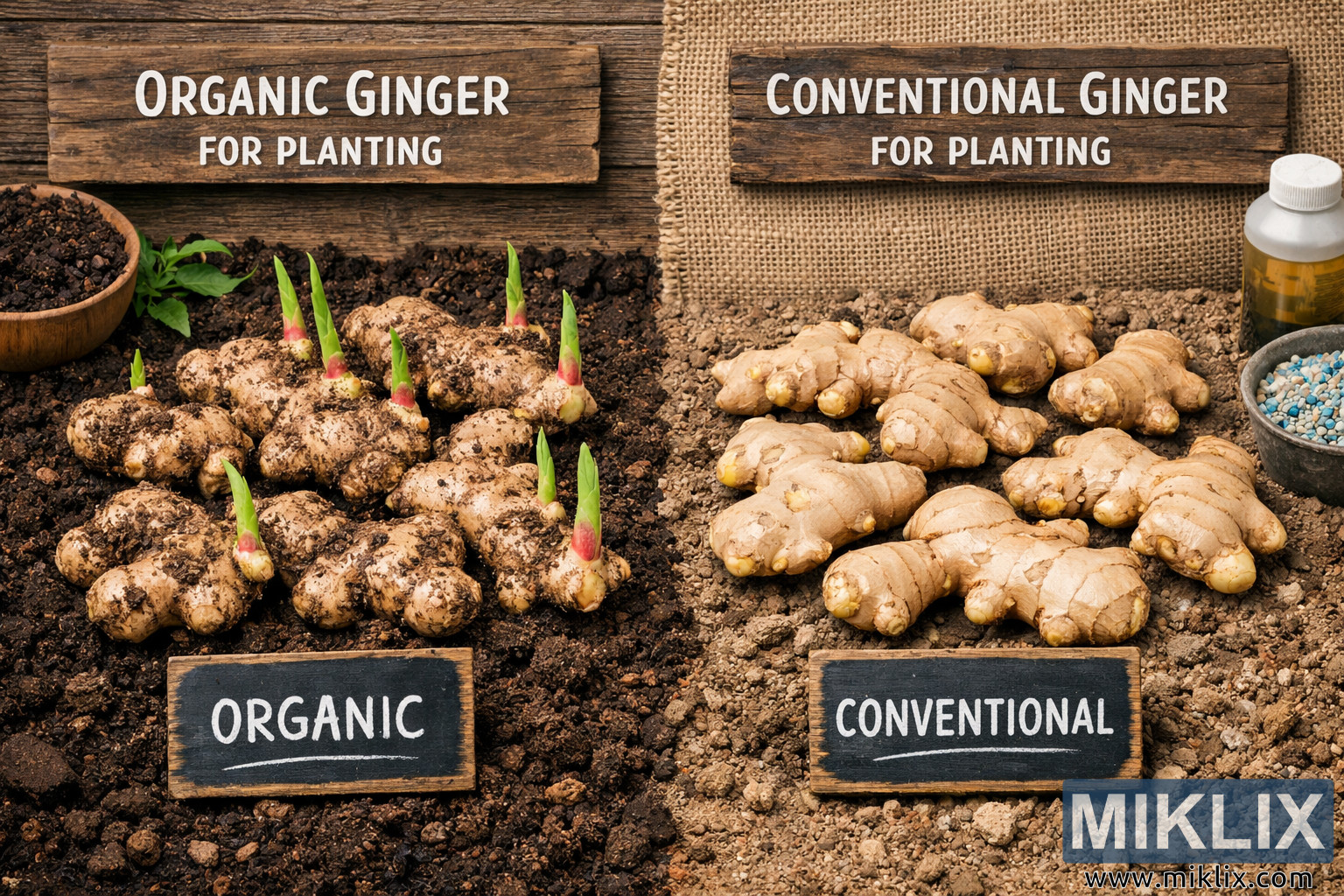
Large size (3,072 x 2,048)
Very large size (4,608 x 3,072)
Extra large size (6,144 x 4,096)
Comically large size (1,048,576 x 699,051)
- Still uploading... ;-)
Image description
The image presents a carefully staged, side-by-side comparison of ginger rhizomes intended for planting, highlighting visual differences between organic and conventional production methods. The composition is arranged horizontally in a landscape format and divided into two equal sections. On the left side, labeled as organic ginger for planting, several ginger rhizomes rest partially embedded in dark, moist-looking soil. These rhizomes appear irregular and knobby, with uneven surfaces and visible clumps of soil still adhering to their skins. Multiple fresh green shoots emerge from the organic ginger, some tipped with subtle reddish hues, suggesting active sprouting and vitality. The soil looks rich and textured, reinforcing an impression of natural cultivation. Above the organic section, a rustic wooden sign with white lettering clearly reads "Organic Ginger for Planting," and a smaller chalkboard-style label at the bottom simply states "Organic." The background includes natural materials such as wood and earth tones, contributing to a farm-like, handcrafted aesthetic.
On the right side of the image, the conventional ginger rhizomes are arranged on lighter, drier-looking soil or a soil-like surface. These rhizomes appear smoother, cleaner, and more uniform in shape and color, with a pale beige to light yellow skin. The shoots, if present, are smaller and less vivid, giving an overall impression of dormancy or treatment prior to sale. The conventional section is topped by a matching wooden sign reading "Conventional Ginger for Planting," and a chalkboard-style label at the bottom reads "Conventional." Nearby, a small container of granular material and a bottle suggest agricultural inputs, subtly implying the use of fertilizers or treatments. The background on this side includes burlap fabric and lighter textures, contrasting with the darker, earthier tones of the organic side.
The overall lighting is soft and even, emphasizing surface textures and natural colors without harsh shadows. The image is educational in tone, designed to visually communicate differences in appearance, handling, and perceived naturalness between organic and conventional ginger rhizomes. The clear labeling, symmetrical layout, and use of rustic materials make the image suitable for agricultural guides, gardening resources, or educational content focused on sustainable farming and planting choices.
The image is related to: A Complete Guide to Growing Ginger at Home