
Image: Ginger Plant Problems and Solutions Infographic
Published: January 9, 2026 at 4:46:37 PM UTC
Landscape infographic explaining common ginger plant problems and solutions, including leaf diseases, pests, root rot, causes, and practical treatment tips for gardeners.
Available versions of this image
The image files available for download below are less compressed and higher resolution - and as a result of that, higher quality - than the images embedded in articles and pages on this website, which are more optimized for file size in order to reduce bandwidth consumption.
Regular size (1,536 x 1,024)
Large size (3,072 x 2,048)
Very large size (4,608 x 3,072)
Extra large size (6,144 x 4,096)
Comically large size (1,048,576 x 699,051)
- Still uploading... ;-)
Image description
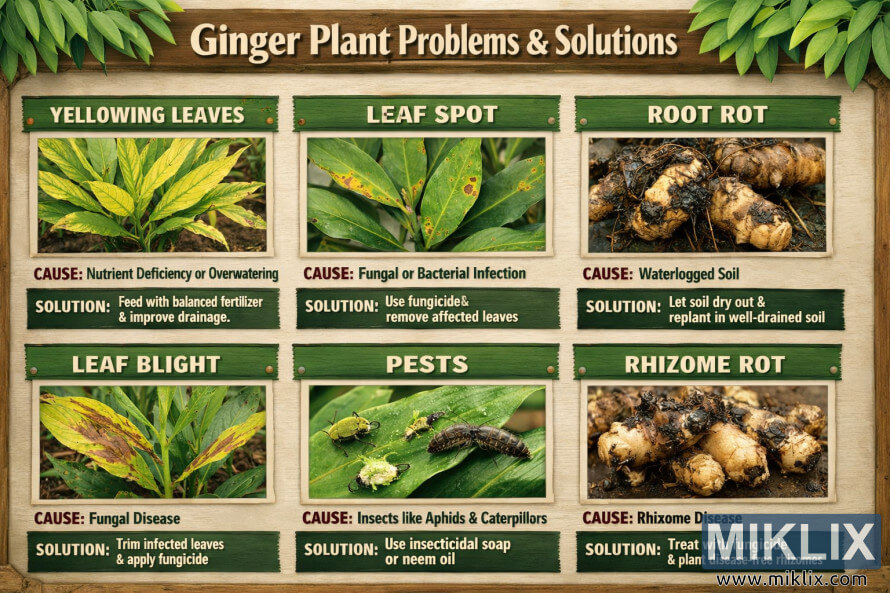
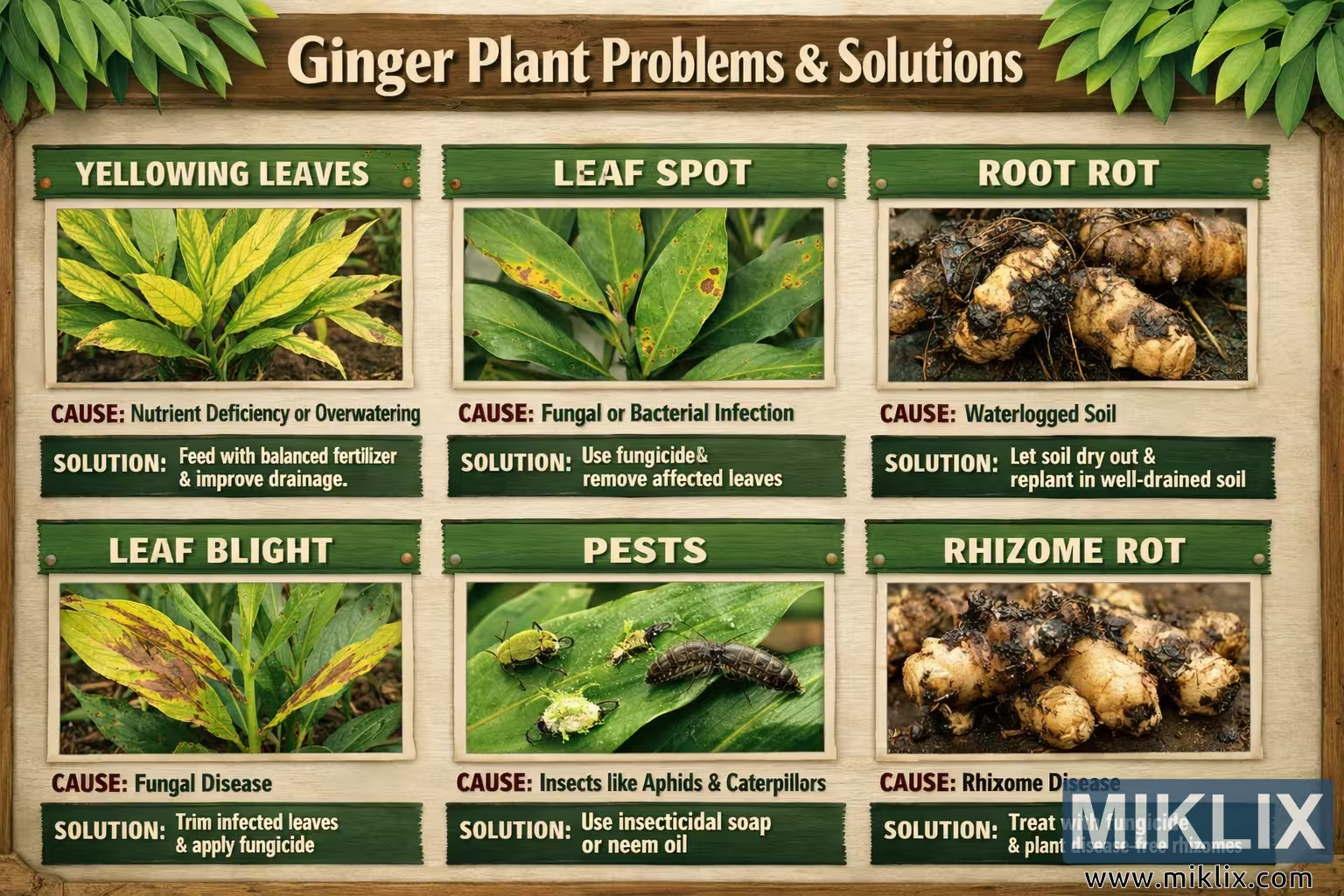
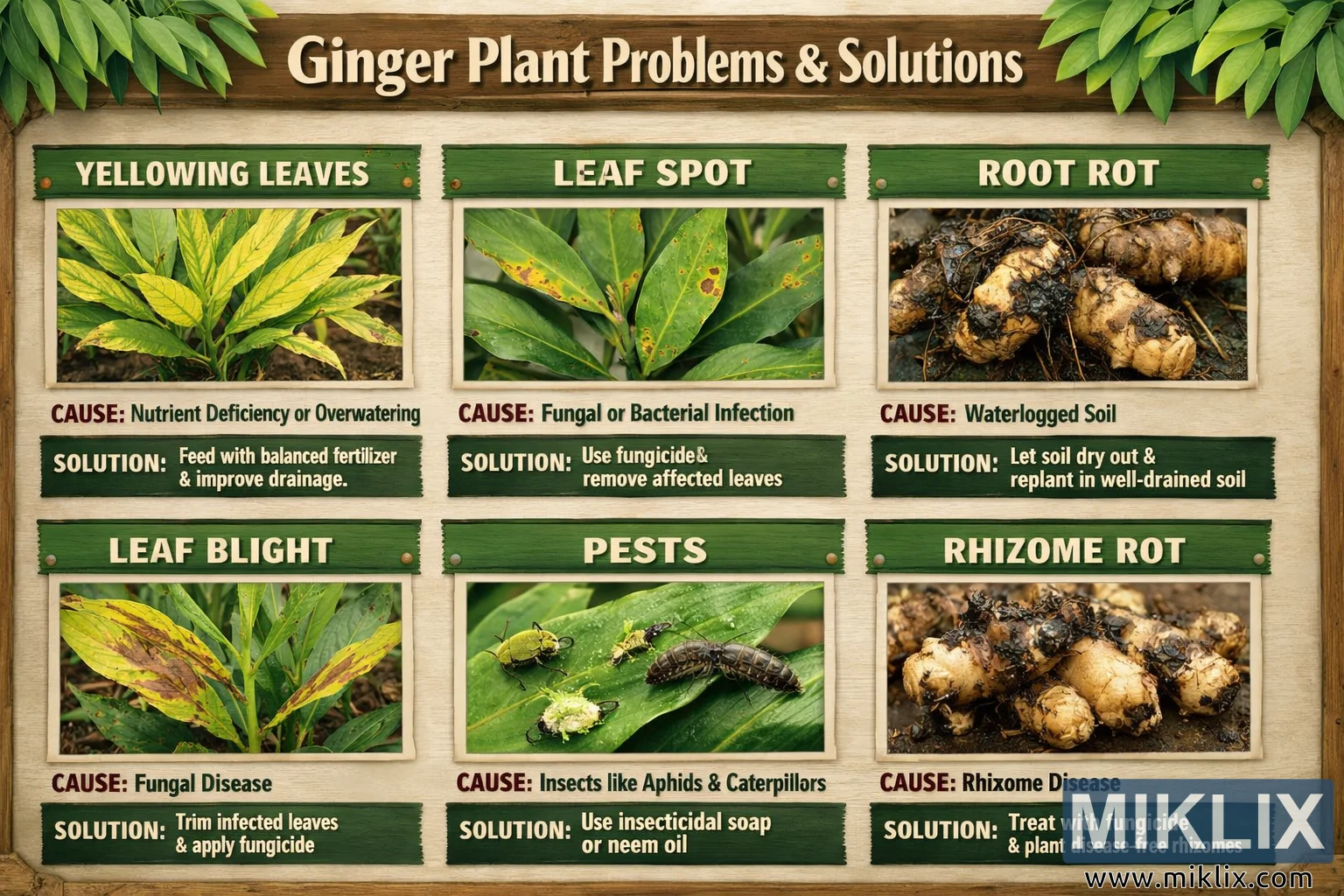
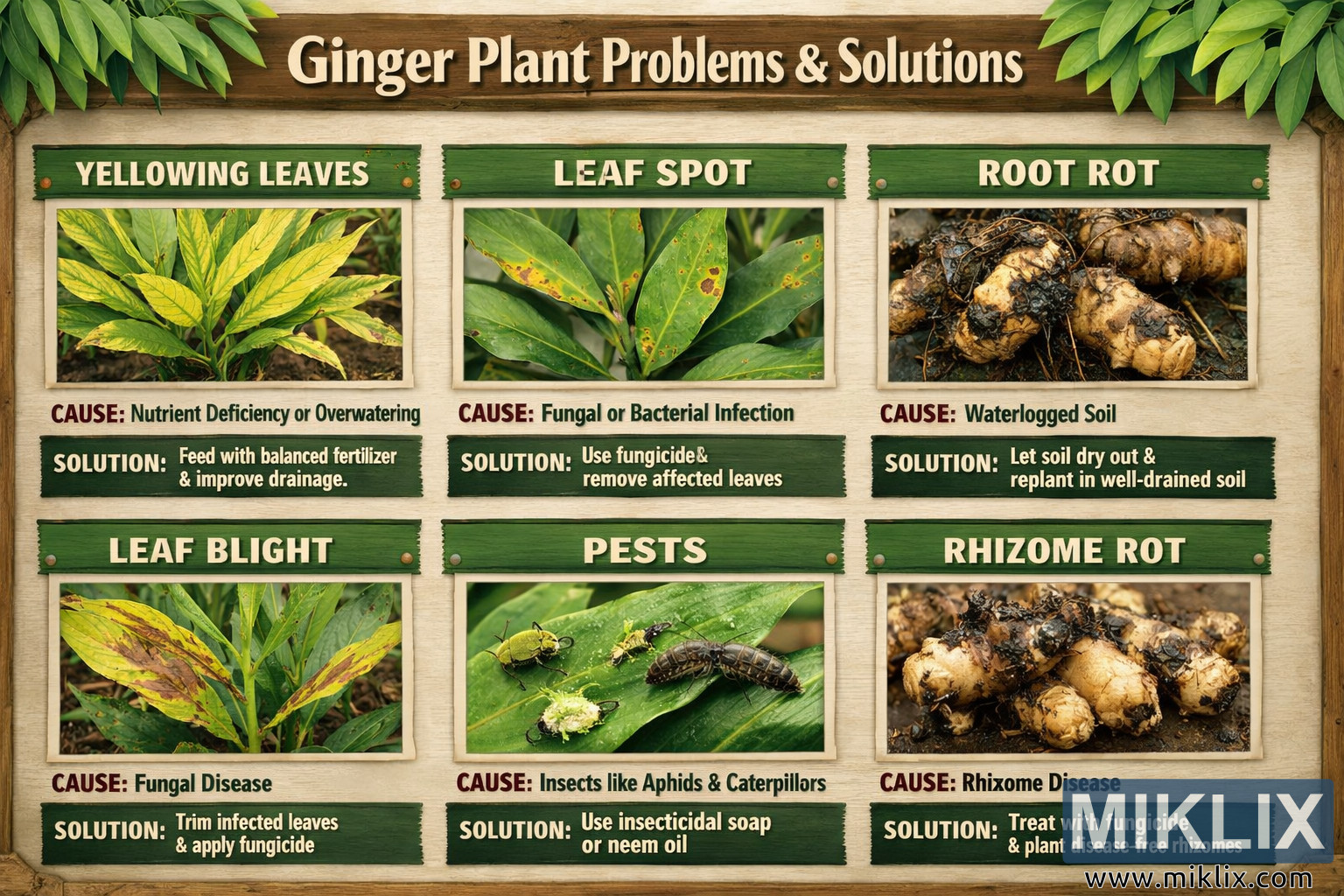
The image is a wide, landscape-oriented educational infographic titled "Ginger Plant Problems & Solutions." The overall design resembles a rustic gardening poster mounted on a wooden board background, with green foliage decorating the top corners to reinforce a natural, plant-focused theme. At the very top center, the title is displayed in large, bold lettering on a wooden sign, immediately setting a clear instructional purpose.
Below the title, the infographic is organized into six rectangular panels arranged in two horizontal rows of three. Each panel focuses on a specific common problem affecting ginger plants and follows a consistent visual structure: a green header with the problem name, a photographic illustration in the center, and two labeled text lines at the bottom identifying the cause and the solution.
The first panel, labeled "Yellowing Leaves," shows a close-up photograph of a ginger plant with pale yellow-green leaves. The cause is listed as nutrient deficiency or overwatering, while the solution recommends feeding the plant with a balanced fertilizer and improving soil drainage.
The second panel, titled "Leaf Spot," features ginger leaves with visible brown and yellow speckled spots. The cause is identified as a fungal or bacterial infection, and the solution advises using a fungicide and removing affected leaves to prevent spread.
The third panel in the top row, "Root Rot," displays ginger rhizomes that appear darkened, soft, and decayed. The cause is waterlogged soil, and the solution suggests allowing the soil to dry out and replanting the ginger in well-drained soil.
The bottom row begins with "Leaf Blight," illustrated by leaves with elongated brown and yellow lesions. The cause is described as a fungal disease, and the solution recommends trimming infected leaves and applying fungicide.
Next is the "Pests" panel, which shows insects such as aphids and caterpillars feeding on a ginger leaf. The cause is insect infestation, and the solution advises using insecticidal soap or neem oil.
The final panel, "Rhizome Rot," again focuses on diseased ginger rhizomes with blackened, rotting sections. The cause is listed as rhizome disease, and the solution recommends treating with fungicide and planting disease-free rhizomes.
Throughout the infographic, the color palette emphasizes greens, browns, and earthy tones, reinforcing an organic gardening aesthetic. The combination of clear photographs, bold labels, and concise cause-and-solution text makes the image easy to understand and suitable for gardeners seeking quick, practical guidance on diagnosing and treating ginger plant problems.
The image is related to: A Complete Guide to Growing Ginger at Home